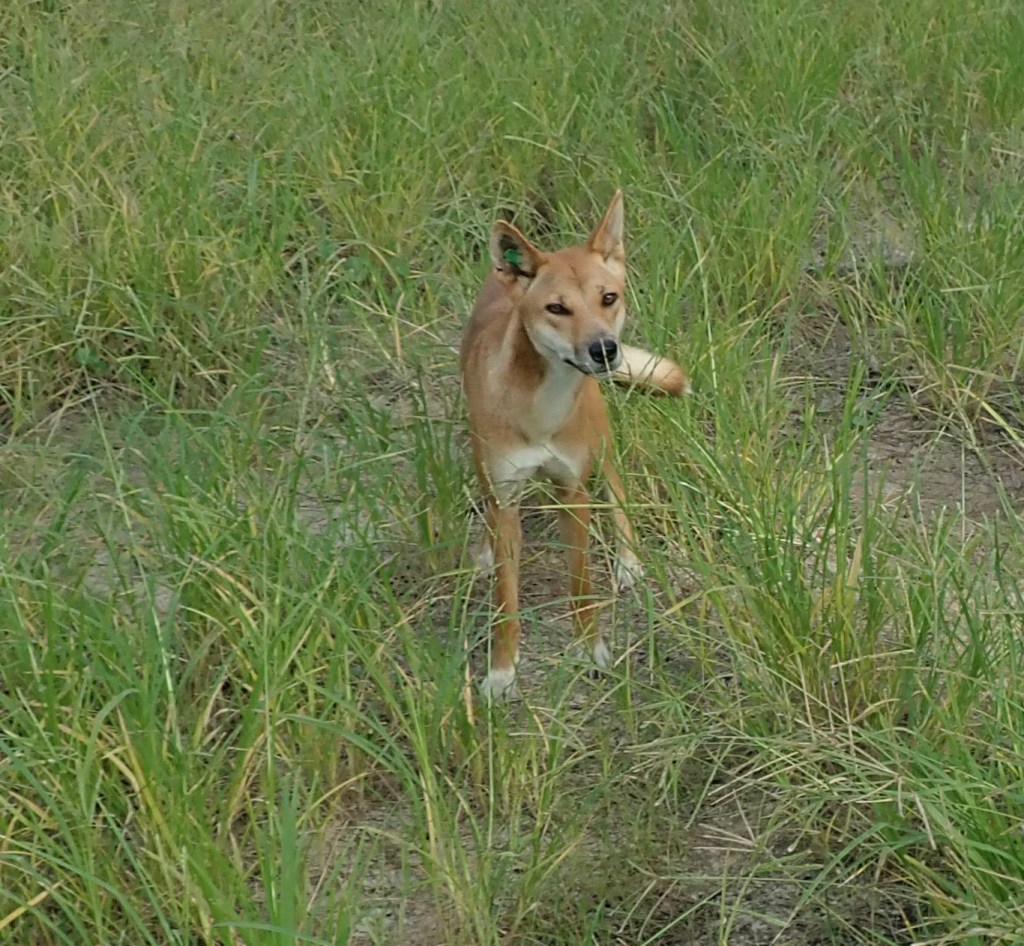
Since my trip to Lady Elliot Island involved stays in Hervey Bay, Queensland, the Park Manager of Norfolk Island National Park recommended I look at a restoration project on another close island: K’gari or Fraser Island. Nigel Greenup recommended I contact Bree Jashin who runs a reservation project on Fraser Council (similar to our regional district government) in Happy Valley. K’gari is part of the Great Sandy National Park in Queensland. Indeed this area is all about sand! One hundred and thirty-one cubic kilometres of it!
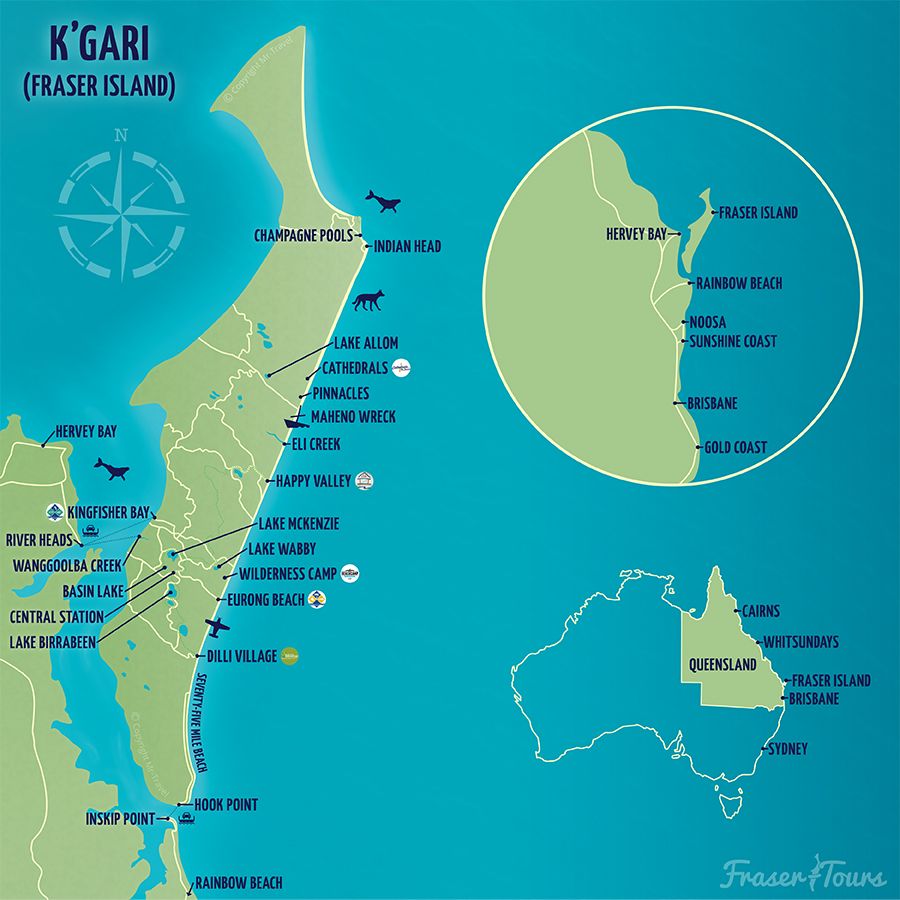
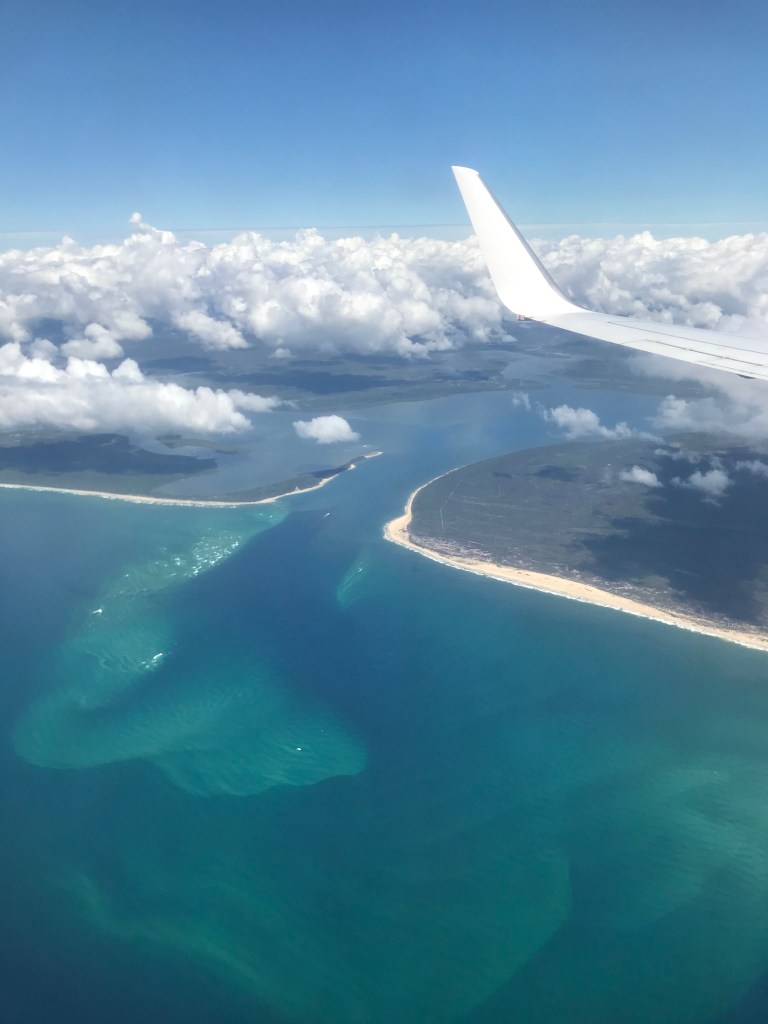
Over millions of years, sand has been transported out to the Pacific by the Hawkesbury, Hunter and Clarence Rivers in New South Wales and the Maryborough River in Queensland. After spewing from the rivers, sand is moved north by longshore drift and created the world’s largest sand island. K’gari (meaning “paradise” to the aboriginal Butchella people) or Fraser Island (after a shipwrecked maiden, Eliza Fraser) is amazing.
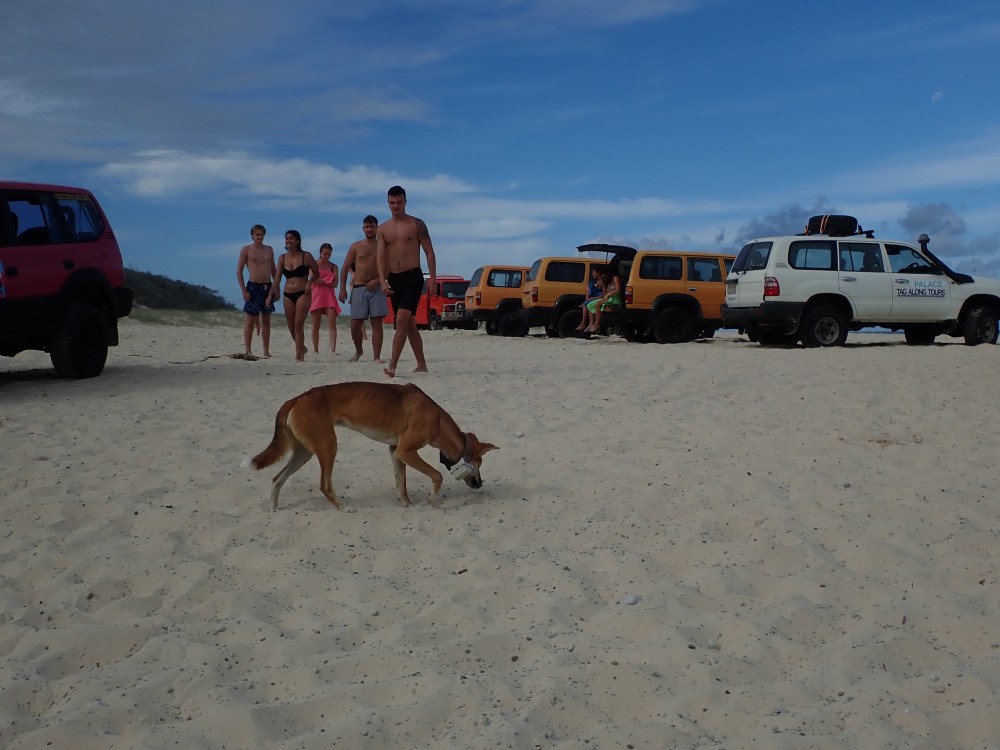
One of the many things I really learned from my trip to K’gari is that different people certainly have different perspectives on things. They gave me definitely different advice, but ultimately all were sort of right. So true in life too! On Lady Elliot, one local Hervey Bay resident advised me I was “crazy” going by myself and expecting to camp on Fraser Island. Bree told me to come along and that I would need a taxi at some point. The taxi driver told me it was fine to camp on the sand-dunes and told me to “Ignore Dingos and they would leave you alone”. Yet another person told me to “carry a dingo stick and whack them on the rear-end, if they bother you”, “If you go in the water, they won’t follow”. Someone else told me to “Identify the alpha male in the pack, send it along, and then the others will follow it” . Having never seen a Dingo, but having taken bear safety and dog-training courses, I thought I was prepared enough for this adventure. . .
The Butchella people have lived on K’gari and in this sandy area for at least 5000 years. They have a legend that “When humans were created and needed a place to live, the mighty god Beiral sent his messenger Yendingie with the goddess K’gari down from heaven to create the land and mountains, rivers and sea. K’gari fell in love with the earth’s beauty and did not want to leave it. So Yendingie changed her into a heavenly island – Fraser Island.
Like other places in Australia, when Europeans settled in this area, it was a disaster for the aboriginal people, whose population fell from around 3000 to around 300. These remaining people were taken off K’gari and killed by British police over various raids. Although it took a long time, in October 2014 the Butchella people were granted freedom to hunt, fish, take water and open up K’gari to eco-tourism and other economic opportunities.
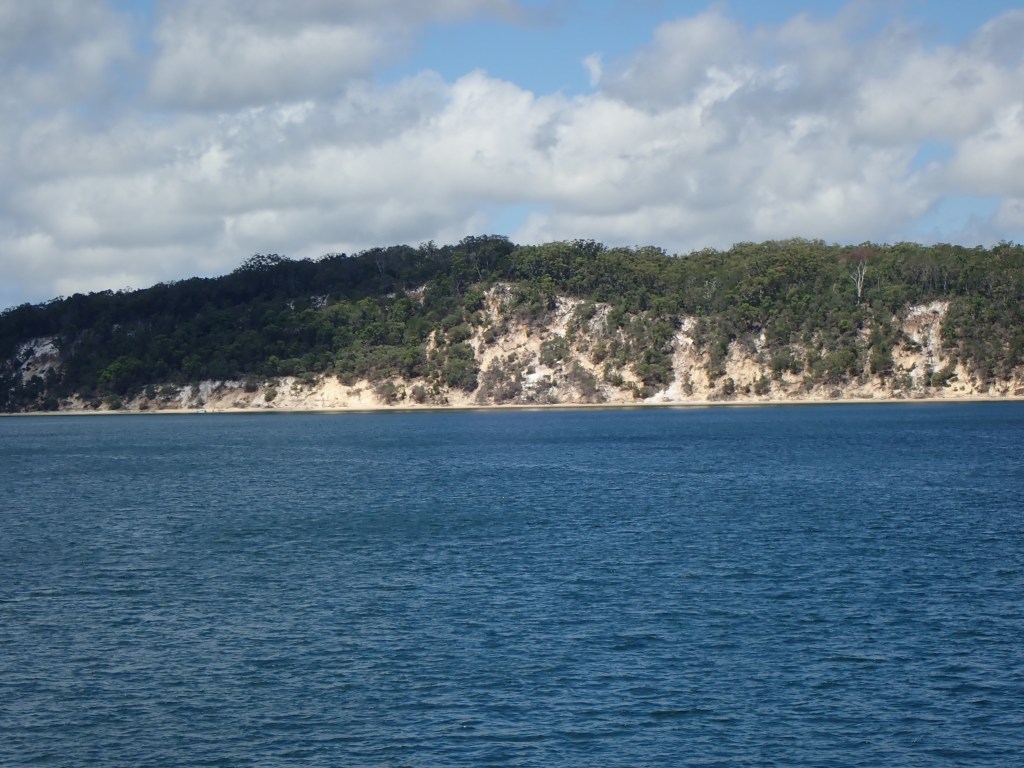
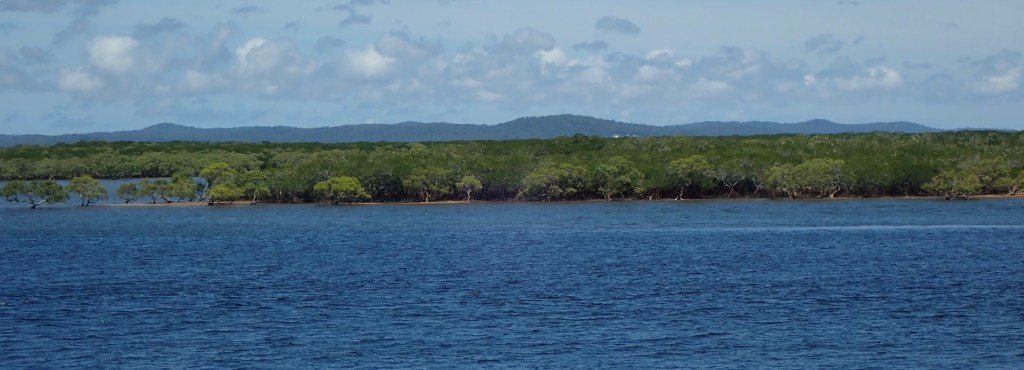
K’gari is a World Heritage Site supporting unique flora, fauna and ecosystems that survive and thrive in the sand. There are beautiful perched lakes with the most beautiful clear waters of perfect temperature, clear streams, fens, sand dunes everywhere, eucalyptus woodland, mangroves, wallum (floral-rich heath), peat wetlands and even rainforests. Unlike many sand ecosystems, the plant-life is rich due to mycorrhizal fungi in the sand which releases nutrients plants need.
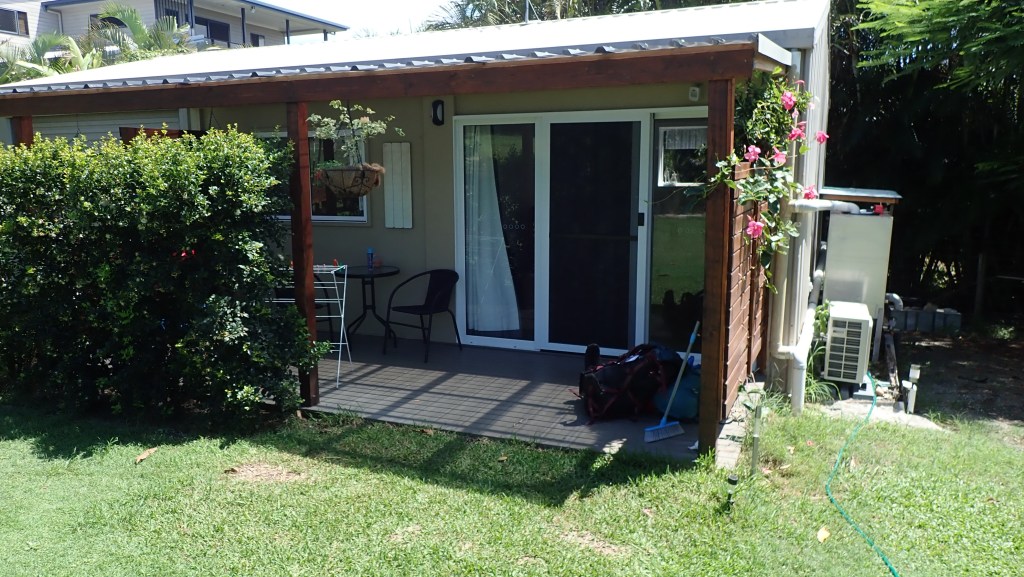
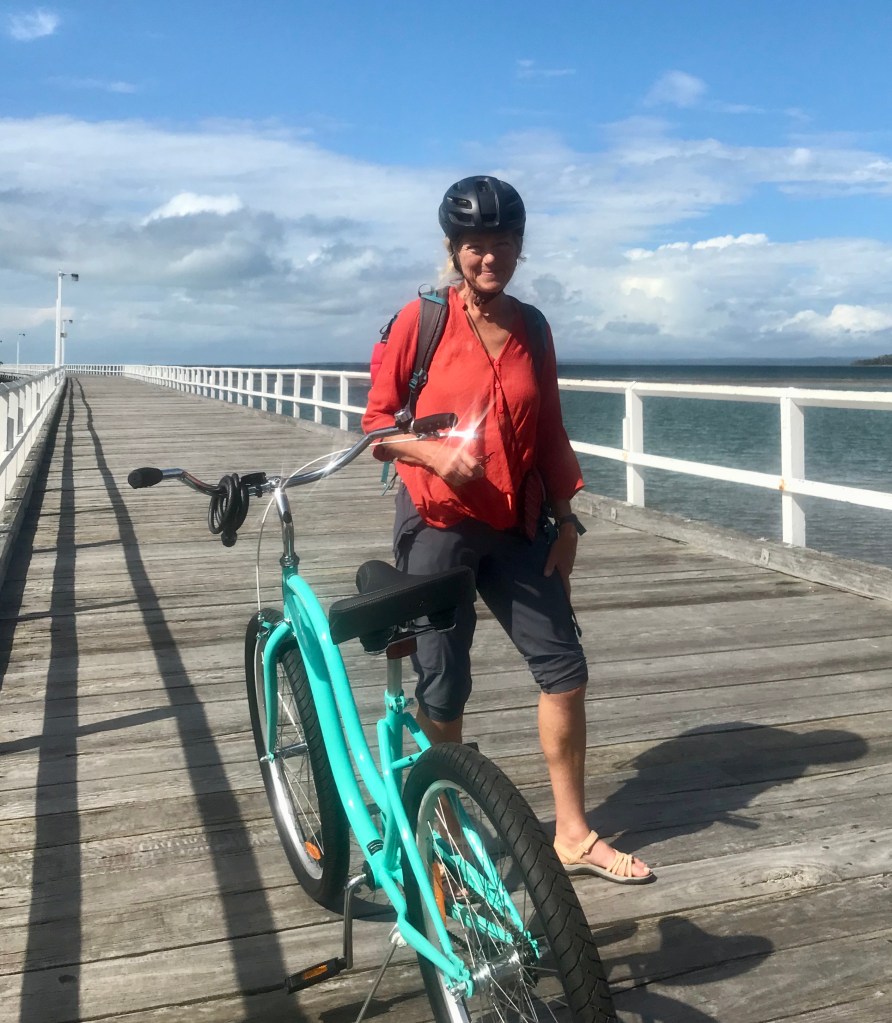
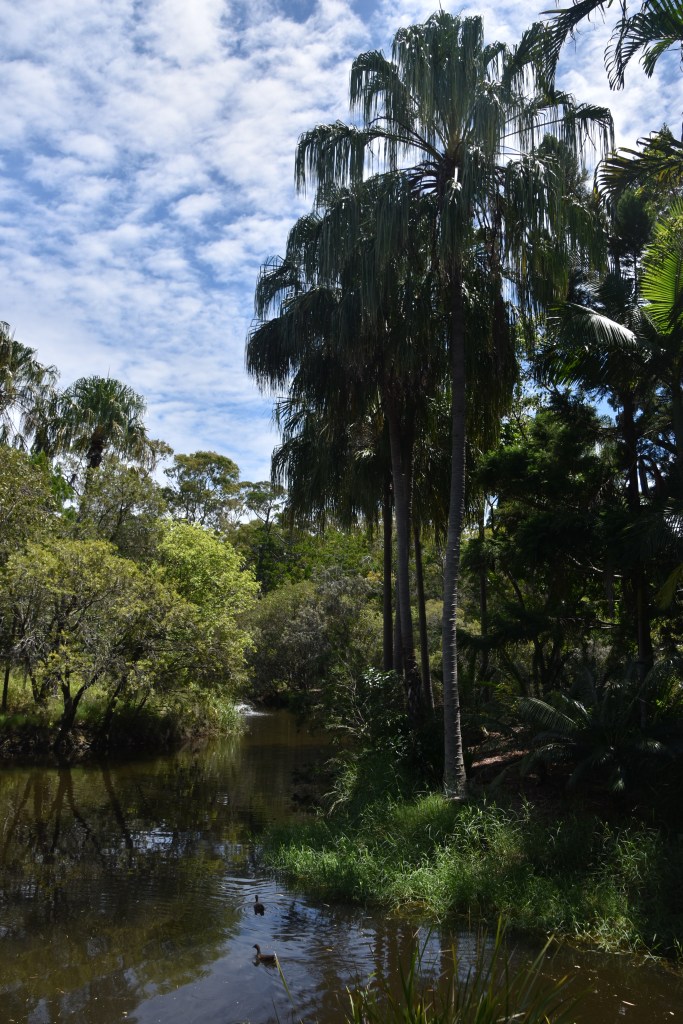
Before coming to K’gari, I had a nice stay in a Hervey Bay Airbnb garden cabin near the Kingfisher barge/ferry. Hervey Bay has a beautiful promenade on the sea-shore and a very beautiful botanical garden. Since it is quite spread out, it was not really great for walking but a bicycle is very handy for getting around. My hosts drove me and my compact back-pack to the ferry. I was determined to save money by camping, due to the previous splurge at Lady Elliot eco-resort. Little did I know that K’gari was not really a backpacking destination!
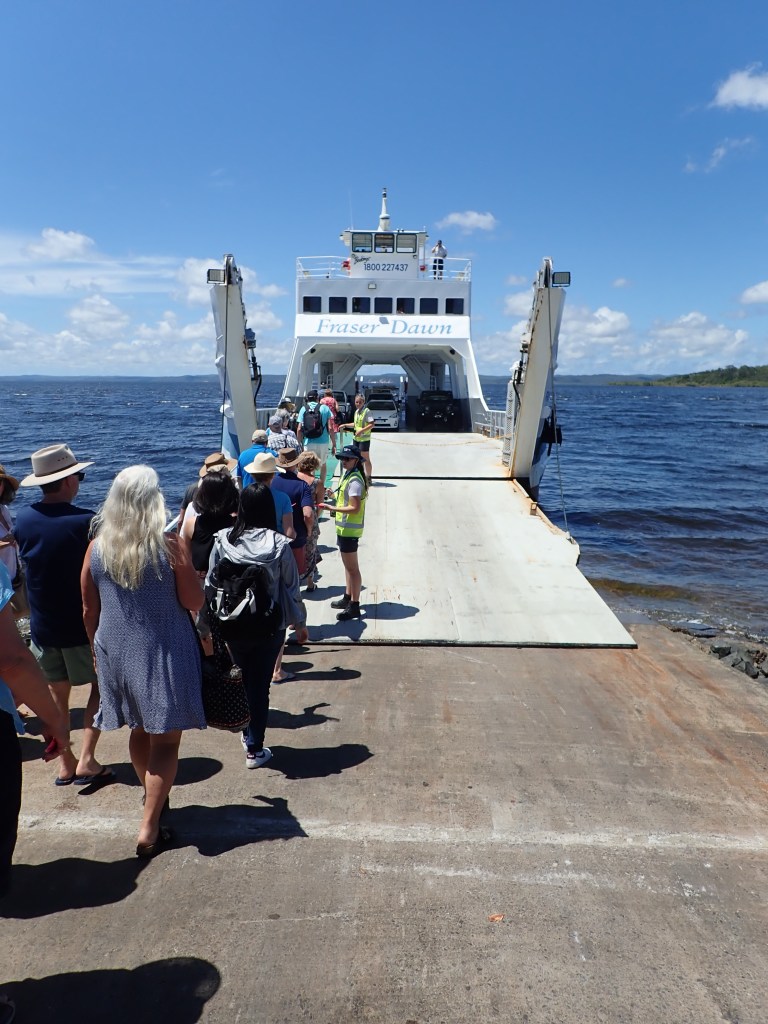
After the 45 minute ferry ride, a few 4WD’s and registered tour group guests disembarked to Kingfisher Resort at 1:15pm. It was very hot and sweltery and I’m not sure if that was the beginning of my problems with getting around K’gari. Being that there was only one taxi, I tried phoning the driver numerous times on kind people’s phones. A couple of Park Rangers told me that one needed a permit (only purchased on-line) to camp on Fraser Island. No hope of that when I didn’t even have cell service! I also wished I’d brought a better map for the island as it is 123 km long, 23 km wide and covers 1840 square kilometres. Not a place to head out on without some navigational aids. I waited over 3 hours, considered whether I should just book a tour or hike across the island to Happy Valley. After all I was equipped for camping. Just by chance the taxi turned up the ferry terminal at 4:30 pm. I eagerly jumped in. Steve’s (the taxi-driver) wife was away, cell reception was very limited and since Steve was out and about in the Toyota Land Cruiser all day, he hadn’t received my calls. Steve was a long time resident of Eurong, wood-worker, manager of recreational properties and a taxi driver. It takes a long time to get any place on the island as there are only crazy curvy 4WD sand roads and the beach for driving. In retrospect, I believe this is part of the appeal of K’gari for many. It is 4WD heaven. The taxi wasn’t cheap however. It took over an hour to go 20.8 kilometres across the island to Eurong for $90. Better to be in a group and share the fare.
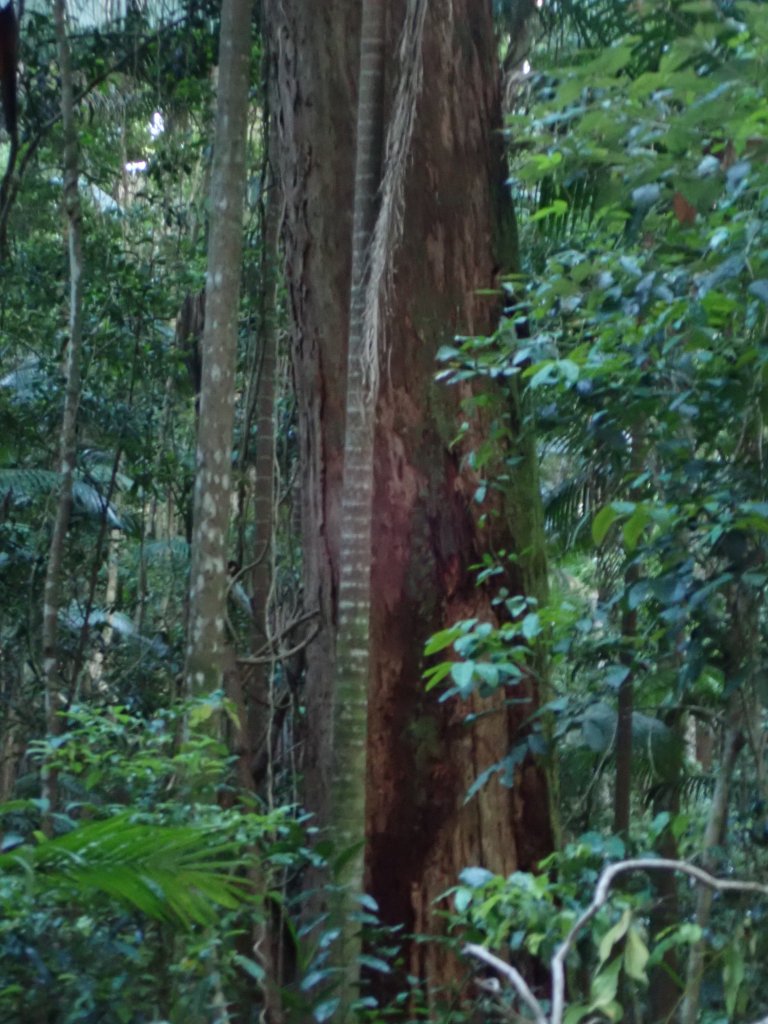
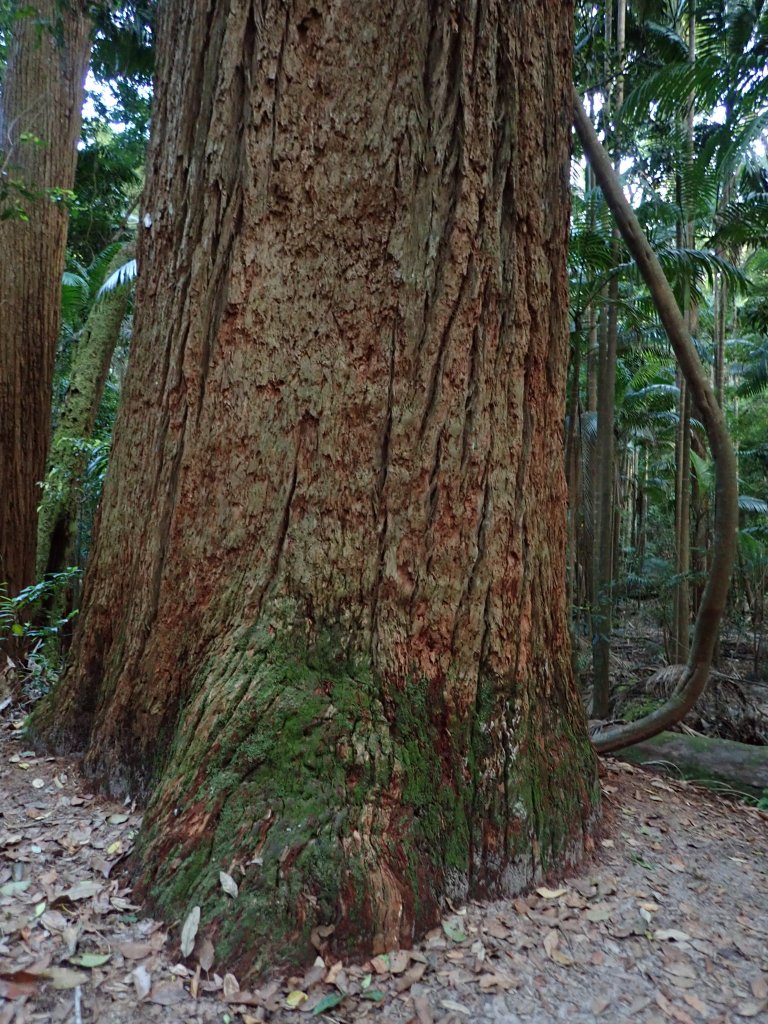
One of the most amazing features of K’gari is the beautiful rainforest in the centre of the island. It is amazing that such beautiful old trees can grow so large in sand due to mycorrhizal fungi. Apparently Prince Harry and Megan were very impressed by the forest as they unveiled a plaque in 2019 commemorating the World Heritage Site. However there wasn’t time to admire this forest as the driver was tired and it was a taxi, after all.
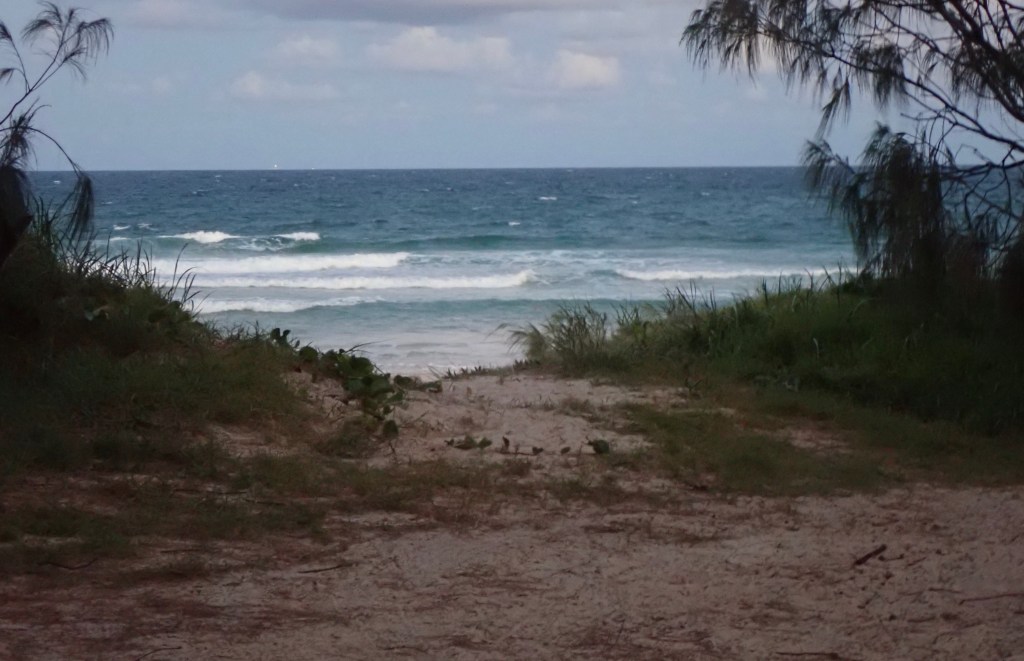
The taxi stopped to fill my water bladder at Eurong which is a village of about 47 residents. At this point, my plan was to camp on the 75 mile beach on the east side and walk to Happy Valley the next morning, Somebody mentioned that this was about 22 km. It was getting dusky when Steve dropped me on the back of a sand dune a little north of Eurong. He told me to ignore the dingos and I would be all right. . . The taxi roared off and to all appearances, I was alone on the 75 mile beach.
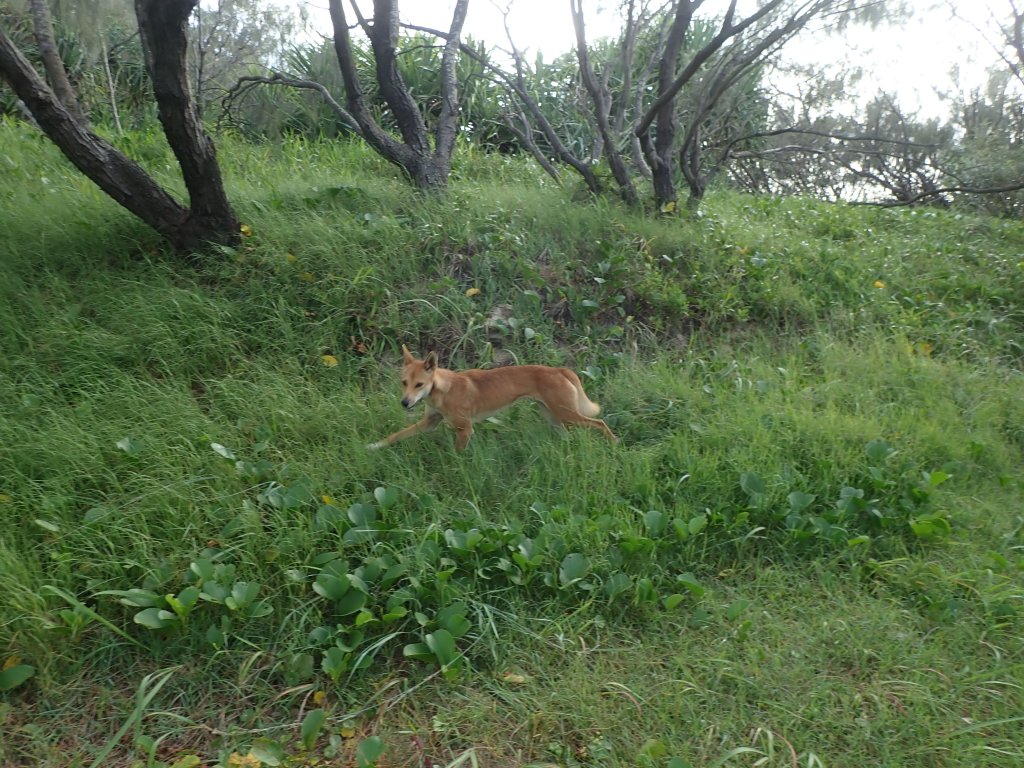
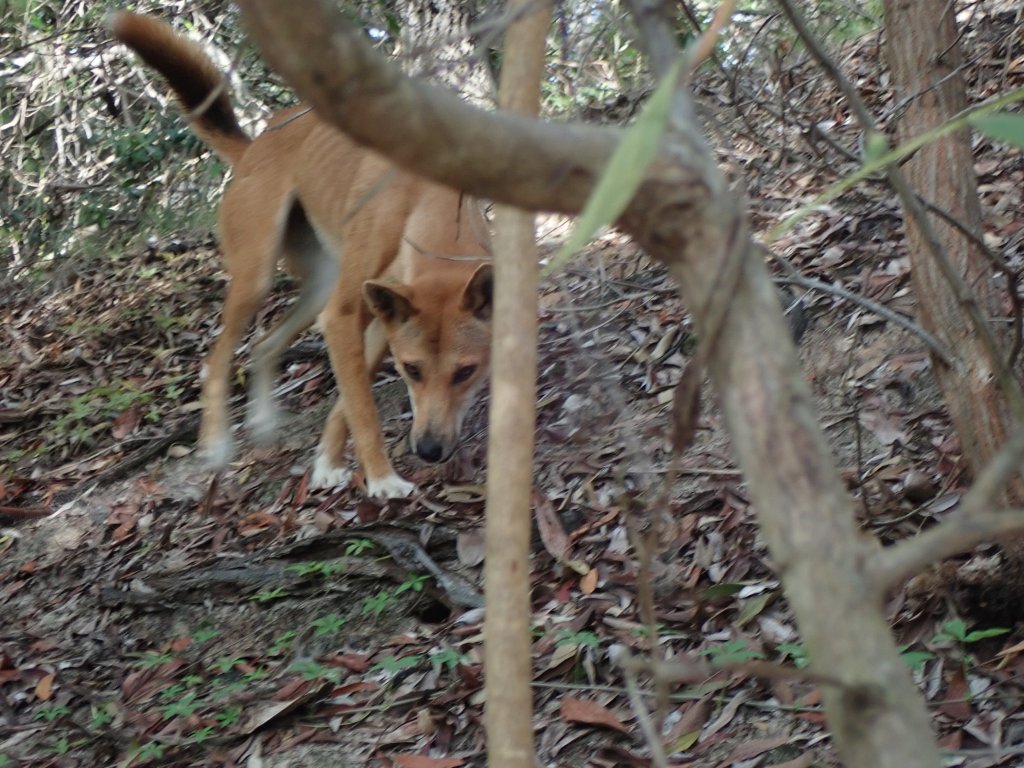
I set the tent up, mustered up a bit of a poor supper (as I didn’t have a stove) and was just cleaning my cup when the first dingo appeared, then a second. I shouted at the dingos “Bad dingo” “Go away”! I waved my arms and stomped my feet. This would have stopped the most vicious dog. Once I leapt on a huge shepard-like dog that was attacking T-dog and Cecil, but the dingos are not dogs, they are wild animals and have been somewhat habituated to people. The dingo didn’t go away. It grabbed my water bladder and bit through it. My precious water was leaking out. I decided at this point to get up a tree with all my food. I climbed a she-oak (Causurina) and tied the bag with the food up in a high branch. Surely the dingos couldn’t reach the food , but there was still the problem of sleeping in the tent!
It was only about 7:15 pm and what was I going to do in the tent until dawn? I knew I wouldn’t sleep with dingos wandering around as I had heard of a dingo entering a tent even when there wasn’t food in it. To fill time, I wandered down toward the beach. Then I saw the sign that read “Agressive dingos in this area” . I switched on my headlight and saw another dingo. I approached two cars that I thought were abandoned on the back dune and realized these were fancy vehicles: Pajero 4 x 4’s. Just in case, I checked their doors and indeed they were open. . . A new plan hatched.
First I moved the food into the car. Then I went back and took down my tent and moved the mattress and sheet into the backseat of one of the cars. It was going to be a long, hot, cramped night with electric windows shut, but I would at least be at peace. One of the cars had a map in it with distances, trails, sand roads and features. I was just reading this with my headlight to pass the time, then I heard voices and saw lights down on the beach.
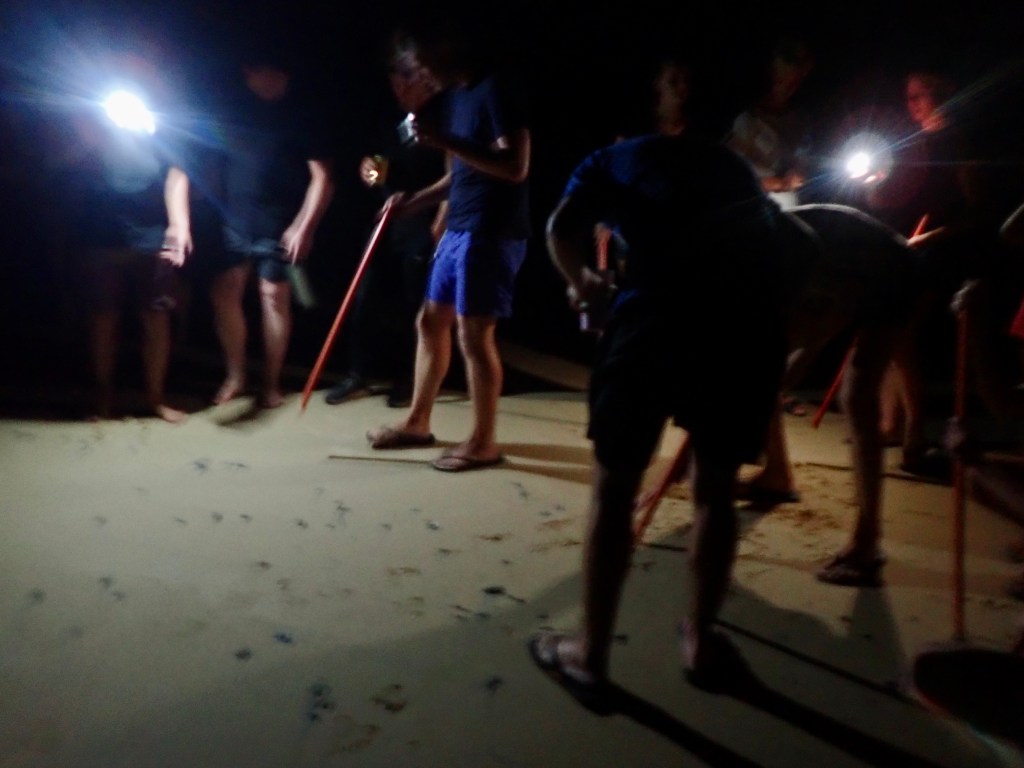
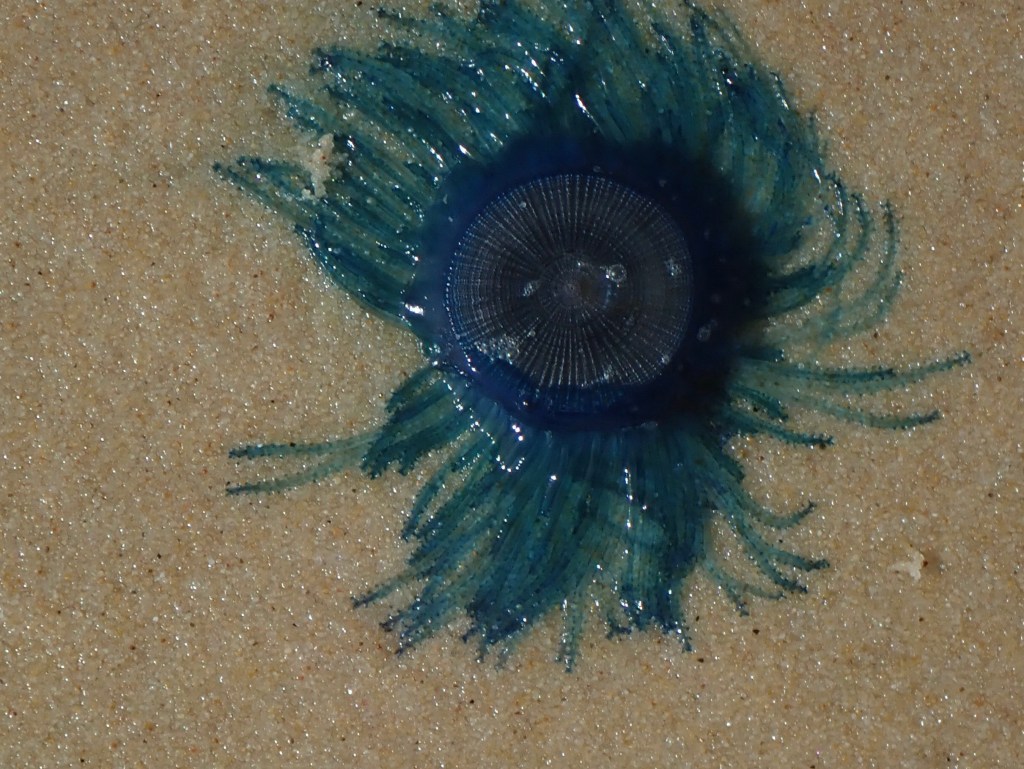
Everybody I had encountered in Australia was friendly, so why would this be different? A great wash of blue bottle jellyfish had washed up and there were folks down at the beach looking at these. I started chatting to a fellow with a recognizable accent. This turned out to be Daniel from Dublin.
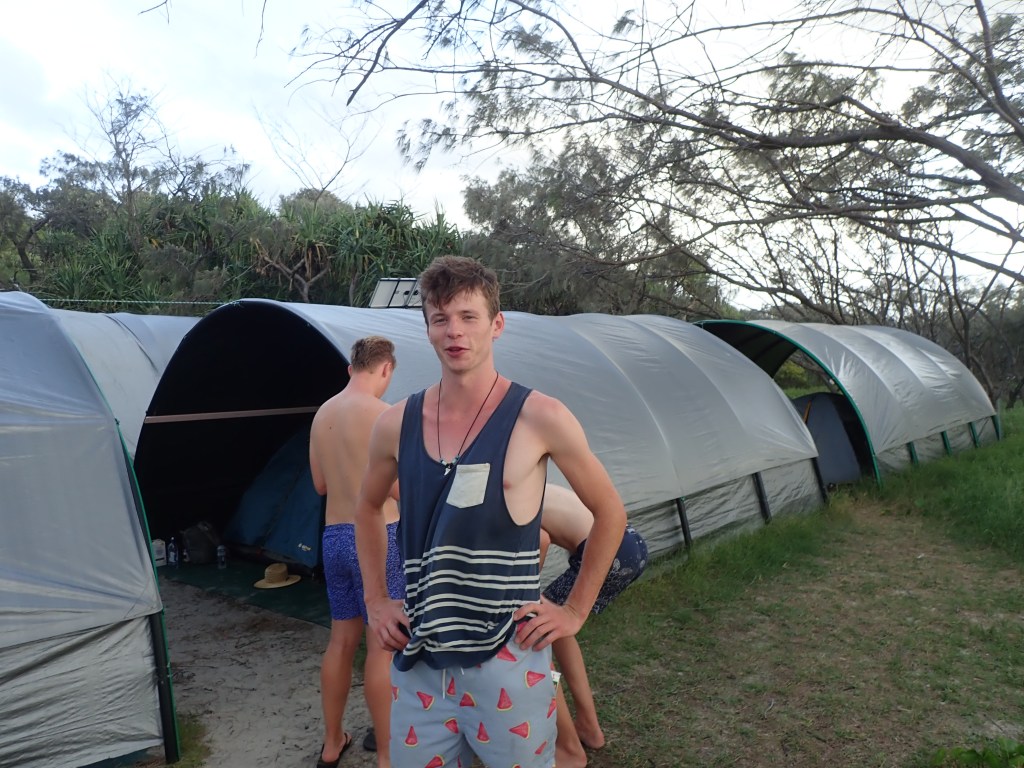
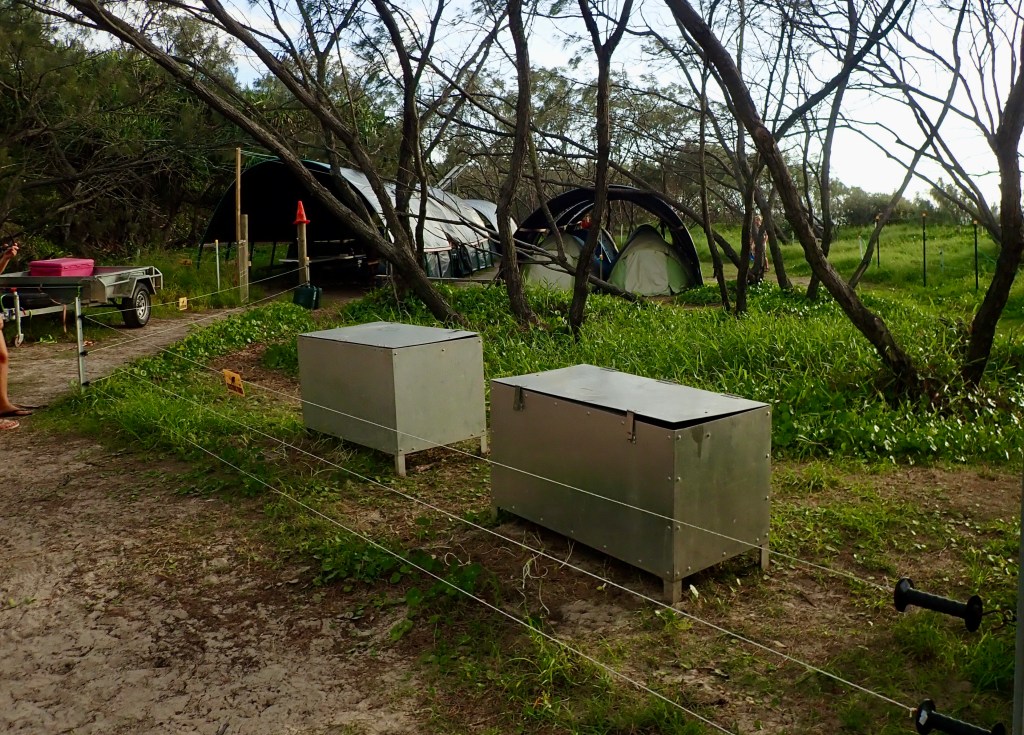
Alongside Daniel were a couple of girls from Germany: Martha and Dania (I think). When I told them about my predicament, they invited me to camp with them inside their “dingo fence” . They came back to the vehicle, helped me carry then set up my tent inside their camp. What a relief! My joy was short-lived however. Their leader, Matt who was managing 30 young-folk on a back-packer Palace Tag-a-long tour outdoor adventure, was concerned that I was a middle-aged party crasher and that there was others with me. He had to phone headquarters. . . “Maybe I’ll drive you to Eurong”. . .My thoughts were on the extra walking. Luckily, headquarters allowed me to stay the night with the campers. There was a grand excitement of Abba music, dancing, forays to the beach and good cheer. In the end I stayed up till midnight, so the night actually seemed short. I really admired Matt, as he was able to get the entire group up at 6:00 am, cooking breakfast, organizing lunch and getting in the Land Cruisers ready for a day of adventures.
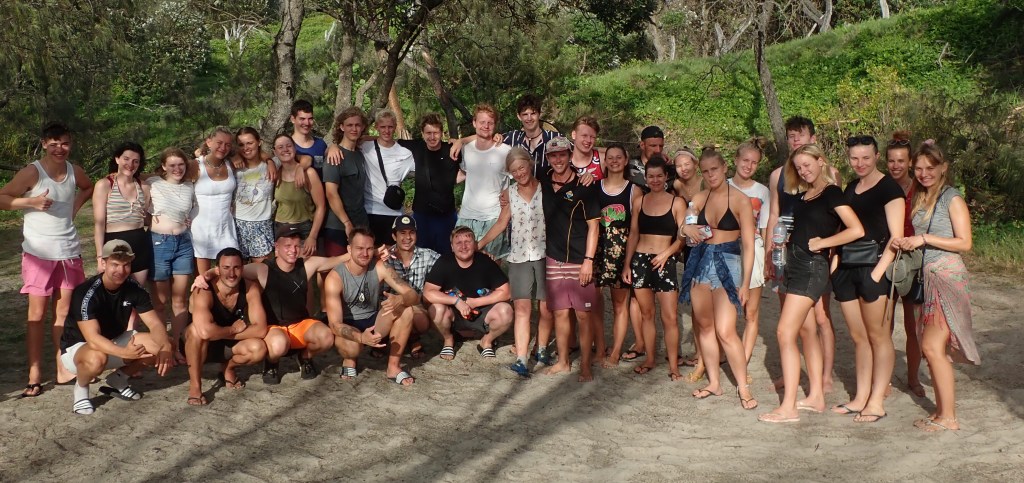
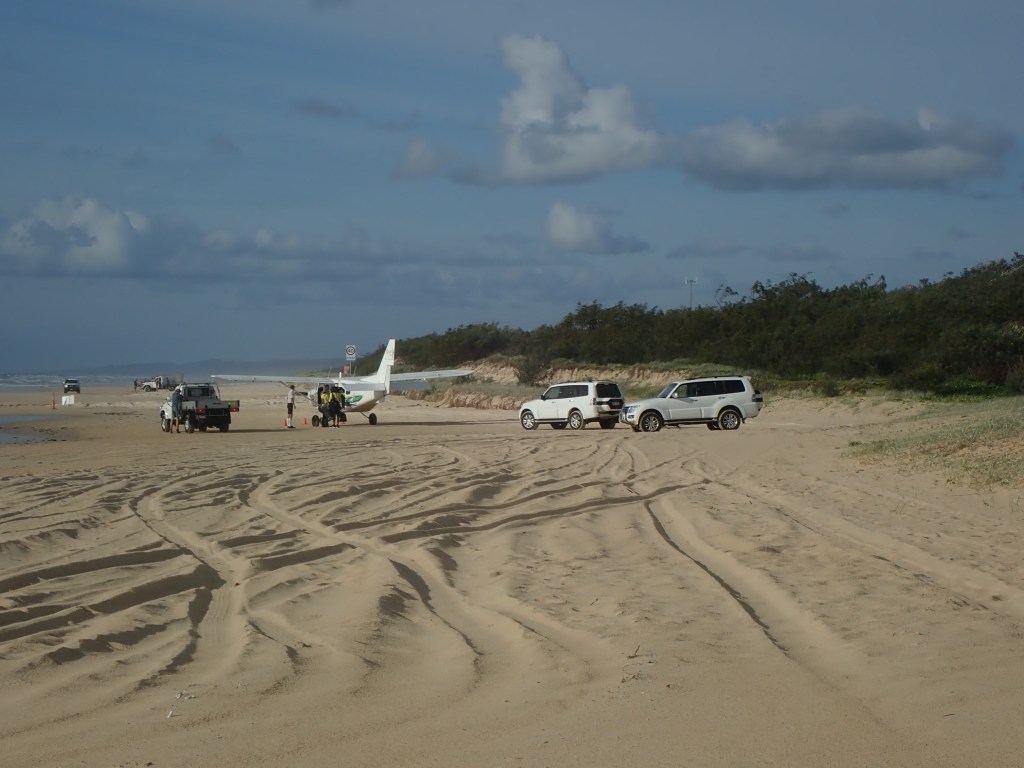
We all started north up the 75 Mile Beach together. I was walking and the gang was whizzing by waving in 4 orange Landcruisers! I looked down the beach and there was the 2 Pajero cars and a fixed wing airplane! The two “abandoned” vehicles turned out to be slated for luxury tours of Fraser Island! What if they had found me “camped out” in those Pajeros that morning? I was certainly grateful for how this adventure unfolded!
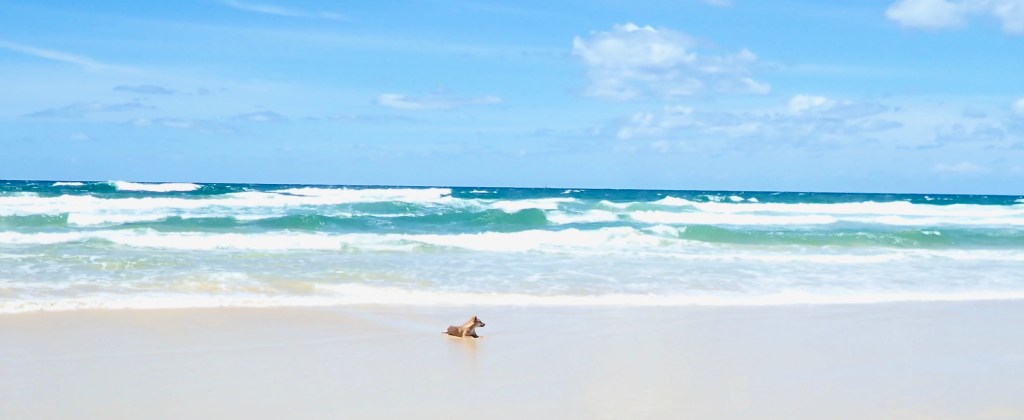
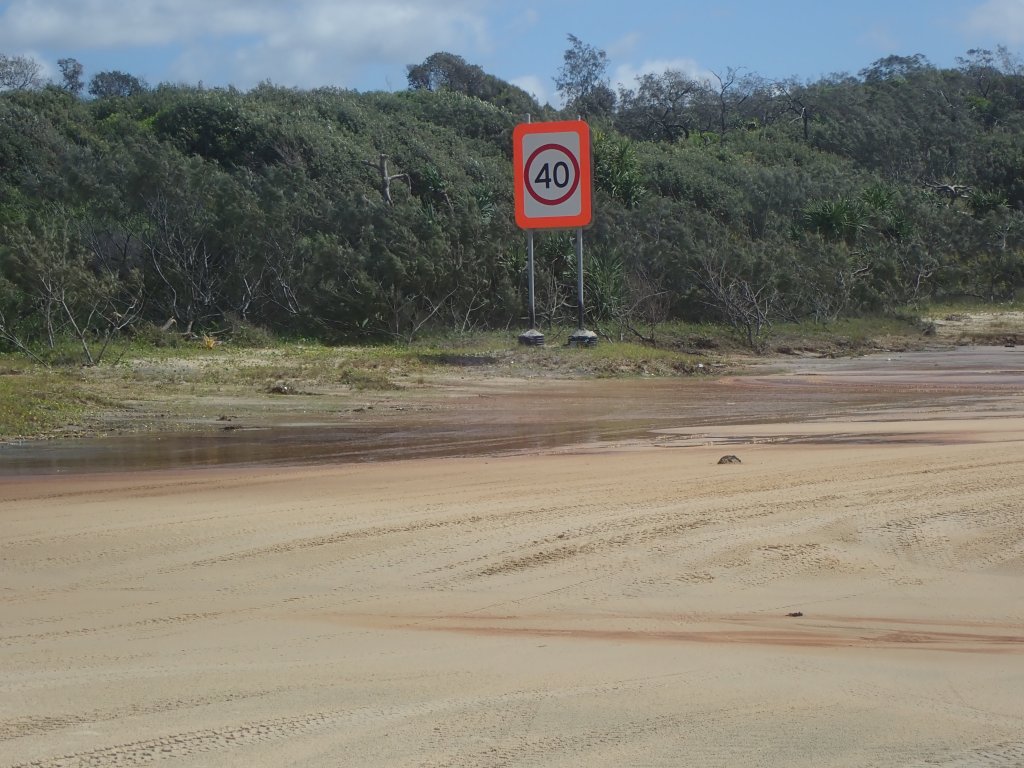
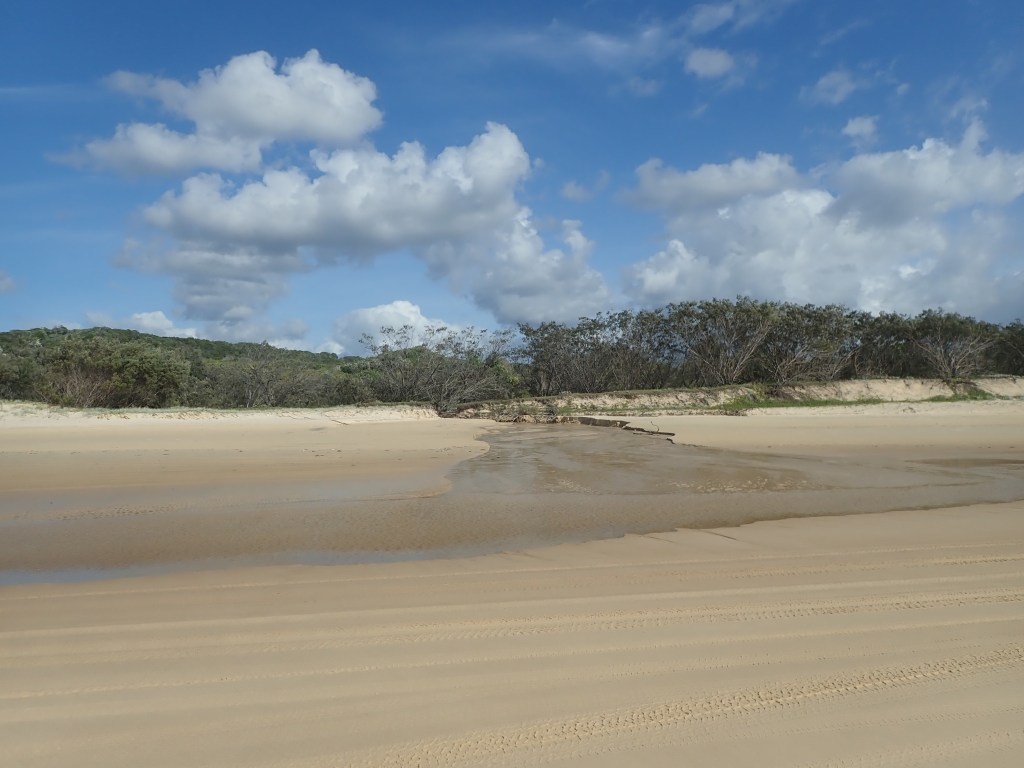
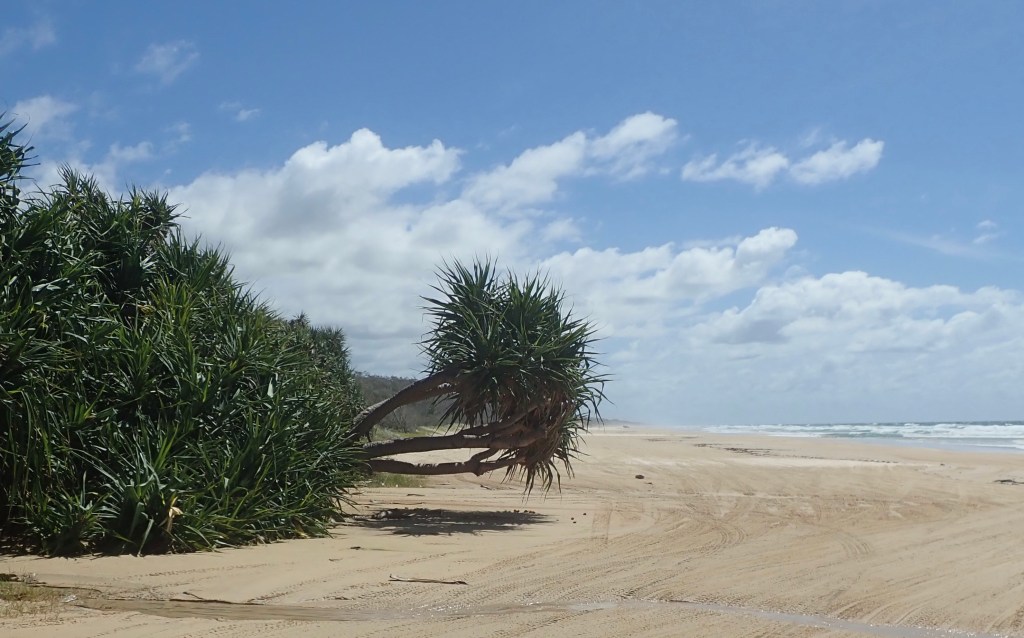
The 75 mile beach runs most of the entire east coast of Fraser Island. Roaring sea to the east, dunes to the west. It reminded me of the great North Beach or the east coast of Graham Island on Haida Gwaii. How many times have I purposely walked along those sandy beaches while the vehicles ripped by? The difference was that here, every time I stopped a dingo came out to check me out. Australians are generally helpful and friendly, so once a car stopped and said “There’s a dingo following right behind you. It looks like you have a dog on a leash! Do you want a lift to get away from it?” I was indeed grateful for this offer and took a ride for a bit up the beach and he found a stick for me to ward off dingos. “It is probably because you are alone.” . I marched off with my dingo stick! I saw the sign for Lake Wabby and was considering walking there to have a quick swim as the day was heating. I stored my pack in the women’s toilet, trusting it would be OK. However, when I came out of the toilet, another dingo approached me. This one was quite menacing and I decided to cut my losses and forget the swim!
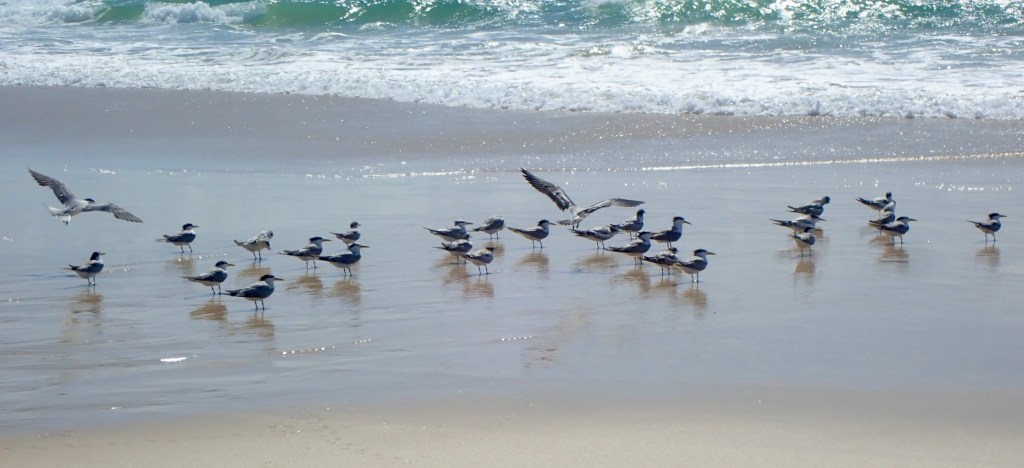
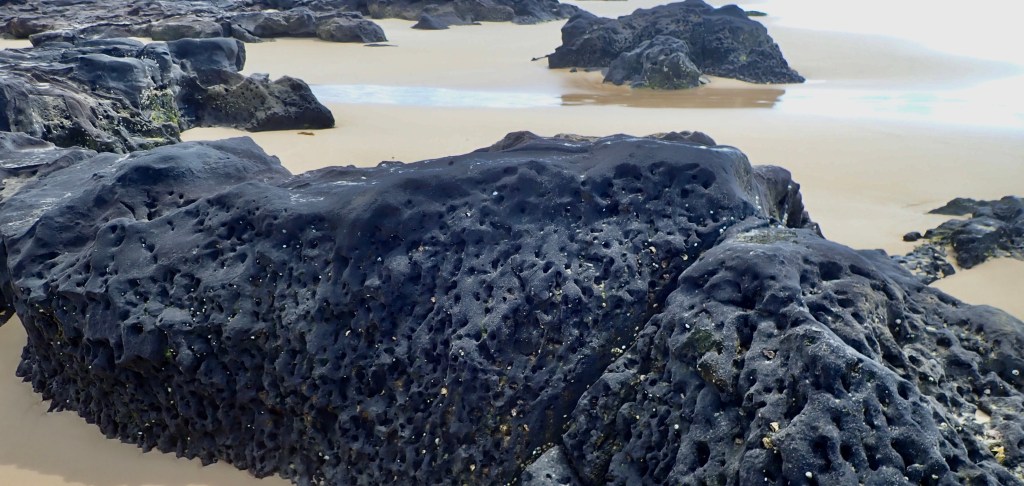
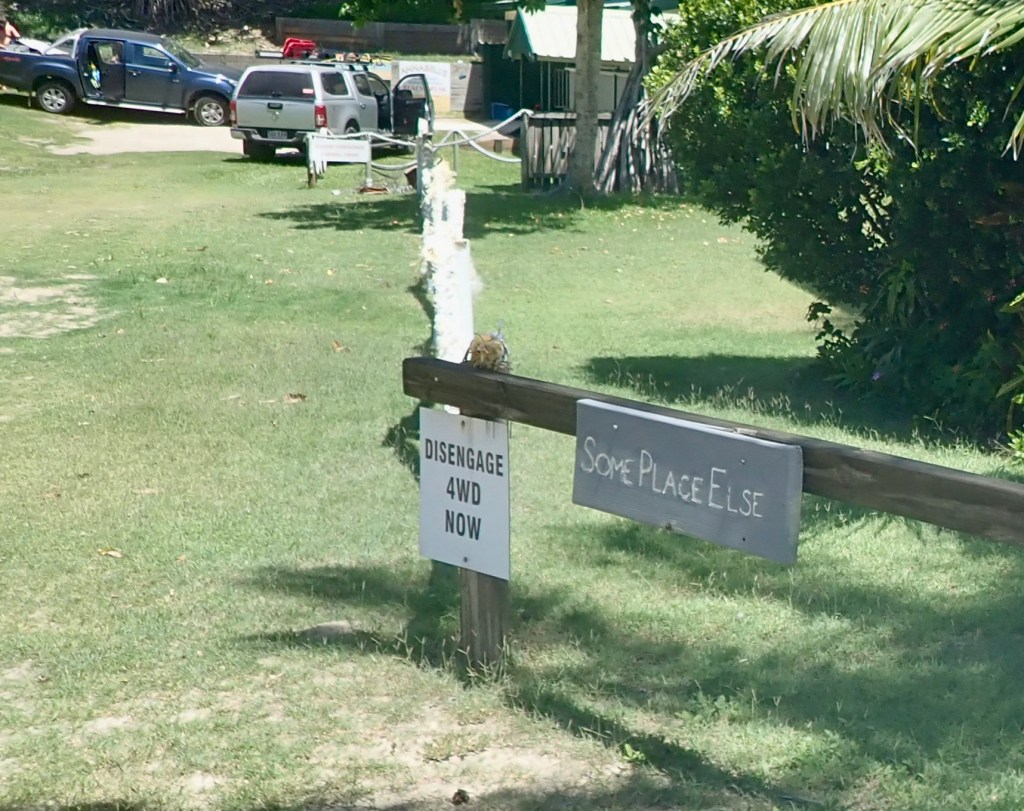
I walked on and on for kilometre and kilometre, past the Poyurgan rocks and up the endless beach. The hot sun beat down and sweat dripped. Finally, I arrived at the sign for Happy Valley just after Yidny Rocks. I took a left up a sand road which turned into a walkway. Happy Valley is surrounded by a dingo fence and had an electrified cattle grid type of crossing that was dingo proof (good planning to keep Dingos out of communities) The Bistro was ahead and beckoned me for lunch! I eagerly devoured an arugula, pear and parmesan salad and an iced coffee. What a treat after the meagre fare I had and the inability to stop and enjoy even an apple. I hung out at the Bistro to recuperate, then wandered out to ask someone where Bree lived. I spotted Joe, a Buchella man and another woman. They kindly gave me a lift right to Bree’s door.
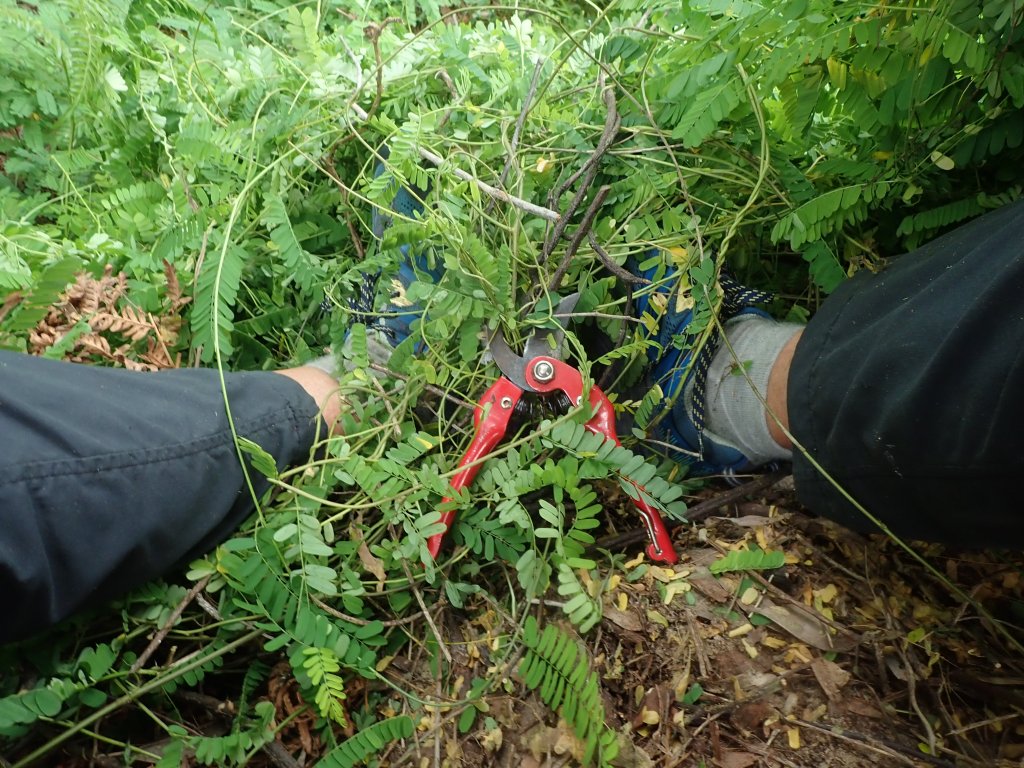
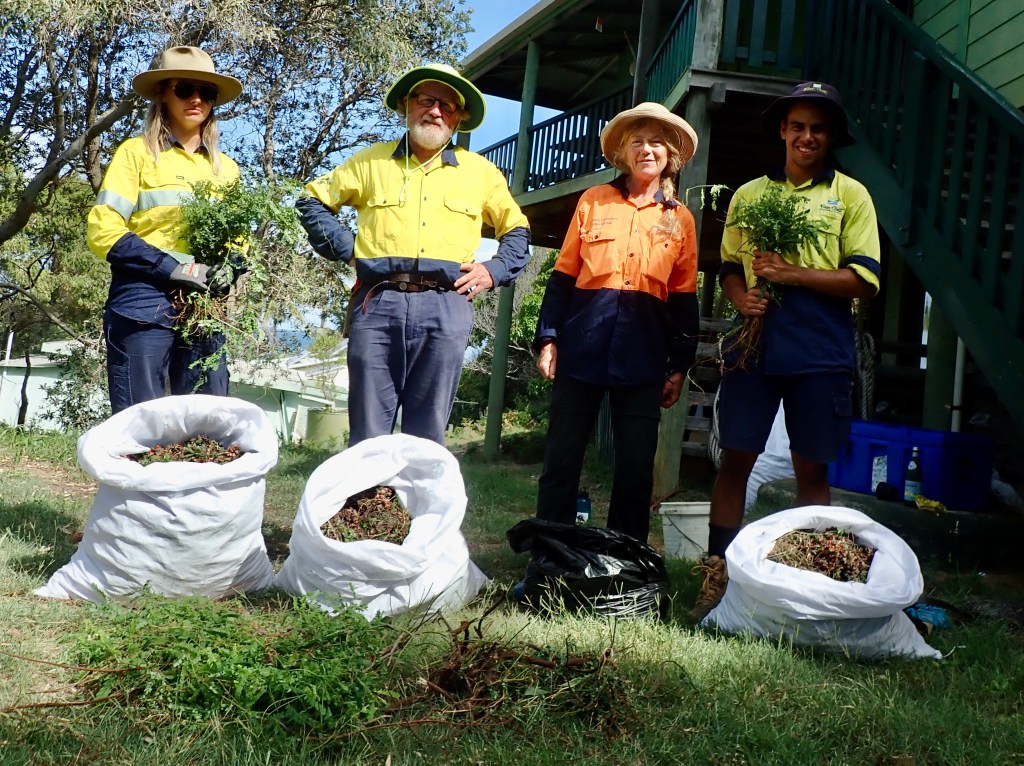
Great chats were had, as Bree hadn’t seen Joe in some time. Then Bree introduced me to Peter, Charlotte and Sam who came from the Fraser Council Natural Areas Program to help her with her restoration project. They had just finished their lunch break and went back to the hot work. There was quite a bit of paperwork I had to go through to volunteer and Bree didn’t like paperwork. Bree has been working to restore the eucalyptus woodland through taking out the very invasive plant, Abrus. Abrus precatorius subsp africanus (for the entire time I thought it was “Avarice”) is in the pea family and seems to favour disturbance. It forms a great tangle and overtops trees, producing pods with bright scarlet seeds. Abrus was threatening to take over a eucalyptus woodland. Bree was determined to tackle this job without use of any herbicides. It is a big job as the weed grew thick, high and fast in the moist, sunny climate of Queensland.
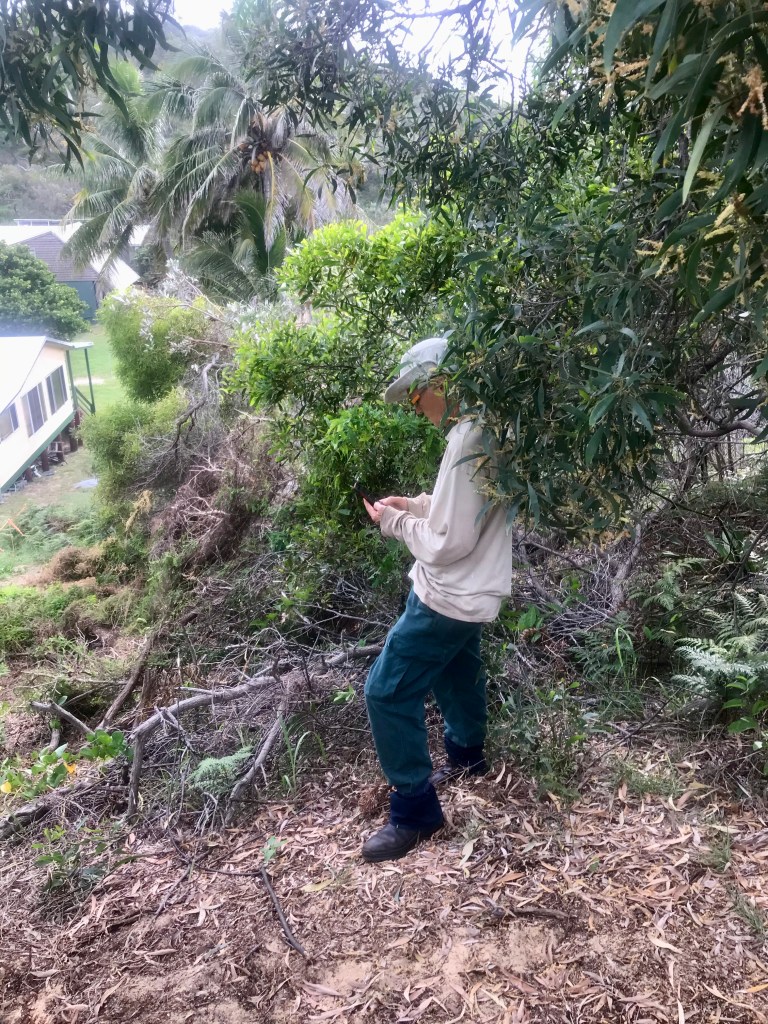
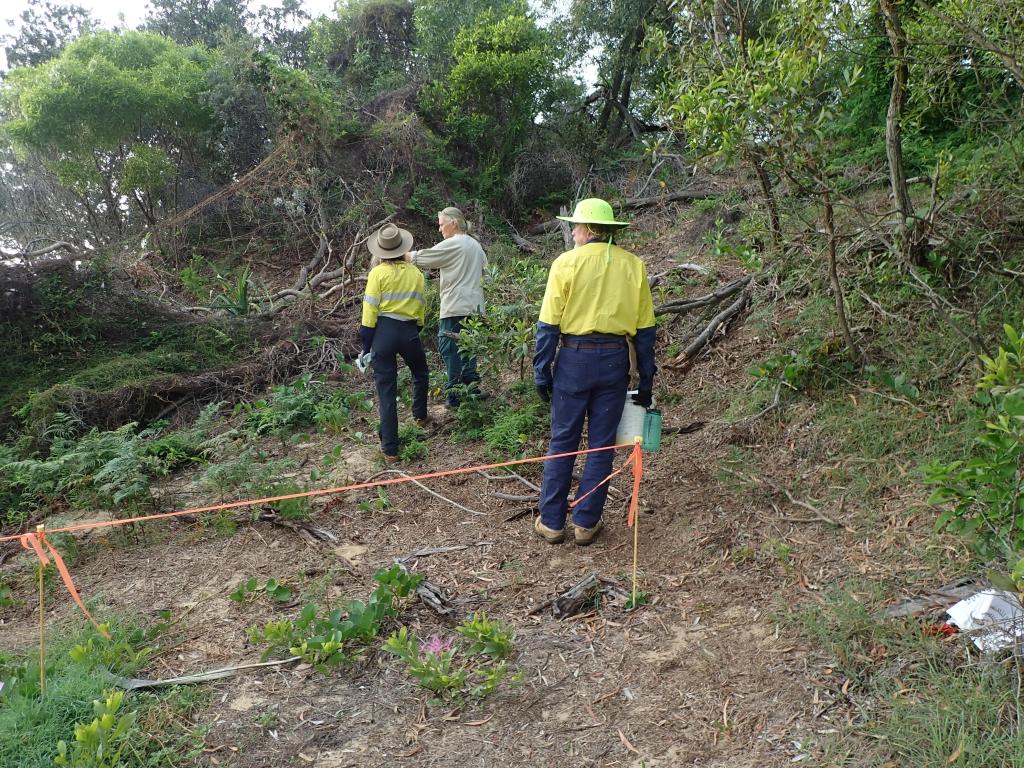
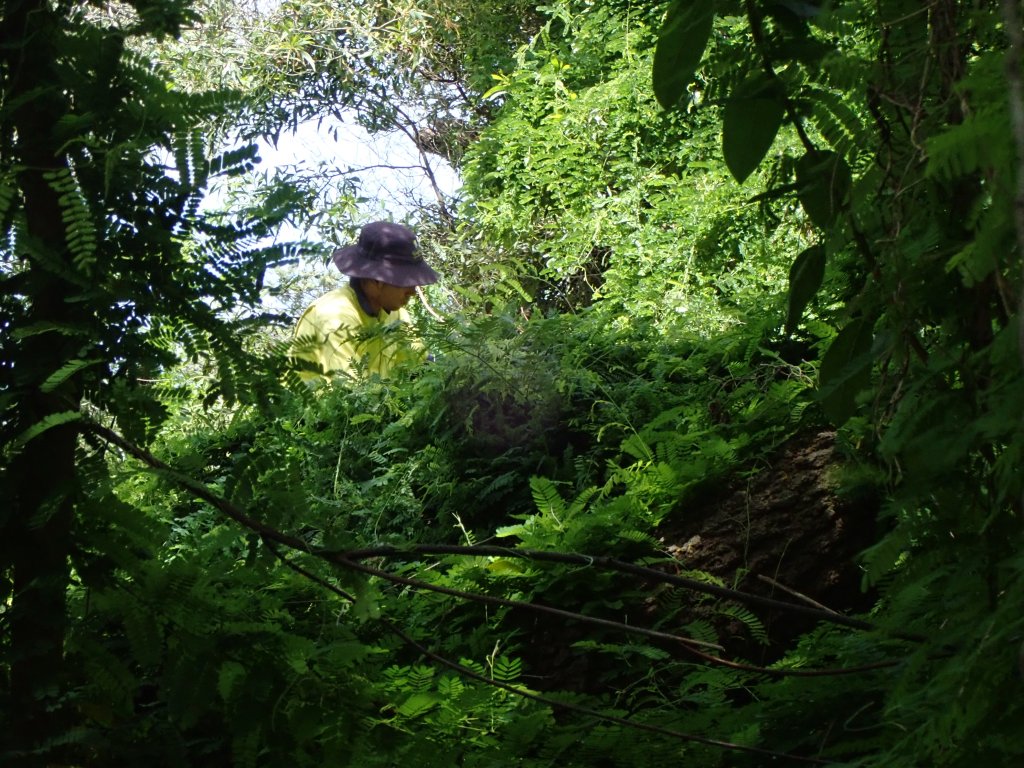
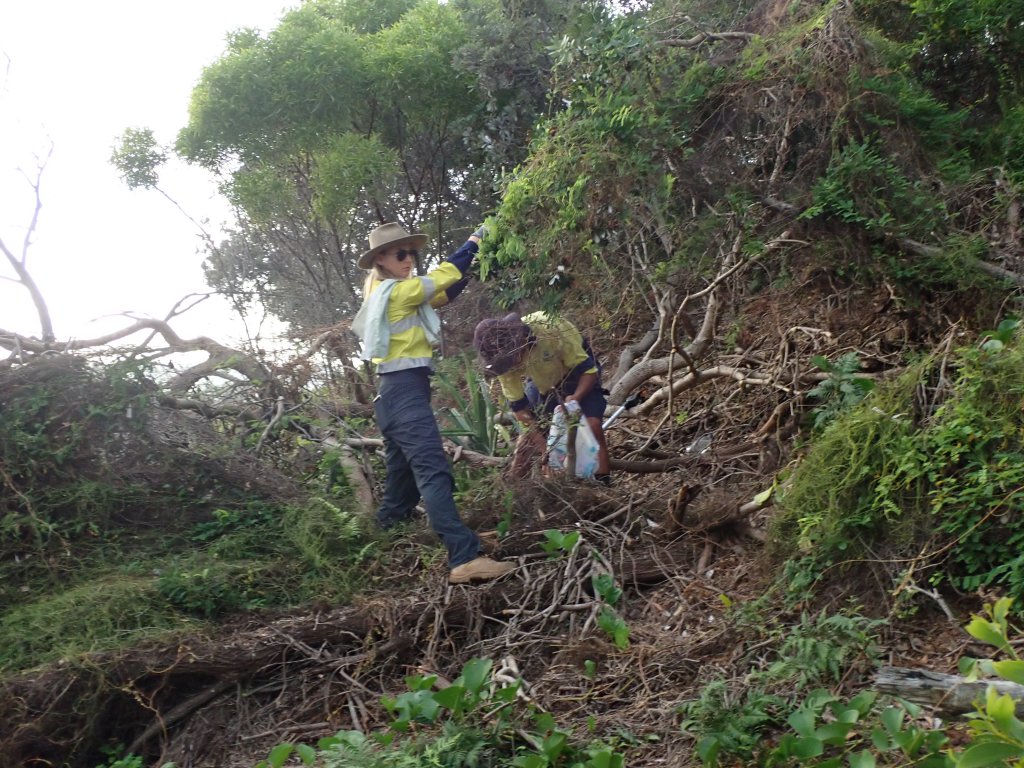
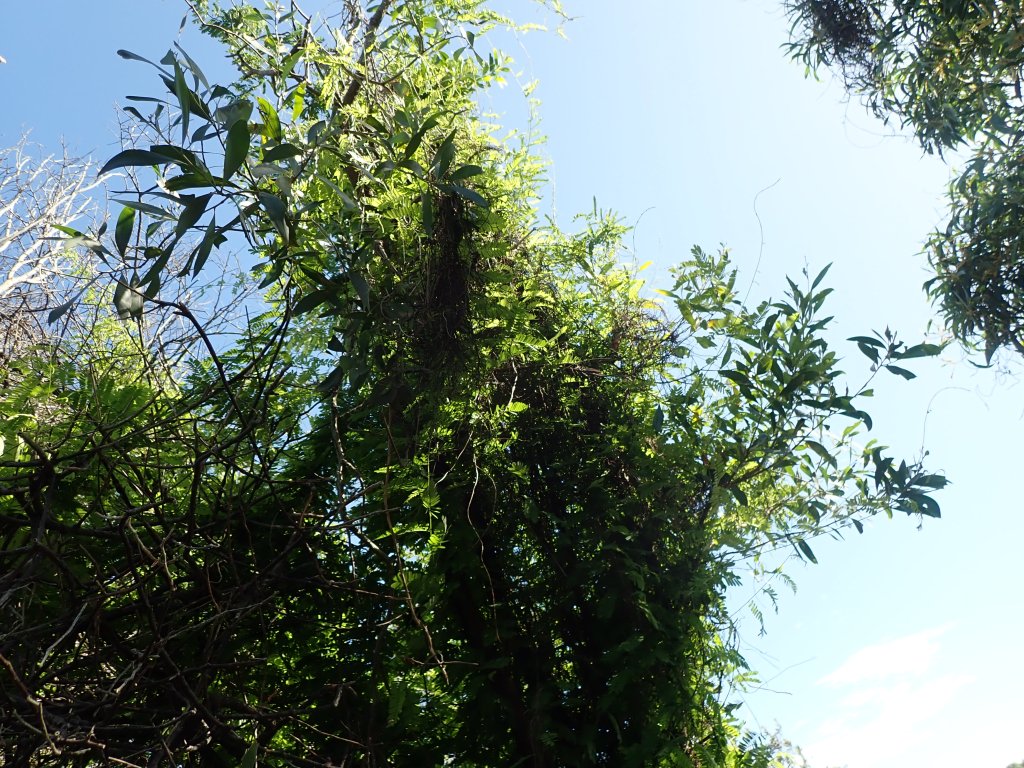
The two nights at Happy Valley were lovely and coolish; quiet except for the crickets and a rare sedge frog’s call. The three Fraser Council workers and I were up at 5:00 am to get to work at 6:00 am while it was still relatively cool. Bree instructed us where to work. She has been working on this project for many years and has managed to restore quite a bit of land bit by bit, working away by hand and with volunteers. Peter and I were working on a third pass, taking out smaller Abrus plants and collecting the scarlet seeds. At first, the March flies and mosquitos drove me crazy biting my legs while I was bent over. At break, Charlotte kindly gave me long pants which kept the flies at bay! We all enjoyed our breaks to cool for tea and lunch.
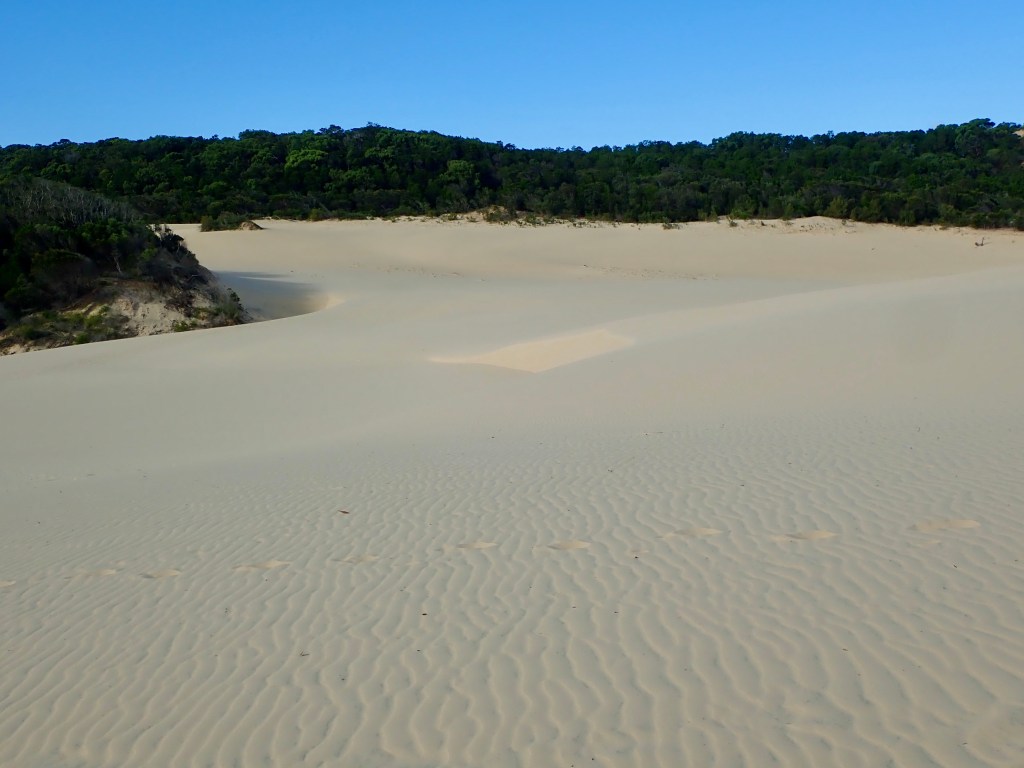
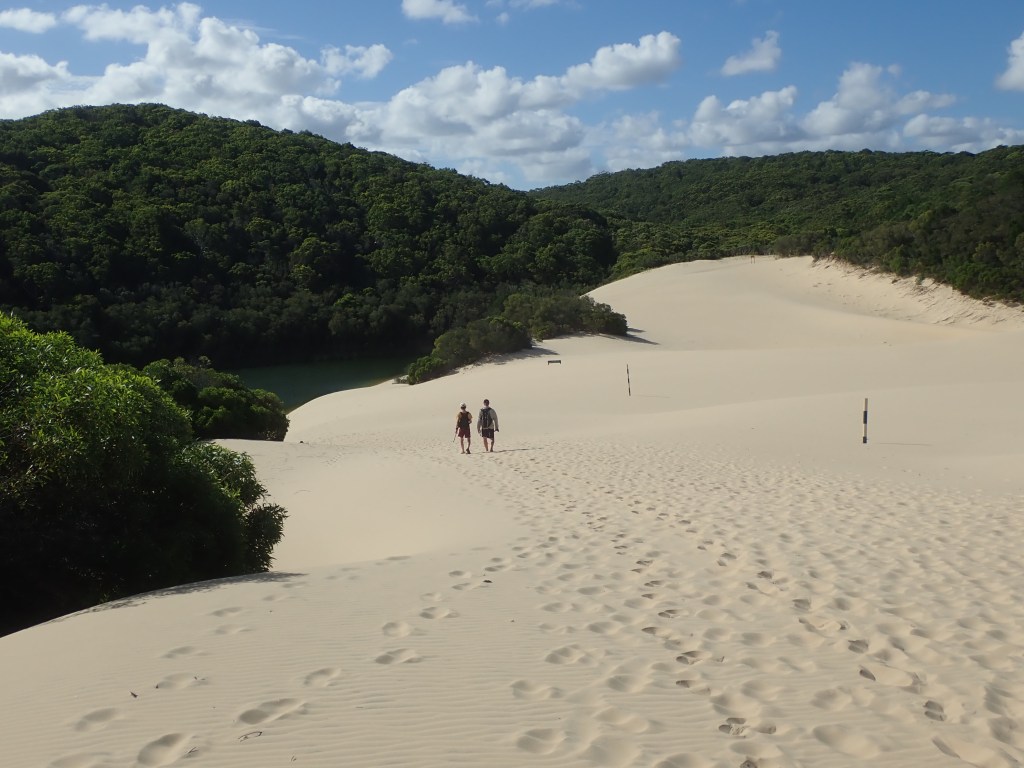
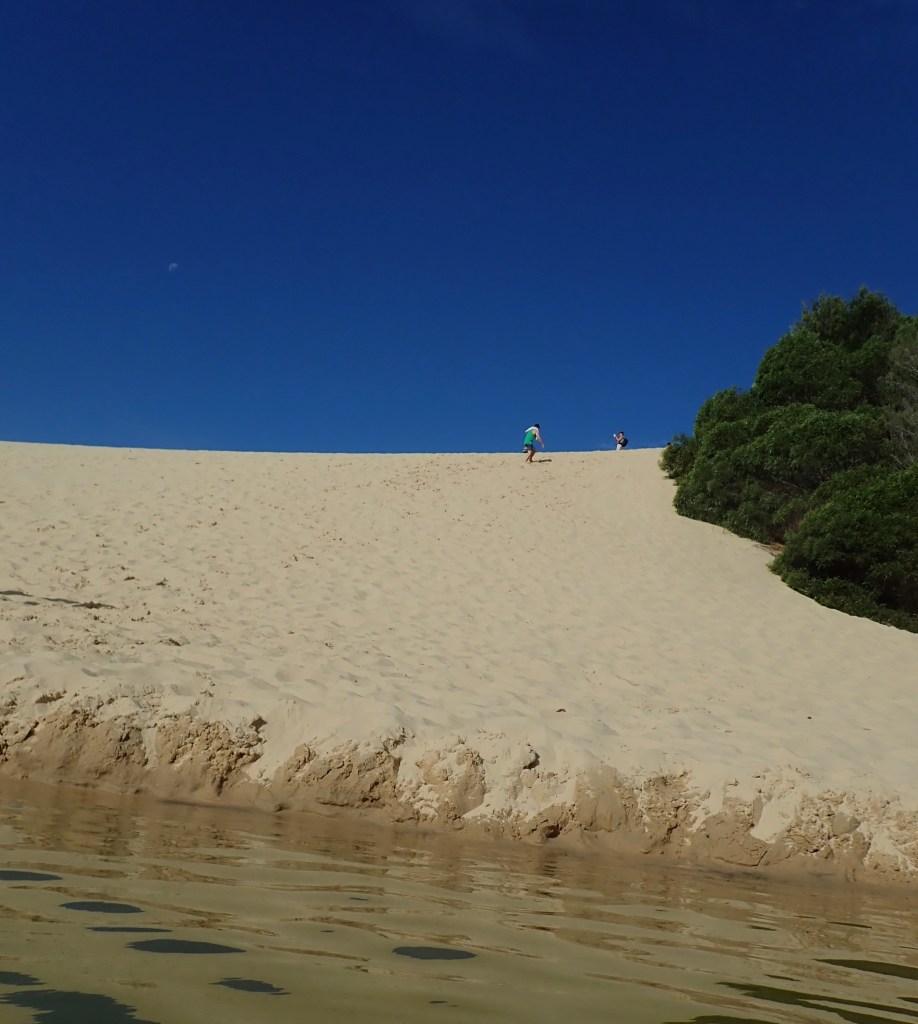
Lucky for me, some visitors that were staying across the road were going to Lake Wabby for a swim, so I was able to join them in the late afternoon. What had taken me hours to walk to was only about 20 minutes in the car to get to the trailhead. Once on the track over vegetated sand dunes and the four of us walking, nary a Dingo was seen. The track to Lake Wabby was about 3 km and was very beautiful with eucalyptus, banksia and tea trees . A giant blow-out sand dune was moving right into the perched lake. The shore was busy with swimmers and sunbathers. Who knew so many people were even on K’gari? The swimming was absolutely refreshing and we stayed in so long, most of the people left.
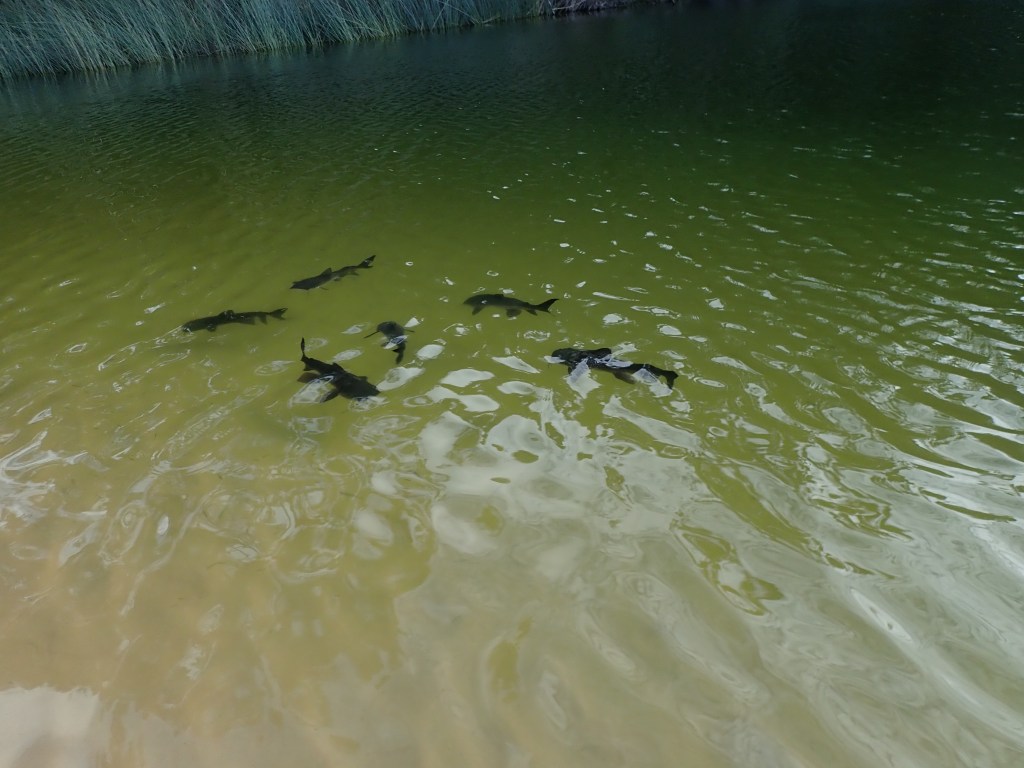
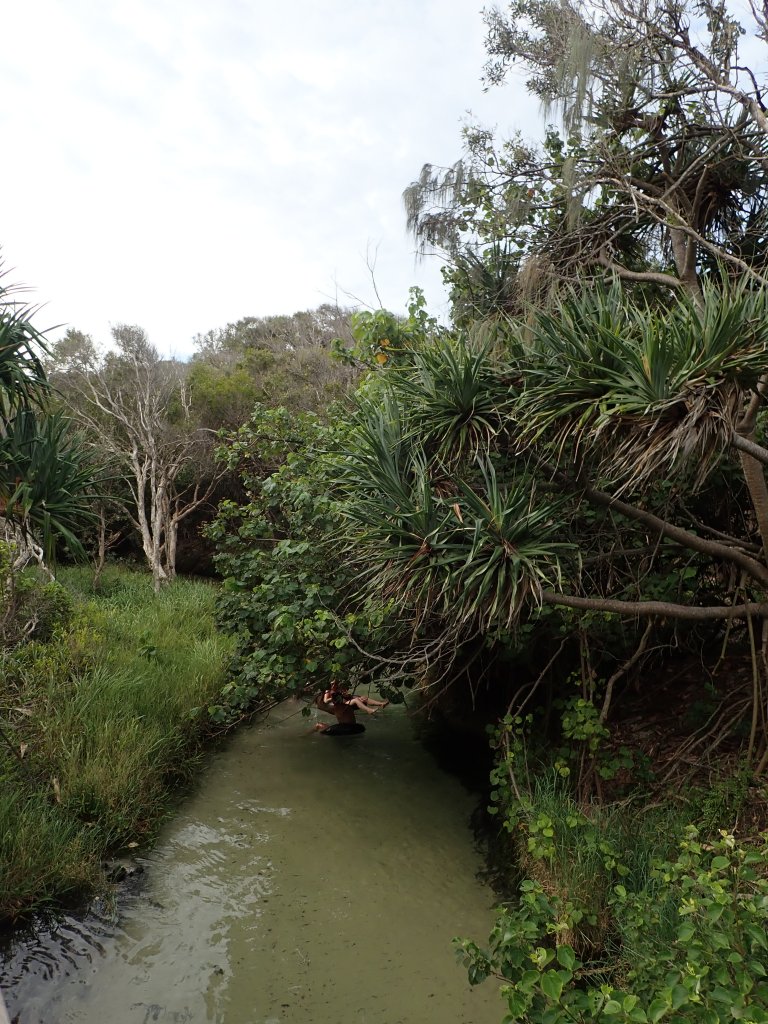
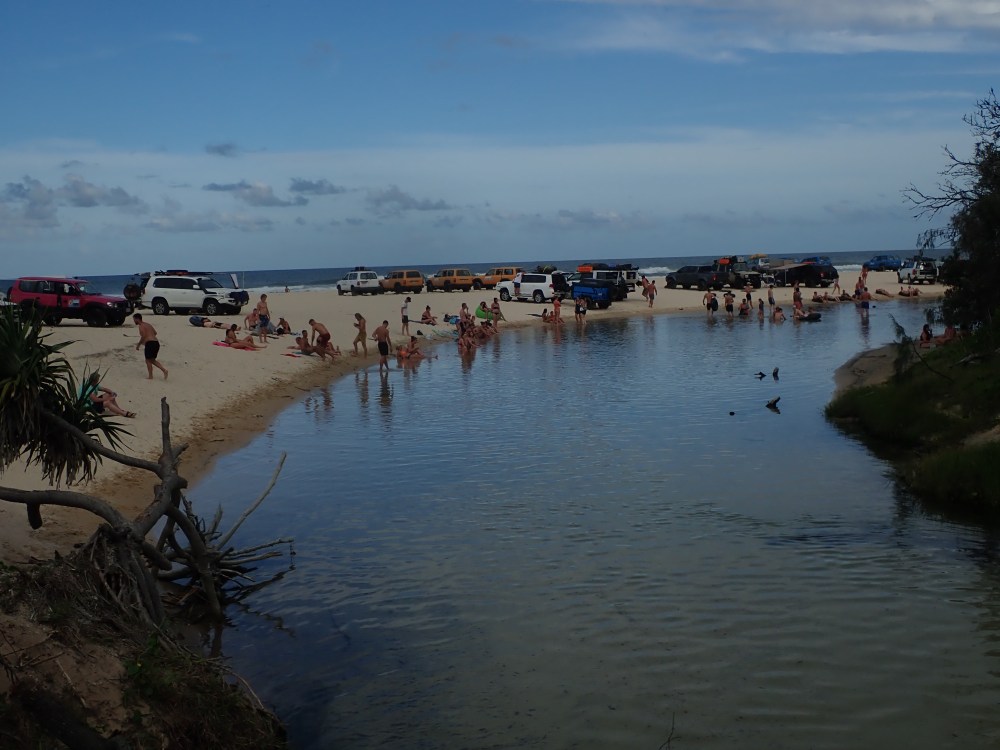
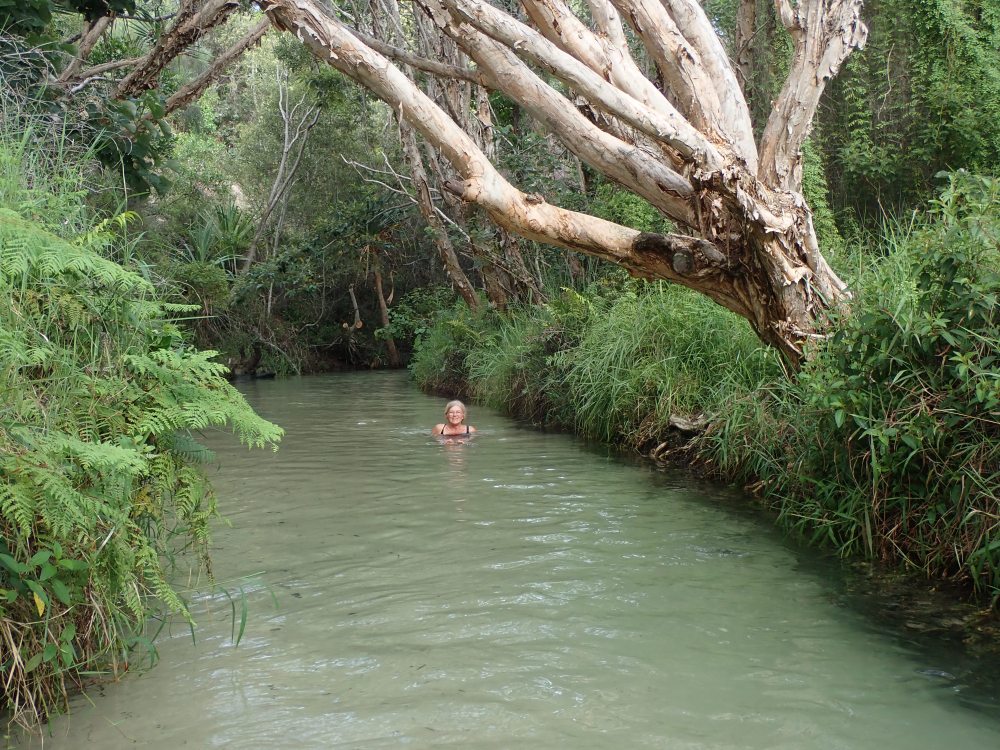
I was able to join the 3 lads on another great swimming expedition north of Happy Valley. Eli Creek is the largest freshwater stream on the east coast of K’gari with a flow of 80 Million litres per day. The freshwater comes from springs that originate in aquifer formed in the high dunes. The water volume in the stream is unaffected by seasonal rainfall as the great sandmass releases the water at a relatively constant rate. Until I researched this hydrological phenomena for this blog, I, and likely the swimming crowd at Eli Creek were unaware of the unique nature of the freshwater on Fraser Island. As water is filtered through the sand, it is clear and nutrient poor (oligotrophic) which is very attractive for swimming (Australia’s national pastime).
It seemed like I was on K’gari for a long time as there were so many adventures, but actually it was only three nights. On my last day, I was up early to do a couple of hours work, then I was picked up by the taxi. The plan was to be driven to Boorangoora/Lake Mackenzie and then I would hike along the Great Sandy Walk to Kingfisher Bay for the 2pm barge/ferry.
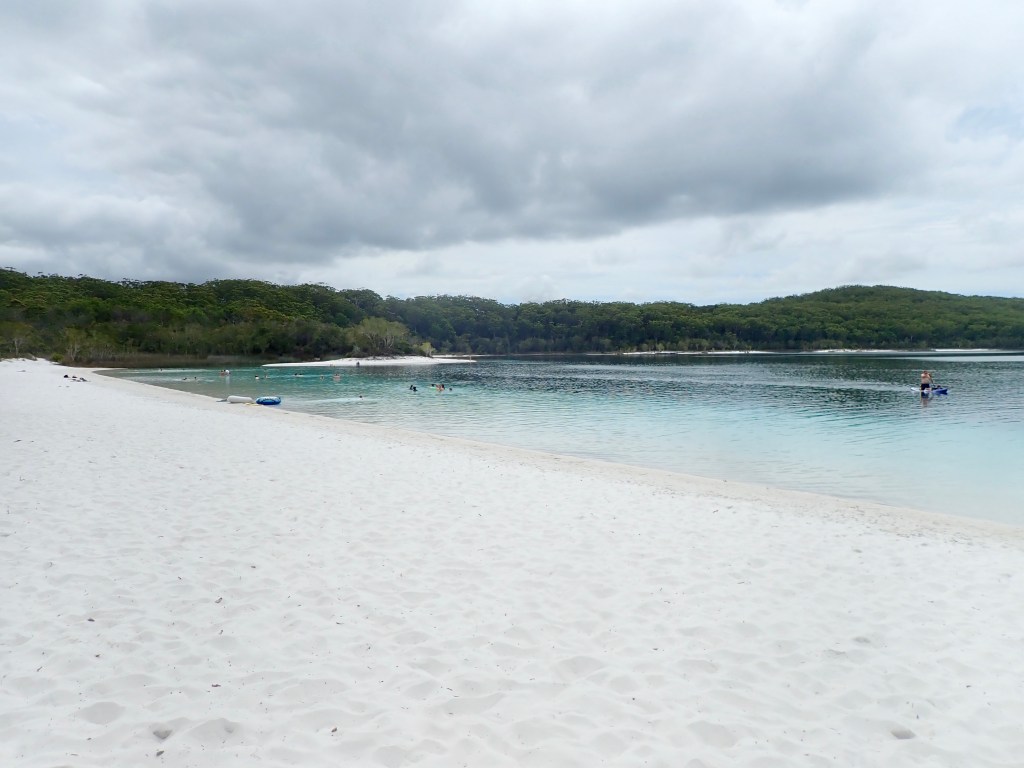
Fraser Island contains more than half of the world’s perched lakes. Perched lakes are formed when freshwater is trapped above impervious sand/rock in dune depressions. Boorangoora or Lake Mackenzie is the largest accessible freshwater lake on Fraser Island. It is famous for its clear aquiline waters, so I was keen to see and swim here. The morning was cloudy, so the colours weren’t quite as stunning as photos I’d seen but it was a lovely swim and I had a bite to eat inside a dingo fence.
The hiking out was interesting. As I didn’t have a map of the Great Sandy Walk, again I was relying on advice. . . The taxi driver showed me where the trail crossed the sand road, but just to be sure I checked with some park/road workers. The lead park ranger told me “the trail is closed!”, “You should check the web-site”. “I don’t know how you are going to get to Kingfisher Bay. It’s a long way. You can’t hitchhike either!” At any rate, he also told me that I couldn’t pass through the worksite, so I had to backtrack and walk around. At this point, I did stop to ask the back hoe operator, who said he didn’t think the trail was closed. So I took a chance when I found the crossing and headed down the trail. It was a great trail and much better than walking on the rutted road.
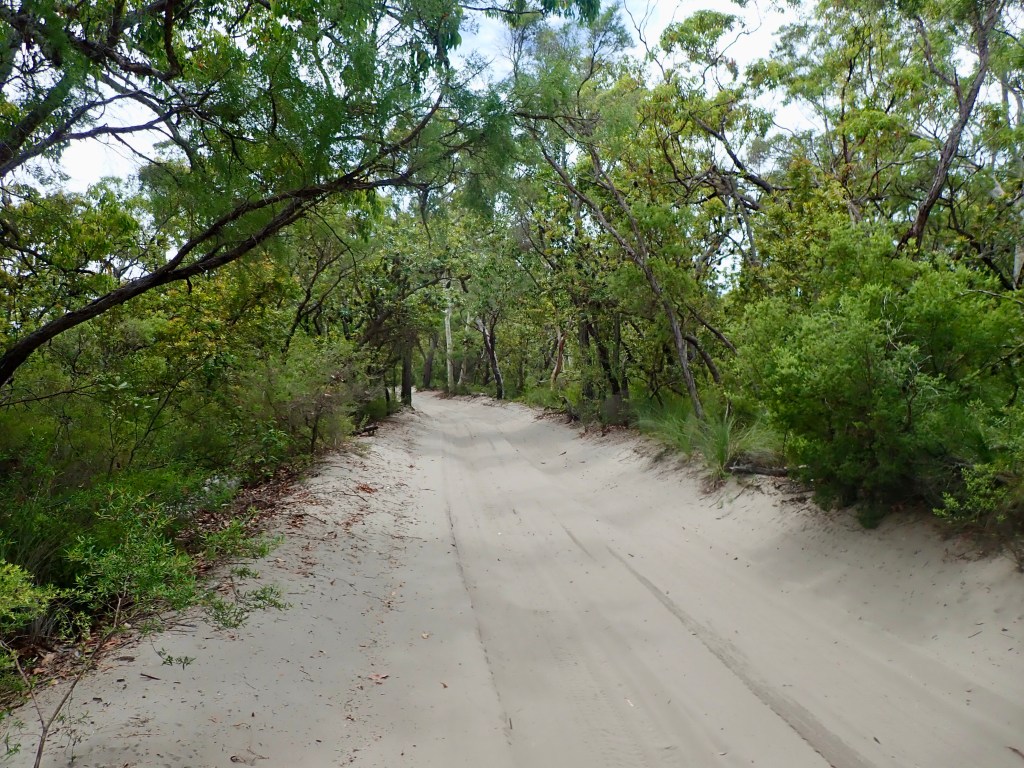
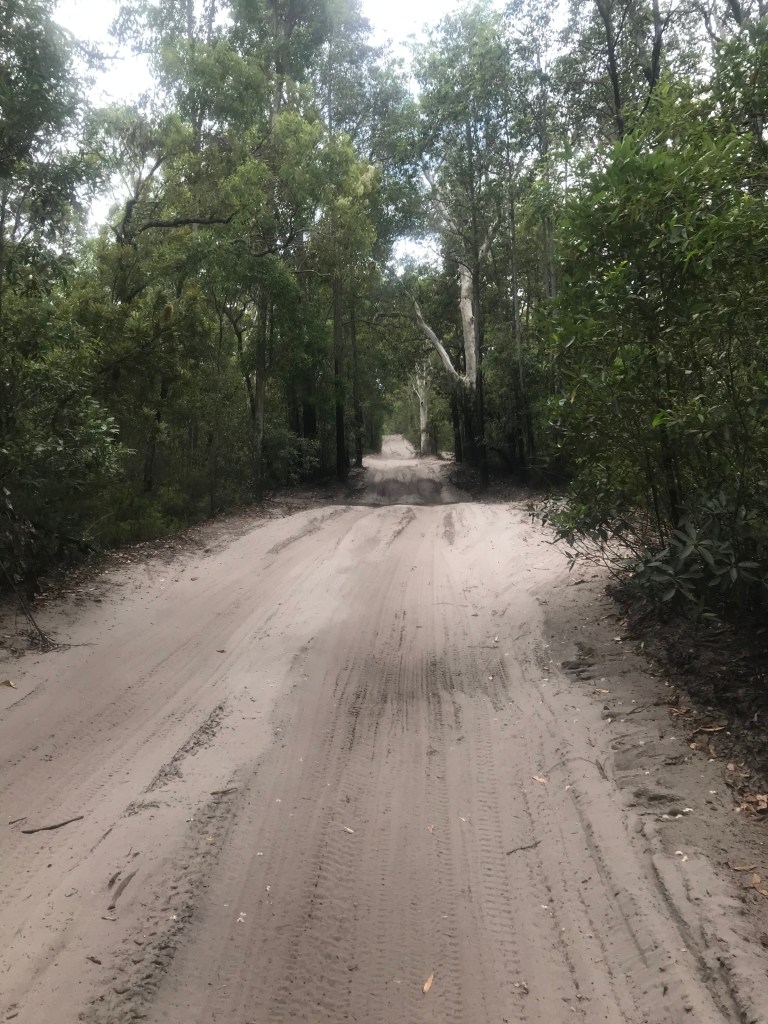
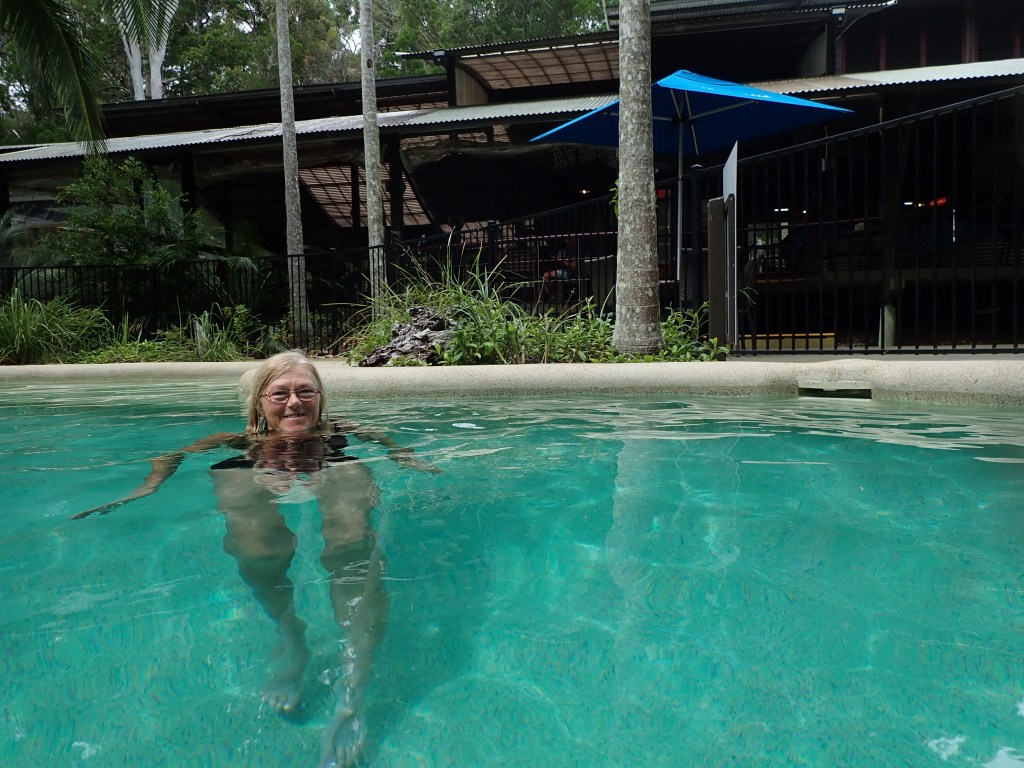
Luckily I could see on my phone that I was heading in the right direction! As many of you know, I don’t have a great sense of direction and I will rely on any navigational aid possible to go along on these adventures. When I was about 4.0 kilometres from Kingfisher Bay I crossed the sand road and hiked along this. It was challenging finding the hardest spots to walk on. Fortunately near the very end, a nice couple did pick me up (I wasn’t even hitch-hiking!). This gave me about 20 minutes before catching the ferry and just enough time for a cooling swim in the resort pool!
After catching the barge back to Hervey Bay, I was picked up by Paul from the Airbnb and taken to his friend Lee’s Airbnb near the Hervey Bay Airport. All in all, it was a wonderful adventure, with times of struggle aided by lovely Aussies and folks from around the world.
I do enjoy walking by myself as it provides time for contemplation and suits my active personality. Good thing, as although this adventure only ended on March 7, 2020 (3 weeks ago), the world has really changed. We are all practically in lock-down. I am fortunate in arriving home in the nick of time and am happily in self-isolation from the Corona Virus 19 pandemic in my garden, kayak and lovely house on Protection Island.

 Trudy’s Pacific Adventures
Hi Trudy glad you are home safely hopefully we will have chance to visit, I am keeping busy on nice days with my English Ivy eradication project! Emma
LikeLike
Quite the adventure with dingoes……. you always manage some amazing experiences….. well done
On Tue, Mar 24, 2020 at 4:55 AM Trudy’s Pacific Adventures wrote:
> Trudy Chatwin posted: ” K’gari or Fraser Island has the purest dingos in > Australia. There are only approximately 200 Dingos on the island. In my > short trip to K’gari, I saw 8 individuals Since my trip to Lady Elliot > Island involved stays in Hervey Bay, Queensland, the Park M” >
LikeLike
All these experiences in only five days. Fascinating in many ways… peoples, geography, vegetation and , of course, dingoes.
LikeLike