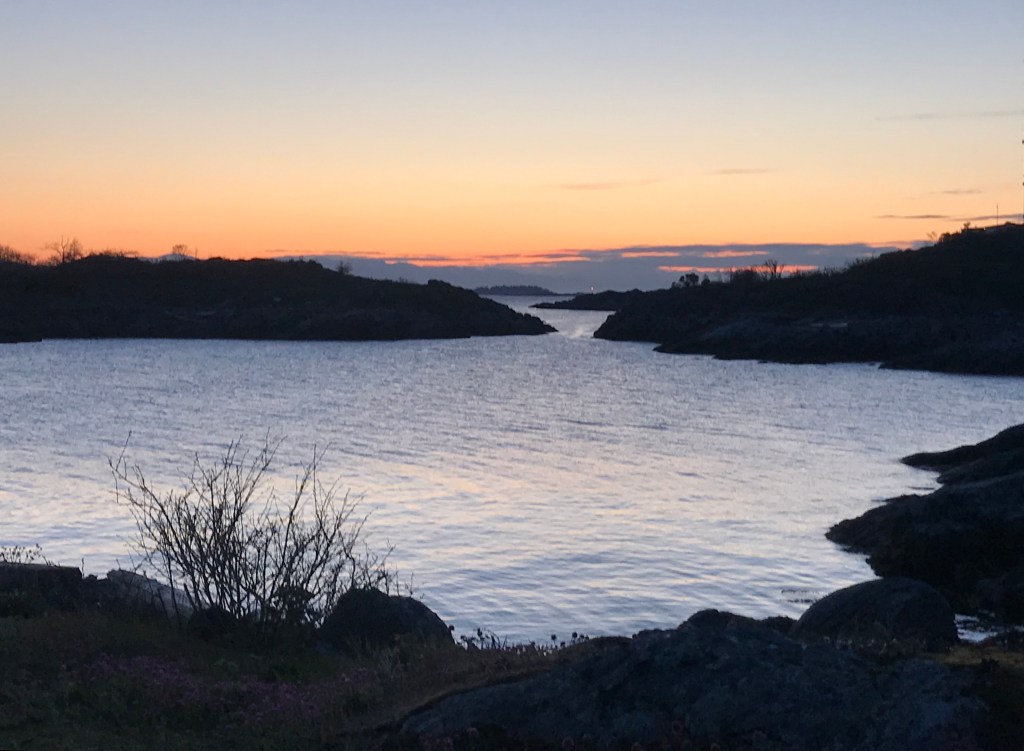
Spring is the crowning glory of the Salish Sea. It is a time of changeable weather, warming waters, wildflower bloom and birds returning to their nest sites in bright plumage and full of song. The most amazing spring spectacle is the spawning of Pacific Herring . Over the years I have been able witness to this miracle of life in some years. As a student at UVIC in 1979, I decided to do my Vertebrates of BC research project on ‘The Birds Associated with Herring Spawn in Captains Passage’.

On weekends, I took my kayak out to various points on Prevost, Pender and off Saltspring Island to count the thousands of Brandt’s Cormorants and scoters, the hundreds of loons, and seaducks including Harlequin Ducks. I then estimated the amount of herring taken by the birds in comparison to that taken by the booming herring fishery as a measure of ecosystem function. It was a time of fishing boom. Fishermen were making millions and boats were sinking as they took on too many slippery, silver fishes in the rush for the riches. I certainly don’t think that Fisheries departments took the slightest notice of my humble results or even cared much about the importance of the small Pacific Herring to life in the Salish Sea. These days it is a rare event to have a herring spawn in the southern Gulf Islands. So when I heard that there was a spawn in Nanoose it got my adventure lust going.
We have all been in COVID “lockdown” for over a month: Socail distancing, no non-essential travel and no gatherings. With National and Provincial Parks closed, the Prime Minister saying “Stay home!” there are few opportunities for adventures. I was content in my lovely home on Protection Island, digging in my garden, taking a renewed interest in cookery, calling my friends and hanging out with T-dog. However, the call of spring flowers, topped off with the chance of seeing a herring spawn once again was overwhelming. When Evelyn called to ask about going kayaking (a reasonable socially distanced activity) I immediately said “Nanoose” and began planning! Amid all the COVID updates and Bonnie Henry’s good messages, there was one of particular relevance to this adventure: https://www.cbc.ca/news/canada/british-columbia/please-go-outside-dr-bonnie-henry-says-covid-19-much-less-likely-to-spread-outdoors-1.5550191
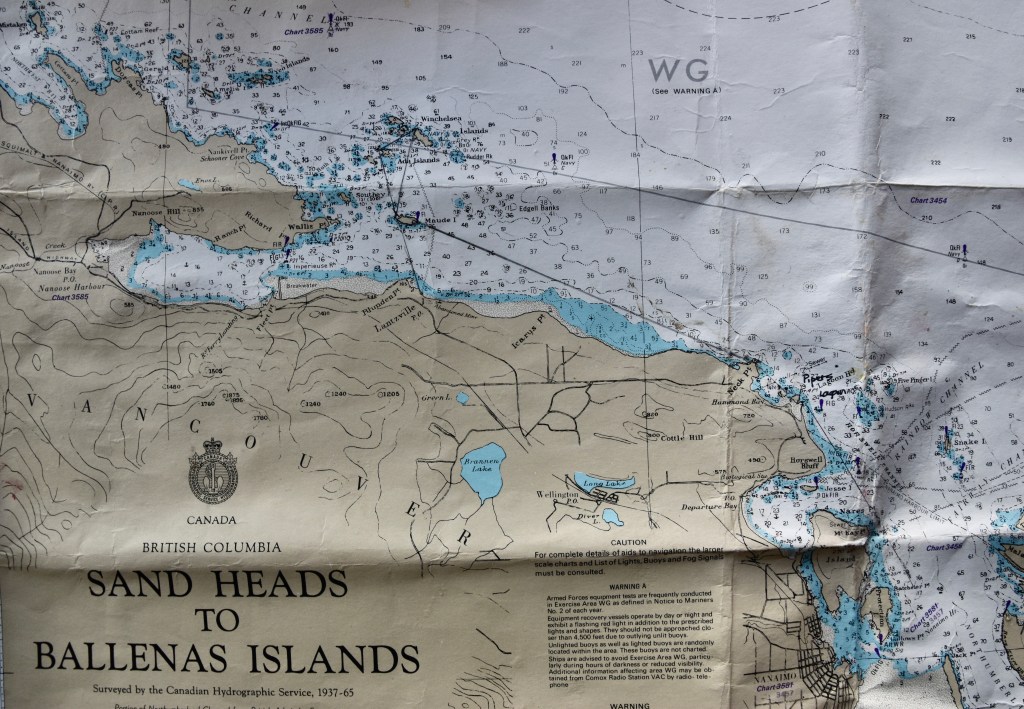
The weather forecast for the weekend looked amazing “Sun and a 10-15 knot NW on Sunday” . Perfect. It was about a 23.5 km (12.7 Nautical Mile paddle) to Maude Island from Protection Island. I had camped there in about 2000 and remembered the beautiful flowers. From Maude Island, we could definitely explore the Winchelsea group easily and return on Sunday. Evelyn decided not to come for the camping, but would meet Ian and I on Sunday.
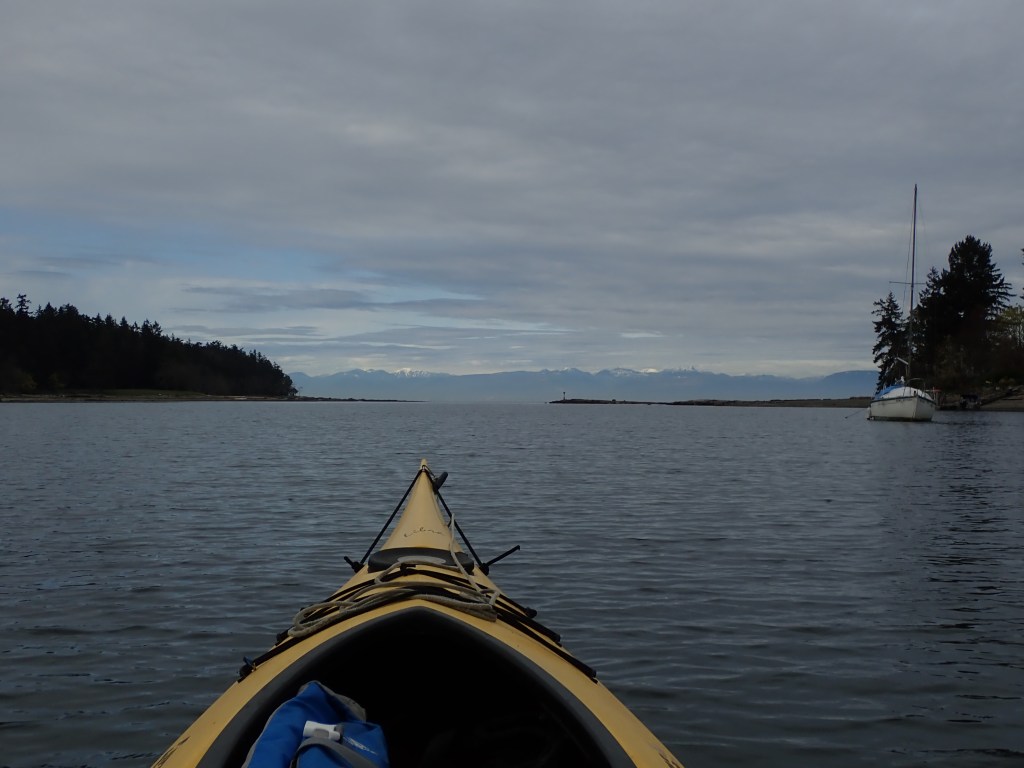
On Thursday night and Friday morning, preparations and packing was the order of the day. Liz agreed to take T-dog (as T-dog -finds it hard getting in and out of kayak in her advanced age). Inspired by Heidi and Steve’s adventure packing, I was determined to have just the right amount of everything. The Stinging nettle quiche for dinner Friday, granola for breakfasts, macaroni with last year’s basil pesto for Saturday dinner, all sorts of goodies for lunch and Ernie’s dried fruit and Anzac cookies for snacks. Ian was to meet me at Piper’s Lagoon with the 2 person tent, his gear, wine and crackers. This would spare us the anguish of lifting and loading the big double kayak, as well as shorten the journey for Ian in the kayak.
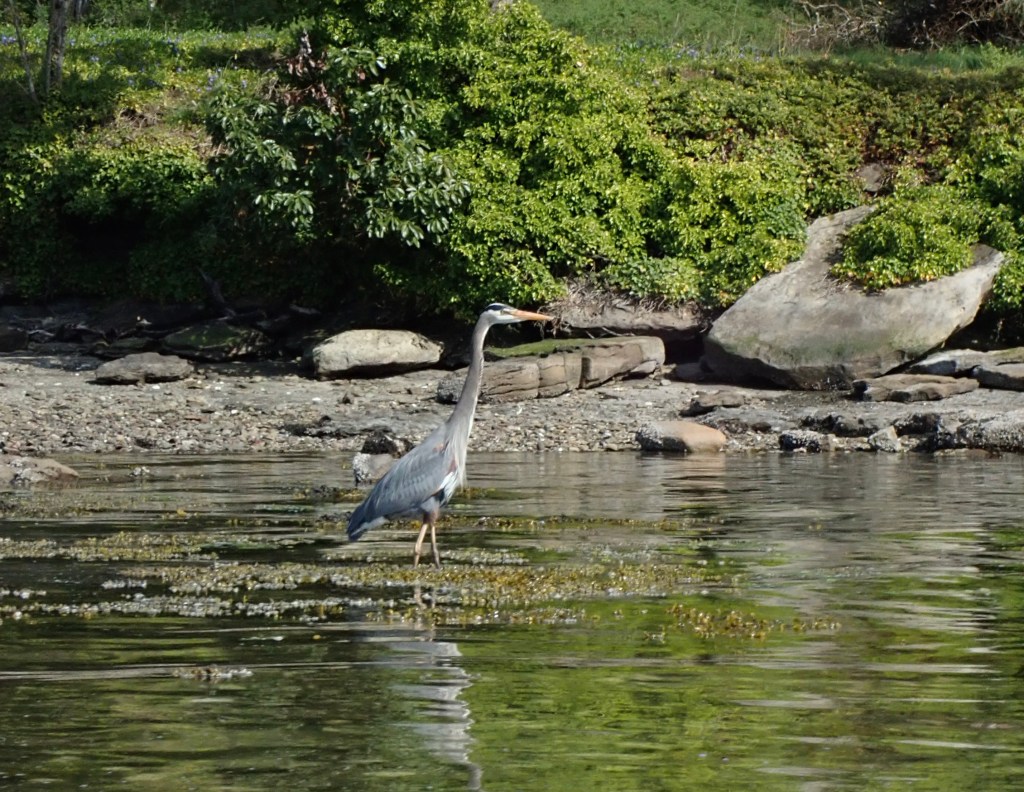
I likely should have built in some contingency time though . . . With fitness with Denise, the promise of cleaning the neighbour’s yard before the weekend and the myriad of things to do in the house and garden, I should have left earlier. The paddle along the east coast of Newcastle Island was beautiful with Harbour Seals and California Sea-lions following my kayak in the glassy water. I passed Great Blue Herons in striking plumage, Black Oystercatchers and raccoons feeding on the shoreline. Common Loons and Pelagic Cormorants flew over the water.
With the BC ferry to Horseshoe Bay completely cancelled, I could cross Departure Bay on a straight line to Piper’s Lagoon. Piper’s Lagoon was the site of one of 4 whaling stations (the station only lasted 2 years until all the humpbacks were killed) on Vancouver Island and now is a municipal park. A quick call to Ian ensured that he enthusiastically greeted me on the south beach of Piper’s. I broke down his bigger packs to store into the kayak. Where was the tent?? Despite the good forecast, we couldn’t be without a tent at this time of year. Besides, I only had one foamy, so Ian was dispatched home in his car to retrieve these essentials while I paddled on to Neck Point (9.5km /2.3 NM) to gain some distance and the next place Ian could park his car .
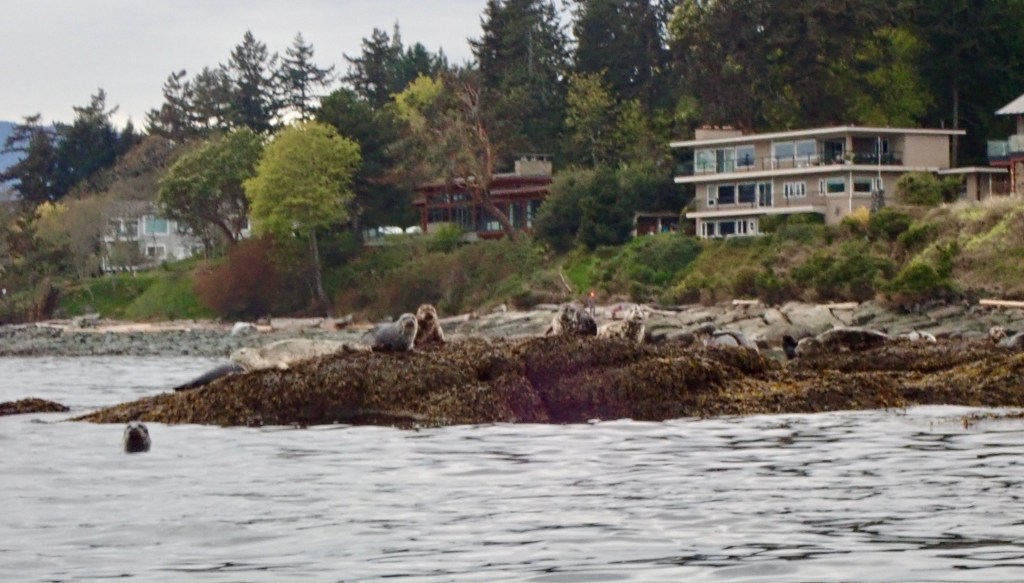
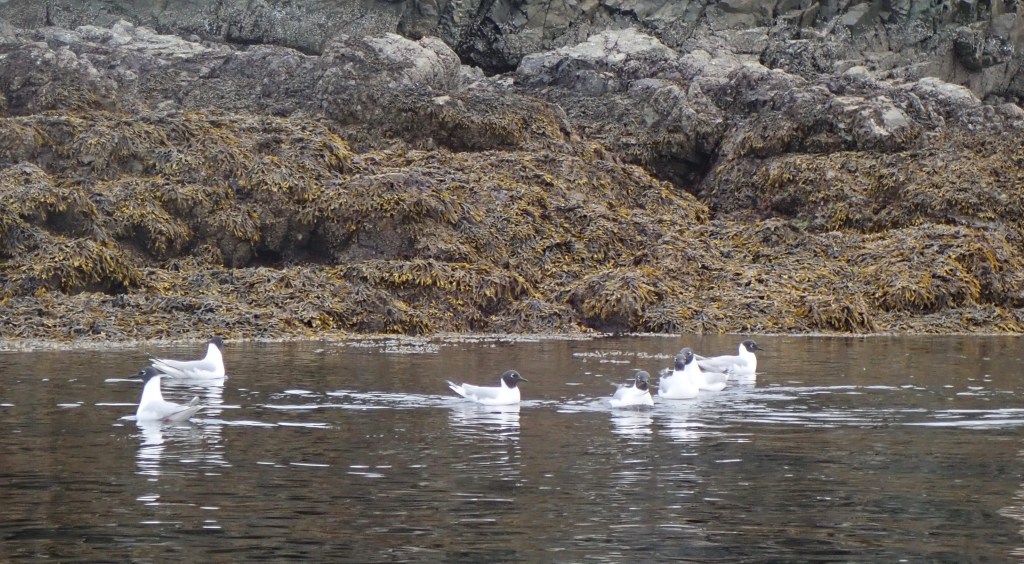
Neck Point is a City of Nanaimo park that was created in 1995 due to lobbying by my good friend, Alison Watt, Ron Tanasichuck, Mike Mann and Mary Gillies . The developer had a concept of houses all along the shoreline with a minuscule green space behind. Alison reports that the process of convincing the City of Nanaimo to create a park here “took 5 years out of her life!”. What a gem Neck Point is: rocky points , cobble beaches and shoreline trails amidst Garry Oak, cottonwood and arbutus . Some thirty years later, Neck Point Park is an oasis in a very developed shoreline. While I waited for Ian, I saw families enjoying the beach, and watched Bonaparte’s Gull scrapping over herring spawn on the shore. Lovely, but the daylight was waning and where was Ian?
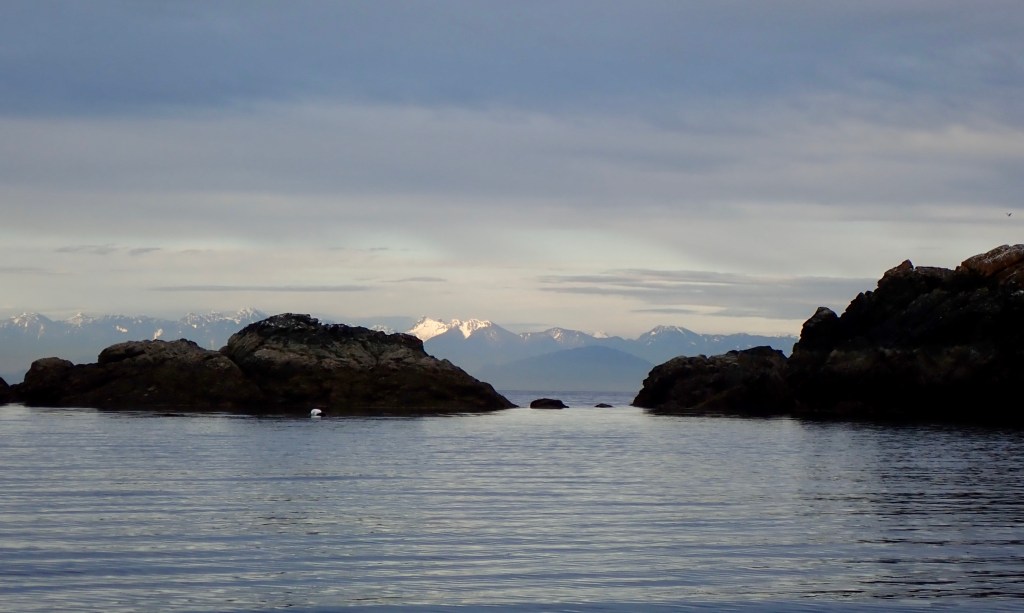
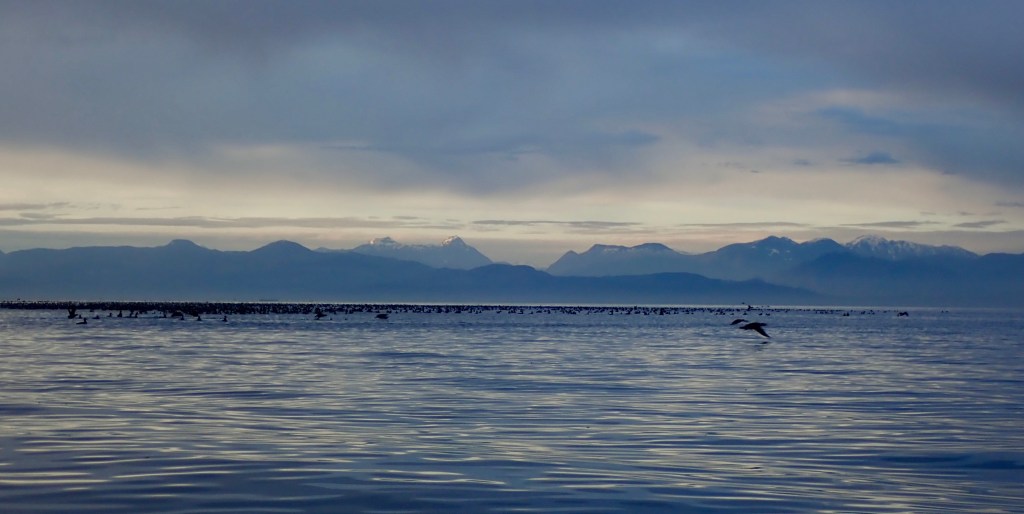
Another couple of calls and it was determined that Ian couldn’t find me, so I beached the kayak on the cobbles at Neck Point, in order to find him. I followed the shoreline trail and met Ian in the parking lot. “Did it say you couldn’t park here overnight?” Ian replied that “signs didn’t say anything about that, although the sign said ‘No camping'”. Well, that settled it, we would have to paddle on! Once launched, we headed NW in the sunset, the raucous call of Bonaparte’s Gulls all around. Neck Point was clearly the site of the latest herring spawn. We could just make out the black silhouettes of lines of thousands of Surf Scoters to the north. These were moving in waves and the sound of their wingbeats was just about deafening. Paddle on!
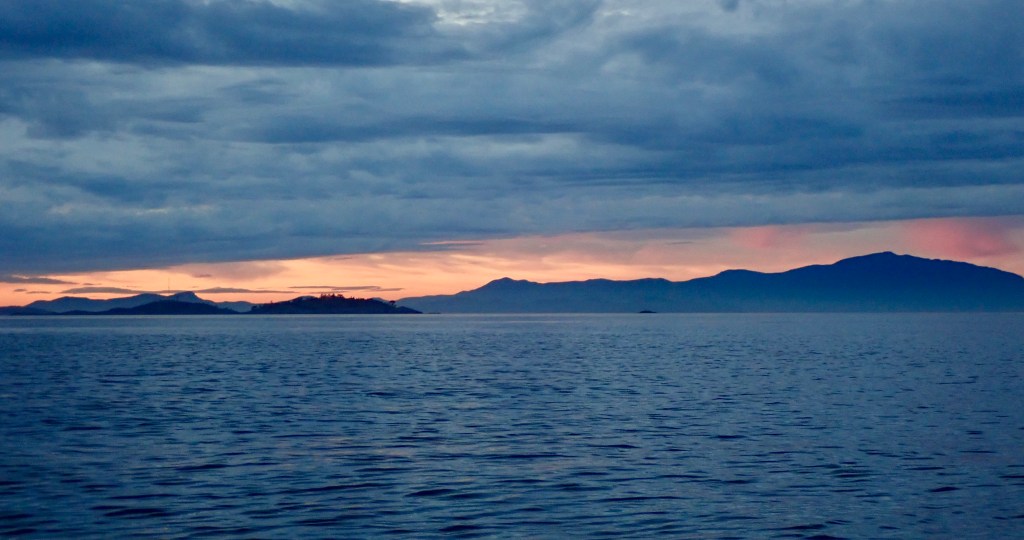
Icarus Point could be seen in the distance and once we passed that I could make out the silhouettes of the Winchelsea Islands and the larger Maude Island. Paddle on, dig deep! The sky was crimson ahead and what a lovely sunset. Paddle on.
By the time we could see the navigational light on the east tip of Maude Island it was getting very dusky. Just behind that light is a small bay that I remembered would be a reasonable landing and good camping site. Once Monica, Ruth, Heather and I had paddled there in the summer and I have great memories of Cecil, the dachshund displaying remarkable swimming ability. However, this was not a time for swimming. As we approached it looked like there was a cabin and what were those flashing lights? Closer still, we could hear voices and make out a couple of tents. Oh no! We couldn’t ‘social distance’ here. So we paddled on in the dark, curling around the west end of Maude Island, all the time looking for the silhouette of a bay or anything resembling a landing spot. Only rocky bluffs. It was starting to rain.
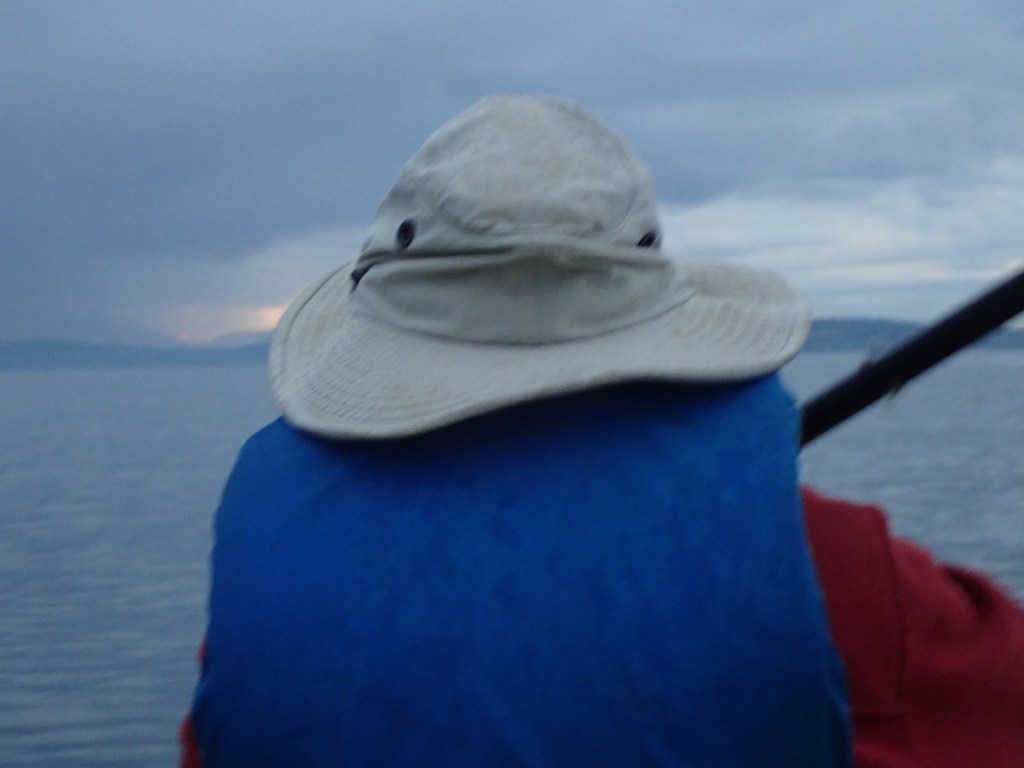
Paddle on! We paddled 9.6 Nautical Miles that night
Desperation led me to round a rocky corner, get out of kayak and scramble up a slippery boulder strewn “beach” to see if there was a possible campsite. I had to borrow Ian’s headlight and carried the tent to navigate over the boulders, climb a small cliff on an otter trail (with beautiful sea blush) and then bushwhack through arbutus, honeysuckle and fir to see if there was a semblance of a flat spot. Ian waited, getting a bit cold as I was sweating and scrambling about. Finally I found a little nook behind a Douglas fir. It wasn’t that flat and I had to break branches and move a rock or two but I was able to set the tent up after a fashion. There was about three more trips down to the shore to retrieve more gear and scope out better routes up to the camp (there wasn’t any!) . Finally, I had tent up, foamy blown up and then to my relief I saw Ian’s light as he crawled up the hill. He was very cold, tired and immediately crawled into his sleeping bag. Safe and sound!
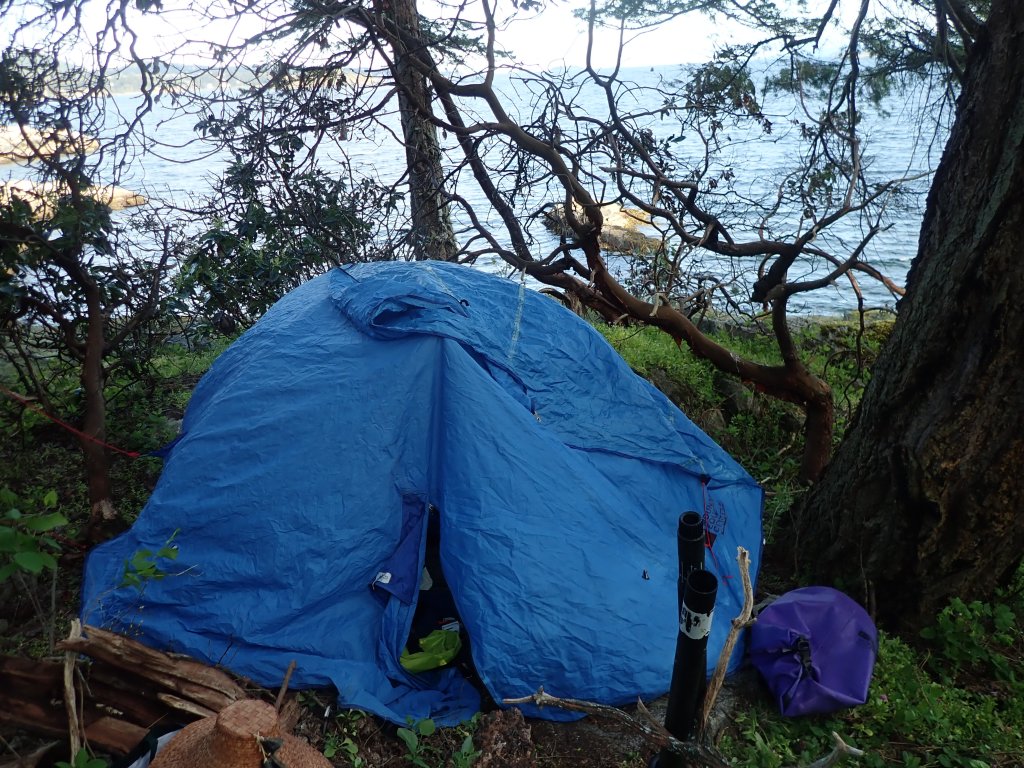
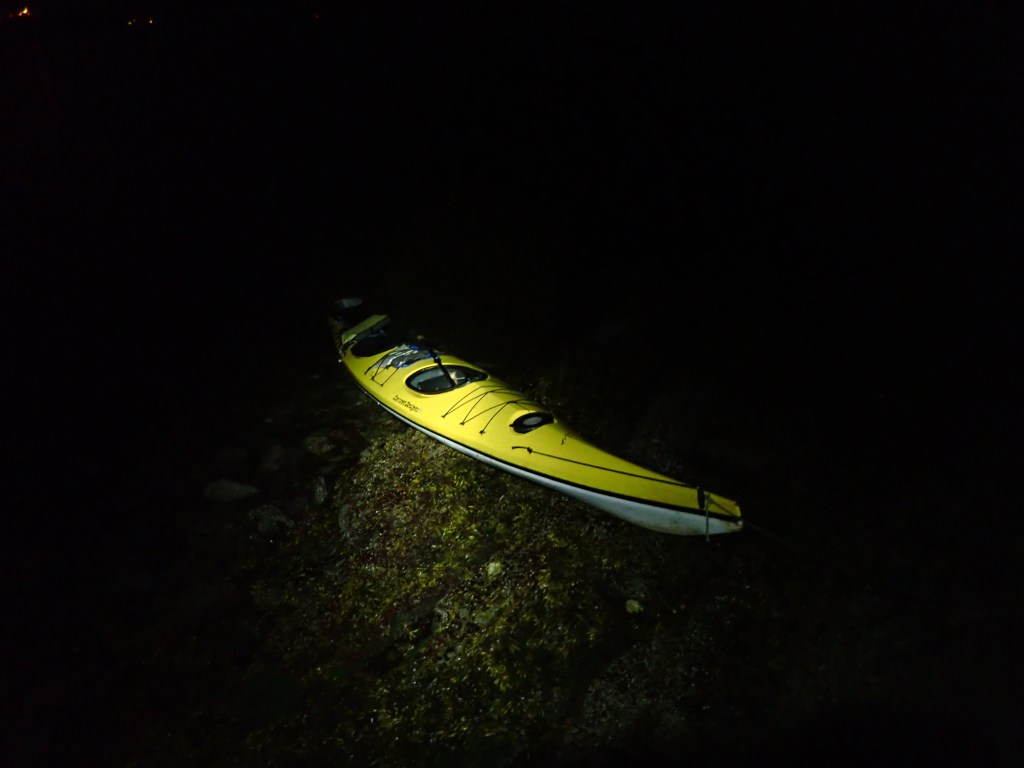
Then there was the matter of bringing the kayak above the tide. Not an easy prospect, but the tide was rising. . . I waited for the tide to rise and wedged the take-out box Ian had bought on his tent retrieval journey as a pad under the big double to protect the hull from the sharp rocks and barnacles. Finally, some time after midnight, I manoeuvred the kayak up on two logs, safe and sound. It was 12:40 and the rain stopped.
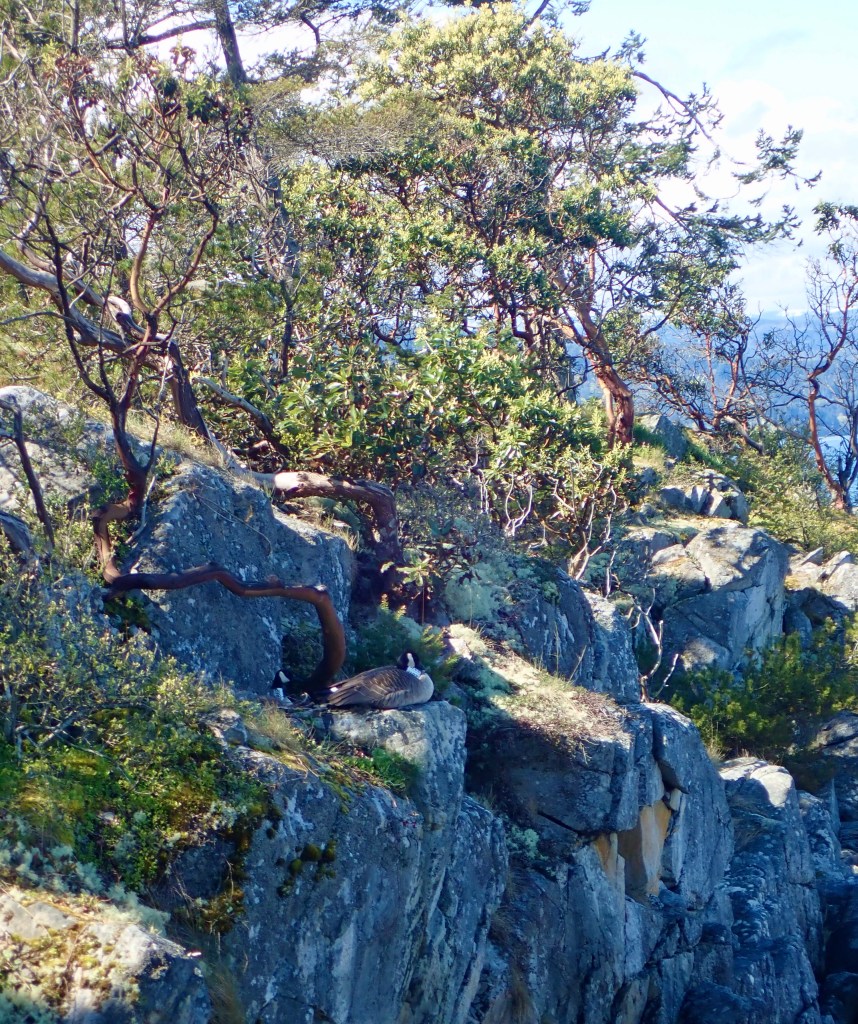
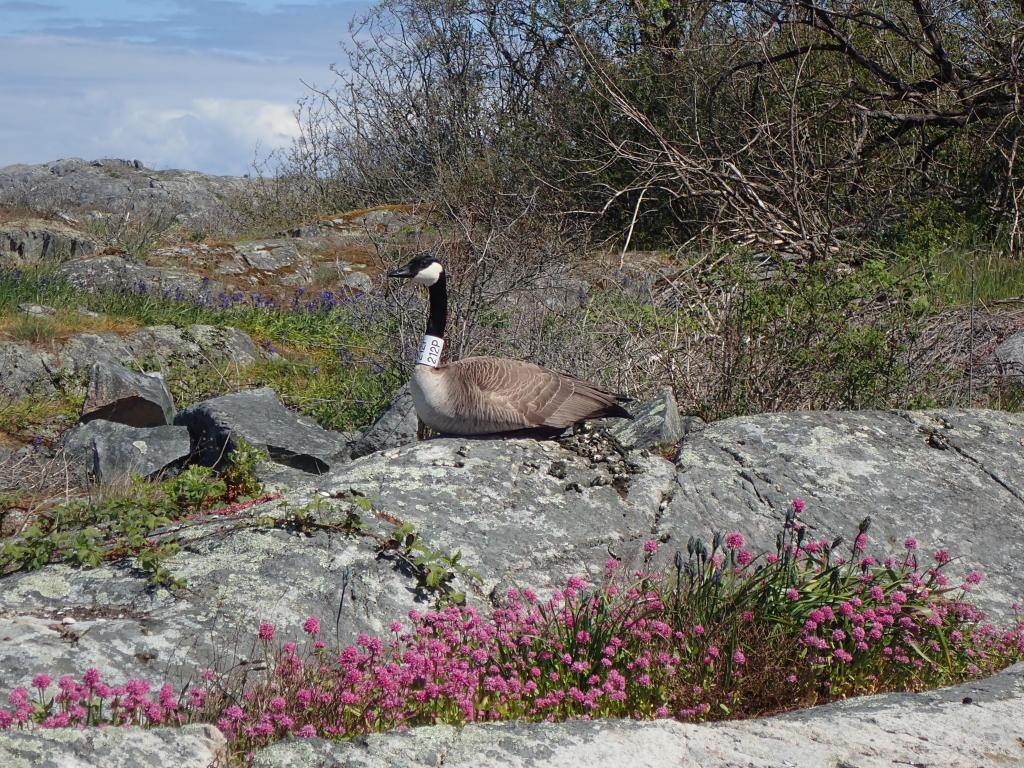
The morning dawned bright; full of Pacific Wren song, a crow “caucus” and a slight NW breeze in the forest. Indeed, there was a beautiful fresh scent of seablush, lichens, Saskatoon Berry and Arbutus in flower all around us. I put the little stove on to make coffee and brought Ian a cup in bed while I enjoyed the day. A Canada Goose eyed me from her nest on a mossy ledge. The forest and surroundings of camp were not easy to walk through, so right after breakfast we began the process of dismantling camp and taking everything to the shore. The tide was dropping which hastened our departure but didn’t make things easier. I think launching in the day was just about as challenging as coming in at night as the NW swell banged the kayak around while loading.
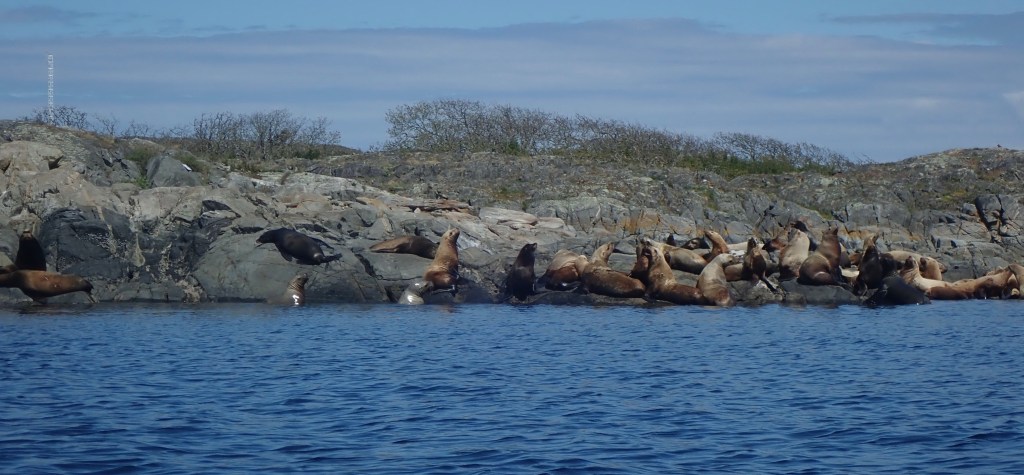
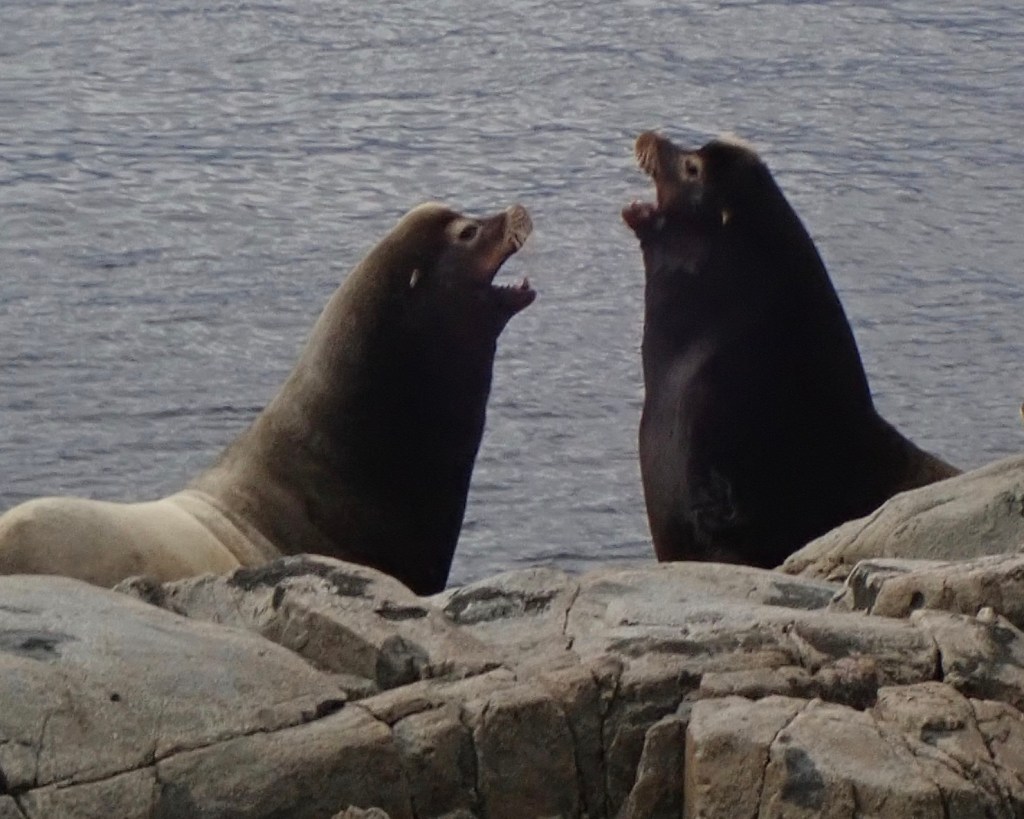
The paddle to South Winchelsea Island was only 2.7 km. California Sea-lions were barking from their haul-outs on the shore of both North and South Winchelsea. By going slowly, we could get close enough to observe their great large male bodies jostling for position, scratching and conducting their ritualized displays without disturbing them. California Sea-lions do not breed in Canada, but many of the males come north to feed on Canadian fish (including herring) to put on weight. California Sea-lion males weight up to 350 kg while females only weigh 100 kilograms. Males have a large crest which is one way of differentiating them from Northern or Stellar’s Sea-lions Only very large males will occupy the breeding sites off California, as when they occupy a territory on the rookery they cannot leave to feed, so they must have enough blubber to sustain them through the entire season. The California Sea-lions on our coast spend much time socializing and barking. I love watching a group relaxing in the water, flippers extended. Their spine is very flexible and one can see them scratching their head with their tail flipper. On land, they seem rather unwieldy, moving their large bodies by undulating their large neck and using both their hind and fore-flippers. However, underwater the California Sea-lion is animal of grace. They swim, glide and pirouette with remarkable speed and agility! They can surface behind the kayak with a great snort and give one a scare, but I have never heard of sea lions really bothering boaters.
Unlike Protection Island and many of the Gulf Islands which are characterized by Cretaceous era sandstone, all of the islands in the Winchelsea-Ballenas group appear to be Devonian to Jurassic-aged igneous and metamorphic rocks of the Wrangellia terrain. For a kayaker, this means that all of the islands in this group are very rocky and have few to no beaches as igneous and metamorphic rocks don’t erode quickly. Fortunately a group of kayakers helped me pull up the kayak safely on South Winchelsea!
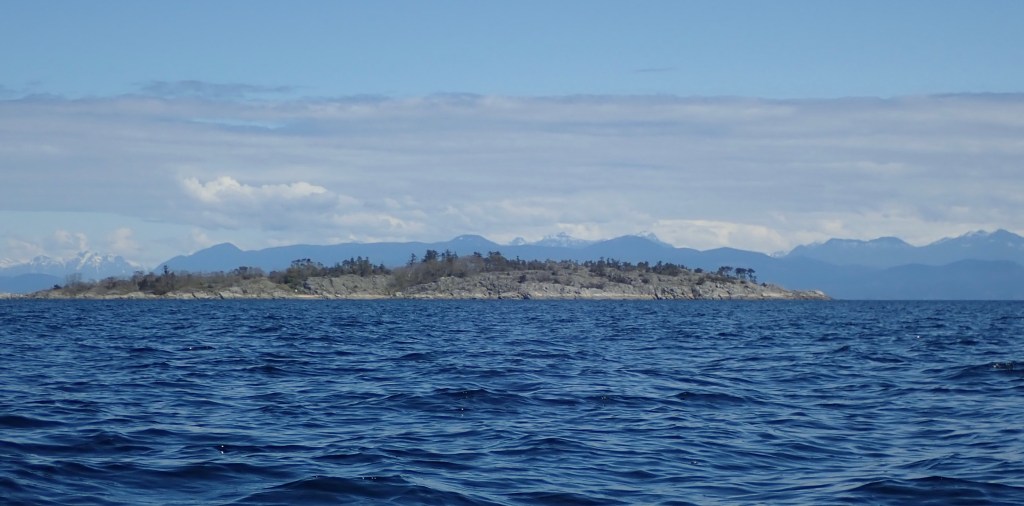
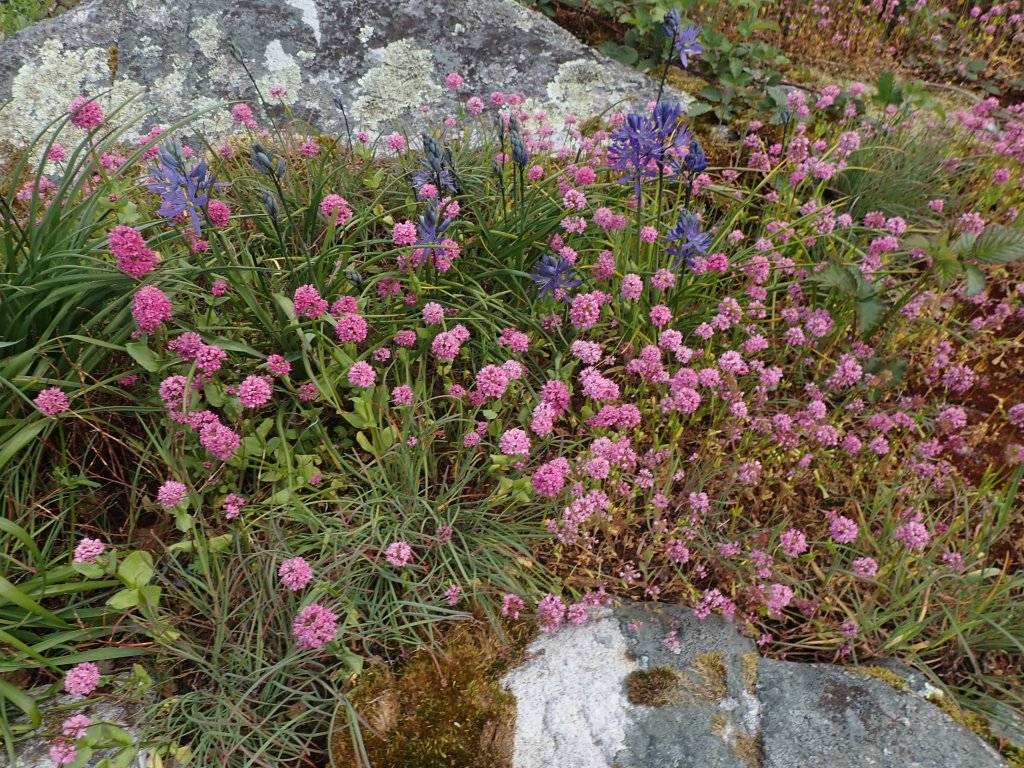
I first visited South Winchelsea Island in 1995 when the The Land Conservancy was considering purchasing this 11 hectare island from a private owner. What a beautiful gem it is. It is sparsely forested with Garry Oak, Arbutus and some sections of Shore-pine. Beautiful camas meadows with seablush nestle in the crevices around the island. Some moister areas have patches of lilies. There is even a small wetland in the interior of the island. The Nature Trust now owns the island and a covenant is held jointly by the Islands Trust Conservancy and the Nanaimo Area Land Trust http://www.islandstrustconservancy.ca/protected-places/places-protected-in-the-islands/all/south-winchelsea-island/south-winchelsea-island-conservation-covenant/
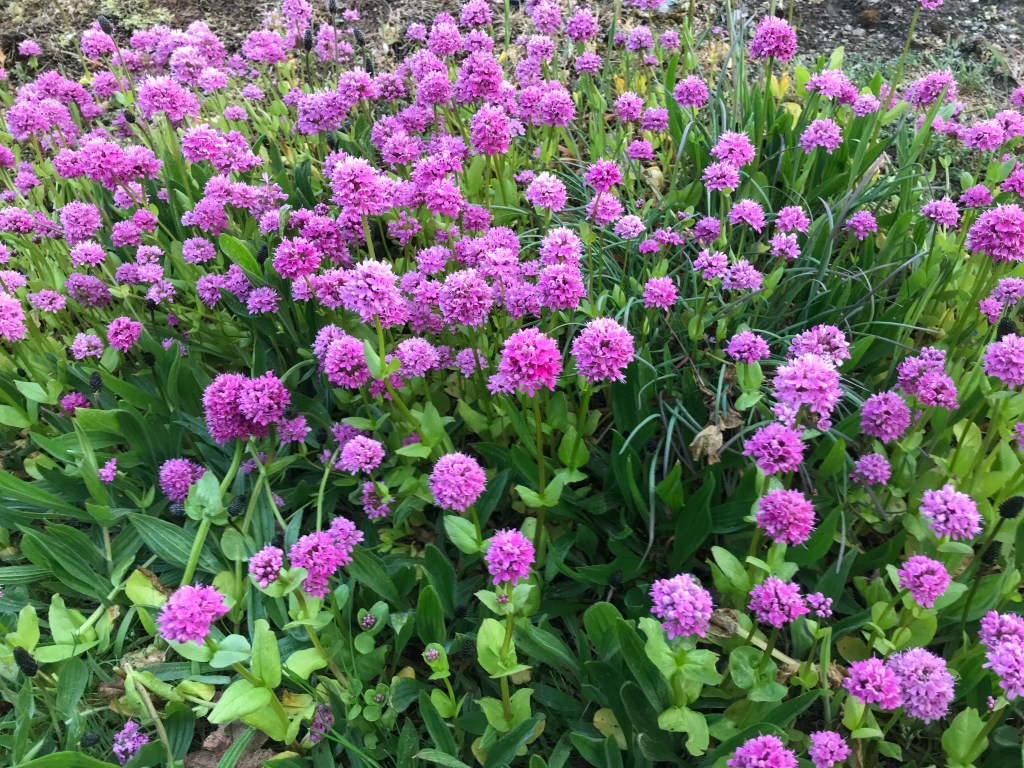
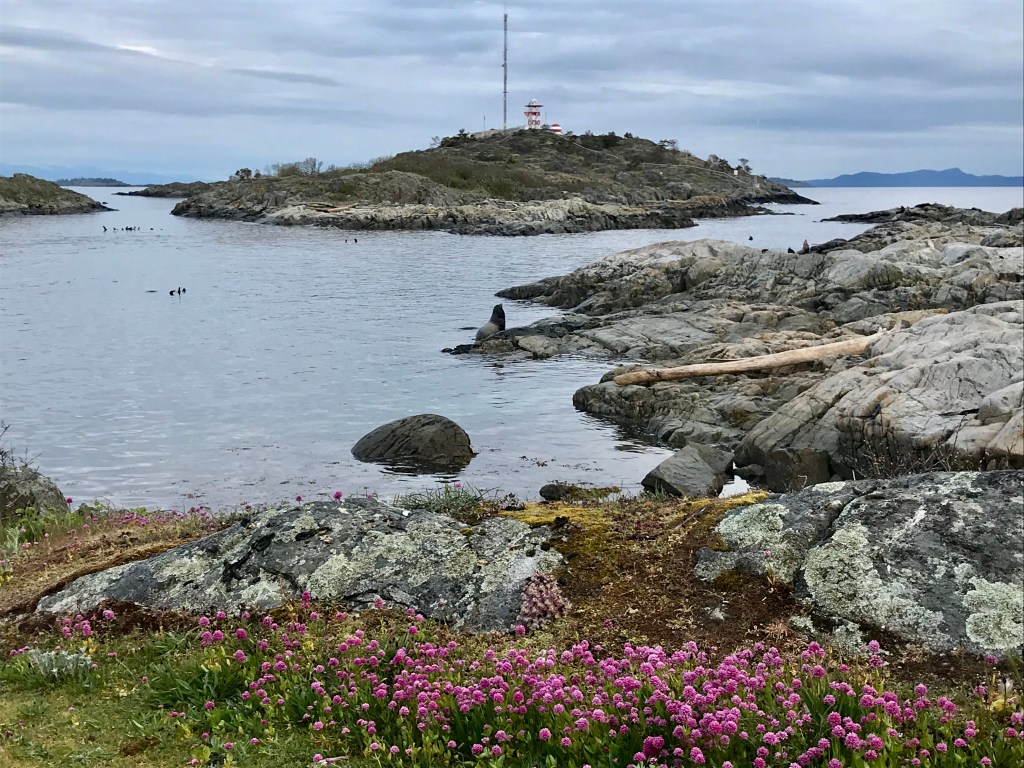
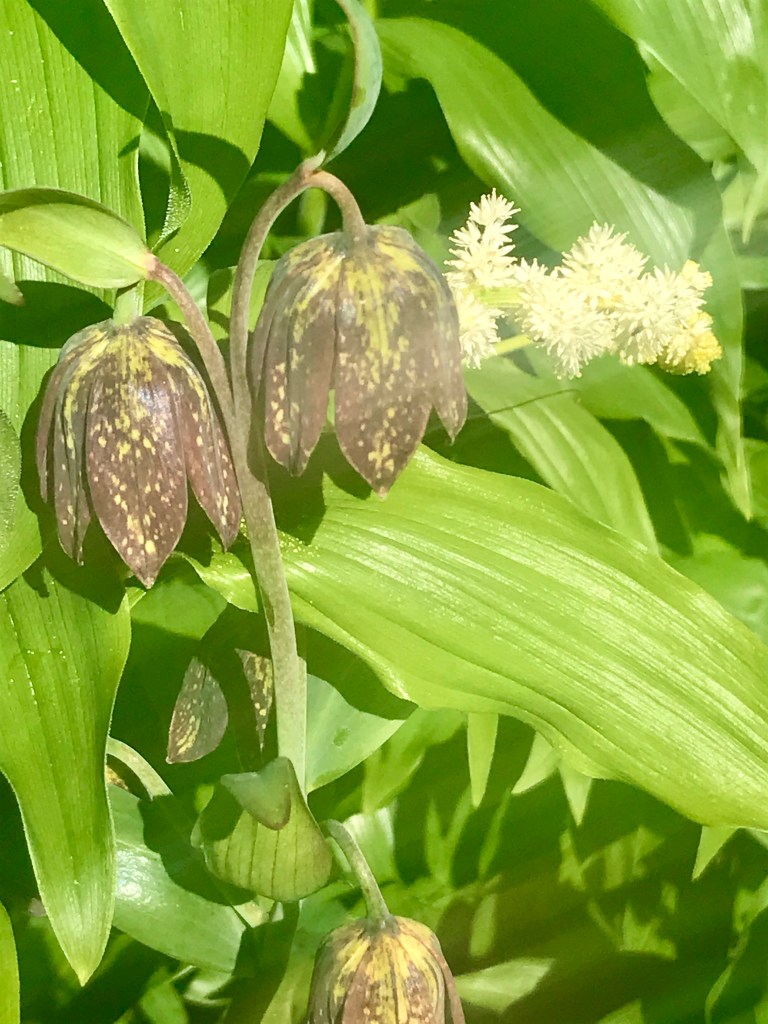
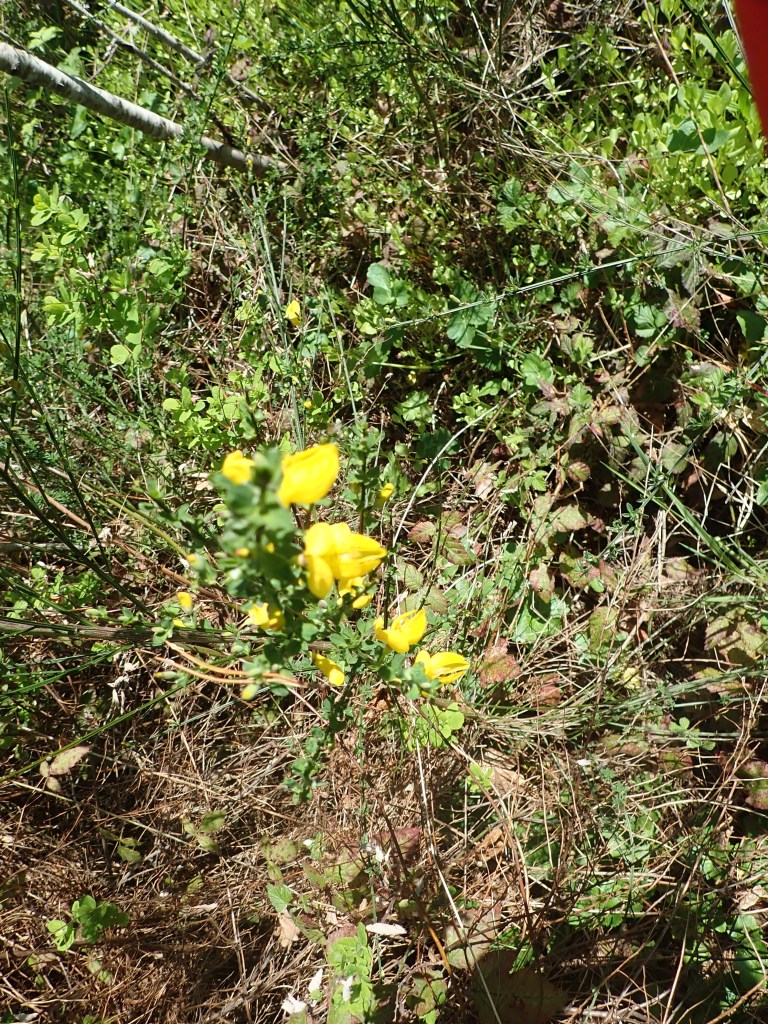
The Nature Trust and (in the past) The Land Conservancy have been working to restore the island. The previous owners built a cabin and trail through the middle of the island. Broom and blackberries colonized the disturbed land and have been a constant challenge. I could see the good work done by Nature Trust’s summer crew and wondered if they would have a crew this year? So many good conservation projects are challenged by ‘social distancing’ and other aspects of working together. As I could see some broom was just beginning to flower, it was a good time to deal with that, so Ian and I spent quite a bit of time getting rid of this persistent invasive plant along the trail. Once you begin with one broom plant, more seem to appear.
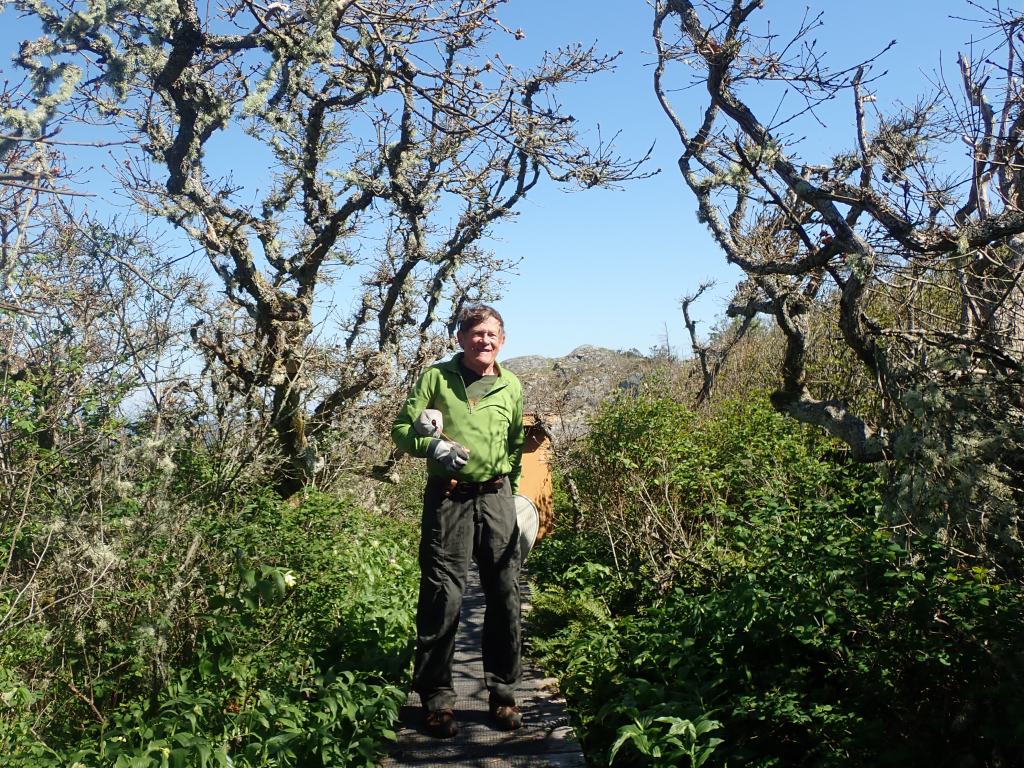
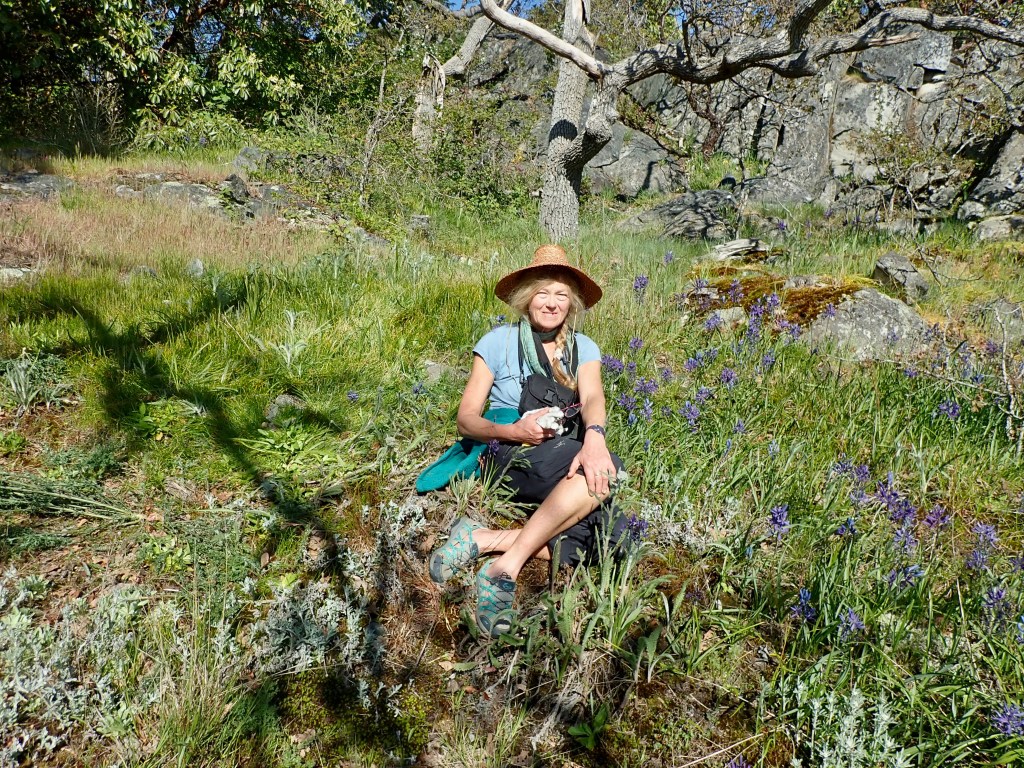
We had a lovely supper watching sea-lions and sunset. Morning was beautiful weather too and I gave Evelyn and David a call to confirm location for the rendezvous. We had barely had breakfast and packed up when they arrived in their double kayak. The tide was very low at this point and they had to paddle around a large rock to come into our bay. I warned them not to use the dock as it was not safe at all. Evelyn and David had a quick paddle over from Lantzville as the weather was fair with calm seas. Once ashore we agreed to go for a ‘socially distanced’ hike along the trail. At the end of the trail is a beautiful meadow of Great Camas and another sea-lion haul out. A Canada Goose was nesting in a crevice at the beach and eyed me warily.
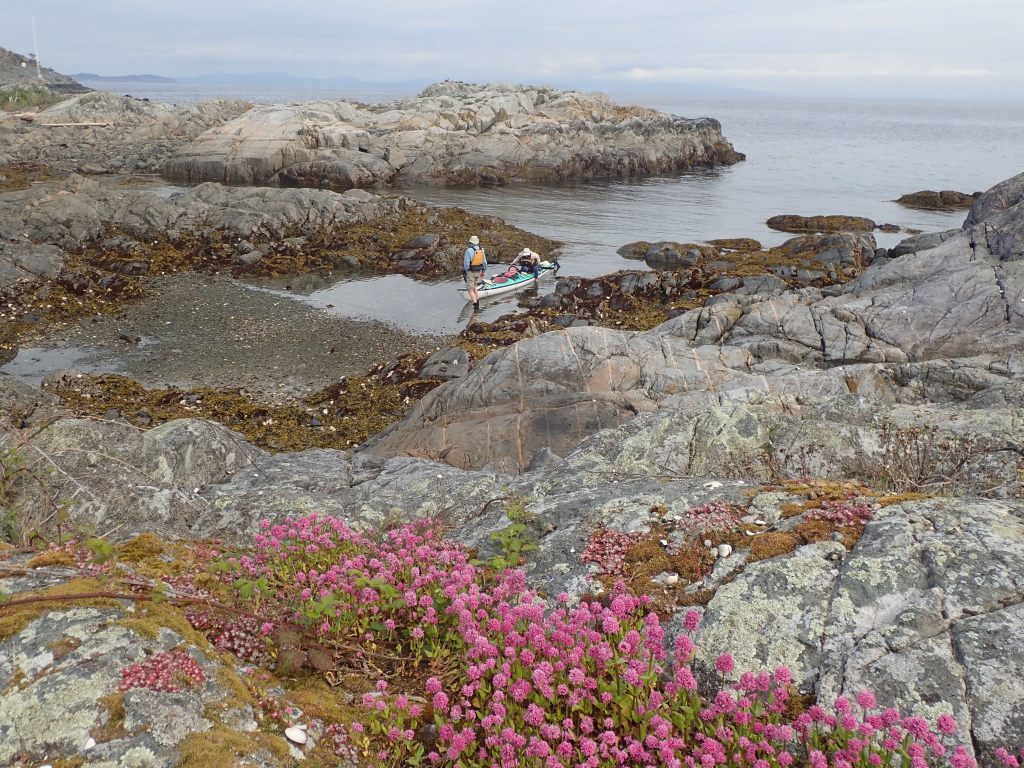
The Canada Geese that nest on the islands are descendants of an introduced variety of Canada goose brought to Vancouver Island in the 1960’s and 1970’s to increase hunting opportunities. As these geese do not migrate, they can have large clutches of eggs and their population has grown substantially. These Canada Geese feed on golf courses then bring non-native plant seeds to the islands as well as “grubbing” the soil and eating the native plants in this endangered ecosystem. https://wordpress.viu.ca/gooseproject/the-canada-goose-ecological-impacts/ Vancouver Island University is conducting a study of the geese to inform a Goose Management Strategy and has collared 400 geese.
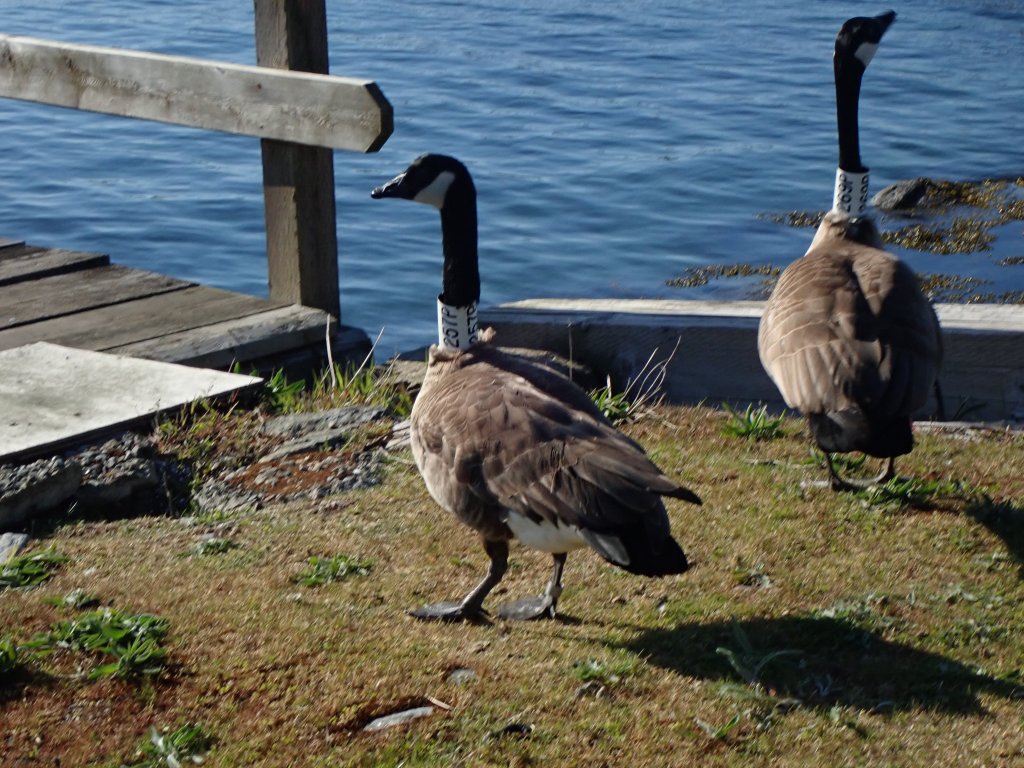
Once back by the kayaks, it was not even noon and David suggested “we could have our lunch”. I thought it was a bit early, but David was completely correct. We would need a good lunch to prepare for our paddle back to Vancouver Island. Evelyn was also well advised when she suggested that they could put my kayak on the roof of their truck and save Ian and I the paddle back”. Once we launched, we were in the southeast wind and swell as soon as we rounded the northwest rock. The wind rose as we paddled across to Ada Islet for a quick break in the lee. The crossing to the northwest point of Maude Island was fully exposed to the southeast wind and was “gnarly” as the well seasoned David said as we caught a breath in the lee of Maude Island. Although it was only 2.4 km back to Lantzville, I had to steer ‘to the quarter’ to keep the kayak from broaching in the large waves. Ian wisely wore his raincoat and I was soaked from the paddle and wave spray. I am always grateful for my stable Current Designs Libra under such conditions. It really is such a versatile boat; carrying me and my various supplies back and forth to Protection Island and handles well in both calm and rough conditions. It has even won the annual “PI 360” race a couple of times.
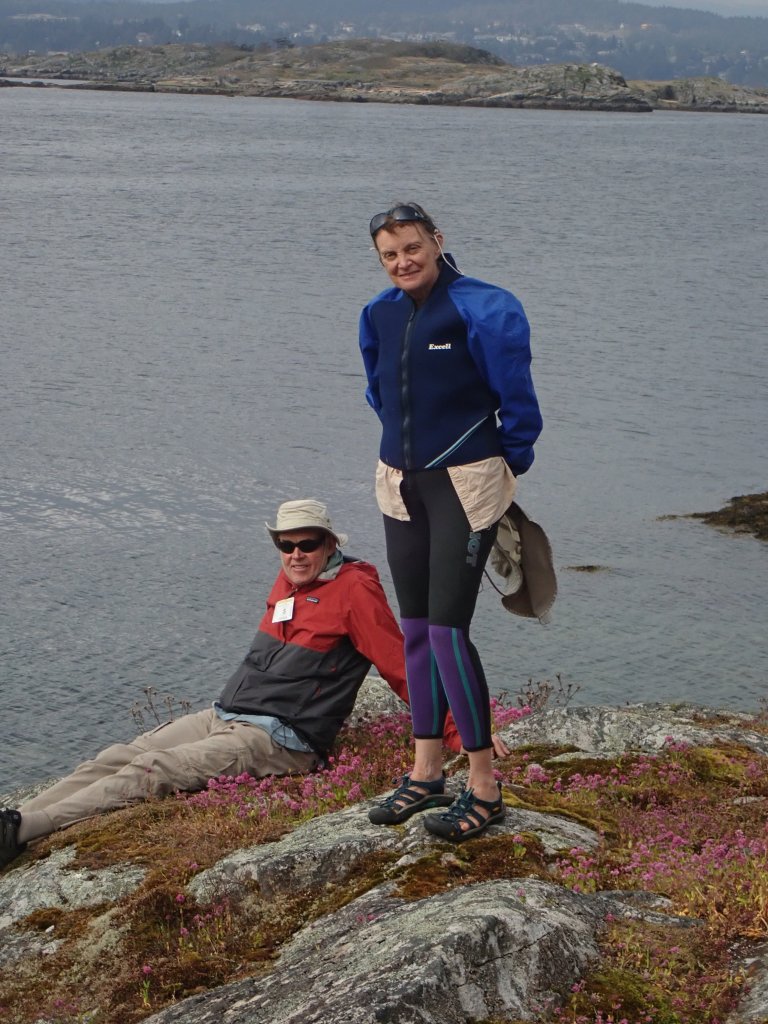
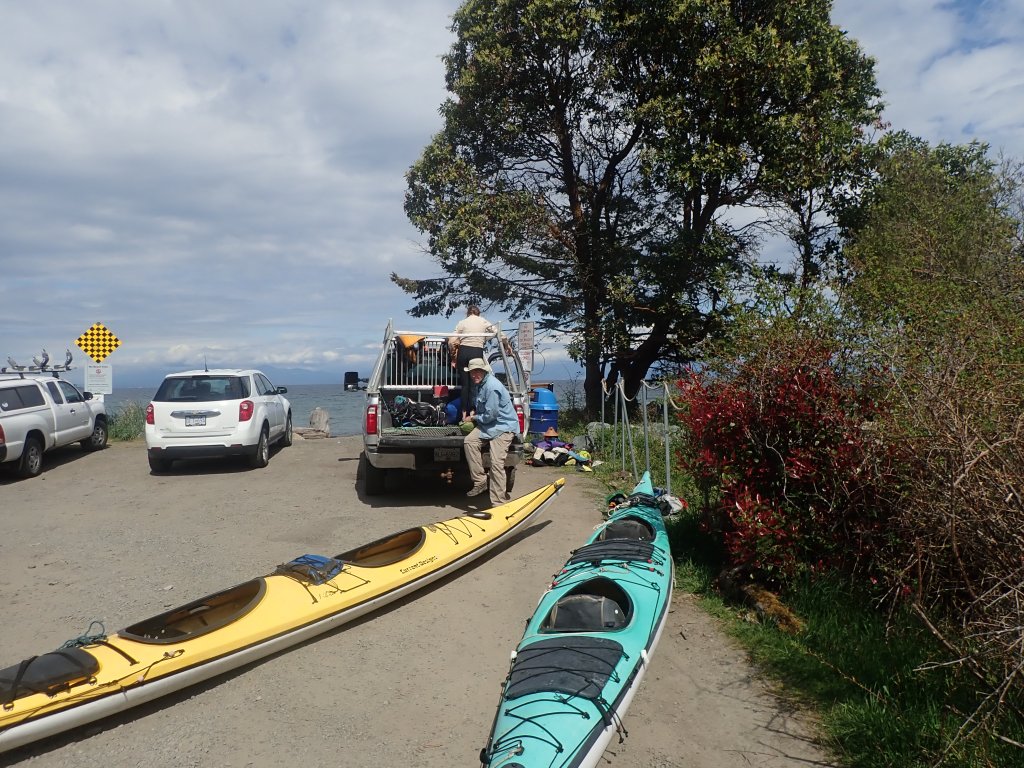
Evelyn and David led the way to the beach in Lantzville where they had launched. The waves were breaking and they landed in what appeared to be a bouldery beach, but what was actually a “canoe run” made by people moving rocks to facilitate launching a small boat. By the time we were close there was no way I could steer to that exact spot at the correct angle. We would have to do a surf landing! As Evelyn is a very experienced kayaker, she could see the situation and knew the routine. As I steered at right angles to the shore, released the spray skirts and waited for relative calm to come in, Evelyn was there to “catch” the boat and keep it straight, while I jumped out and pulled the boat up so Ian could disembark. I was so grateful that they had brought the truck which was large enough to accommodate the two large kayaks, saving a really long and difficult kayak back to Protection Island. With all four of us packing and lifting the kayaks, it wasn’t so bad to get everything safely strapped and stowed. Back to Neck Point Park first where Ian retrieved his car (by this time reported to police as an abandoned vehicle) then to the Nanaimo Harbour which is my usual staging area. The sun had returned and the wind died. Crossing home to Protection Island, one would have never known how rough it was out there in the exposed Strait in the Salish Sea!
The COVID pandemic has given many the time to appreciate nature. I especially am grateful for my beautiful home on the Salish Sea. Zoey Roy is an indigenous writer and performer whose words on the Canada Performance Series seemed particularly apt:
“I believe in the regenerative nature of this moment
The tree’s branches stuck out like tongues on cotton candy
I imagine the fish breathing like they are home for the holidays
The sun dancing across the sky to slow jazz with a sad grin
The grass stretching out like it already rained men
I imagine the stars crying happy tears as they are hearing their language spoken again
The mountains are being cleansed, the rivers feeling ten
The groundhogs thinking they are magicians
I imagine bears stretching out as they do each spring
The clouds becoming the fluff we drew when we were kids
That there are birds returning with new songs written
The penguins are gleaming at new sliding hills built
That we are all budding and will be soon ready to bloom
I imagine the pink moon knows that we need to be cleansed
Just like the earth and all our relations.”

 Trudy’s Pacific Adventures
It looks and sounds absolutely beautiful! Greetings from London.
LikeLike
Just got back from hiking at Westwood lake A very well written piece with a depth of history and colour and fine photography. Thanks
LikeLike
Thanks Trudy. That was lovely.!
Sent from my iPhone
LikeLike
Always a wild adventure! Nice to have so much nature all around.
LikeLike
Great adventure Trudy, despite C19….beautiful place, flowers and kayaking. You have a way of letting us feel we were there with you.
LikeLike
Thanks, Trudy. Shows what wonder rewards an adventurous spirit. Eric
LikeLike
Hi Trudy! Nice to see the island not completely overrun yet. What a beautiful poem. Many adventures to you and Ian Love D
LikeLike
What a beautiful trip… so close to home!!! Good for you both.
LikeLike
Thank you. What a great kayak adventure.
If you and Ian would like one day to try the trip up Port Neville inlet by kayak with lunch at the head – it is a fun adventure too and David and I would love your visit.
LikeLike