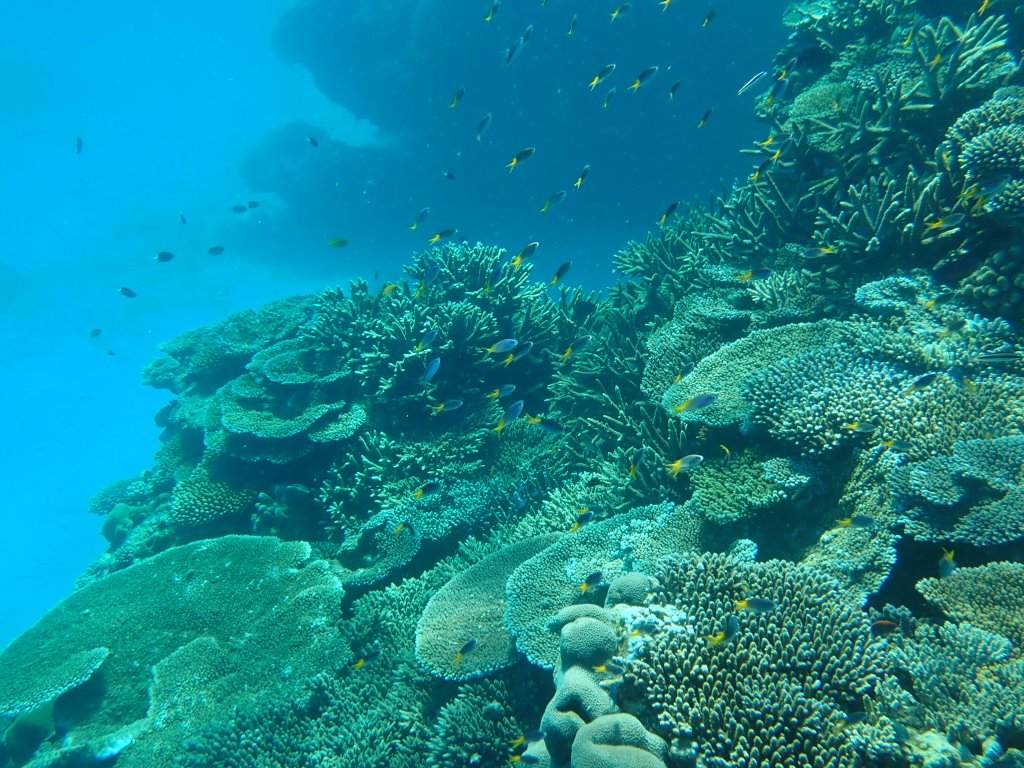
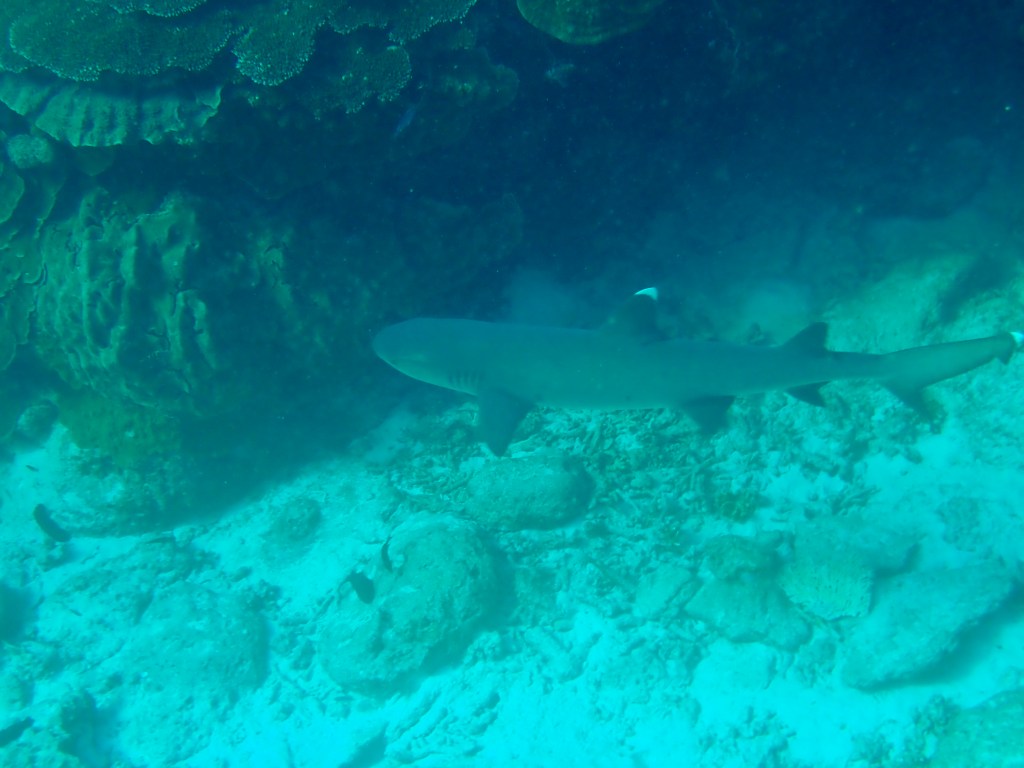
Australia’s Great Barrier Reef is the world’s largest coral reef system, composed of 900 individual coral islands and stretching for 2300 km along Australia’s east coast. The Great Barrier Reef is a considered to be one of the seven natural wonders of the world and was declared a World Heritage Site in 1981. With my love of marine environments, it is somewhere I’ve always wanted to visit. It is also one of the most threatened ecosystems on earth. Ocean warming from climate change, run-off , ocean acidification and fishing (leading to out-breaks of Crown-of-Thorns starfish) have caused massive loss of coral reefs and coral bleaching. A report in the Proceedings of the National Academy of Sciences 2012 estimated that half of the Great Barrier Reef has been lost since 1985.
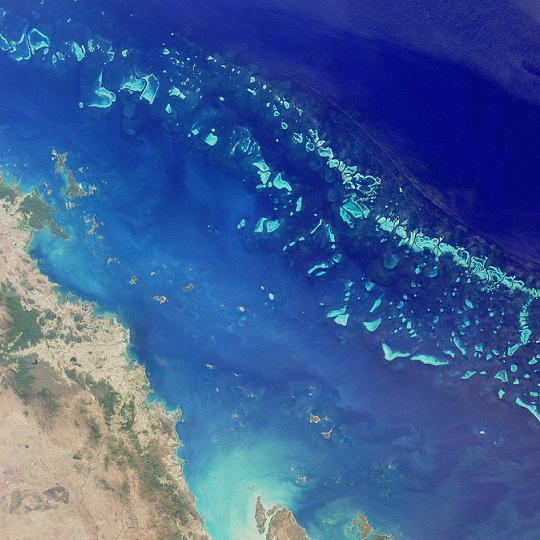
Lady Elliot Island is located at the South end of the Great Barrier Reef in the Capricorn Group and as such, is a reservoir of coral reef biodiversity or as much ocean warming. It has the highest density of nesting seabirds, the endemic Capricorn Silver-eye, amazing water clarity, nesting sea-turtles and a great eco-resort. On this trip, it was my splurge to go to Lady Elliot Island Eco-Resort for 3 days. This indulgence meant as much snorkelling, bird-watching and turtle-watching as one could do with sumptuous buffet breakfasts and dinners included.
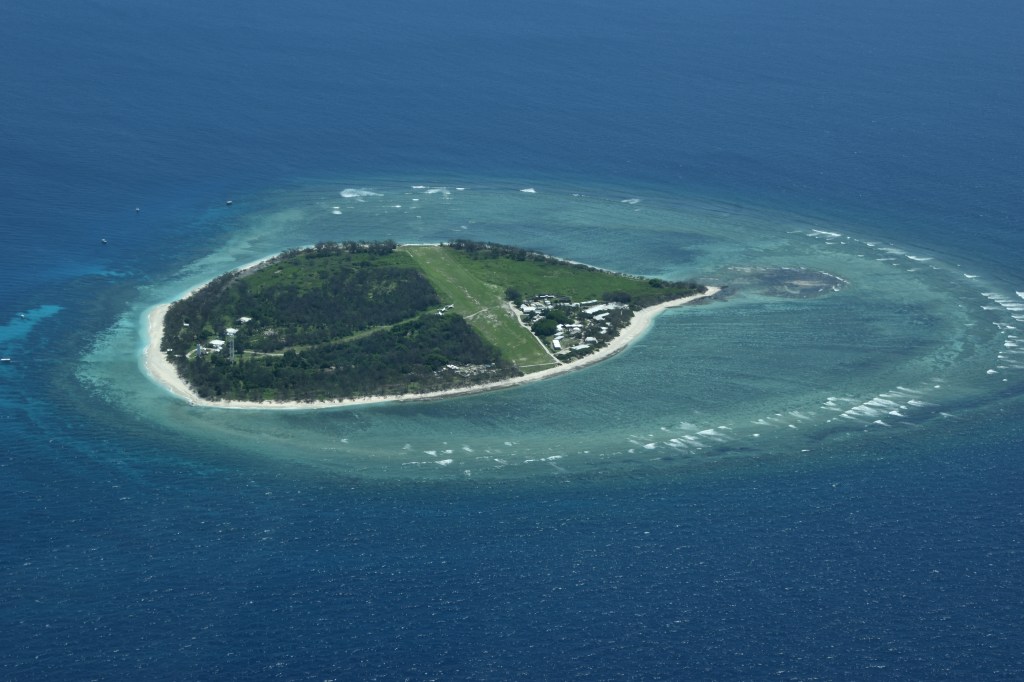
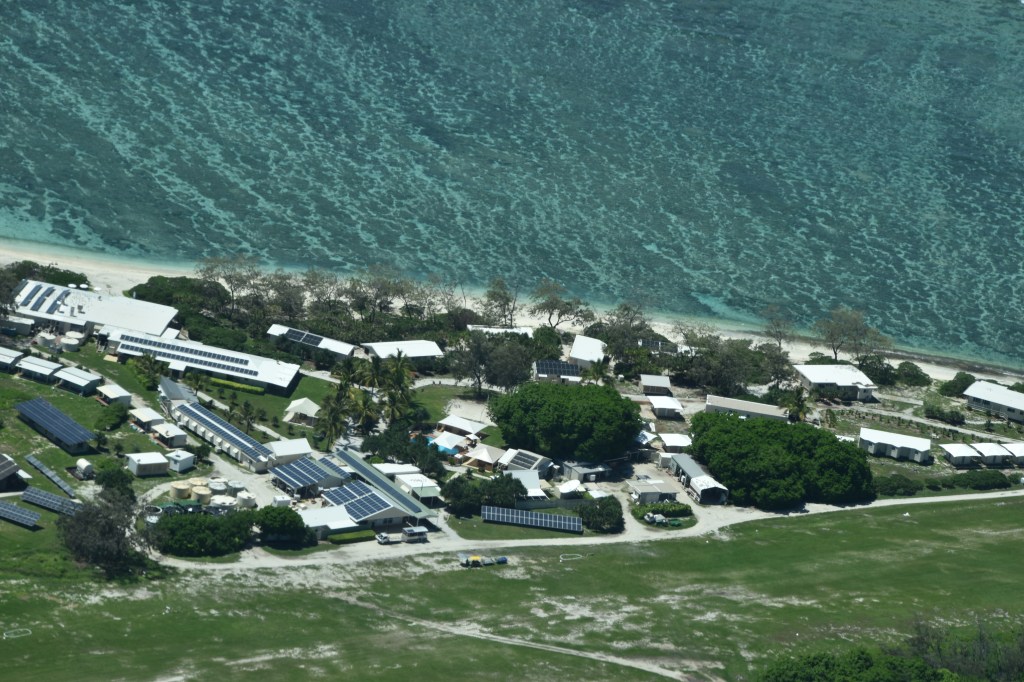
Lady Elliot Island is in a “Green Zone” which means highest protection possible. The resort is mostly solar powered, has amazing educational programs and strongly encourages environmental best practices throughout. It’s history has included guano and coral mining, light-keeping. The resort was constructed in 1985 and since then the owners have implemented restoration programs to plant native plants, protect the wildlife and update the facilities to conserve water, power and reduce night lighting (so as not to disturb nocturnal birds and nesting sea-turtles).
A small group of us met in Hervey Bay Airport at 10:00 am and checked in with Sea-Air (we also paid Carbon offset fees for the flight) as flying is the only way to reach Lady Elliot Island. Lady Elliot is a half hour flight from Hervey Bay or Bundaberg and is about 110 km to 85 km off the coast of these towns on the Mainland Australia coast.
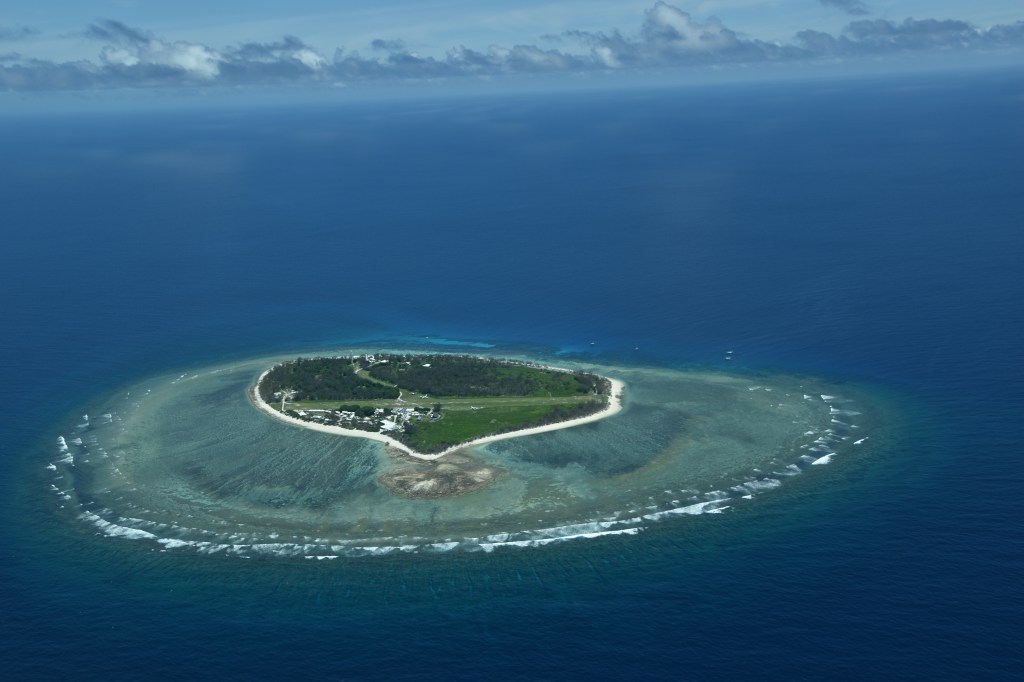
A small coral cay suddenly emerged from the lingering clouds. I had experienced two crazy thunderstorms at Hervey Bay (great for Queensland, as it hadn’t rained for about a year previously) so I was selfishly hoping for clearish weather. A bit of a long safety/environmental/housekeeping orientation occurred before we were allowed to get into the water. The resort has a “buddy” system for snorkelling. Just fortunately I met Kim, a nurse from Brisbane who had similar interests and was a willing partner to my adventurous spirit of longish snorkels to far out “bombies”.
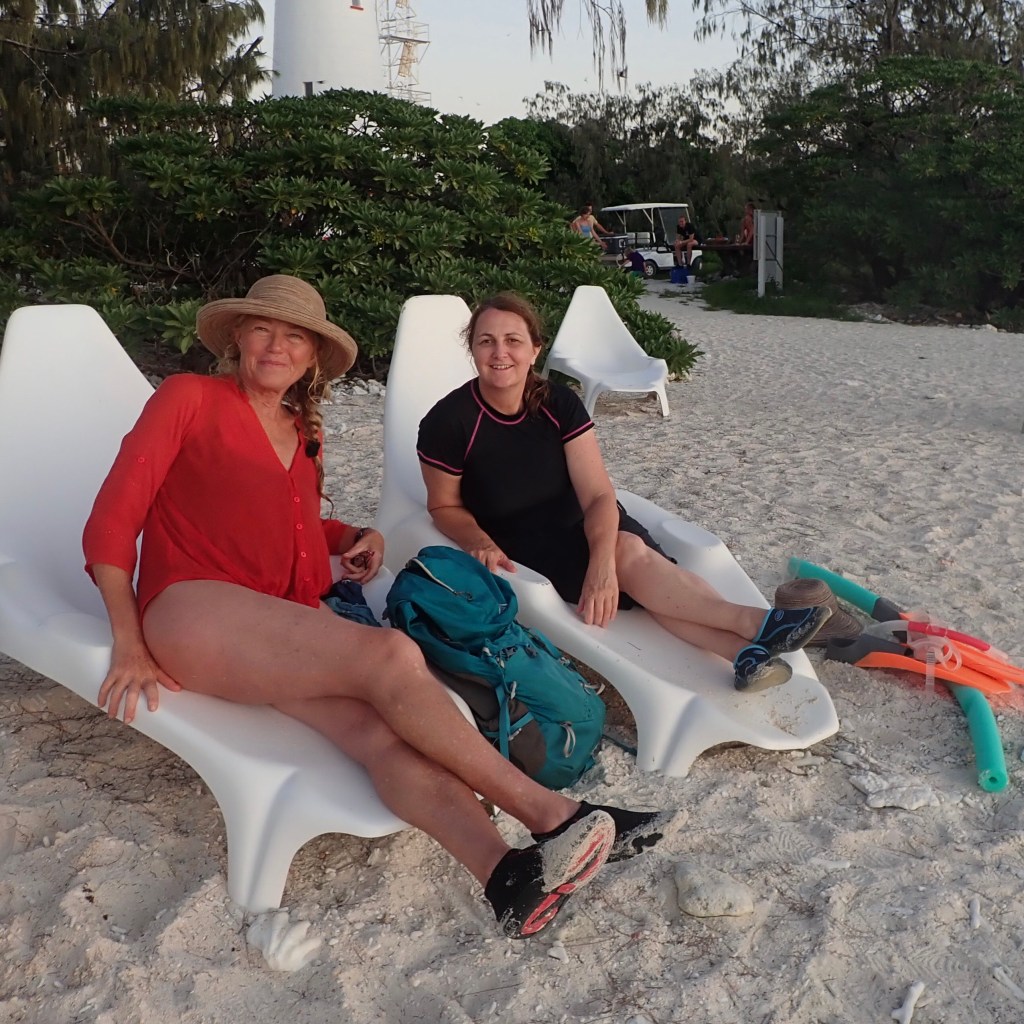
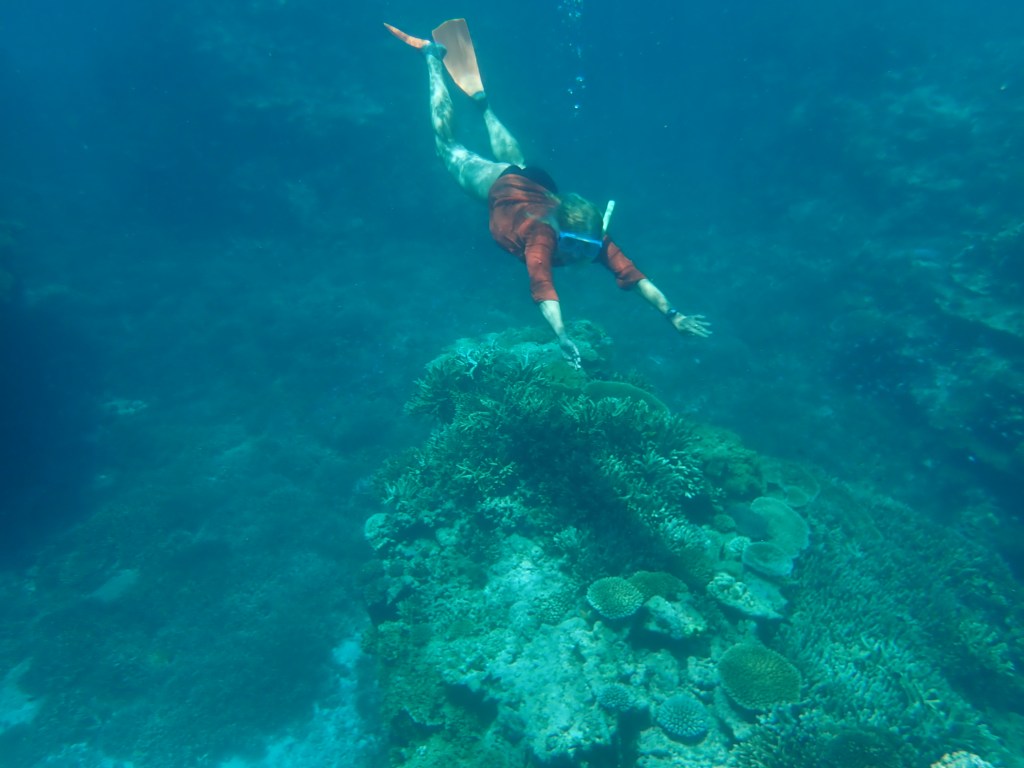
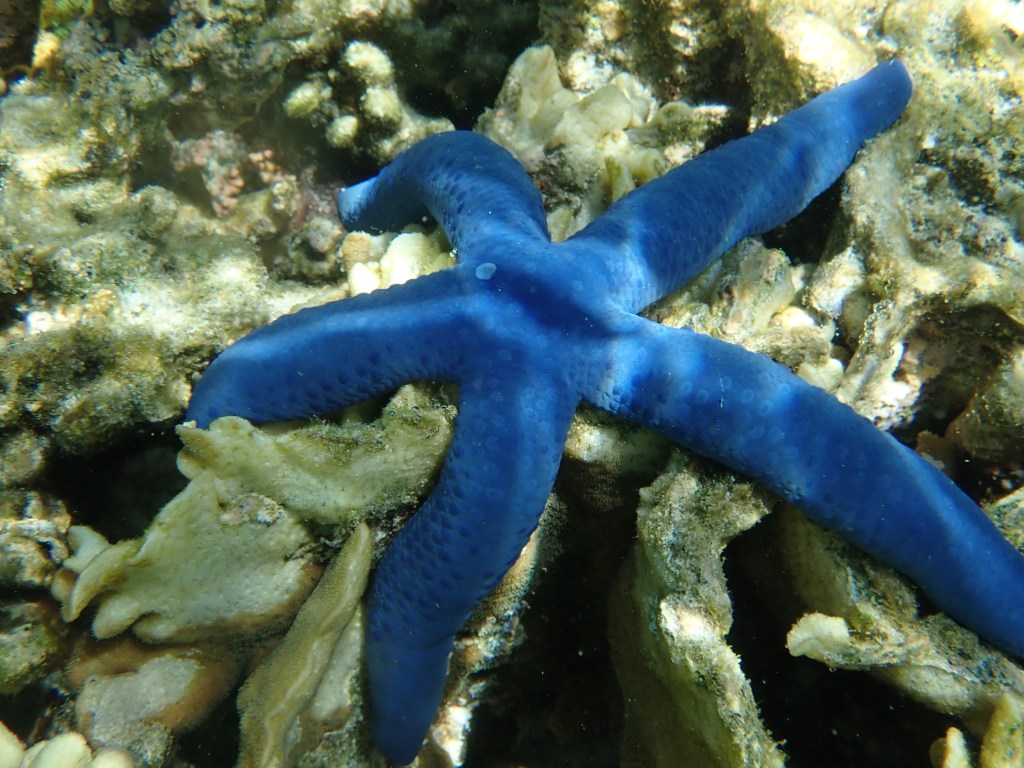
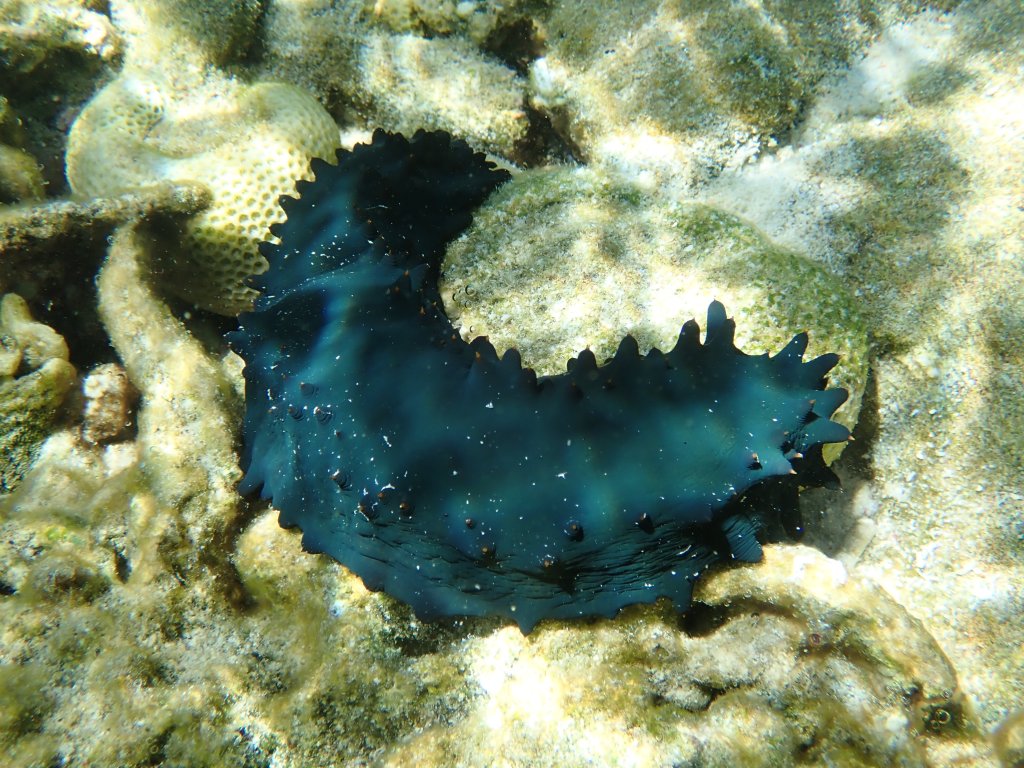
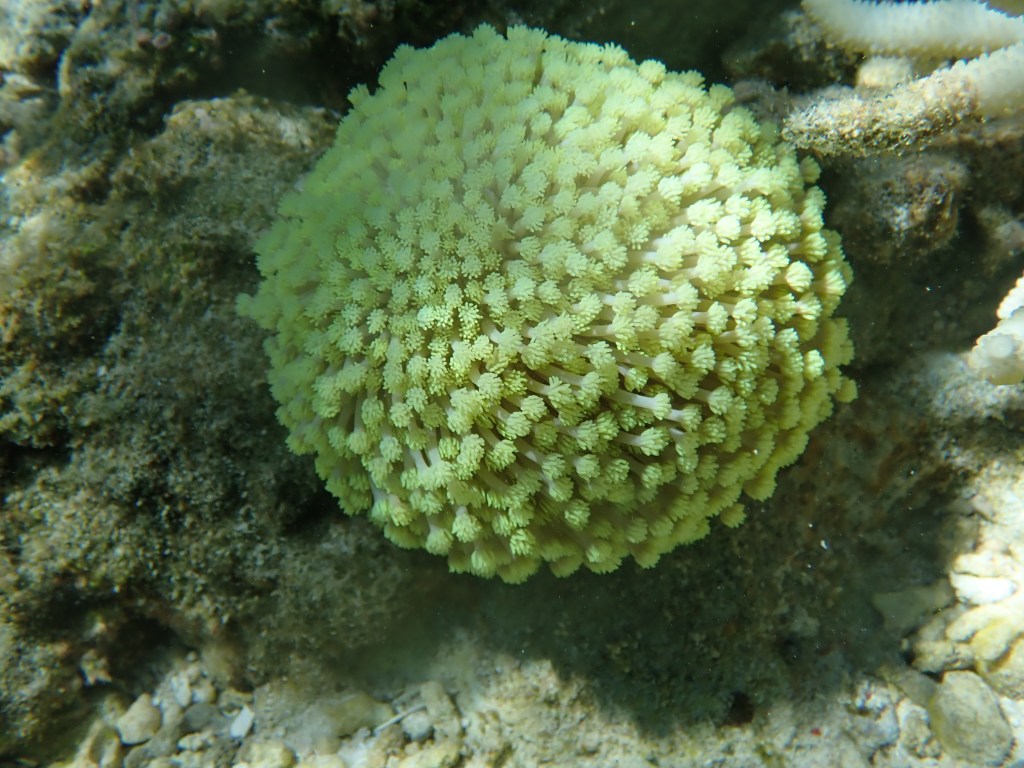
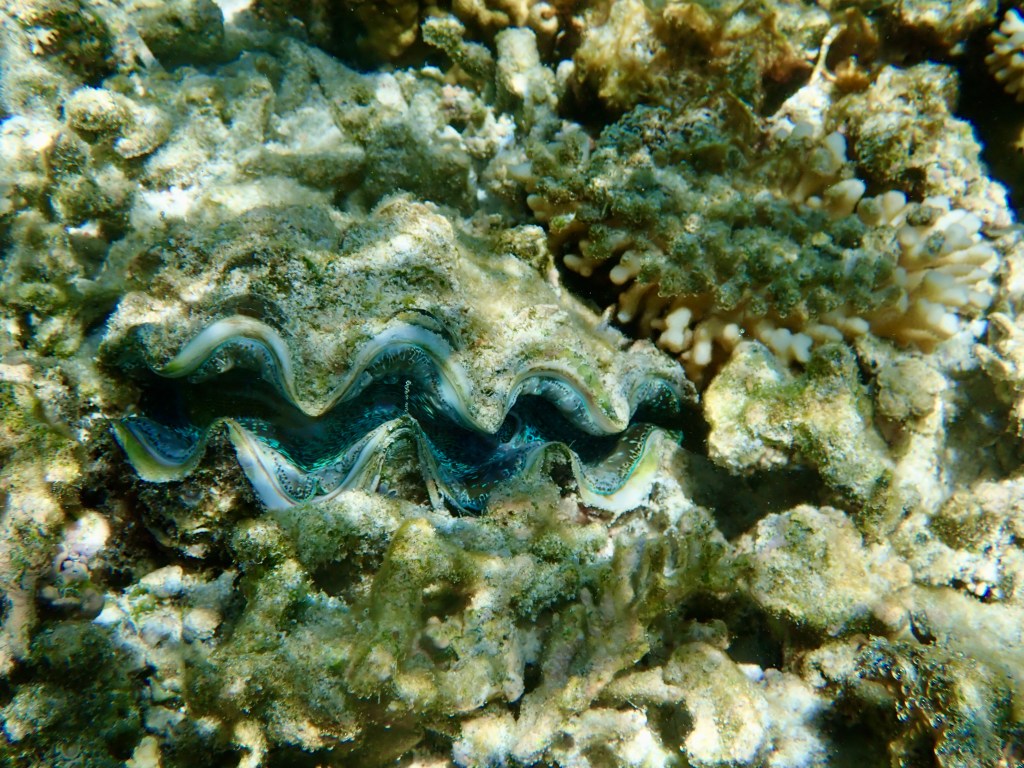
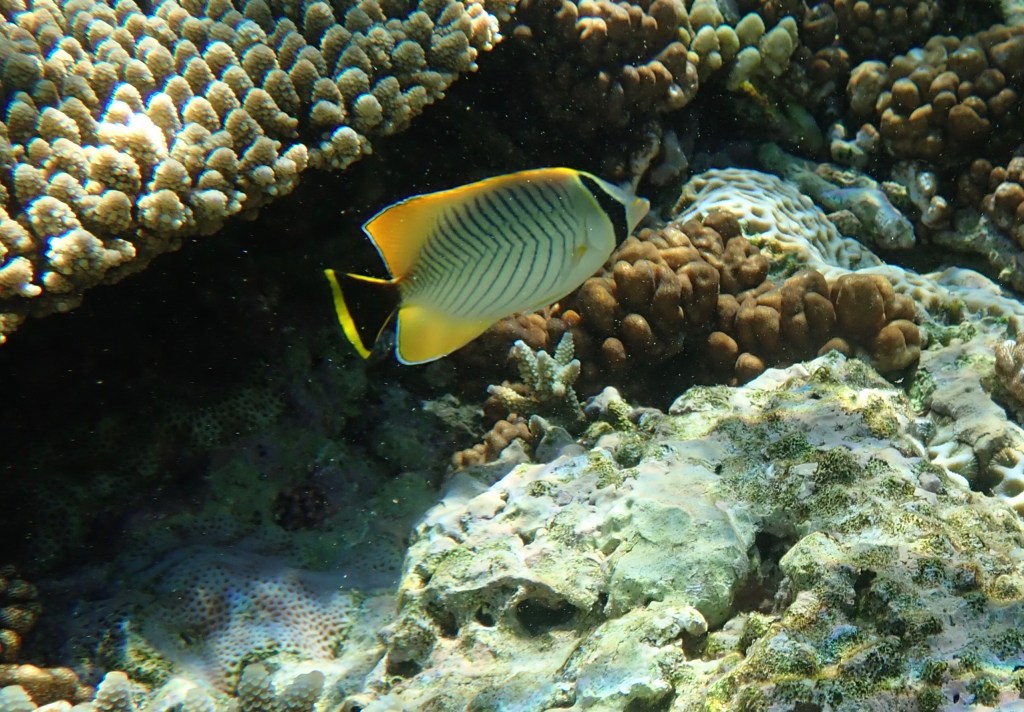
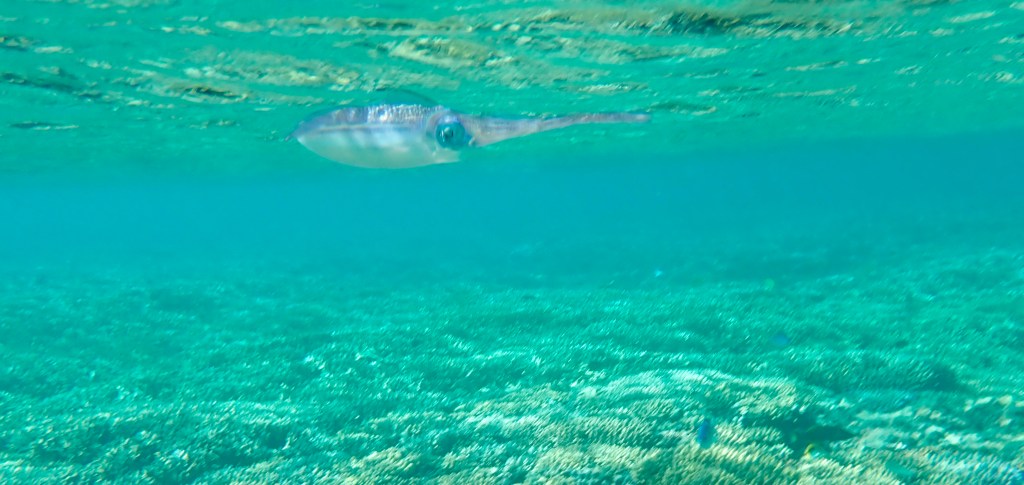
We started gradually in the shallow lagoon in front of the resort which can only be accessed within 2 hours of the high tide to prevent coral damage. Kim and I were both fascinated by the reef and its beautiful corals, sea cucumbers, Tridacna clams and fish, so snorkelled for at least an hour and a half while the tide dropped.
SeA Turtles
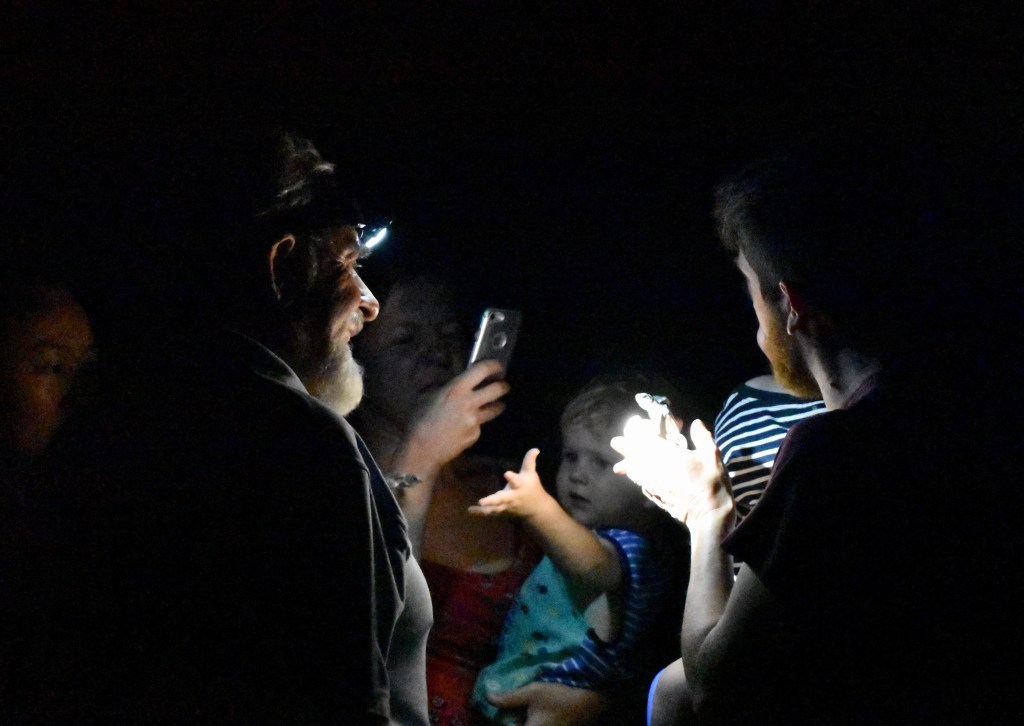
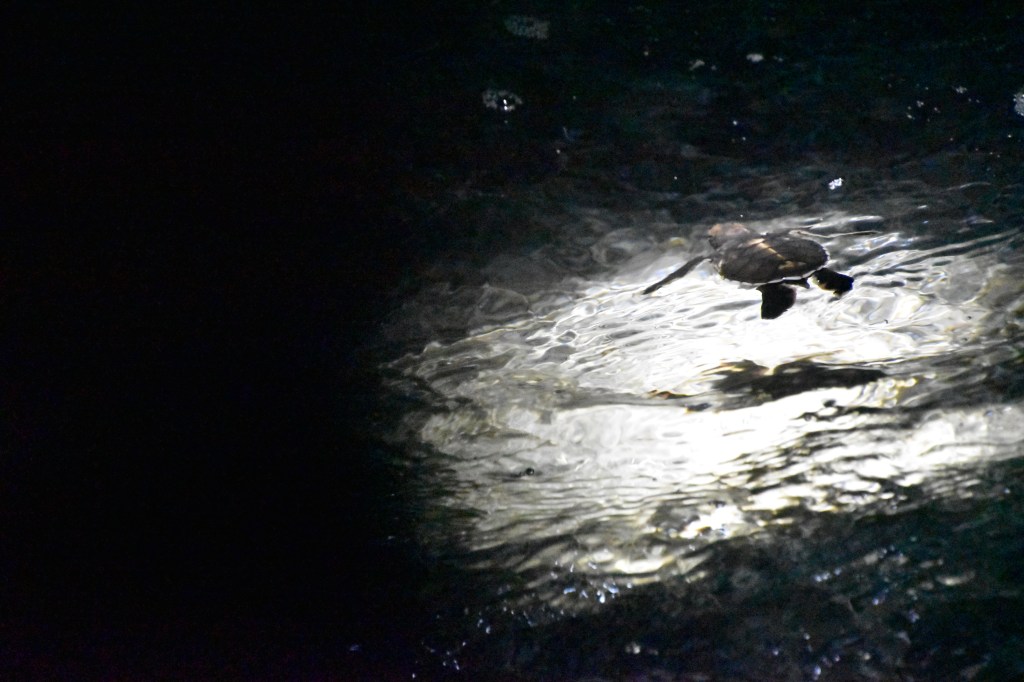
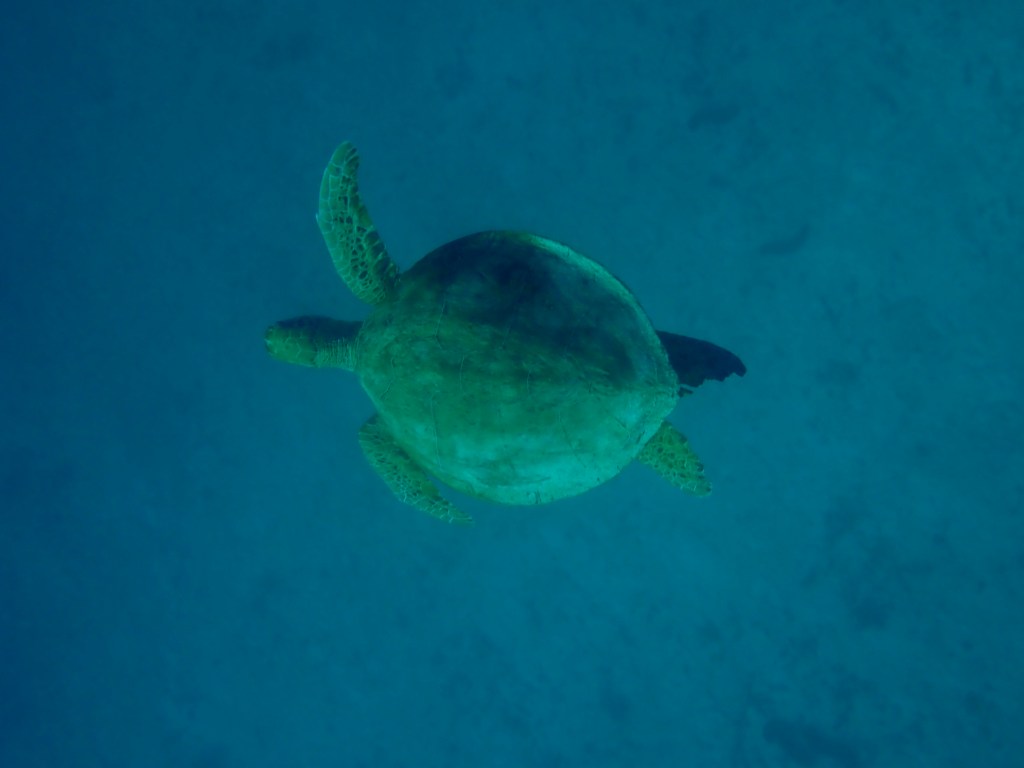
One might get the impression from the amount of turtle photos, that I am obsessed with turtles! That would be true! Still wet after the reef swim I encountered a group of fellow turtle enthusiasts following “The Turtle Man” Jon Meech, who had come out from Bundaberg to check on the turtle nesting. Jon was recovering hatchlings from coral nests that hadn’t been able to dig their way through the coral to escape to sea. Green sea turtles are in the nest as eggs for 50 to 70 days. Then they hatch simultaneously and dig themselves out at night for their charge to the sea! The female Green Sea Turtle makes a journey up to 2700 km to her natal nest area and mates offshore. She comes ashore, then digs and lays from 80 to 200 eggs in a nest then returns to sea. The sex ratio of a nestling is determined by the temperature of the nest at 20 to 40 days. Hotter temperatures (greater than 30 degrees) hatch a majority of females, while temperatures below 28 degrees hatch a majority of males.
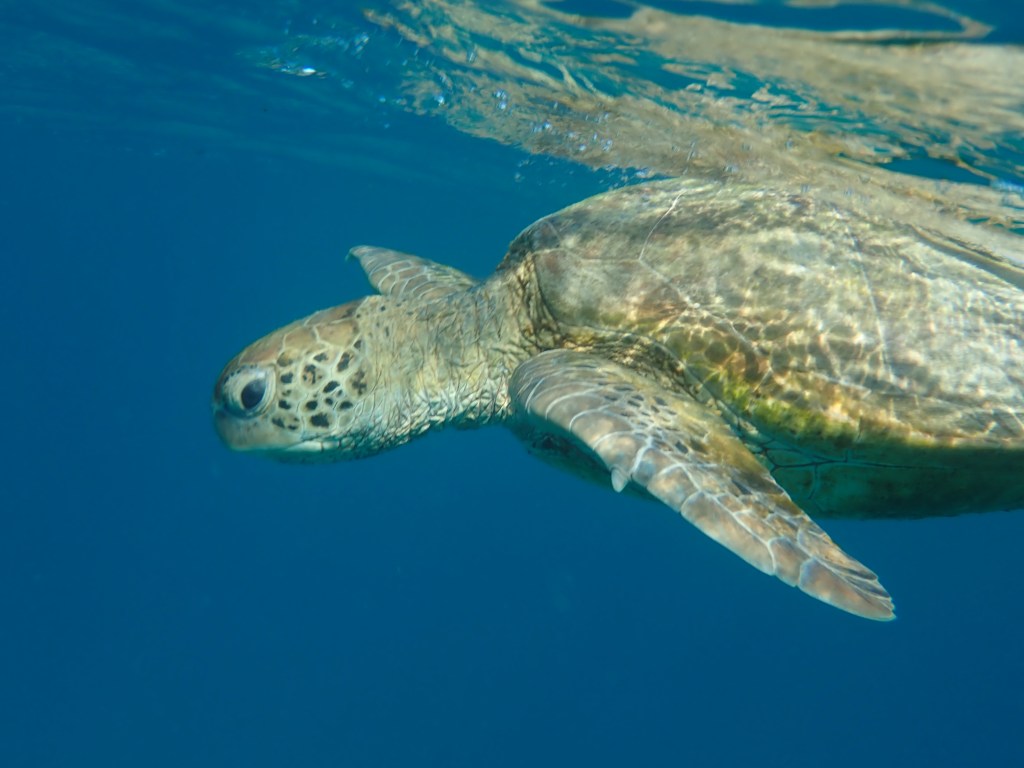
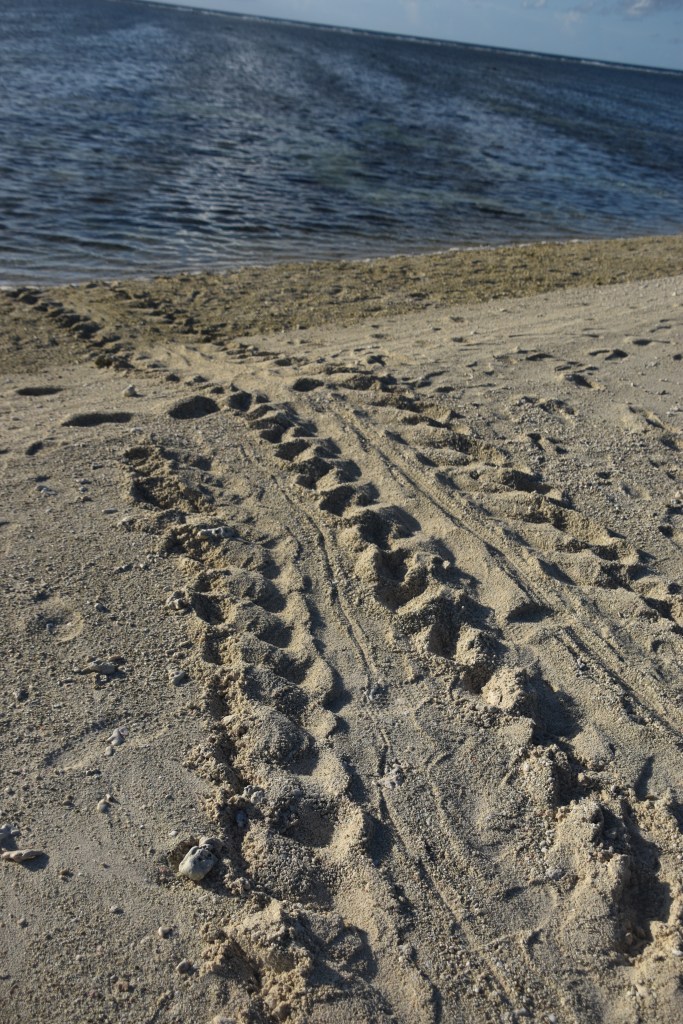
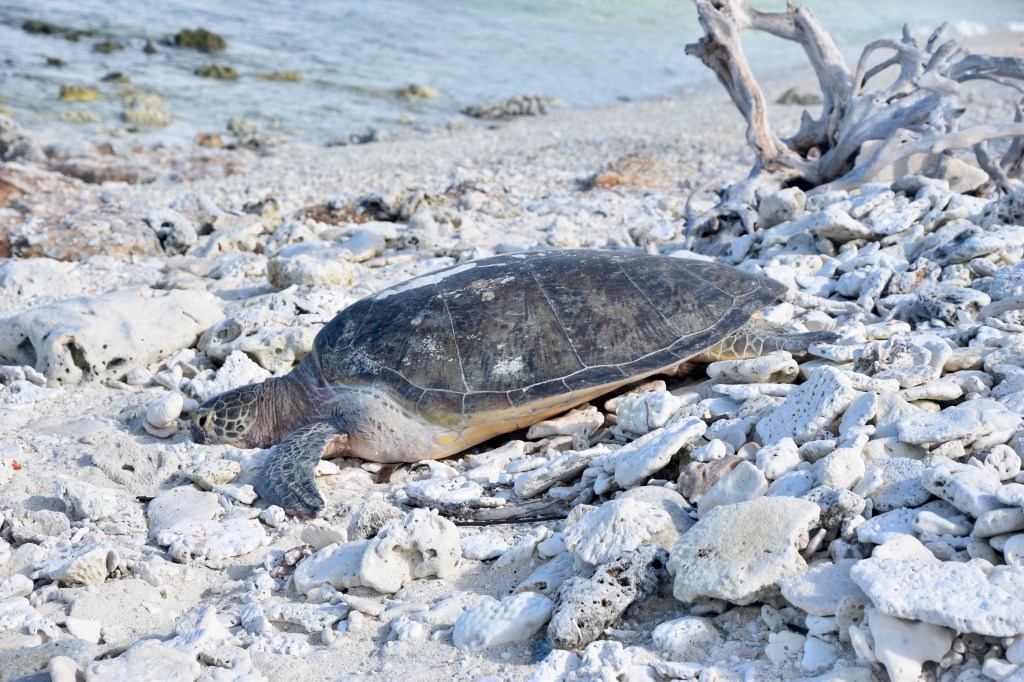
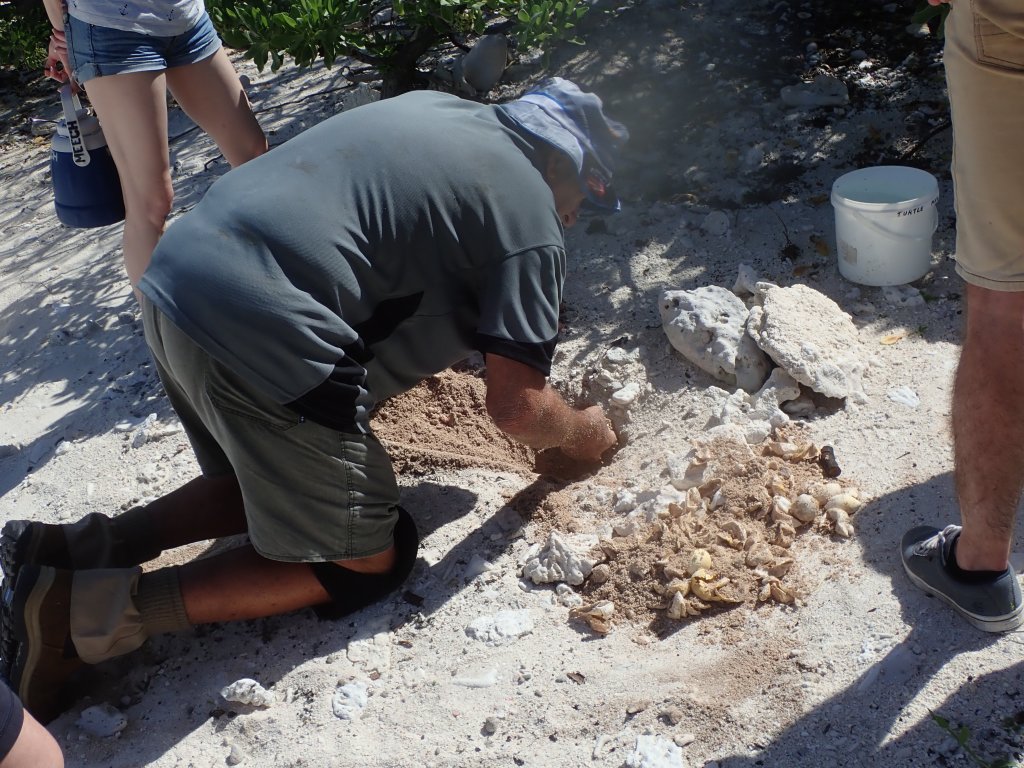
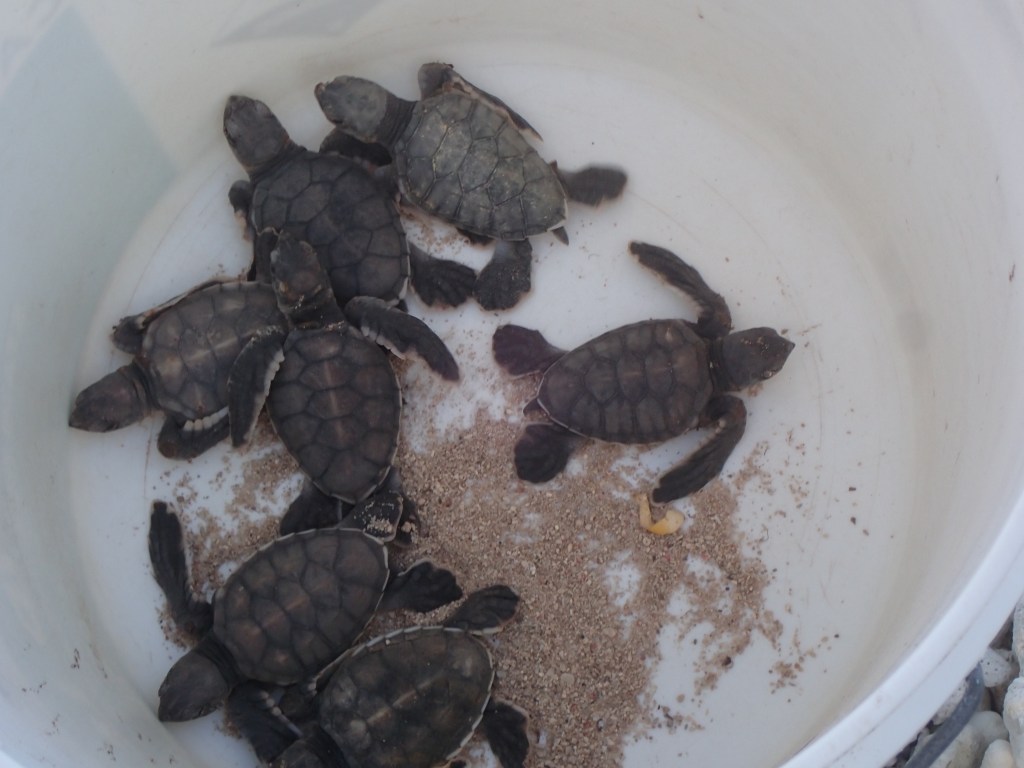
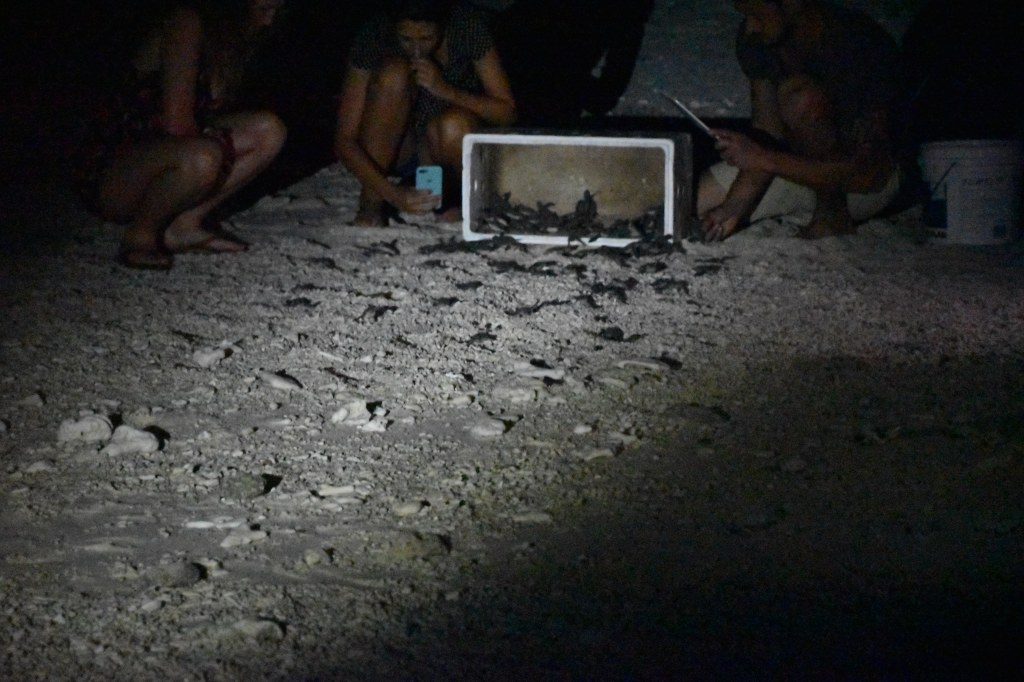
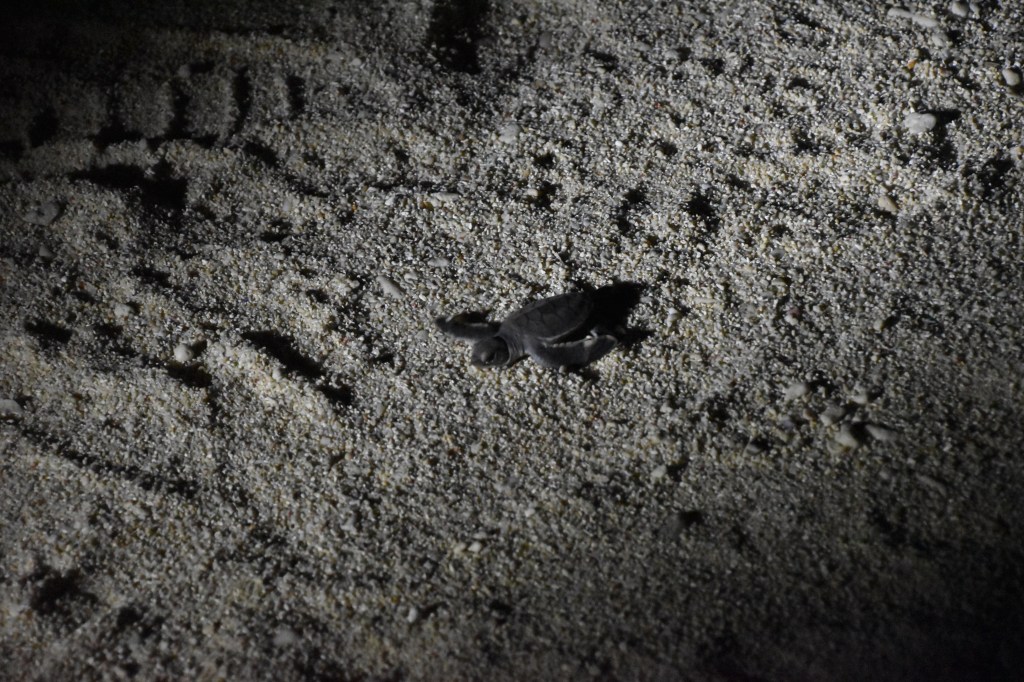
After supper there was a turtle education program followed by a night expedition to release the hatchlings to make their way to the sea. These hatchlings do not need to feed for some time, but they need to dodge Silver Gulls, land predators and numerous oceanic predators that will gobble them down in their time swimming and growing in the world’s oceans. Only 1 in a thousand hatchlings ever return to reproduce and thus the threats facing sea turtles are very serious!
Coral Reef
Coral reefs have some the highest biodiversity of any place on earth. Their amazing structures provide habitat for so many organisms of many different phyla. The Great Barrier Reef is thought by some to be the largest living ecosystem on earth. Coral reefs are formed by free swimming polyps (polyps are coelenterates, the phylum with jelly fish) landing on a barrier reef. Charles Darwin was the first to hypothesize on formation of reefs. Darwin thought that coral reef formation started when oceanic volcanic islands went extinct and then subsided. This provided a substrate for corals to build fringing reefs alongside. Often , this system included a lagoon between the land and main reef. Then as the land subsided or eroded away, the fringing reef becomes a large barrier reef or atoll. Coral Reefs in healthy circumstances grow at about 1- 5 cm per year. The Great Barrier Reef formed along a continental shelf instead of a volcano, but Darwin’s principal still applies.
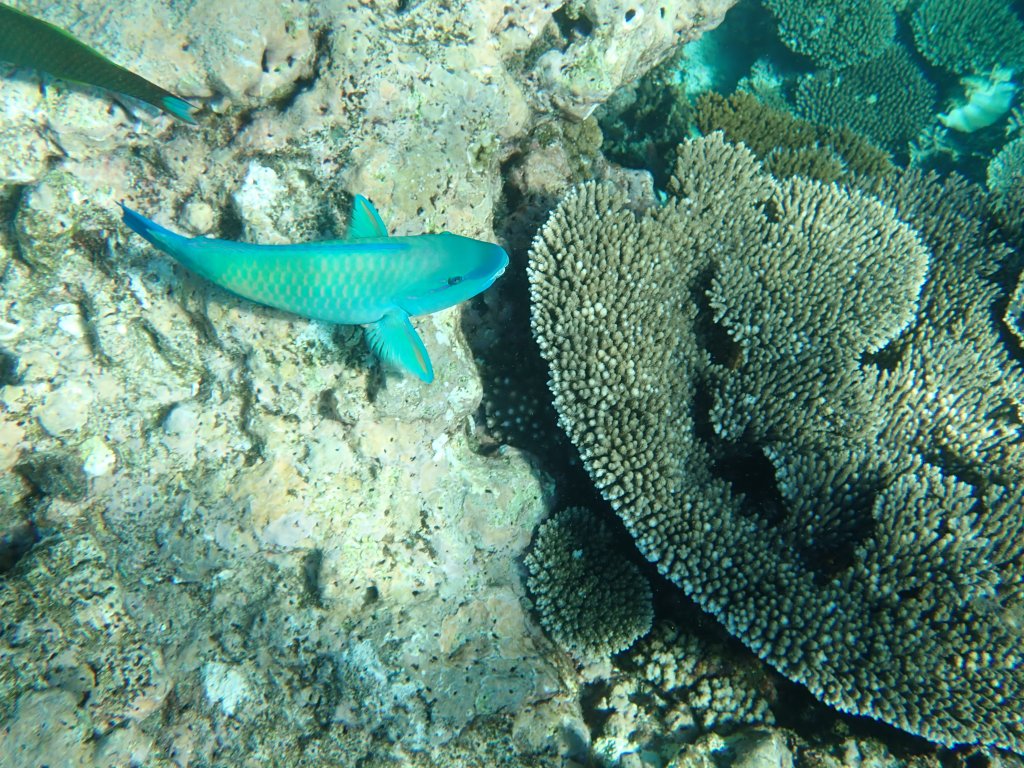
Way back when, I took a fantastic invertebrate biology course at UVIC from Dr. Fontaine who was more than thrilled about coral reef physiology! I remember him describing how coral reefs take up CO2 and the formation of Calcium Carbonate structures. While I don’t remember details, I do remember that the role that corals and their symbiotic relationship and calcium carbonate building was so important in worldwide ecology. To refresh’s my knowledge, I looked up the Wikipedia reef forming description and it is excerpted here: “Coral polyps do not photosynthesize, but have a symbiotic relationship with microscopic algae (dinoflagellates) of the genus Symbiodinium, commonly referred to as zooxanthellae. These organisms live within the polyps’ tissues and provide organic nutrients that nourish the polyp in the form of glucose, glycerol and amino acids.[60] Because of this relationship, coral reefs grow much faster in clear water, which admits more sunlight. Without their symbionts, coral growth would be too slow to form significant reef structures. Corals get up to 90% of their nutrients from their symbionts.[61] In return, as an example of mutualism, the corals shelter the zooxanthellae, averaging one million for every cubic centimeter of coral, and provide a constant supply of the carbon dioxide they need for photosynthesis”. Coral reefs fix 5-10 grams of Carbon per metre square, per year. Each day on Lady Elliot was spent snorkelling in the amazing coral reef offshore the old lighthouse. To swim in the perfect temperature clear waters full of coral, fishes and so much sea-life was an amazing experience.
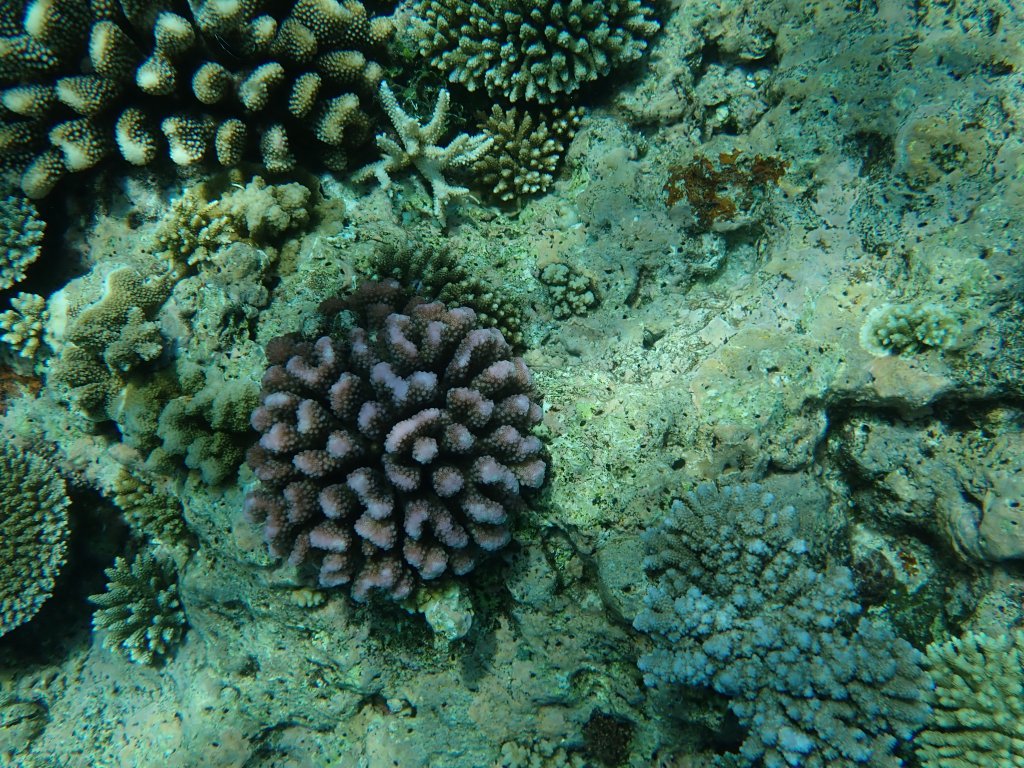
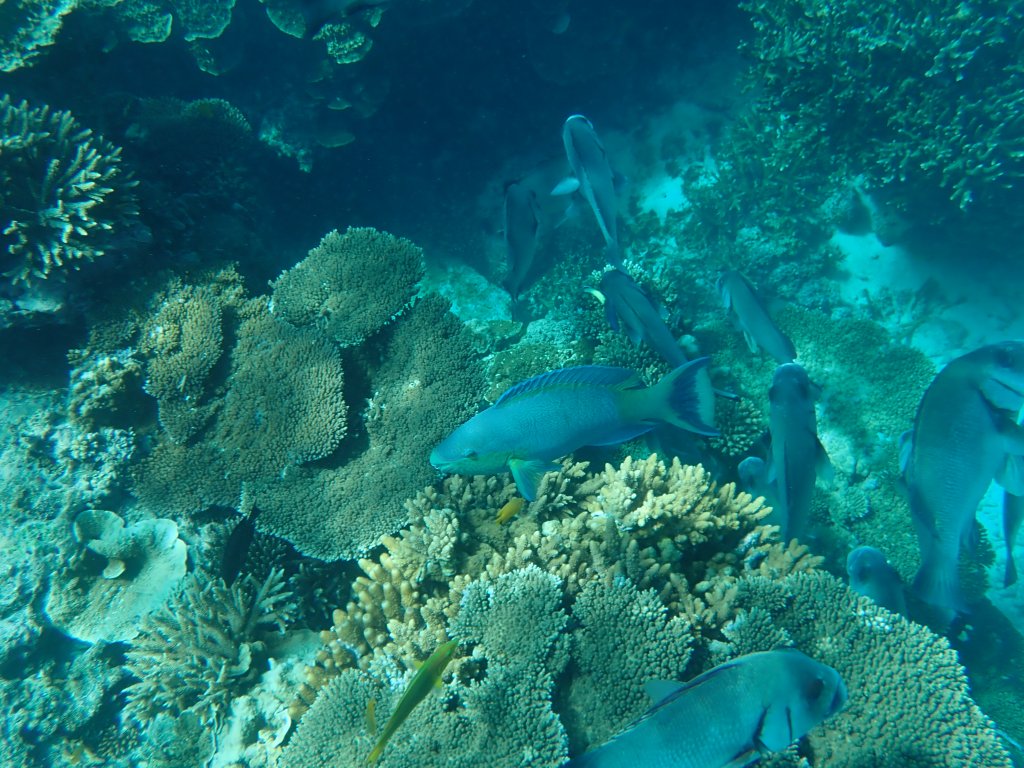
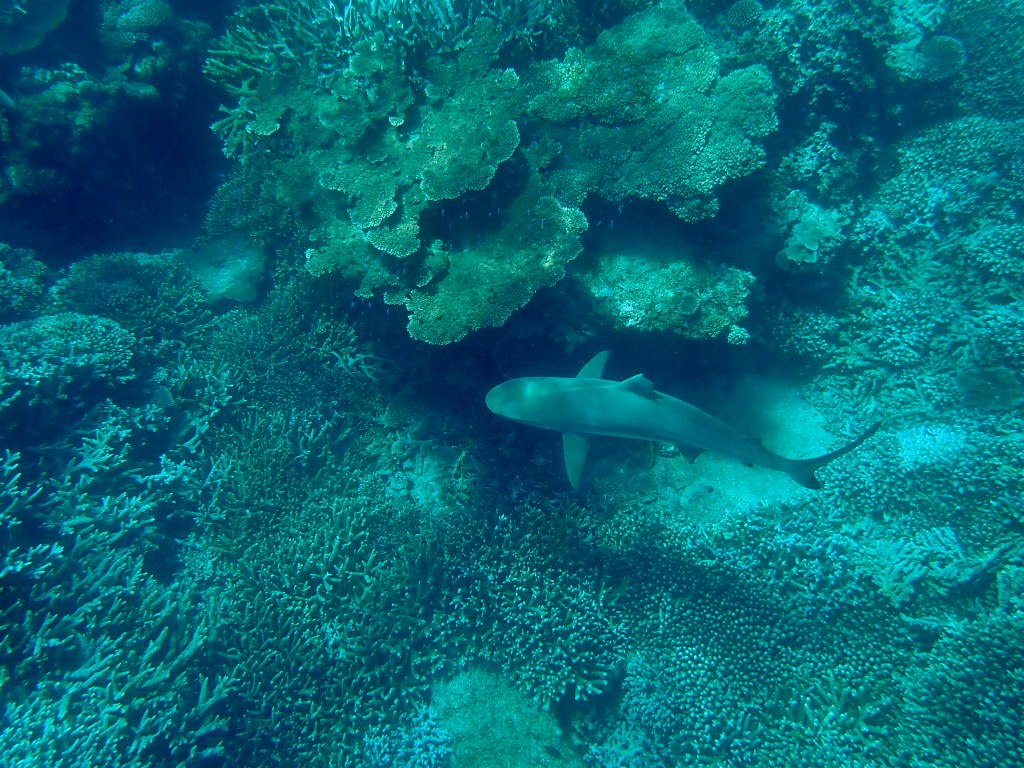
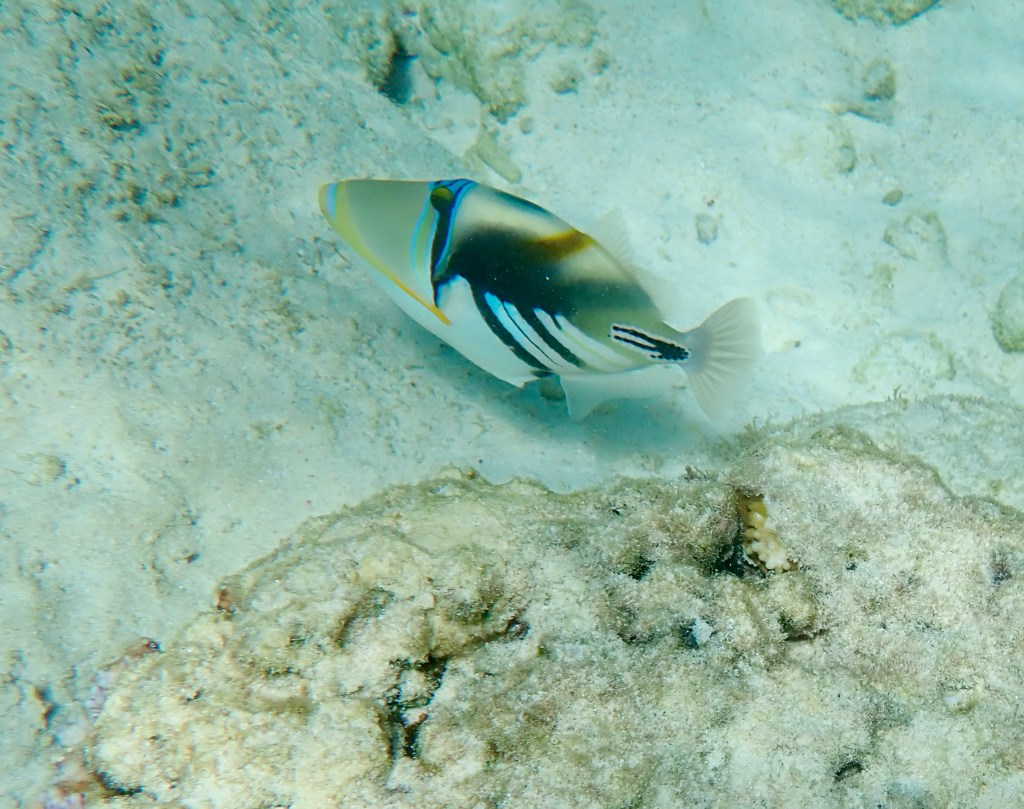
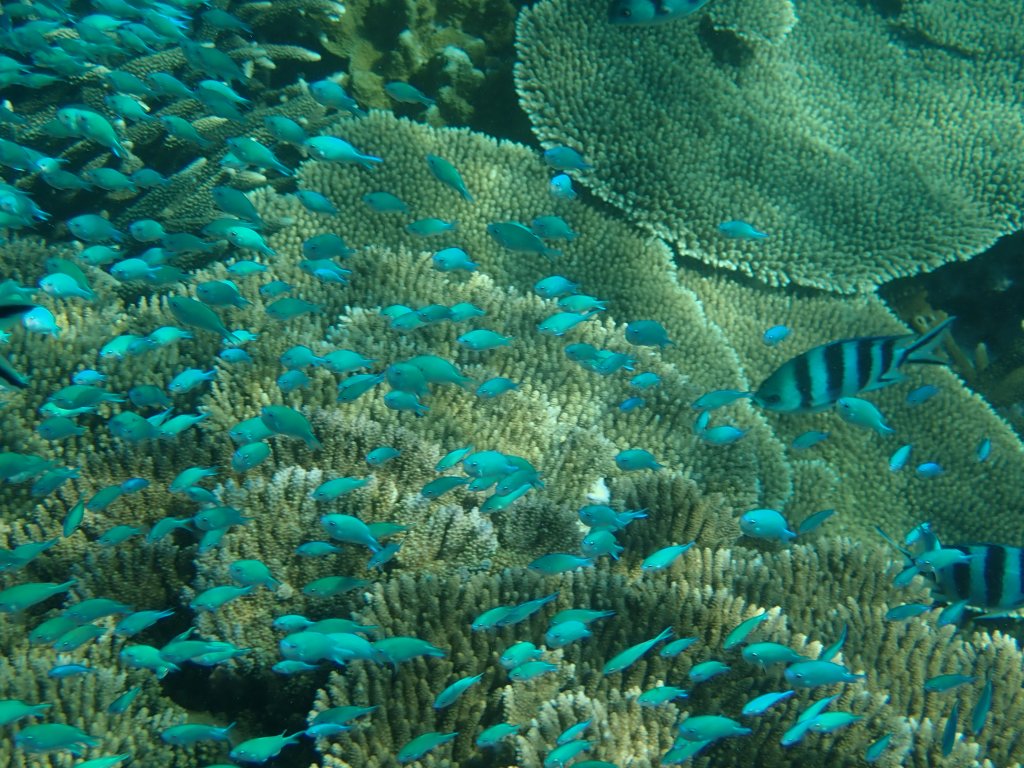
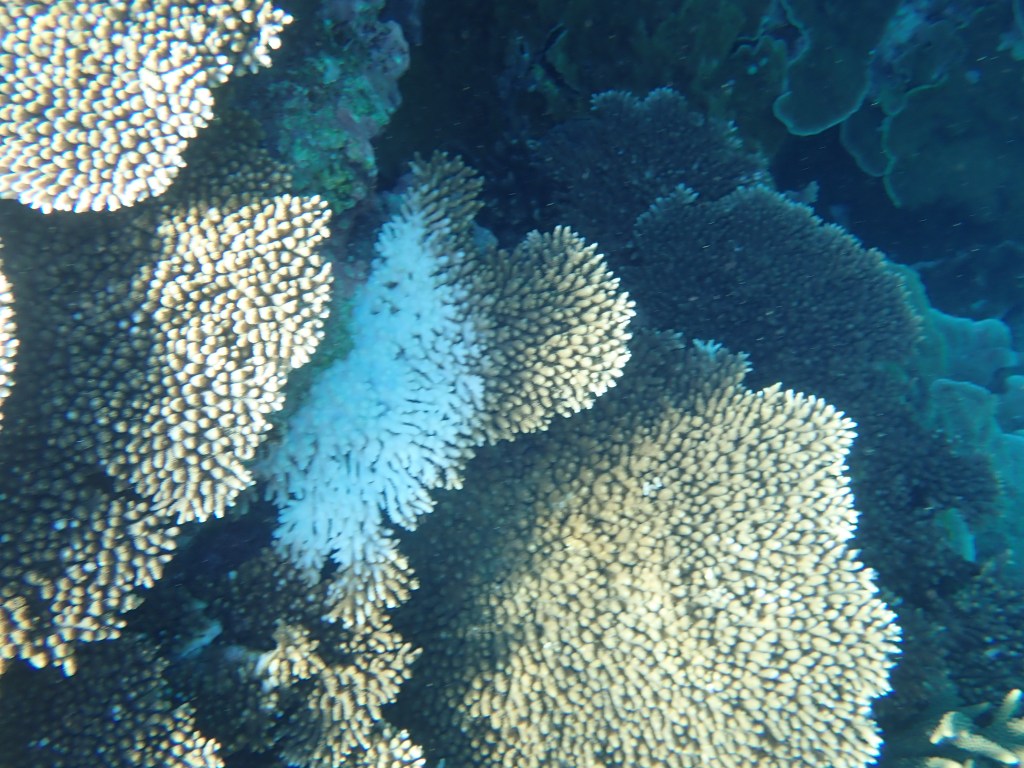
Just before arriving at Lady Elliot Island, I happened to watch a TV special on coral bleaching and its measurement at Lady Elliot. Coral bleaching occurs when warm water ) causes the coral to expel zooxanthellae which exposes pink and blue coral pigments which gives the appearance of florescent coral. The coral then can die. Lady Elliot at the south end of the Great Barrier Reef is doing better than most of the Great Barrier Reef, but occasional patches of bleached coral could be seen.
Manta Rays
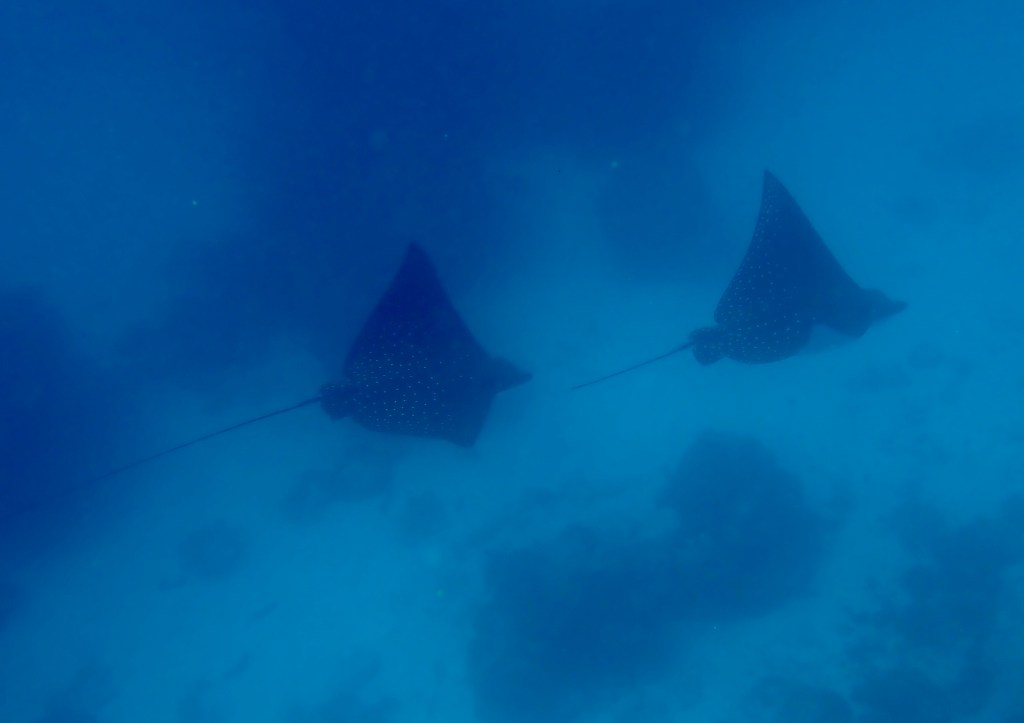
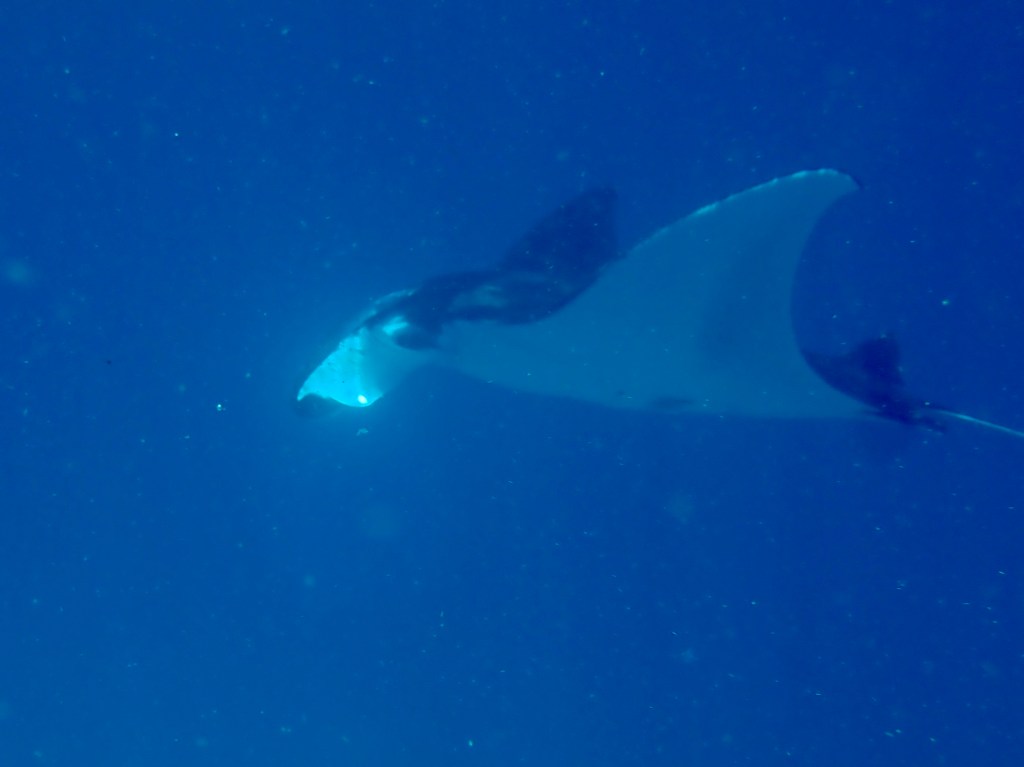
One of Lady Elliot Island’s features is Manta Rays. Manta Rays frequent the bombies (separate coral lumps) to be “cleaned” by wrasse. The cleaner wrasse will even go inside the mantas giant mouths to pick off external parasites. If a wrasse bites a manta too hard, the manta will not visit that cleaning station again. Apparently, the cleaning fishes at Lady Elliot are very gentle, as the same mantas return again and again. Individual manta rays are recognized by markings on their underside and colour variations. There is even a pink coloured manta ray named “Inspector Clouseau” Manta season is generally May onwards, but occasional mantas were spotted this March, so Kim and I were on the look out.
Lady elliot’s Birds
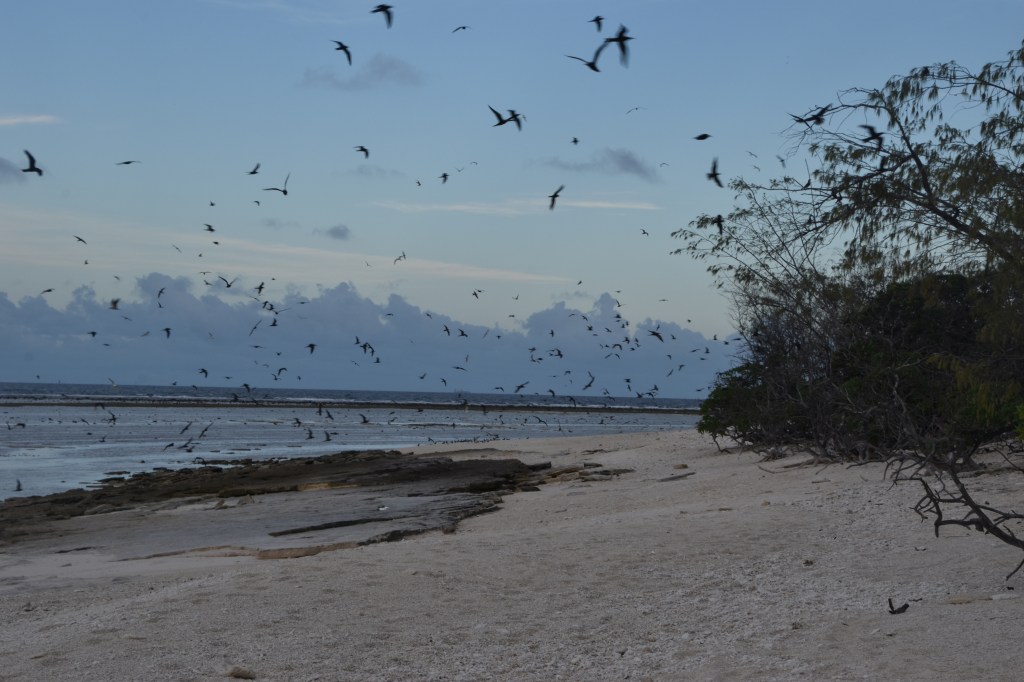
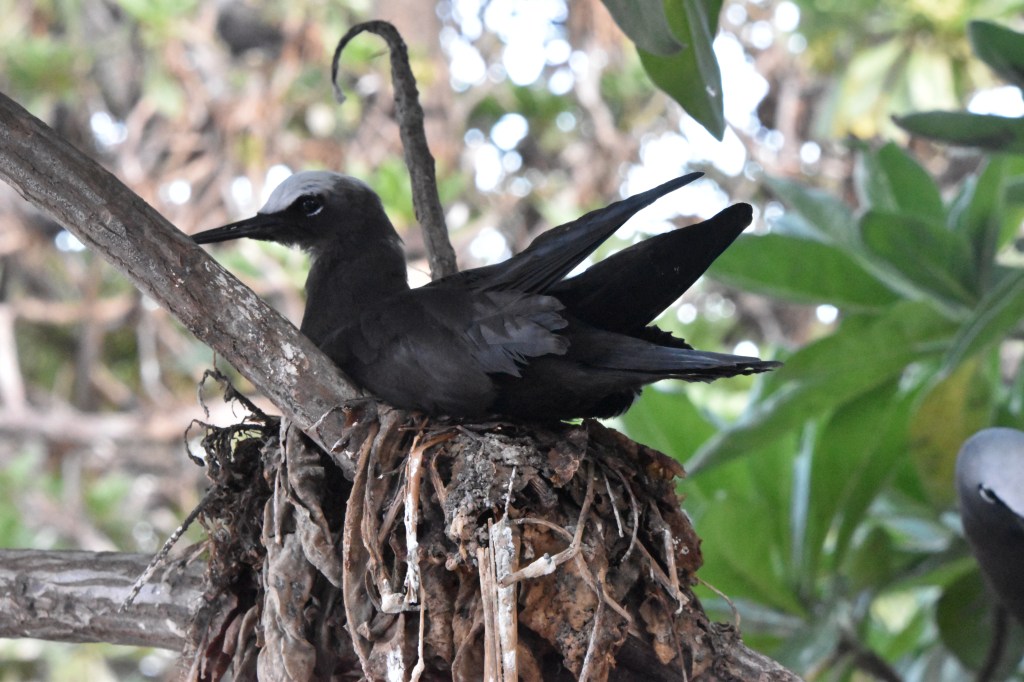
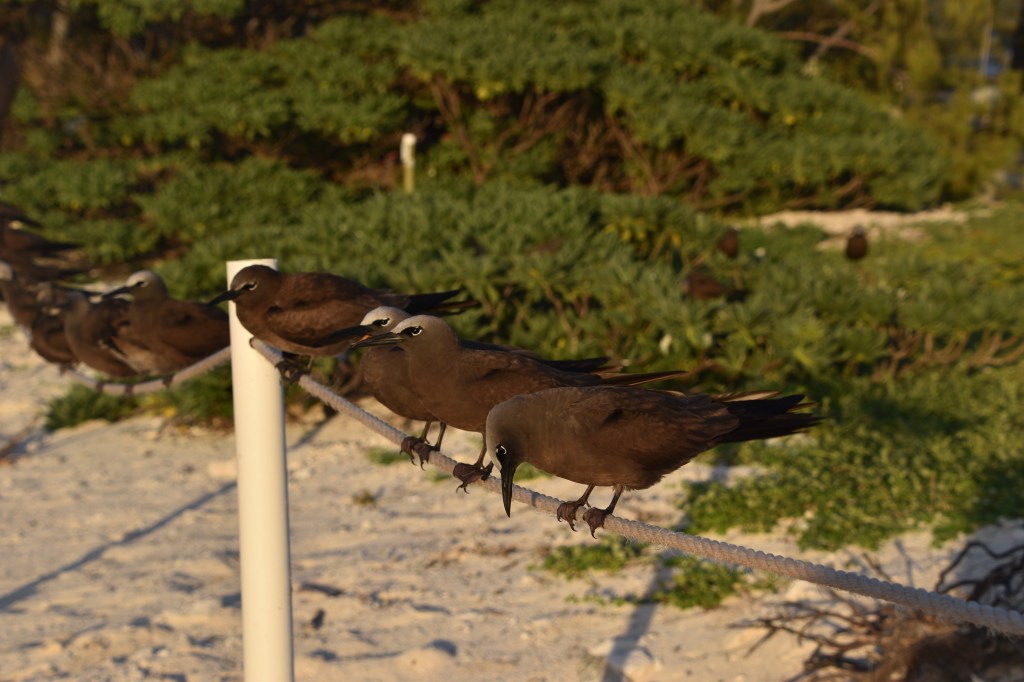
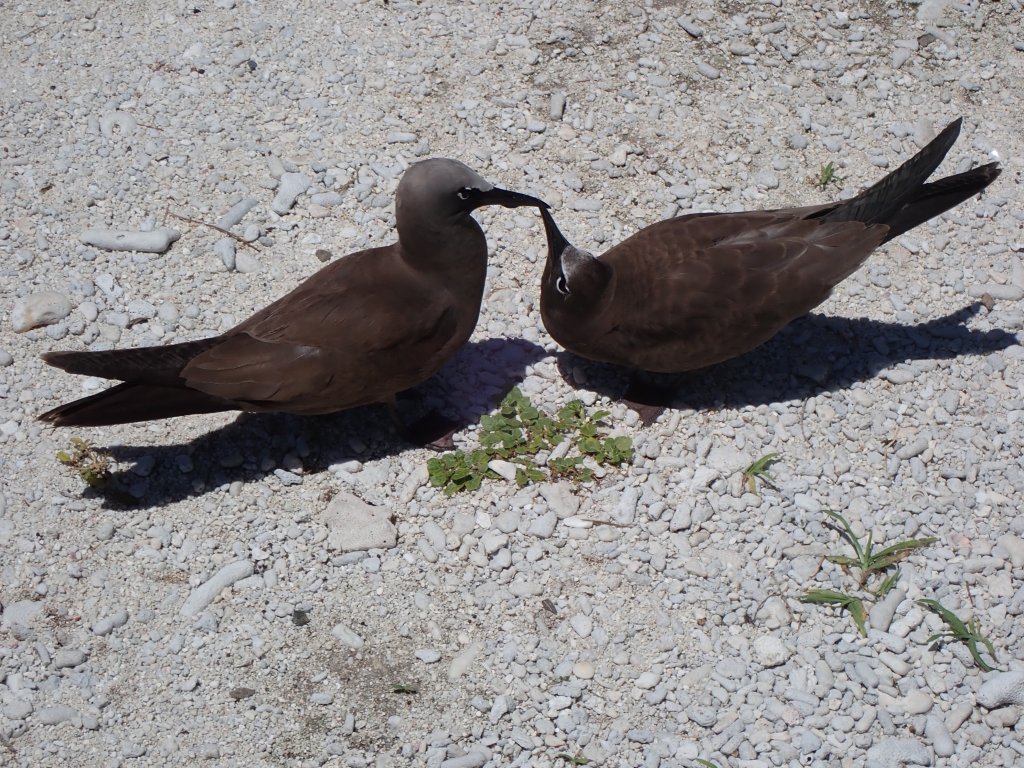
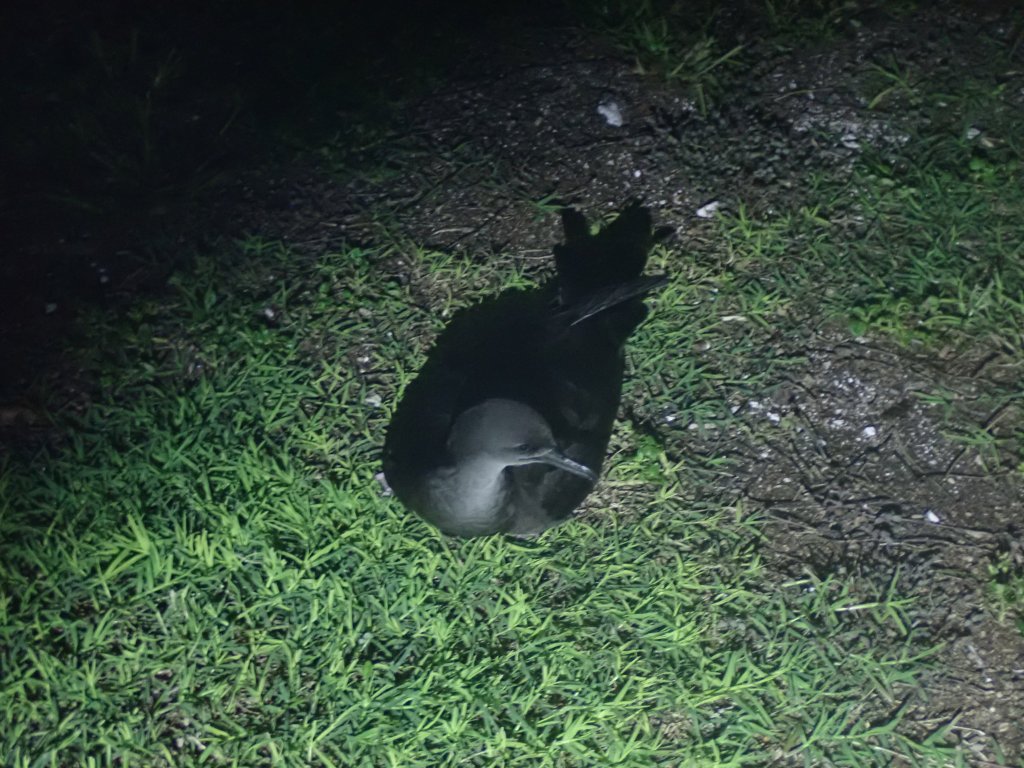
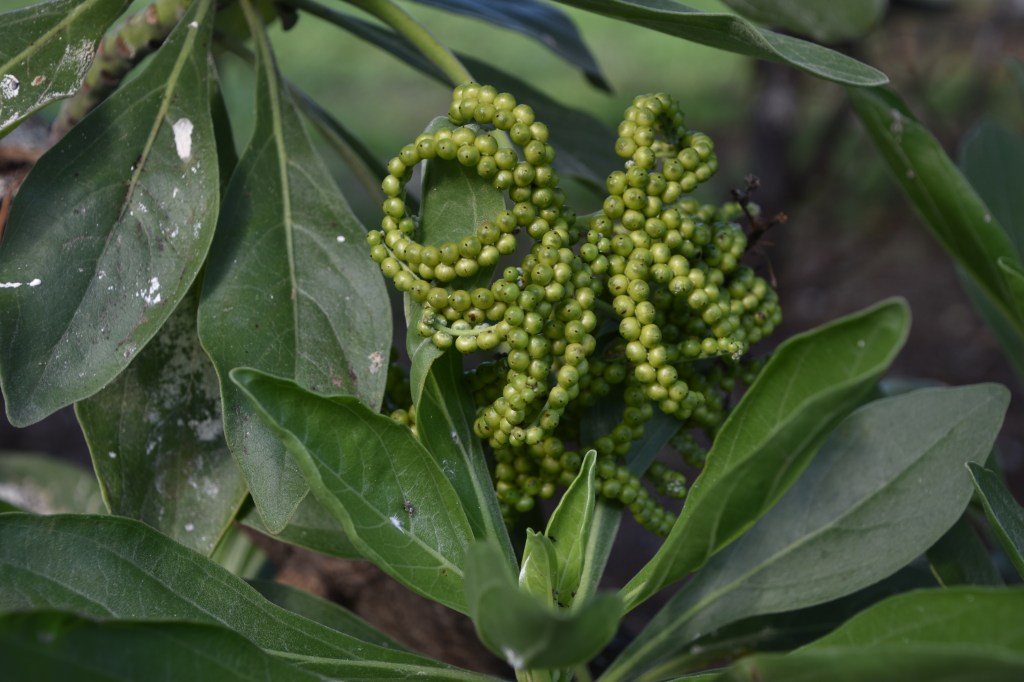
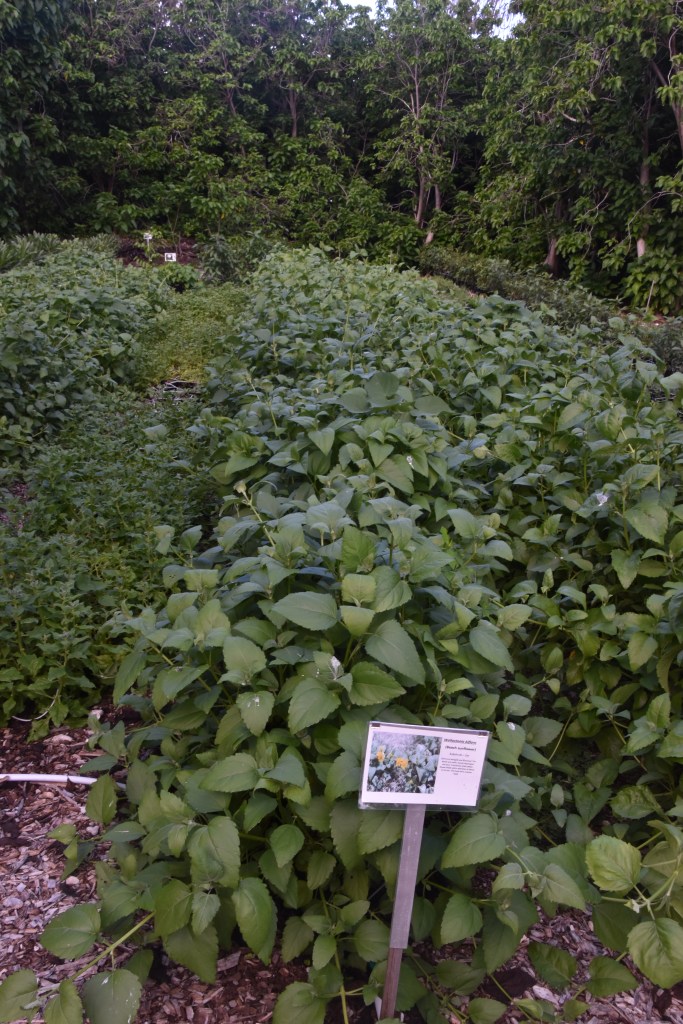
What would one of my blogs be without some notation of birds? Apparently, I picked the best place in the Great Barrier Reef for birds as Lady Elliot Island has the highest diversity of nesting seabirds. The most abundant nesting seabirds are Black Noddies. There are 30,000 nesting pairs of these chatty birds nesting in the shrubs, and low trees (mostly Pisonia) on this tiny cay! Since they feed their young in the small nests made from a few leaves and guano. They are very tolerant of humans and can be seen at eye-height on Lady Elliot. Their droppings (guano) provide the fertilizer for these coral reefs and also give the nesting areas an “essence of sea” perfume. From 1863 to 1873 guano was mined from the island for agriculture at Bundaberg. This denuded the island of the Pisonia and now there are only 4 old-growth Pisonia estimated to be 400 years old. The resort has a very large re-vegetation program going on with a beautiful nursery
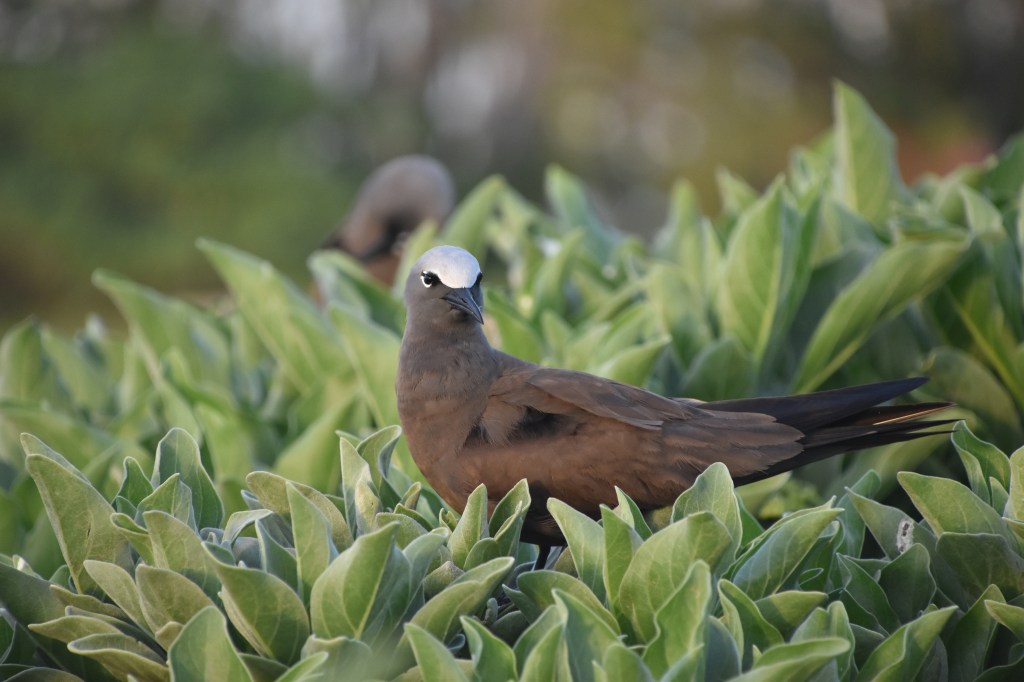
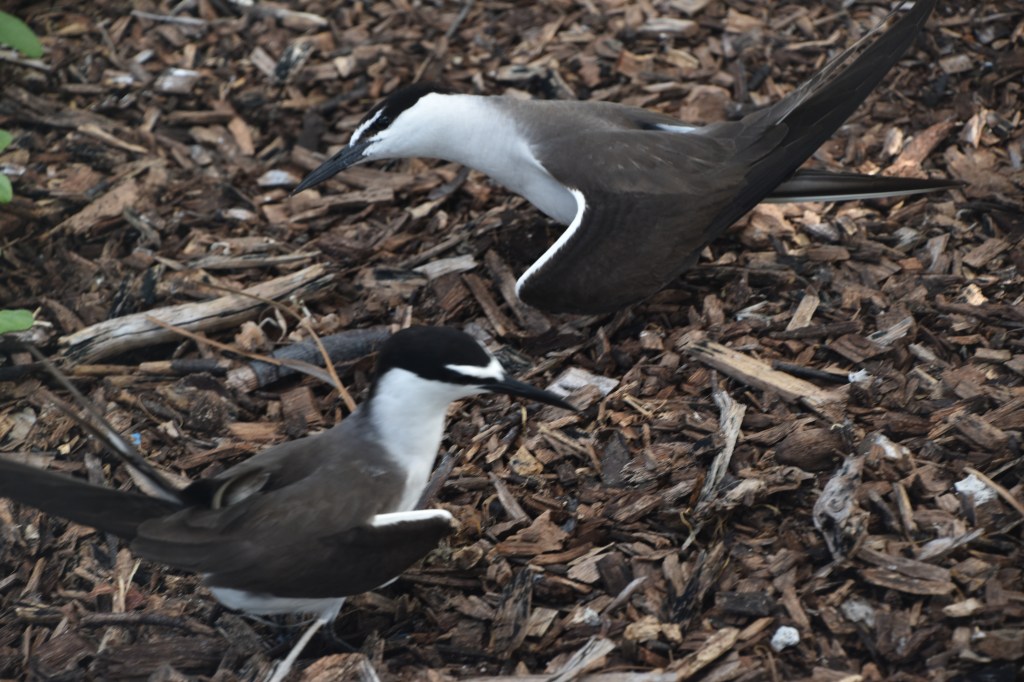
Terns are the next most common bird on Lady Elliot Island. Terns tend to be quite vocal, so between the noddies and terns there is quite a deafening racket during the daytime and especially around dusk.
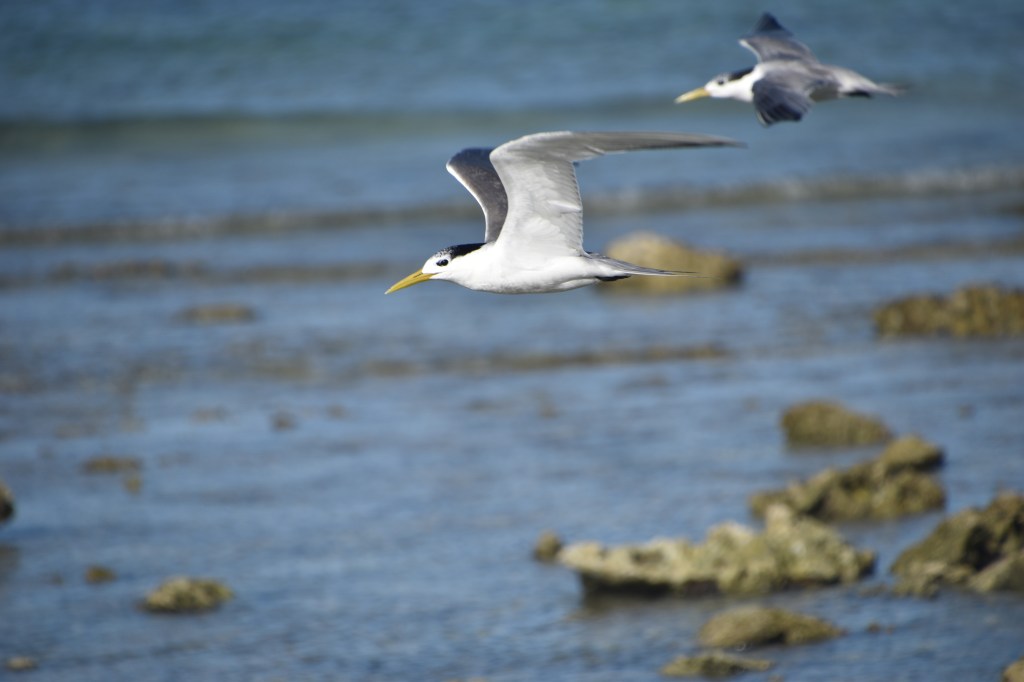
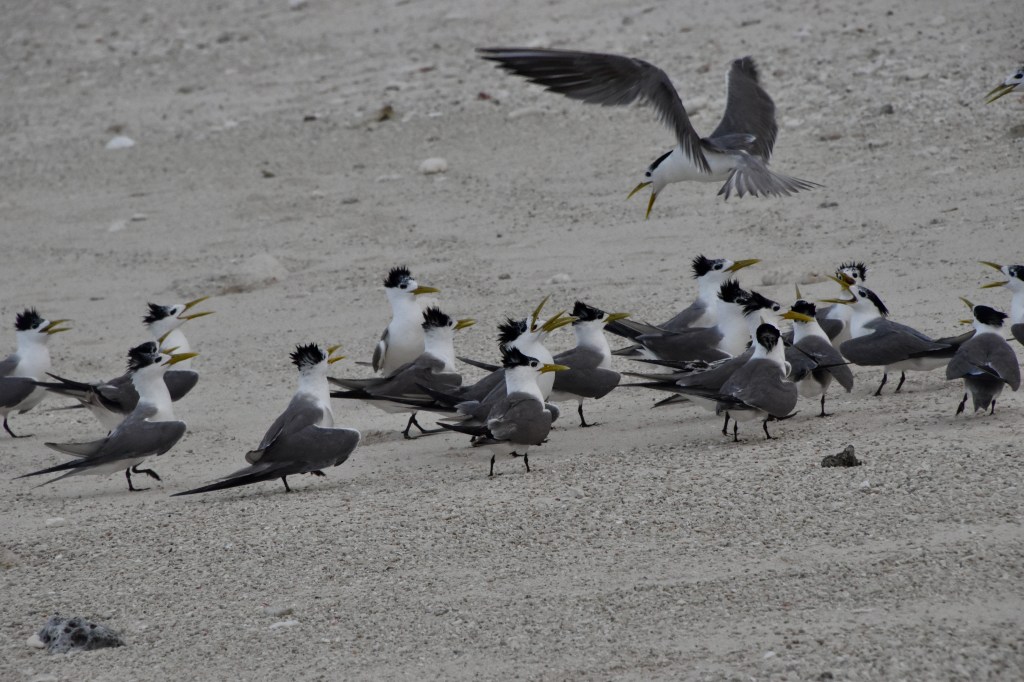
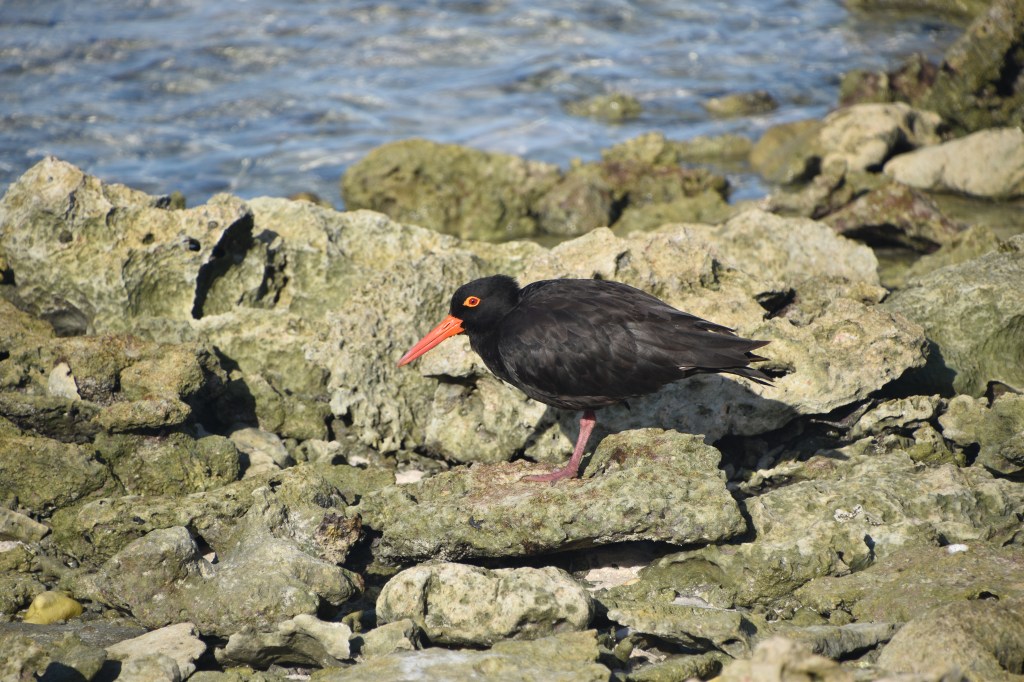
It was a great chance to see some shorebirds that are passing through en route to the arctic or are resident.
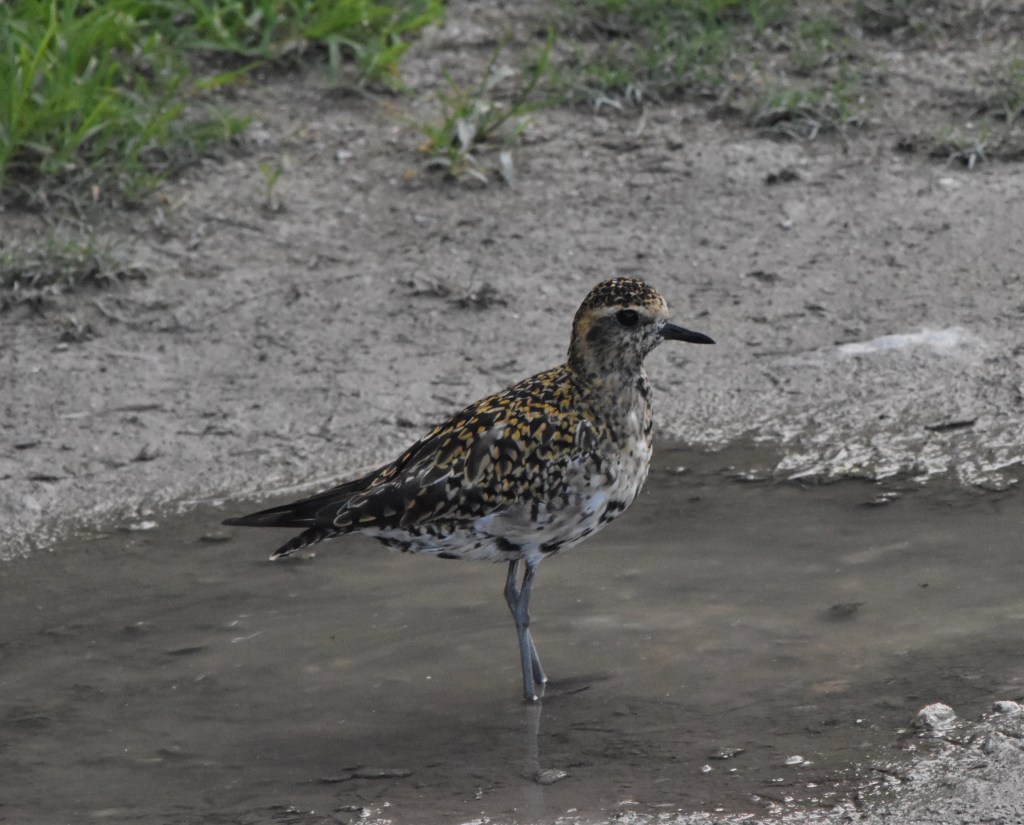
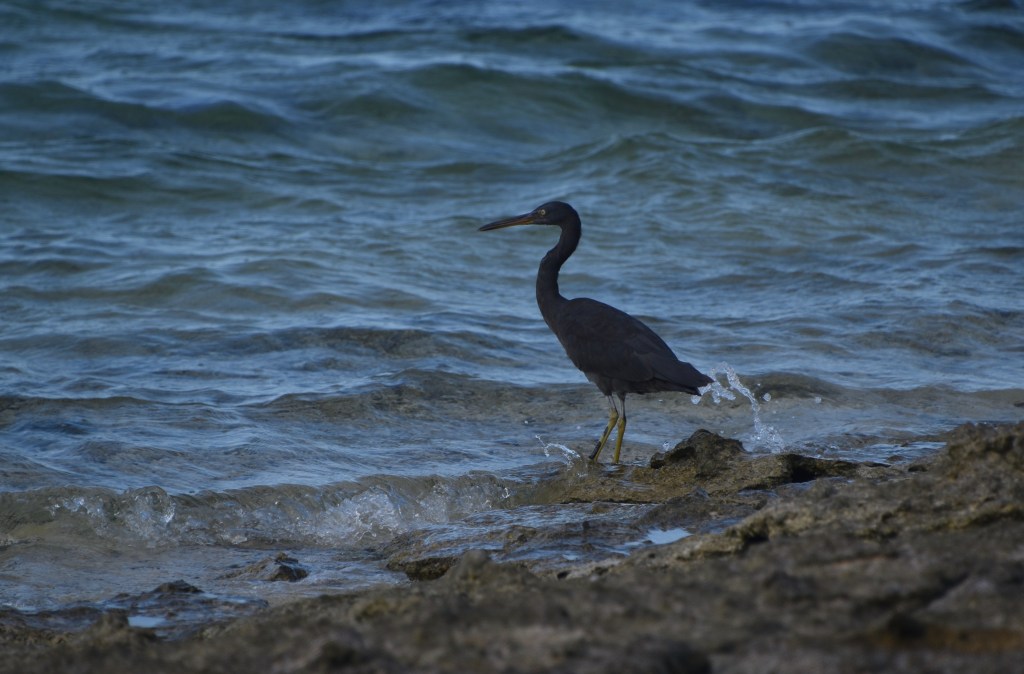
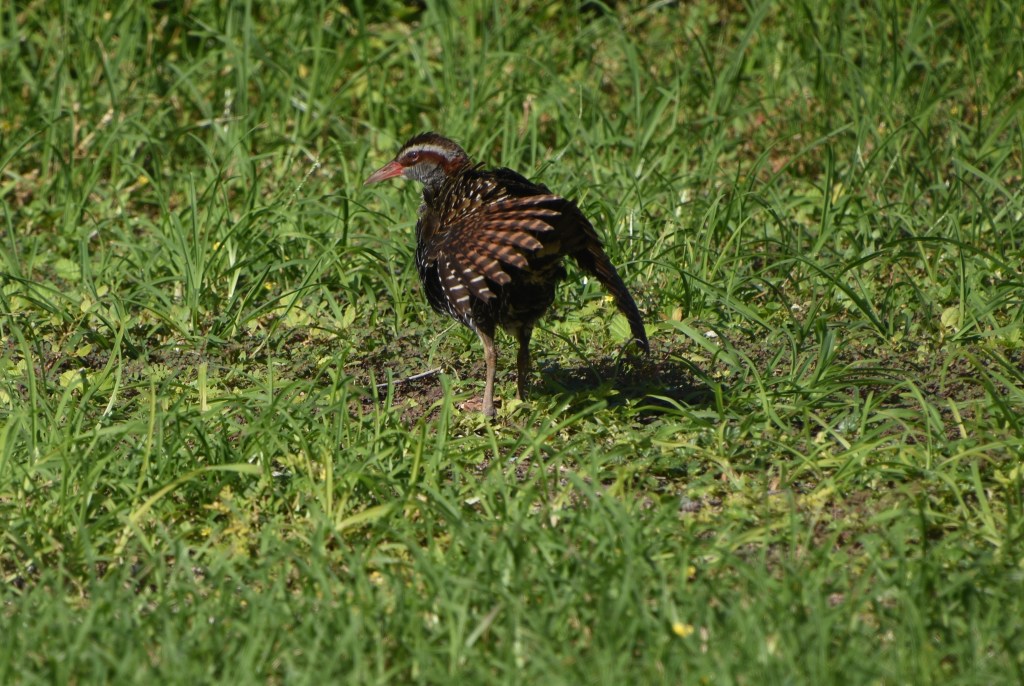
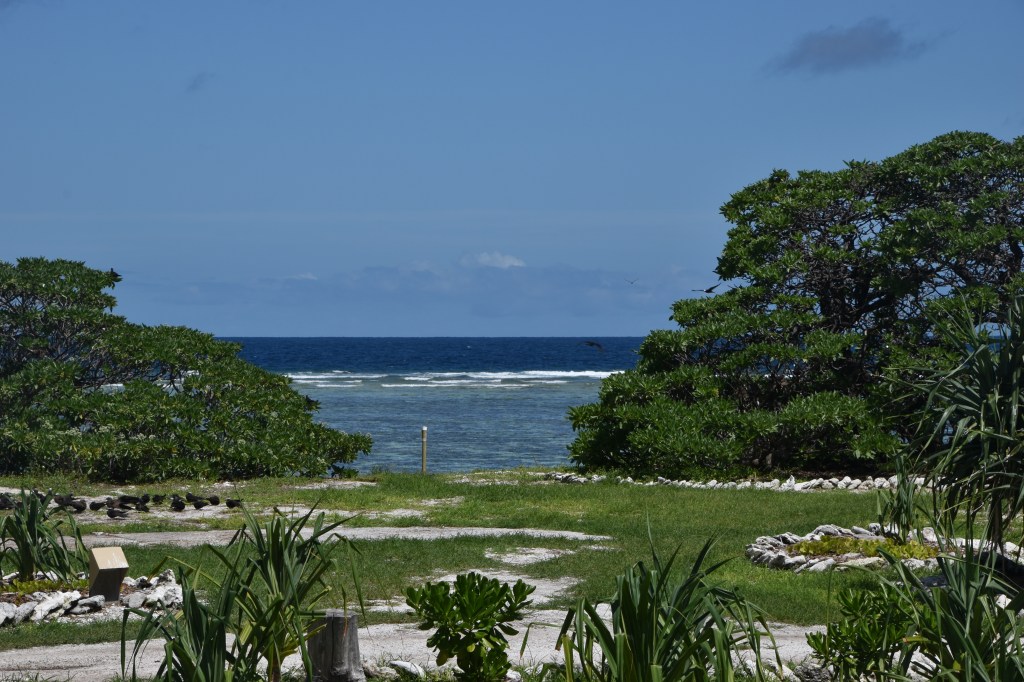
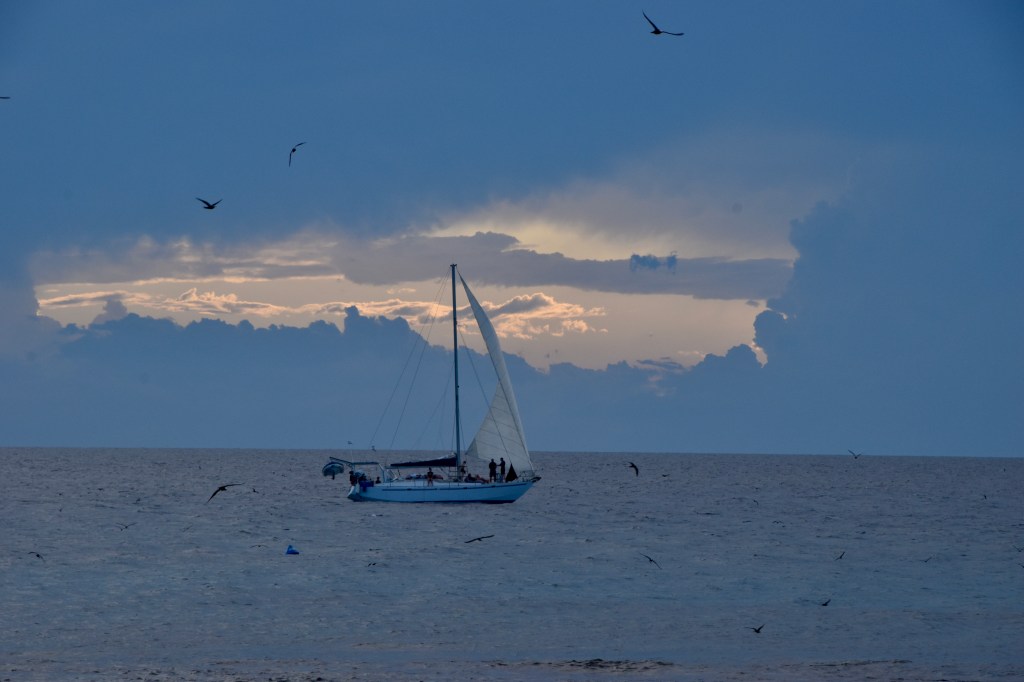
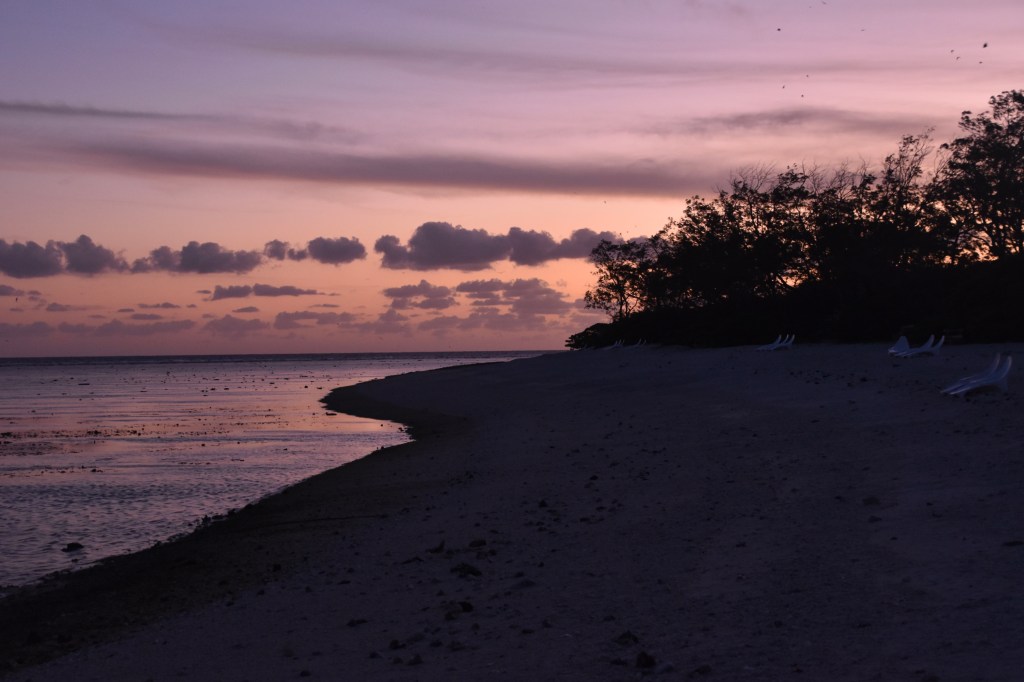
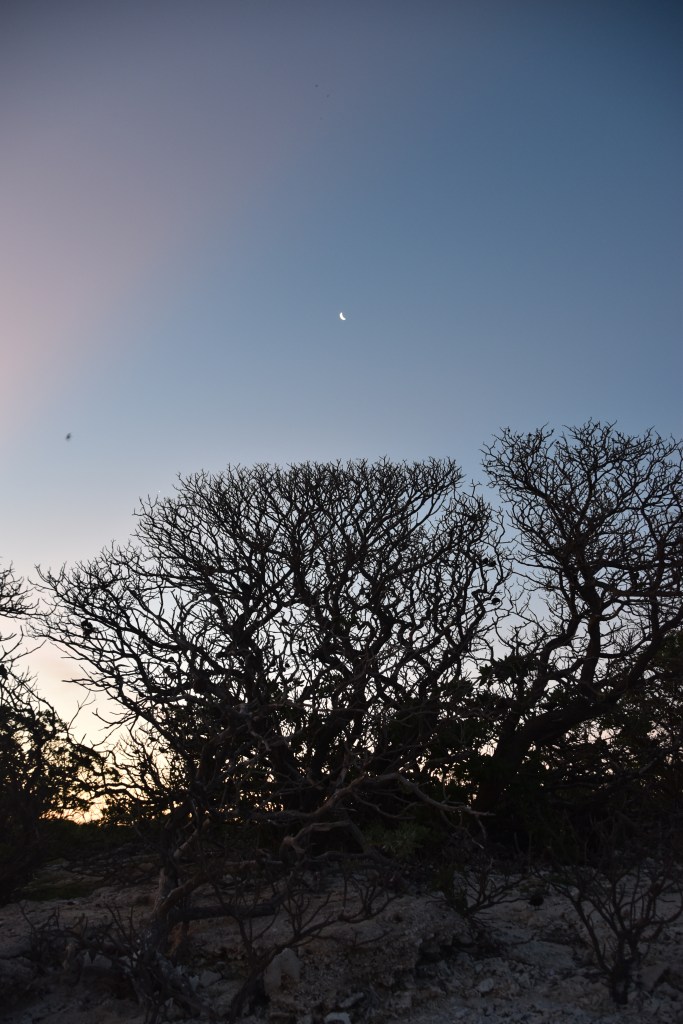
plants and scenes

 Trudy’s Pacific Adventures
Glad your treat was worthwhile Trudy, looks amazing
On Tue, Mar 10, 2020 at 11:24 PM Trudy’s Pacific Adventures wrote:
> Trudy Chatwin posted: ” White-tipped Reef Shark Snorkelling on Lady Elliot > was fabulous! Australia’s Great Barrier Reef is the world’s largest coral > reef system, composed of 900 individual coral islands and stretching for > 2300 km along Australia’s east coast. The Gre” >
LikeLike
Glorious!! thank you for this wonderful sharing. I feel I must start packing and head out to Lady Elliot immediately….Harry would have just loved it
I am determined to visit and experience it – once the present “situation” has cleared.
Safe travel and thank you for the wonderful blog Emmah
LikeLike