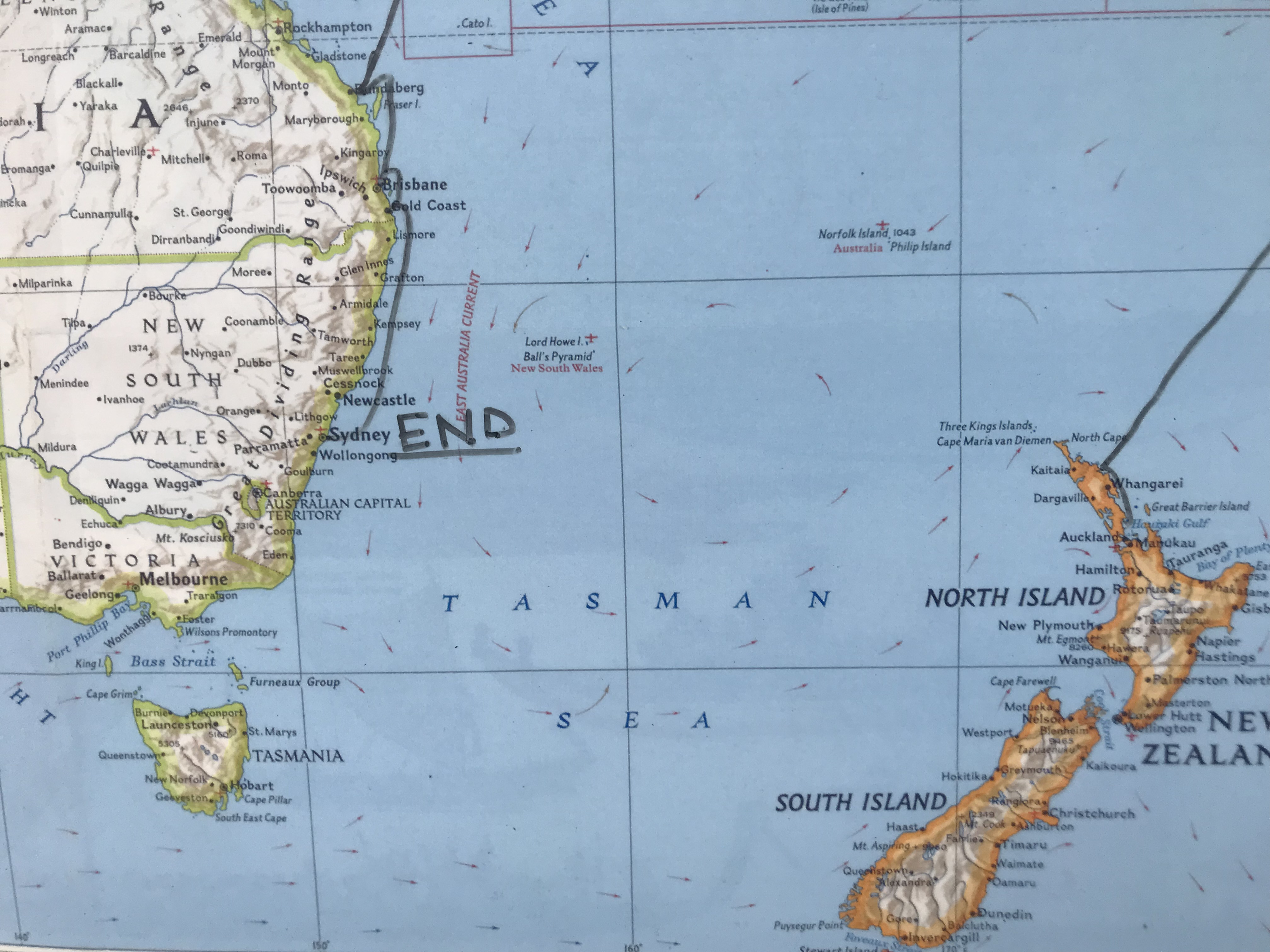
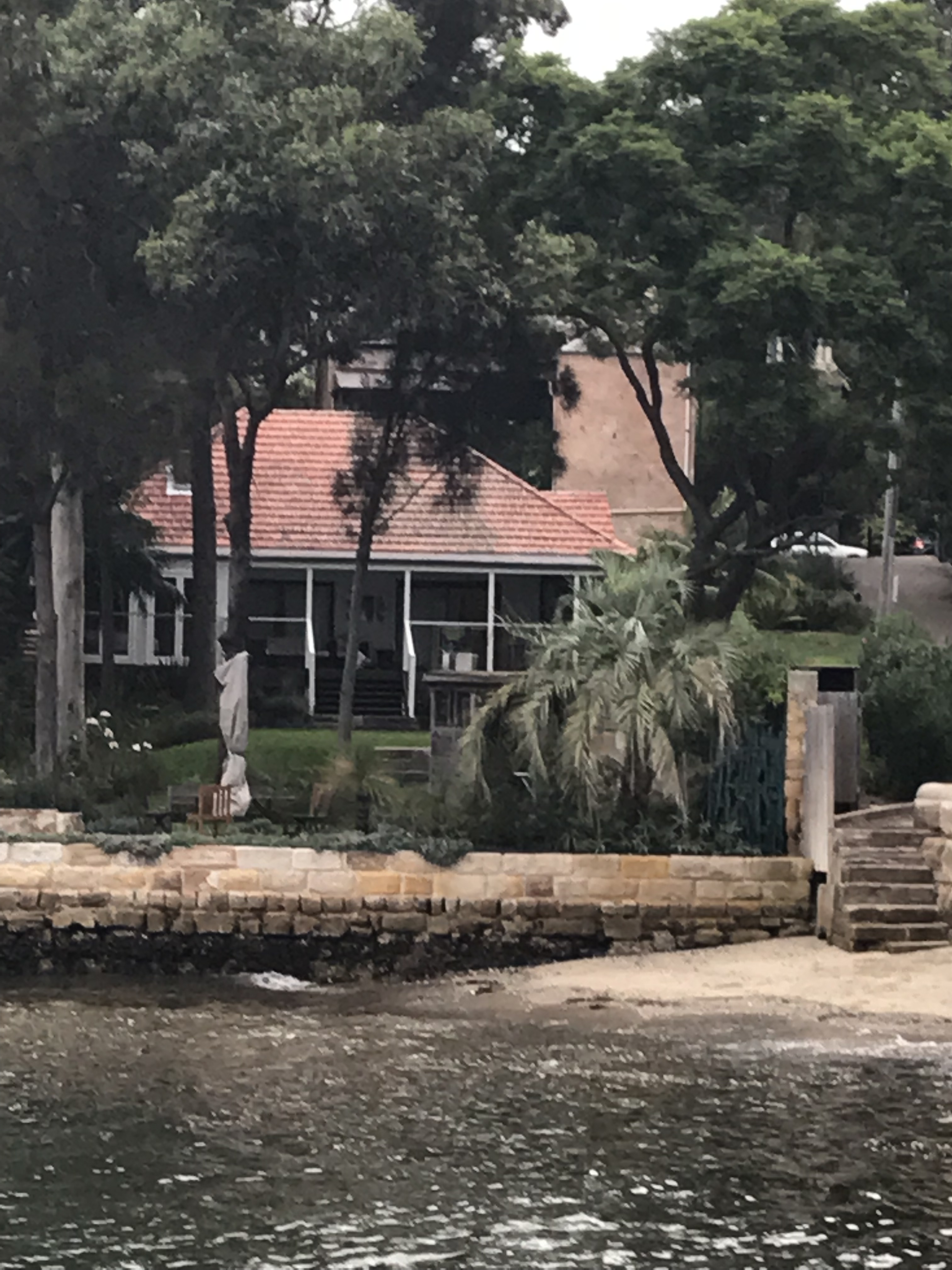
Getting on a 10am flight from Sydney’s Kingsfort Airport to Norfolk Island took as long as the flight itself. Thank goodness Maria and I started well before 6am. Due to the convoluted configuration of Sydney Harbour there is the Sydney bridge to cross and this and the multitudes of people going to work in this bustling city of 5.5 million causes many traffic congestion issues. Maria kindly drove me to Central Station where one navigates to a certain train platform (mine was 23) down escalators, corridors and platforms to await the airport line.
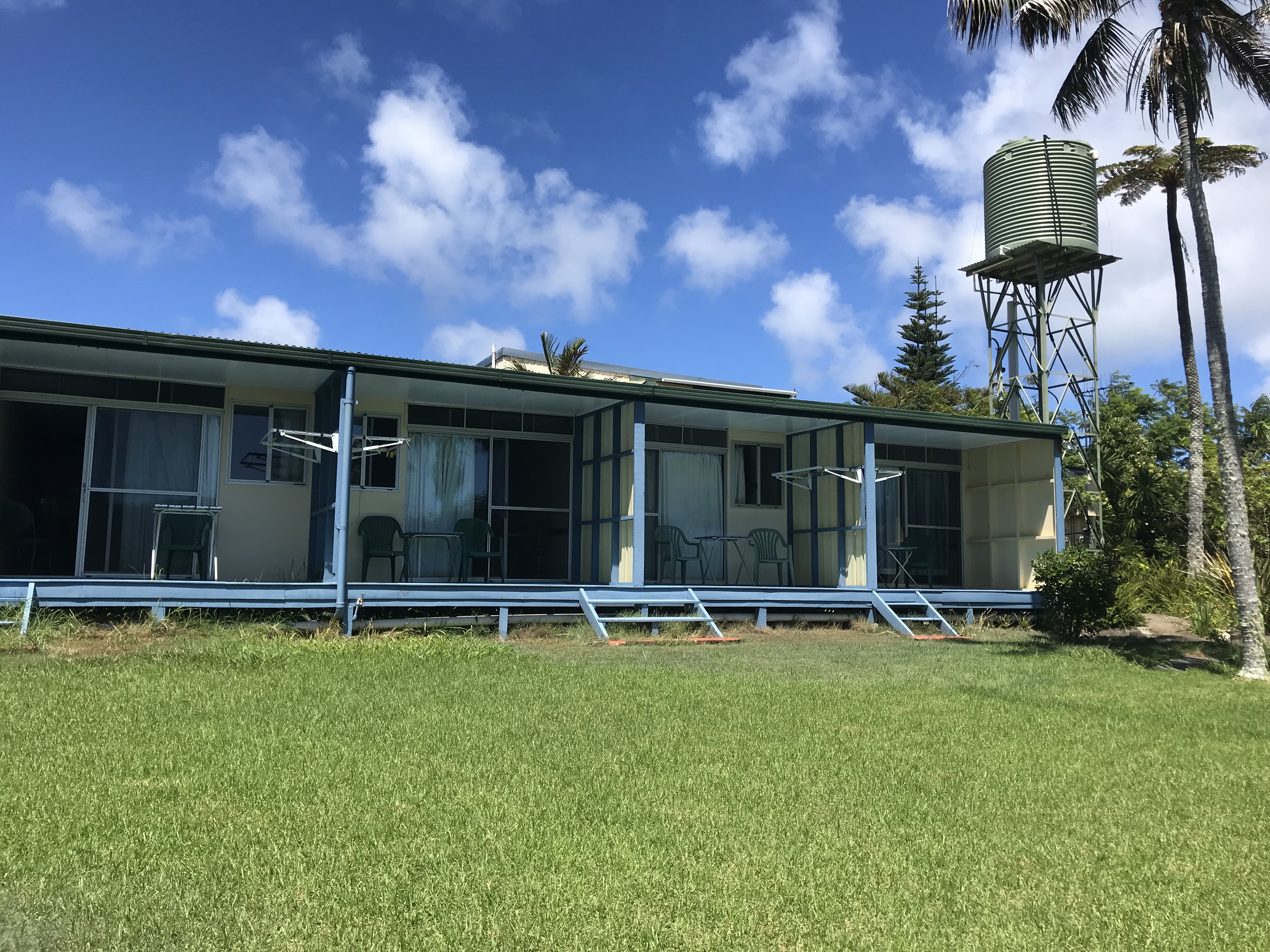
With my bags full of field gear, some snacks it was a bit of a load. I was glad to check my big bag through Air New Zealand’s security. Finding the counter was only the first step in the busy airport. Security was the usual here. Down more escalators to find the gate, then I awaited the call to board for Norfolk with a large group of Tasmanian holiday goers. The flight was only 2 hours over a vast section of ocean but Air New Zealand provided lunch which was great, as once on Norfolk food is ultra expensive and very hard to find. The bio security at the Airport is intense. A sniffer dog picked my large bag with the snacks. Oh oh, I had to open it up and among the flippers, swim gear etc a tube of sunscreen had exploded. So white goopy cream slathered over bag made an awful mess. Finally, the kind security lady concluded after a clean up and opening of the cookies for Luke that I didn’t really pose a threat and I packed up as best possible and was greeted by John and Diesel proprietors for the Polynesian Apartments and Baunti tour operator.
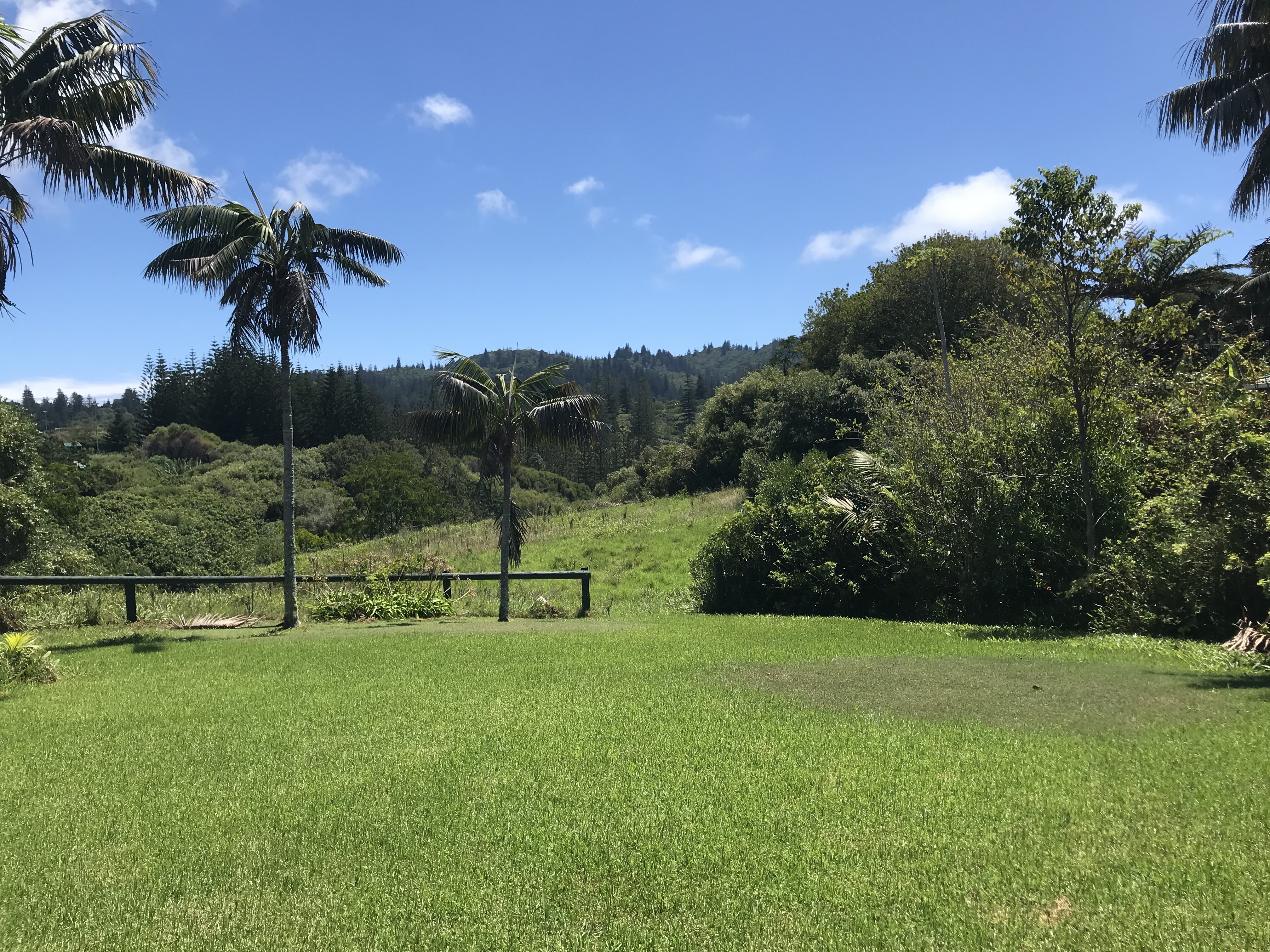
Norfolk seemed very verdant but was apparently undergoing a drought. It was just fall here and being a sub-tropical climate, seemed humid and warm to me. Namesake, Norfolk Island Pines are scattered over the hills and other broadleafed shrubs and oak, palm, Moreton Bay fig and other unknown native and introduced trees are scattered especially in the valleys.
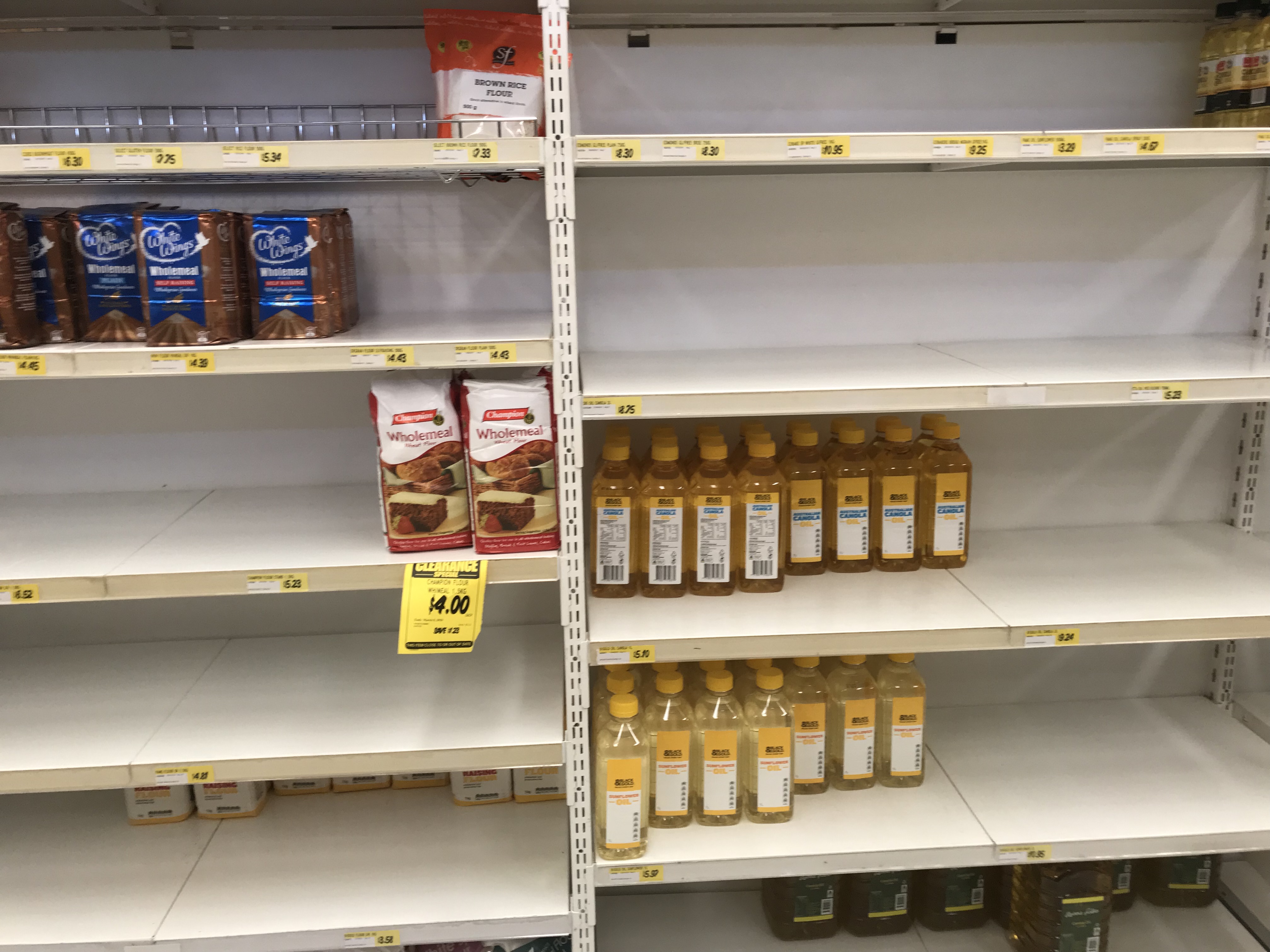
After settling into the apartment, I ventured out to buy supplies for breakfast until Luke arrived , thinking that I might try a cafe for supper. There was very little to buy in Foodland mall. Bananas were the only fruit, potatoes the only vegetable, fresh milk had run out, so the aisles were full of pop, cleaning products and non-perishables at great price.
Upon returning to the apartment, I was surprised to meet Claudia and Darren Copley, Adrian Pollard and Louise Blight. Louise preceded me, volunteering on Phillip Island but to see the others in the middle of the Pacific seemed out of context. Of course, they had been birding and recommended a walk to the Norfolk Island Botanical Gardens about 1.5 km away, then they were making supper at their apartment and possibly owling after. I dashed back to Foodland to purchase a contribution for supper, then hiked up the hill to the Botanical Garden so I could visit before 6pm.
Walkers are few and far between and the Botanical Garden was empty. There beautiful trails, great signage for the various threatened and endemic plants (40+) which include Broad and Narrow-leafed Mertia, Nettle tree, White oak (which is related to Mallow family )Phillip Island hibiscus, Popwood and Cordyline. Although I was looking for Norfolk Red-crowned parakeet, Norfolk Island Robin and an endemic fan-tail on the Tree-fern trail, I was only able to hear the parakeet in the dense forest and spot White Terns swooping through the valley forest below the trail. I hope to return and investigate the nature centre, birds, and trails further. For now the mission was to return to the apartments for dinner pick-up.
Darren and gang had been out to Phillip and heard from a travel companion that there were sharks to be seen when the fishermen cleaned their catch and threw the waste in the ocean. So we charged down to Cascade Bay Pier in the dusk to catch a glimpse. Sure enough, the fishermen were cleaning Sweet Lips, tuna, and cod on the wharf. Swarms of fish were going after scraps, then we saw the shadow of Tiger Sharks and Galapagos Bronze Whaler Sharks swimming below the wharf and taking the choice bits. The sight of these sharks prompted me to ask whether it was wise to snorkel at Phillip Island? The replies varied slightly, but the overall consensus was that it was not a good plan, since the island is so cliffy, waveswept and there was the shark factor!
Louise cooked a nice supper of butternut squash, potatoes, fresh fish and my eggs which was enjoyed by all. After much merriment Louise and I walked home under stars and the few streetlights.
Up early to get to Saturday farmers market to buy fresh vegetables. Even at 7:10 am the two vegetable stands had long line-ups. The produce was varied with carrots, lettuce, cucumbers, cabbage, bananas, potatoes, onions and chard. I stood in line and bought items I thought might keep on Phillip, then dashed across the market to get the last Rosemary and Olive Sourdough.
Going off on the half day island tour by Baunti Tours . . . Free and recommended
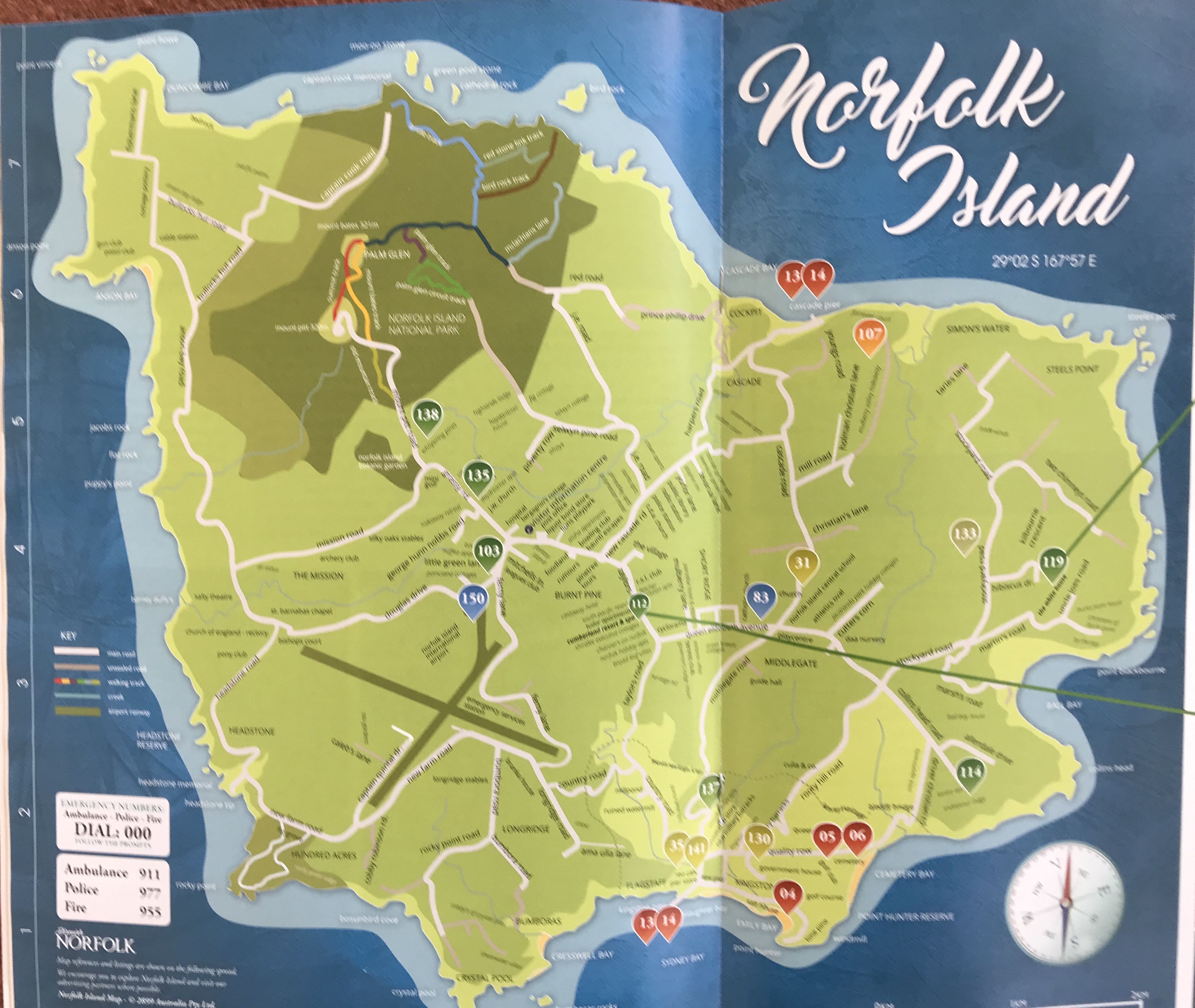
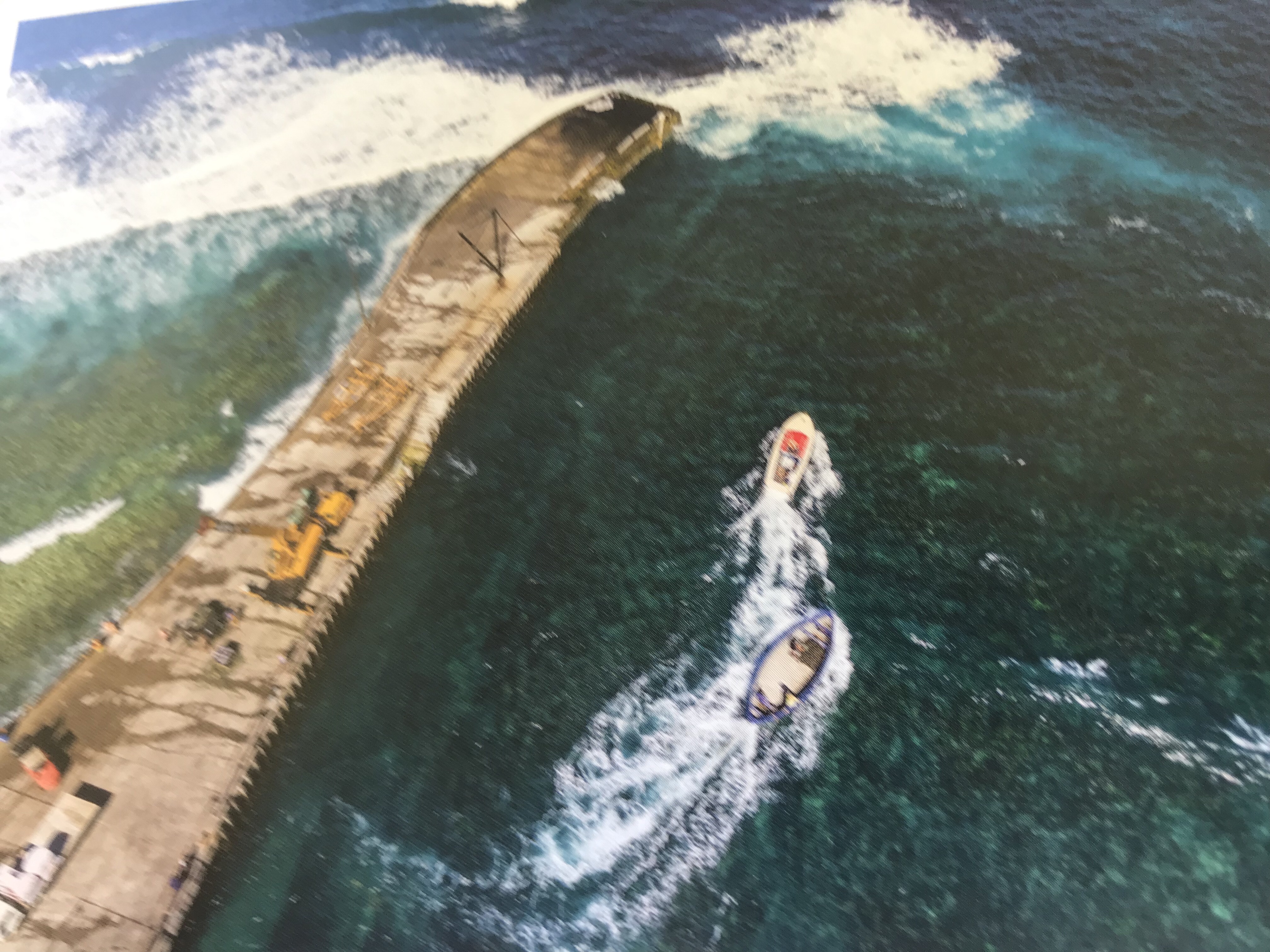
Norfolk Island has a present day population of 1800 people. There is only 1 school with 300 pupils that was started in 1791 for children of convicts. The island names are colloquial partly from Creole, Tahitian and mostly English. There is actually no port on the entire island. Freighters and larger vessels have to anchor offshore and bring in smaller boats to 2 piers located on the west side of the island, which at times means that they cannot unload freight at all and just wait offshore. The 20 passenger tour bus was apparently brought over on 2 boats lashed together. No wonder there is little available in the shops! Even the bike store didn’t have rental bikes as the owner couldn’t get parts to fix the bicycles he had.
The settlement history of Norfolk (if I understood Lynn, our tour guide correctly):
600AD to 14th century – Polynesians inhabited Norfolk island. However we were told that these seafaring people left the island.
1774 – Captain Cook landed and told the Queen that Norfolk would be a good place to cut the Norfolk Pines for timber (especially for ship masts).
1788 – 1814 – Norfolk Island was considered the timber basket and 90% of the forest was harvested.
1856 – 194 men and women mutineers from the Bounty moved from Pit Cairn Island to Norfolk Island. These are the original descendants of Norfolk Island, then the Queen of England granted them independence,
Later, Melbourne send convicts under the navy’s command. The convicts were treated very poorly and were set to work building the community of Kingston which has stone buildings (some cut from the reef just offshore). One row of houses was named Quality Row which consisted of the commander’s houses and various high level government houses. The tour guide didn’t elaborate as she wanted us to join the cultural and “Ghost” tours, however there was a Bloody Bridge were one of the soldiers was built into the cement part and a rather grim looking cemetery that apparently made one’s hair stand on end at night. At one point there was a shipwreck of the ship “Sirius” which increased the population by yet another 30% setting off a famine. The folks began to eat the 100,000 burrow- nesting Providence Petrels which drove these birds to extirpation.
The present day people (including our guide, Lynn) of Norfolk are proudly related to the original convict settlers.
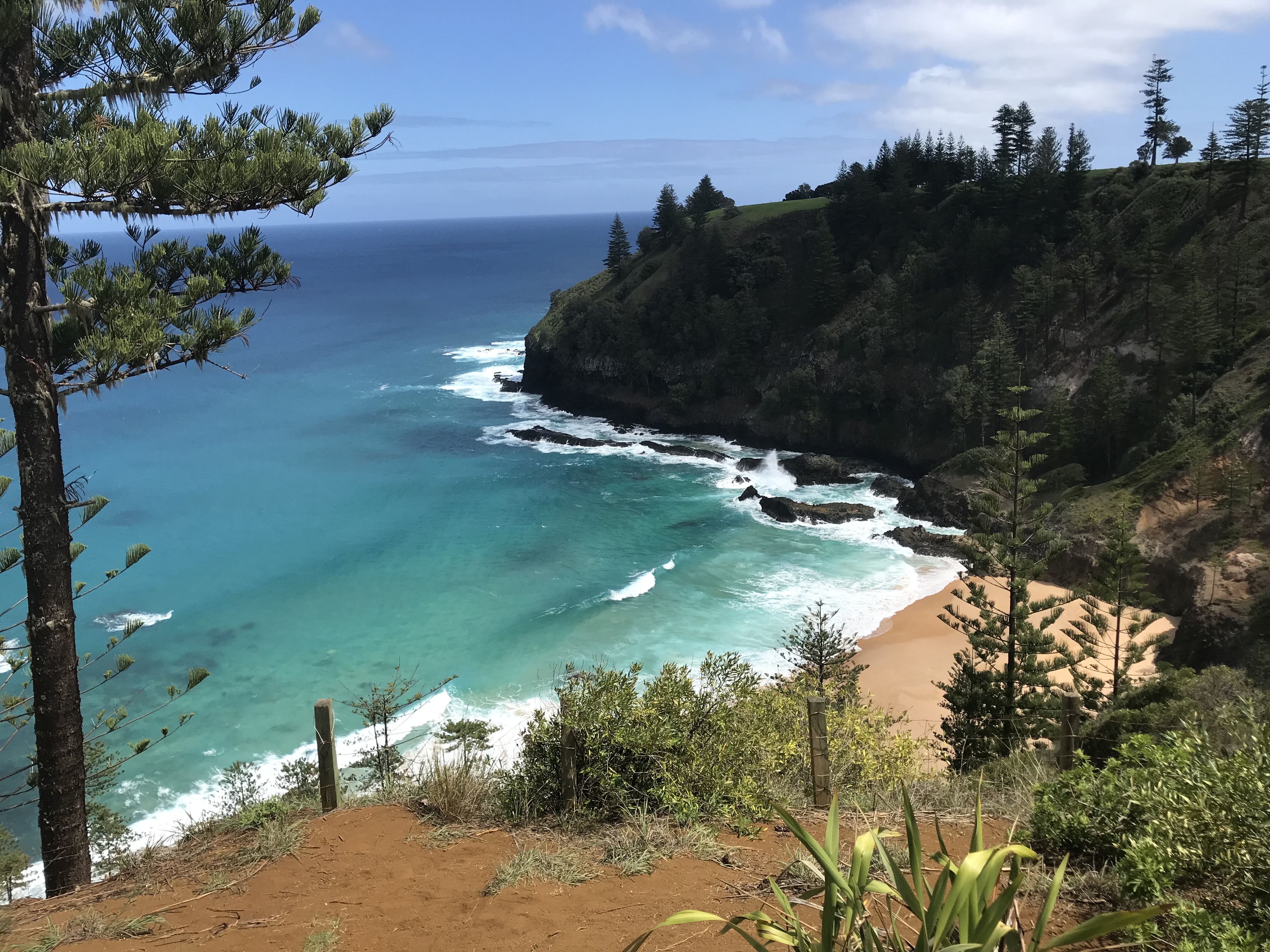
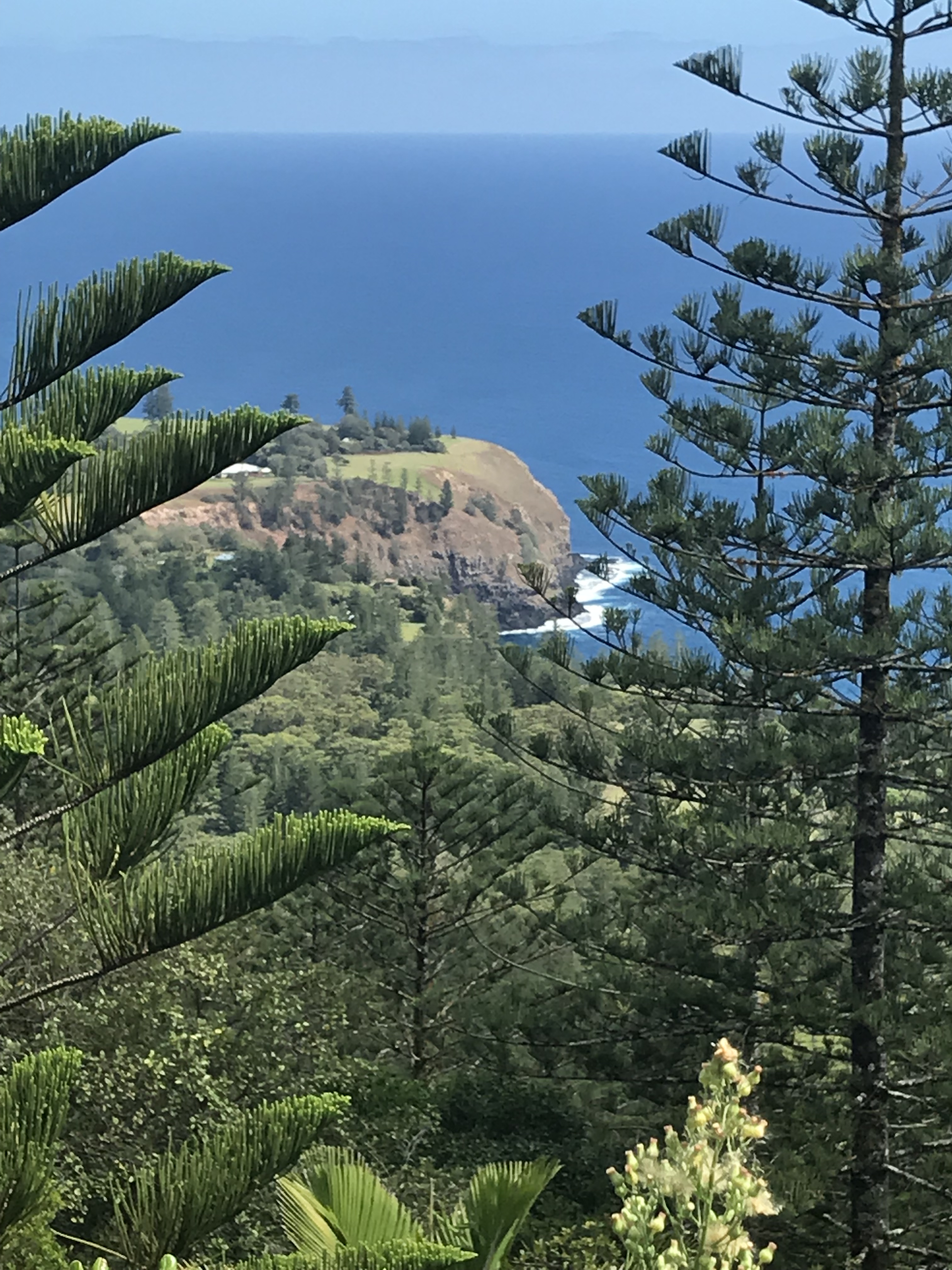
We drove to many spots on the island and stopped for a “cuppa” at a look-out over Anson Bay on the west coast before arriving to the original pick-up point.
Luke and Daniel (Honours student studying the giant millipedes of Phillip Island) had returned and were resting from their field time at Phillip Island). There was a rather red muddy giant back pack and boots left outside their doors, so I gathered some of the field conditions on Phillip were rigorous to say the least.
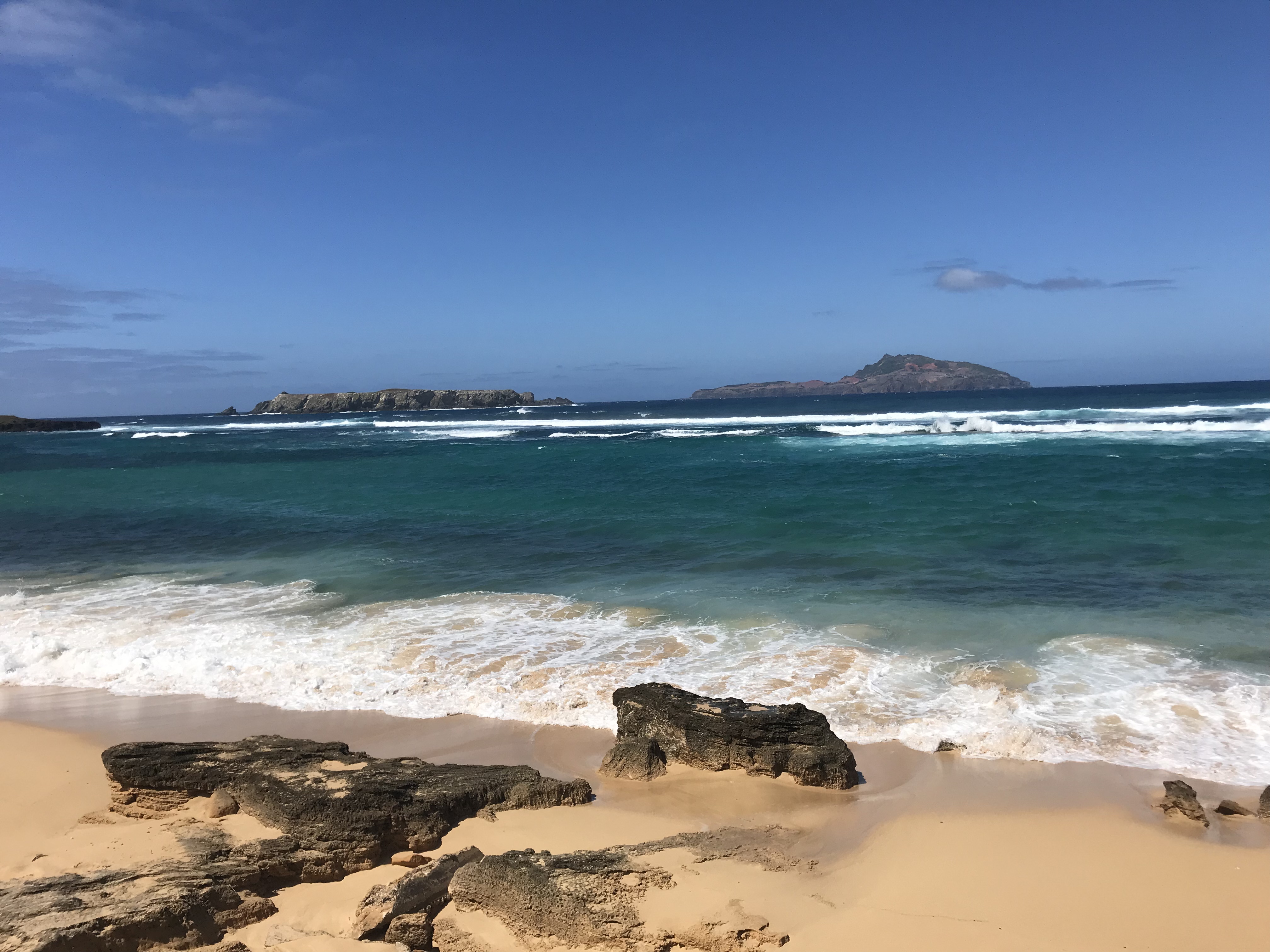
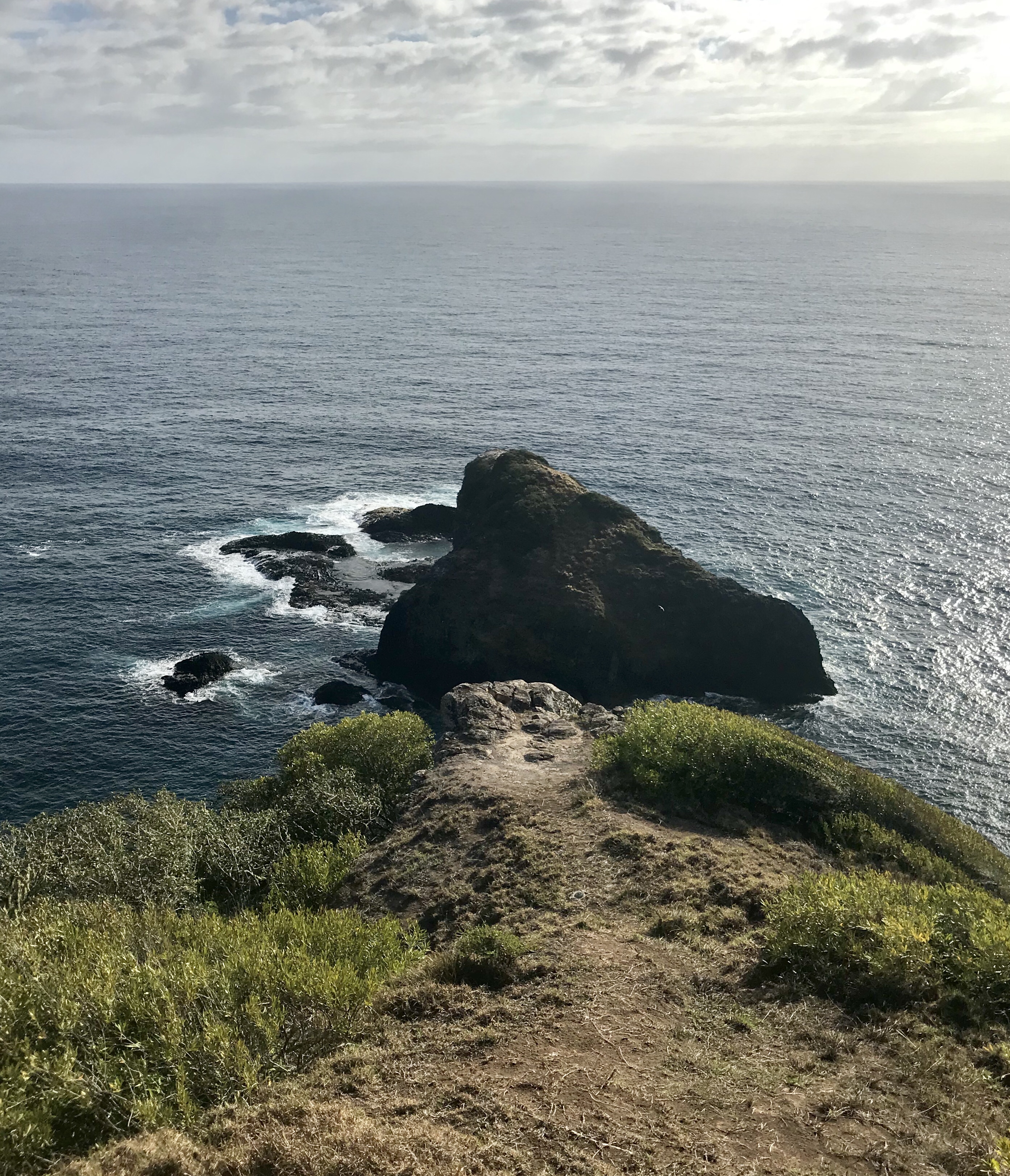
When I saw them after their nap, they were eager to go snorkelling at Emily Bay and explore the Captain Cook Memorial site in the Norfolk Island National Park. The snorkelling was really fantastic as the water is so clear and there is a shallow reef leading around to Slaughter Bay. The corals were really beautiful with little to no bleaching and had beautiful fish hiding in between the shelves, swimming in schools or solitarily. That I could discern, there were neon coloured parrotfish, tangs, schooling forage fish like our herring and territorial fish. The territorial fish are just that, and come up to face to face with Luke and one even bit his toe!
Maria is an echinoderm specialist with interest in how species are distributed through the oceans of the world. She is also working on climate change in the ocean and developmental biology. She was very interested that I was going to Norfolk Island as she would like to collect urchins from this remote island to determine their distribution, speciation and her predictions that some Australian species will be moving and re-distributing to these cooler waters carried by a current from Australia’s west coast. On the snorkel I saw 2 species of urchin and found a white and black urchin in the reef flat area in about a meter of water which and the other urchin species on a deeper sandy bottom just barely in my diving range with the wetsuit and no weight belt. The sea cucumber took umbrage to being handled and regurgitated its sticky gut. This is a remarkably good defence to a soft bodied animal as the incredibly sticky gut envelopes predators in tangly strings. The specimens were photographed and returned to the reef.
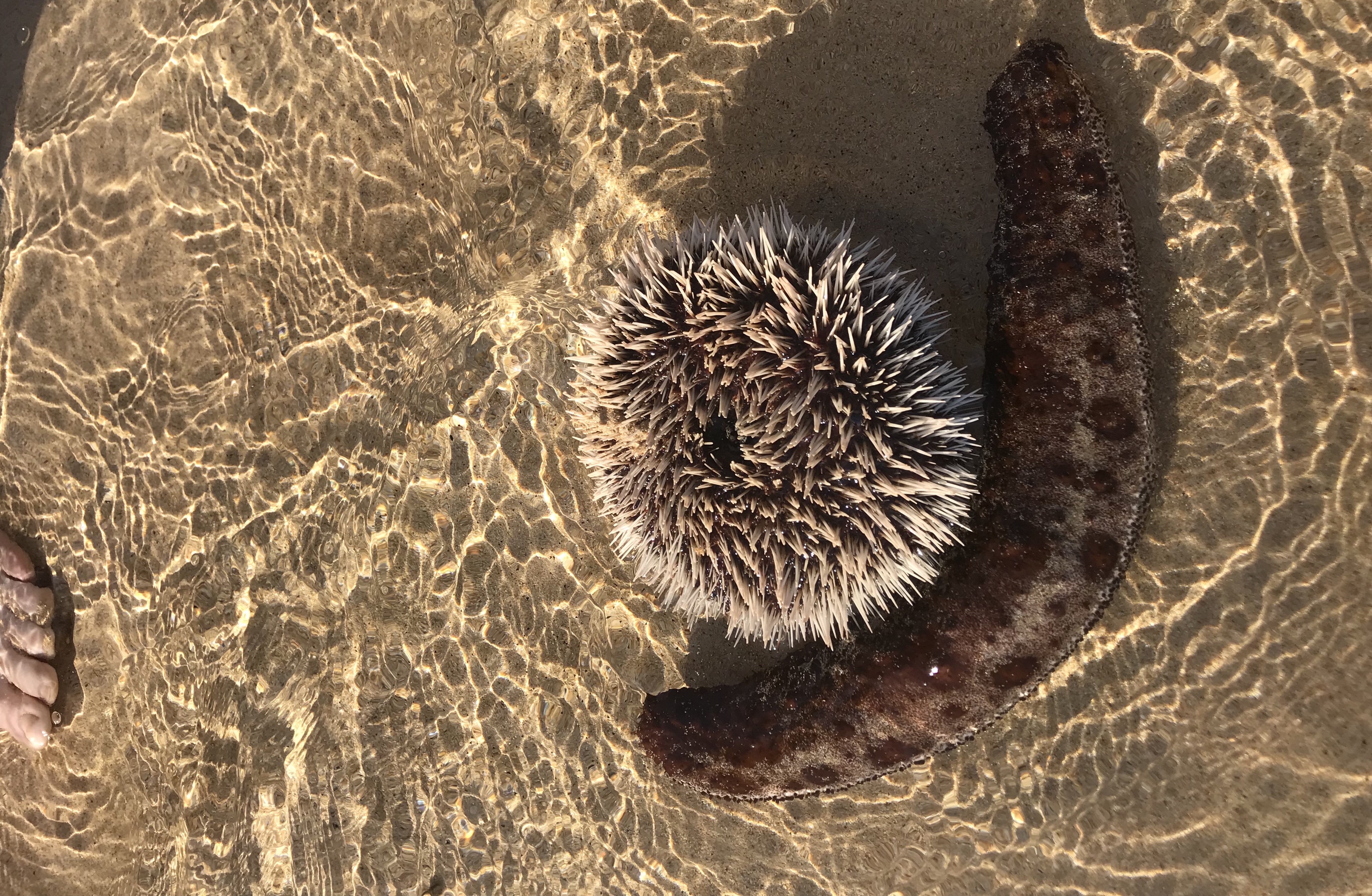
Sea Cucumber and sea urchin from Emily Bay
Luke had procured a rattly Mazda for cheap rent so took full advantage by heading out near sunset to the Captain Cook lookout which was a northern cliff overlooking a series of craggy islands. This is where I learned that Luke and Daniel were really serious birders. They were excited to show me birds and seabirds I’d never seen: Grey Gerygone, Silvereyes, Crimson Rosella, Song Thrush, Greater Frigatebirds roosting in shrubs below, White terns, Black Noddy, Red-tailed Tropicbirds, Grey Ternlets, Black-winged Petrels, Sooty Terns (dark black back and white belly with long streamers on tail). Most exciting to Luke was a sighting of a Red-footed Booby roosting on Moo-oo rock. This species of Booby had not been recorded on Norfolk. I felt proud to be able to spot a Brown Booby which is unusual to Norfolk Island.
Louise cooked dinner from food I had bought and then the lads uploaded bird lists to E-bird.
March 10, 2019
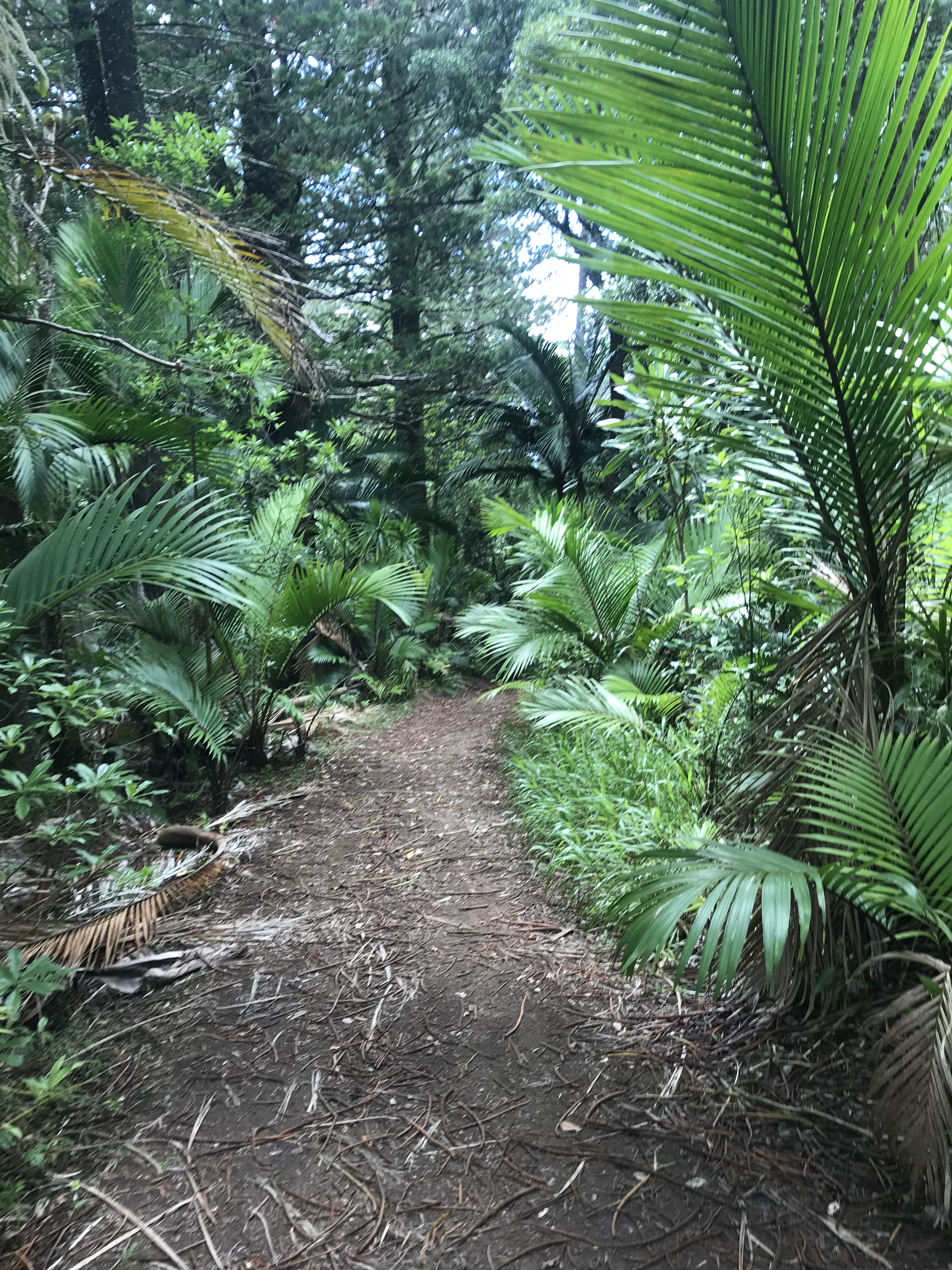
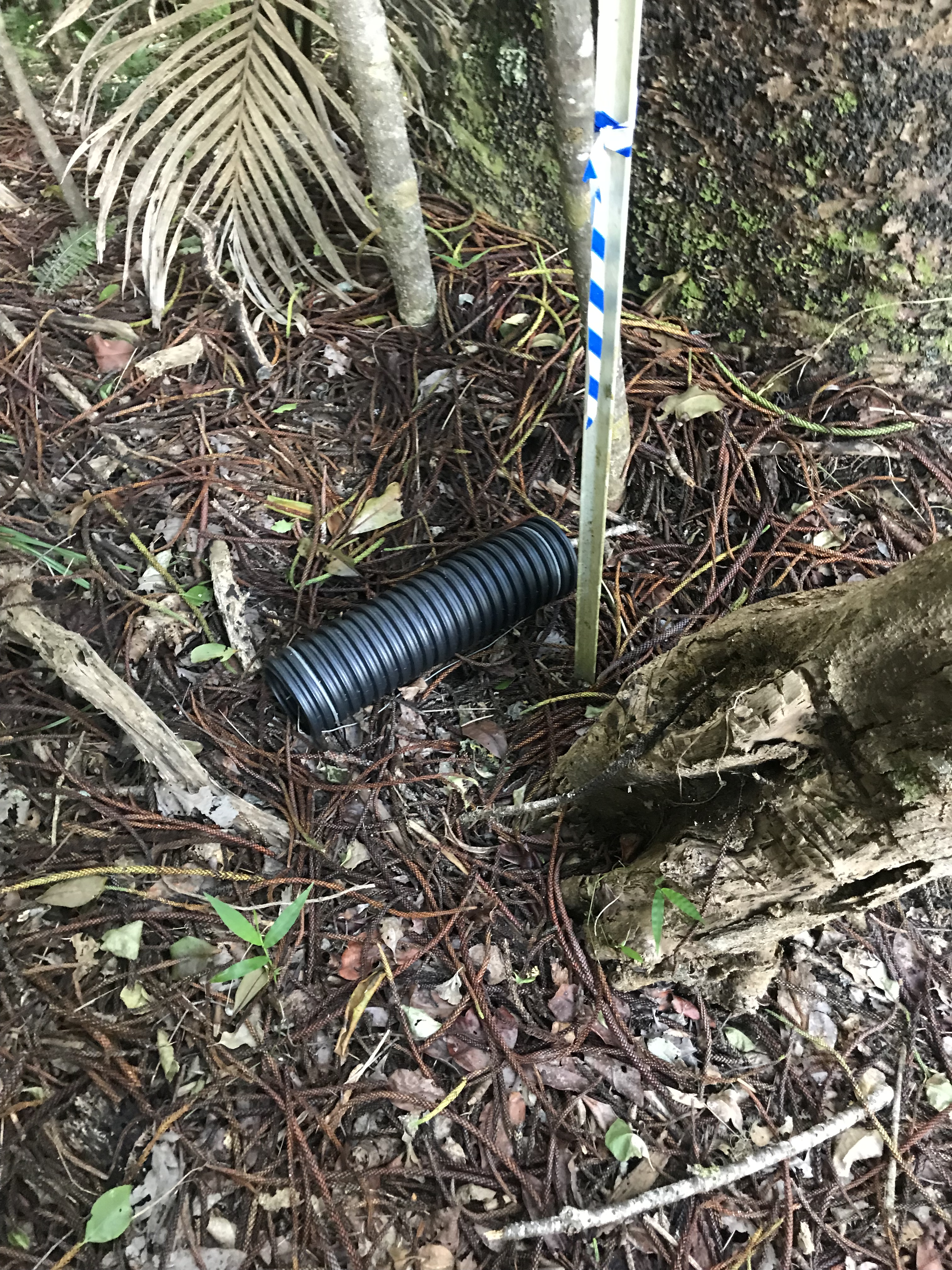
This day seemed like a bit of R and R for Luke and Daniel. They wanted to photograph the Red-footed Booby at Captain Cook lookout. However the booby had gone out fishing. After the gang wanted to go out for coffee, so I opted for being dropped off and hiking. Although they meant to drop me at Anson Bay, I soon realized that I was at Puppie’s Point south of Anson Bay. Since I didn’t want to walk back to Anson Bay, I opted for a Trudy adventure. Why not hike North-east through the National Park and back to the Polynesian? It looked on my tiny map that there might be a road and hadn’t I downloaded a Google map that morning in the limited internet? So I blithely headed NE along an unmarked road that I thought might be the trail. Fortunately I stopped at a house to check the plan and met adventurous Peter and family. They were keen to start me on my way up Mt. Pitt. “You just follow the rat traps up and keep the mountain in sight” . Peter and sons Si and his younger brother led me up a mowed area, pointing out Norfolk Island robins, fan tails and whistlers in the shrub. Then I headed up. I did find a rat trap route, but certainly had thoughts of being stuck in the thick palms, Pines and oak forest as I couldn’t see the mountain top. I reckoned that the traps were following a transect so kept going up, despite doubting my poor sense of direction. Google maps had not uploaded, so that wasn’t a fallback. However I did have the compass on my phone, which showed between 32 -45 degrees N.E. This was bushwhacking in the tropics! Generally I followed a ridge and was very pleased to hear some traffic just about a sweaty hour later during a particularly thick patch. I emerged red, scratched and hot to a lookout. A Tasmanian tourist asked if I “had actually tramped up that hill?” They said “I wish I could trade your legs for mine!” . The view from 300 m was grand. There was Phillip Island in the distance. They were all interested in Luke’s project and actually showed me a photo of Luke and Daniel landing at Kingston Pier. I looked at this and was duly impressed and somewhat frightened by the wave they surfed in on the little boat! Next was the hike back. First the hike to Mt. Bates, then along Red Road track, turn right at Palm Glen track and along Selwyn Pine Road to town. Fortunately I received a lift part way along the road from the only folks I met on the trail.
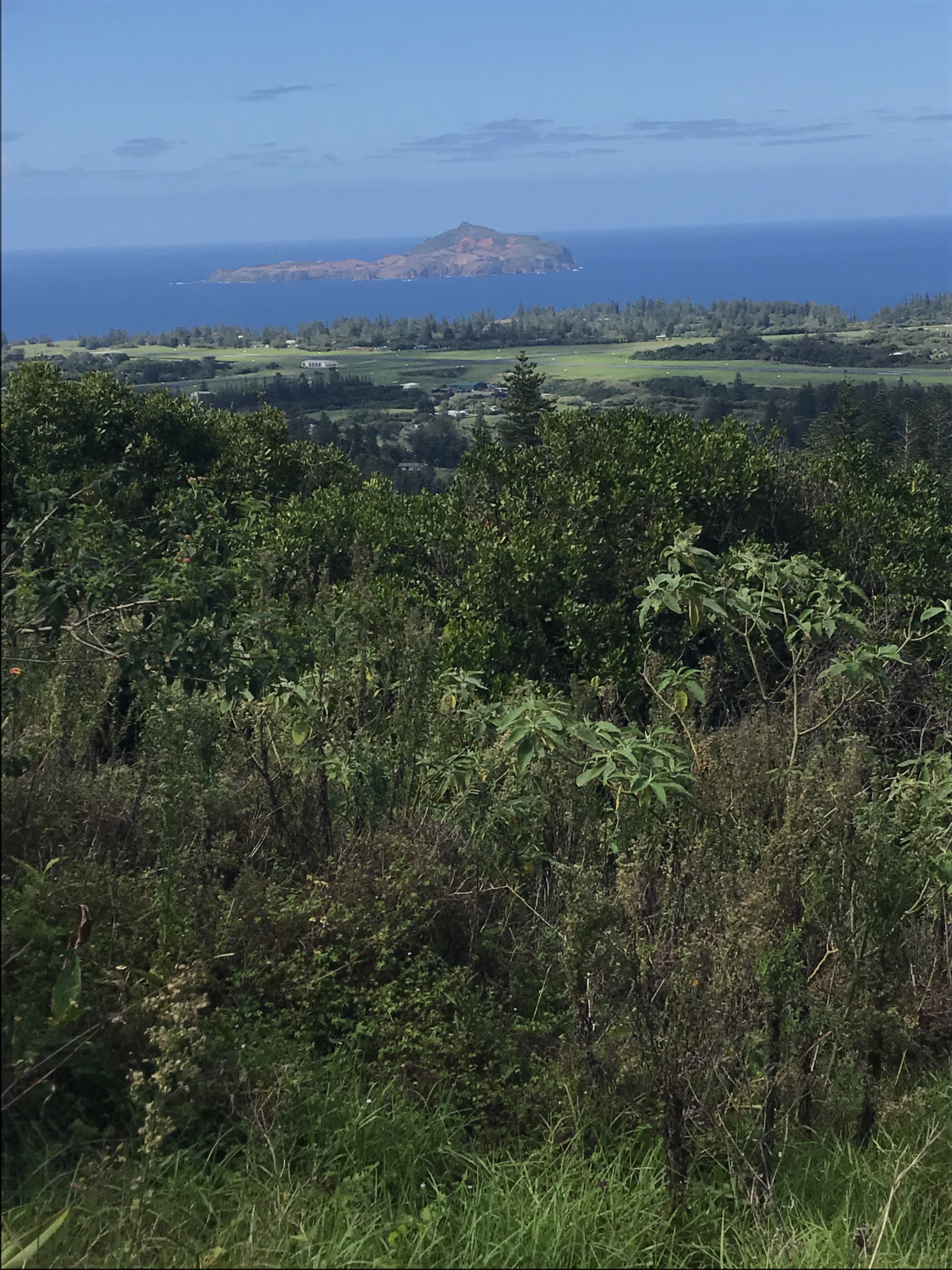
Where I bushwhacked from Puppy Point to Mt Pitt, Phillip Island in distance
Once back at Polynesian, Luke was keen to go out again, so we headed out to Hundred Acre Woods park, both to forage for limes and bananas and of course see more birds! We stopped in at the The Sea Urchin Science Centre and Gallery where I wanted to get a sea-urchin contact for Maria. We were met by an unusual and odd character whose balding appearance resembled the Adams family. He told us he would admit us to his scientific gallery for “only $15” as he couldn’t be bothered to serve tea. When Luke told him we were tracking birds on Phillip Island, he gasped and said “Haven’t they tracked every bird in the world?” And went on muttering. I couldn’t get out of there fast enough. One Hundred Acre Woods was across the street and we walked out under guano laden Norfolk Pines. Hundreds of Black Noddies were nesting on the branches of the trees and created quite a cacophony of chattering. White Terns swooped through and were nesting on White Oaks. However, the best was the Red-tailed Tropicbirds nesting under the windswept shrubs and on grassy ledges. These large and spectacular red-billed seabirds mostly had single fluffy chicks. Larger chicks were left alone while their parents fed at sea. I am sorry that I am unable to download my camera photographs to provide photos of all these cool birds.
Sunday dinner was a treat out at the League Club about 150 metres from our apartments. There are more restaurants per capital on Norfolk than anywhere that I’ve visited. The Bowling Club was full, Fish and Chook didn’t appeal, so the League it was. I gasped at the prices; $34 for fish, potatoes and vegetables! 3 small beer cost $21 . Luke said that one had to ignore the prices. Did I mention that the Canadian and Australian dollar are about on par? Prices here make even Haida Gwaii look ridiculously cheap by comparison.
March 11th, 2019 Preparing for Phillip fieldwork
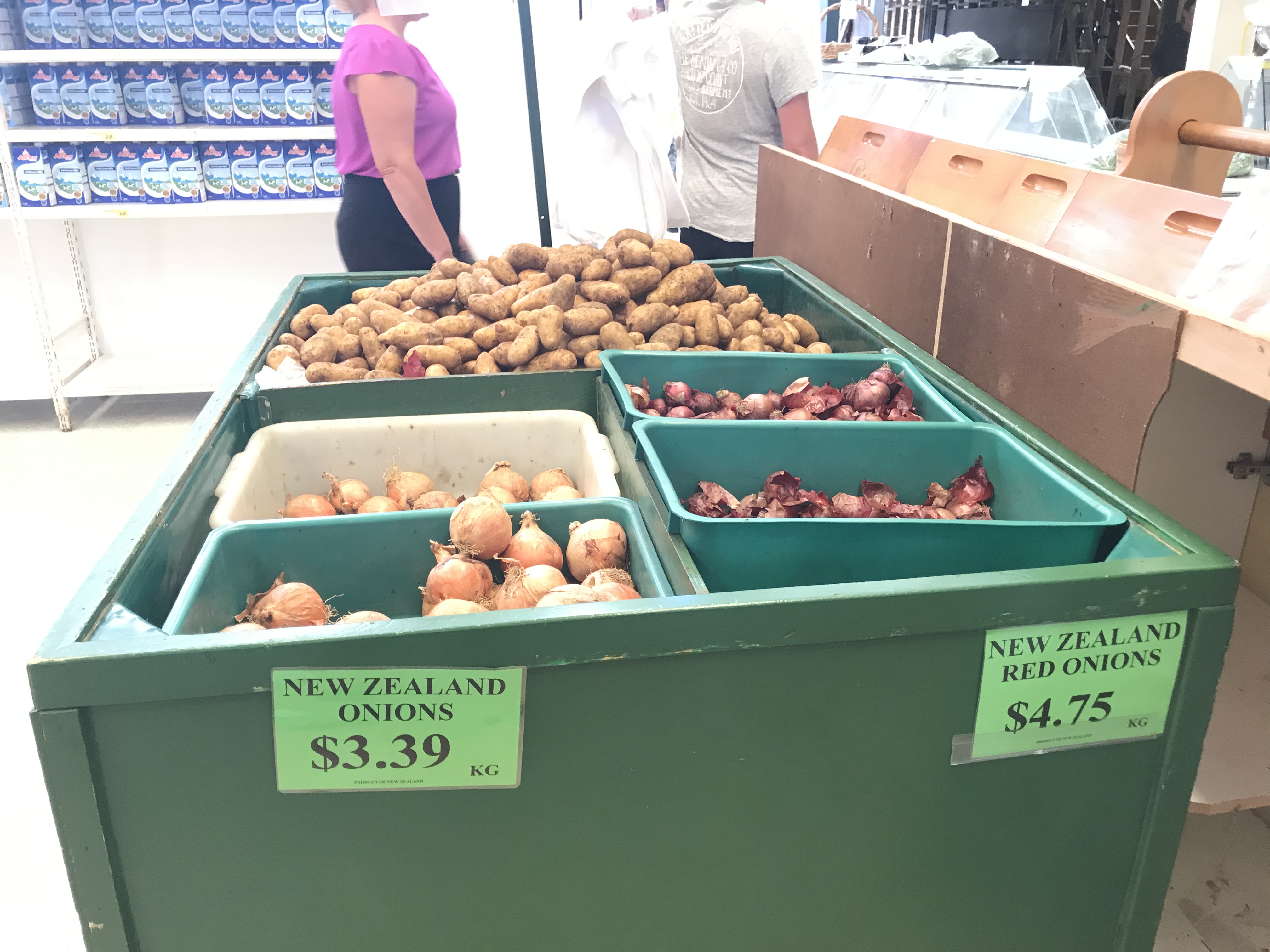
Today was shopping and getting ready for an early departure from Kingston Pier to Phillip Island with Bigze the boat operator. Shopping was the first order of the day so we headed to Foodland at 8am to try our luck. Vegetables were not out yet, so the next stop was the “Butcher by the airport” Potatoes were $6 per kg. We bought a small bag for $20 and a few gnarly sweet potatoes as the meat was just to dear. Back at Foodland, there were 5 women and 2 men surrounding the vegetable stand, waiting for delivery. One woman told me that the boat hadn’t been able to come in for 3 weeks! Daniel was sent to muscle his way in to the vegetables, while Luke and I continued our rounds uncertainly around the store. Everything we buy has to be hiked up a dirt cliff to the Parks field station. Dinner is simple and early as night work starts at 6pm. We managed to fill 5 boxes and pack them into the back of the car.
For the remainder of the day, I packed, sorted and decided what not to bring until Luke arrived back. He was downloading tracking data from GLS loggers which are lightweight tags that measure daylight hours, sunrise and sunset. From this data, the latitude and longitude position of birds on any given day can be measured. My job was to attach the polyester twine to the Velcro straps so the logger can be secured to the White-necked Petrel’s leg. Although it took a while to learn the technique (especially threading the tiny needle), we completed our tasks, marked the tags, then went for another snorkel at Emily Bay. Today there wasn’t as many fish, but the corals and neon coloured parrot fish were spectacular. I saw another uniformly dark and sand covered sea cucumber looking like a sandy pickle between reef rocks, but didn’t collect this one.
I cooked dinner tonight. Pasta with tomato-bacon sauce, steamed broccoli and salad with wine. It was delicious. Luke and Daniel have gone to bed for a 5:30 am start. Weather permitting, the boat is picking us all up at 7;00 at Kingston Pier.

 Trudy’s Pacific Adventures
Wow,so well written ,I was living the experience and adventures in my chair!
LikeLike