August 24th to September 7th, 2020


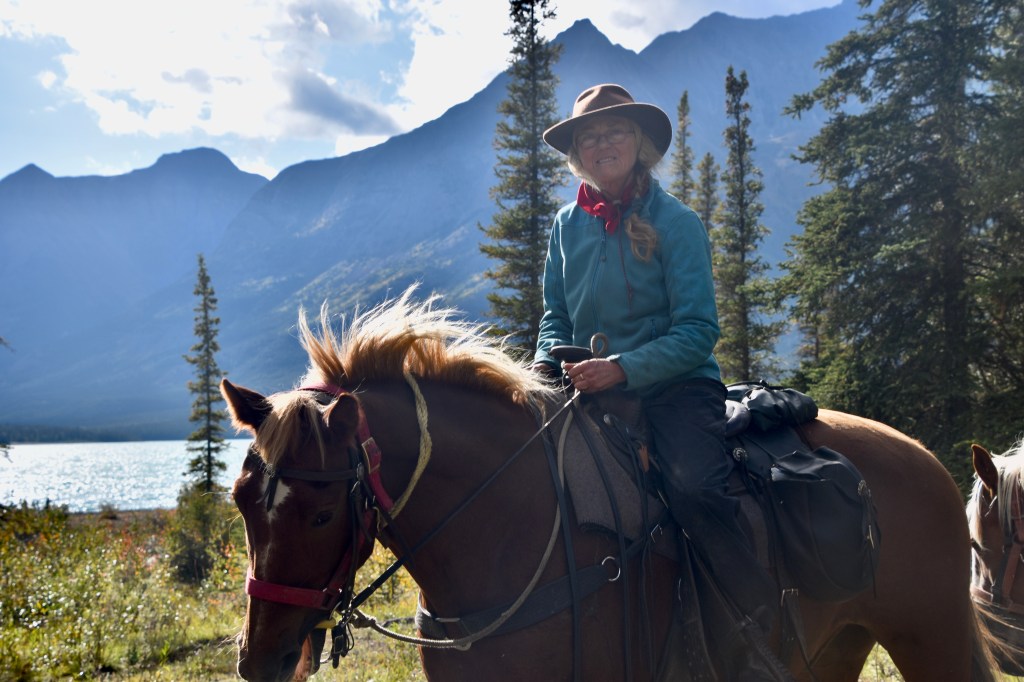
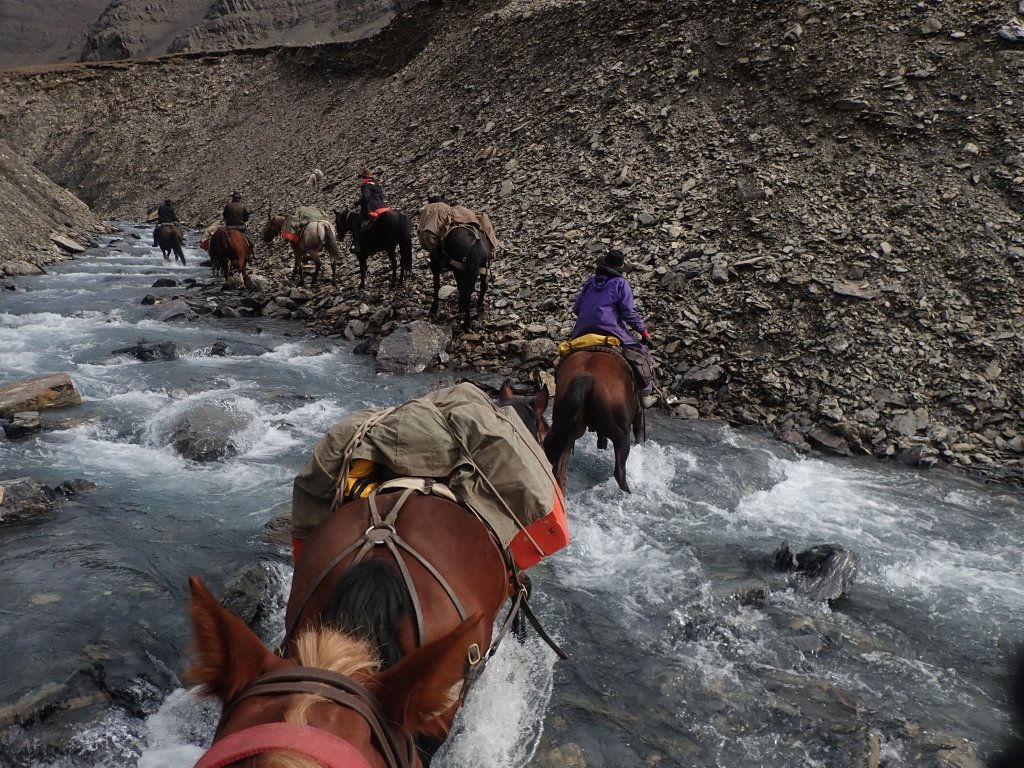
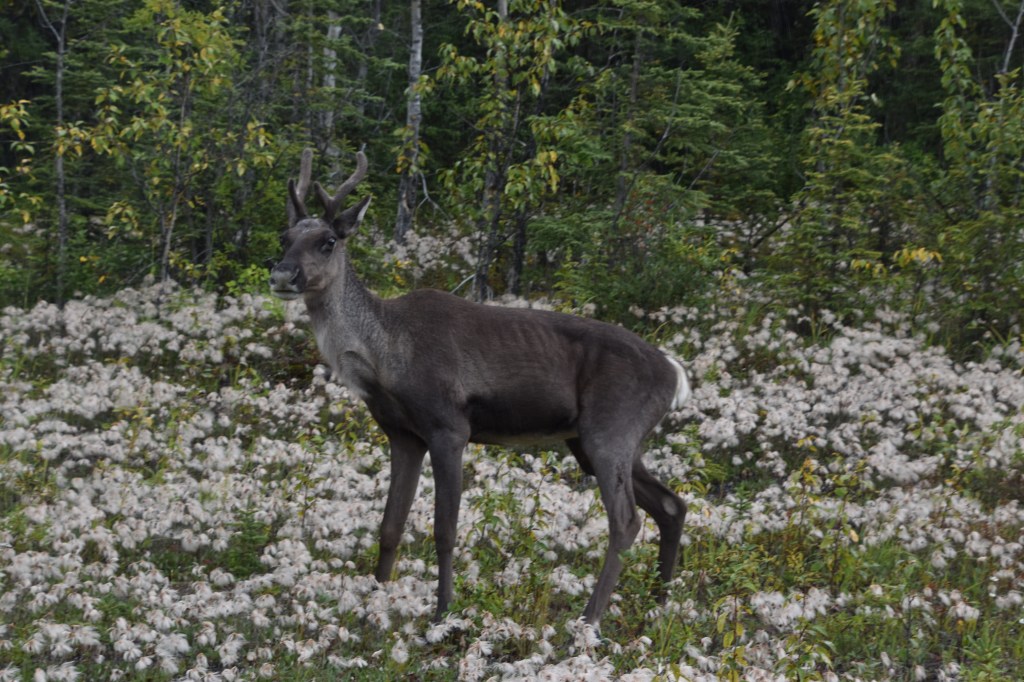
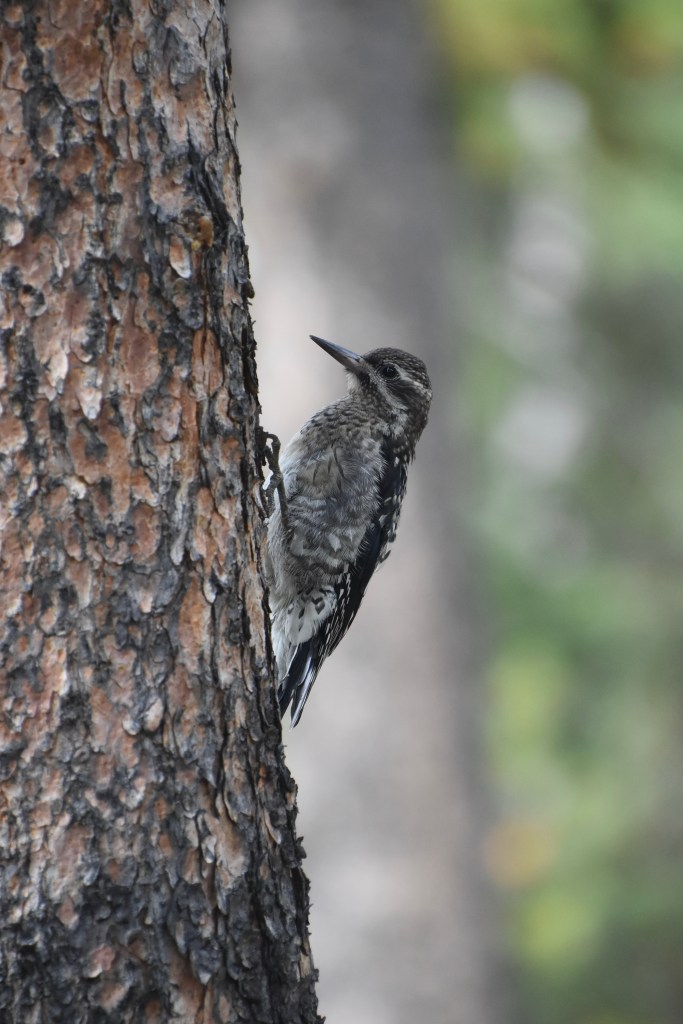
Rule Number 1: Keep Calm at all Times! An apt expression of the adventure that accompanies an expedition with 22 horses, 9 riders and one dog in the Northern Rockies of British Columbia. Wayne Sawchuk has been leading Muskwa Kechika Adventures for over 30 years and there is always “fun with horses” in the wilds of the remote mountains, raging streams, spruce, willow and birch forests, crystalline lakes and alpine tundra. The Muskwa-Kechika Management Area has been described as the Serengeti of the North and is the home of Mountain Caribou, Moose, Stone Sheep, Mountain Goats, Elk, Wolves, Grizzlies and a host of smaller creatures including porcupine and lemmings.
I have been on 4 different expeditions throughout the Muskwa Kechika (MK as it is known) and each calls to my spirit of adventure. I’m not sure what I love best. Is it just being with the amazing horses, comradery by the campfire, being on top of a mountain pass or the absolute rugged wilderness of it all?
Wayne leads the journey and the three wranglers, Michelle, Alex and Hamish work hard to keep the horses safe, shod and packed, keep the expedition on track and guests safe.
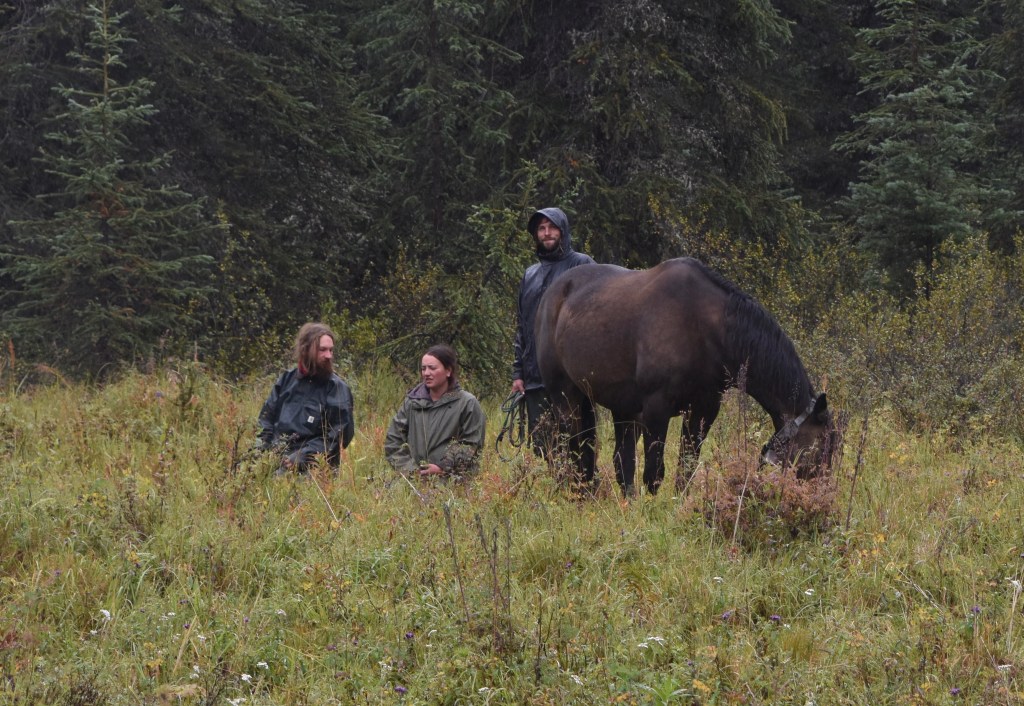
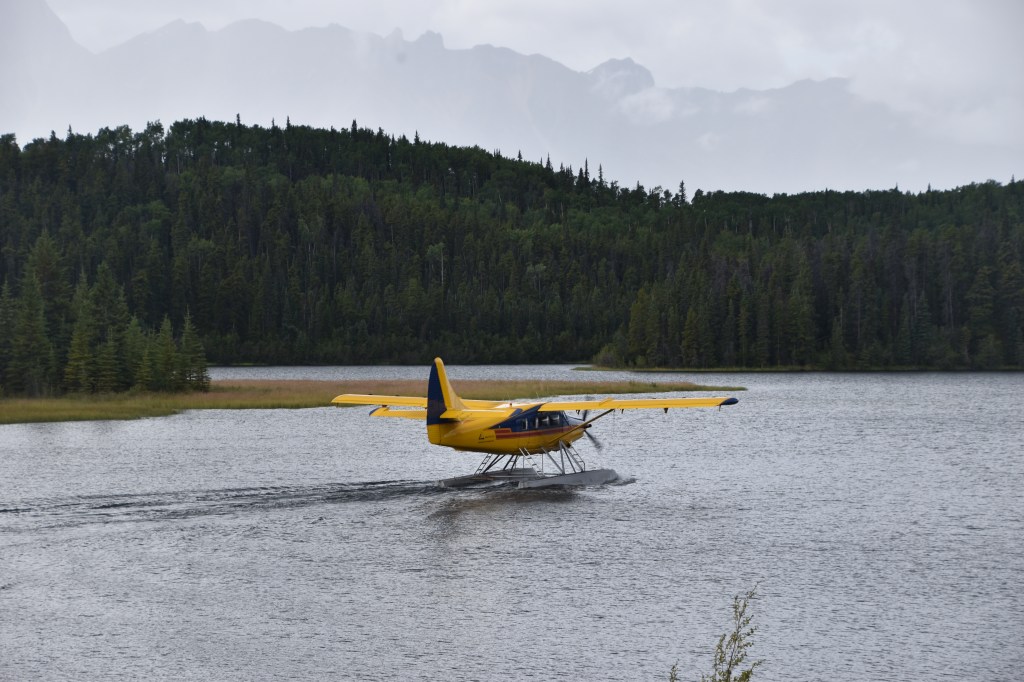
This summer’s expedition over the Rocky Mountain Divide started in late August. I joined 4 other guest riders at the Northern Rockies Lodge at Muncho Lake. The weather was ‘iffy’ and we had 2 ‘no go’s’ for the floatplane flight into Mayfield Lake. However, at 1 pm Urs Schildknecht declared “Mayfield Lake has cleared” and we should load the plane and take off to the wilds and meet the rest of the crew and horses.
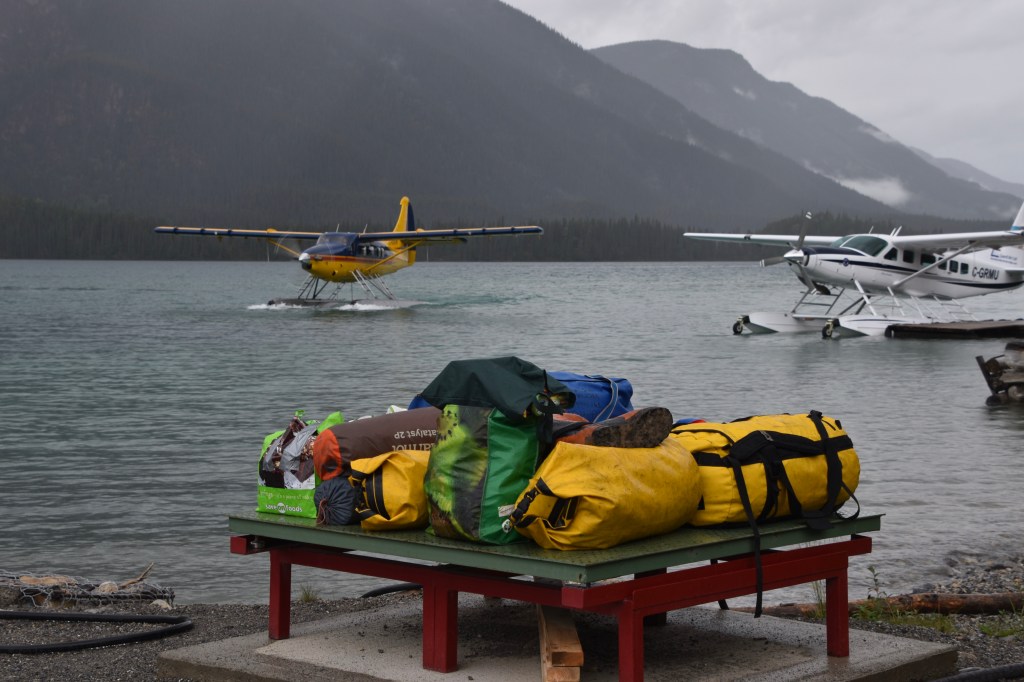
Our flight west took us over the winding Toad River, jewel lakes nestled in scree and ice, a small caribou herd taking refuge by a snow patch, a couple of Mountain Goats on some ledges and over the wide plain of the lower Gataga River.
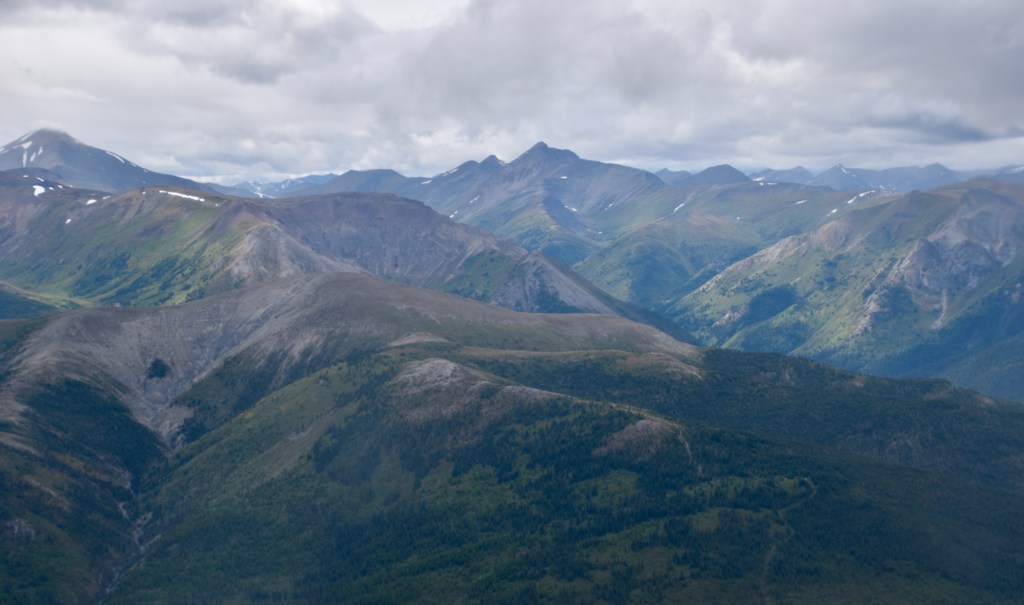
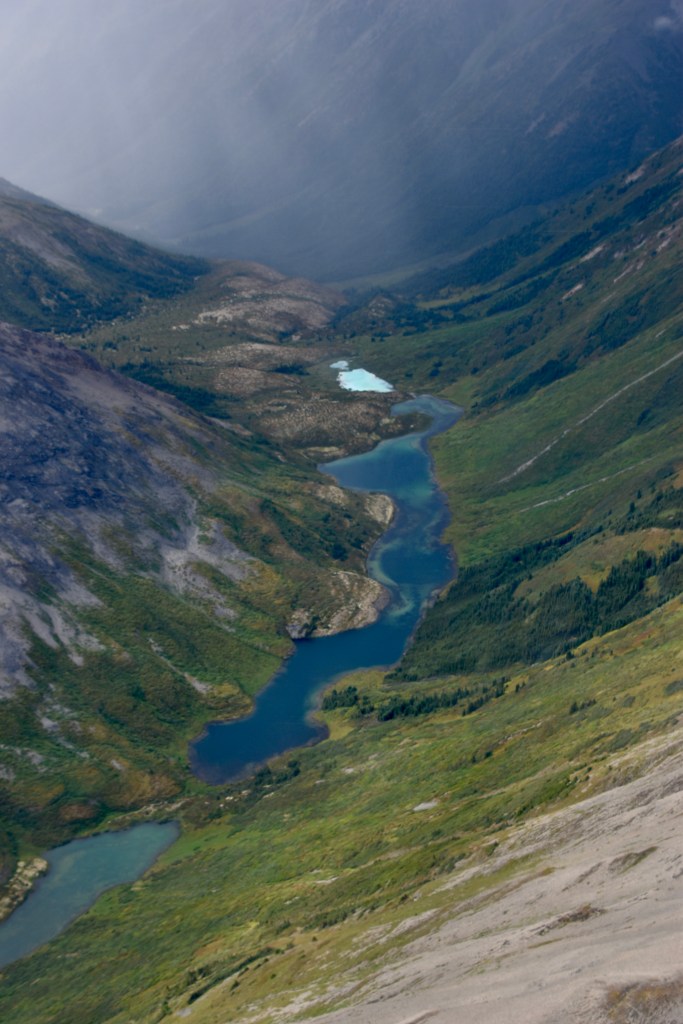
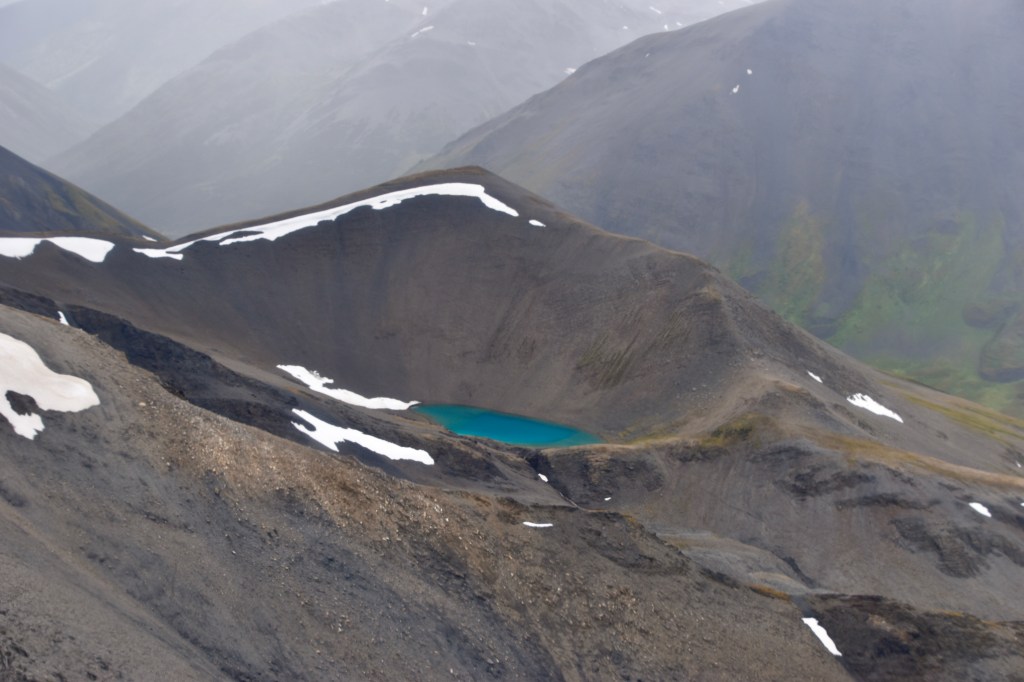
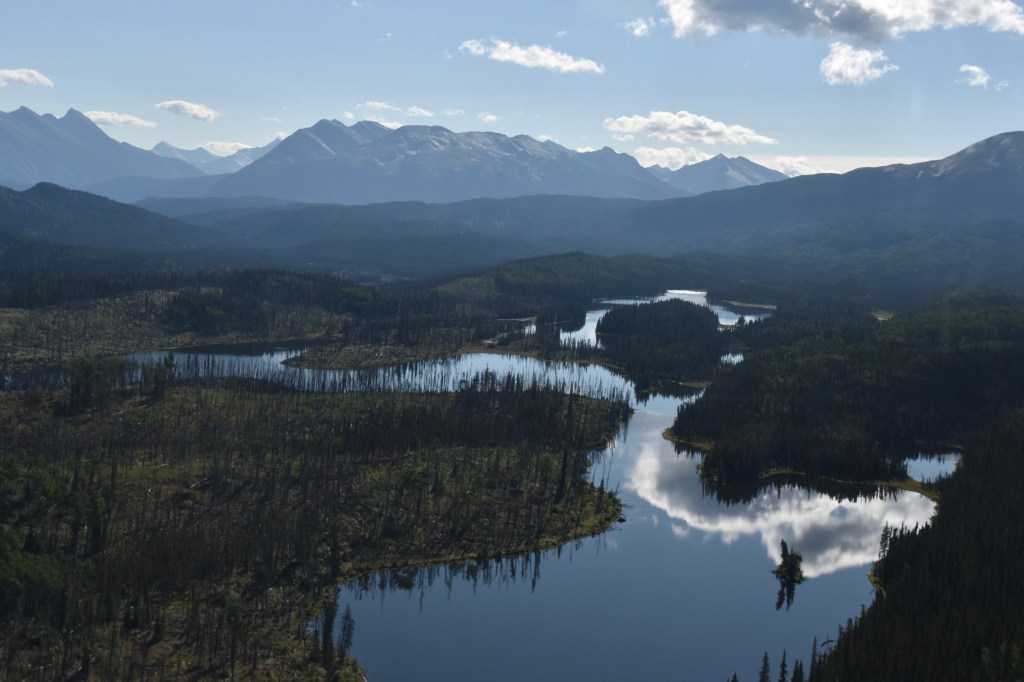
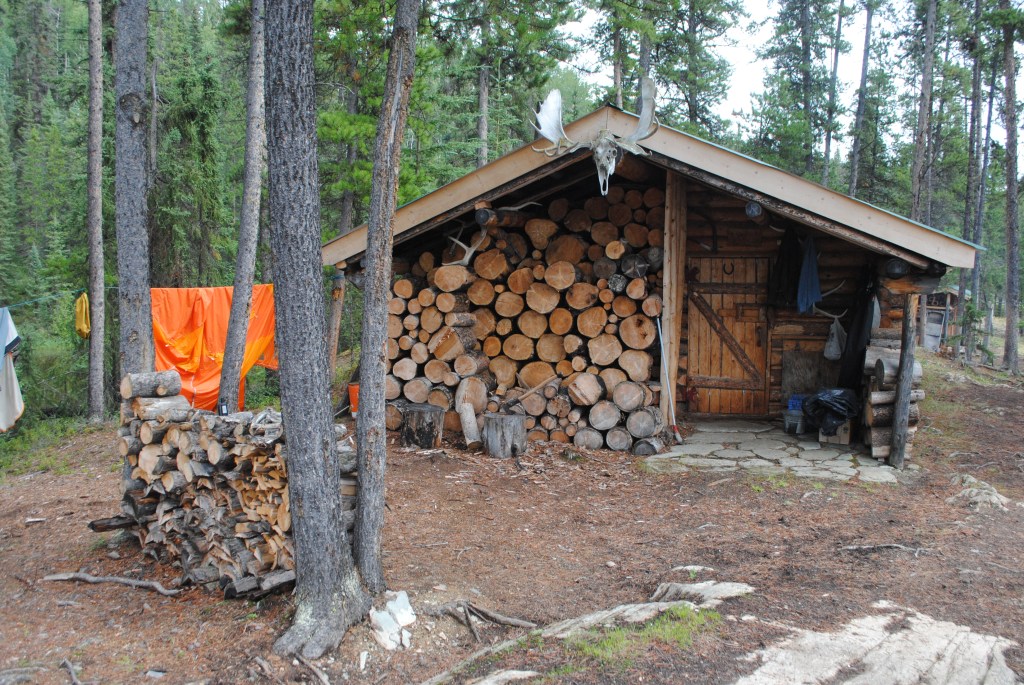
Wayne’s trapping cabin is located on a small plateau above Mayfield Lake and has canoes, sauna and even a small workshop. We hastily transport our seemingly enormous pile of gear up the hill and exchange greetings with the folks that are flying back to Muncho Lake. The roar of the floatplane is the last engine sound for 2 weeks. Just the sounds of wind, rain, horses, osprey, owls and our own chatter.
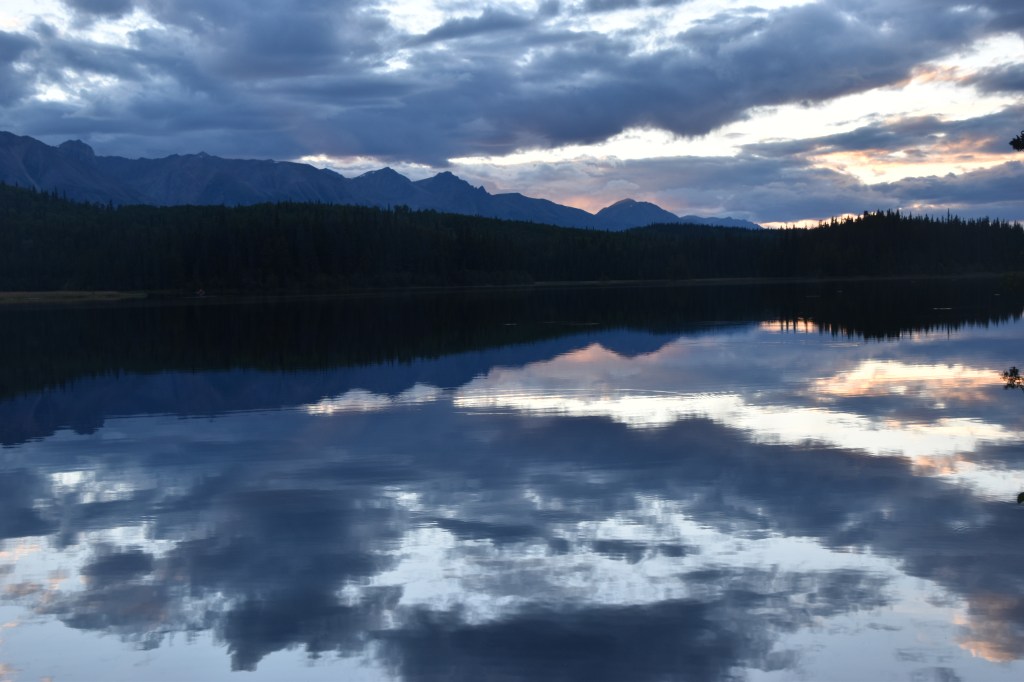
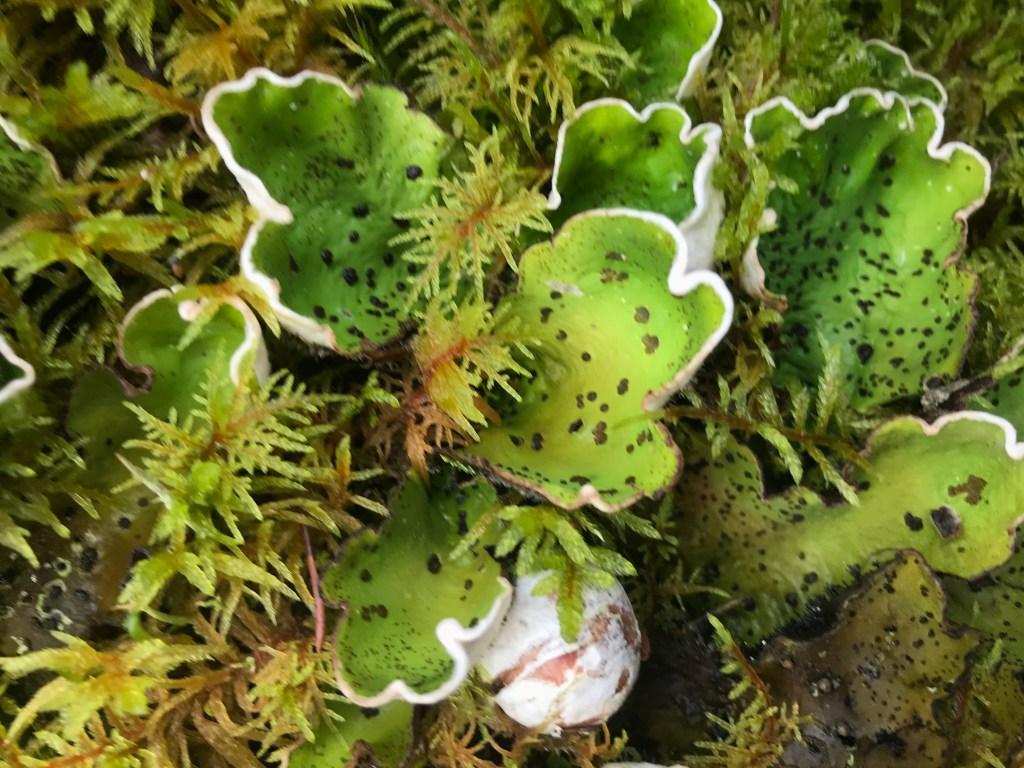
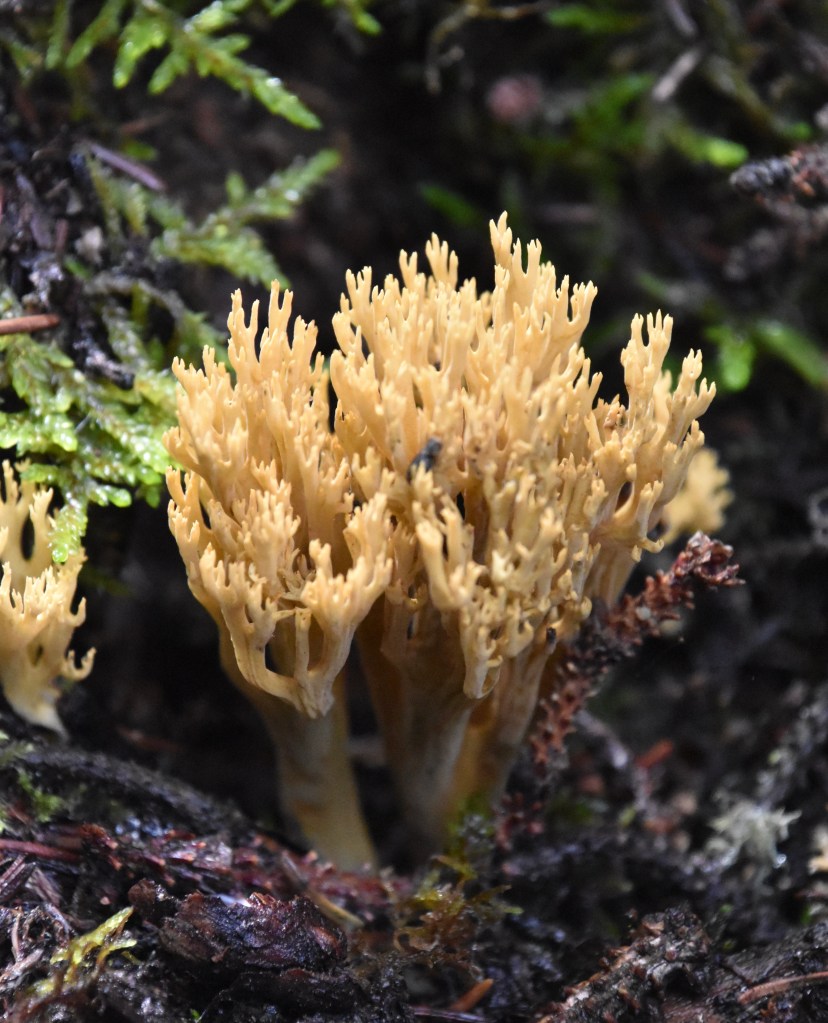
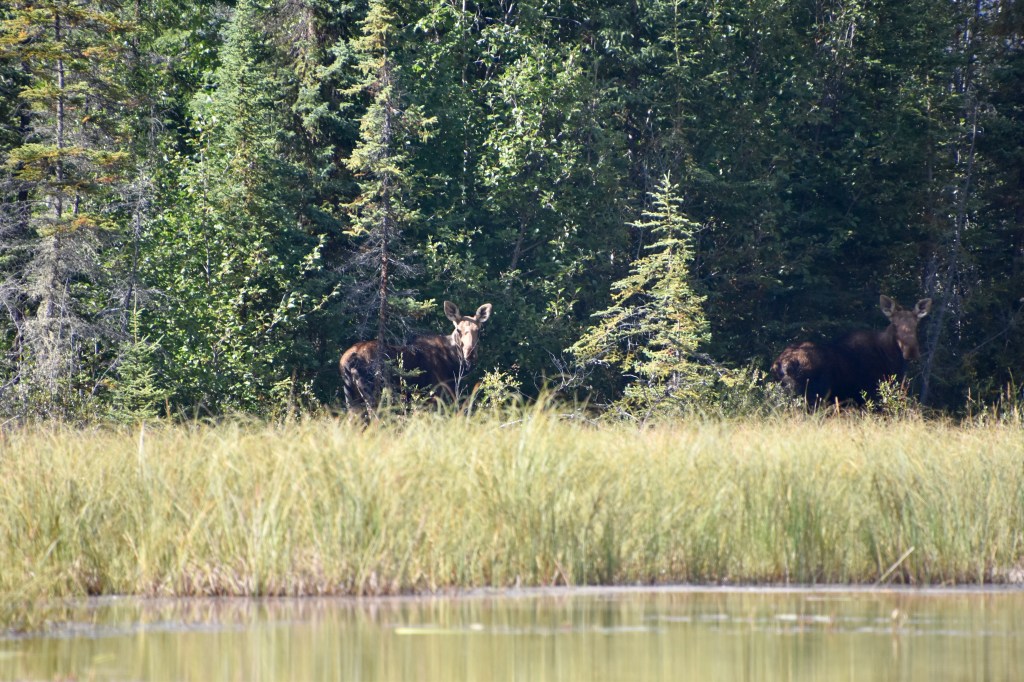
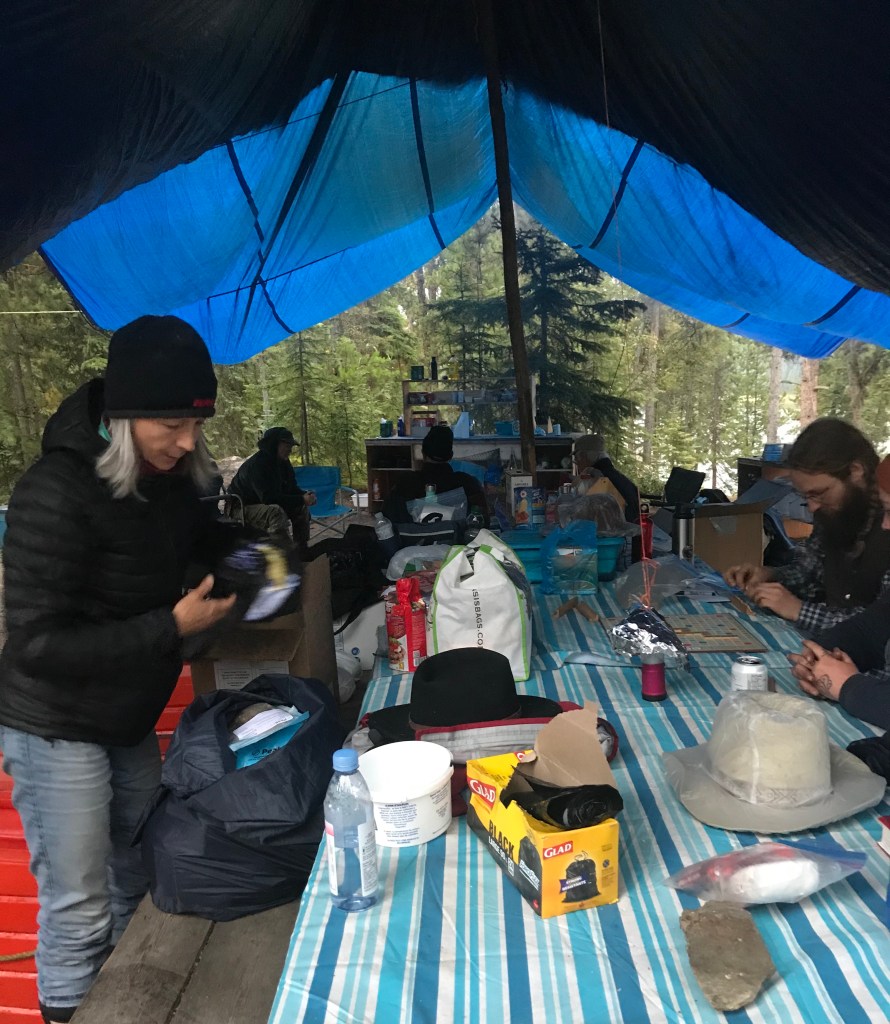
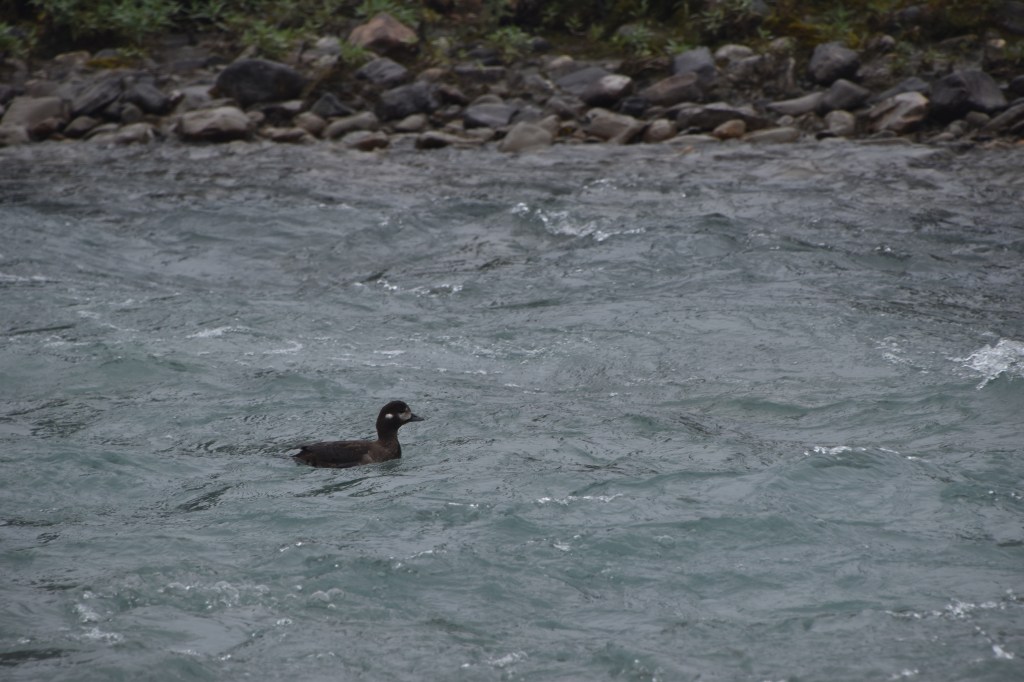
After settling into camp, eating as much of the heavy fresh food as possible, plans are discussed. The first adventure is swimming across the swollen Gataga River. Waterproofing is in order as everything could get wet. The weather is unsettled and a large tarp covers the campfire. We sort and sort, then re-sort , pack everything in plastic and into the pack boxes. Mayfield Lake is somewhat of a wildlife mecca. There are a couple of mineral licks across the lake which attract moose, caribou and elk. The lake also seems to be on a bird migratory route so Scaups, Mallards, and even sandpipers stop by on their hurry south. Besides packing, we busy ourselves with canoeing, sauna bathing and hiking to look at the Gataga River. The summer has been unusually wet which has encouraged an amazing crop of mushrooms that almost erupt through the moss.
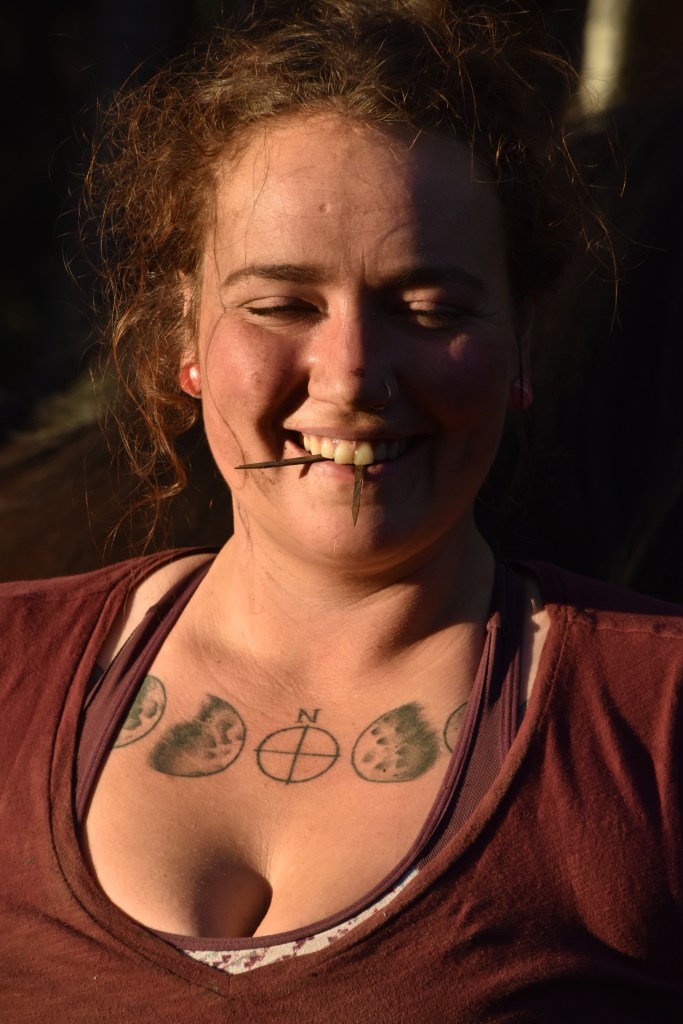
Alex, Michelle and Hamish have paddled a canoe to the outlet of Mayfield Lake which connects to a trail to the Gataga River where the horse herd can usually be found. They check the horses and return with a subset that need some attention (usually shoeing as at this point in the summer shoes become loose). I love to see the horses again. Who’s new in the herd, how are my favourites? This year, Wayne has rented 3 dark mares and a gelding. “The Brides” don’t get along with the main herd and there is a lot of squealing, ears back and general mayhem when they are close to the other horses. “We try for separation,” says Michelle “they don’t really integrate with the others”. Michelle and Alex have become professional farriers and work hard to keep the horses feet healthy for the arduous conditions of deep mud and incredibly rocky terrain.
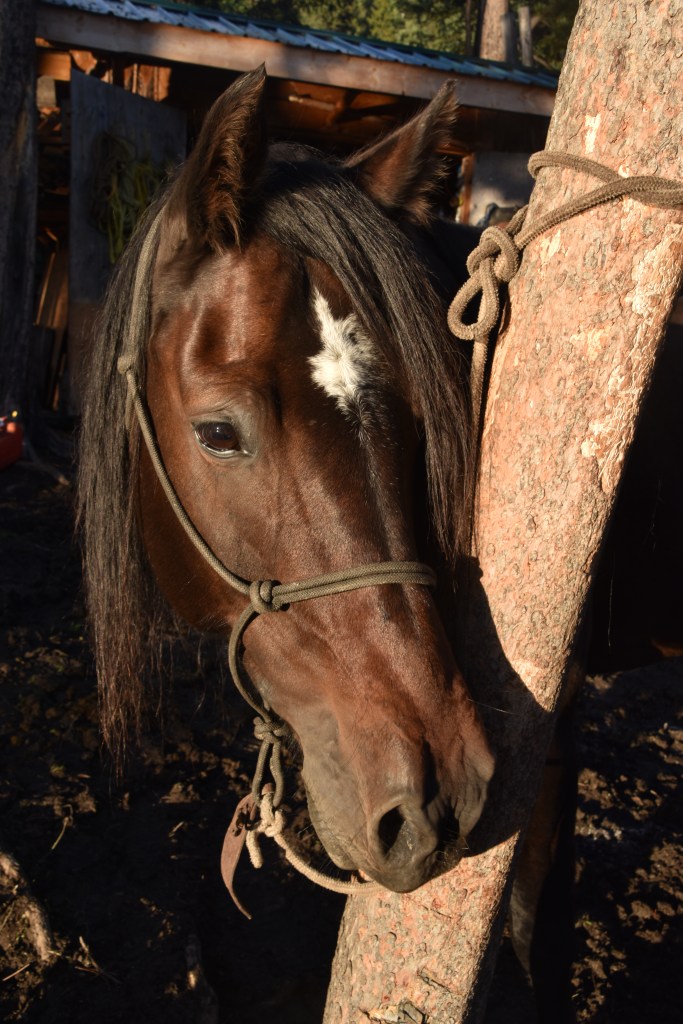
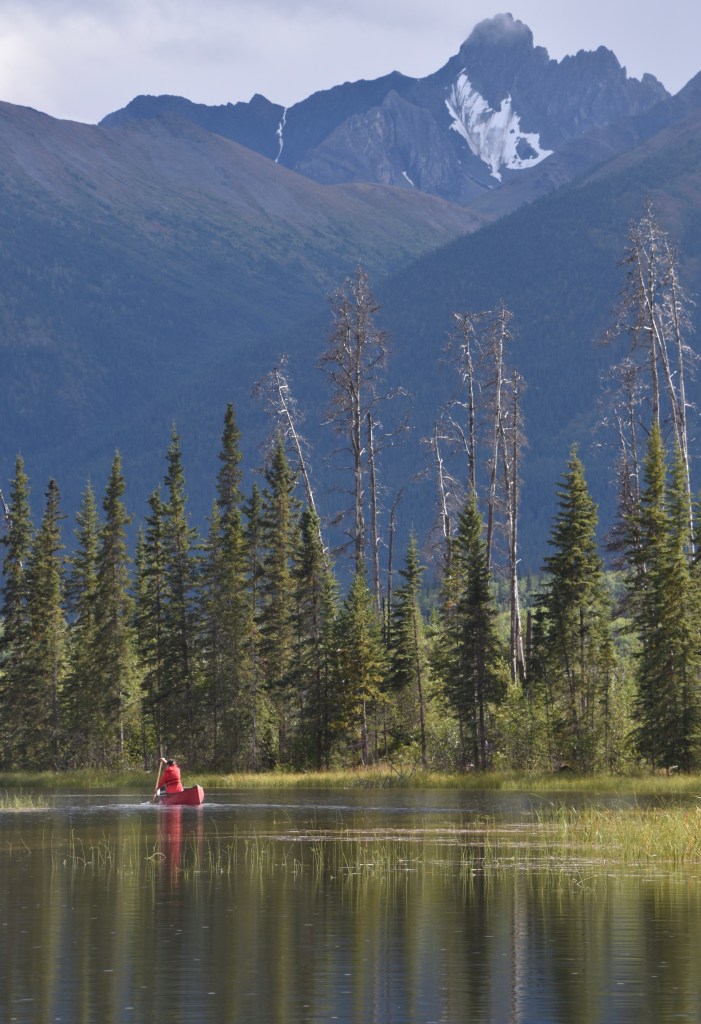
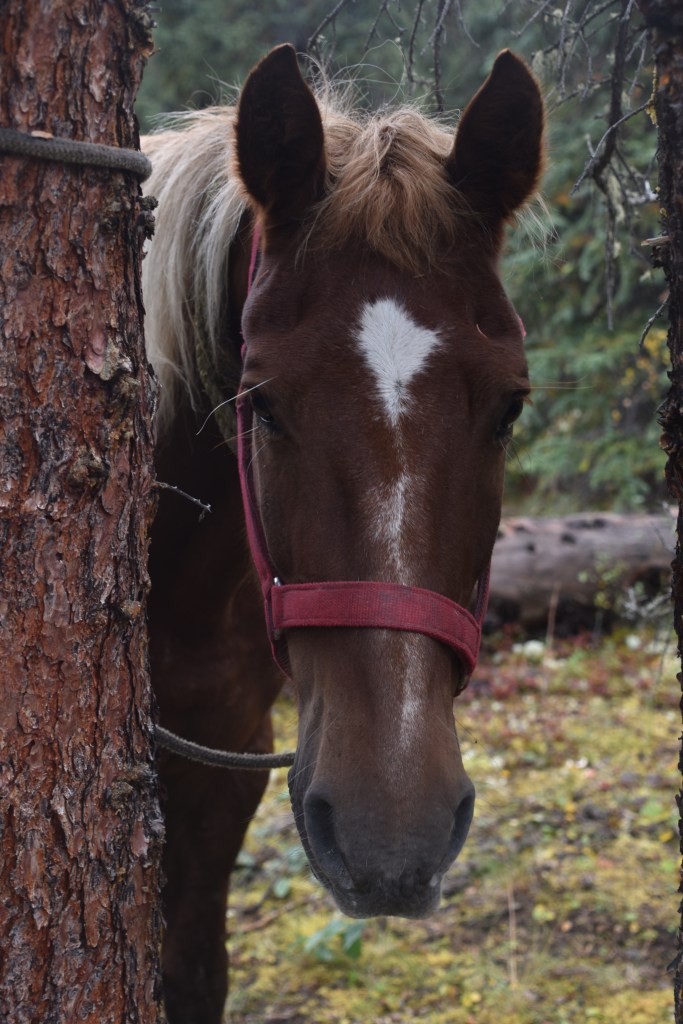
The afternoon before we set off from Mayfield is busy. The entire herd is brought into camp and corralled or tied. Comet leads the herd back. I’m glad to see him so shiny and perky. Hank is friendly as ever and the newest member is a friendly giant draft horse with feet as big as a plate; Big Rig. Michael, Carol and I paddle down the lake to retrieve a canoe. Then we collectively stow the canoes, teepee and dock for winter. There is the endless packing, the last bath, get breakfast and lunch ready and then to the tent. Sleep is restless with anticipation of the journey.
Riding East along the Gataga River
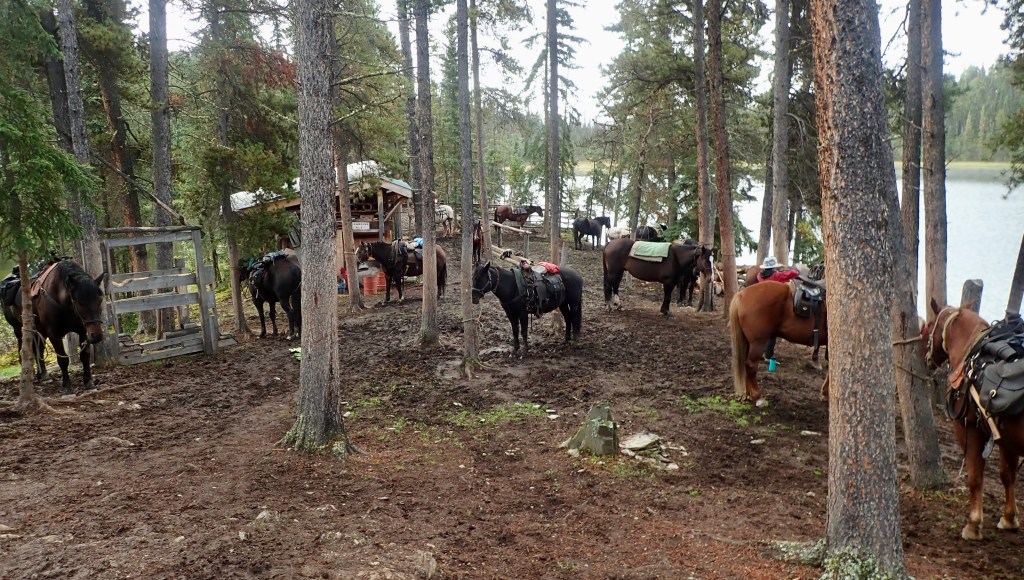
The routine of a riding day begins in the misty dark (5:00 am): Pack up in the tent, stow the wet fly in a bag, keep the tent as dry as possible, get everything into the soft pack bag and put as much as possible into the panniers. By the time we get to the fire for coffee, the wranglers have eaten and begun saddling the horses. Tarps come down in a dry spell and panniers are weighed, evened up and transferred to the saddling area. It takes everyone working to get the expedition on the trail. First, saddle your riding horse and pack your panniers. Then saddle pack horses and leave them tied. “Let’s get Gataga” says Wayne and Michael “offsides” the giant canvas covered soft packs up on the packframe. “Coming over” warns Wayne as the pack rope and hook flies over to the right side of the entire load. Hamish packs the temperamental “Brides”. Eventually all 13 packhorses are ready. “Get to your horses” says Wayne, and already Melodie is aboard Tony and Carole is aboard Levi. Comet is keen to go and likes to be up near front so we jostle forward and head off as Wayne chimes “Let’s go, let’s go”. Bonus heads out at a trot and the shuffling of horses begins. The packhorses have pecking order and Kylo, Buddy, Hank and Locket like to be in the front. Kylo tends to be a bit slow and is terribly cranky if others attempt to pass. Little Lloydie, a clever Appaloosa likes to circumvent the entire crowd and often heads his own way.

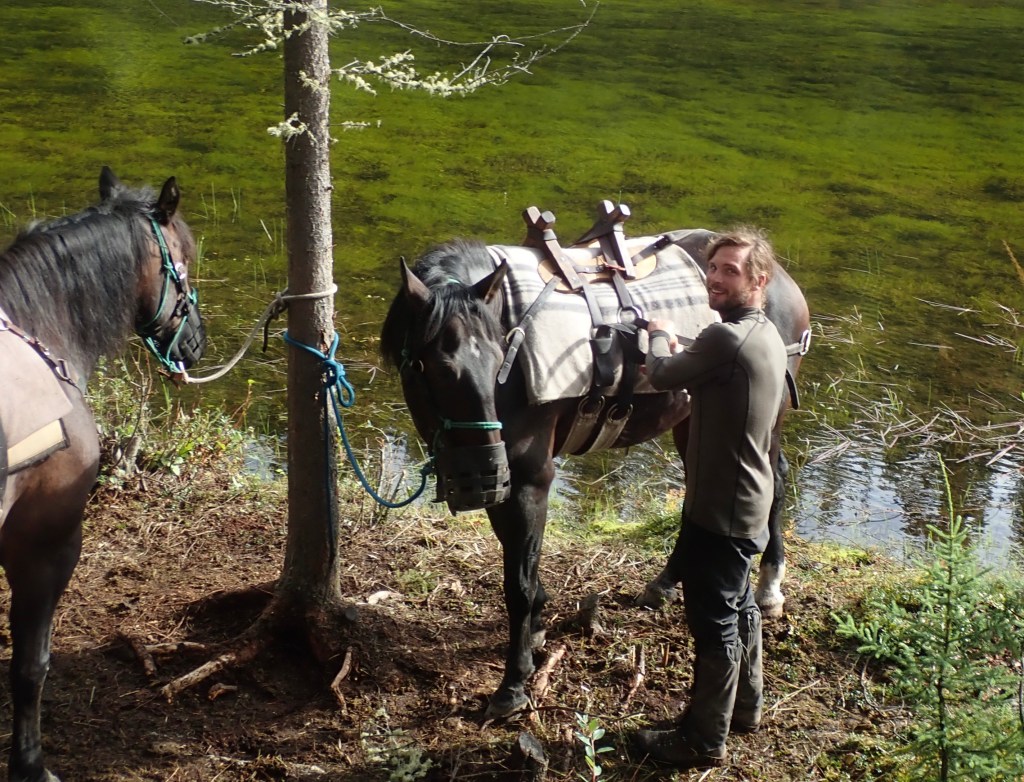
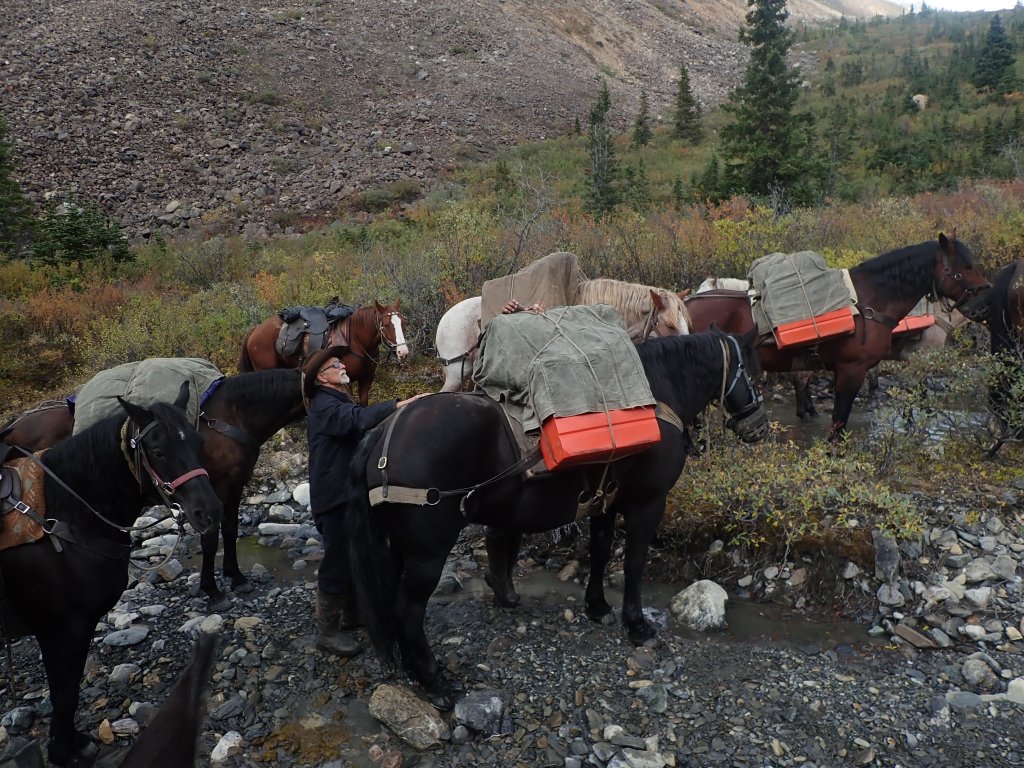
We make our way through the burn and have a final chance to change before the big swim. I tie my gumboots around my neck (not recommended) and go barefoot. There are many recommendations about the swim, but mainly to follow Wayne’s route and hold on! The horses tend to reach for the bottom with their back end, which causes one to float off (at least that’s what happened to me). I had to hold Comet’s mane and nearly floated off towards Cassiar. I was trying to photograph, hold on and rein in Comet all at the same time. Needless to say, good photographs didn’t result! However, there were no mishaps and when we reached the spot for lunch and reassembly, the sun was shining. I poured out my saddle bags and quickly realized the double bag over lunch didn’t work. There was a soggy sourdough bun and soaked trail mix which was appreciated by Big Rig, Gataga, Lloyd and Comet. In fact, after the soggy bread, Big Rig never left me alone at lunch breaks!
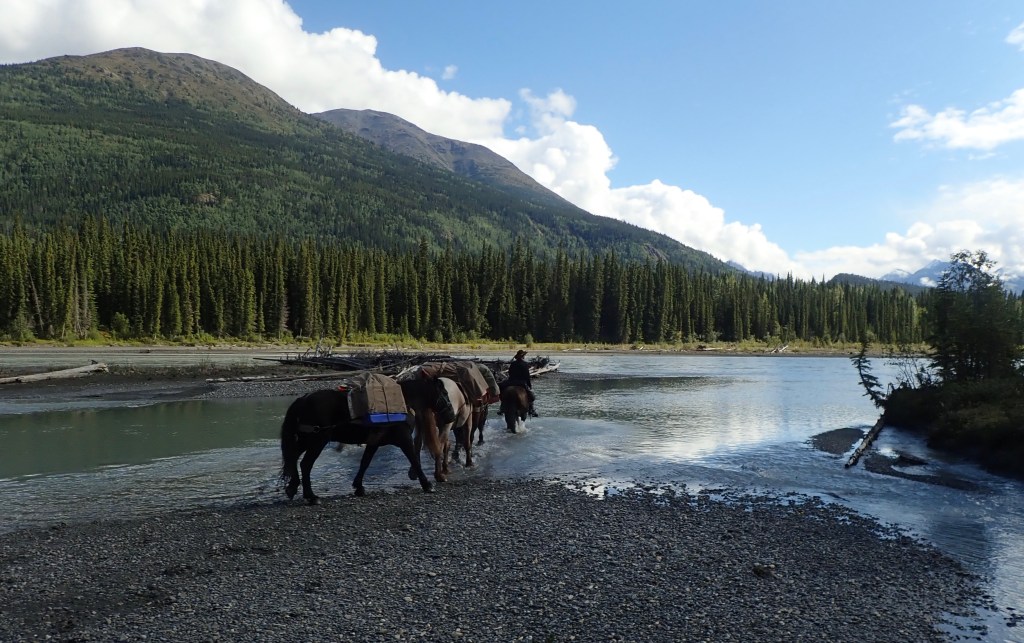
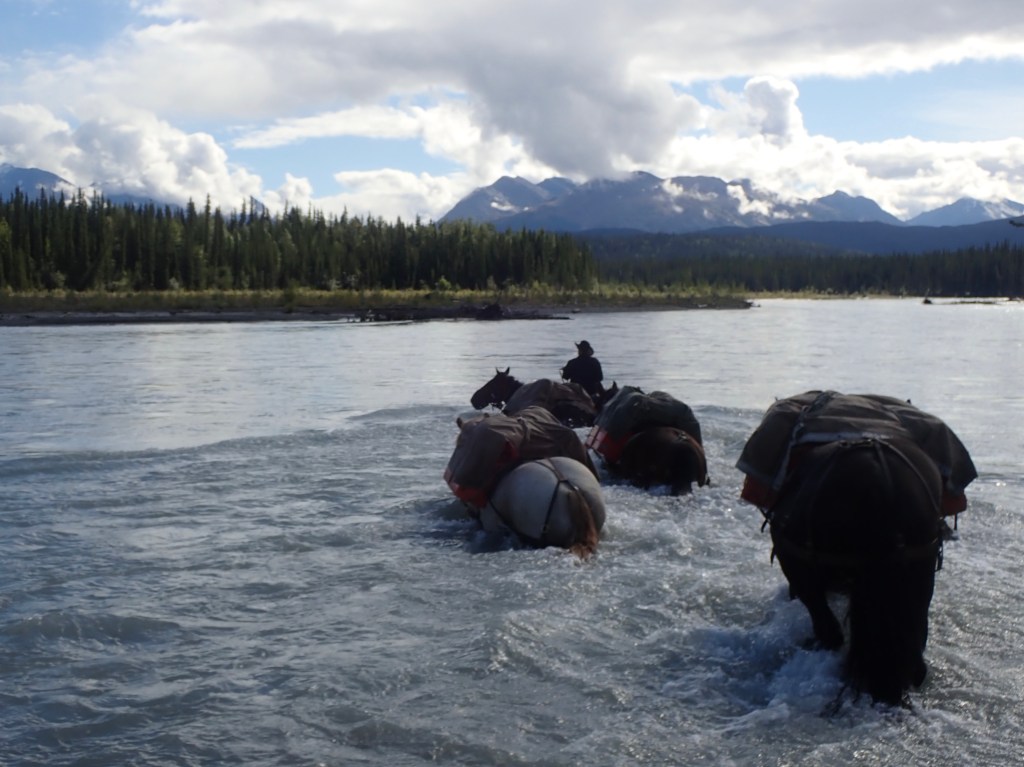
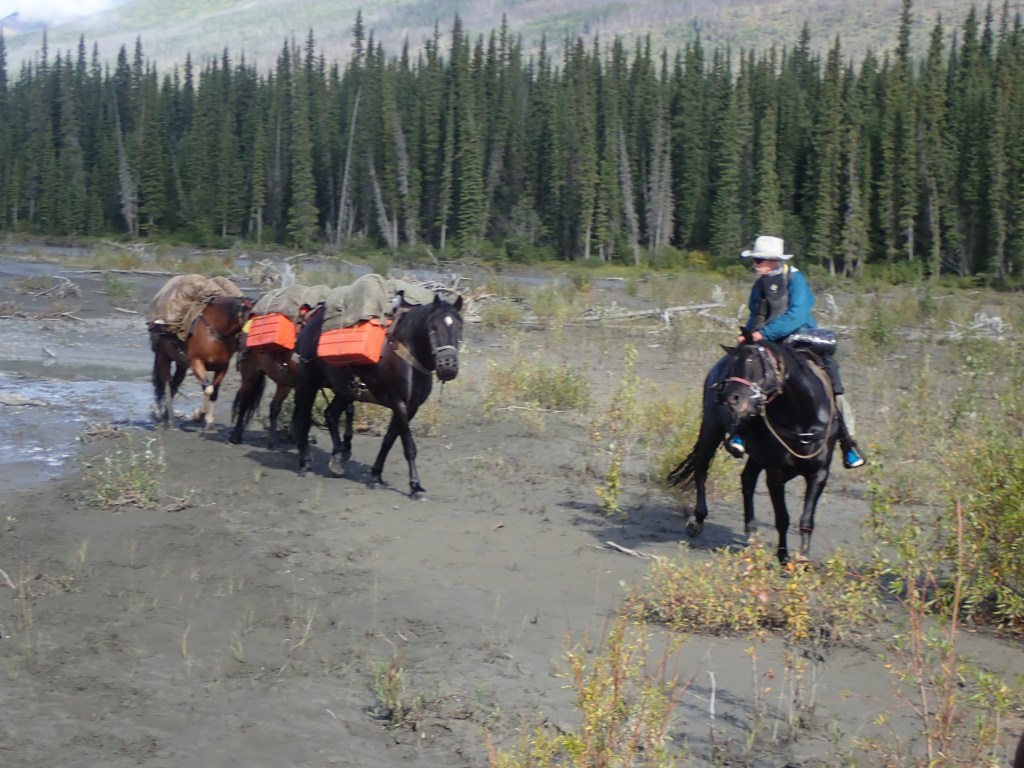
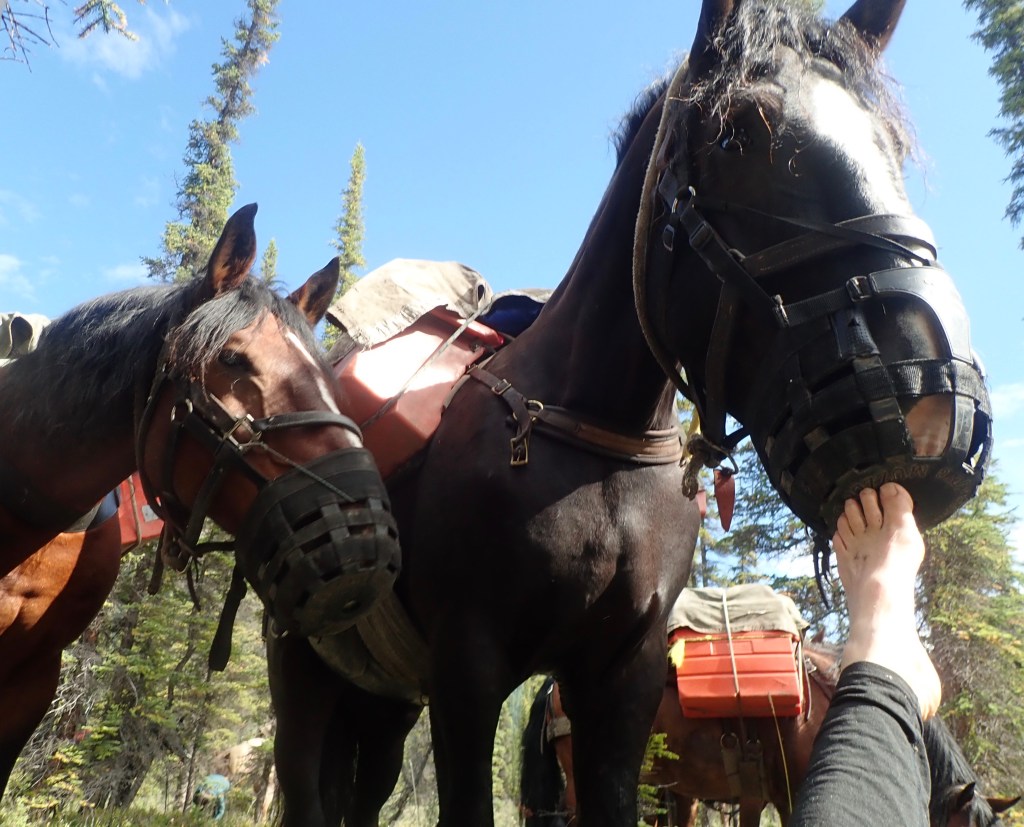
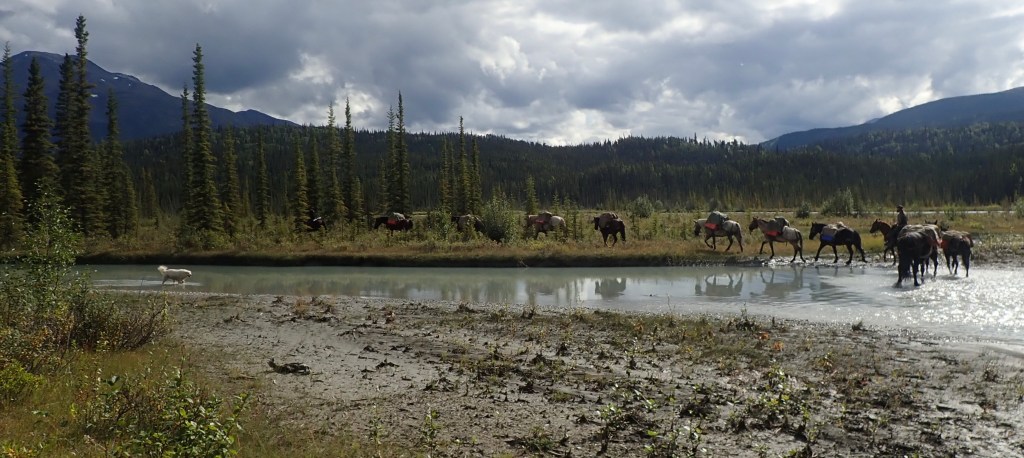
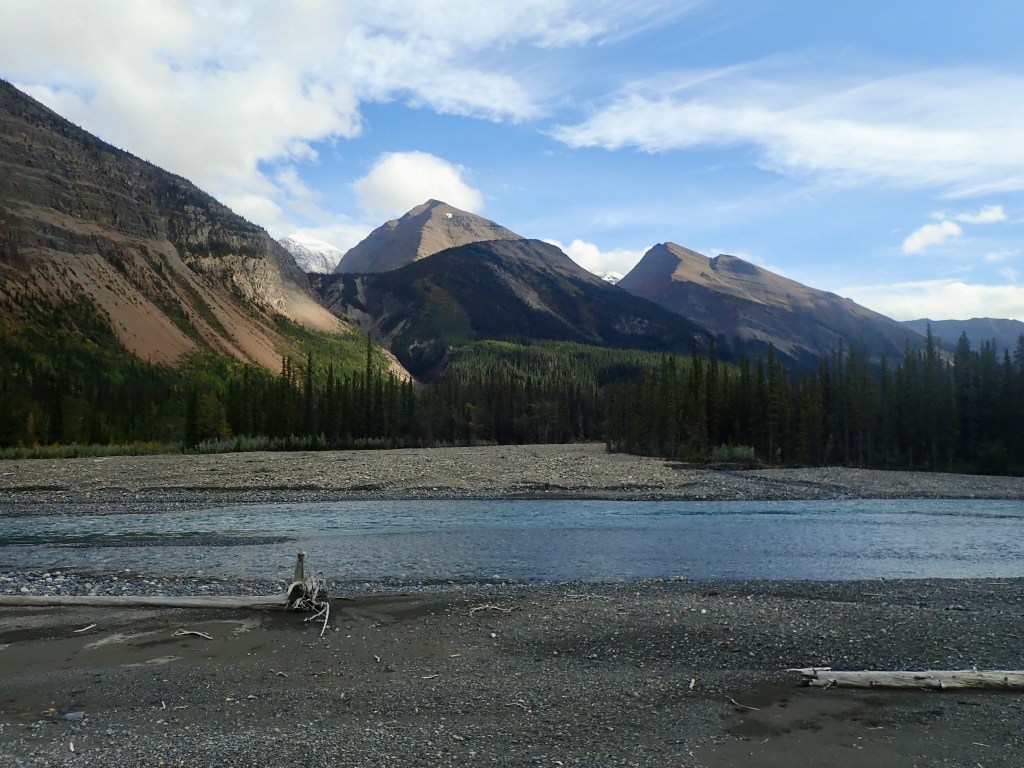
We ride east along the wide river bed, skirting steep bank sections by moving up to the forest. How do Wayne and the lead horse Bonus know these little nuances of trail-finding in this wide, dynamic river landscape? We arrive at our first camp on the Lower Gataga floodplain, tie up the riding horses and the pack horses come in to have their loads removed. Packboxes are arranged in numerical order parallel to the fire pit “Order must be maintained” jokes Wayne. The piles of saddles, wet blankets, canvas, saddle pads, pack ropes, muzzle baskets and our packs are seemingly disordered until the inevitable rain begins and tarpology begins. After the horses are released to graze for the night, we set up tents, and Michelle takes her turn at dinner preparation.
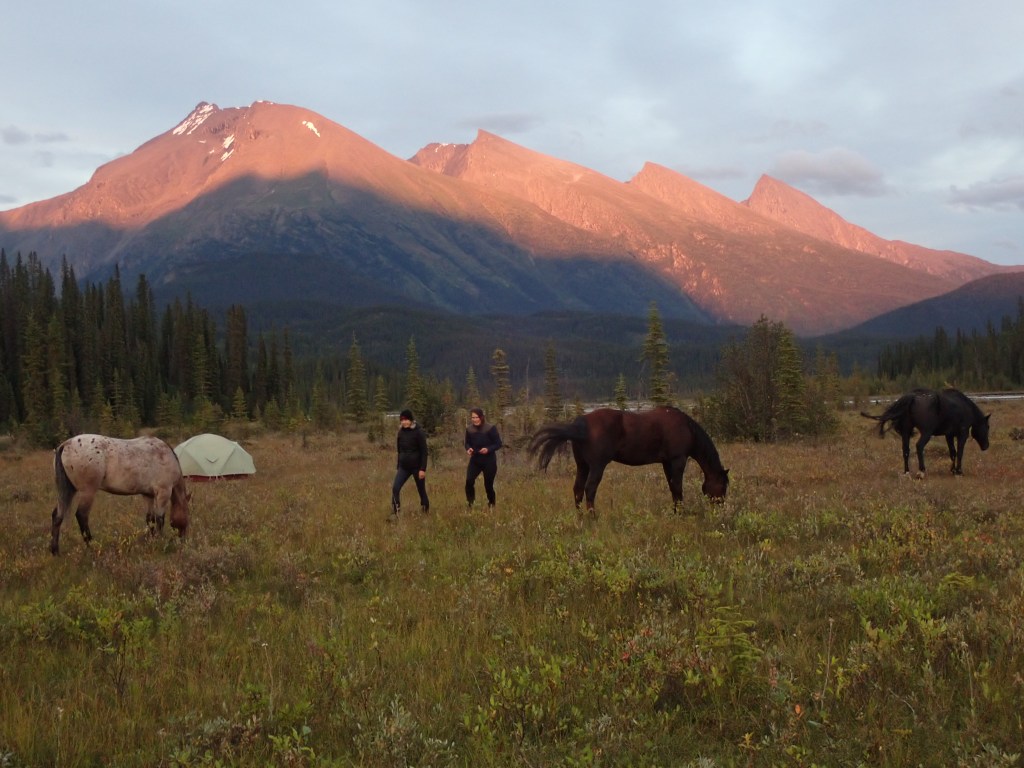
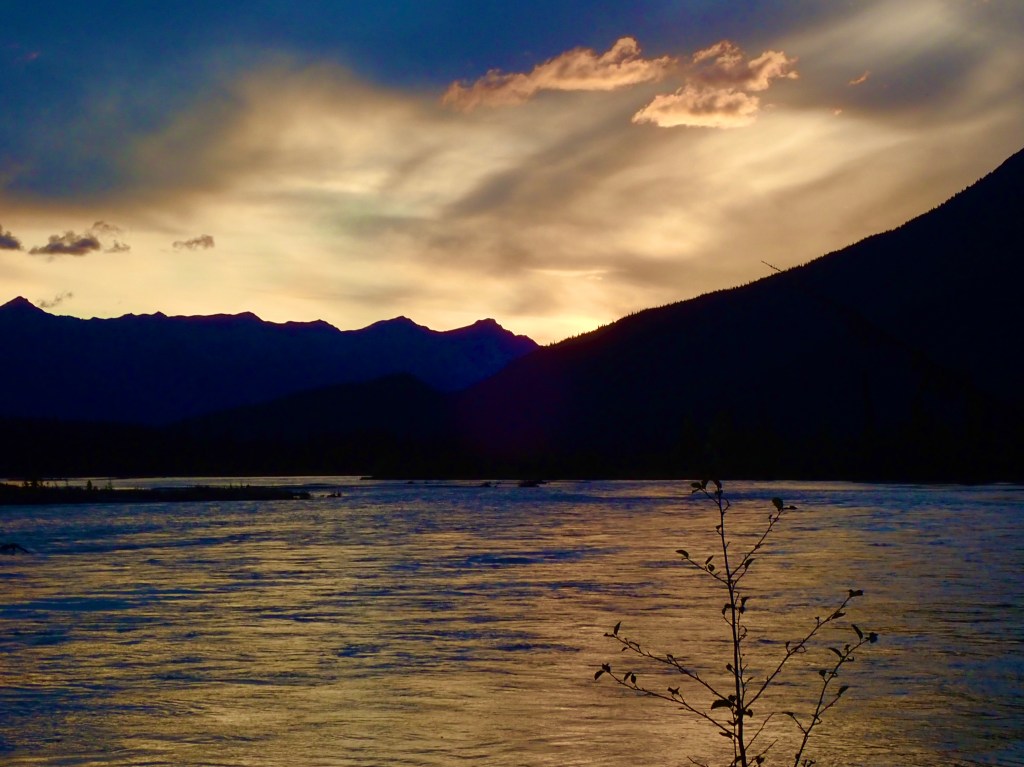
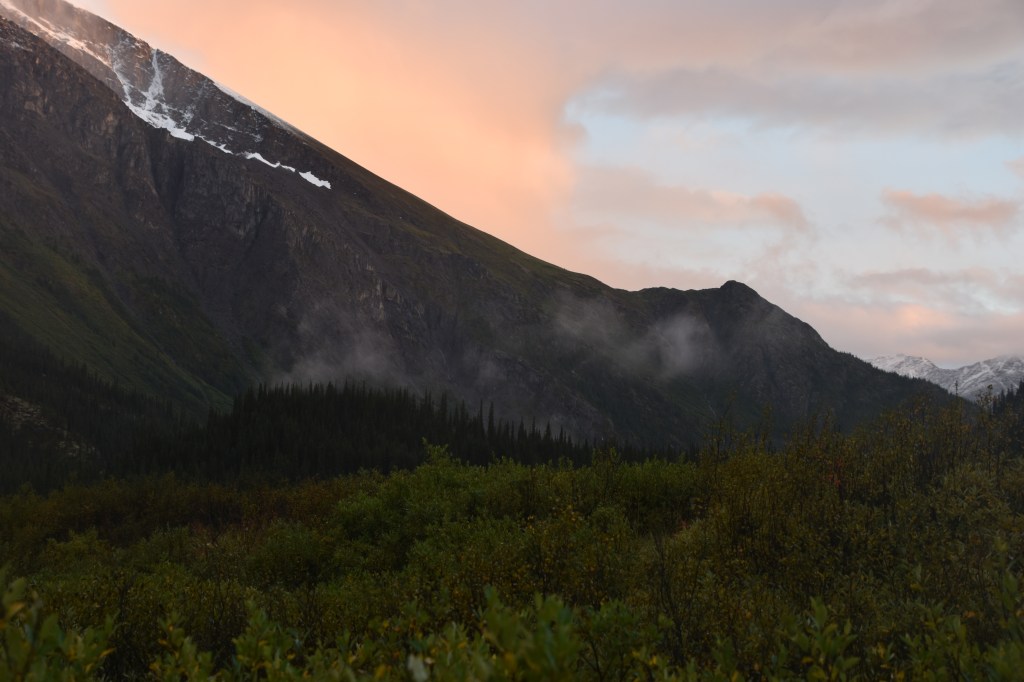
The evening light casts a pink glow on the Rockies and the horses that remain nearby are cast in mellow light. As darkness falls, we retreat to our tents with the sound of the river rushing by.
To Thistle Camp
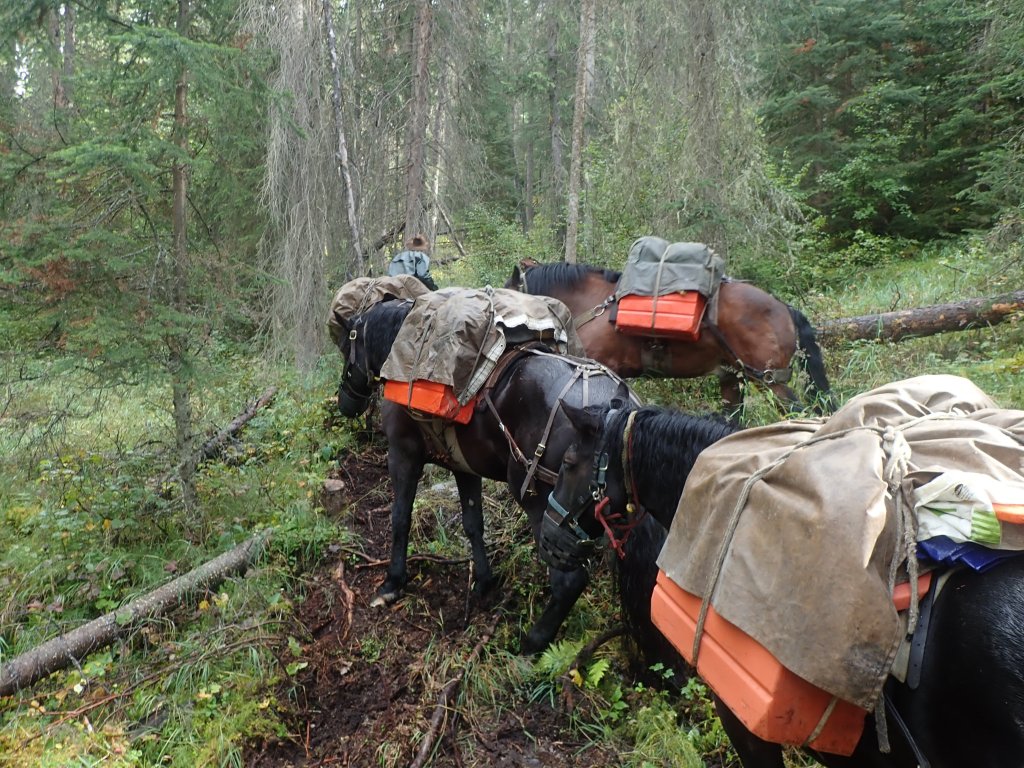
Did I mention that the Gataga Trench has some especially muddy areas? The ride to Thistle Camp ran along the North Gataga floodplain, then over a forested foothill. Spruce roots run across the trail and there is intense mud in lower sections which is compounded by this wet summer. It literally sucks the shoes off horses and one has to watch for losing gumboot or footing when we walk the horses through steep or particularly tricky situations. I am grateful for Comet’s agility and having a horse to ride through wetlands, swamps, rivers and mud.
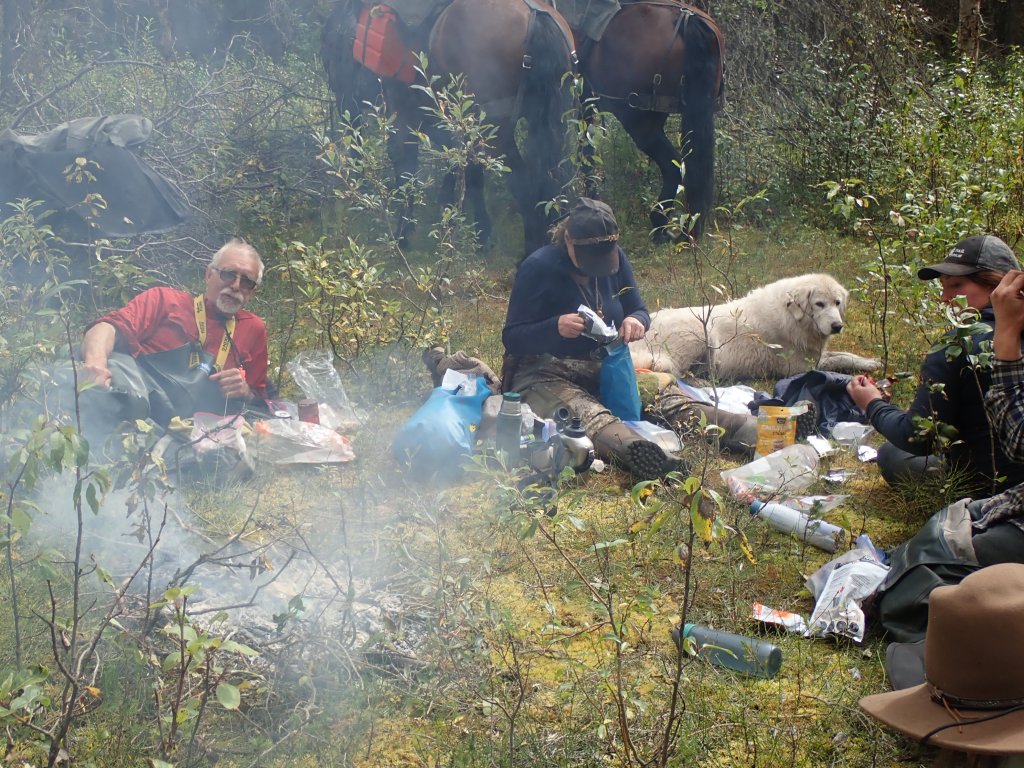
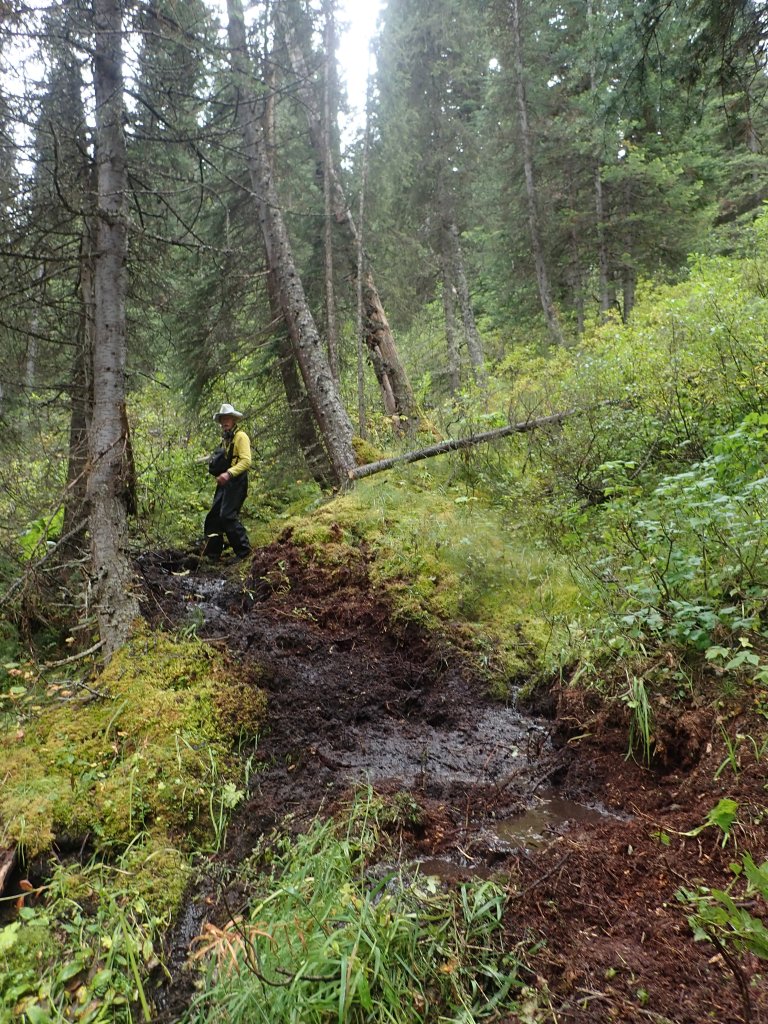
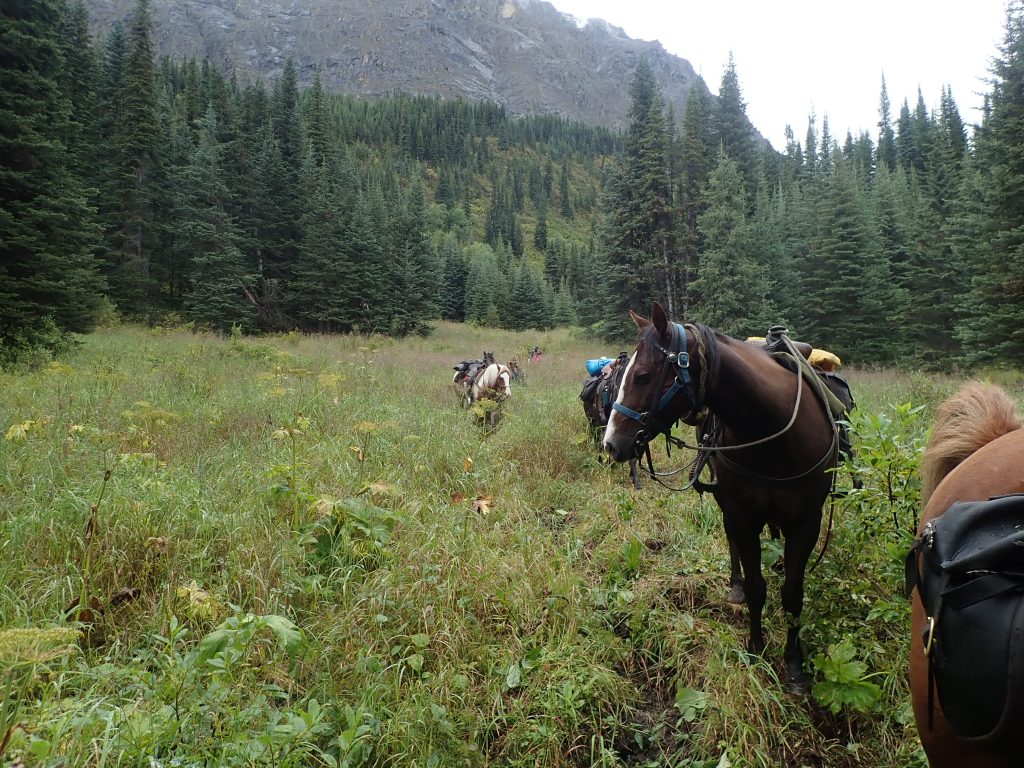
Thistle Camp is located in a meadow above a tributary to the North Gataga. It’s lush grass, alpine flowers and willow provide grazing for the horses and spruce provides shelter and firewood for us.
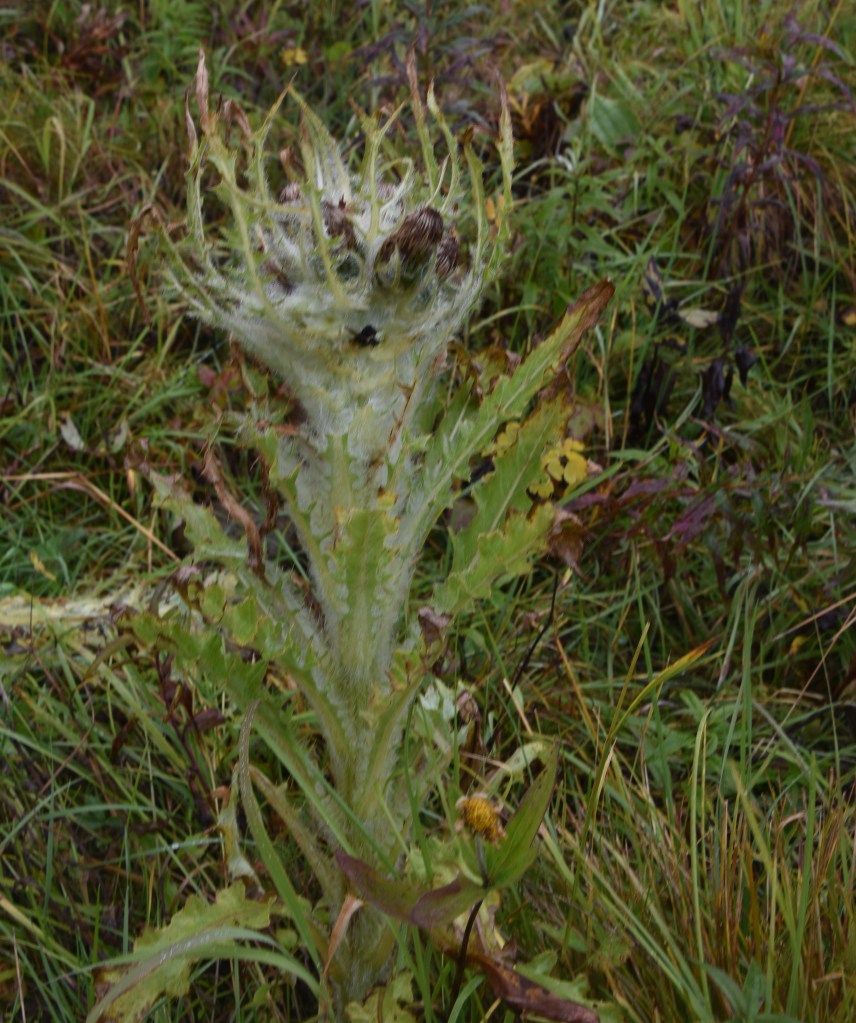
Thistle camp is so named for the native Leafy Thistle, (Cirsium foliosum), a beautiful plant with edible roots. Apparently, too much consumption of these thistles cause flatulence, which apparently didn’t disturb the horses as nearly every thistle flower was chewed off!
We stayed at this camp for 2 nights, so our “day off” was spent fire tending, checking horses and walking the river in the breaks between rainstorms. When the clouds parted fresh snow was visible on the high unnamed peaks.
To Churchill Camp
Five-thirty am. I was awoken from a wild dream to hear bells. The horses were nearby which signalled time to rise and help with catching horses. Sometimes the horses wander far in their nights of grazing and the wranglers have to cross streams, climb mountains and bush-whack through terrible thick willow to find the horses, so when they come into and near camp on a riding day, its a real time-saver. I threw on my headlight and raingear (I always slept dressed to keep warm in the tent) and waded through the head-high willow in the direction I heard bells. There was the reflections of Comet, Big Rig, Lloyd and Hank’s eyes in the thick willows right above camp. I easily caught Comet and also put a halter on Lloyd but getting a halter on Big Rig in the thick brush was another matter! Big Rig stands over 18 hands and while friendly, it’s still hard to reach over his poll while holding on to 2 other horses. I must have dropped a halter in the dark too, so luckily Alex knew the identity of missing halter and found it in the willows by daylight.
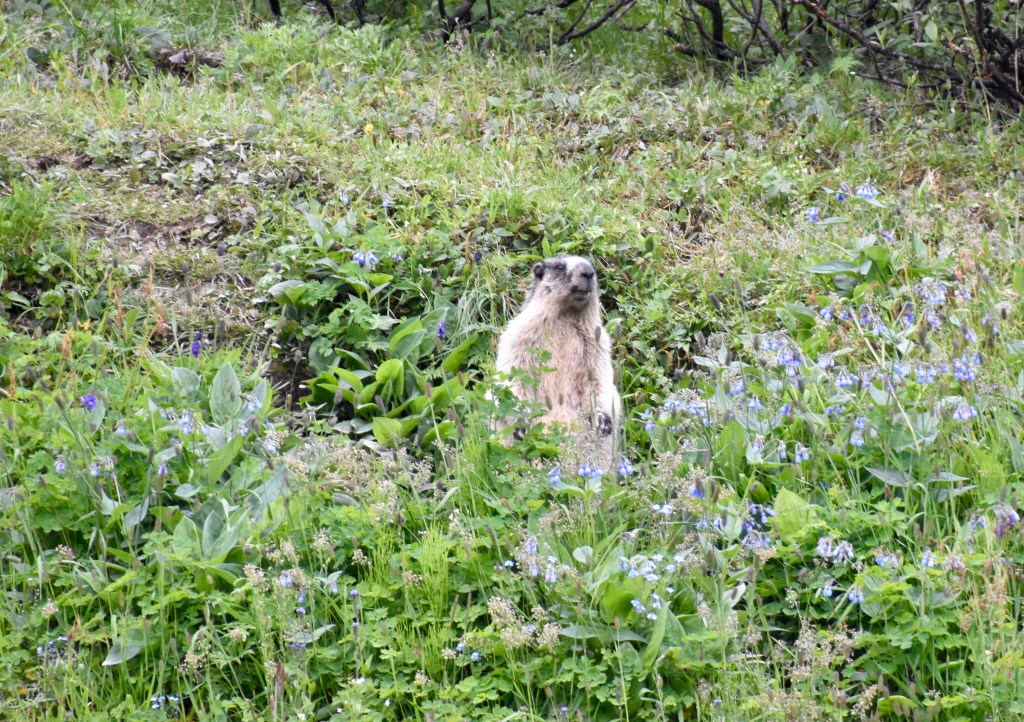
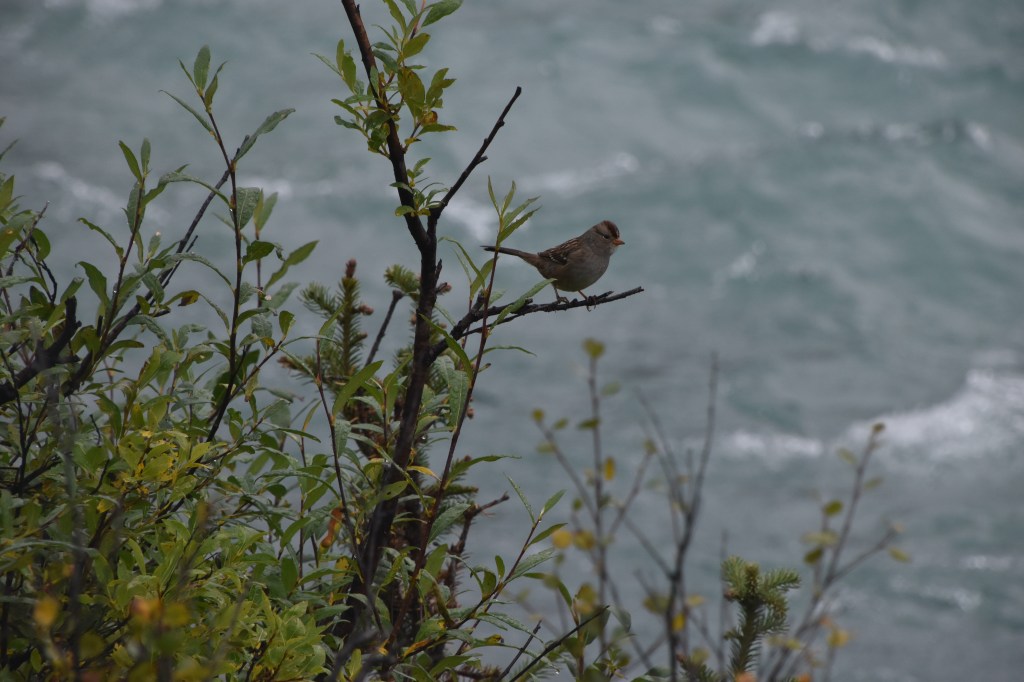
We managed to have all the horses caught, cook breakfast, pack up and head up over the Twin Glacier Pass before rain . Two horses had shoes replaced as well. This pass was a lovely ride through glacial moraines and ridges in every direction. A moose ran away in the willow and marmots whistled warnings from their burrows. The Hoary Marmots wouldn’t be up for much longer as it was nearly September. The marmots had crammed as many lupines and wildflowers into their bellies as possible in 4 short months in preparation for their 8 month hibernation period. Red-breasted Nuthatches call and a few Golden-crowned Sparrows flit in the brush.
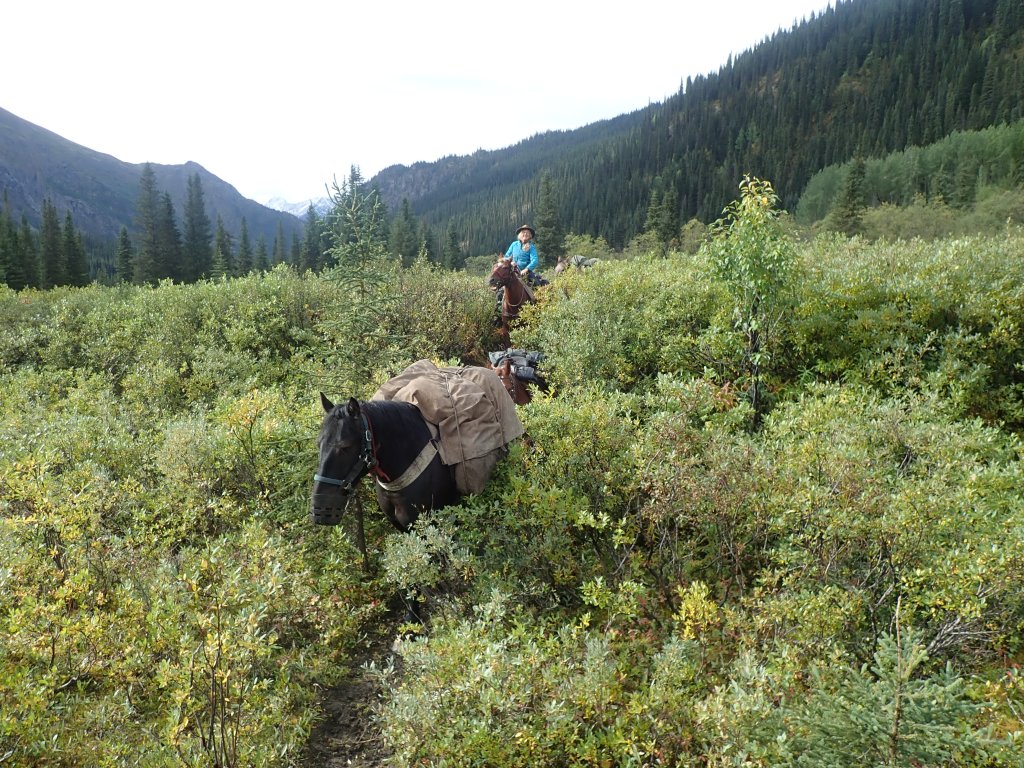
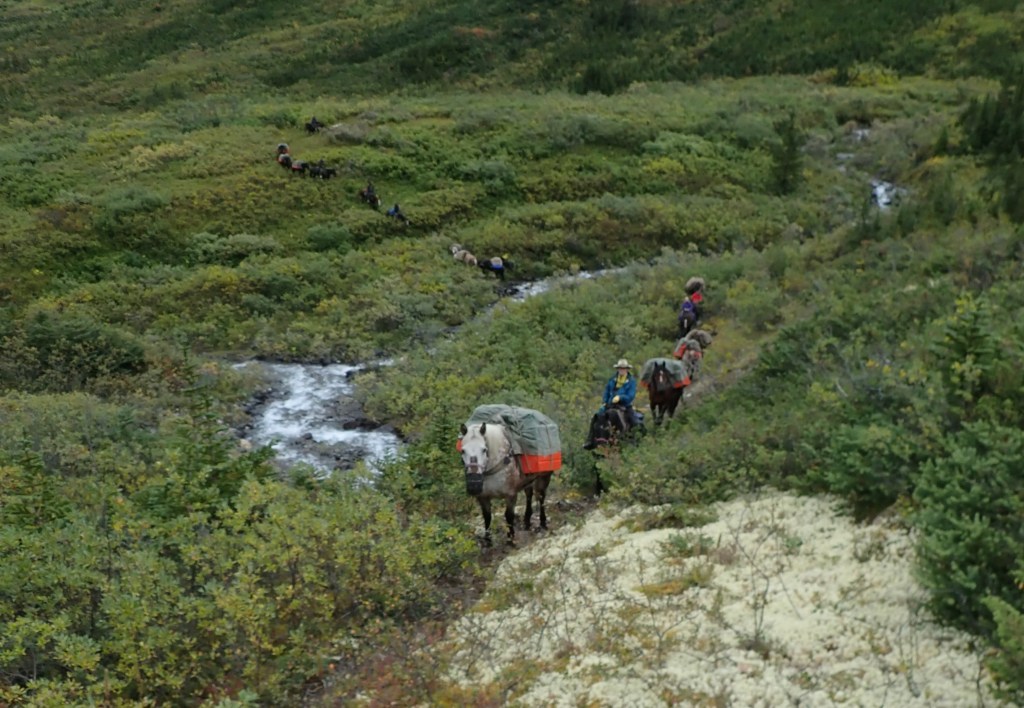
After the pass, there was a particularly muddy section of forest side-hill trail.The roots are plentiful and furrows are deep. We descended into Churchill Camp at 19:45 safely and tired. Alex whipped up his signature dish of beans, corn and mashed potatoes and we fell in to our beds early as dark and rain descended.
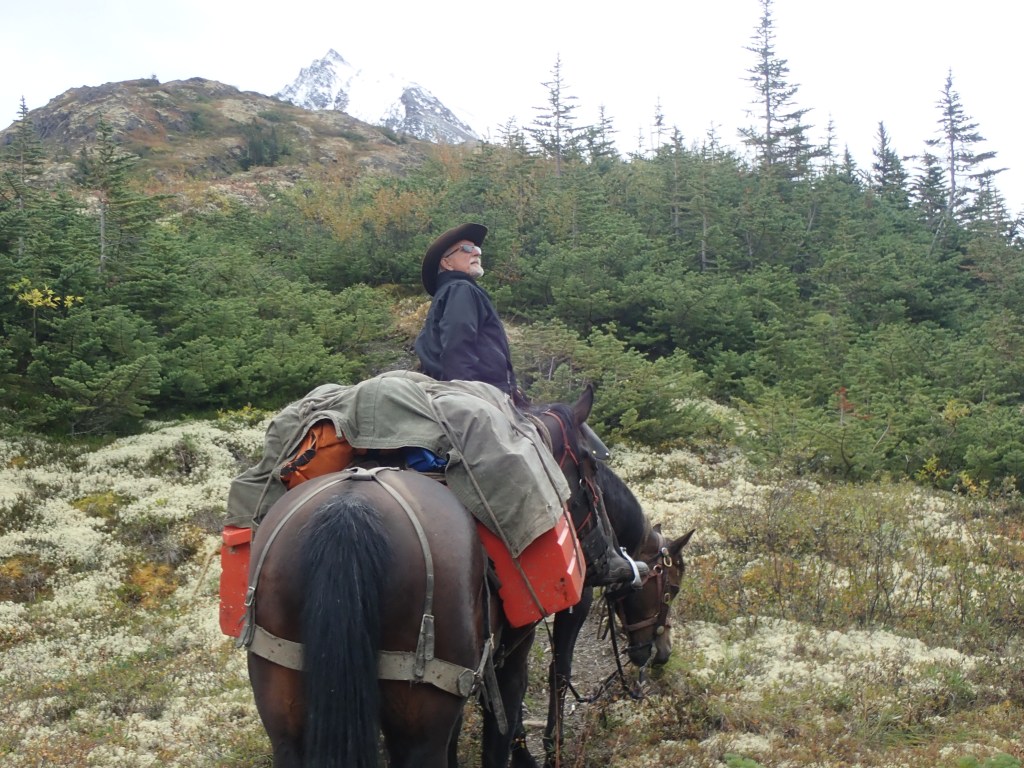
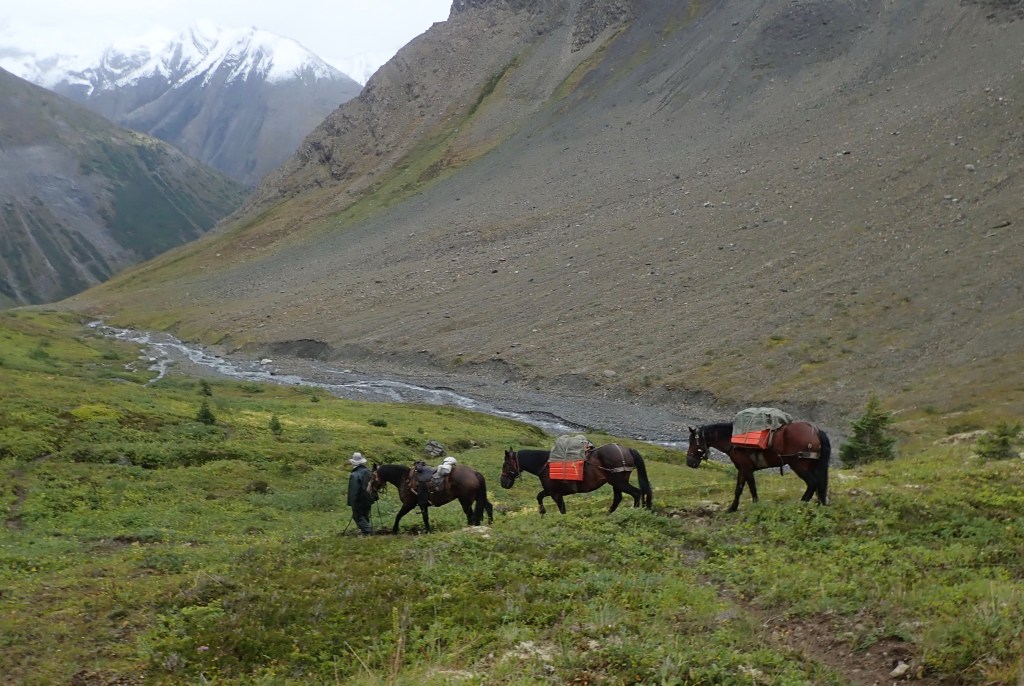
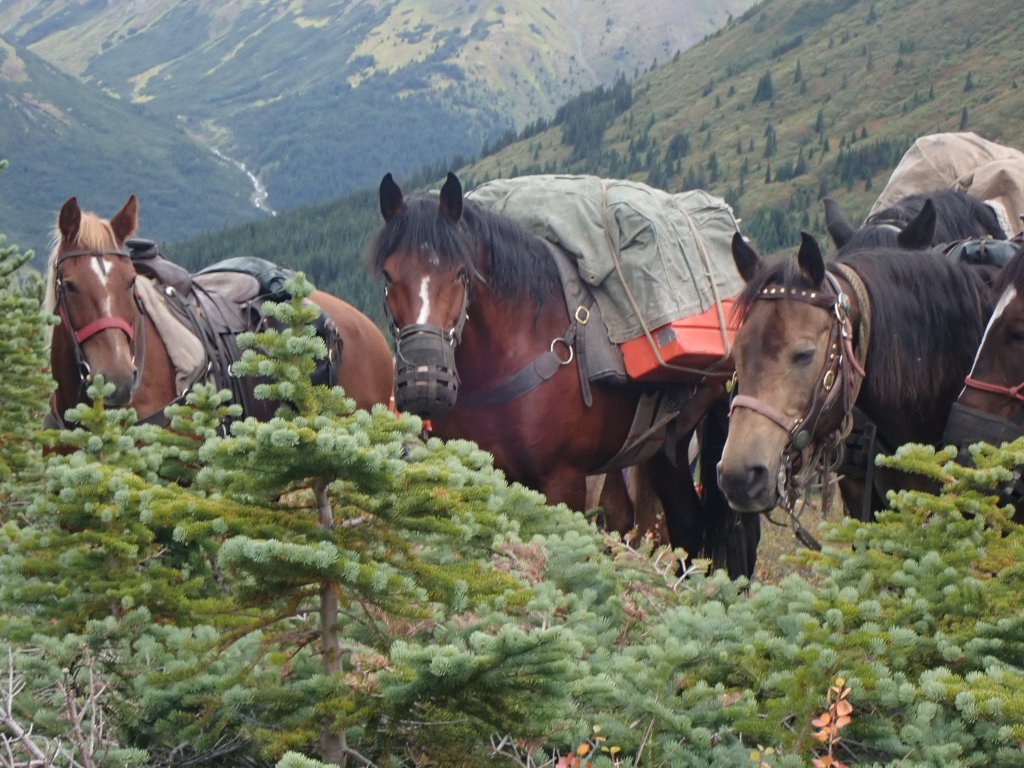
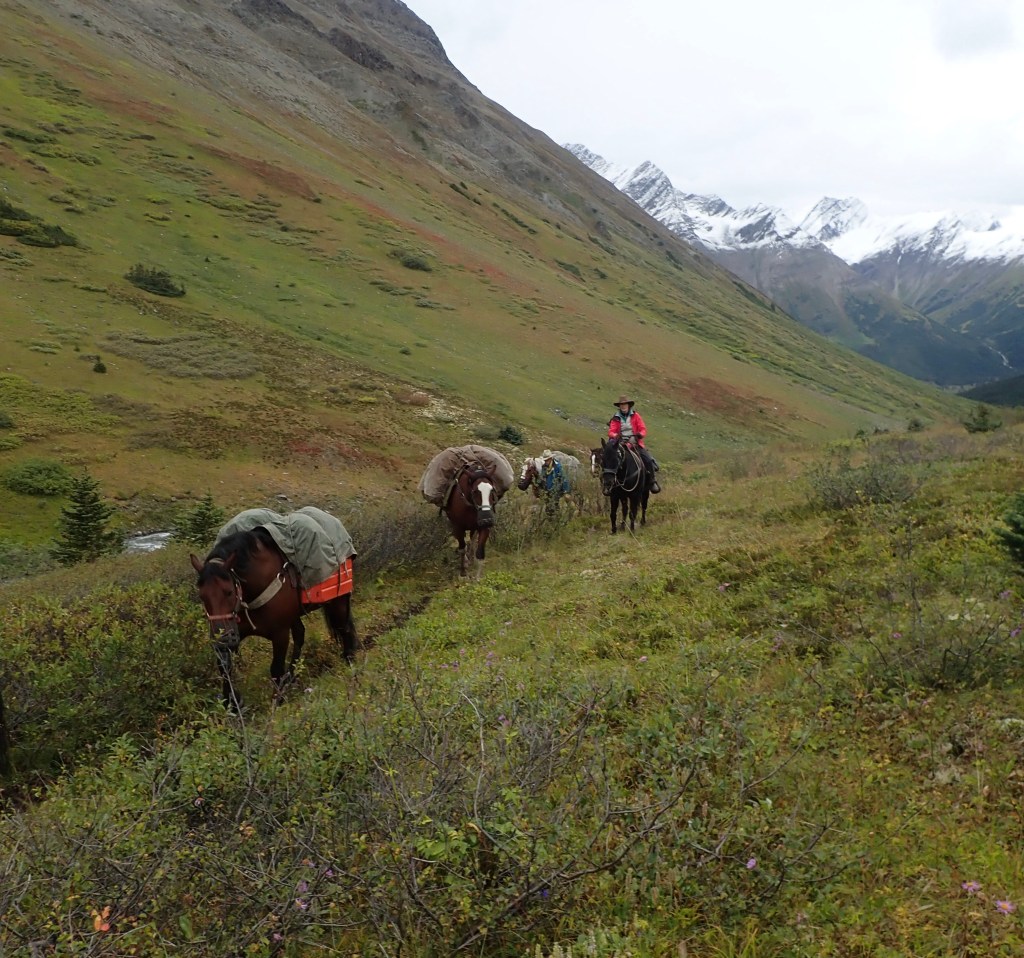
We spent two nights at Churchill Camp. One night I had dreams of swimming off sunny Protection Island. Two British Columbia beautiful places couldn’t be more different in temperature right then! Michael makes the morning fire and we try to dry horse blankets, but soon the rain challenges that attempt. Waves of weather sweep through this valley and the tarps go up! We spend the day with stories around the campfire and occasionally Mt. Churchill appears between bouts of rain. The horses graze in the meadow nearby.
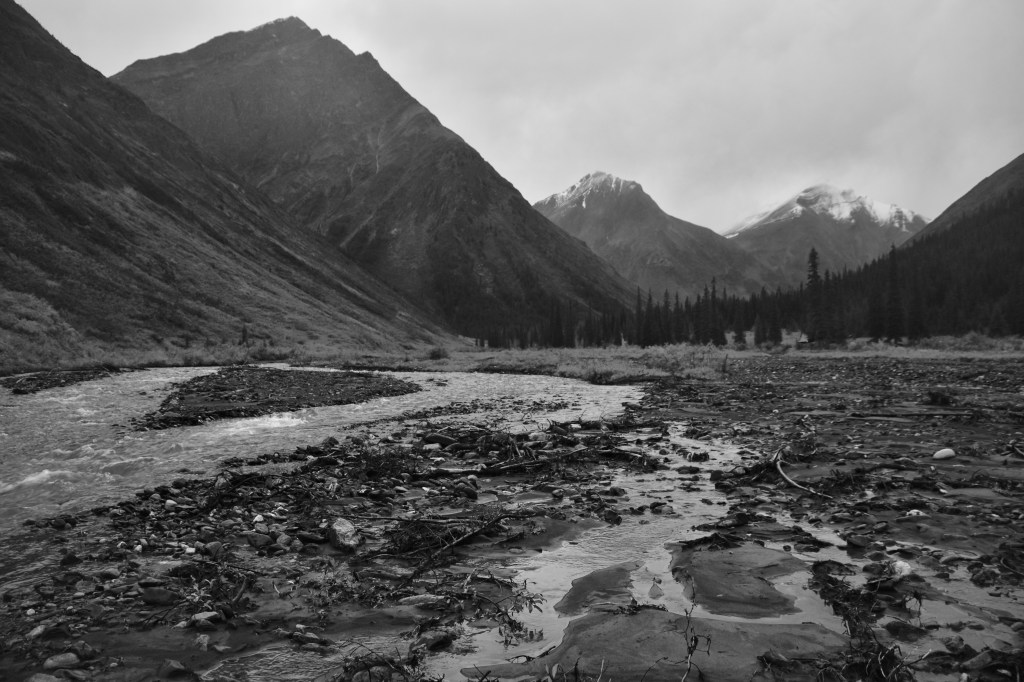
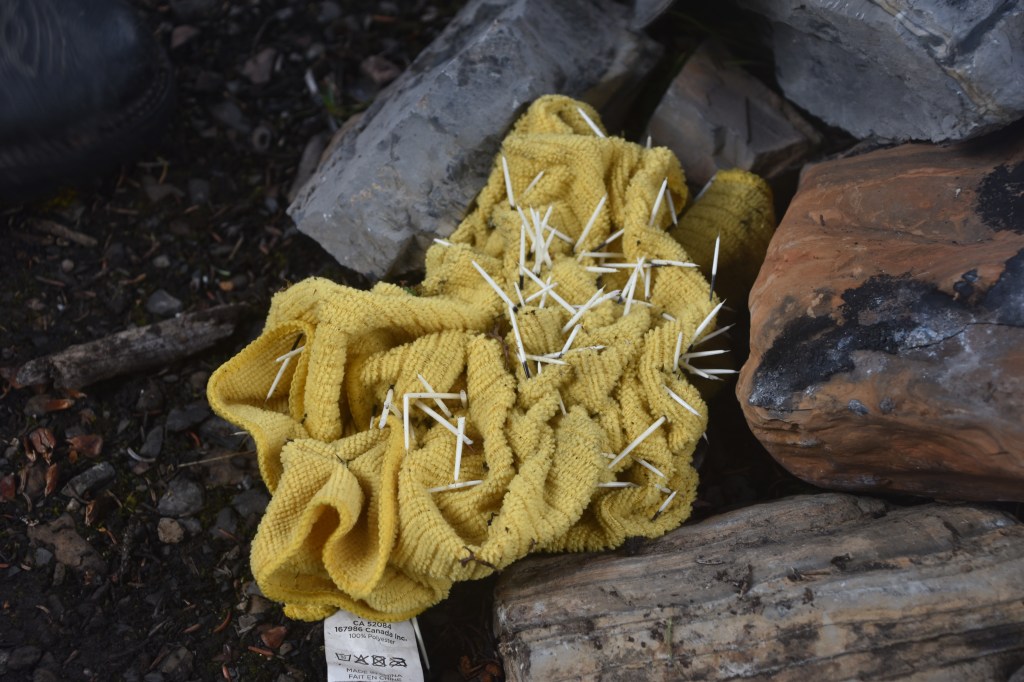
Alex was particularly concerned about porcupines at Churchill Camp. Porcupines keep Alex awake at night; their grunts can signal chewing of leather saddles, bridles, even one’s boots. At Churchill Camp I found the chewed sole of a boot, the tangle of a shoelace, some plastic thread and metal eyes under a spruce tree. Was this lost boot responsible for Alex’s concern? Certainly a yellow dishcloth spiked by over one hundred spines found near the fire was the result of a porcupine investigating Alex’s tent vestibule and being turfed out near the dishpans and tangled in the dishcloth!
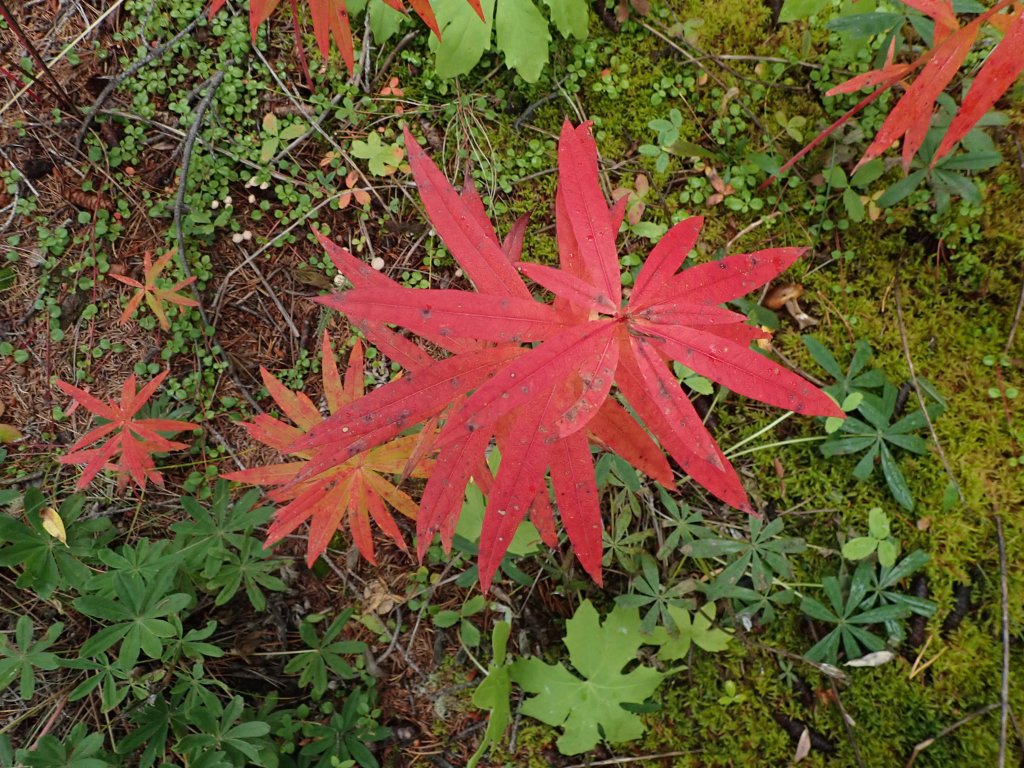
To the Headwaters of the Gataga River – Timescales
From Churchill Camp it is a short ride to the Peck Cabin which is located on a wide braiding section of the North Gataga River. Most of us have lunch on the doorstep of a cabin which has been nearly destroyed by porcupines. It strikes us that this cabin and camp of human construction is only 10 years old and is going back to the wild while Pioneer 10 (the subject of Wayne’s life partner, Donna Kane’s book of poetry, Orrery and Pioneer 10, I hear you) will be present in space millions of years from now. While we muse, Michelle, Alex and Hamish are busily shoeing horses in the little meadow surrounding the cabins. We ride on to Porcupine Camp.
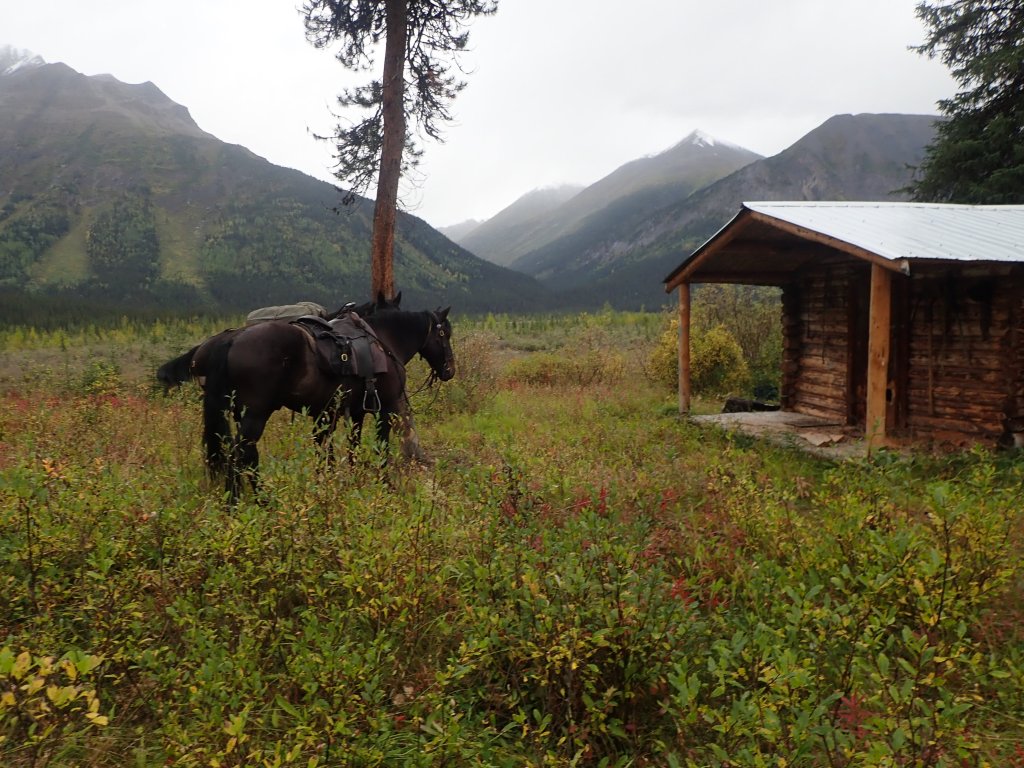
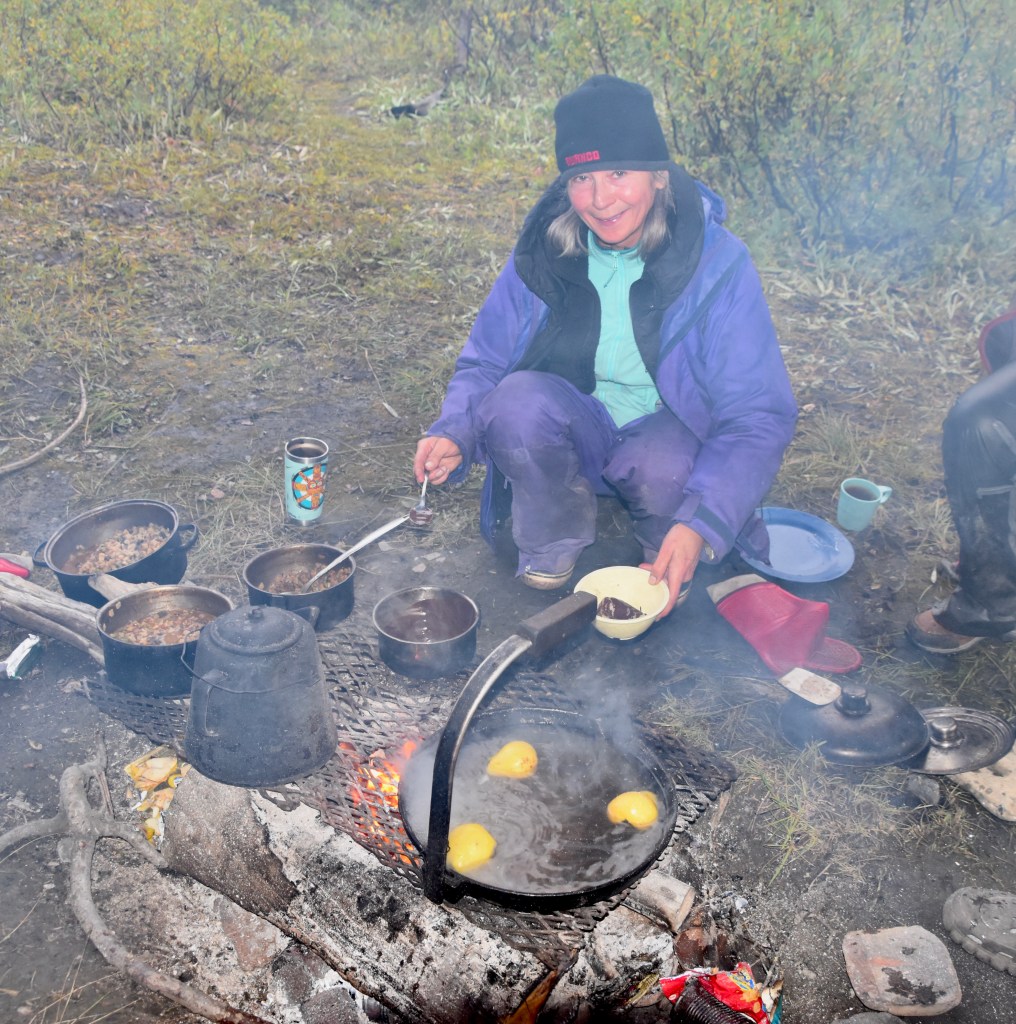
The next day, gusts of wind, light, rainbows and unsettled skies accompany our journey. We find the good horse Percy’s teeth at a spot where he left this earth. Nothing else remains. Likely even his skull was eaten by grizzly bears or porcupines. I muse that such a burial would be something I would like; to be incorporated into the wild so purely. The terrain is rugged and rocky through the narrow pass and the vistas are stunning. We lead our horses through the rocky terrain and appreciate the lack of mud.
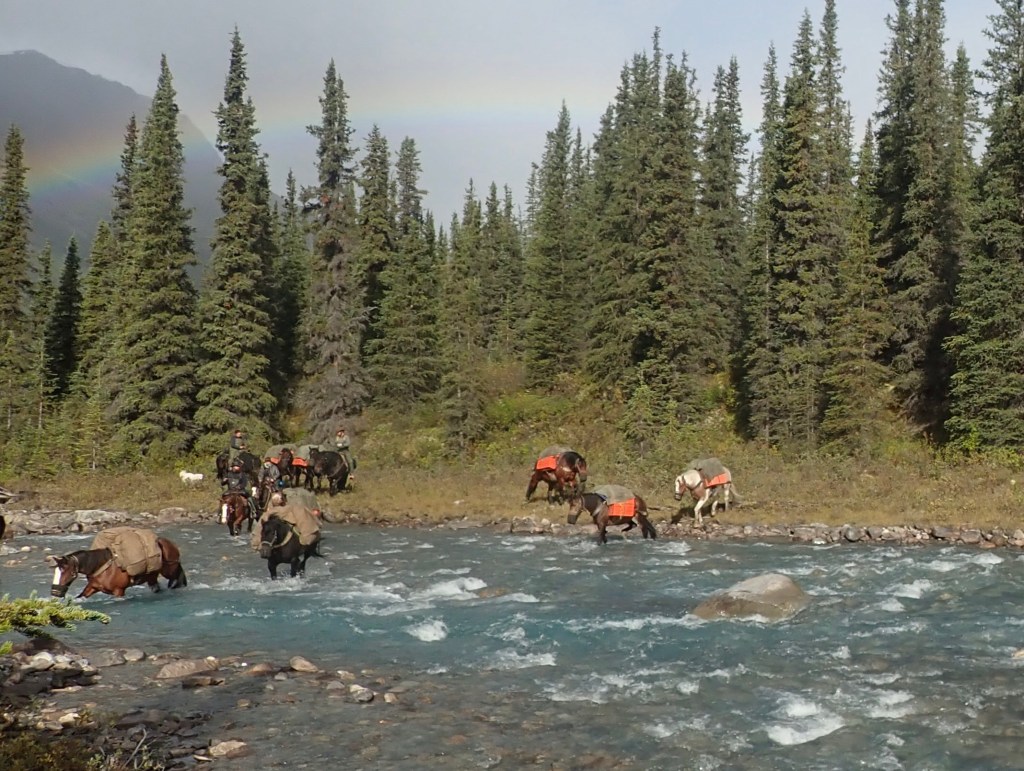
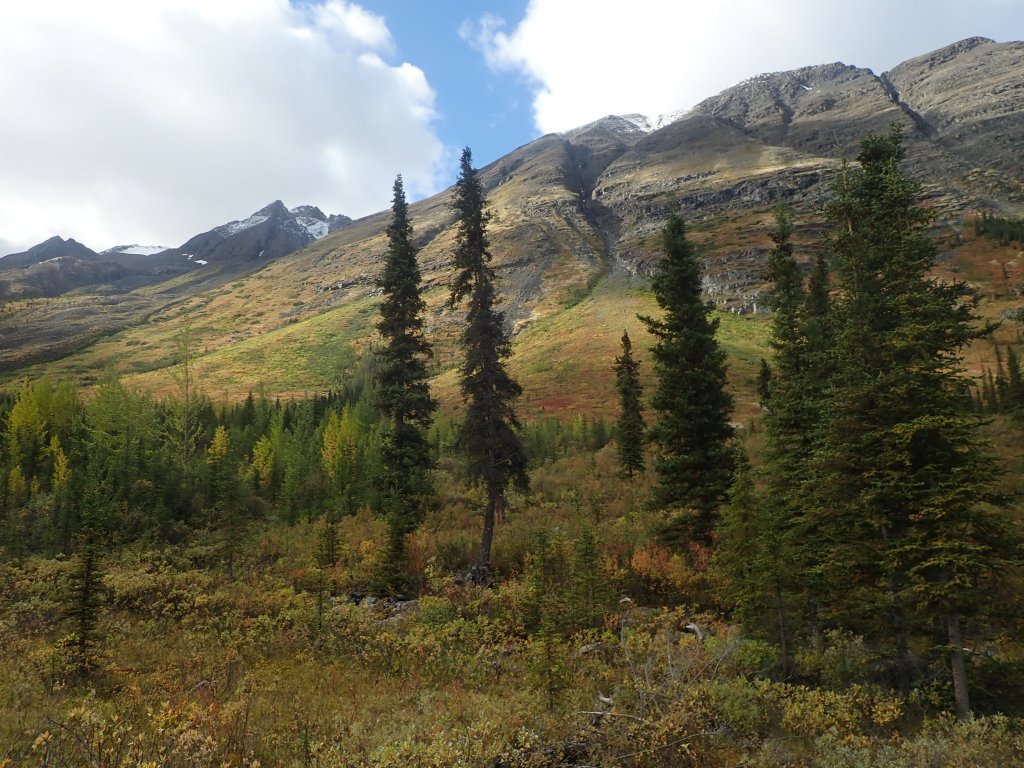
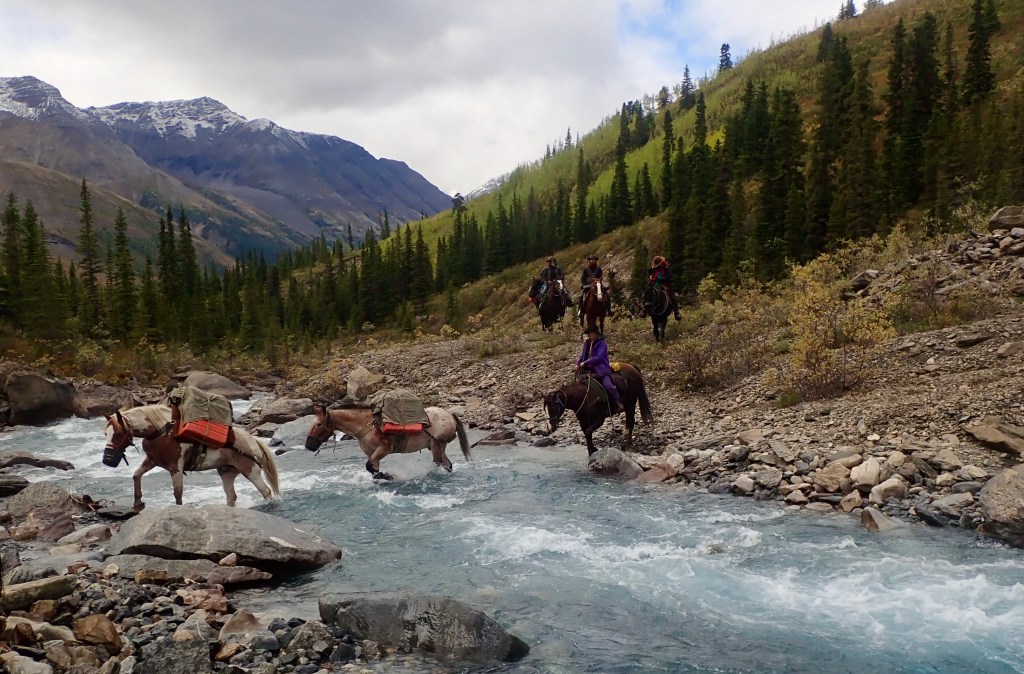
Wayne spots a little dead alpine fir in a grove off the trail. Michael, Wayne and Hamish head up to retrieve firewood. Wayne is riding Locket today and the pack is really not as ordered. During the firewood mission a group of horses including Locket take off ahead. Wayne eventually catches up on foot to Locket, but bemoans that the good horse Bonus is getting older.
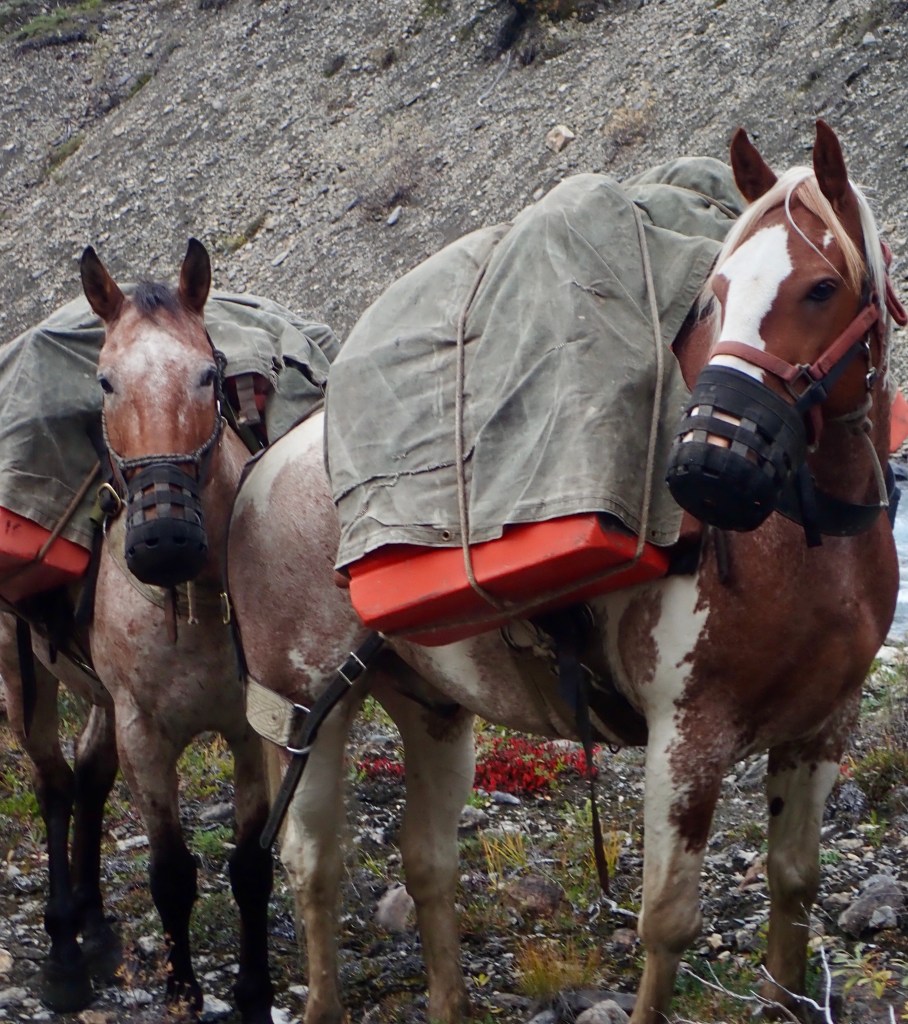
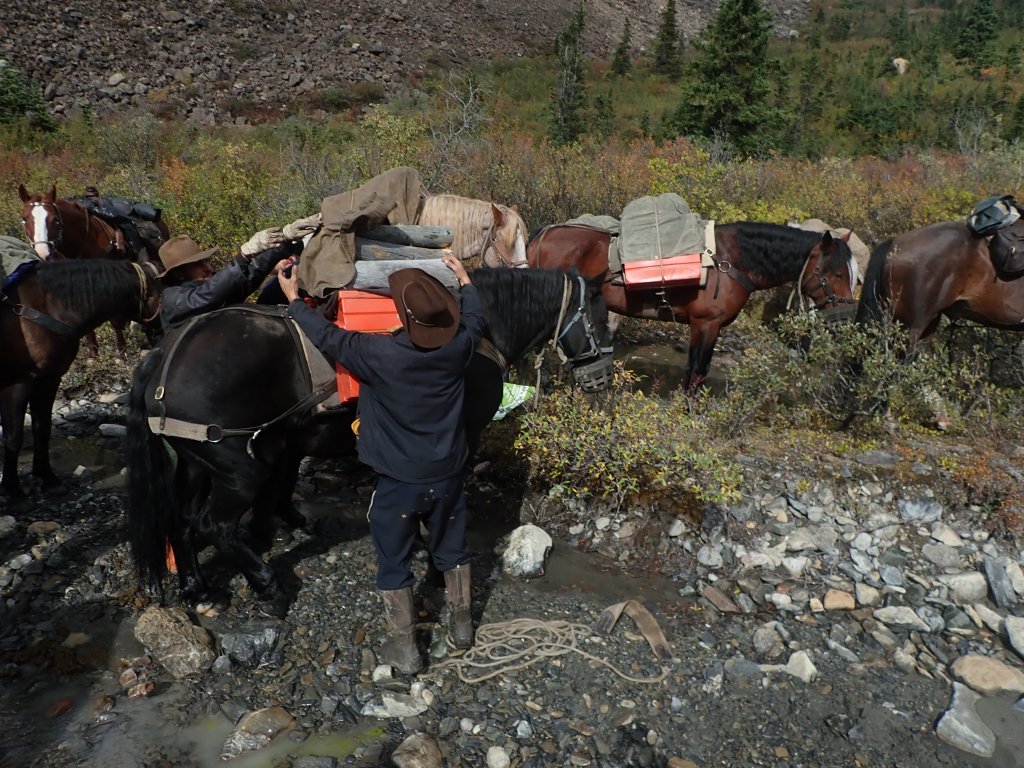
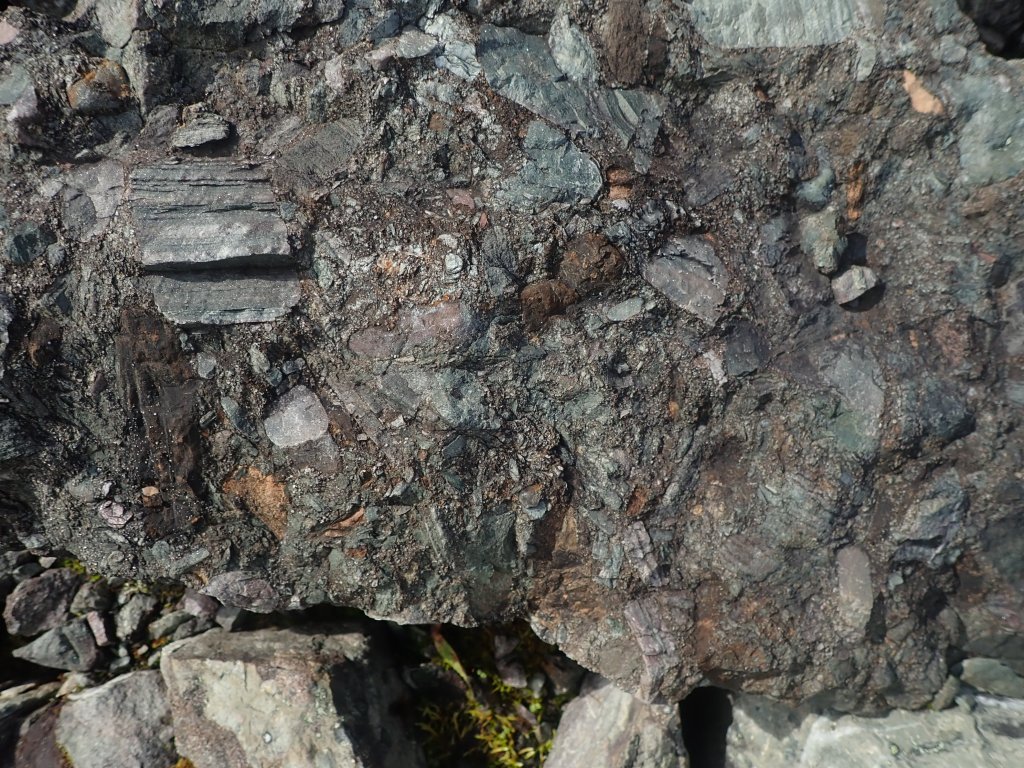
Our next stop is the ‘Big Slide’, a jumble of giant breccia rocks that slid from the Rockies. “History repeats itself” . Originally the breccia was formed by an underwater landslide in the Pacific millions of years ago, then thrust up with the Rockies as the Pacific plate pushed against the Continental plate. These days the breccia deposits are moving downward to the Gataga River, then along to the Kechika, then northwards along the Liard River to be deposited again in the Bering Sea off Alaska.
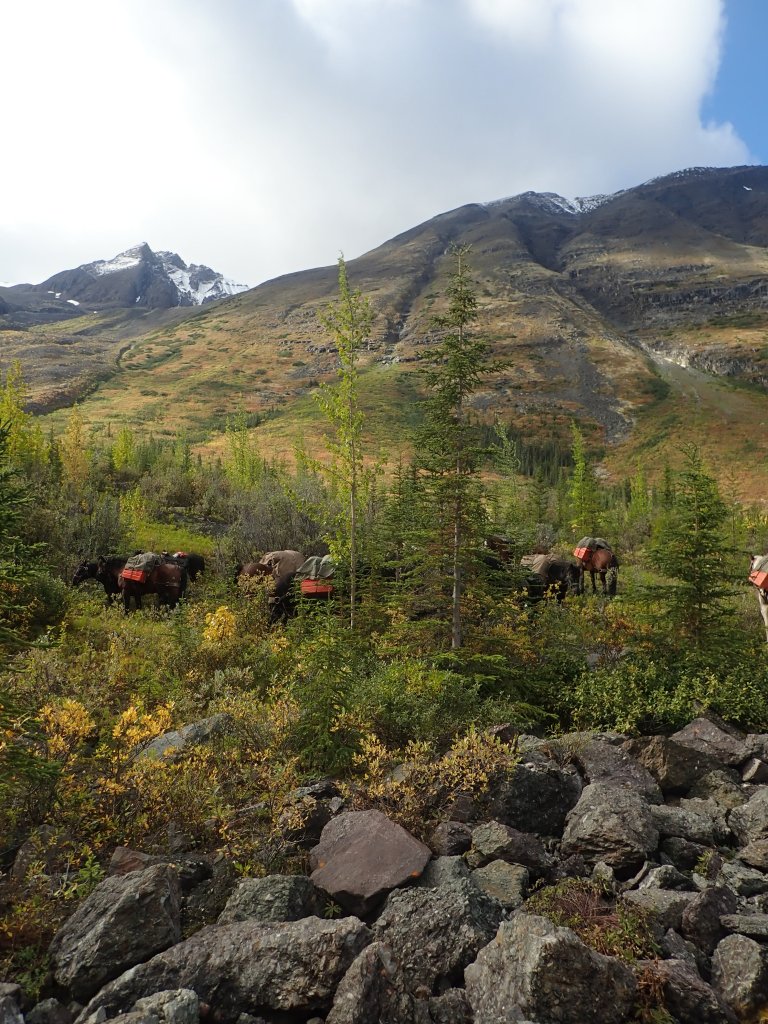
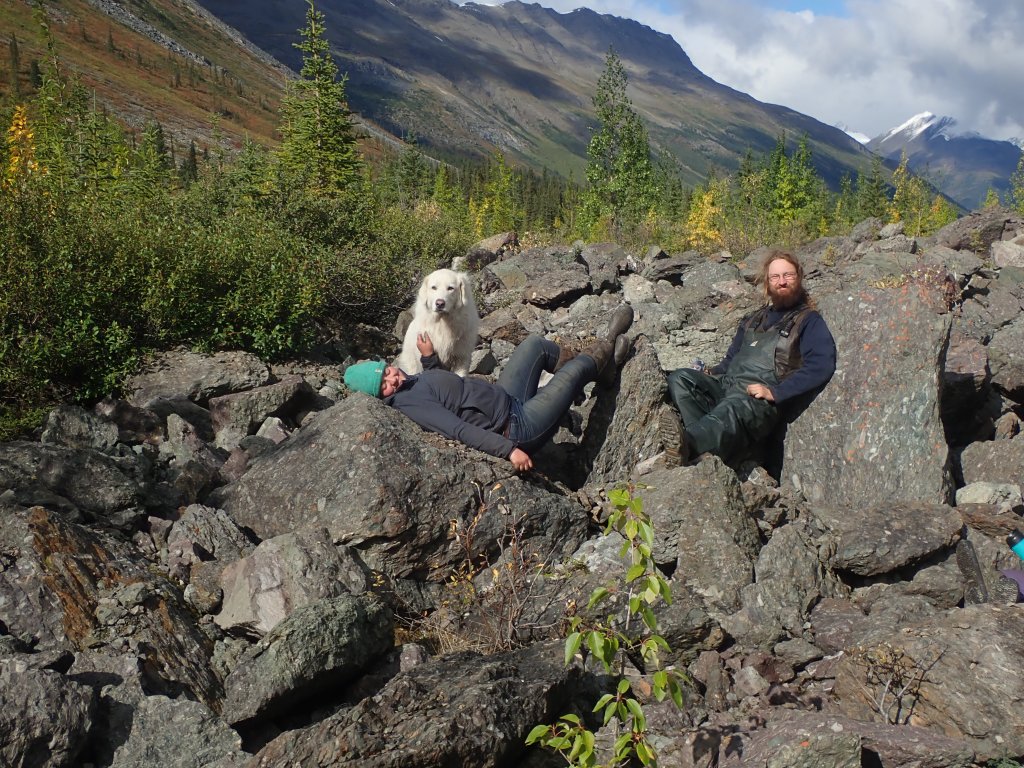
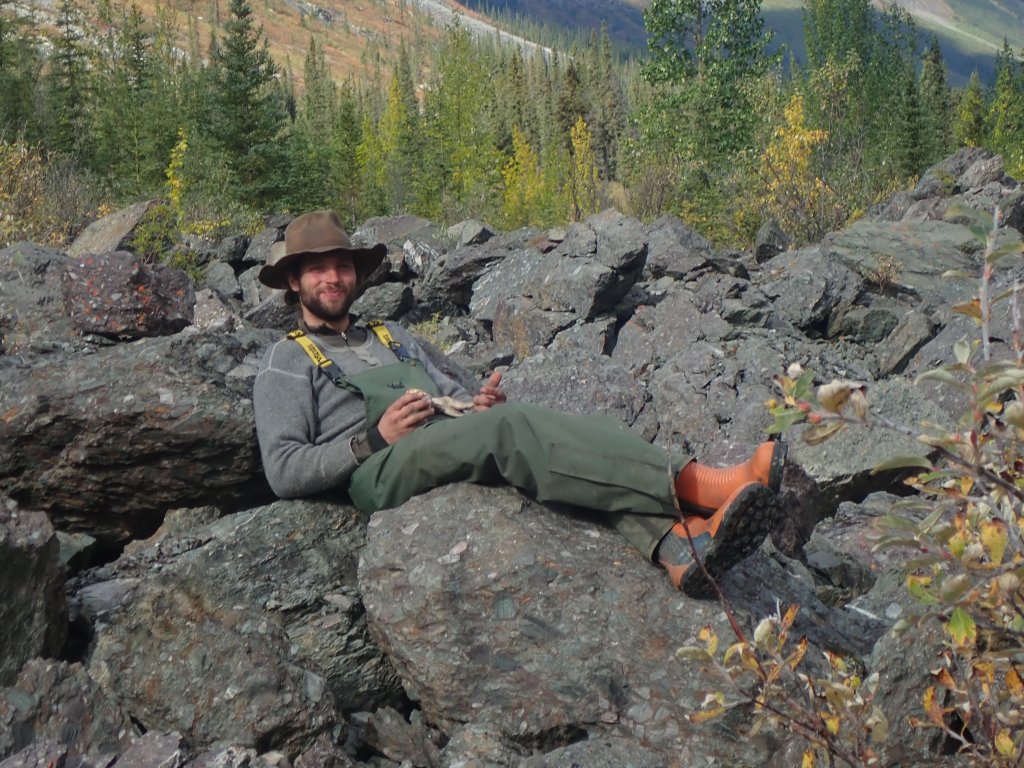
The headwaters of the Gataga pass through tundra and mountains flanked by steep moraines, creeks flowing fast with glacial meltwater and the vermilion red, yellow and green willows, lichens and grasses. Usually the headwater route heads up the side of a bench but in this dynamic landscape, the bench had dropped into the river. It turns out that the river is cutting through a moving rock glacier!
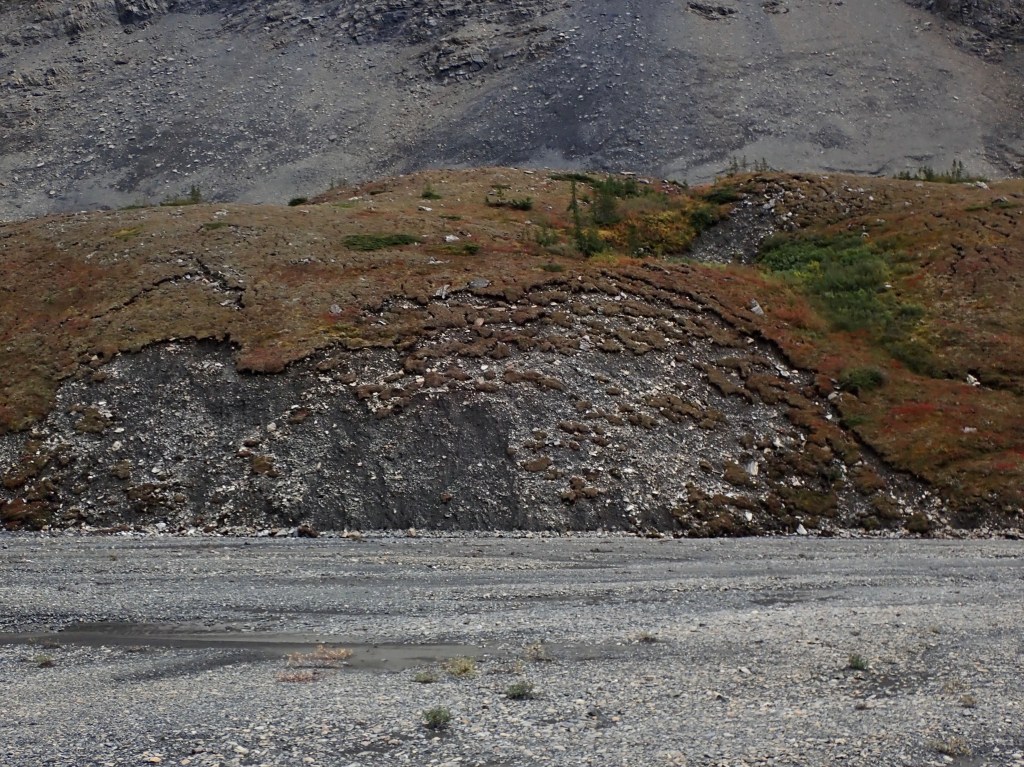
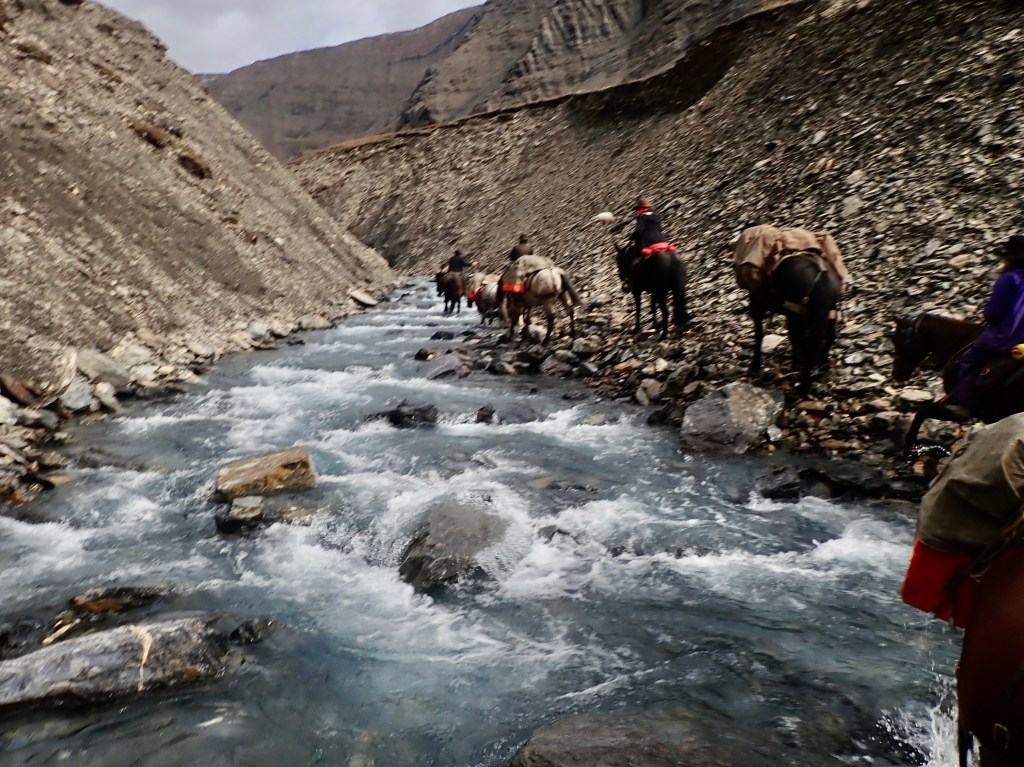
Wayne coaxed Locket into the boulders of the rushing river and we all followed! It was hairy navigation through the sharp dark rocks and rushing water of the river canyon but once in there was no turning back! Once out of the canyon there was an immense sense of relief as the valley opened to a big bowl surrounded by Sicily and Campobasso Peaks amongst many other unnamed mountains. Comet was eager to canter towards camp!
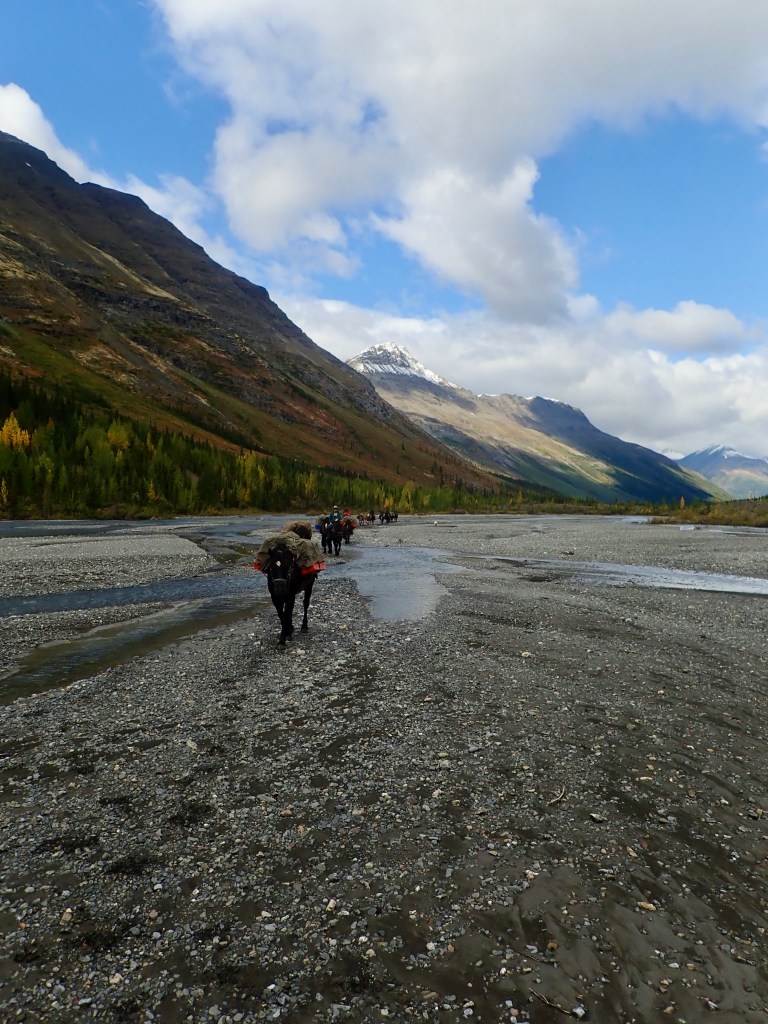
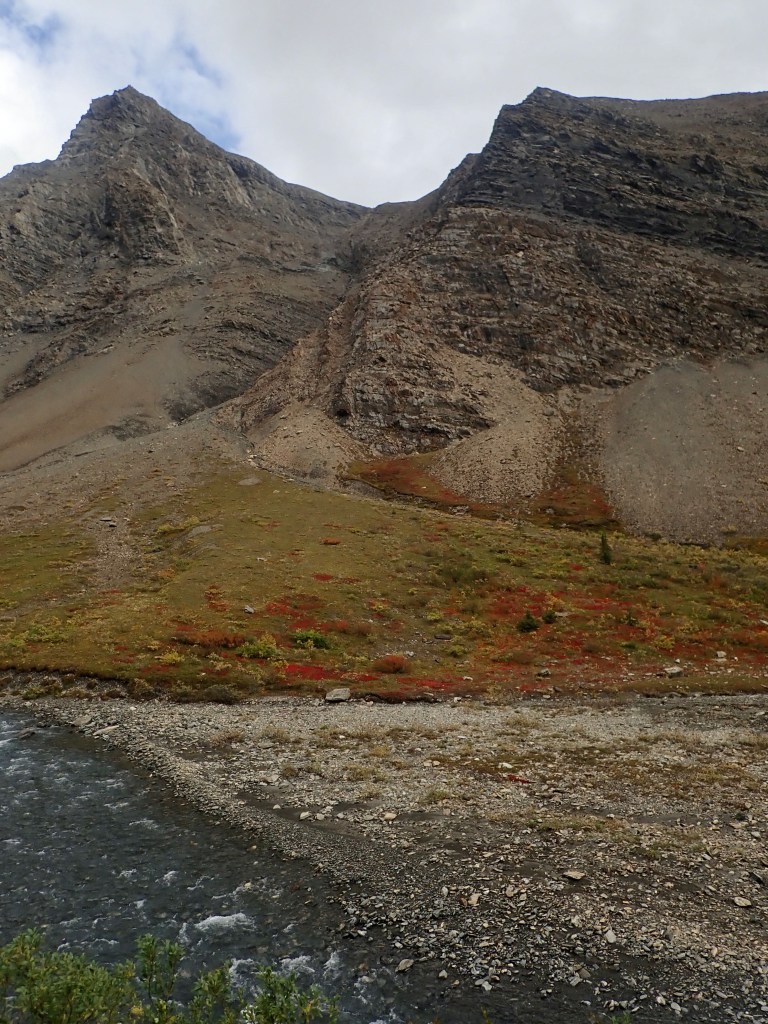
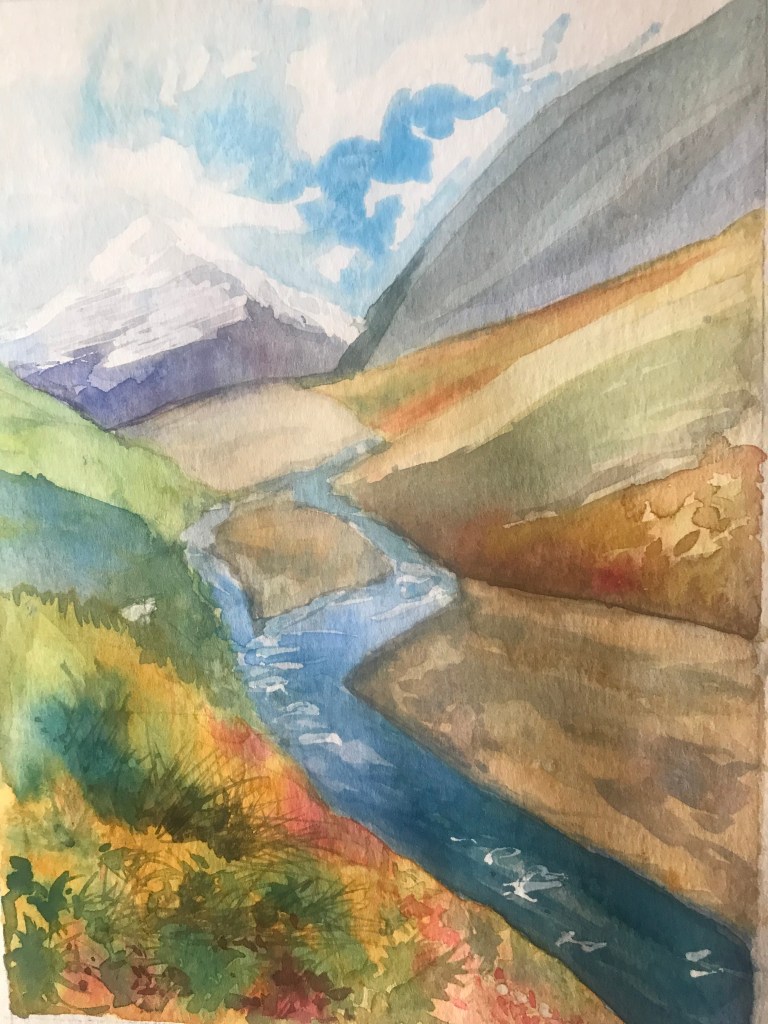
We reached my favourite camp in the heart of the MK, the base of Misery Pass. The wind howls and the roar of the waterfall dim any sound. The horses know the sweet alpine meadows are even higher and most head off for much anticipated grazing. It’s my turn to cook fishcakes and rainbow salad so I hurry to prepare for the hungry group.
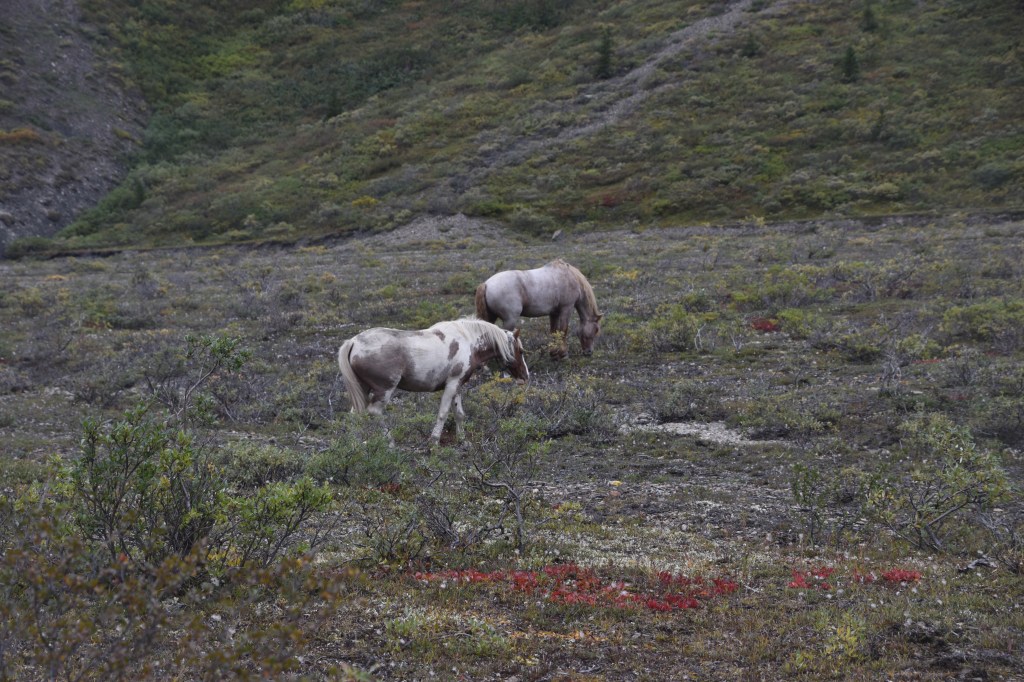
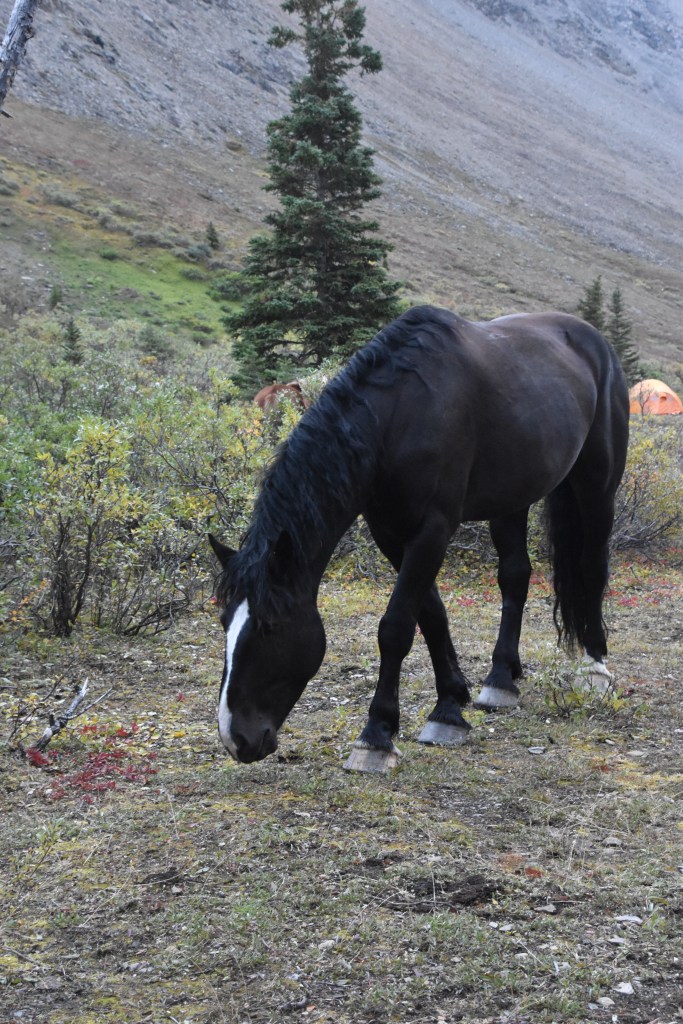
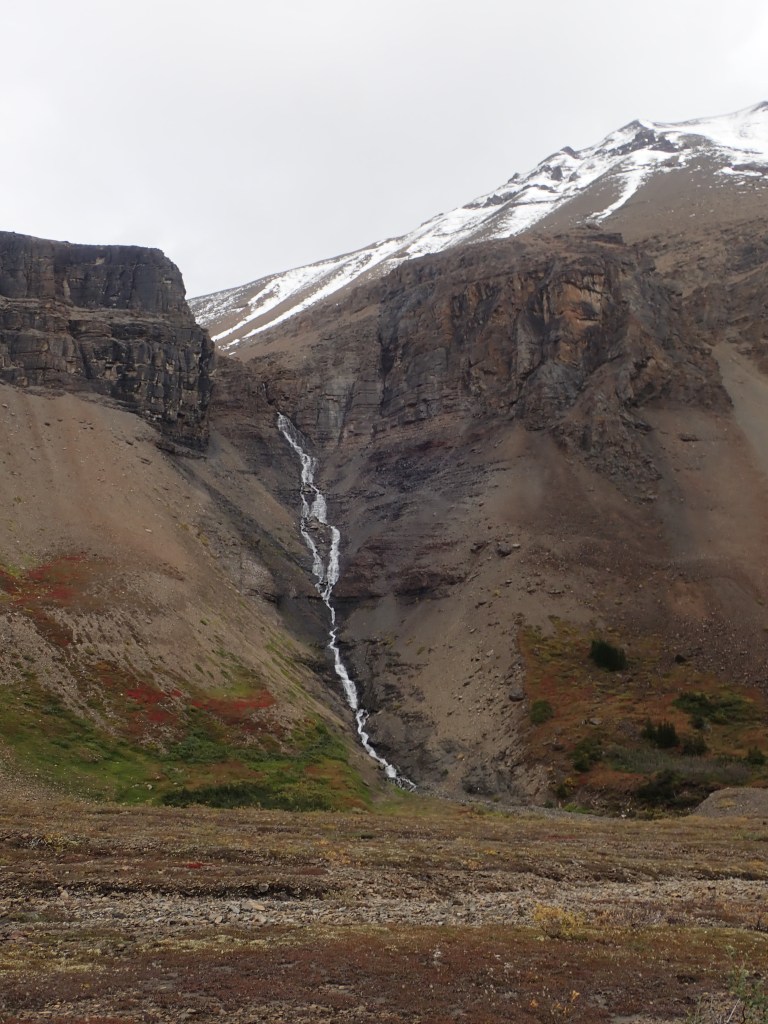
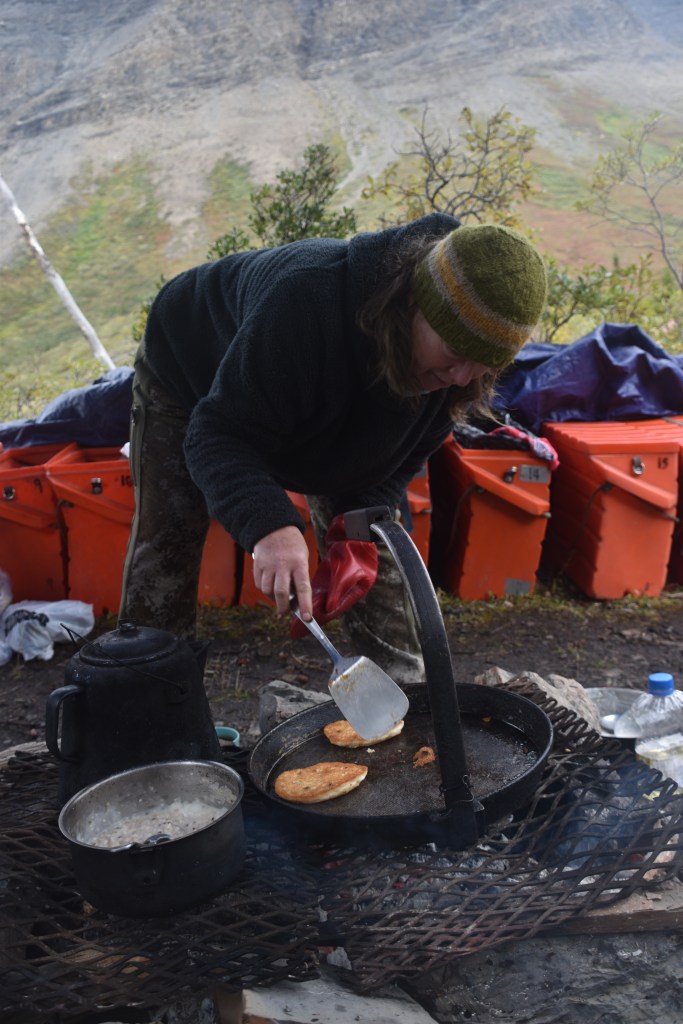
Morning dawns grey and windy in our exposed camp. Since it is a “day off” riding, everybody is still in their tent while I go to the waterfall and fetch water. It is such a primal landscape of rock, water, lichens and patches of sweet vetch and red willow and wide sky. Michael starts the fire, and slowly the group comes to life. Melody whips up a batch of pancakes and Wayne spots a small herd of Stone Sheep peering down at us from the top of a rocky ridge above.
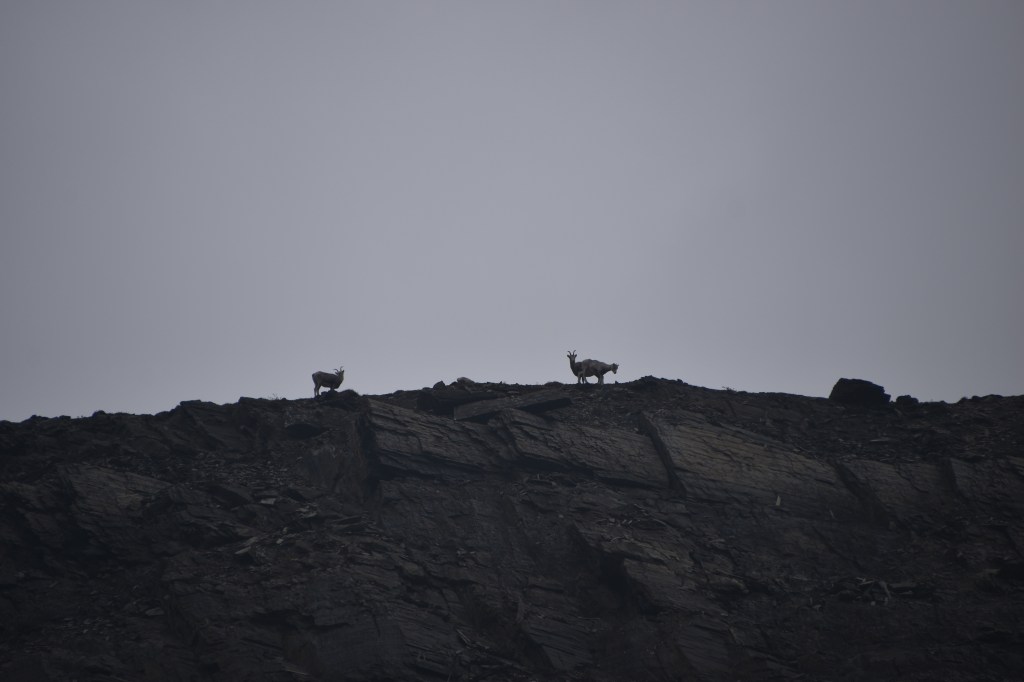
Northern British Columbia has over 75% of the world’s Stone’s Sheep. These mountain sheep require the wind-swept mountain landscapes to survive the harsh long winters and also escape predators. The high plateaus with alpine grasses on the Coast Mountains above the Stikine and Muskwa-Ketchika and Stikine support the world’s largest remaining populations of these wary animals.
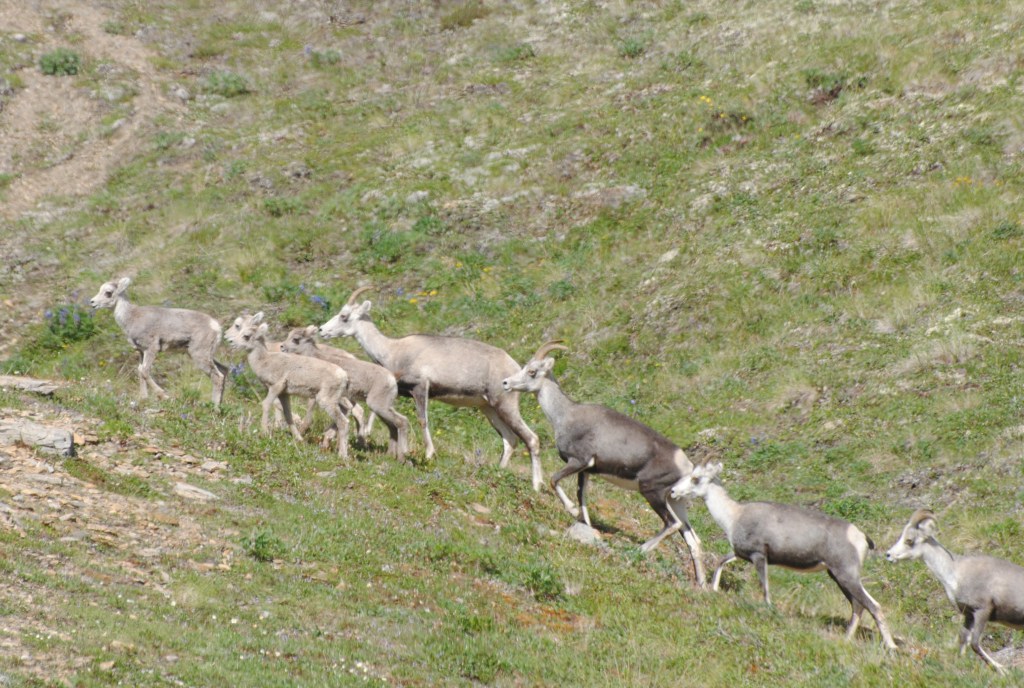
A report to the Foundation for North American Wild Sheep, Guide Outfitters and Wildlife Branch of BC in 1999 has this quote from Andy Russell:
“Mountain sheep fit where clouds sail on the wings of the wind. . . They live with the song of the wind in their ears . . . sometimes a roaring crescendo; the background lyrics of wild sheep country. The two go together like northland lakes and loons. . . It is the wind that whips the snow off the flanks and crests of the wintering grounds, allowing the sheep to feed when the rest of the country is buried deep beneath the cover of the cold white blanket. The sound of the wind in summer is a reminder that one travels in sheep country”
Stone’s Sheep are threatened by access to wild areas through oil and gas development, mining, and over-harvesting. I consider myself so fortunate to see the Stone’s Sheep and to be able experience this wildness. This is in great part due to the work of Wayne Sawchuk and the collaboration in the planning committees that worked to create the Muskwa-Kechika Management Area. The Muskwa-Kechika Land Use Decision in 1997 protected 1.17 million hectares including the Dene Ze Kiah Provincial Park where we were riding surrounded by 3.24 million hectares of special management zones where resource development can only occur with environmentally sensitive management.
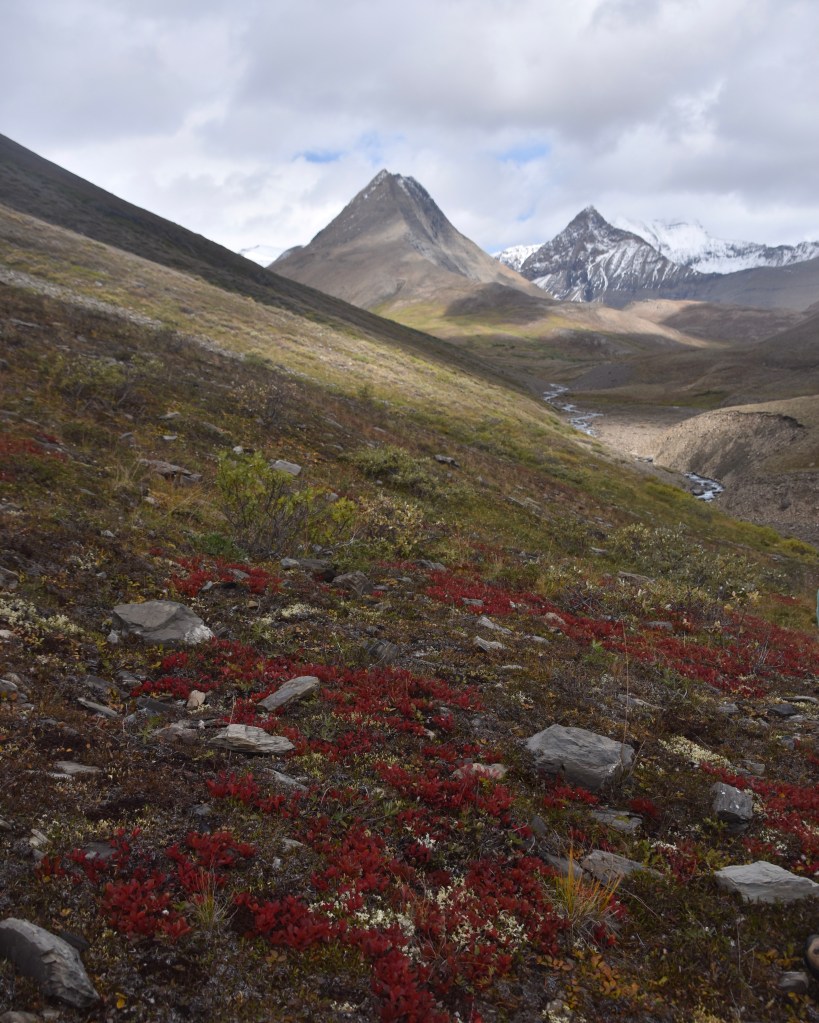
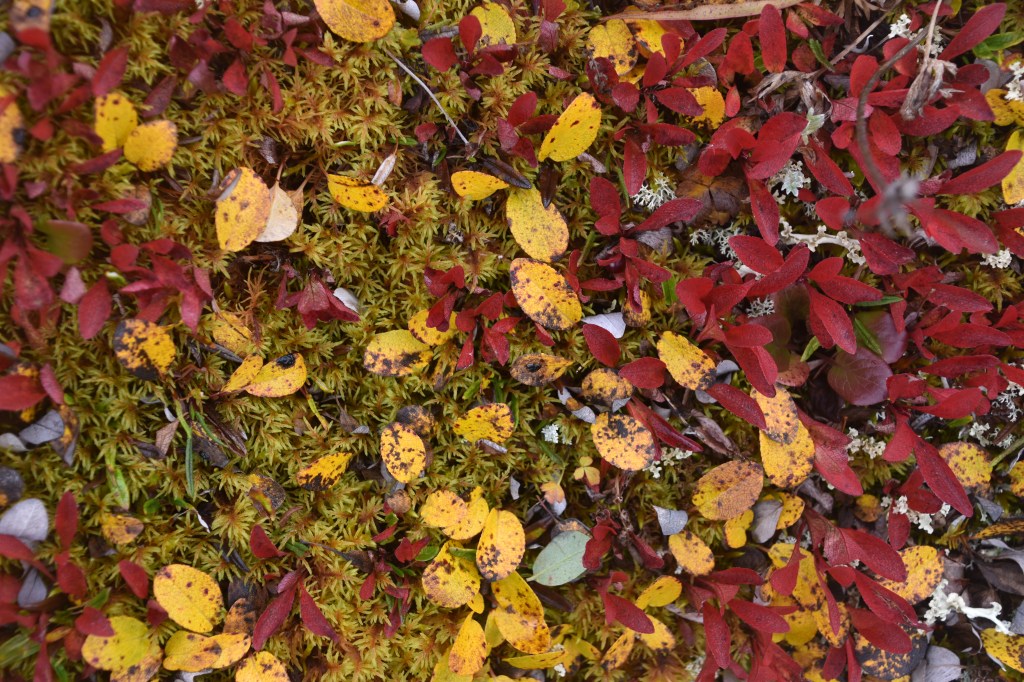
Hamish heads off towards Gataga Pass with a small pack and a couple of halters. His young legs take him far and fast. Michael, Carole, Barb and I cross the river and head up the valley in unsettled weather. We look over to clouds swirling over Misery Pass and anticipate with some trepidation tomorrow’s journey. As we hike along the gentle flanks of the tundra, there is time to appreciate the beauty of the lichens, and the monkshood, mountain sapphire, paintbrush and arnica blooming in gullies that held snow longer. Perhaps next week, the snow will come again and cover the meadows for another season.
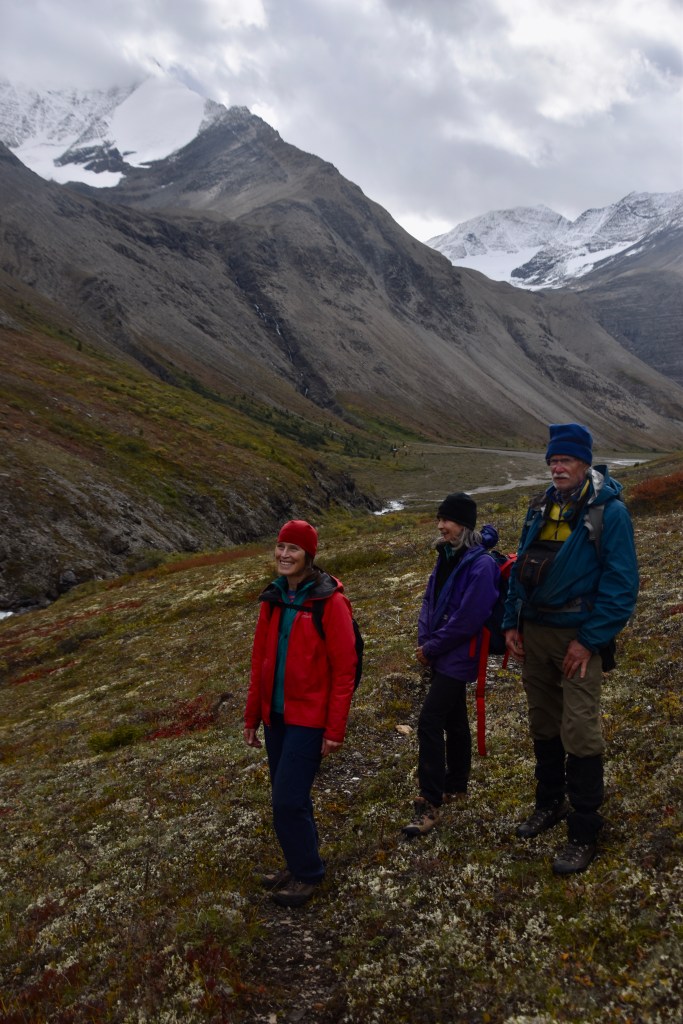
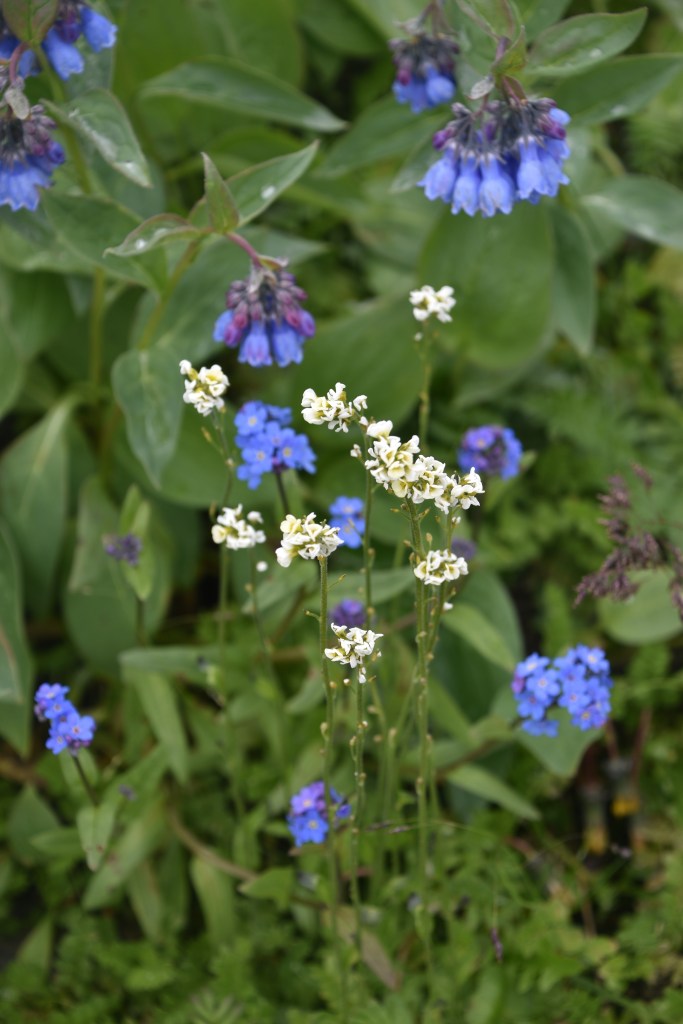
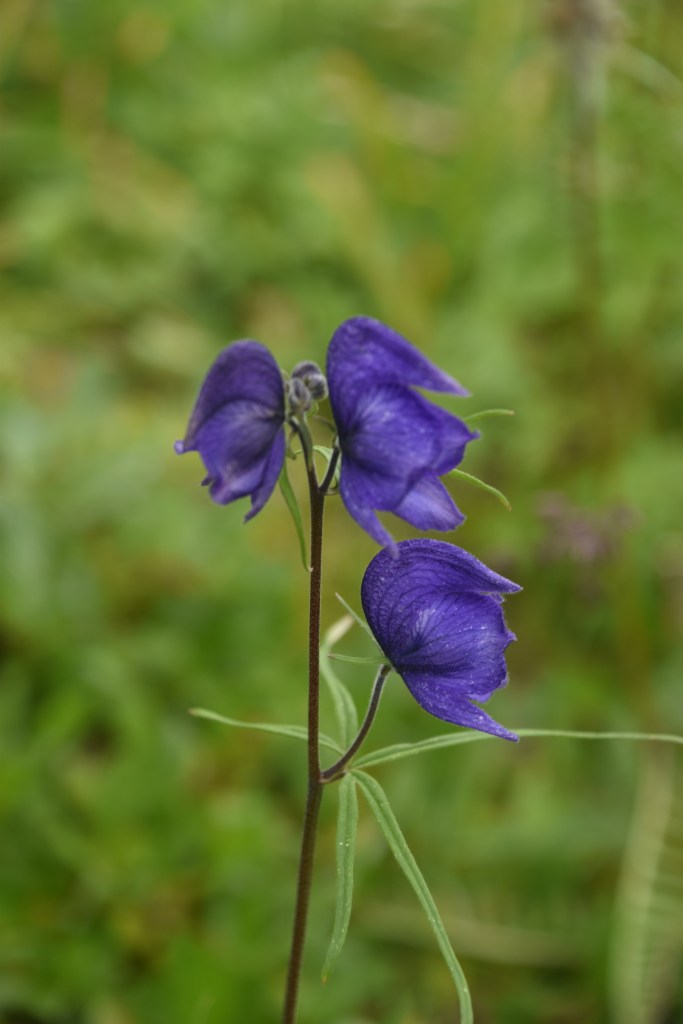
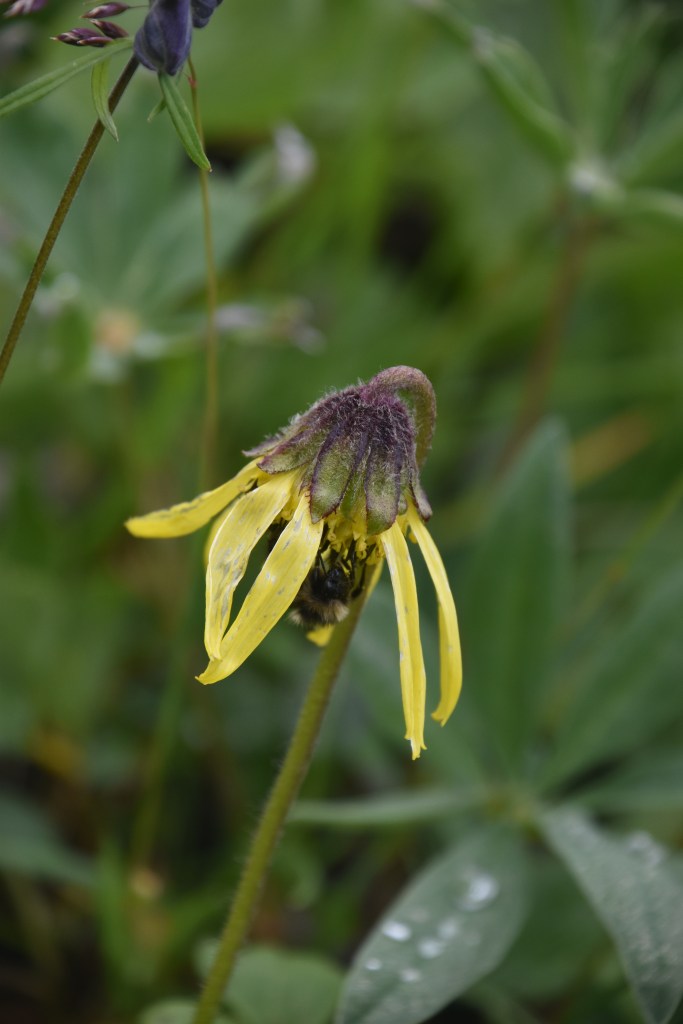
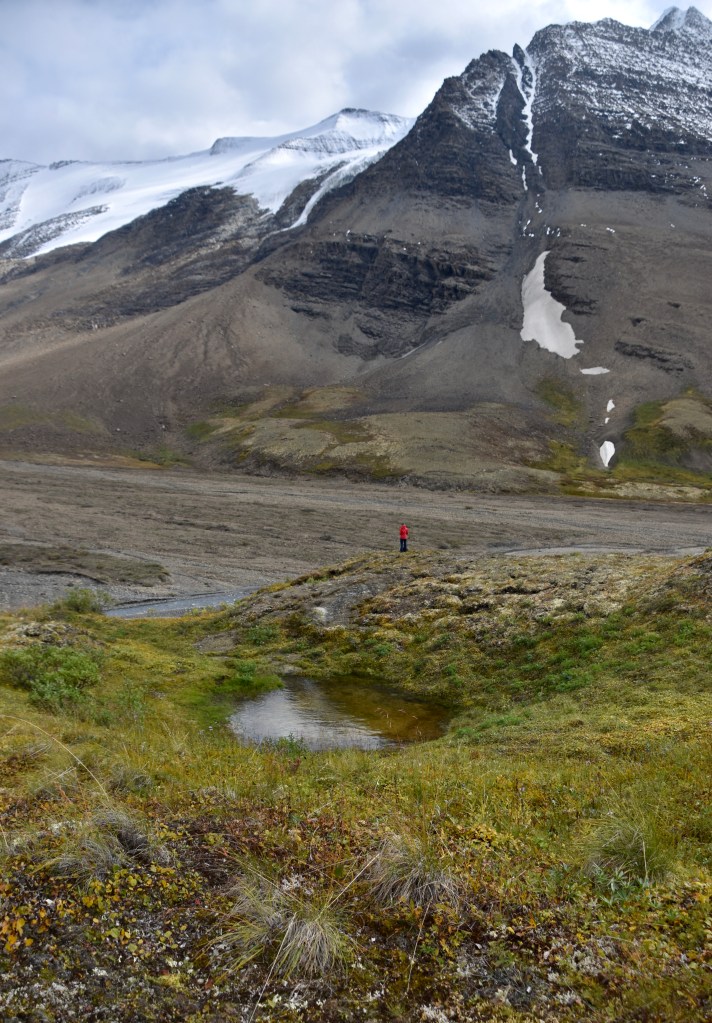
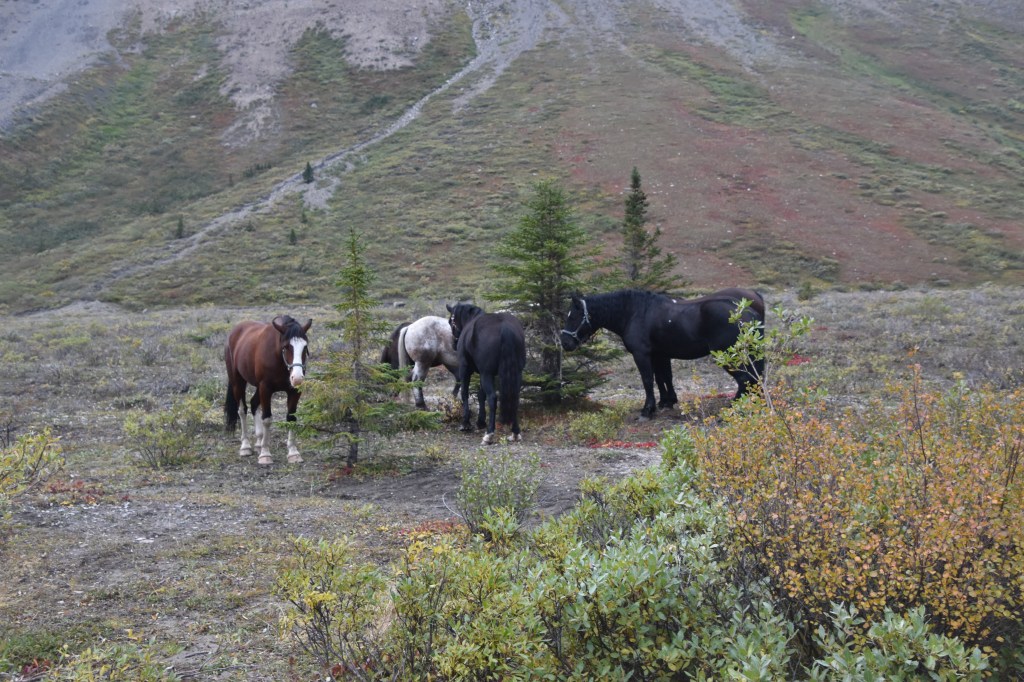
We spot the horse herd happily grazing on a bench lush with alpine grasses, lupines and wildflowers. I remember the herd of 22 Stone Sheep ewes that I spotted on a sunny day in July 2015 with Connie Haist and Alex, so am keen to hike higher. However, the weather is iffy and it’s Carole and Barb’s turn to cook, so we head back to camp after lunch. Soon after we arrive, Hamish has managed to bring the herd back and there is a great rush to move our tents away from the few trees so the horses can be tied.
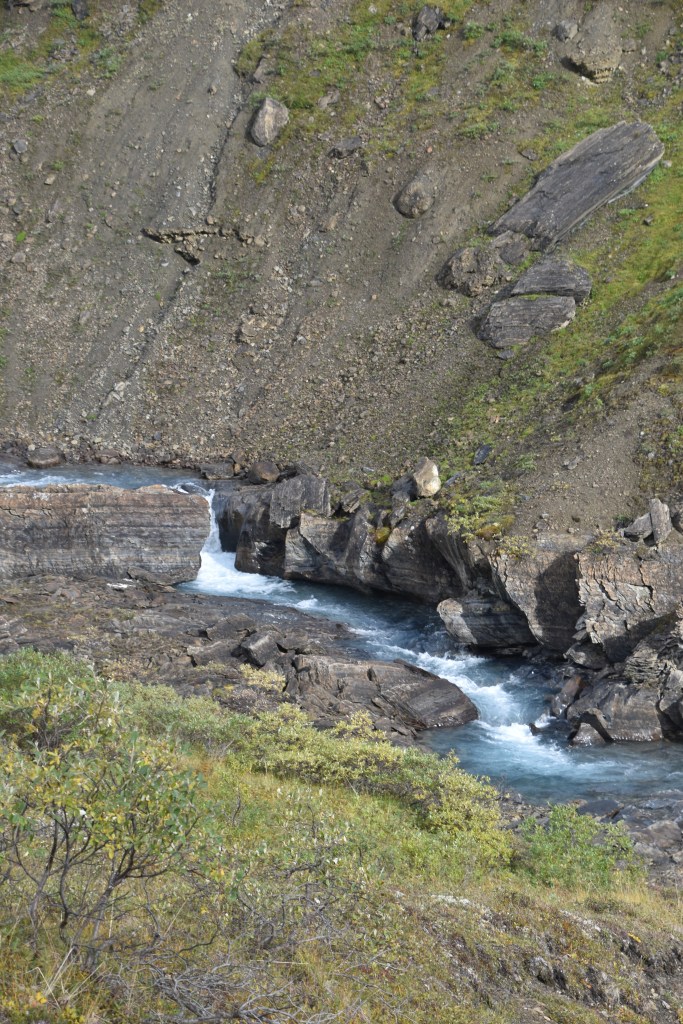
Securing the horses for the night saves a huge amount of time for the ascent of Misery Pass which is the pinnacle of this expedition. After the wonderful dinner we head to our tents. I take a last walk to the waterfall for water and pick a few morsels of Milkvetch for Comet, Big Rig and Gataga. From my tent, I can hear them snorting and stamping occasionally as we all anticipate the morning.
Over Misery Pass
It’s before 5:00 am. My headlights is on, and I work to pack up the gear in tent and bring my duffle bag to the canvas tarp. The wranglers are already saddling and organizing while the fire blazes. Drink coffee and get down some granola to stoke up the energy. Make more coffee, weigh the panniers and brush the horses, saddle our riding horses, then the pack horses and help with the loading. Riding days are full of action! We begin riding, cross the Gataga and head up the pass. It isn’t long before Wayne gives instructions to dismount and lead our horses up the steep rocky pass. One tries to only look ahead, as looking below to a raging stream is pretty dizzying. The footing on the scree is difficult and part way up Comet’s back feet slip. I guess Buddy was too close and as I turn around to see what was happening, Buddy gives a buck aimed at Comet, but lands a hoof on my left chest! I take stock and realize that while painful, I’m OK and the adrenalin kicks in to carry me forward. Keep climbing. . . Up ahead, I look ahead to even more drama. Locket loses footing and tumbles down the mountain. There is a tangle of legs and horses (I couldn’t tell which additional horse was involved) and Carole was in the midst! How she survived is not clear, but thankfully she was sheltered under a boulder and escaped with some goosebumps and sore shoulders. Locket got up and walked downhill nearly to Comet, I yelled at him and he fortunately turned uphill. Wayne told me to leave Comet and catch Barb’s loose horse and he went to see to Carole. Keep calm. . .
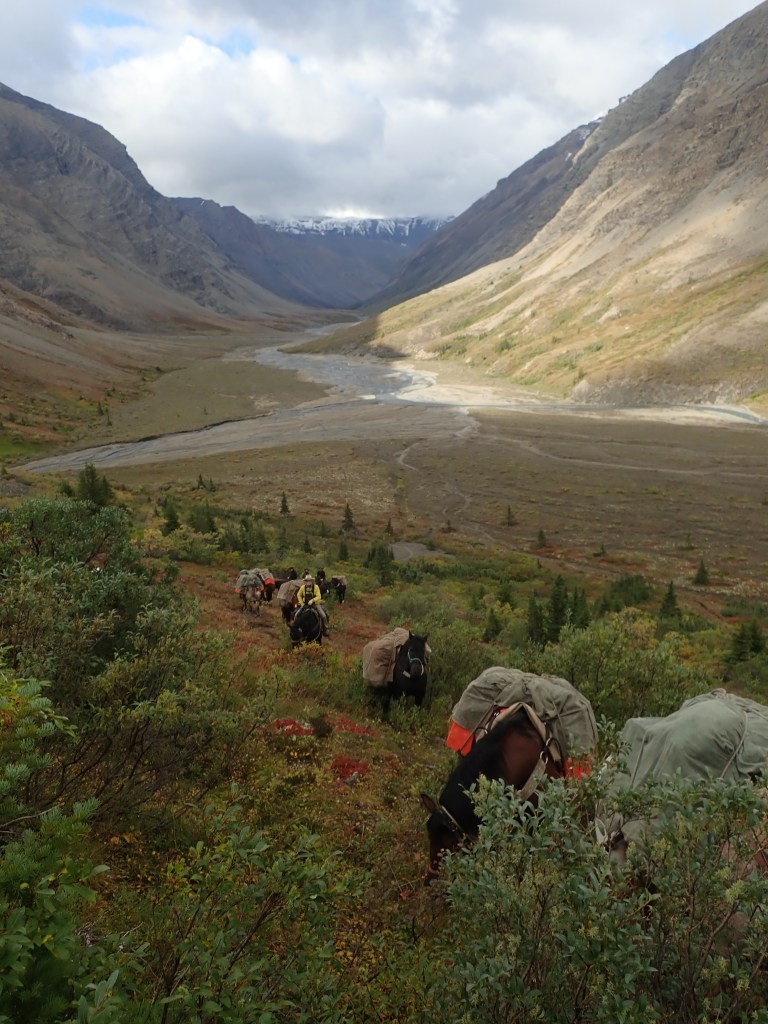
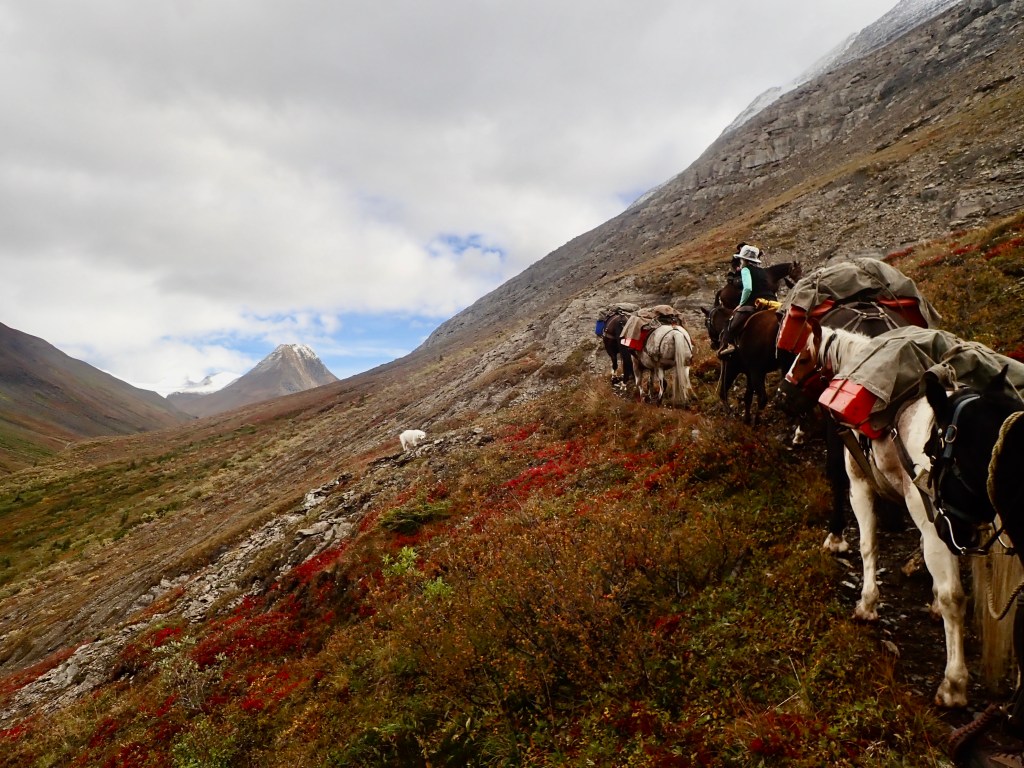
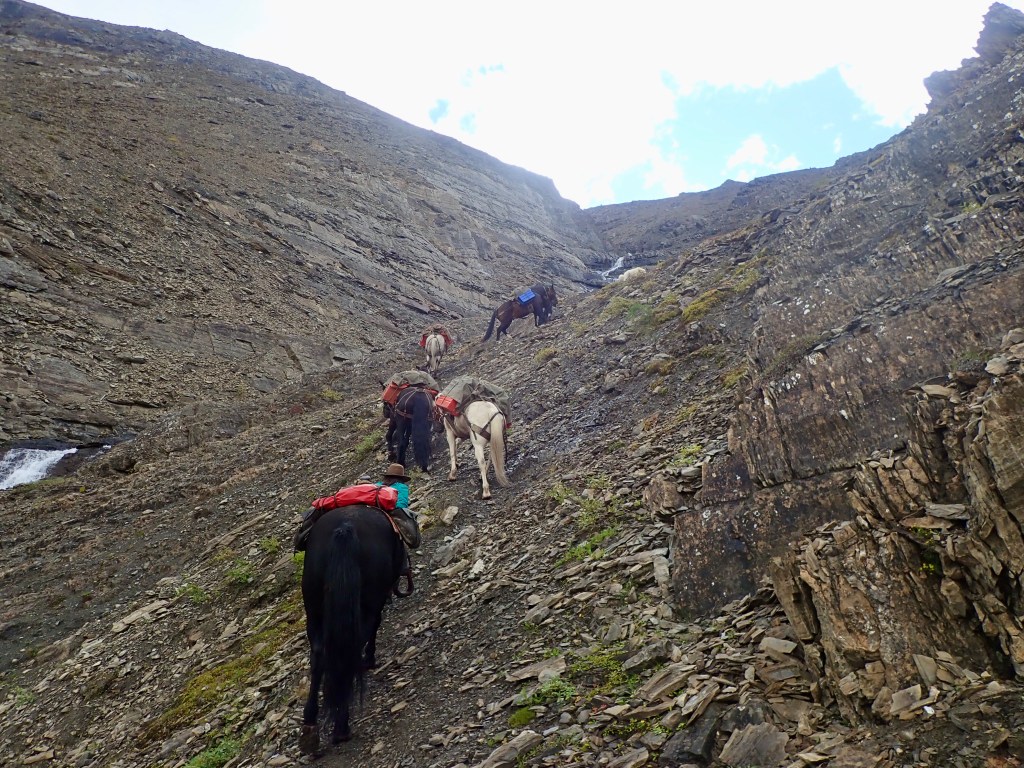
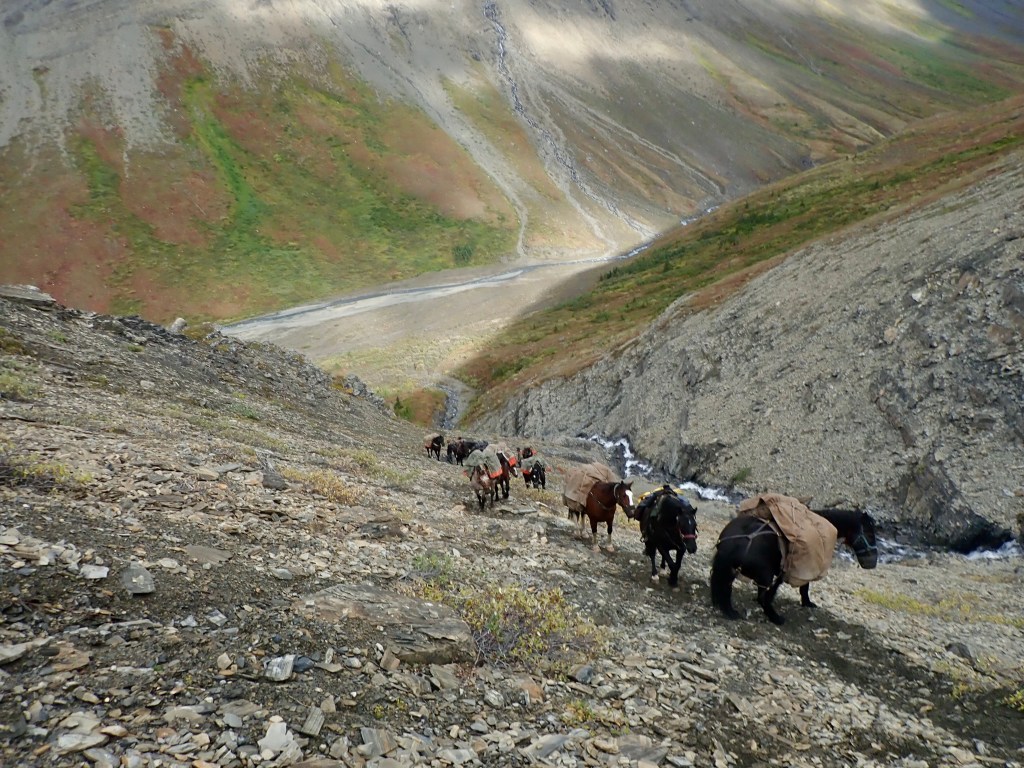
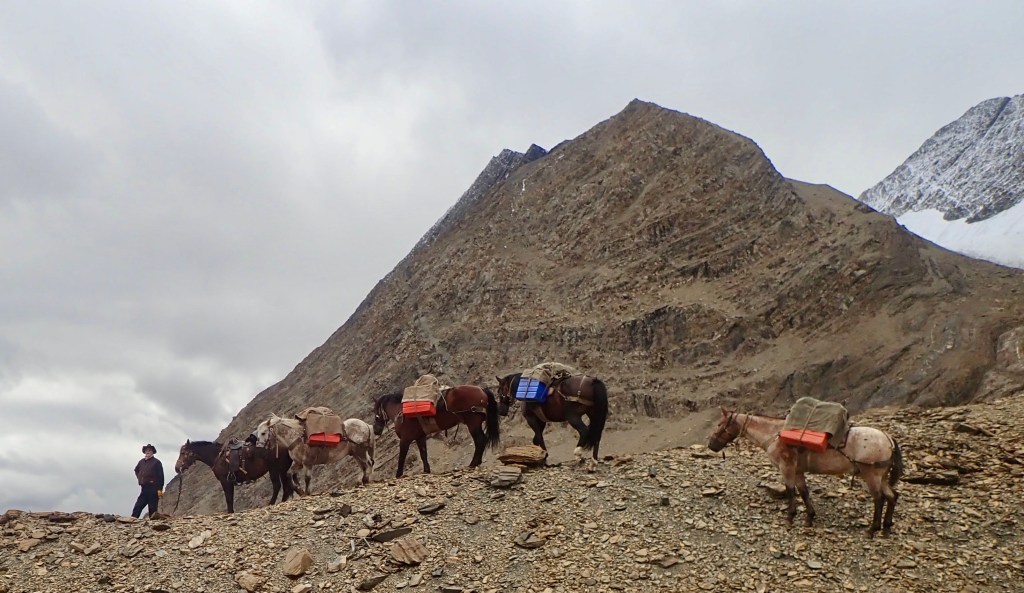
Gratefully, we all made it to the crest, where we reassembled and breathed a sigh of relief and could take in the beauty of Misery Pass without it living up to its namesake!
A short walk and ride later we stopped for lunch at a beautiful tarn and put snow on our wounds (to reduce swelling) while the horses grazed.

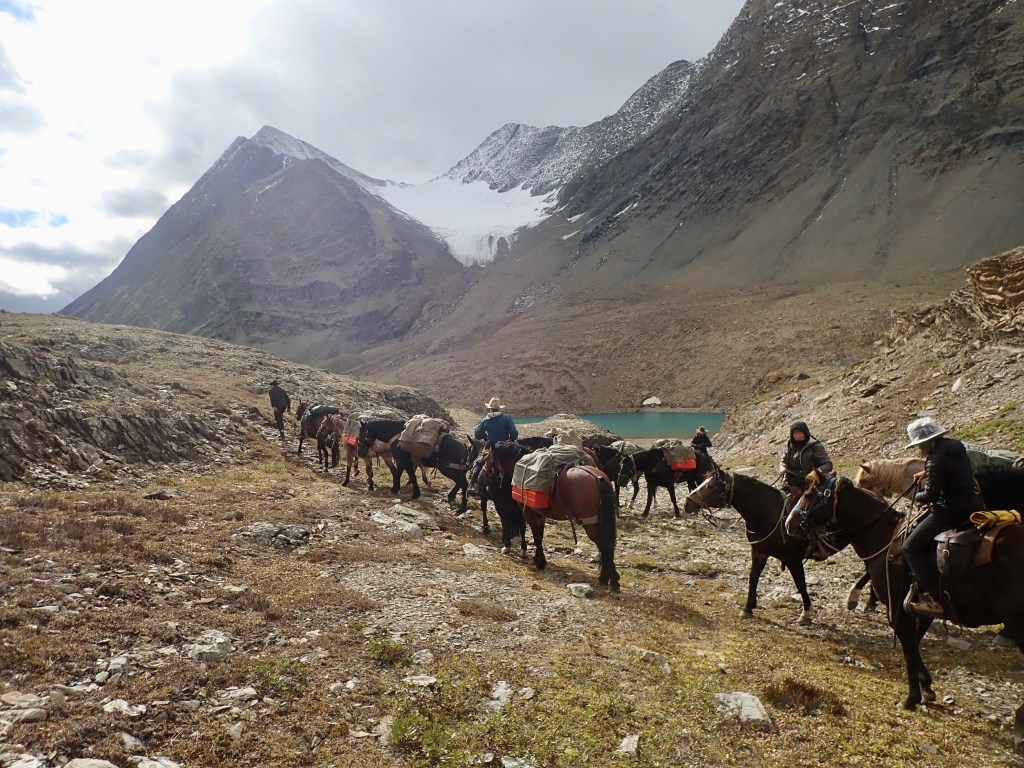
Misery Pass itself is an epic landscape with towering peaks, glaciers, rocky moraines, azure tarns and rich lush avalanche slopes inhabited by whistling marmots. Clouds come and go. Weather changes quickly in the mountains and I am grateful for the sun in this wild ride and walk over the divide.
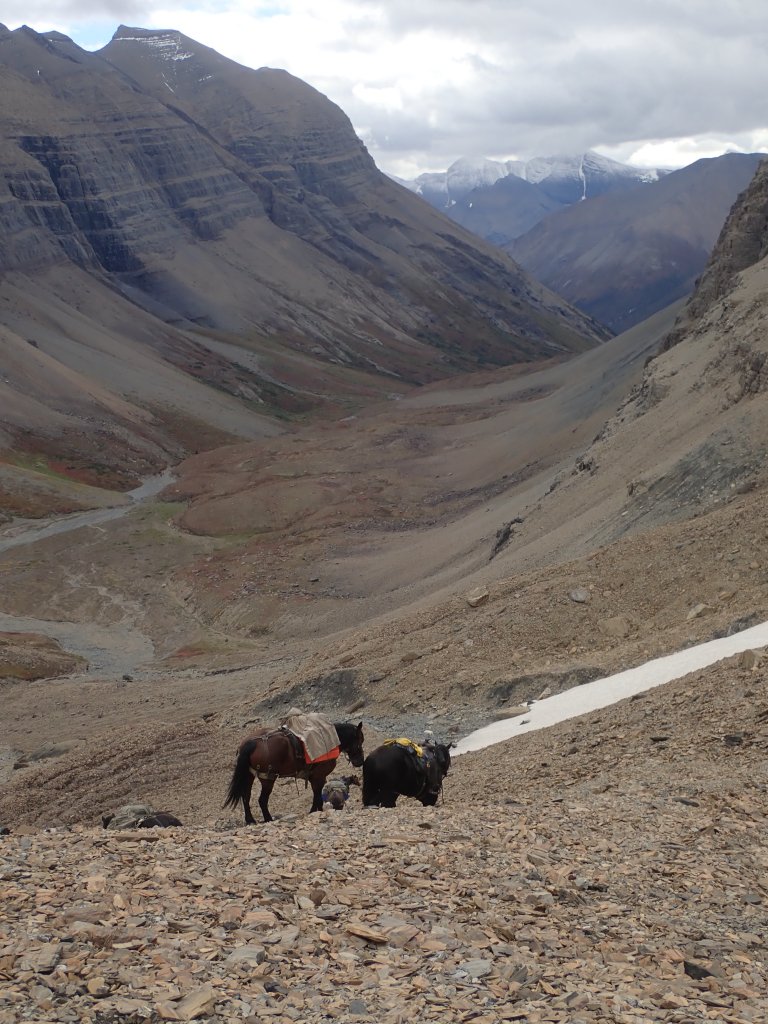
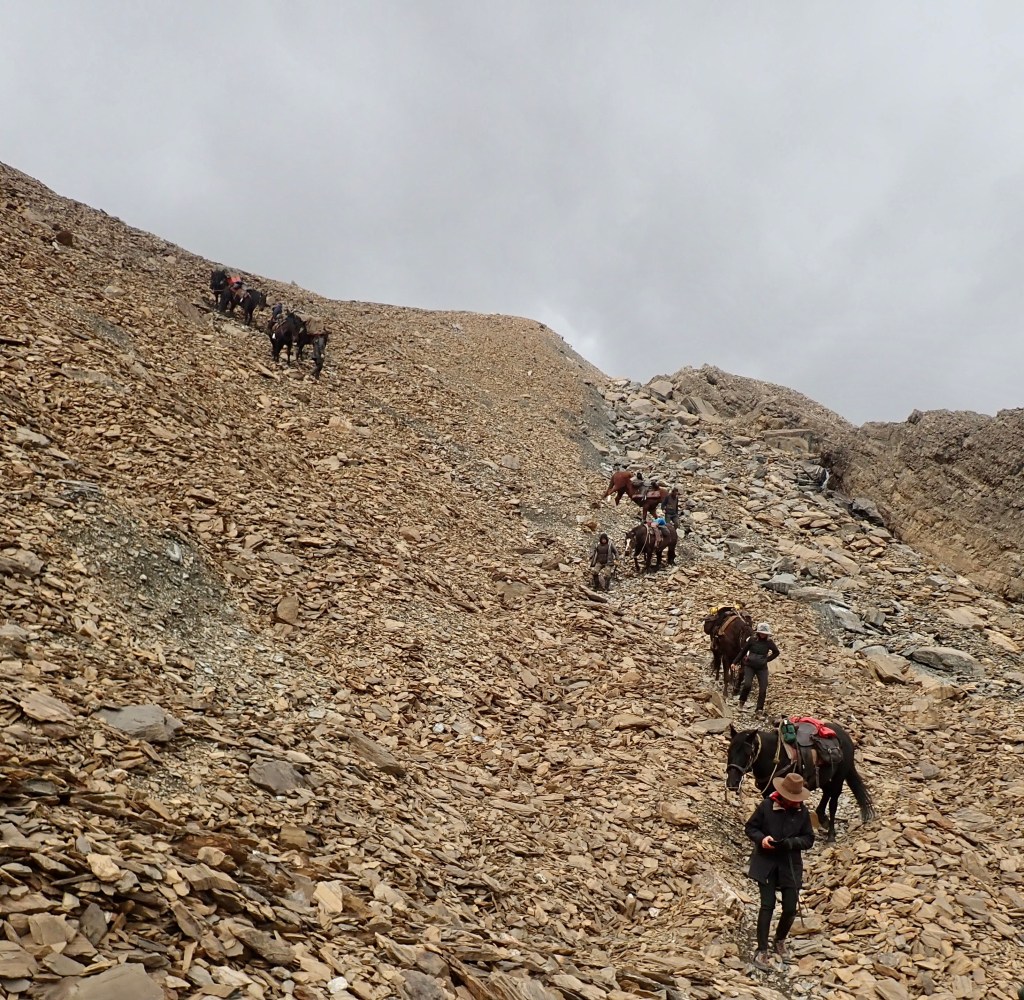
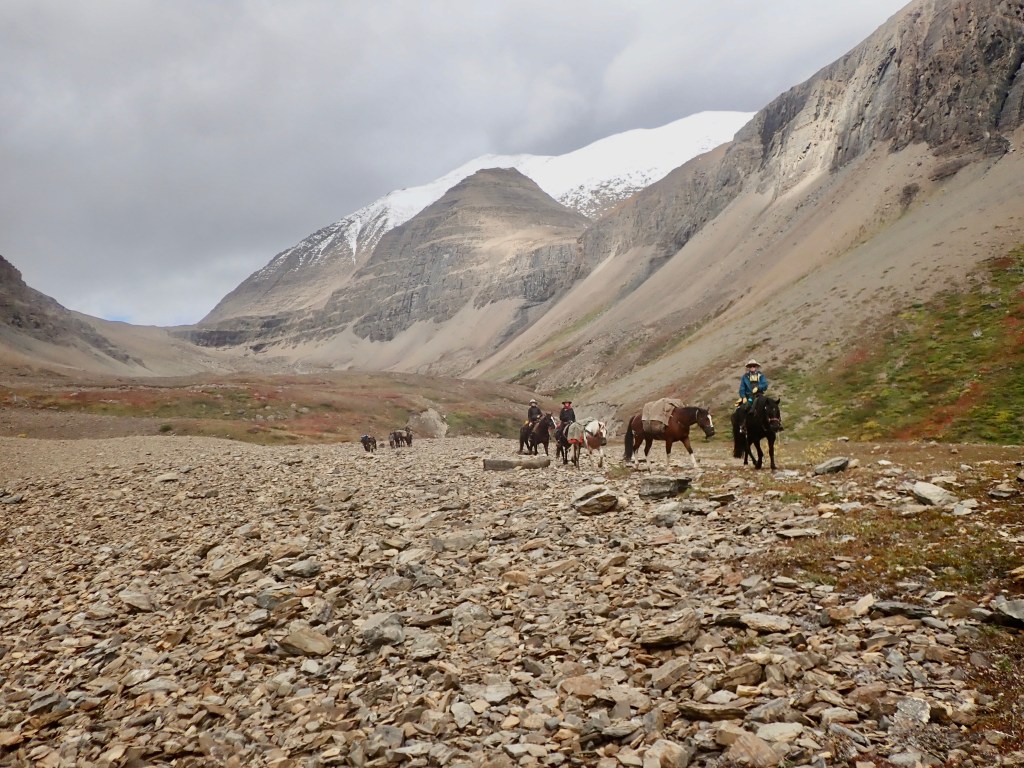
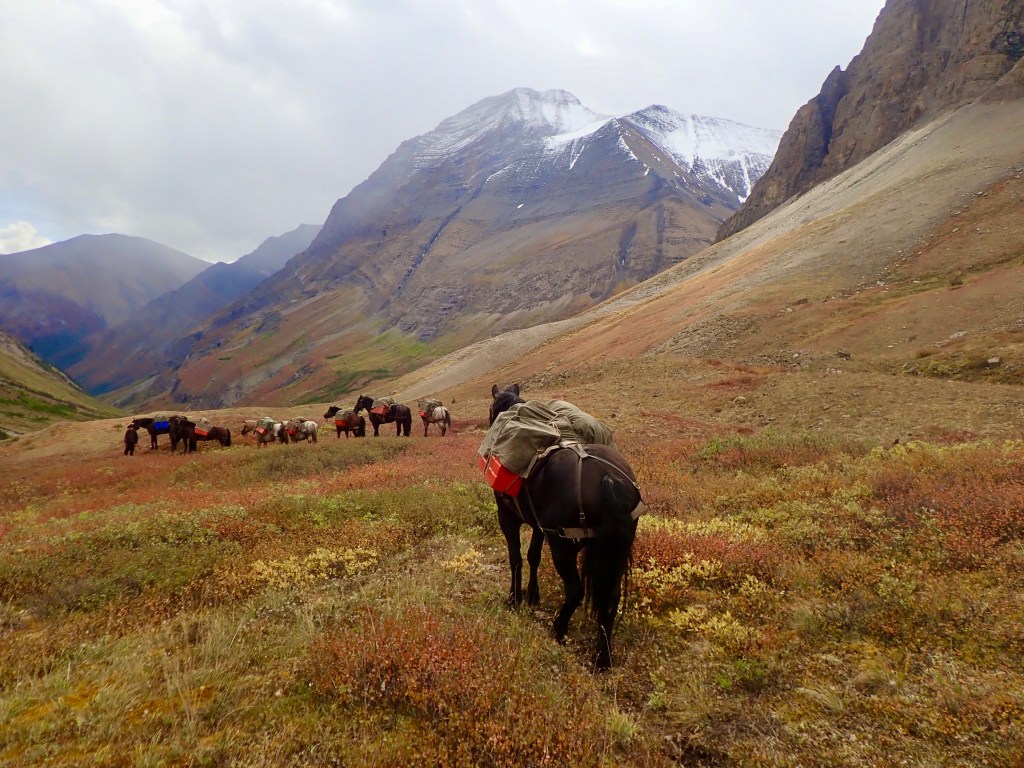
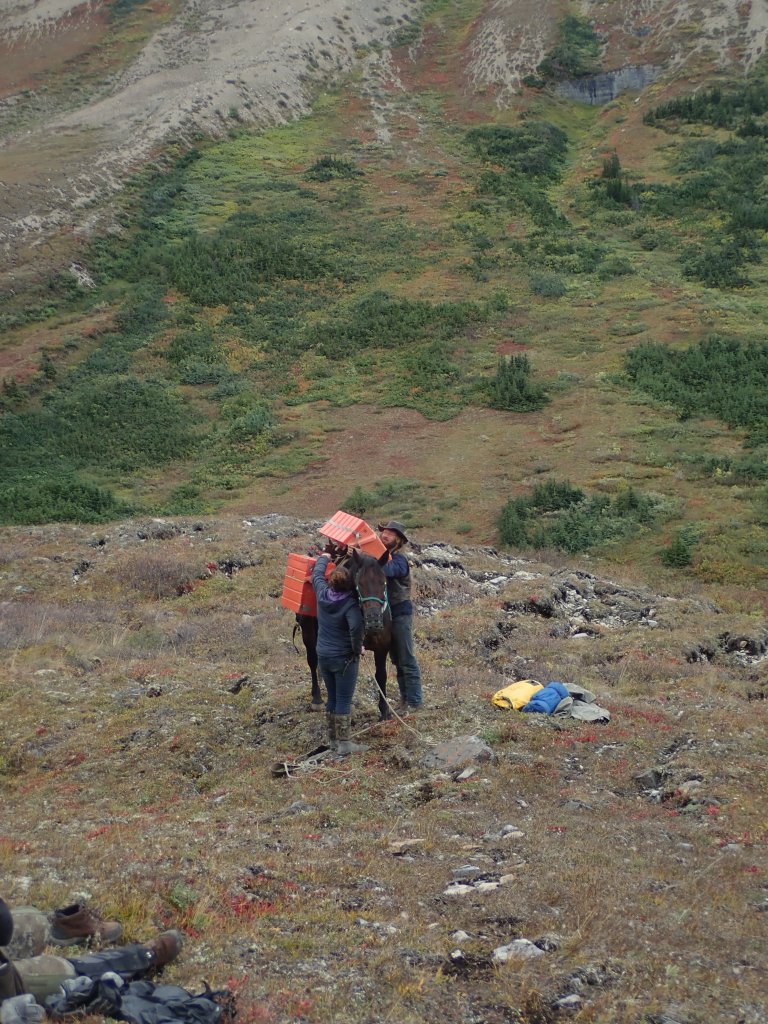
The descent leads us down to Falls Creek, named for the stunning waterfall at the terminus of Misery Pass. We are now in another drainage leading to Tuchodi Lakes, and eventually into the Muskwa River.
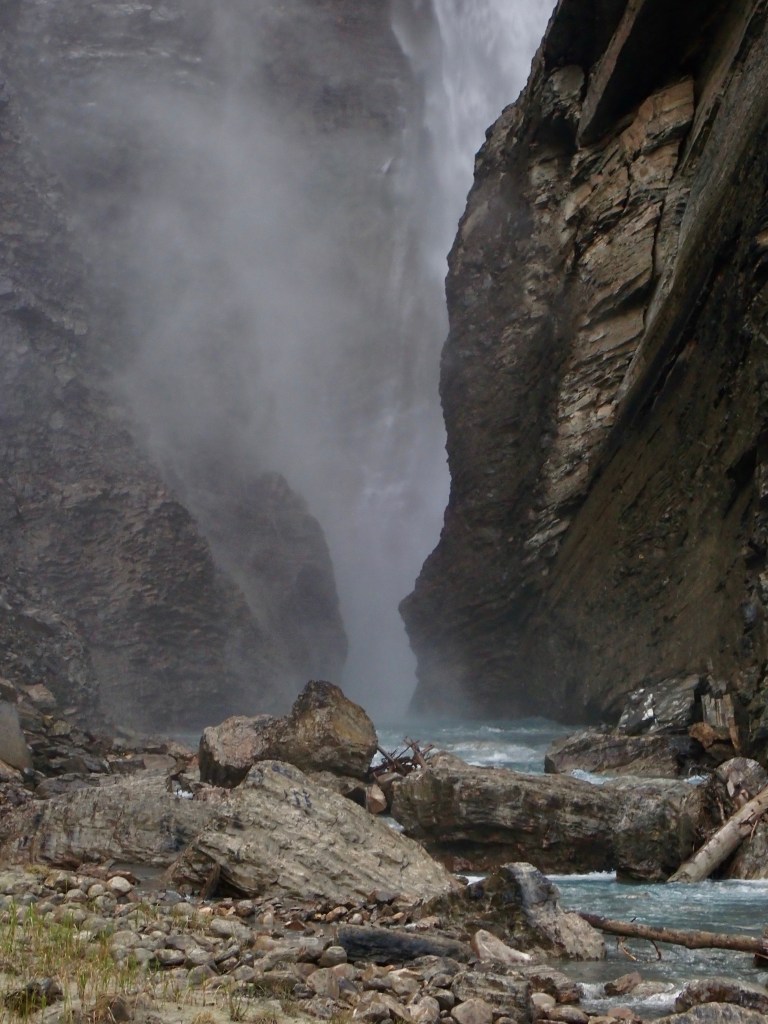
It is about 6:00 pm by the time we reach camp on a side channel of Tuchodi River. This camp in willows and spruce doesn’t have a great deal of space, so the tents are lined up along the bank on waterfront. We release the horses and they dash madly off, galloping through the waters. The wranglers muse about where the herd will get to as we enjoy dinner. Will they take off towards Tuchodi Lake grasses as once happened?
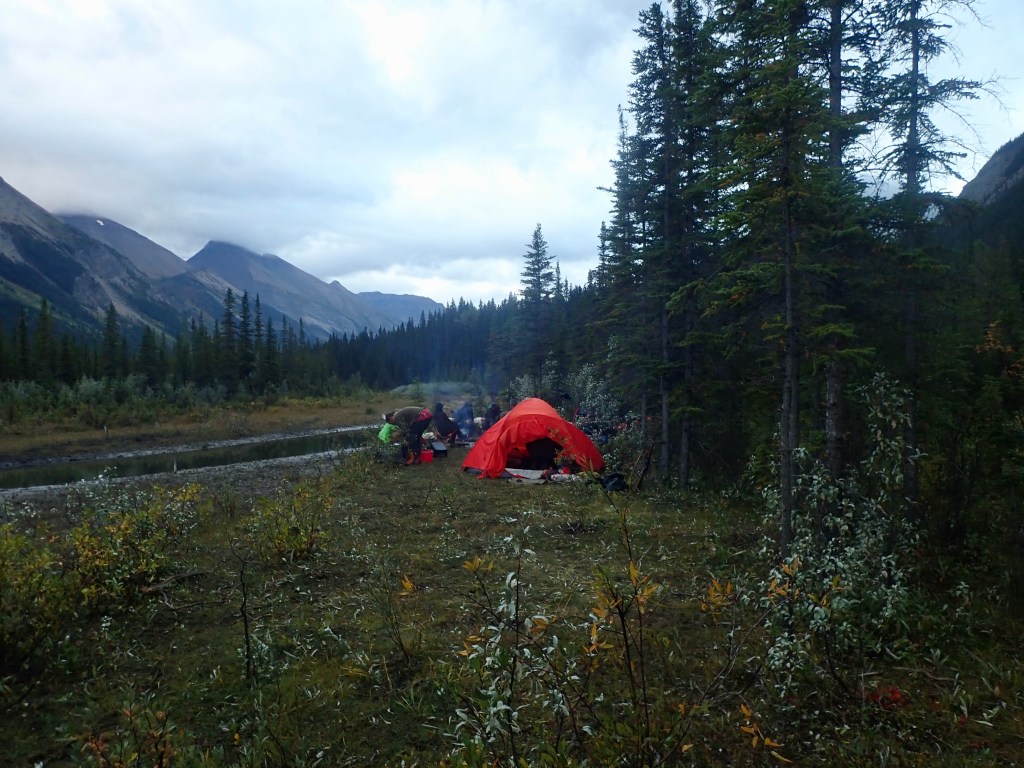
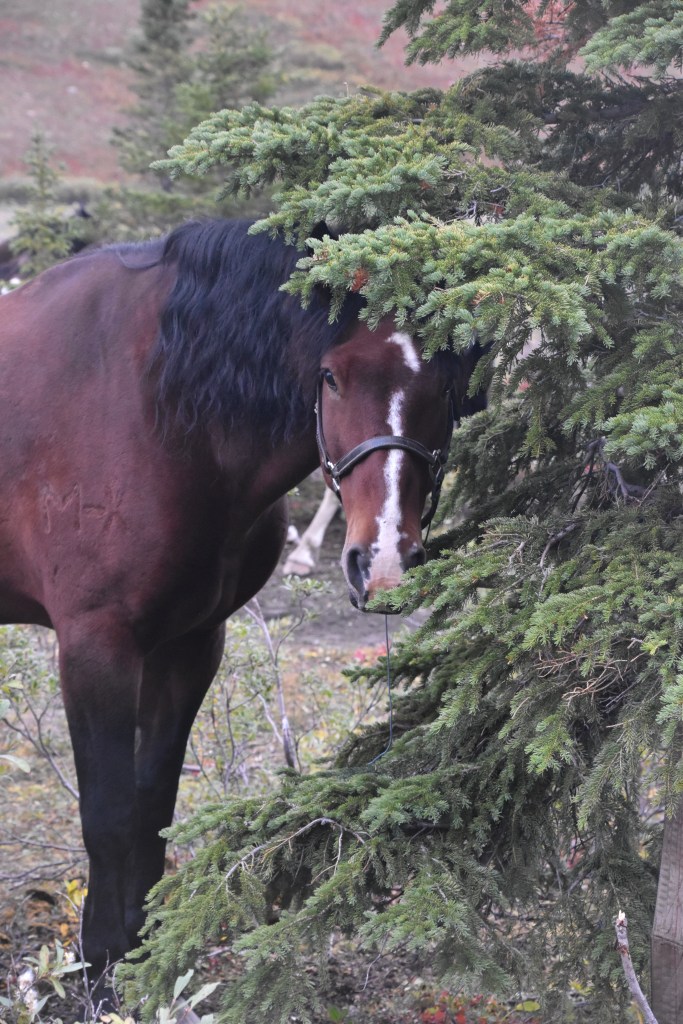
It is September now and the days are growing shorter quickly. After dinner most of us settle into our tents but the wranglers have taken off in search of the herd. It is dark and I’m just dozing off when bells are heard and there is the occasional flash of a headlight across the water. The herd of 22 returns in the dark with even a bit more chaos than usual. “Catch the easy ones and tie them up!”. It’s hard to tell whose halter is whose and then there’s alway the reticent Bob and Don to catch at the very end! Horses are tied near tents and anywhere we can find. I go to change a halter on Buddy using just my red setting on the headlight and land face first in a swamp! Oh my god, the smell! So much confusion. Luckily I have a dry (but slightly dirty) change of clothes in my tent. What a day!
September 5, 2020 Along Tuchodi Lakes
The morning dawns bright and it’s an early start to another epic day of riding through flooded forest, deep swamp meadows, dry juniper grassland slopes, spruce-moss forests, aspen groves, great washouts and lakeshore. This is our longest ride (35 km) and there are many habitats to take in as we head west along the river linking Tuchodi Lakes. East Tuchodi Lake is an amazing turquoise colour and from above we can just see flocks of swans (Trumpeters?) resting in the shallows. Flocks of ducks move through and on shore Spotted Sandpipers take off with their characteristic call. Moose. Elk, caribou, deer and wolves are likely common too judging from the tracks and scats. This side of the Rocky Mountain Divide has such a different feel to it and horses and riders are keen to get to camp, knowing that there is grazing and a long rest ahead.
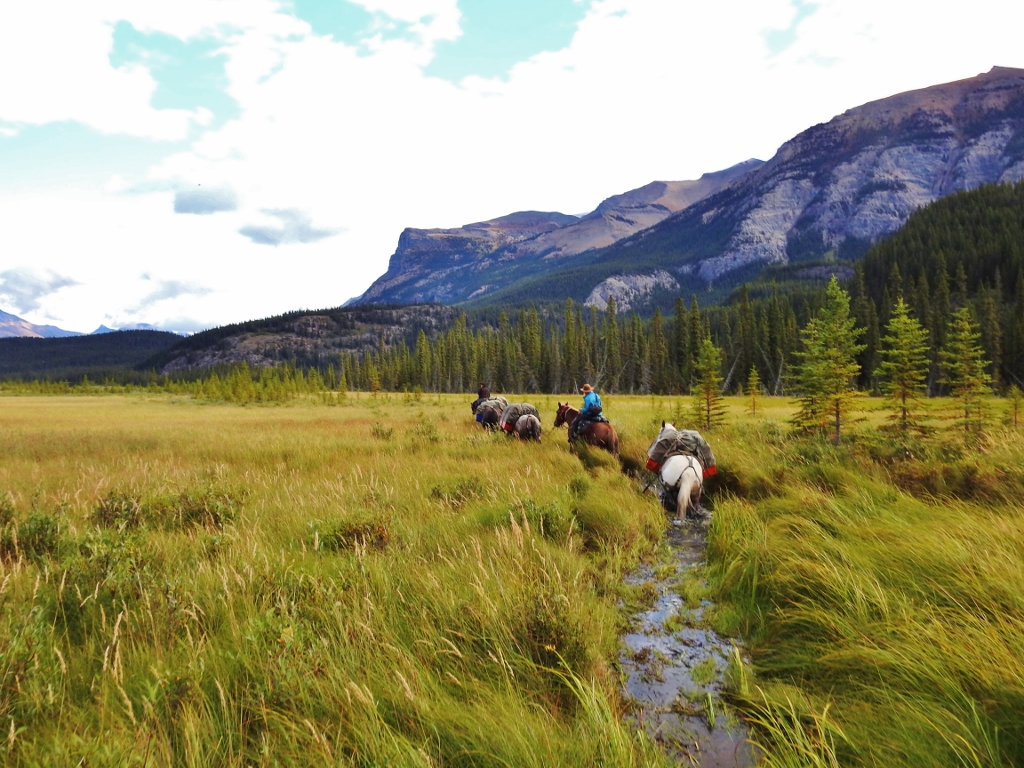
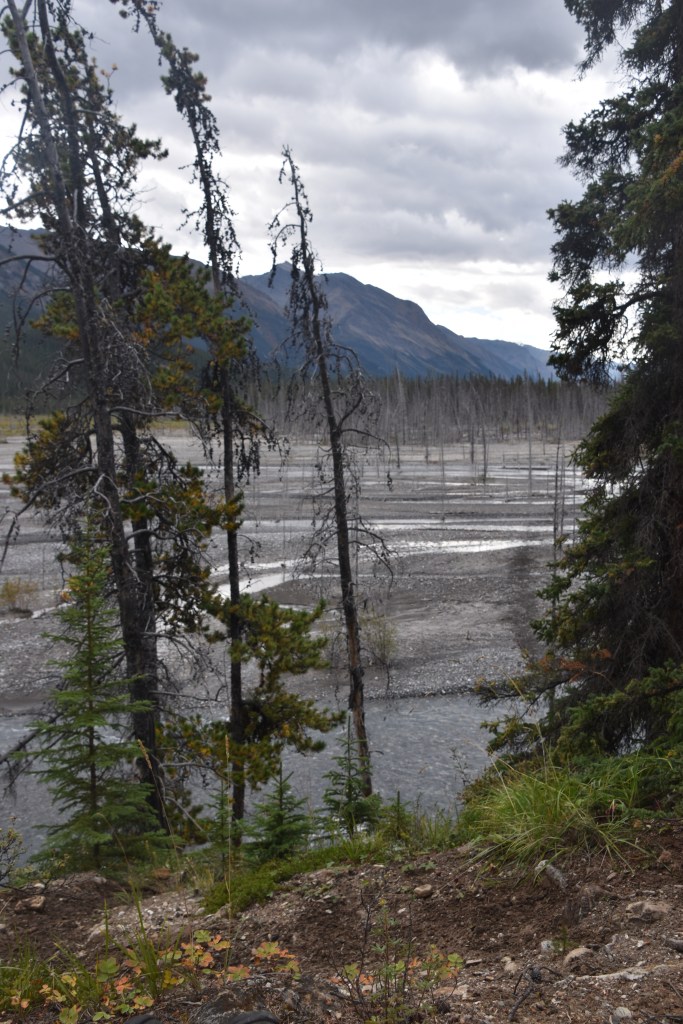
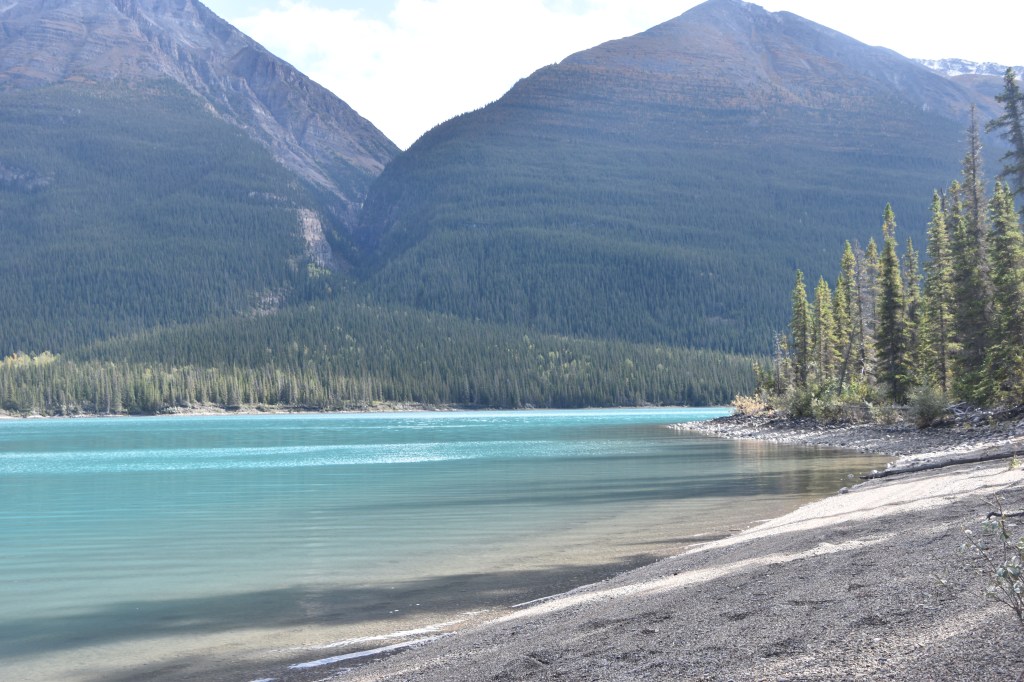
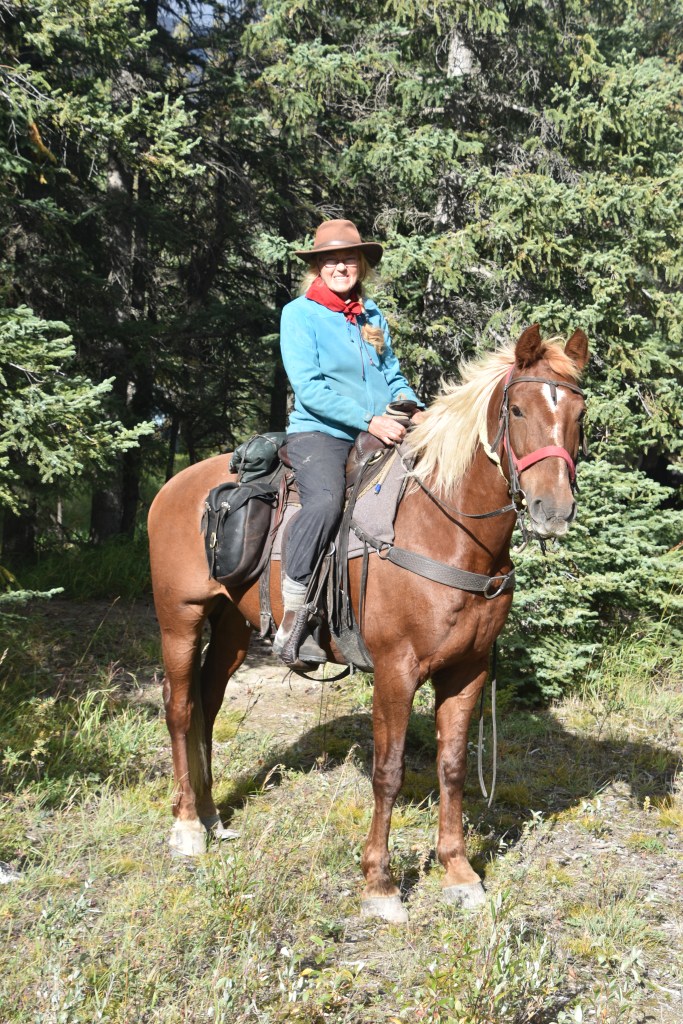
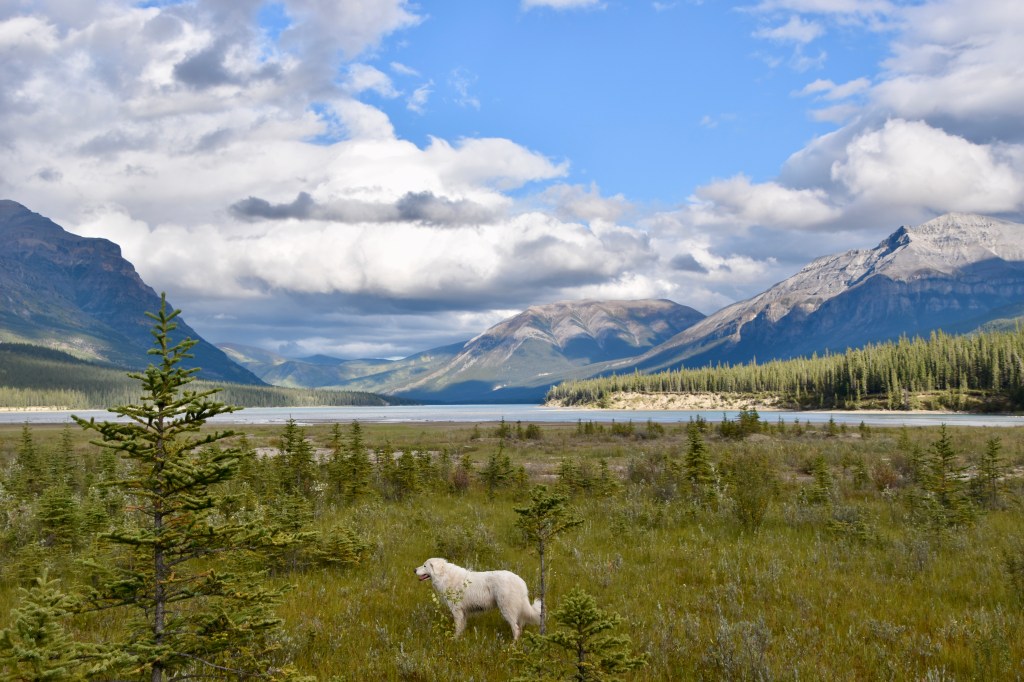
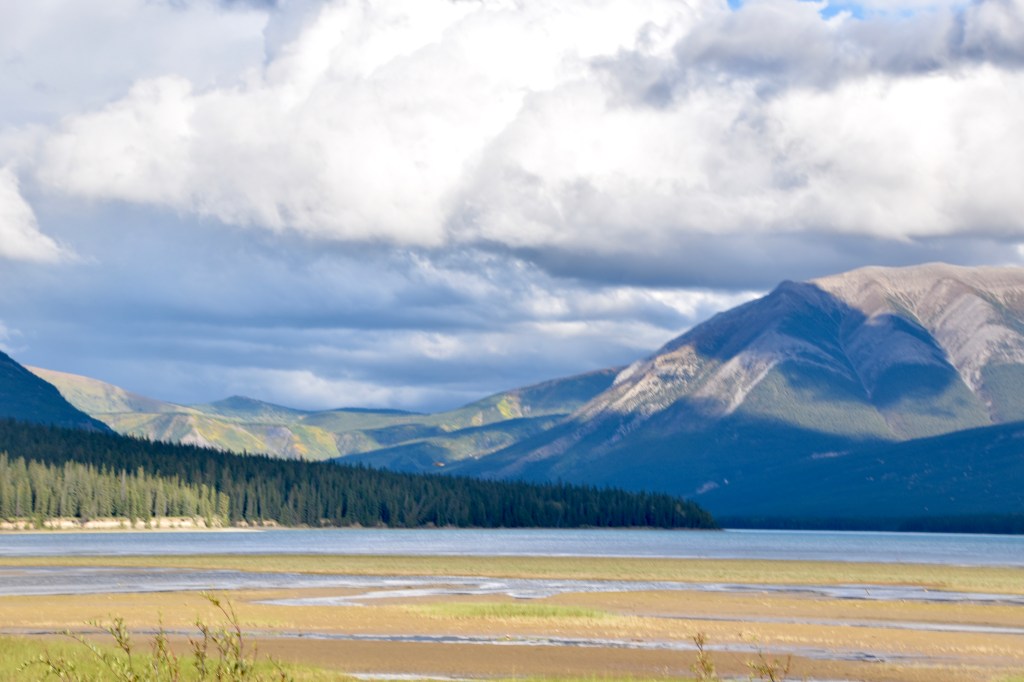
We ride northwest along the Tuchodi Lakes as the weather comes and goes. A wild wind whips the lake but for the most part, there is no rain. This is a long ride of 35 kilometres but we have multiple “lunches” as breaks. We move quickly along the well-drained lakeshore and even over the sandy side hills. The south-facing sidehills are quite interesting from an ecological point of view as they have “juniper swarms” and grasses common to dry areas. The shrub Juniperus communis grows here just like it does in BC’s Cariboo. Nowadays, juniper berries are used to flavour gin, however Dena’ina and Gwitch’in people used juniper to treat colds and other respiratory ailments.
We stop at Lac-a-Nookie camp for the last break and a bit of shoeing. Michelle and Alex are busy at this point, as horses are losing shoes and still have one more expedition leg to go before taking their winter break in the grasslands at Wayne and Donna’s Rolla farm near Dawson Creek.
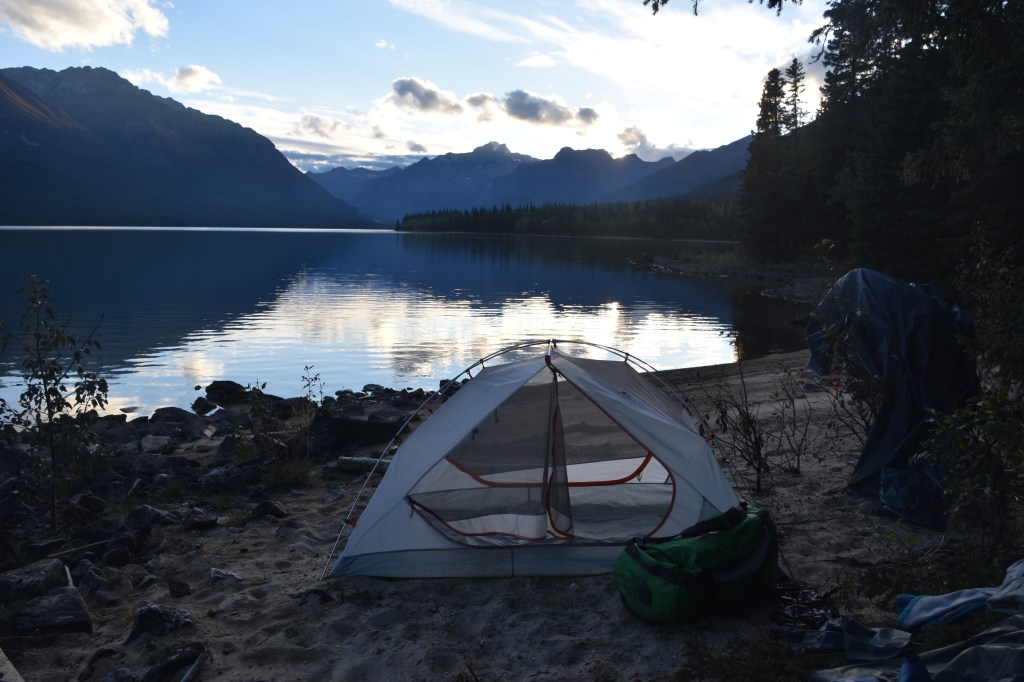
We spend three lovely nights at Tuchodi Lake. As usual, the weather is dramatic with wind and sun, mist and rain. Our camp is located at the outlet of Tuchodi Lake in a beautiful aspen and spruce woodland and the horses graze in the aspen meadows just down the lake apiece. We variously cook, catch up on sleep, do a bit of swimming and prepare for the journey south. It is always a bit sad for me to not see the herd again, however the Brides and Vern make an unscheduled visit and are tied up and inspected for loose shoes or injuries.
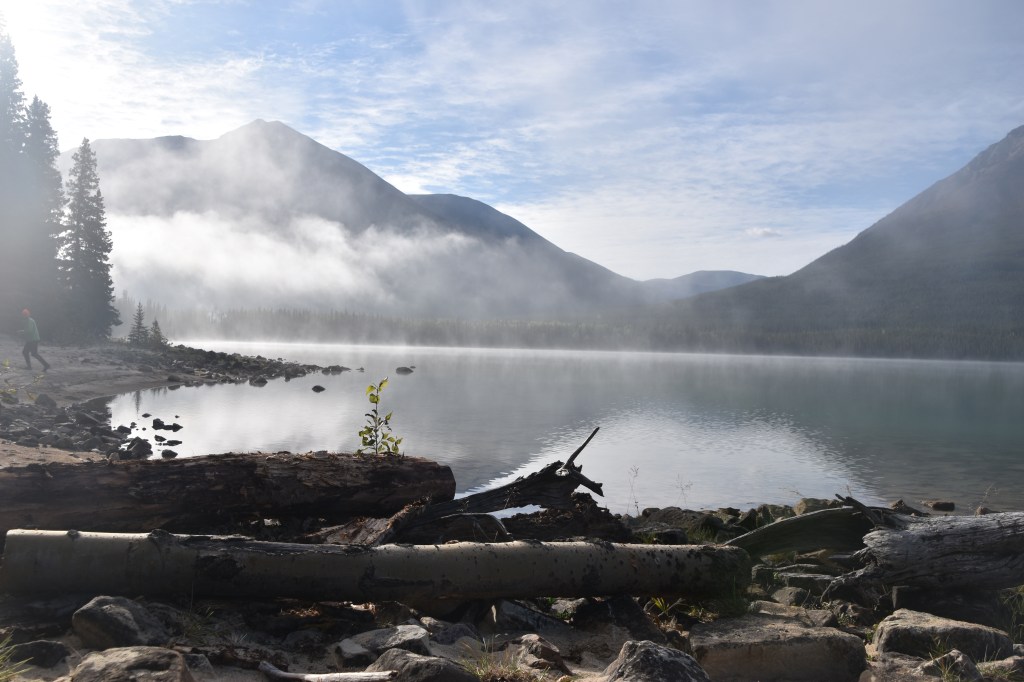
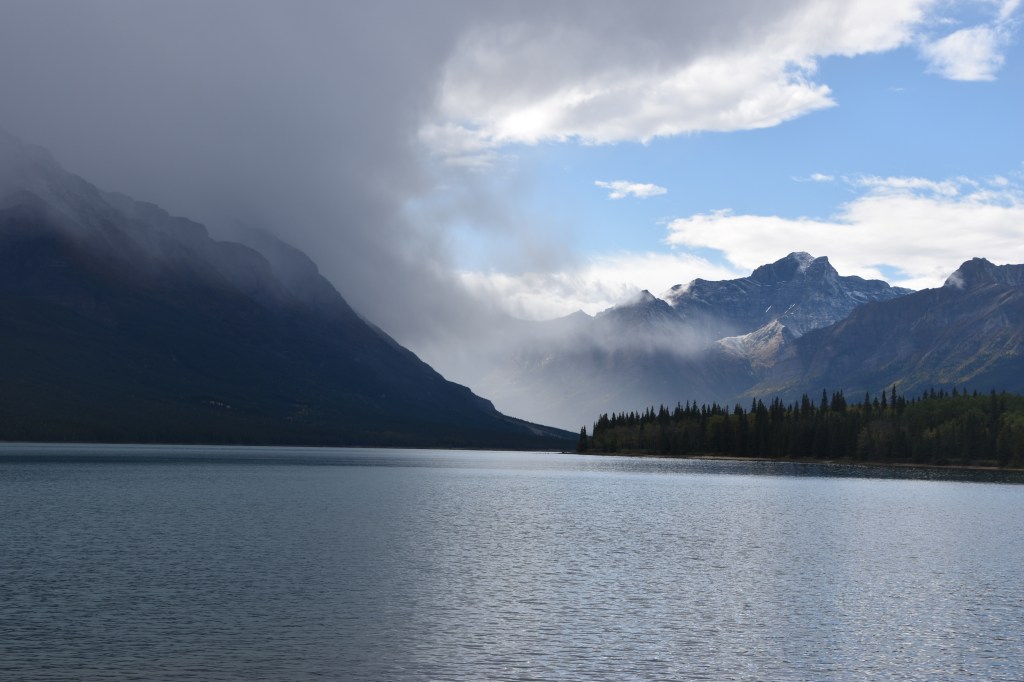
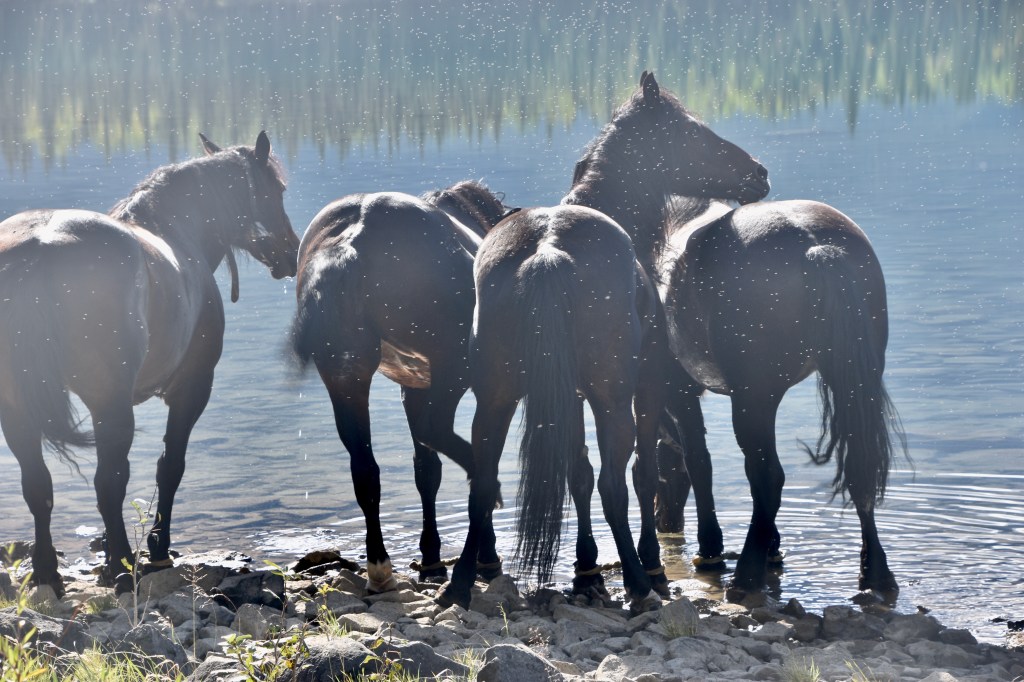
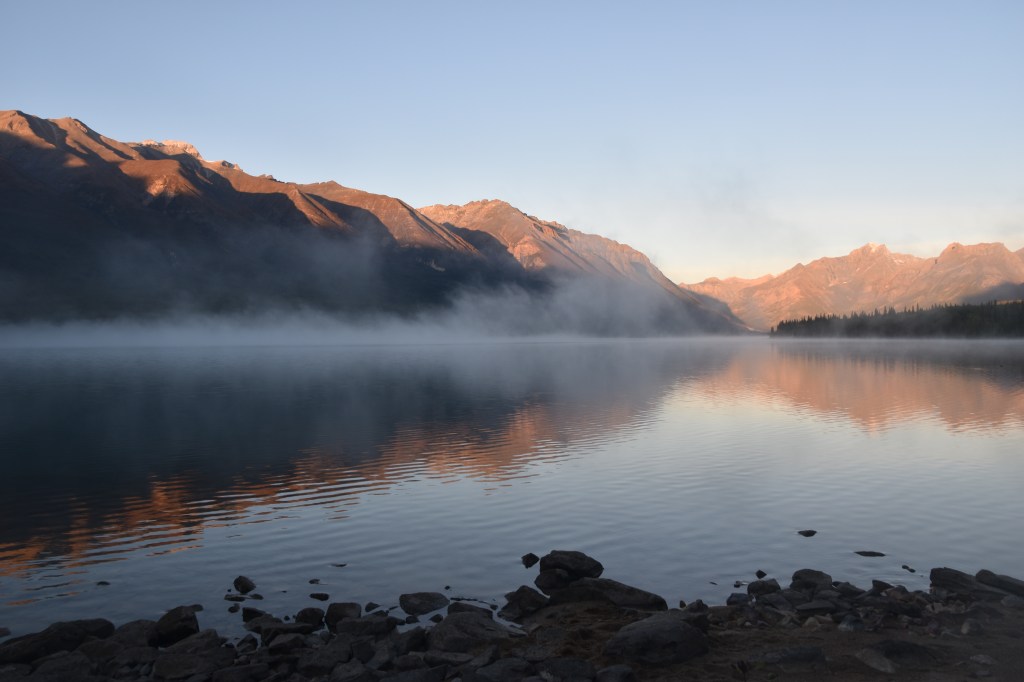
We revel in the ride , the adventure and actually accomplishing the journey through the rugged wilderness. The light of the wildness shines through.

 Trudy’s Pacific Adventures
Wow! What a adventure! Fantastic images too. Thanks for sharing
LikeLike
Trudy That is a fabulous rendition of an amazing trip ( Misery Pass ) in the MK… the photography is stupendous and your astute observations and descriptions of all the amazing flora and fauna and the descriptions of all the trials and tribulations of a hardcore challenging horse journey in very trying conditions is most commendable. You certainly nailed it and despite the miserable weather finished with a smile on your face. Congratulations! 👍😃.
LikeLike
Thanks Trudy!
I loved reading about this trip – I always enjoy your writing/story-telling, and the photos are gorgeous! I have never been to this area, but it feels a little more known for having read this!
LikeLike
Amazing adventure Trudy!
Takes a lot of strength to do that.
Thanks for your story.
I read your blog at midnight with the sound of strong wind blowing through the trees on shore.
LikeLike
Trudy what an adventure. Your descriptions are so atmospheric you brought me with you…the photos are superb, and I feel like I know your horse! Beautiful place, so good it is now preserved. Thanks for bringing us all on the journey. I can hear you planning your next trip. Ruth
LikeLike
Now I know what Bob Toothill keeps talking about! Amazing country and so magnificently shared by you! Wow and congratulations on this superb blog! Cheers
LikeLike