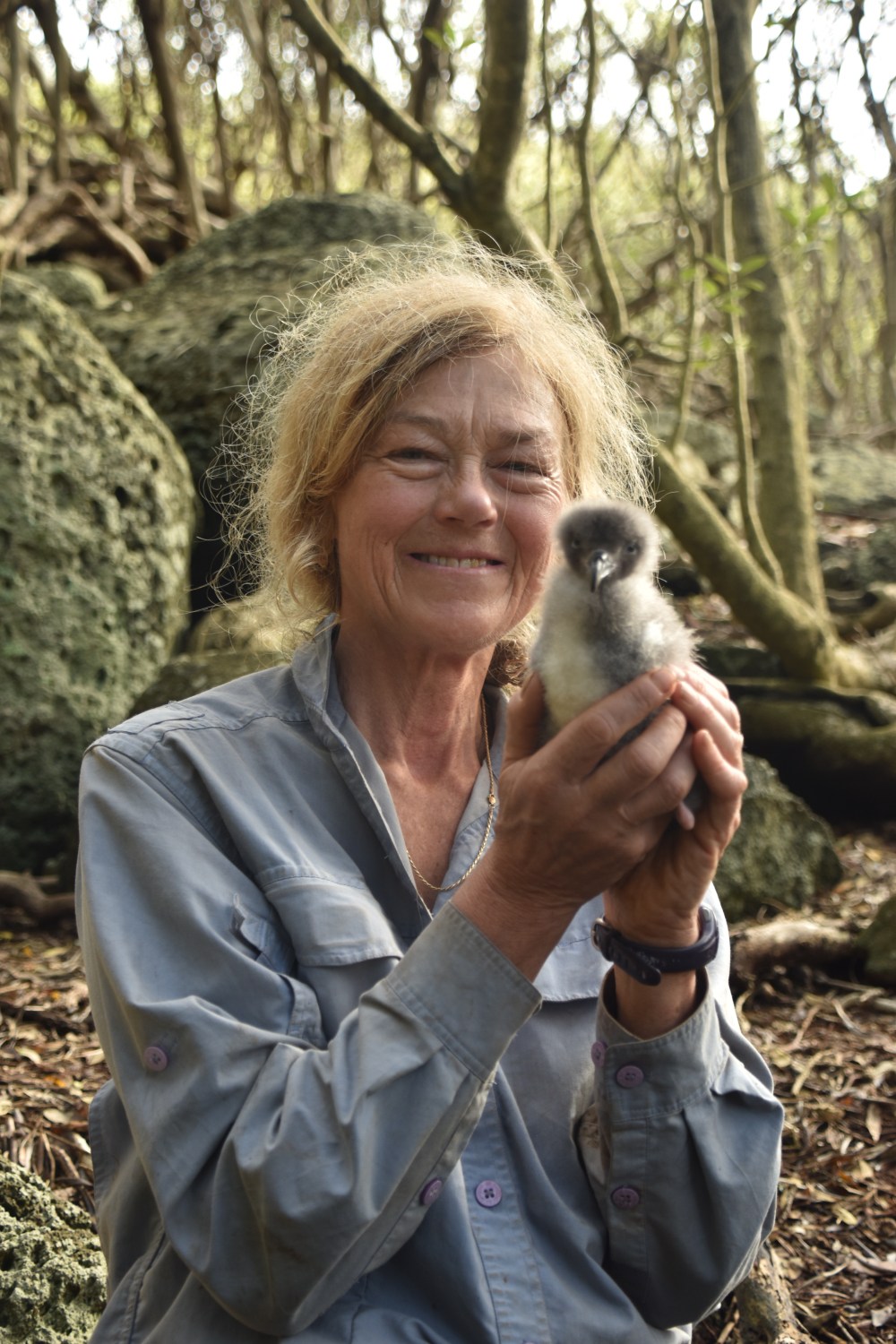
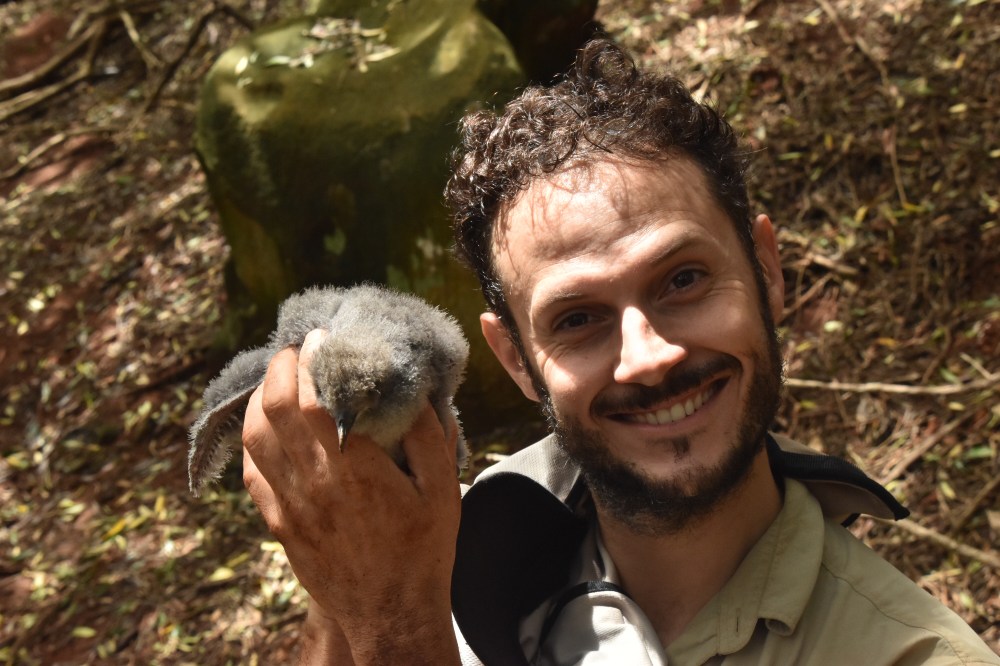
Phillip Island is only 6 km off Norfolk Island in the South Pacific Ocean (latitude 29 degrees S and longitude 168 degrees E). It is 190 hectares and 2 km length and width, with an altitude of 280 m. It supports endemic plants, invertebrates including an giant centipede (Cormocephalus coynei), reptiles (skink and gecko) and 14 species of breeding seabirds (including Kermadec Petrels, White-necked Petrels, Providence Petrels, Red-tailed Tropicbirds, Black-winged Petrels, Black Noddies, White Terns, Common Noddies, Grey Ternlet, Wedge-tailed Shearwaters, Little Shearwaters, Sooty Terns, Masked Booby, White-bellied Storm Petrel (just found) and Greater Frigatebird) Phillip Island was protected by Norfolk Island National Park in 1996 after a petition by the Norfolk Island Flora and Fauna society.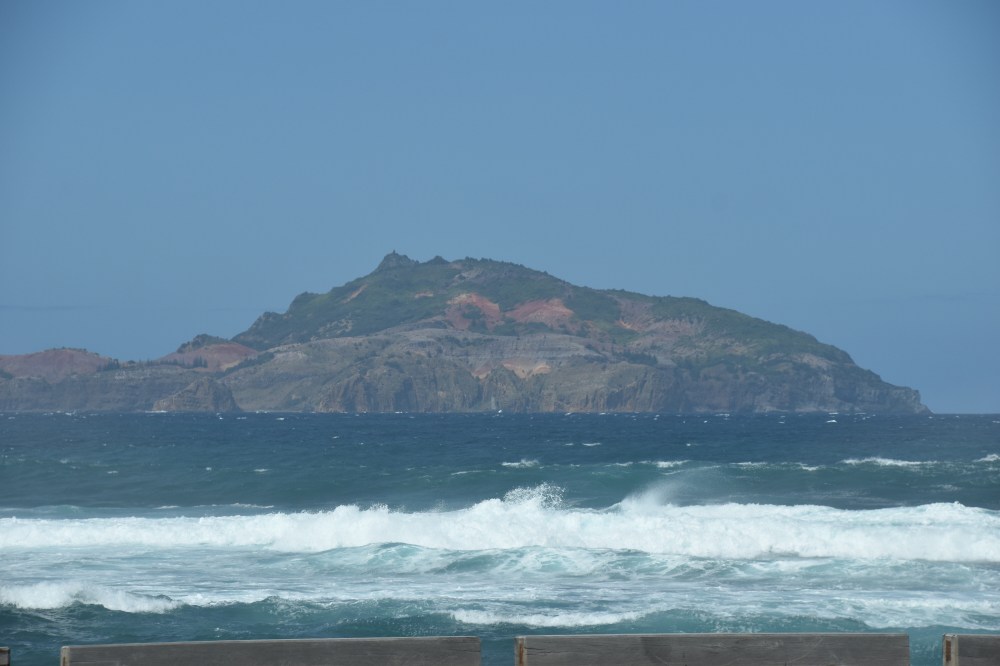 Phillip Island from Slaughter Bay, Norfolk Island
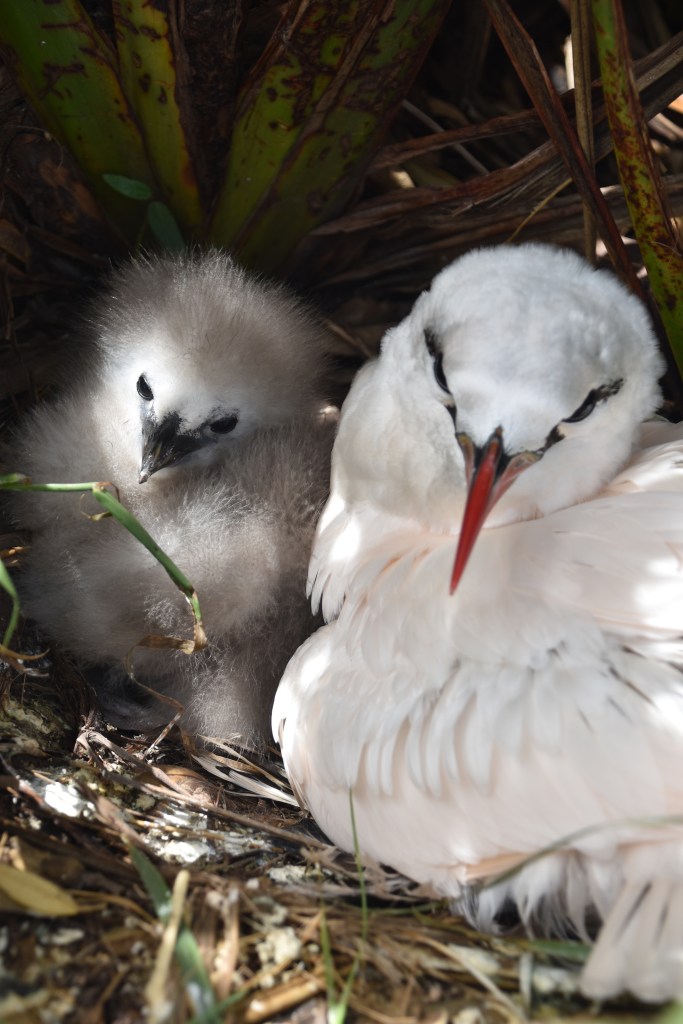
Red-tailed Tropicbirds nest on cliff ledges and under white oaks
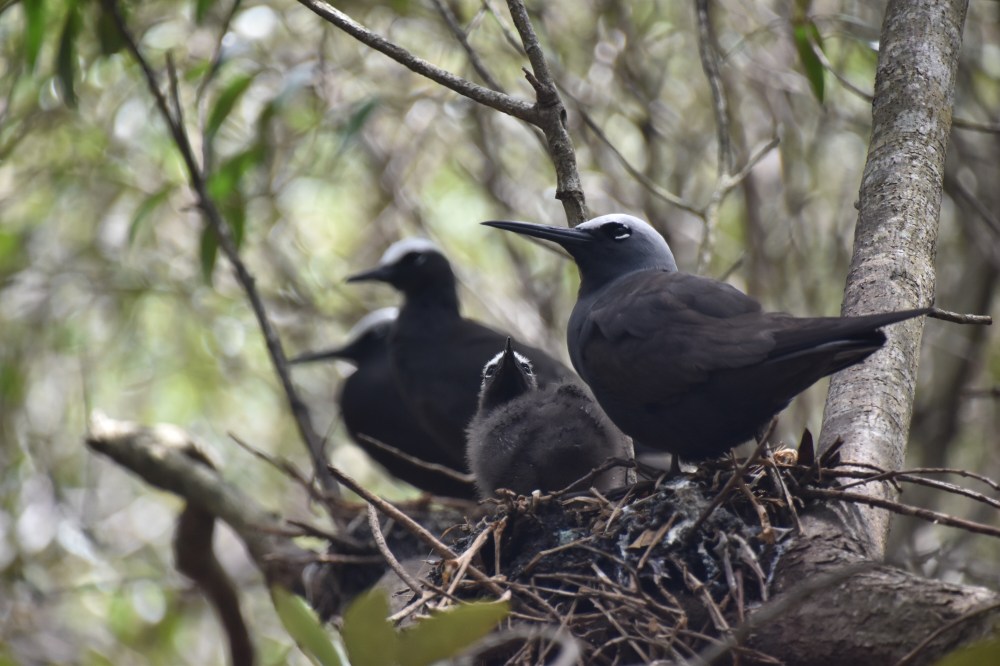
Black Noddies nest abundantly in olive and oak thickets
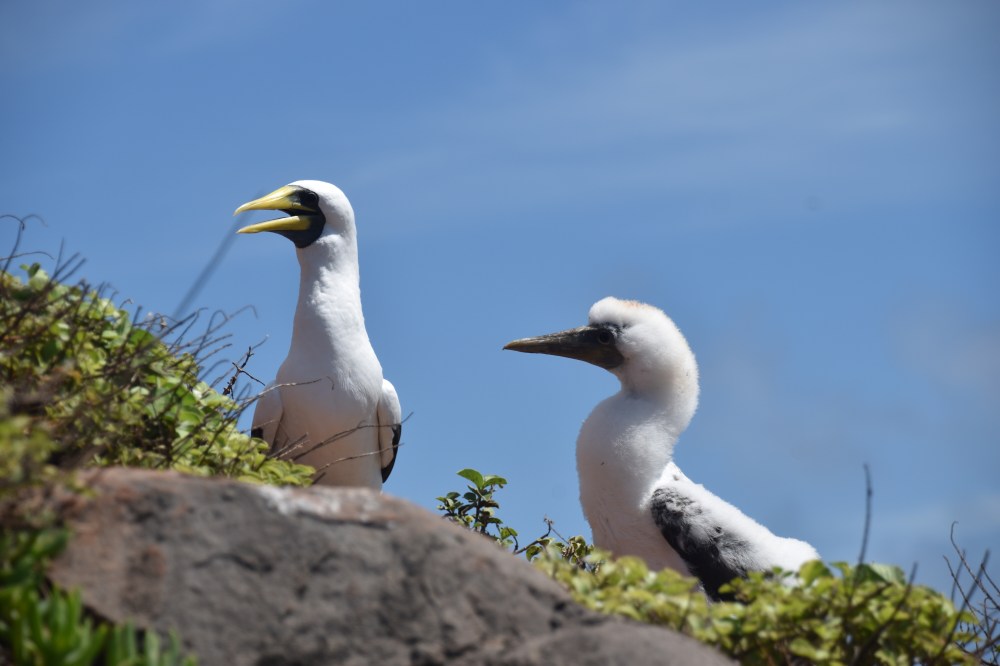
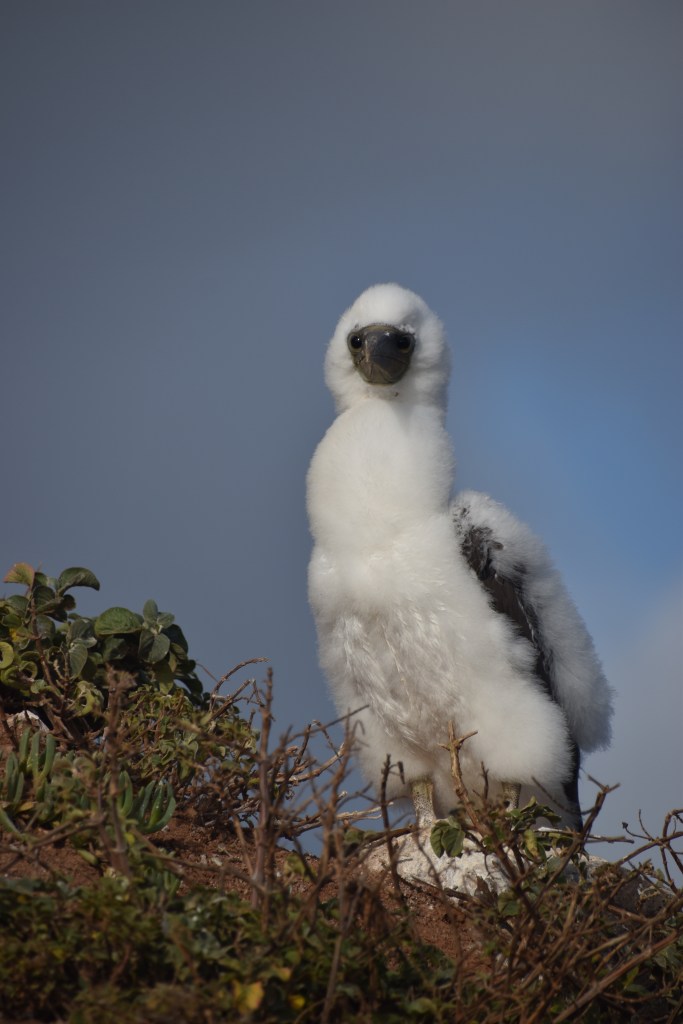
Masked Boobies nest on the top of headlands
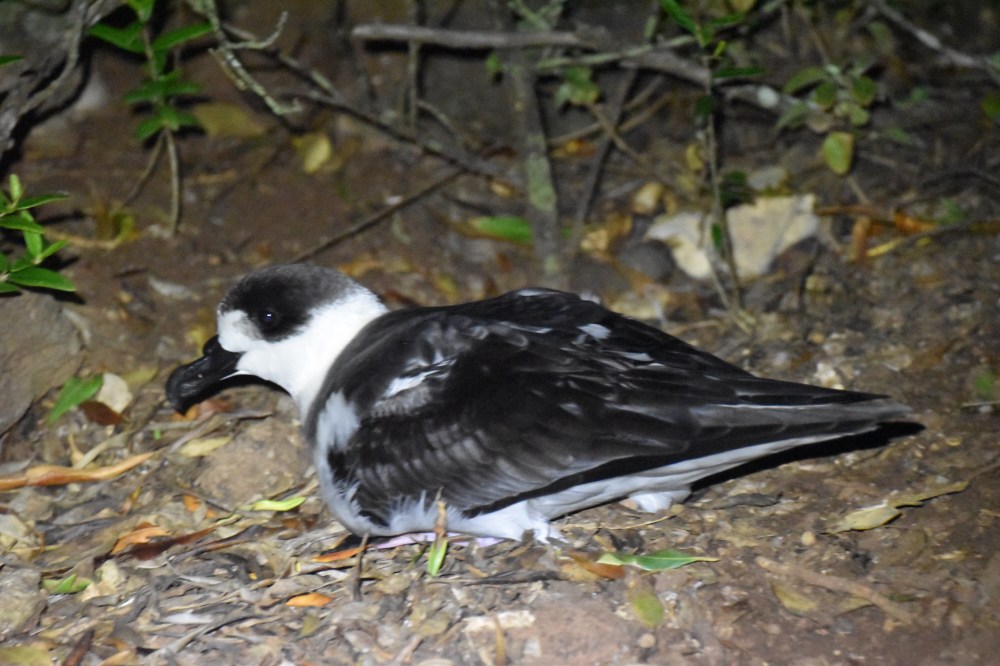
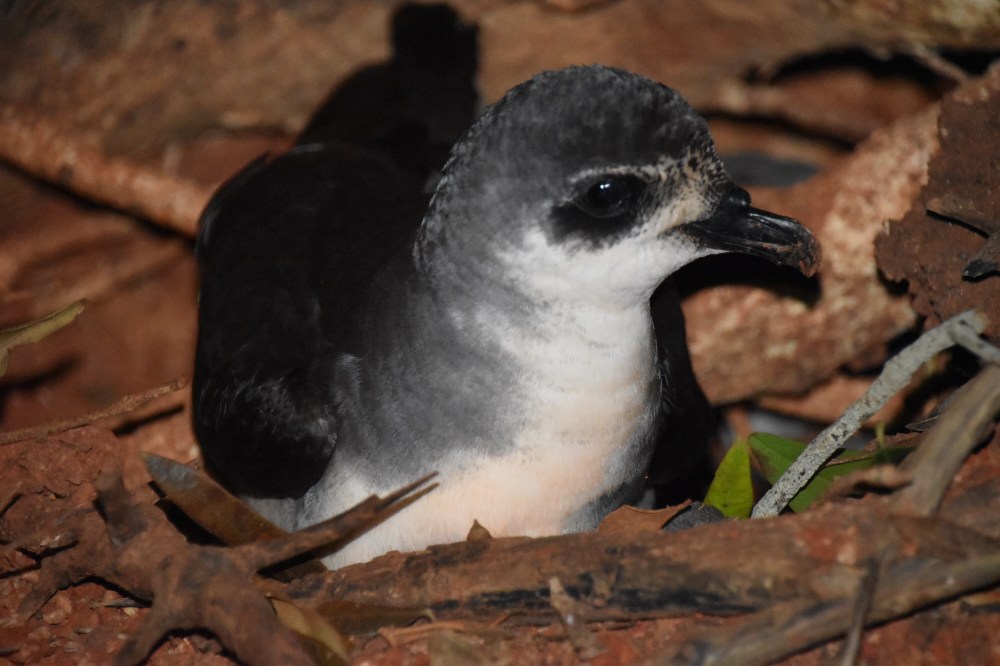
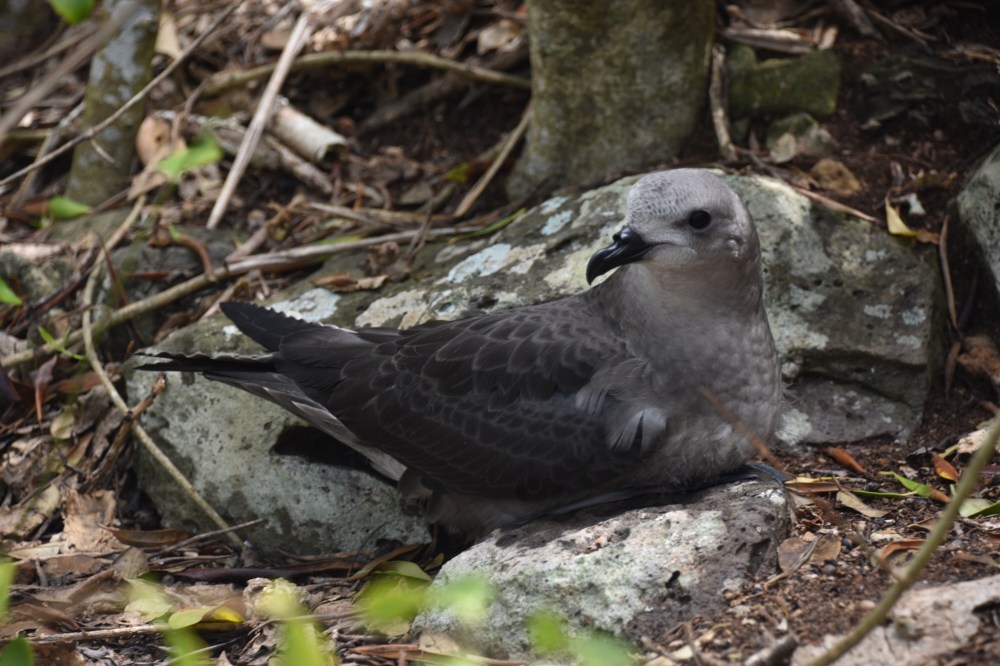
There are under 30 pairs of Kermadec Petrels nesting on Phillip Island
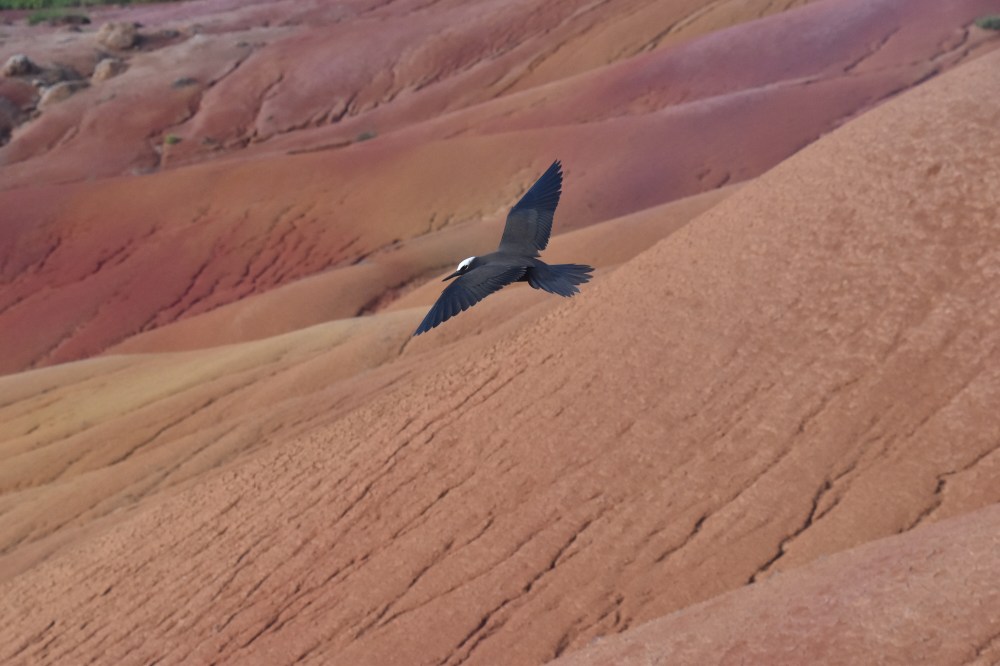
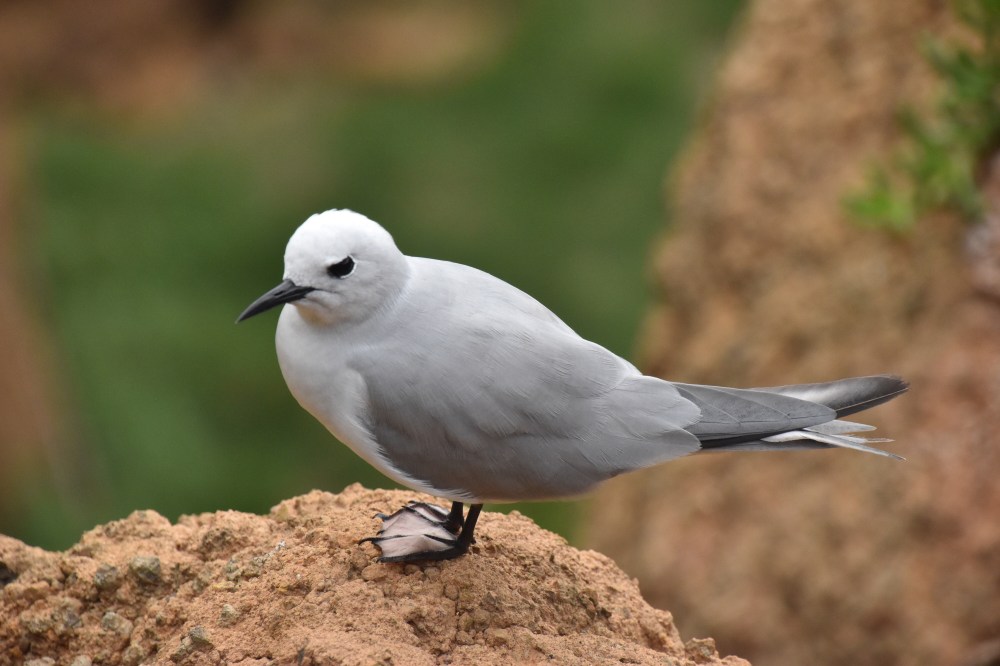
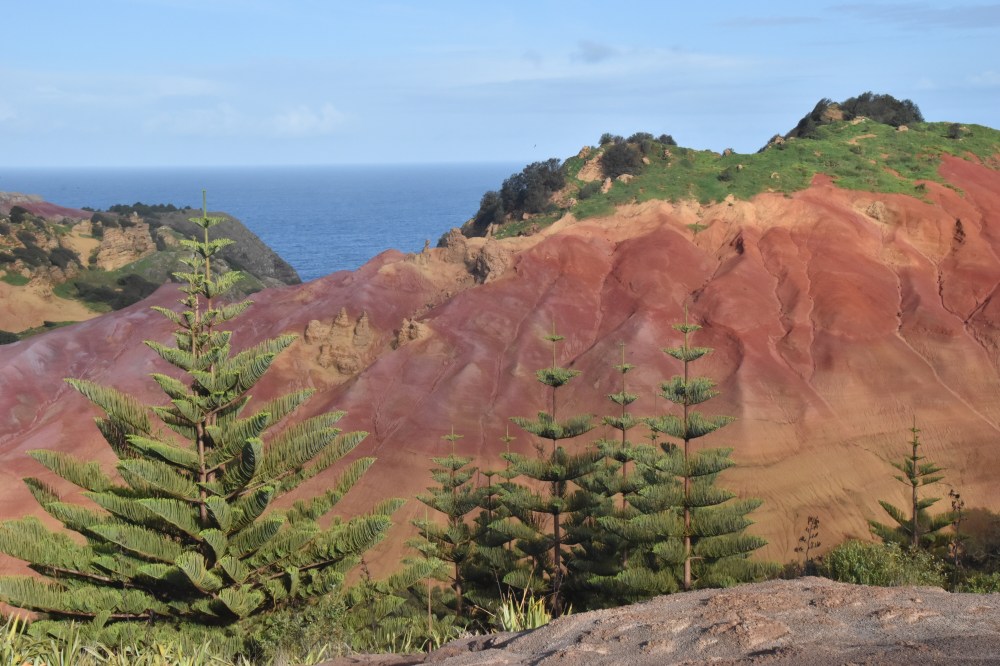
Phillip Island is a volcanic island of only 1.2 million years comprised of volcanic tufa and ash layers. There are steep cliffs and no beaches on Phillip. Presently there is large swaths of exposed red and golden ash layers with patches of vegetation. Phillip Island was and is still very eroded by soils and substrate washing and blowing away.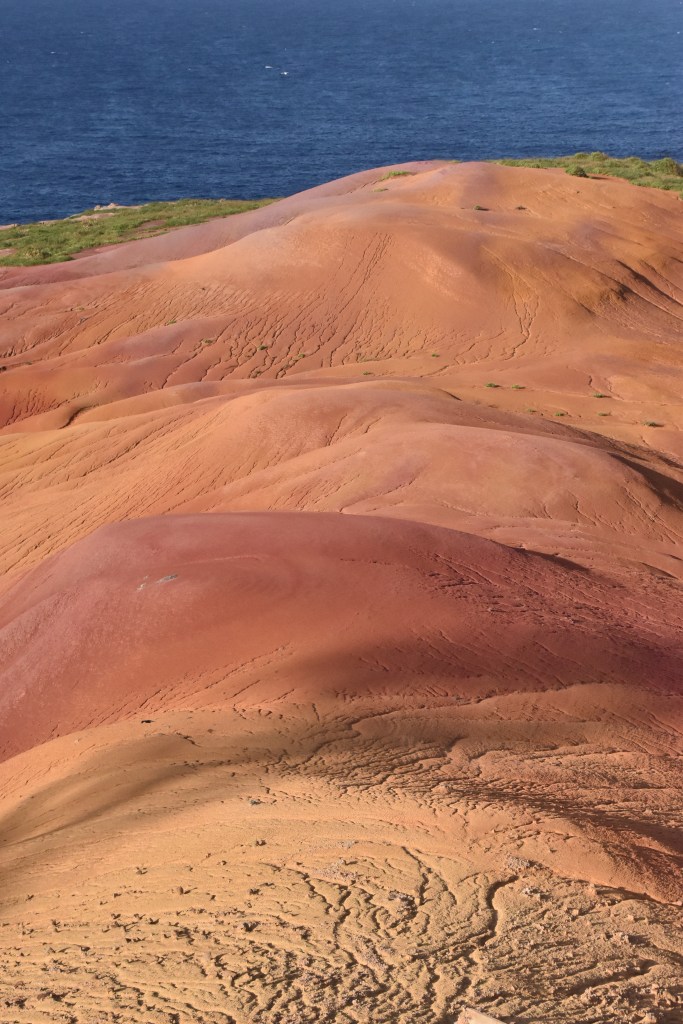
Introduced goats, pigs and rabbits rendered Phillip Island barren from the 1800’s to 1980. Fortunately, the rabbits and the other grazers were eliminated in 1988. Since there were no introduced cats or rodents Phillip Island still had nesting seabirds. Therefore Phillip Island became a focus of the park restoration programs. Since the 1990’s there has been intense vegetation management to plant and seed Norfolk Pine, encourage revegetation with White Oaks, propogate Phillip Island hibiscus, Neau Palms, Cordyline, bloodwood, Margaretarum, Popwood, Formium tenex (flax) Maple and ironwood. There is active erosion control with sand sacks and wire mesh. However, as we were to find out, abatement of the erosion process due to the removal of vegetation by the past introductions is a real struggle and perhaps the greatest environmental threat to the island’s ecosystems.
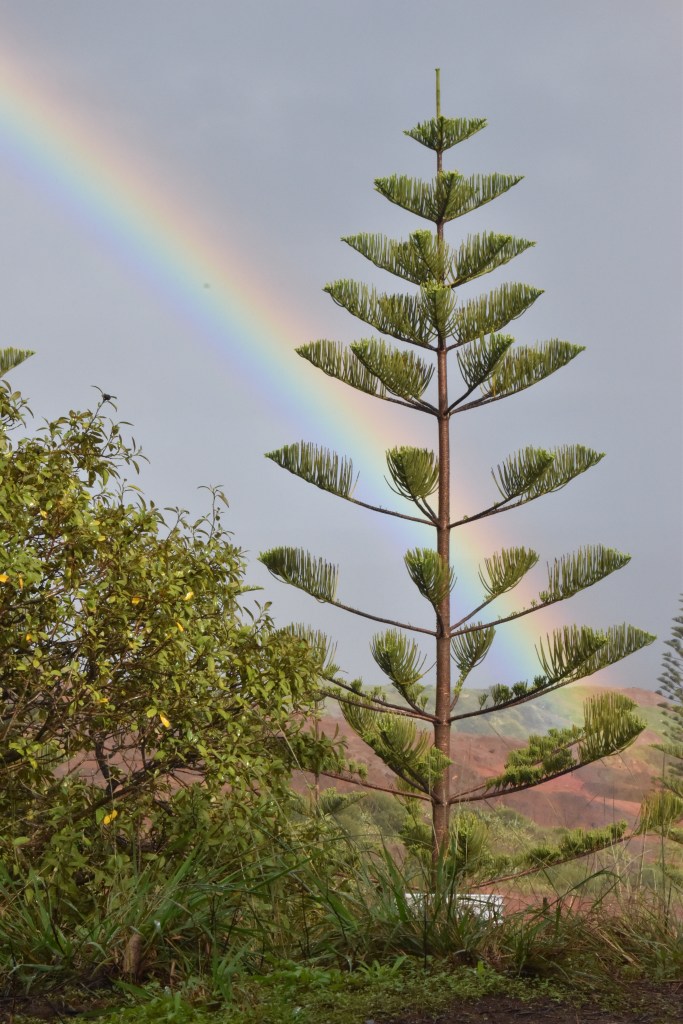
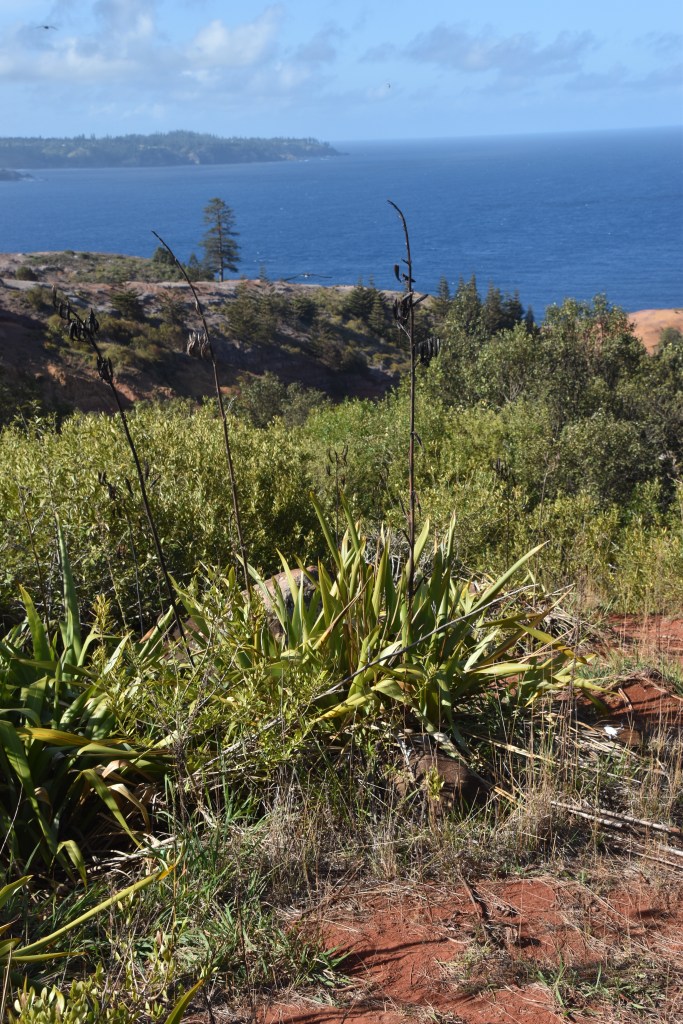
Flax and introduced olive in foreground. Norfolk Island in distance
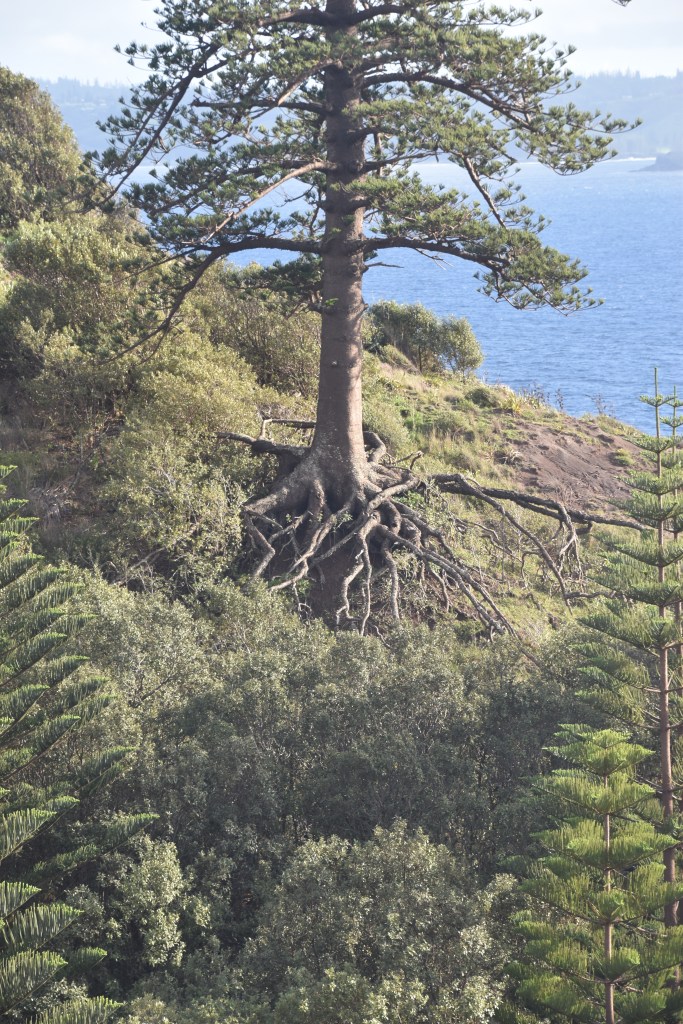
Veteran Norfolk Oak shows the near 2 metres of soil under roots that washed away in last 100 years
Joel, a jovial native Norfolk Islander descended from the Pit Cairn mutineers has worked on Phillip Island for at least 10 years refitting the cabin, conducting vegetation management (hot and hard work), cutting invasive African Olive, then spreading the vegetation to control erosion. Joel, Roscoe and Mel work for Norfolk Island Park and have also come to work on the invasive Australasian Swamphen (Tarlar bird) which predate on seabird chicks.
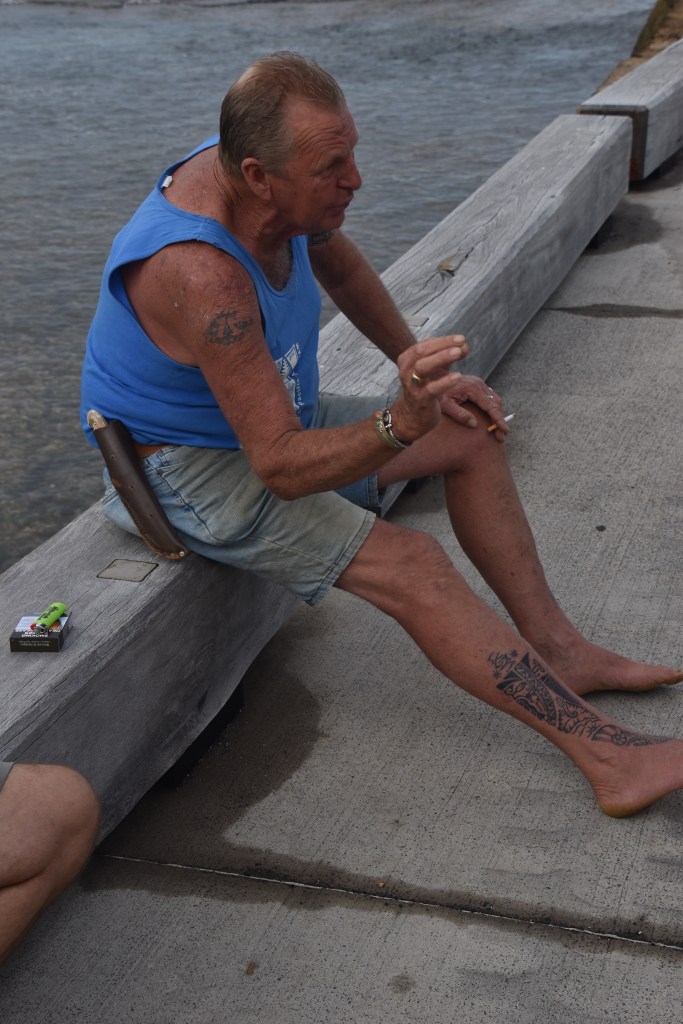
I was awaiting the opportunity of working on Phillip Island since June 2018, so was thrilled to be actually going on March 12th (a few days after the original date). Our departure time was 0700 so I was up at 5:30 repacking, repacking again and eating lots of muesli to prepare for the day. The day was cloudy but apparently calm. Luke made two trips with the rickety Mazda to carry two giant back packs of food, plus various other packs, propane cylinders, a box of gifted bananas, rock boots, camera gear and computers. We waited at historic Kingston pier for sometime before meeting Dids, a colourful Parks employee with some beautiful proudly displayed tattoos and a Norfolk accent to boot.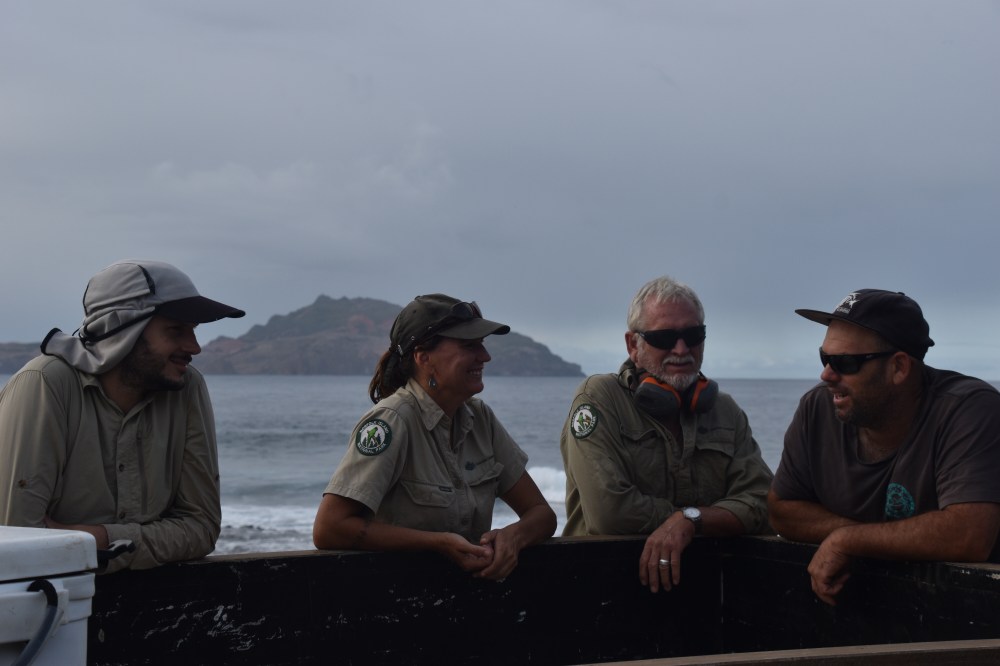
Along came Bigsy, his. daughter Em and their trailered boat, ‘Amber Jack’. Without even a blink, he hooked the boat to the crane, lifted it and dropped it into the swells.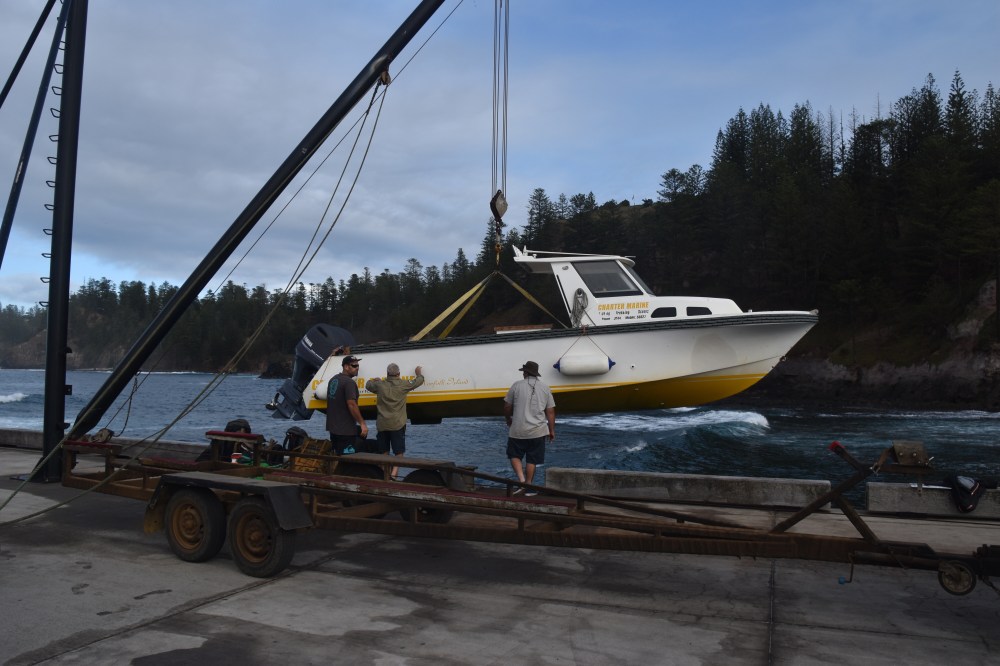
We hauled what seemed like a crazy amount of stuff onto the boat, strapped it down, jumped on ourselves then pushed off the piers into the swell. Someone remembered that a car had to be moved, so Joel leapt off the boat on a rising swell, moved the car and jumped back on the boat. All a bit tricky, but we all managed what was a normal day for Bigze. We swept past Nepean Island and Phillip Islet cliffs loomed in the distance. “Where do we land? I innocently asked. “Just around that corner, then it’s straight up!” 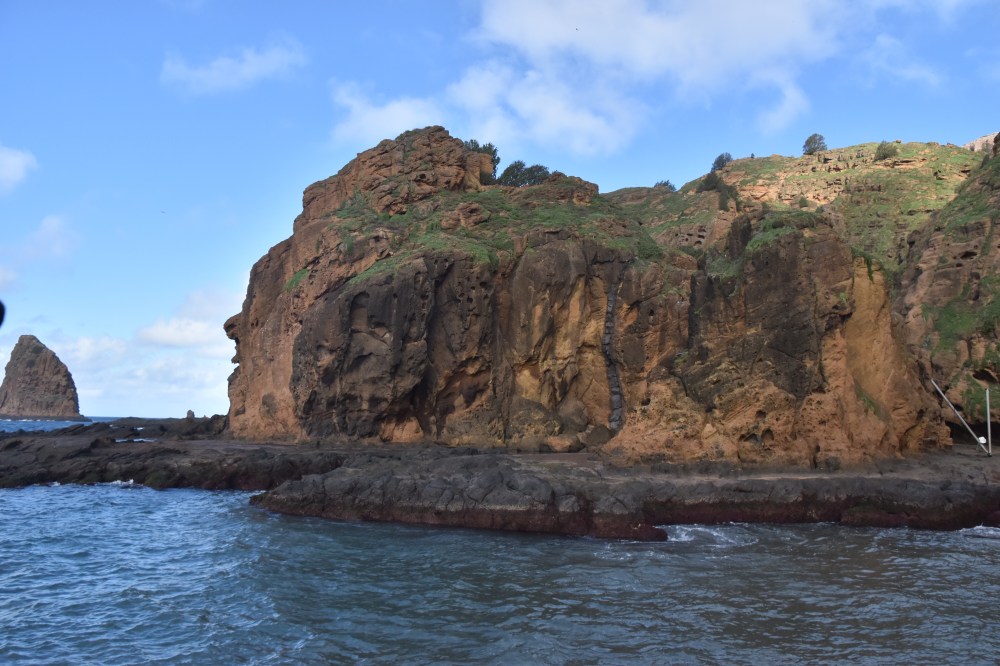
Before we knew it, we were in “The Stool” and having to get to the bow of the boat, put on the rock boots and do a “seabird leap” to the rocky and slippery shore. Luke got off first and packs were handed off on the swells. 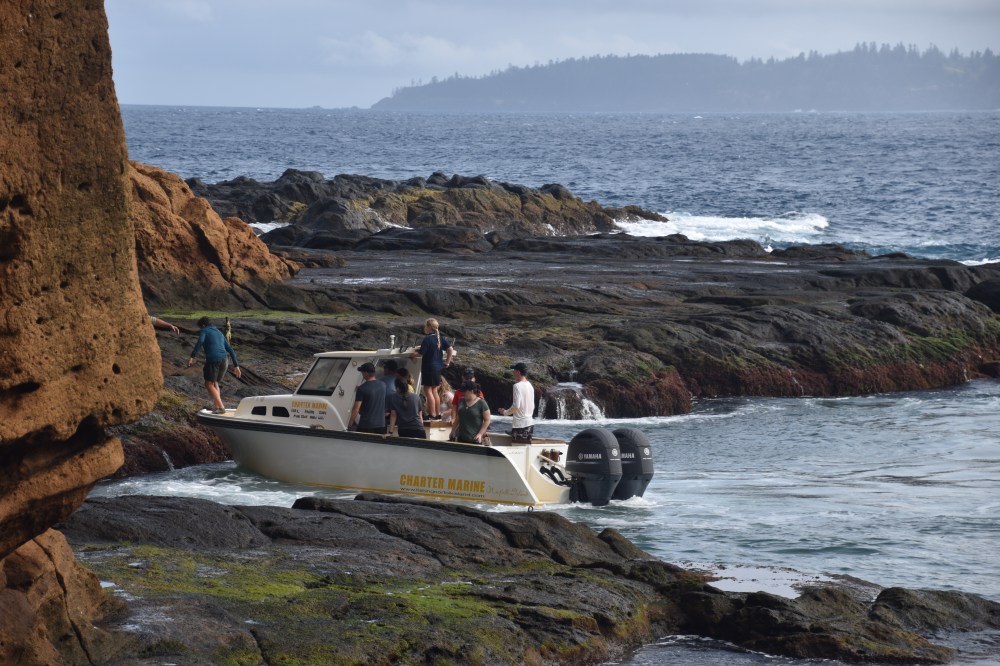
The packs were so heavy, that a bad hand off caught Luke off balance and a pack hit his knee. I grabbed him to keep him from hitting the ocean. We then trooped the packs along the shore to a drop off, before climbing up the cliffs with ropes to the various levels. 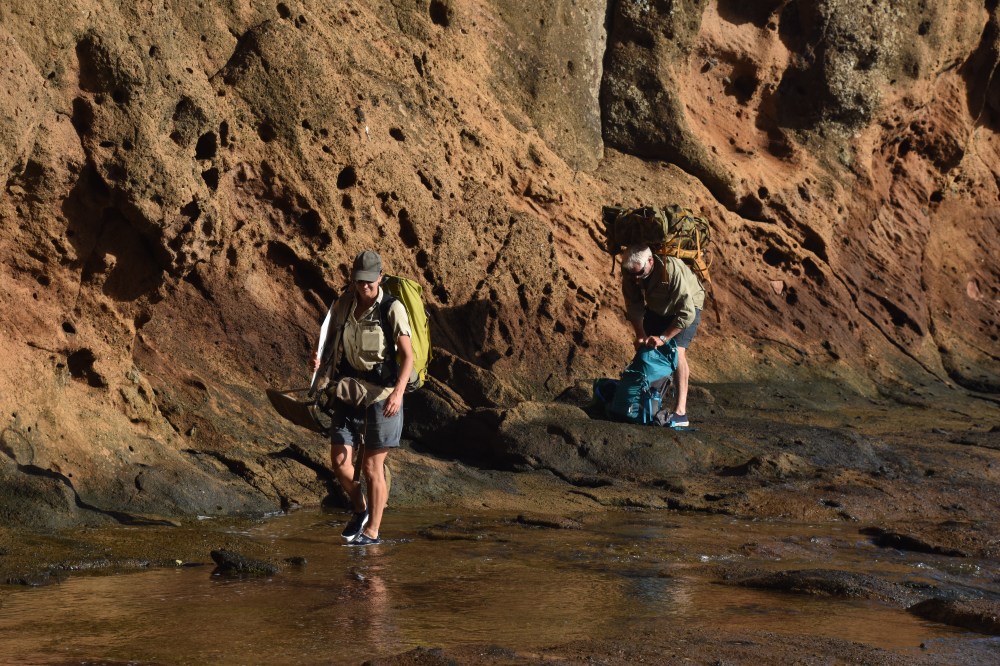
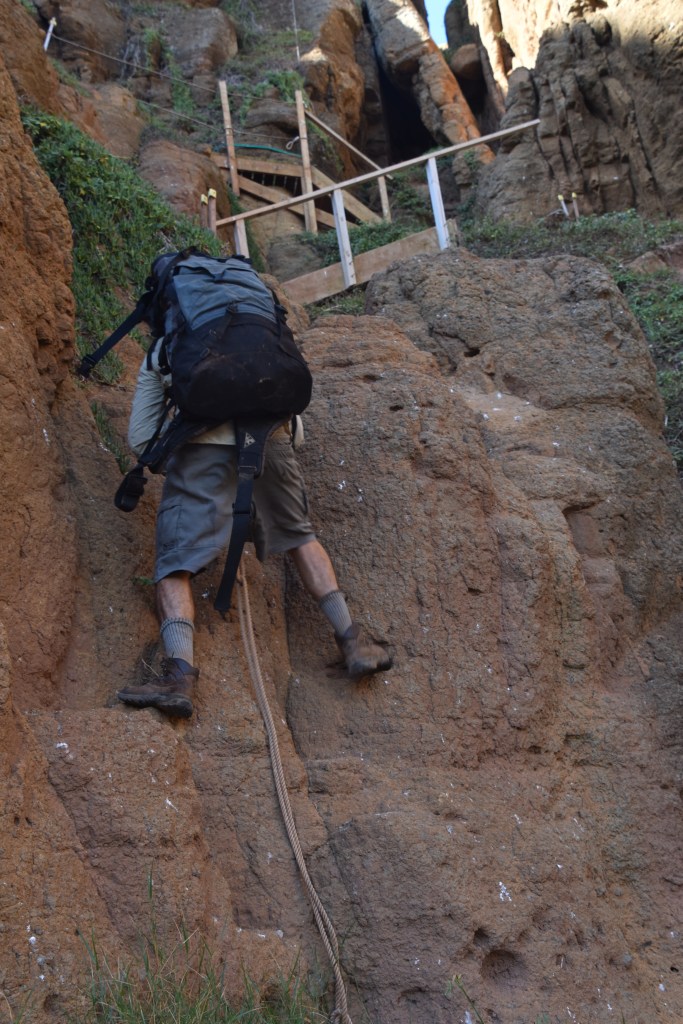
What a sweat! Mel, especially impressed me with her strength and Luke rallied to take 2 huge loads up to the cabin and back. It’s about a kilometre to the cabin and the trail is among cliffs, barren volcanic tufa soils eroded with gullies and indignant Masked Boobies and their fat chicks.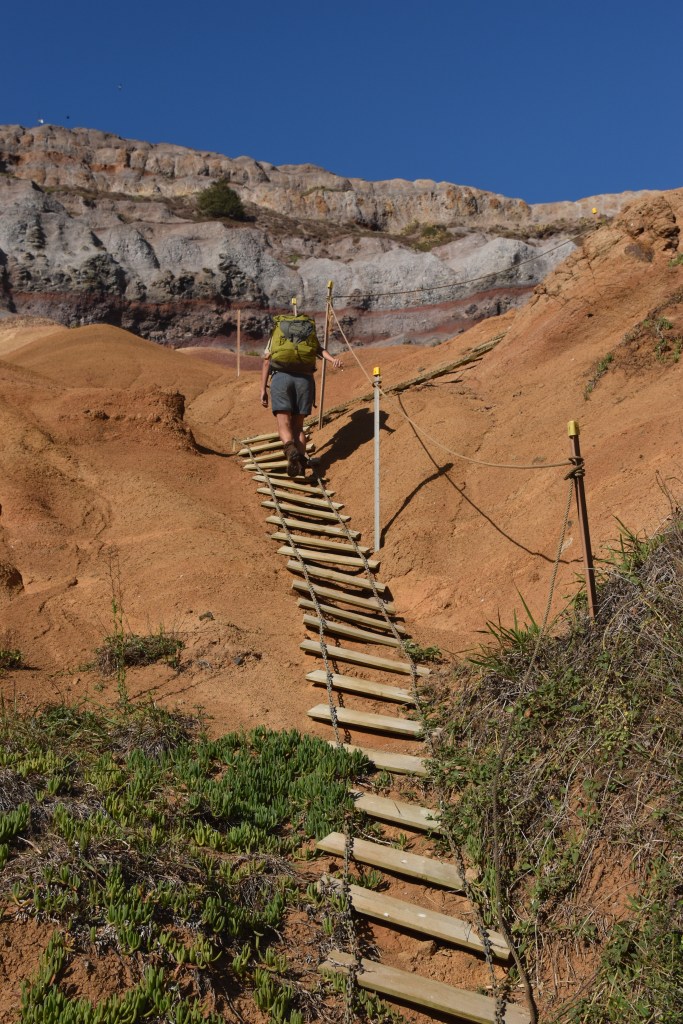
All the time, the air is filled with Black Noddies chattering and swooping by. I dropped one big pack at a flattish spot then went down for my own gear. It was a bit awkward with my duffel bag and day pack sort of attached.
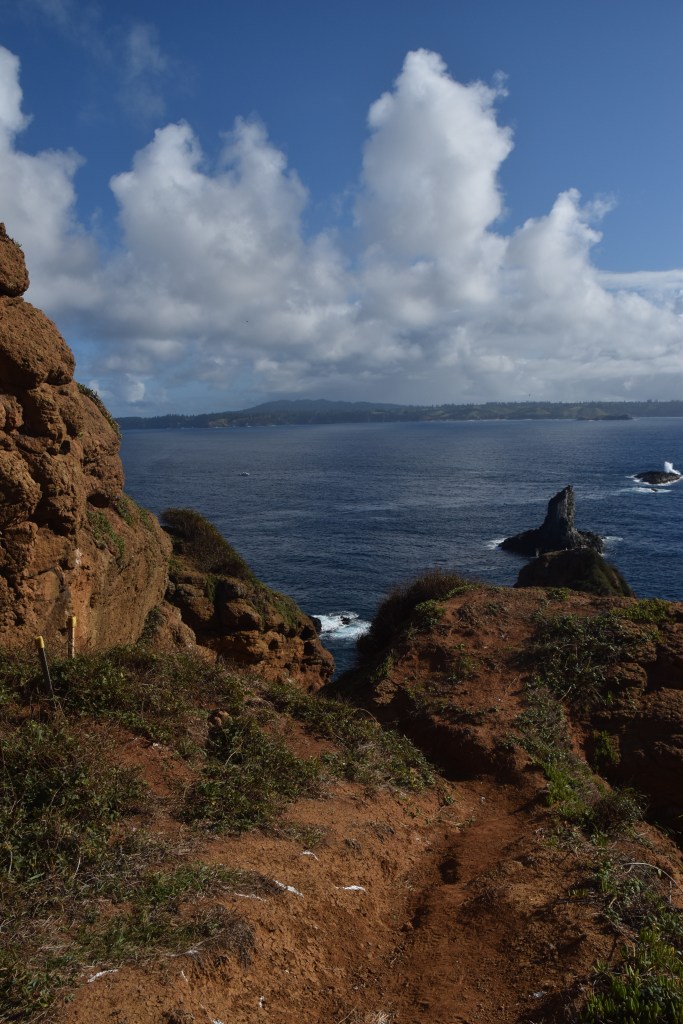
By the time I reached the drop off point, Daniel (only 22) grabbed the first big pack I’d carried up and took it the rest of the way. The Parks folk were already enjoying a cold one by the time I stumbled in. 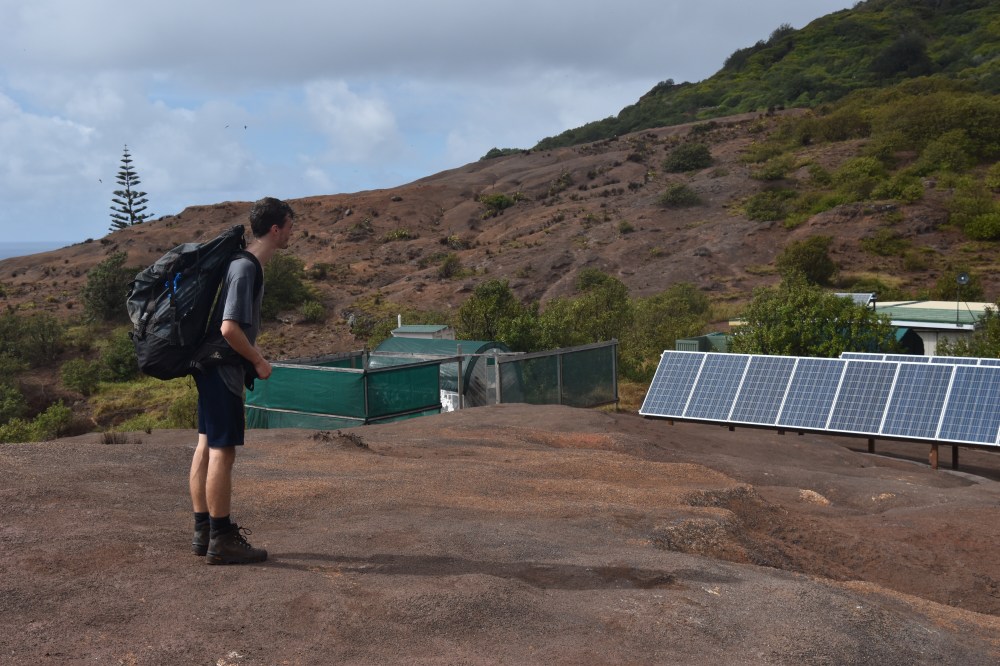
The day was fine and Luke was keen to get to work setting traps for Black-winged Petrel and checking White-necked Petrel chick weights. We donned long-sleeve shirts and pants and headed up the tufa slopes checking burrows along the way. 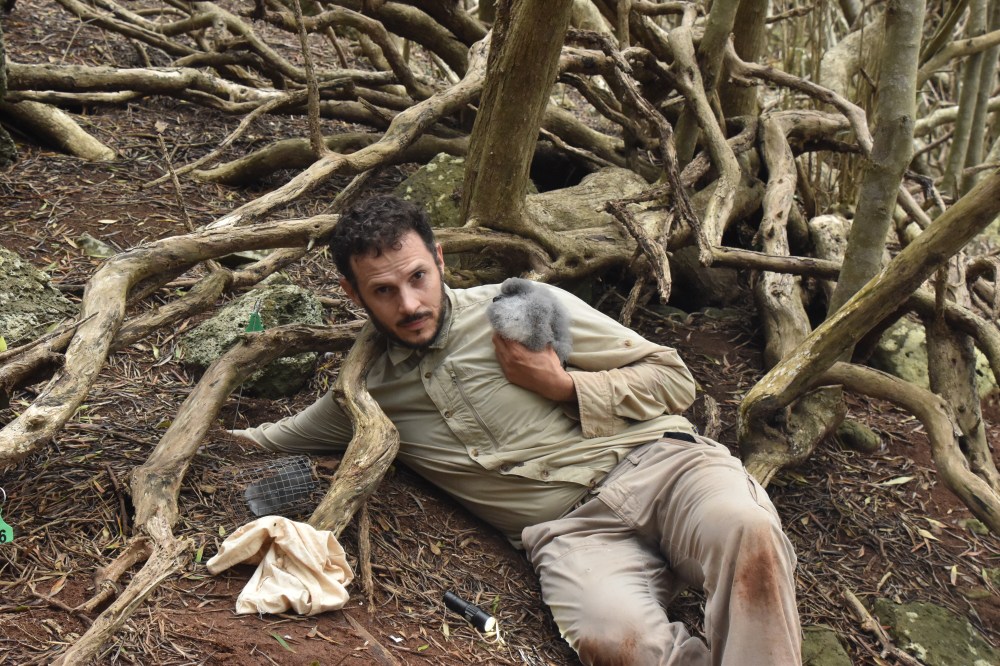
A Red-tailed Tropicbird sat under an olive branch and protested as we walked along. Black Noddies crick crick crick rattling chatter as the fly to their nests where some have begging chicks. Luke has marked burrows and nests, red for White-necked Petrels, green for Black-winged Petrels. He was putting in wire mesh one-way traps, to catch the Black-winged Petrels for putting on Geo-locators or taking them off. I just watched and took notes for Luke, then he said “would you like to hold this chick? I was thrilled to hold the fuzzy chicks before their weighing in bird bags. 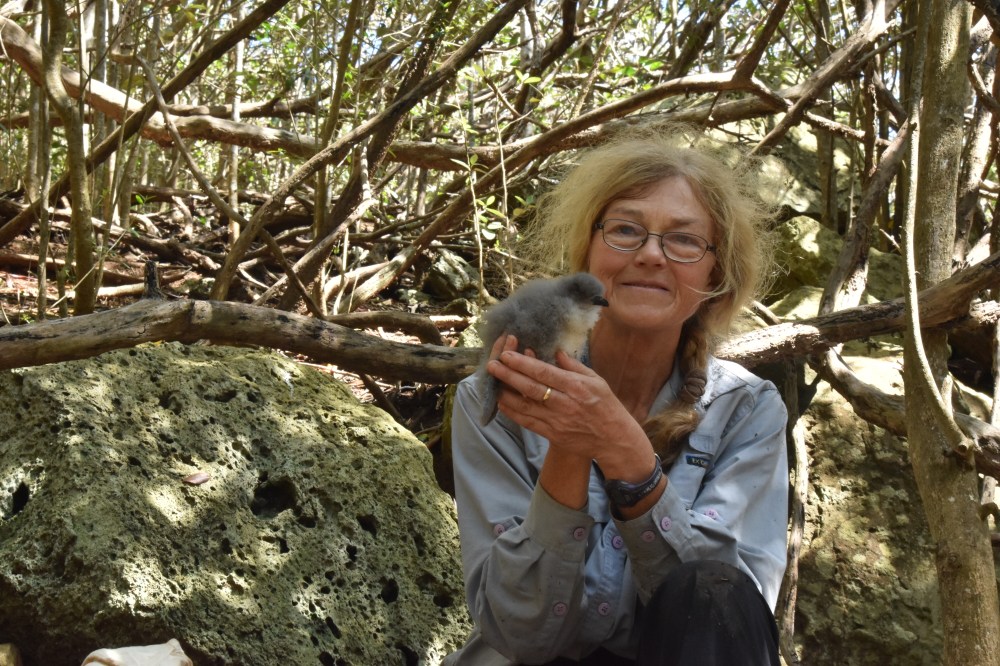
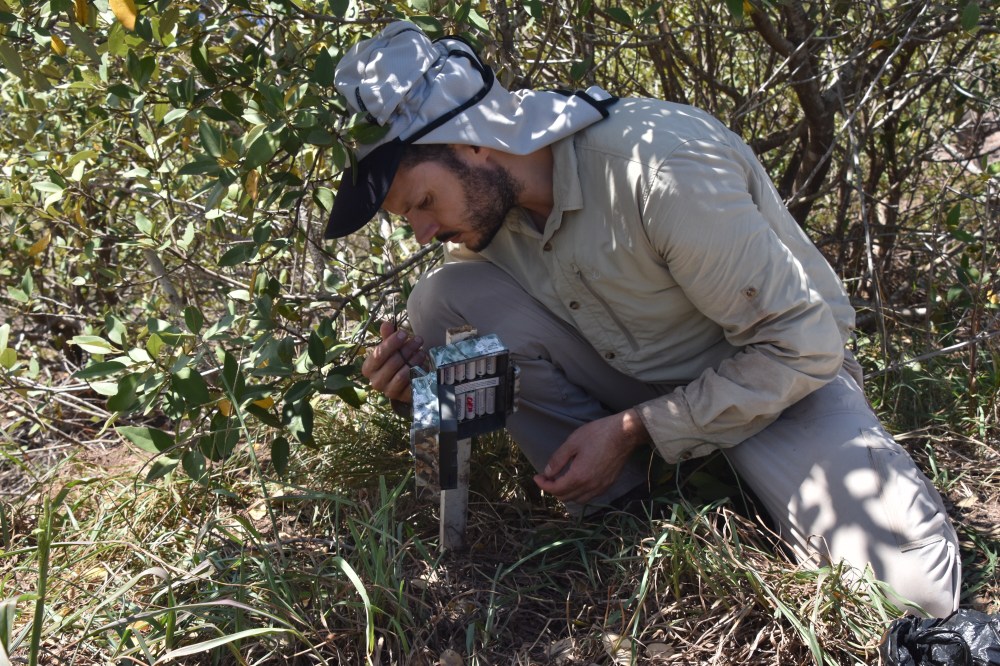
Luke is very systematic and has detailed notes regarding chick growth, banding, tagging and each study nest. He needs to keep track of 60 Black-winged Petrel nests and 25 White-necked Petrel nests and sort out which birds have which tags and when the tags should be removed, batteries replaced and deployed again. Some nests are “controls” where chicks are monitored for growth, but do not carry GPS (Global Position System which are heavier tags with an antenna) or GLS (Geo Locator System which works on daylight/night sensing) tags. The control sites have infrared cameras posted nearby to check on comings and goings of adults.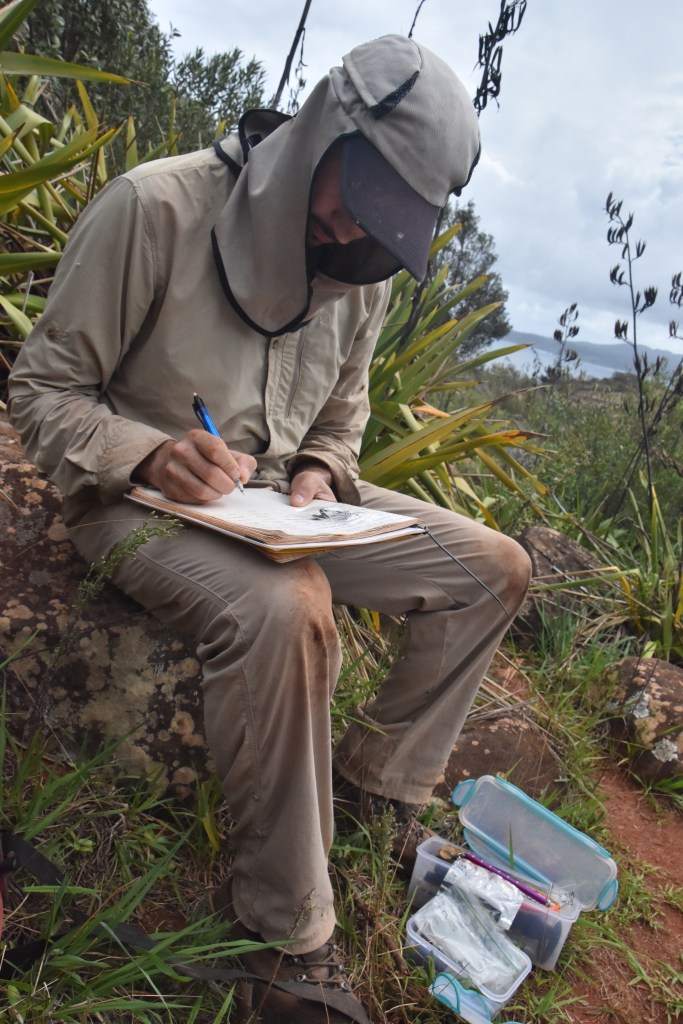
Luke’s study involves tracking the foraging flight paths of both species during the breeding season with the GPS tags and looking at annual flights with the Geo-locator tags. Seabirds are basically sampling the ocean over wide areas and can be used as indicators of marine health. White-necked Petrels are listed as a vulnerable species by the IUCN and they only breed on Phillip and the Kermadec Islands. They are large bodied seabirds with long wings and the white neck, weighing in at about 400 to over 500 grams. 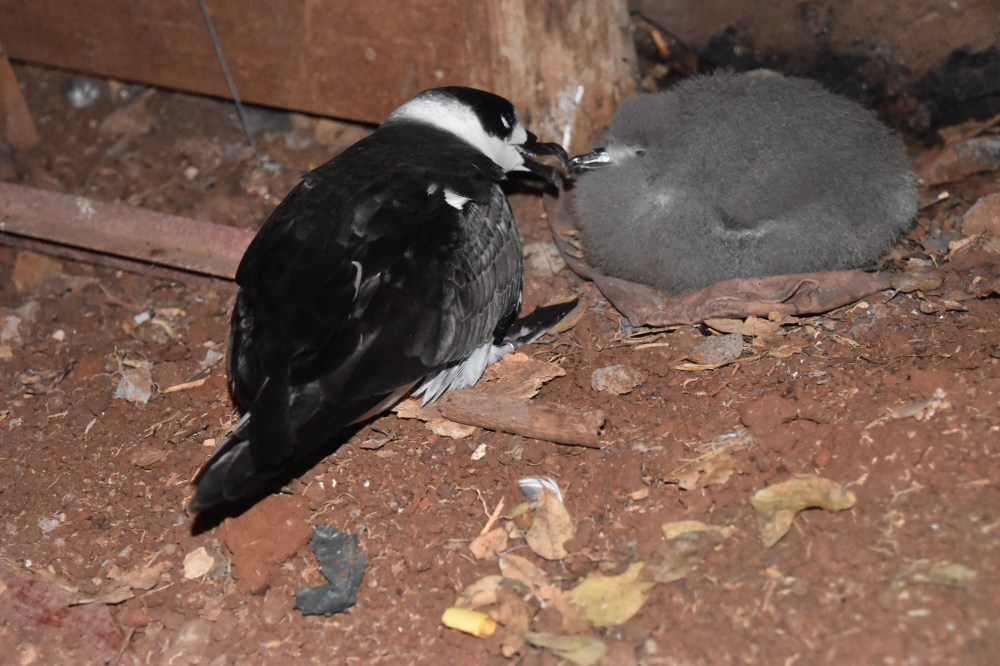
The Black-winged Petrels weigh much less, running in at around 250 grams.
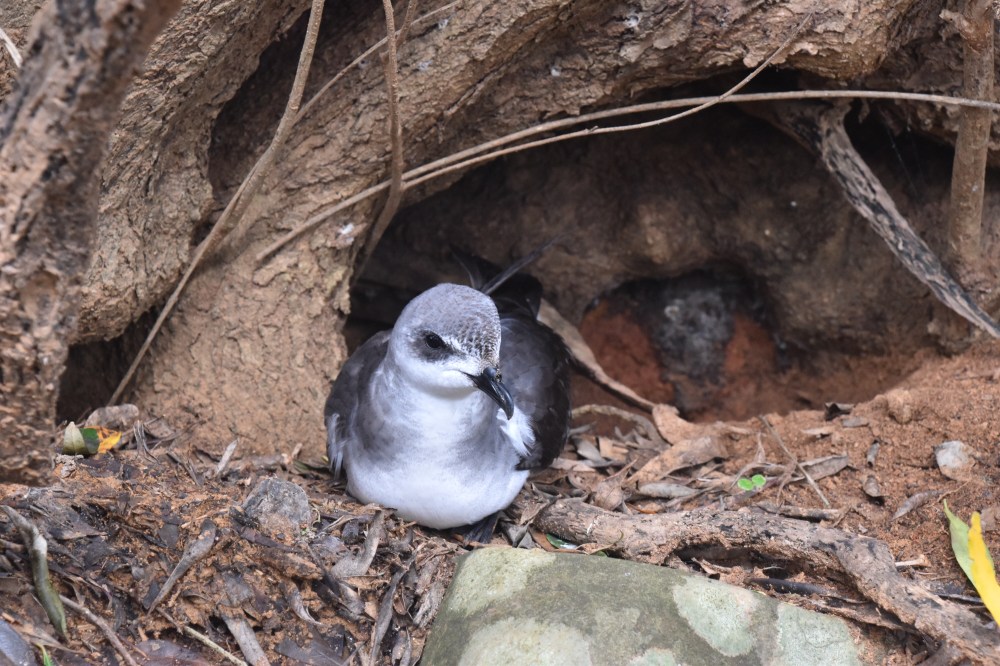
Luke is also tracking the food web of Phillip Island through use nitrogen and carbon isotopes of a range of species and how they fit into the food web. For example, Luke noticed giant (up to 23 cm) centipedes feeding on chicks by biting them on the neck and going for the brains. 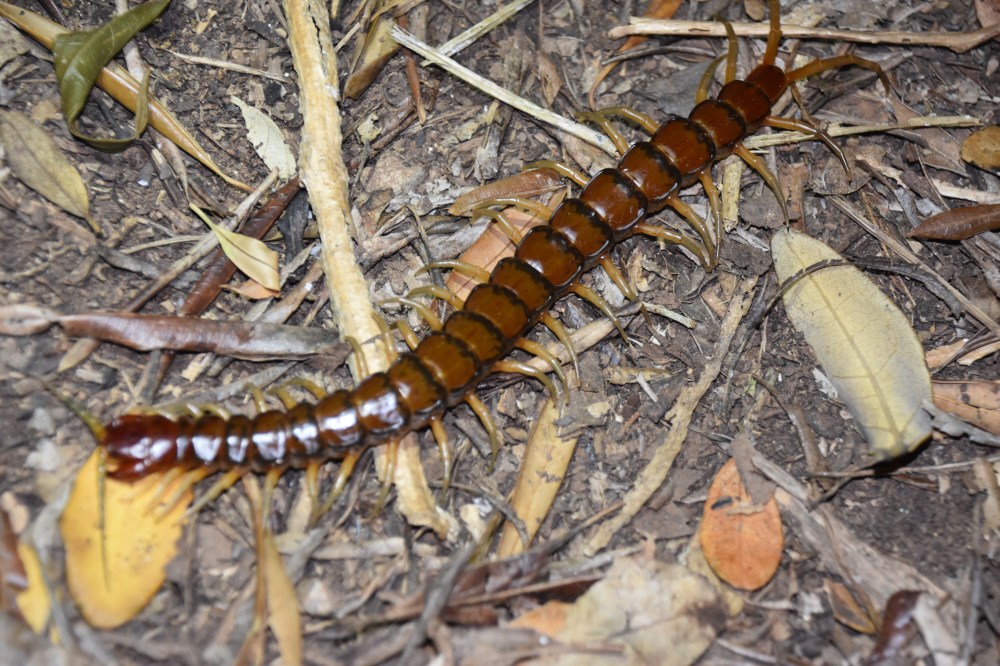
11 chicks out of 50 chicks sampled in 2018 were killed by centipedes that are only found on Phillip and Nepean Island. Luke informed his PHD supervisor at Monash University and then Daniel, a keen young Honours Bachelor of Science Student was brought over to study the populations, ecology and habitat preference of Phillip Island giant centipedes. These frightening looking creatures may well be at the top of the food pyramid on Phillip Island if they eat a significant number of seabird chicks!
Daniel goes out for hours each night tracking and marking the golden burnt sienna coloured centipedes by daubing them with different colours of paint. The creatures have managed to rub some of the paint off their scutes, but those that have been resighted seem to remain in a very small area near seabird burrows.
The Parks employees, Roscoe and Joel sharpen chainsaws, don protective gear to cut the invasive olive and then spread branches over gullies. It’s very hot and hard work as the olive is very pervasive and widespread. There is a management plan has divided the island into different geographic areas with differing treatment plans based on presence of seabirds, rare endemic plants and steepness. 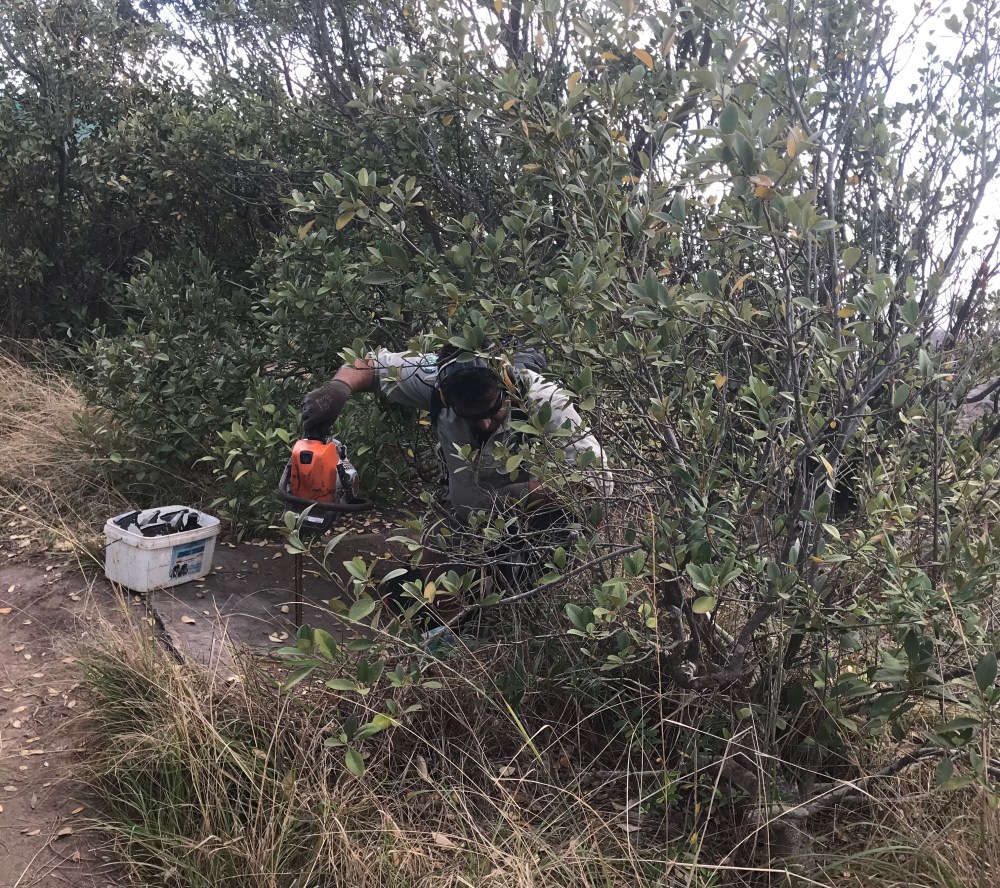 Rossco with chainsaw cutting invasive olive from under shrub White Oak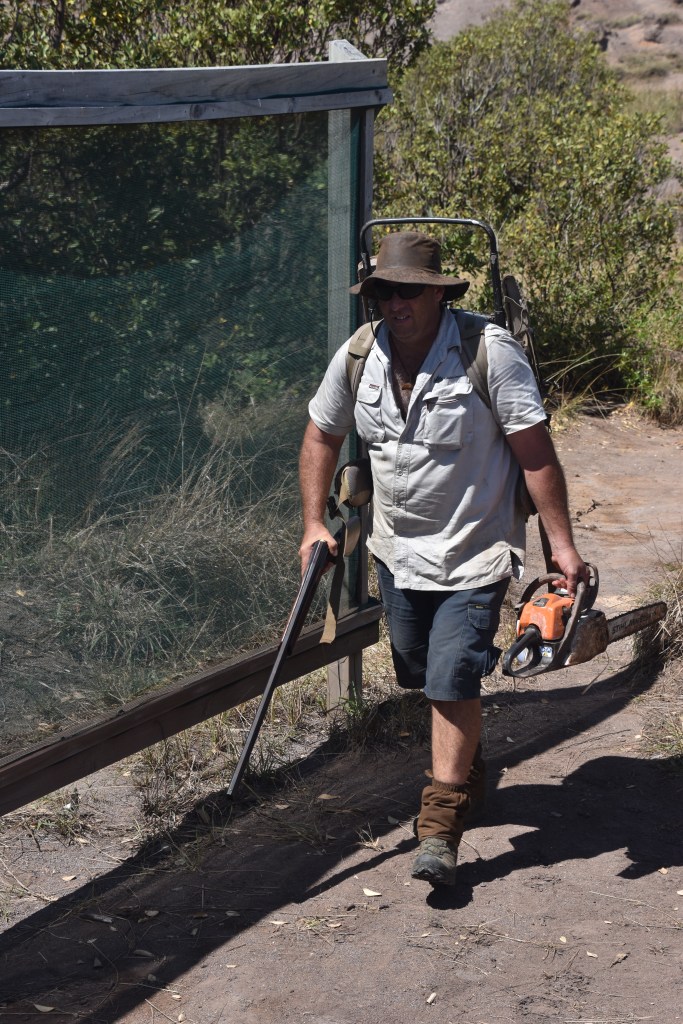
Part of the ranger’s program is to try and reduce the number of Tarlars (Australasian Swamp Hens) which predate on the petrel chicks. These vicious chicken sized birds attack the chicks and are particularity adept at running fast and hiding under bushes to evade the rangers. Mel is trying a sort of spring trap, baited with biscuits. However in the 2 nights they were set, the tarlars neither took the bait or even went near the traps.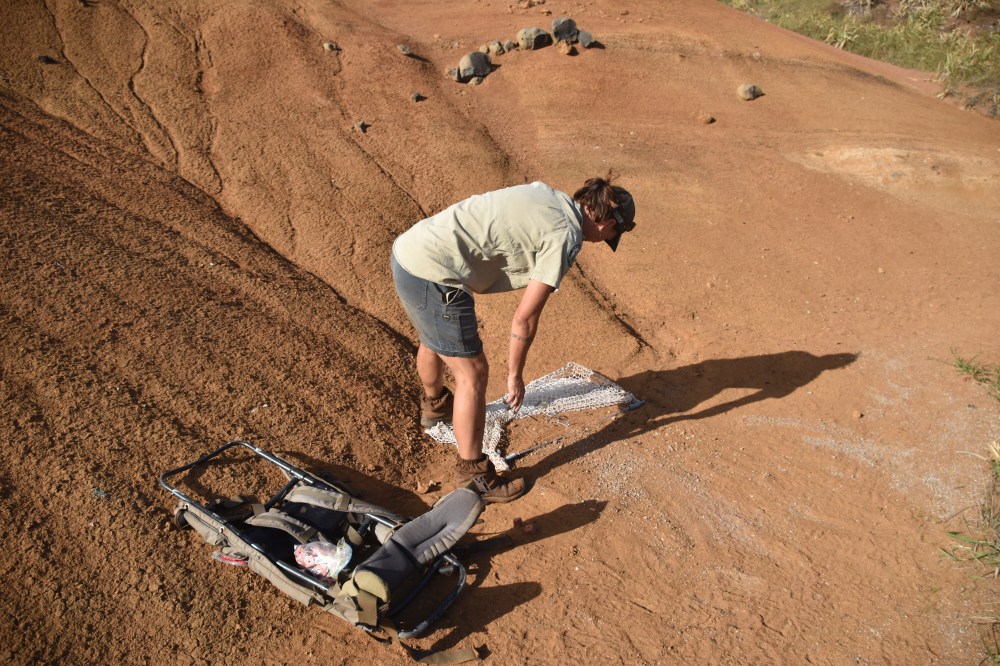
Mel setting a spring trap, baited with biscuits to catch a “Tarlar bird”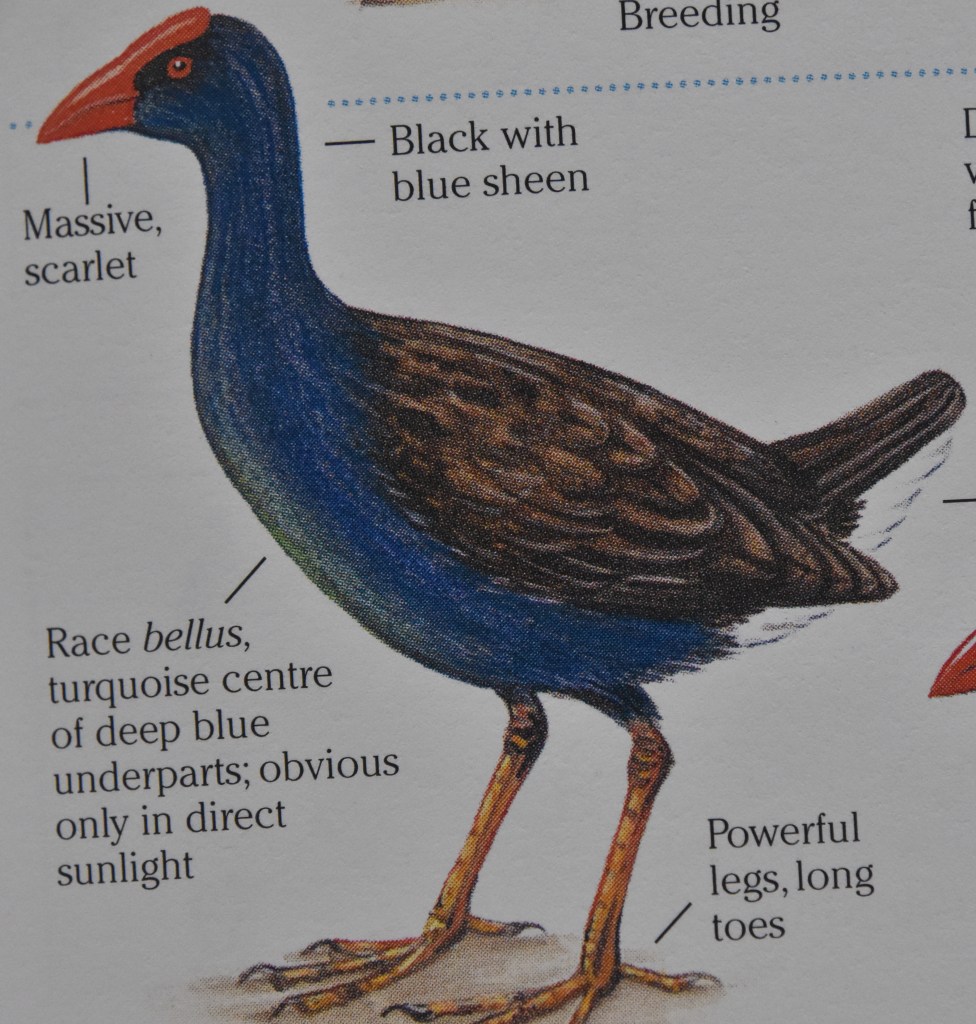
By about 5 pm, the sky darkens slightly and gradually fills to a cacophony of seabird calls. The Black-winged Petrels chattery call can be heard everywhere and they begin to land and come into burrows. Kermadec Petrels undulating call “twee tuu ooh” is heard in spots and White-necked Petrels are quieter but occasionally have a melodic knee-kaa-kaa. We have early dinner and head up the trail to check the burrow traps of Black-winged Petrels for returning adults and check the more open nests of the White-necked Petrels. There is a gentle breeze as we stand out on one of the ridges, just long enough for me catch my breath and wipe sweat from my brow. It’s kind of a wondrous scene: crescent moon, Norfolk Island lights in distance and silhouettes of petrels swooping. Once in the colony areas, one has to be mindful of the delicate burrows, especially in the sandier areas where the roots don’t bind the soil. Luke checks the burrows with a bright torch to determine if the adult has returned to feed the chicks. He wants to remove the GPS satellite tags from some birds to download the 2-3 week foraging tracks. The satellite GPS tags are slightly heavier, have a 3 to maybe 4 week battery life and have an antennae that extends down the tail feathers. 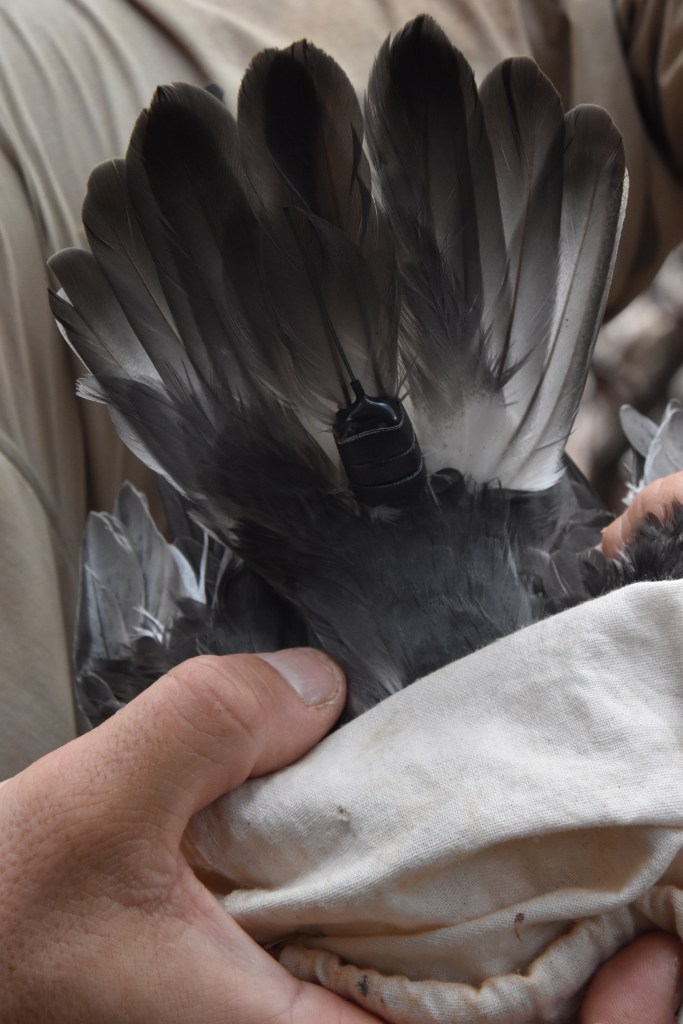
Luke carefully attaches the GPS to the middle tail feathers, while I hold the bird carefully so he can precisely attach the transmitter. I am impressed with Luke’s steady hands and methodical approach, especially this late at night! One of my jobs is “staking out” 2 White-necked Petrel nests in Owen’s hut. Owen was an eccentric naturalist who lived high up on Phillip in a white oak gully, that he made into a eclectic hut made with miles of ropes and multiple tarps. It is full of White-necked petrels nesting under mini laying boxes, roots of a giant oak and under bits of board. Until it rained, I wondered why such beautiful birds choose such a spooky place to nest.
We return to the station after about 4 hours work. The rangers are snoring away, so we do our best not to wake them. Luke downloads the GPS tags that we’ve retrieved and I go for a shower to wash off sweat, re-gurgitated squid from a White-necked Petrel chick and various other dirt from the colony. This field camp is luxurious by some standards with solar electricity, propane hot water and cooking and rainwater that is stored and treated in 3 large tanks. Still, sleeping in a tent was more appealing than in the cabin bunks with the rangers who rise at 5:00am. Night was lovely with a fresh breeze, petrel calls and in early morning “ghost birds” (Wedge-tailed Shearwaters) mewing hauntingly.
The next day (March 13th) was again beautiful and we were woken by Mel’s laughter and raucous joking around. Joel and Roscoe prepared for more sawing of olive and Mel was going out to check her Tarlar bait stations and traps. Luke and I followed a similar routine to the day before, but focussed on weighing Black-necked Petrel chicks and resetting traps in burrows. Dinner precedes sunset and we head up the slope under the Southern Cross to check for returning adult petrels that may be already tagged or require tagging. Luke has some success in recapturing a Black-winged Petrel with a GPS tag and instructs me in holding the bird while he delicately removes the tag from the tail-wing feathers then attaches the GLS tag to the leg, so that this bird’s movements can be followed until December when the tag will be removed from the re-captured bird. 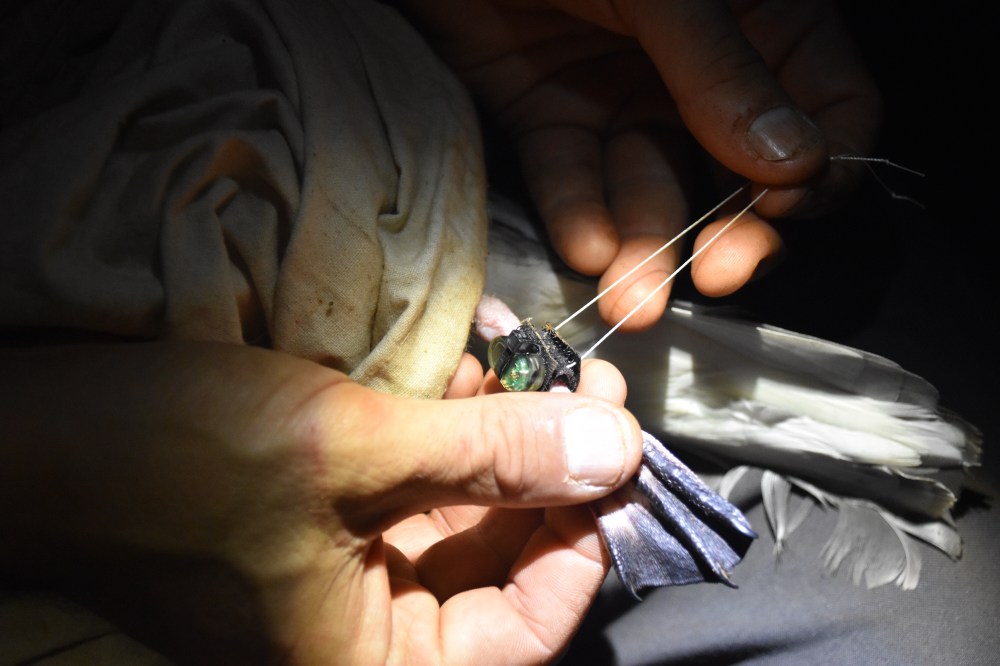
This night is cooler, which should foretell the coming day.
March 14th is the day a group of Norfolk Island high school students are coming out to Phillip Island. Luke has warned me this will be a slower day as he weighs the chicks only every three days, so as not to stress them. So I follow Mel down to the Stoop to check her traps and go with Joel to help the kids dis-embark. Without a great load, and morning sun, there are excellent photo opportunities of Grey Ternlets courting and Masked Booby chicks. The school group arrives all clean and enthusiastically throwing runners off the boat in the swells. On the way up Joel provides an excellent overview of the geology, history, management, erosion issues and the massive effort to do restoration of this island ecosystem. 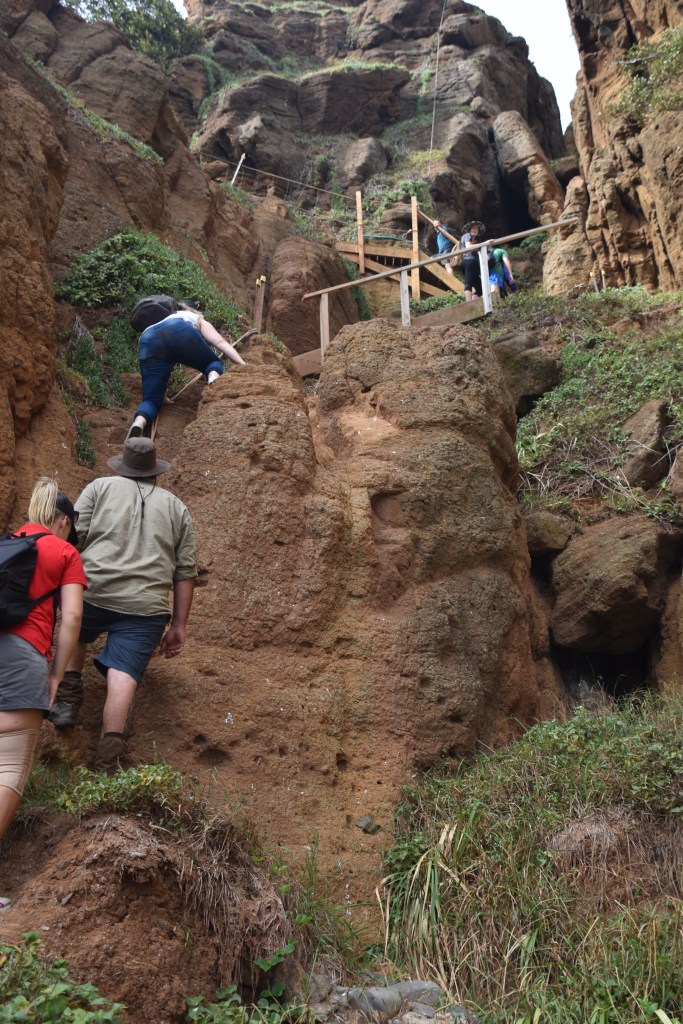 Norfolk students and Joel climbing up to camp
The teachers stress the opportunities to volunteer for work experience. Really, our only hope is inspiring this next generation to carry on and provide innovative solutions to conservation problems.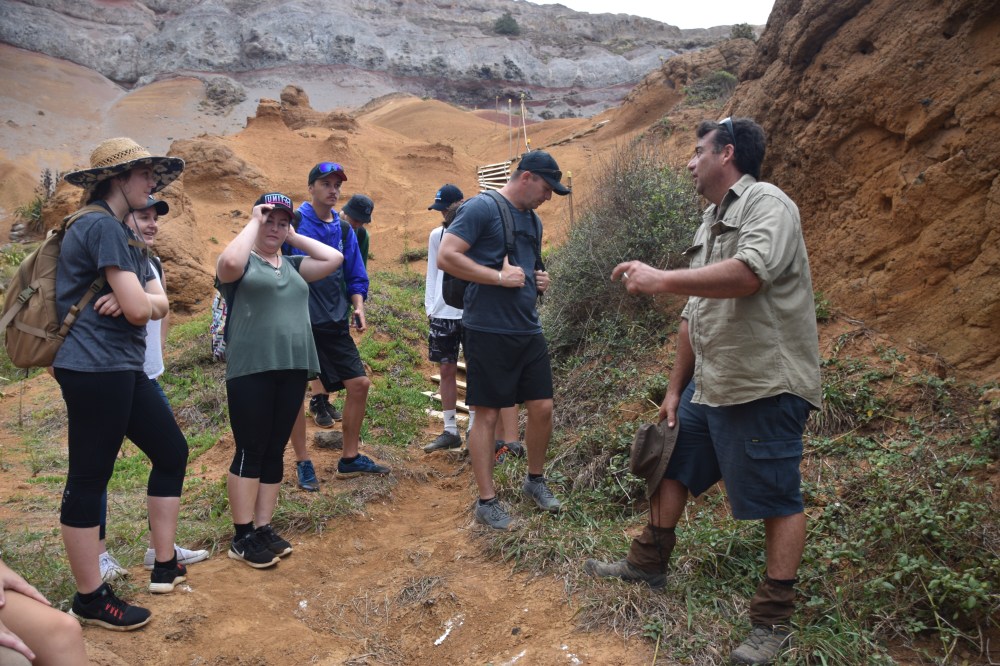
The teachers have the students working on describing food webs, undertaking transects and taking samples of soils near the camp. Just before they are about to head up to the summit the sky darkens and wind rises. Daniel and Luke describe their research to the students and it begins to rain. The teachers decide its time to go up to the hills to conclude the field program. While they are out, lightening strikes across Red Valley, then thunder roars. Sideways rain deluges the slopes and really doesn’t let up. Just when one thinks its as bad as a storm can get, the rain pounds harder. 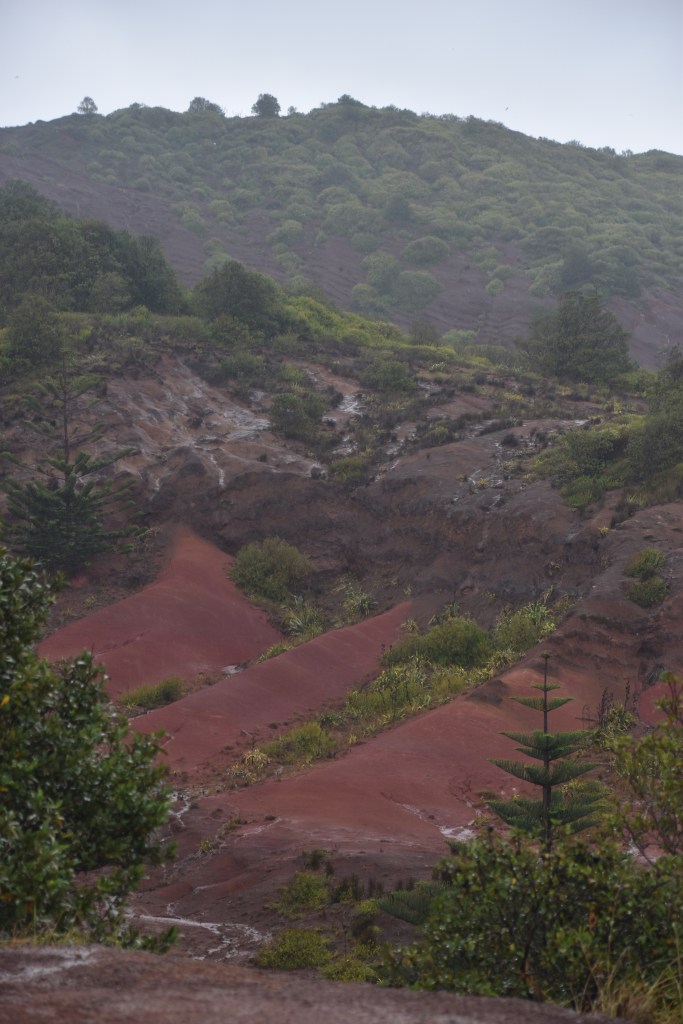
Those at the cabin take shelter but even the porch gets drenched. We worry about the students in the pounding rain and crazy wind. Are they going to be able to navigate the muddy paths safely? Will they be able to get on the boat? Will Bigze even come in this weather? Maybe the 12 of them will also have to stay overnight. How crowded can it get? Within the hour, the first 3 lads dash in, some falling in the mud by the cabin. Roscoe provides them with towels to dry off, they laugh, then reluctantly squeeze out shirts as it doesn’t seem cool to expose themselves.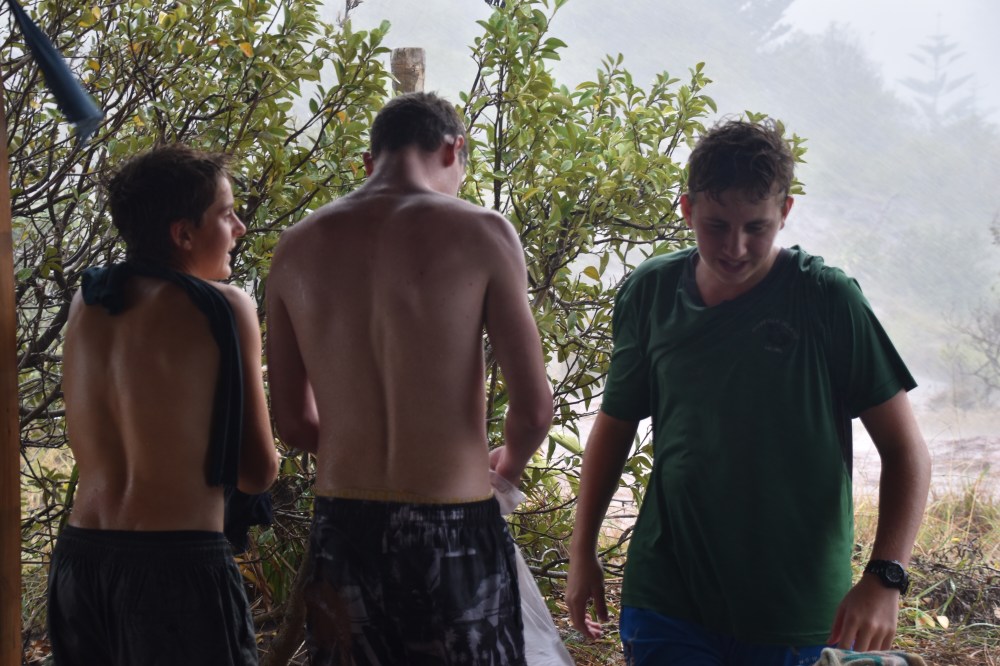
A little later the teachers and girls arrive splashing and scraping off mud. Everyone huddles on the porch. I decide tea is in order, so put the kettle on and brew up a storm of sweet hot tea. Calls are made to the boat driver and they wait for a “window” to head out in. The kids all laugh nervously but say “it’s all part of the experience” and Rowan the geography teacher says “lightening wasn’t part of the safety plan!” Eventually Joel decides its sort of a “window”and rallies the students to head down to the stoop. We look down on the frothing sea below. Hopefully, they’ll get across to Norfolk OK with Bigze who is a well experienced driver.
Luke and I pick the only window in the relentless storm to head out to remove traps and check on the study petrels. At the second nest of a Black-winged Petrel, Luke calls me over as the eroding soil has completely blocked a burrow! He digs out the burrow, removes the silt laden trap and feels for the chick. Very fortunately, the chick is above the level of the entrance and is dry in the nest chamber. We makeshift erosion blocks for more rain coming and hope this works to keep the burrow from flooding again. 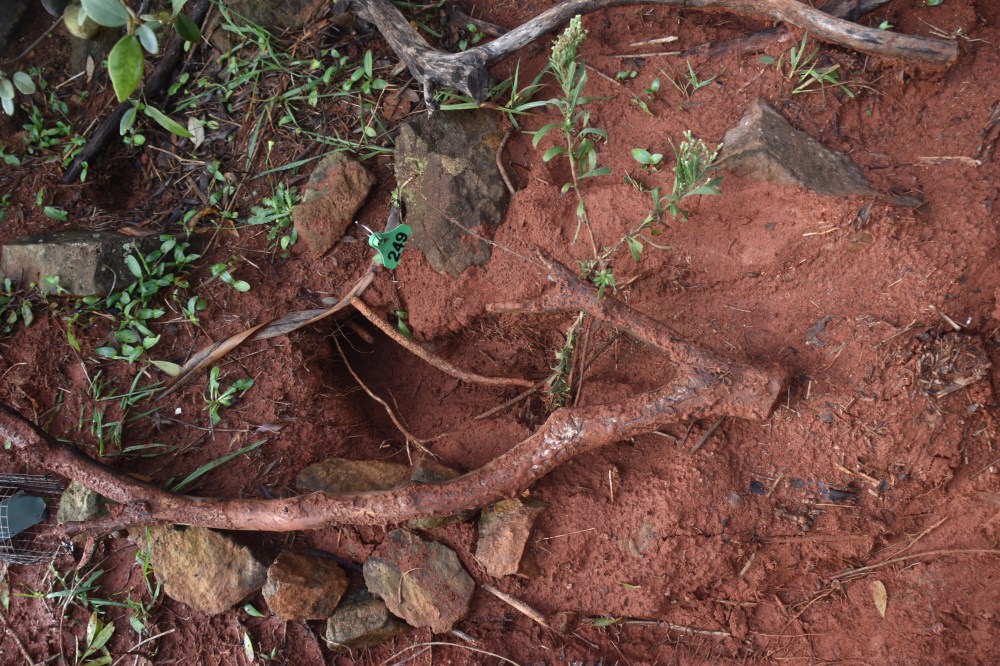
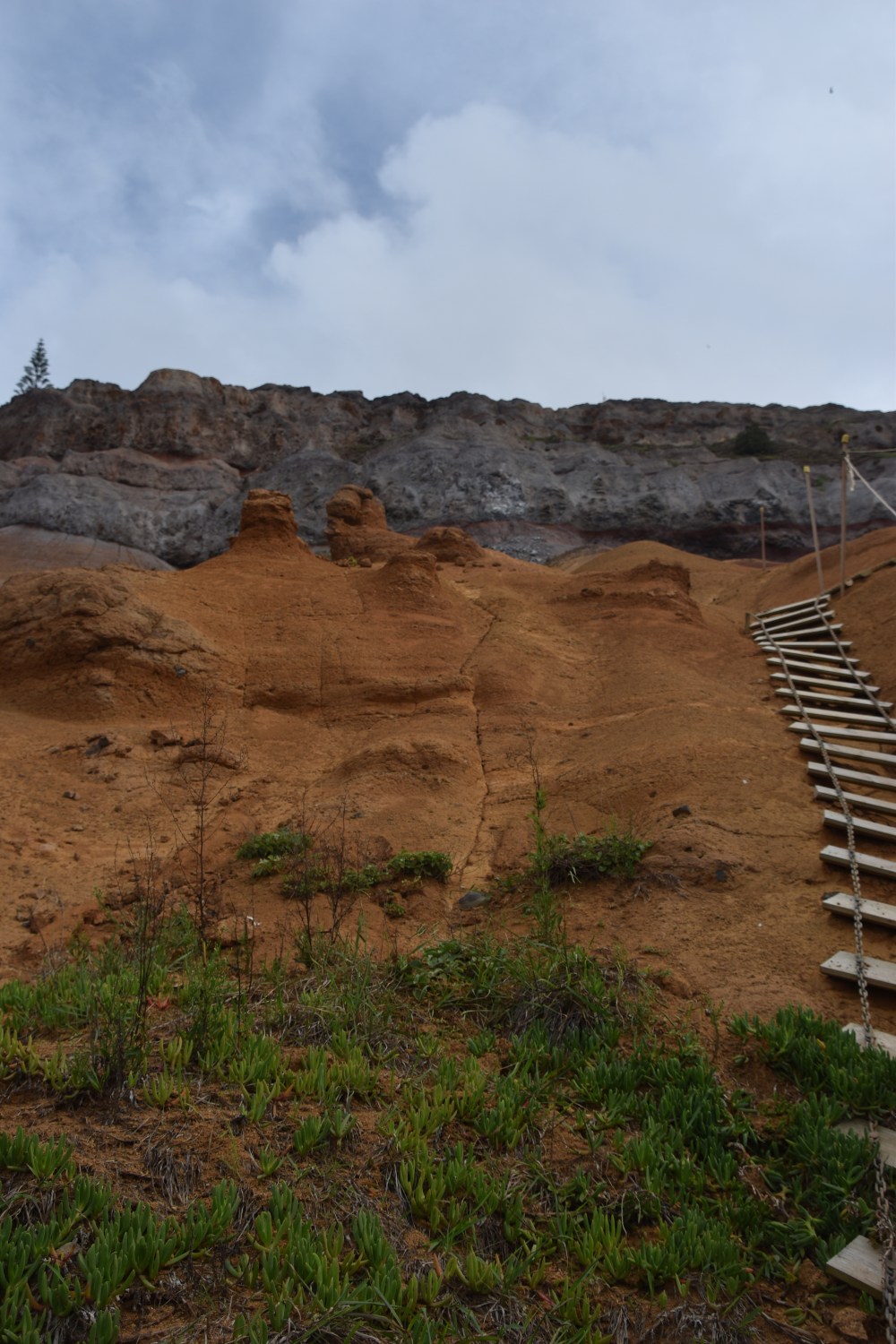 As we work to take out all traps, we encounter adult Black-winged Petrels outside (they visit burrows day and night) and trapped birds, so Luke is able to remove a GPS tag and put out two more GLS tags. There is so much soil erosion on the trail and slopes that are not vegetated, that the going is very slippery and difficult, especially trying to avoid treading too hard, then crush a tunnel or burrow. Today I feel less hopeful about the success of these beautiful birds as Luke shows me a chick that was mauled at the neck by a Tarlar bird and one bedraggled wet chick outside its burrow that had a wing wound with blow-fly maggots.
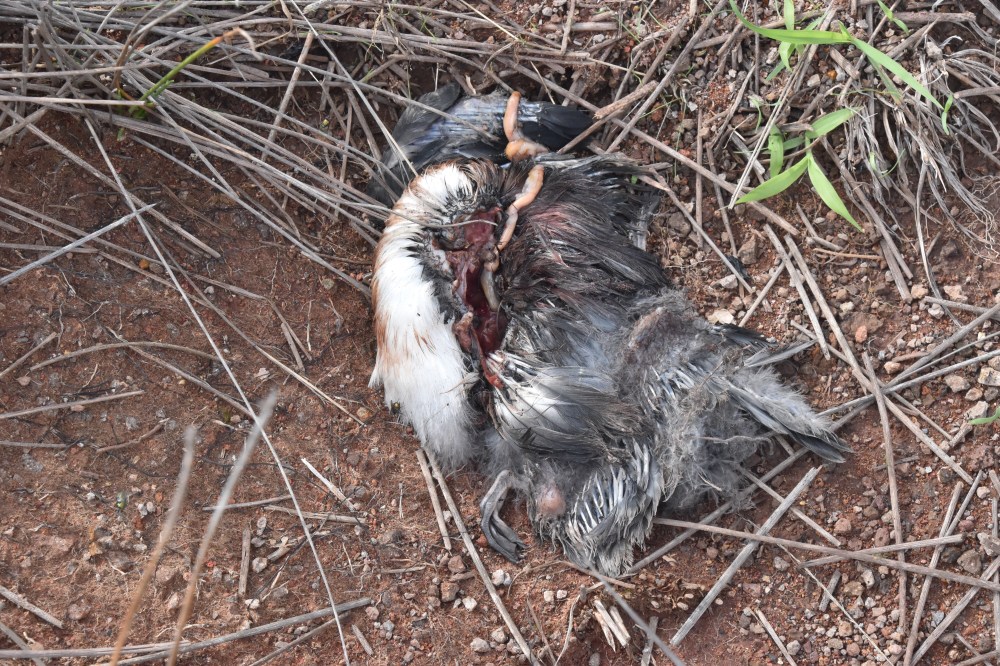 Really these seabirds face so many threats that ultimately that track back to human foibles: climate change increasing the frequency of these storm events and warming oceans which decrease forage food productivity, erosion which knocks out burrows and huge amounts of habitat, introduced pigs, goats, cats and rabbits which further knock down populations and nesting habitat and then the native predators are able to make significant cumulative population effect on nesting seabirds. The seabirds nest site choices are few and far between in the vast Pacific Ocean.
I make a stir-fry of the vegetables carefully hauled up from the Stool while the storm rages. Daniel ponders going out to his plots but is warned against sampling in the lightening and driving rain. The wet slopes are so muddy and slippery, he may not be able to get back from Long Valley. We try to content ourselves with reading, computing and eating, then retreat to bunks while the rain pounds
As usual I’m cozy in bed but awake before others. It seems to have stopped raining so I sneak out and attempt to clean up some mud and bits of garbage strewn around. There are muddy clothes soaking in ochre water, so possibly if they can be washed with the abundant water, they might dry . . . We all plan to go out before lunch, but the storm picks up force again driving against the almost dry tent. Luke made some new Velcro, zap strap and aqua sealed GLS tags while Daniel and I try to remain calmly occupied in the cabin. We mostly eat and make coffee. . .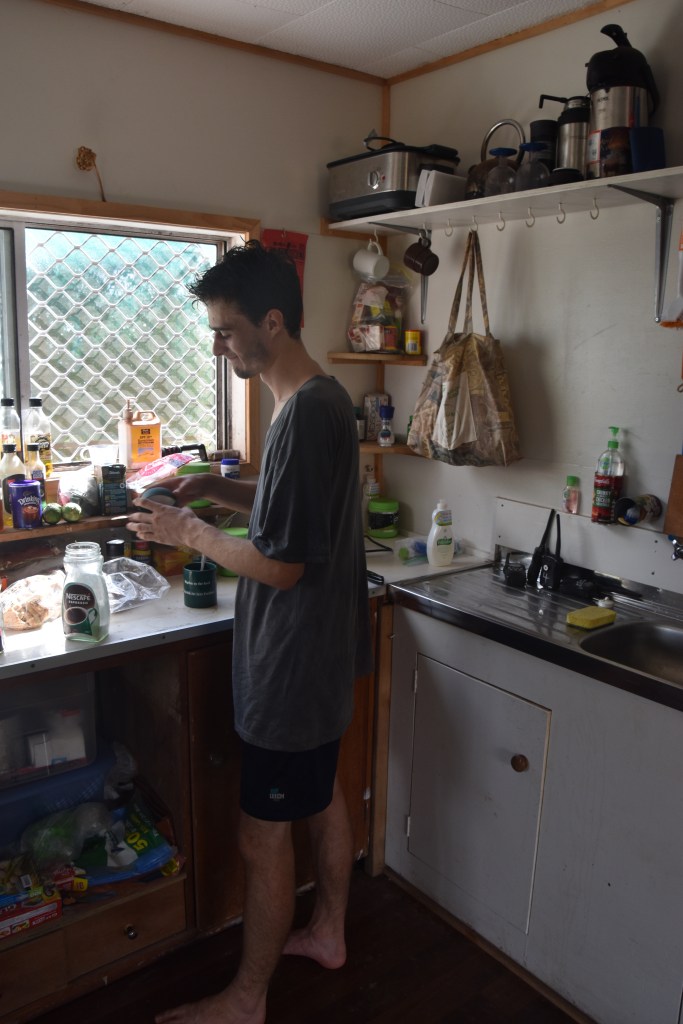
At one lull in the storm I venture from the cabin with camera out to the rolling eroded plateau overlooking Norfolk Island. The sea is crazy rollers from the west and I duck back into the cabin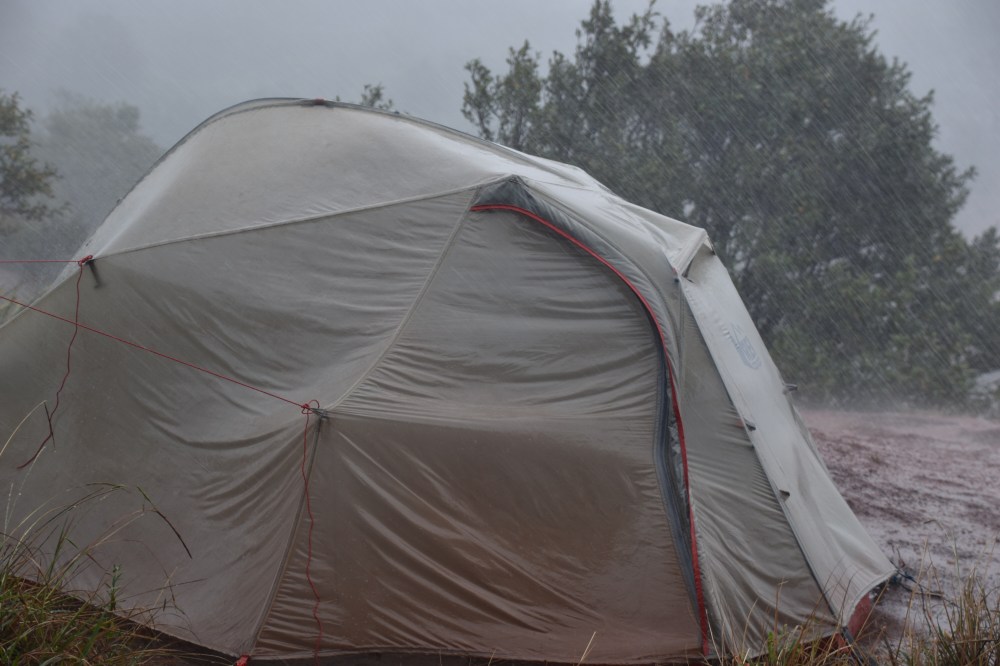
It rains all day and it is so bad we cannot go out that night. Apparently it rained 25 cm over the three days. Luke and I dig out a flooding covered burrow near an upper rain catchment area and try to divert water and mud away. There is a chick in this burrow that seems to be in an upper dry chamber. Black-necked Petrels come in by evening but we can hardly hear them over the rain. We all stay in the bunks in the cabi
Although the day dawns with more promise, it begins to really rain by about 11:00 am. We try to occupy ourselves with cooking, Sudoko and reading. However, this is about driving us crazy (at least me). Cabin fever is setting in by day 2.5 of deluge. I chuckle to myself that Margaret at my fitness class said “Trudy should be doing core exercises while sitting on a sunny beach under a coconut tree” We couldn’t imagine this South Pacific deluge and mud scene in a hundred years!
By afternoon, we are going stir crazy and vow to go out no matter what. Daniel cooks an early supper of stir fry, then we all slowly get ready as the rain pours down and the muddy slopes erode away. 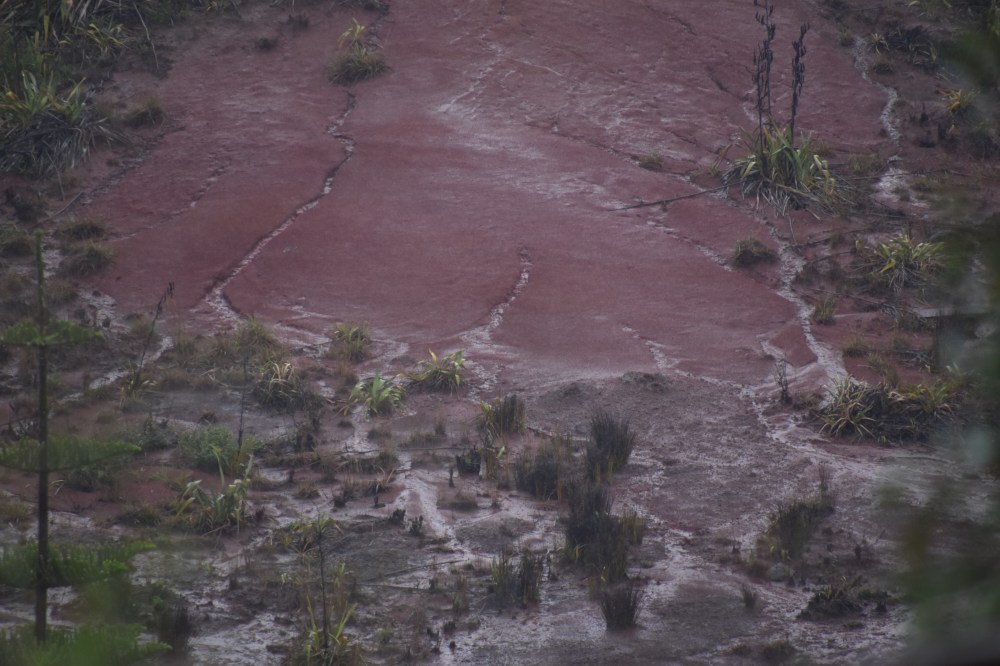 The rain is so intense that I can’t even venture to go and check the tent or the recently flooded burrow in the morning. Eventually in the evening we all vow to go out even though we can’t weigh chicks in the rain. We get ready very slowly as new downpours start up just as we want to go out. I wear just raincoat, quickdry pants, water sandals, headlight and I-phone in its case.
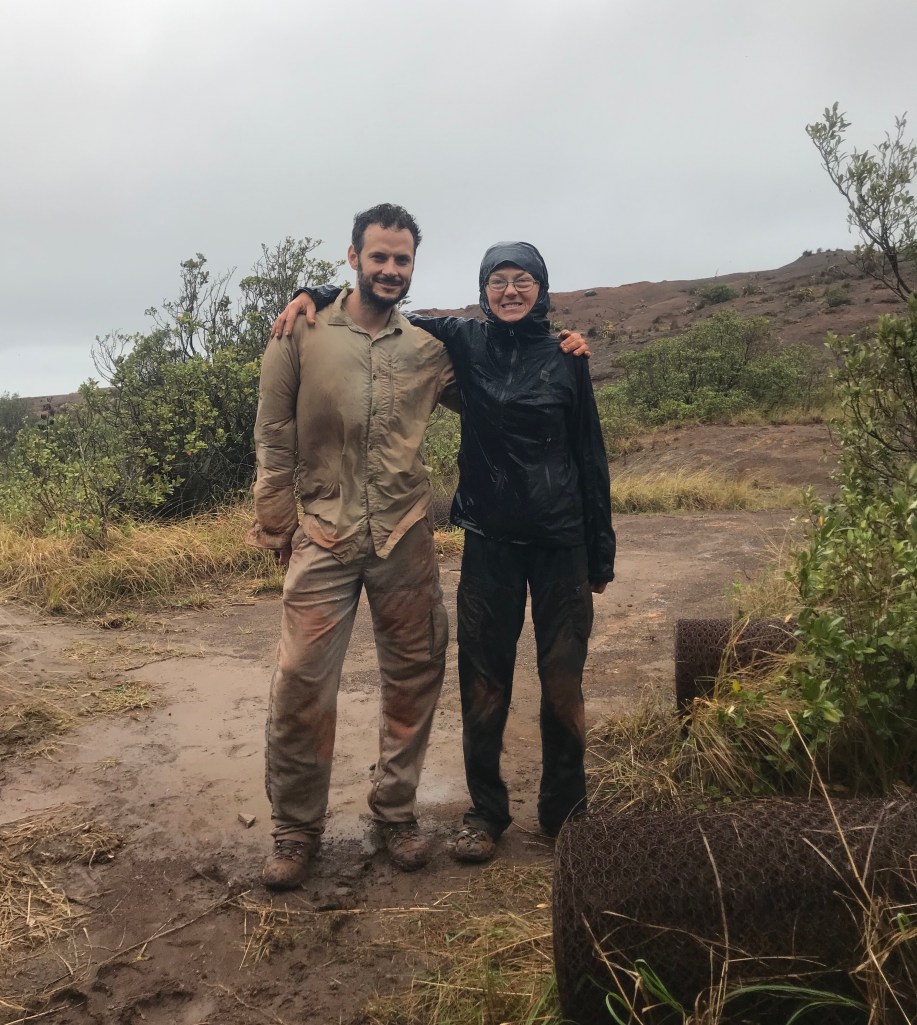
By the time we go up there are veritable rivers, running through the plots, centipedes are everywhere, the little chick in dug out burrow has drowned and I find a very wet chick in one of the rivers.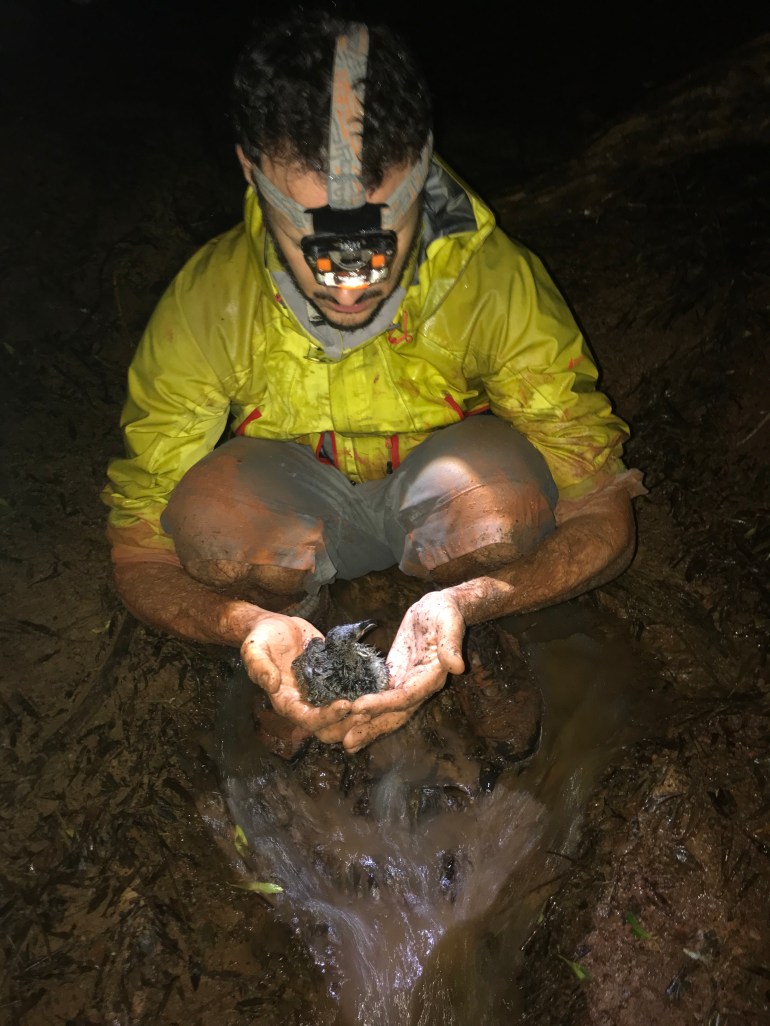
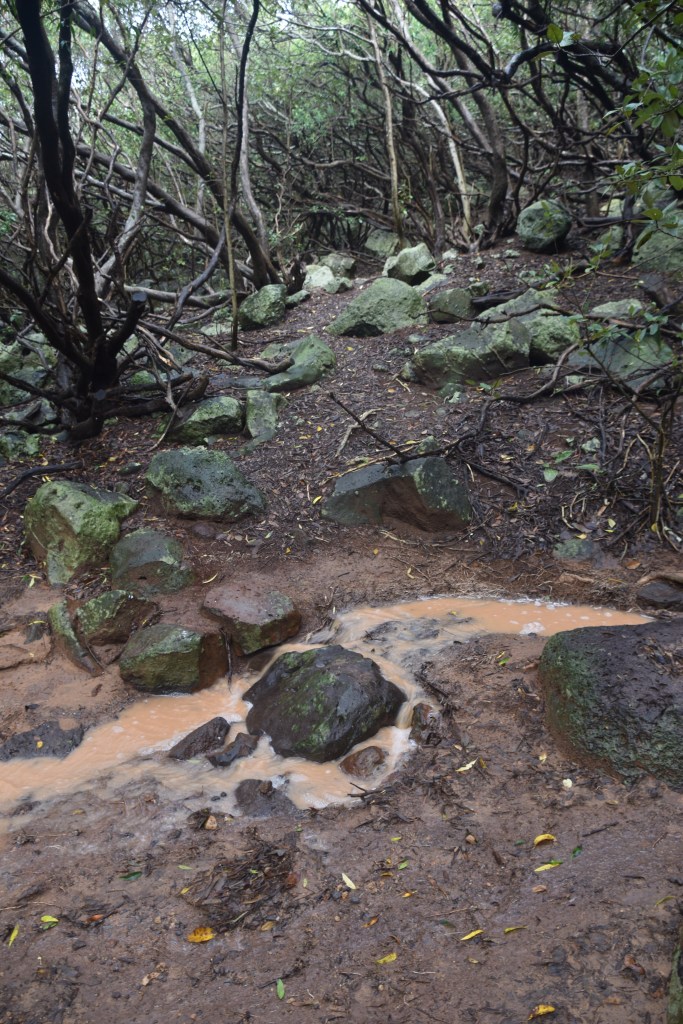
Rivers of muddy water flood through Mordor and trails
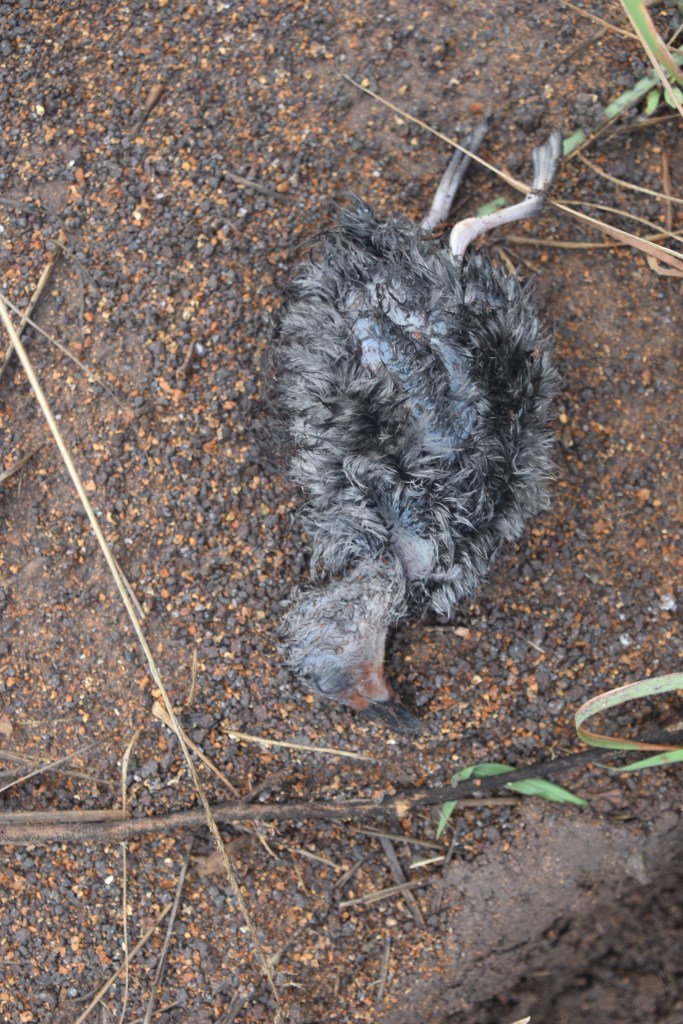
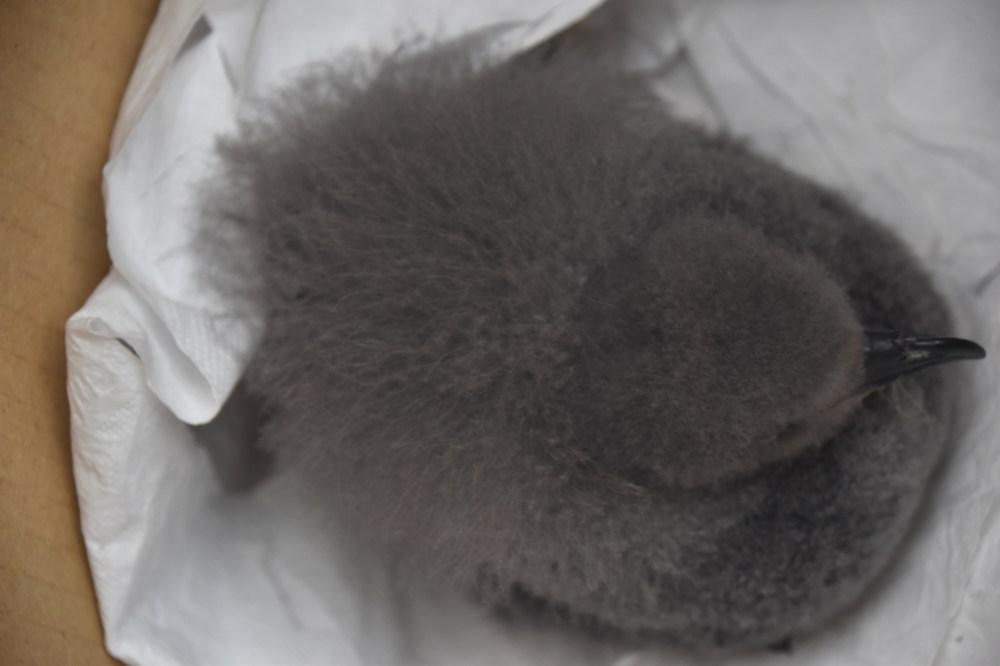
Luke thinks it came from the burrow with the “twin” chicks, so I take a special interest in this crying wet chick. In all, we take in 4 Black-winged Petrel chicks that night and put them in dry boxes to dry out in the covered greenhouse.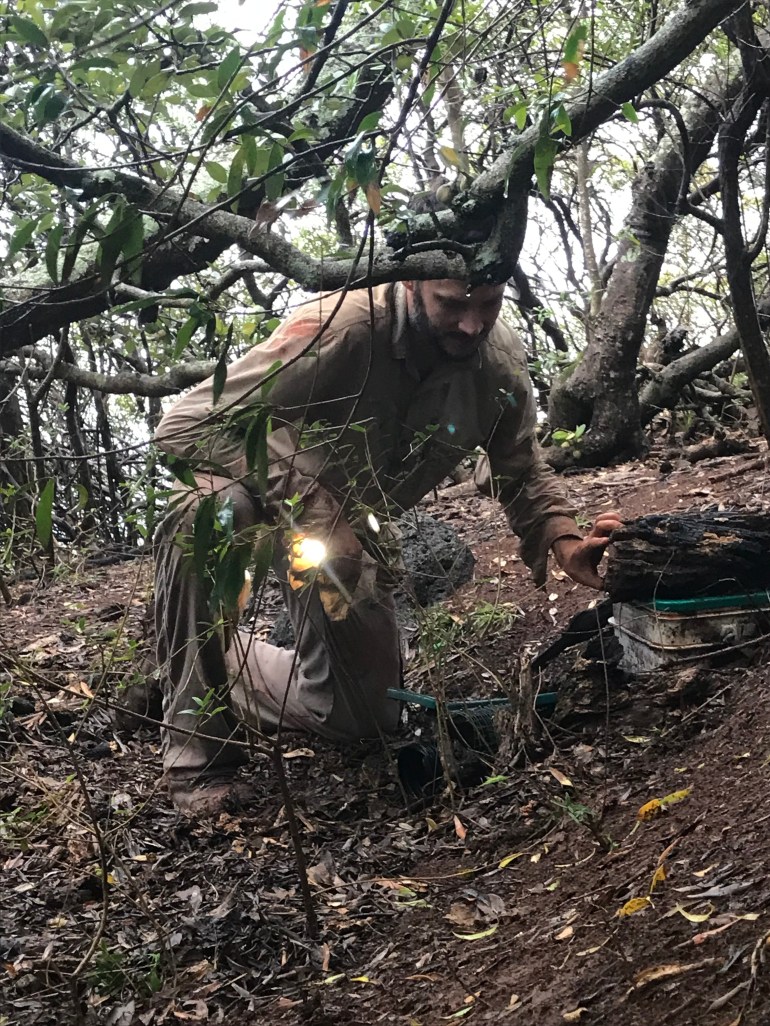
With a renewed appreciation of Owen’s tarps, we are covered in the White-necked Petrel colony, even if it is a smelly dank spot. We slide down the hill in the red clay. Even the rope steps don’t help much and we get back to the camp in a red muddy mess with inches of mud caked on our boots, red mud streaks everywhere. The luxury of the hot shower eludes us too, as the excess water and crazy humidity likely affected the shower polarity
March 16th, 2019
Another day of rain and storm with some breaks in between. Gusts of easterly wind are crazy today and water pools everywhere around cabin. We watch erosion in action, streams of muddy water pouring down the bare red ochre, golden and brown raw slopes. Early in the morning I go out to check the chicks in care. My little Black-neck Petrel has fluffed up entirely and is peeping eagerly for someone to feed it. It seemed good to be able to help this chick, although we had no way to feed it. I venture to look out over the ocean between Norfolk and here. There is a large brown mud plume down in the Stoop bay that almost to the point. The slopes that first impressed me with their vibrant colours were in reality a scene of destruction. Norfolk Island has lost over 2 metres elevation in the last century due to erosion. Over this one storm event it has probably lost another 10 -15 cm in the non-vegetated areas.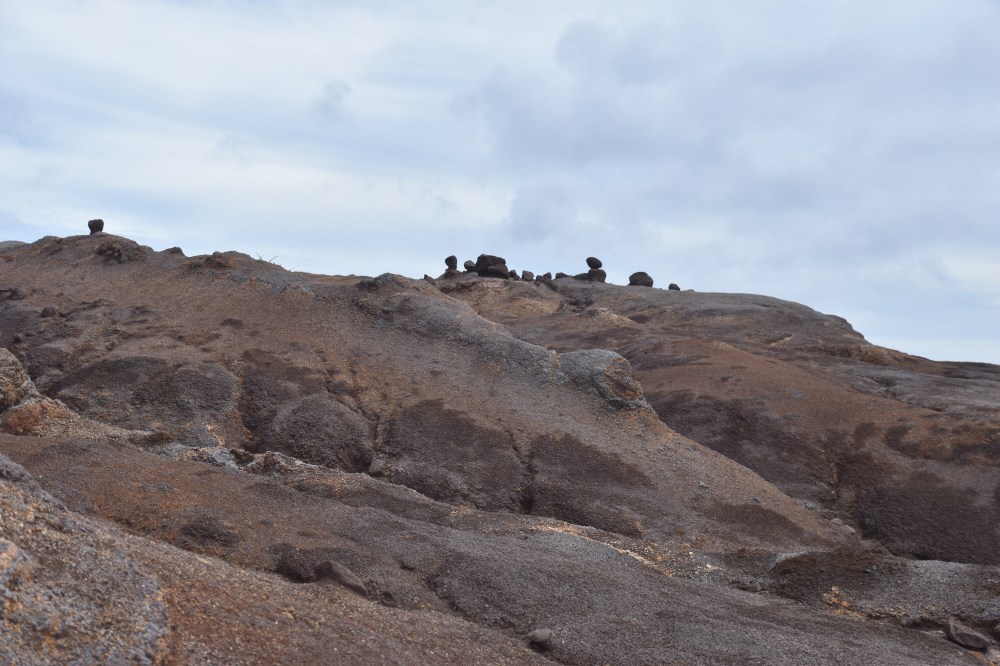
This morning, there is no water coming from the tap. With all the rain filling the 3 huge barrels there should be lots. Luke tries to turn on lights to no avail. Likely there has not been enough sun to recharge the large solar panels and battery bank. Luke gets out the generator to recharge battery bank. In the meantime, I make coffee on the one burner stove.
The morning is OK until about 11 am when the heavens open again. Back to the cards, books (Where Song Began by Tim Low) and Luke’s phone. Luke and I find a 2 hour window and go to check on Black-winged Petrel chicks and put in some traps due to the weather report that is only 30% chance rain! At the past flooded burrow we find an adult looking for its dead chick. I wonder if this adult could feed the chick in care? Luke has tried this relocation before and found it didn’t work well, but it was really our only option, given that we could feed the chick. So I go and get our chick in its box and place it carefully with the adult BW Petrel. It begs and quiets for a half hour while the adult foster parent presumably regurgitates and feeds it. Dinner is early so we can all go out so I return to camp as we all plan to go out. Daniel for his millipedes, us to at least remove traps and check on birds. However our dryish lull, ends right before dinner and rain pounds for 2 more hours. We still need to go out so brave the rain and fog for chicks sake. This is a low point of the entire trip as I find my chick drowned in the burrow as the recent downpour has flooded that burrow again! It is with real anguish that I see this now lifeless chick, covered in mud, when it had survived the river and recovered in its box. Luke despairs too over this work, mud and all that threatens the island. We finish off the night in fog and remove all the traps. Our clothes and boots are covered in the relentless mud. I retreat to the damp tent.
March 17th, 2019
Despite the night before, the night was rainless and it was lovely to lie in the tent and hear the progression of Black-winged Petrels, White-necked Petrels, Wedge-tailed Shearwaters ghostly moan and then the Red-winged Tropicbirds and Black Noddys.
I tried to deal with the mud on my clothes, new pack, shower, bathroom stall and camera case as best possible through washing with our excess water. This rather futile effort required planning to avoid bringing more mud to the porch and house.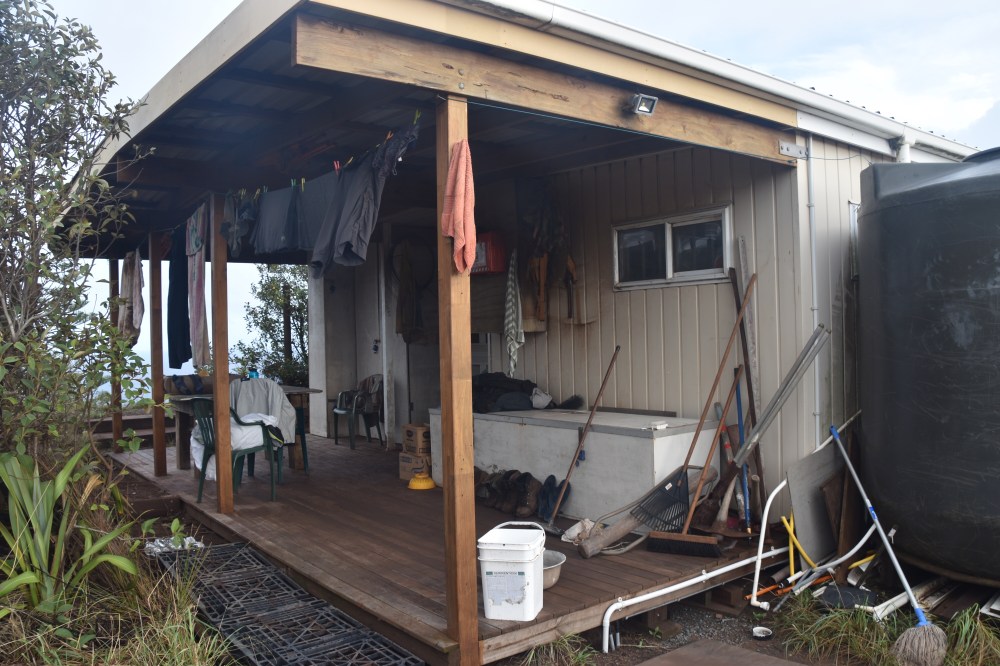
Luke announced we were going down to the Stoop where the Fisherman’s camp had a wifi connection. The trail down was so eroded that gullies were everywhere. 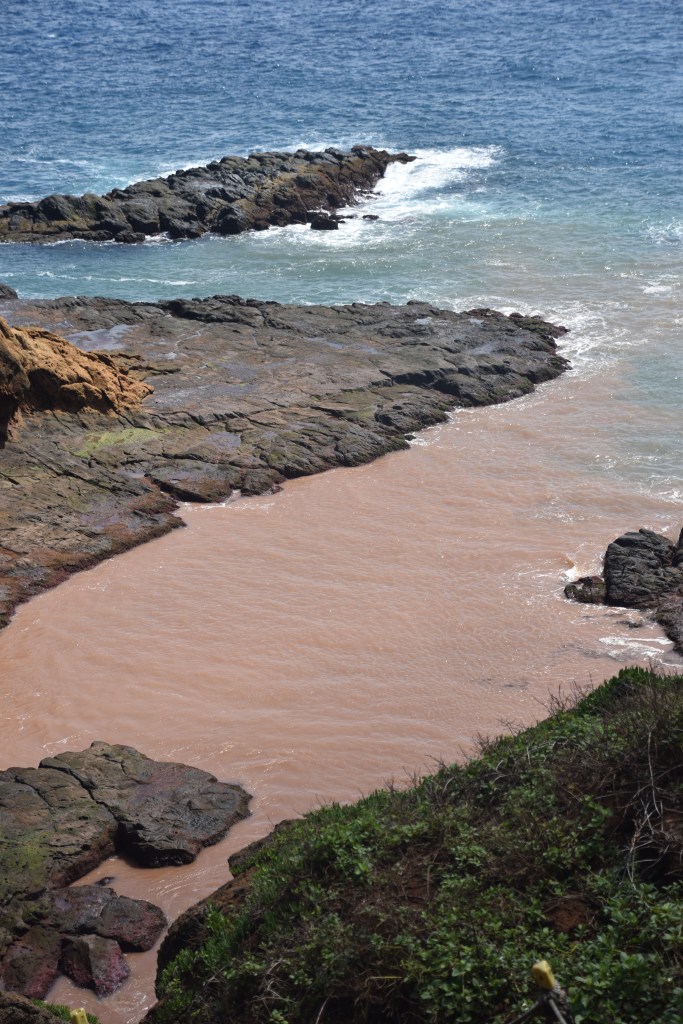
At one point a boulder had rolled down on some of the rope supports and it was difficult to traverse. 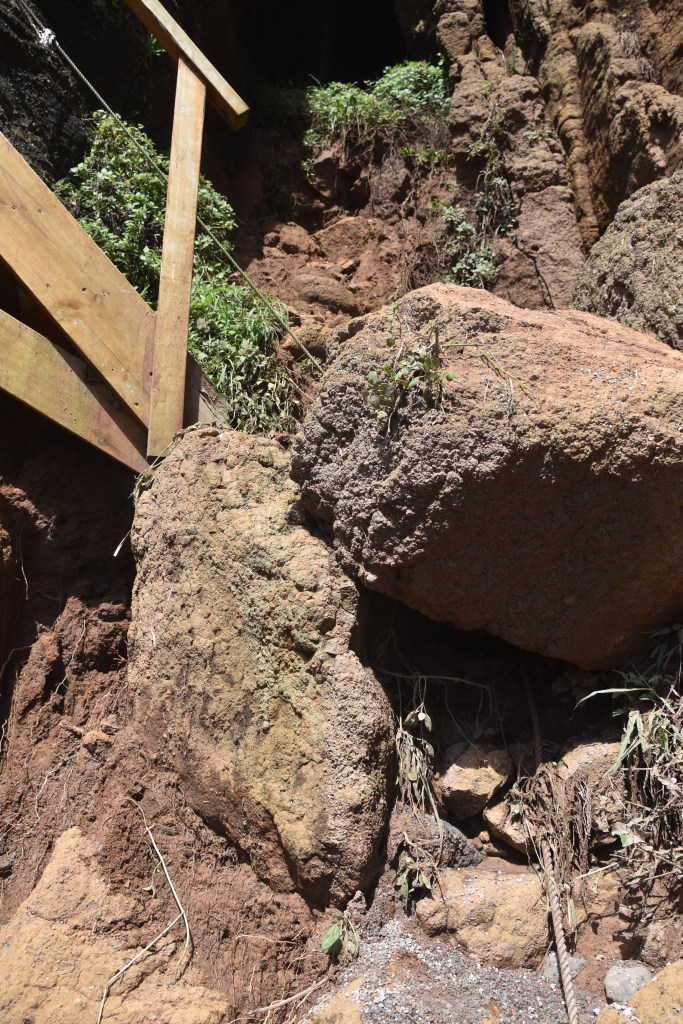
Boulder rolled down during rain event on trail and lines
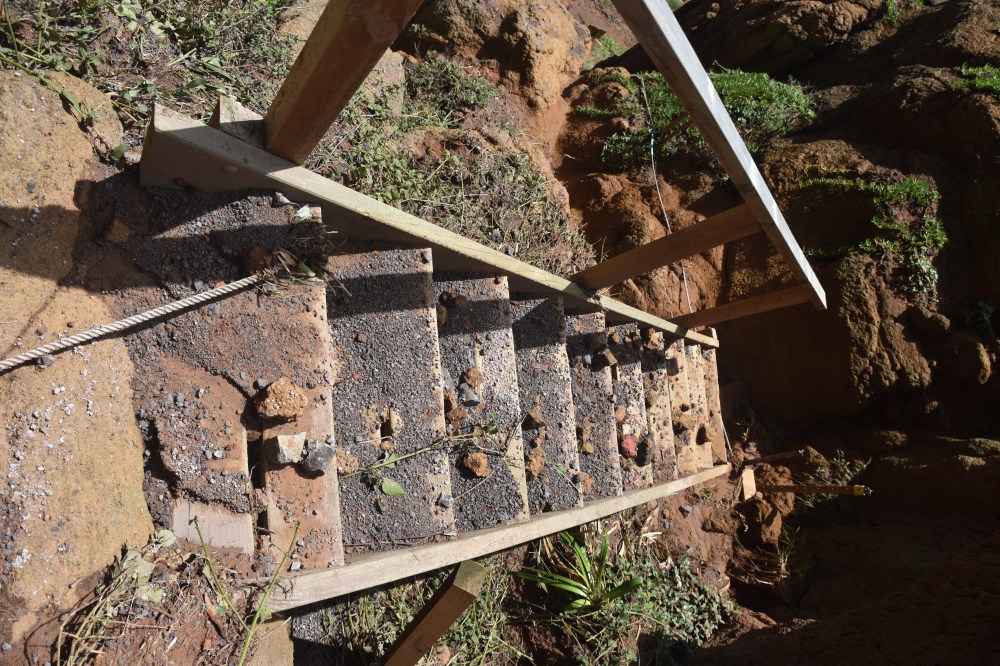
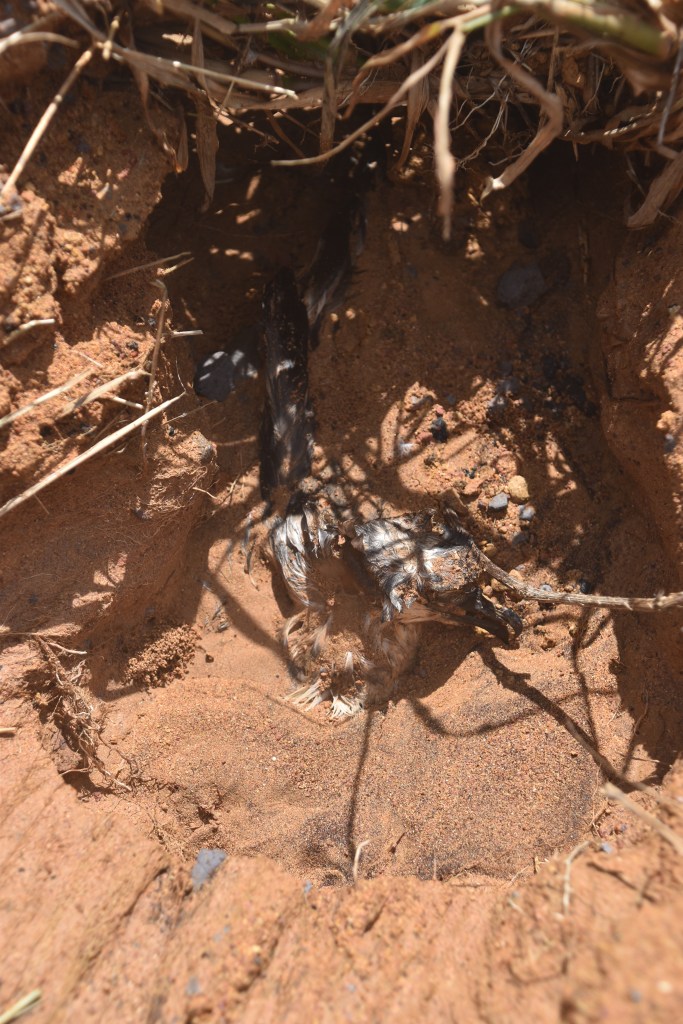
How the trail had changed and where there was no vegetation, there was more erosion. I slowed to photograph brave Masked Booby chicks that gawked at me from the ledges. The boobies don’t seem to favour shrubs, but how they survived in the open is a mystery! 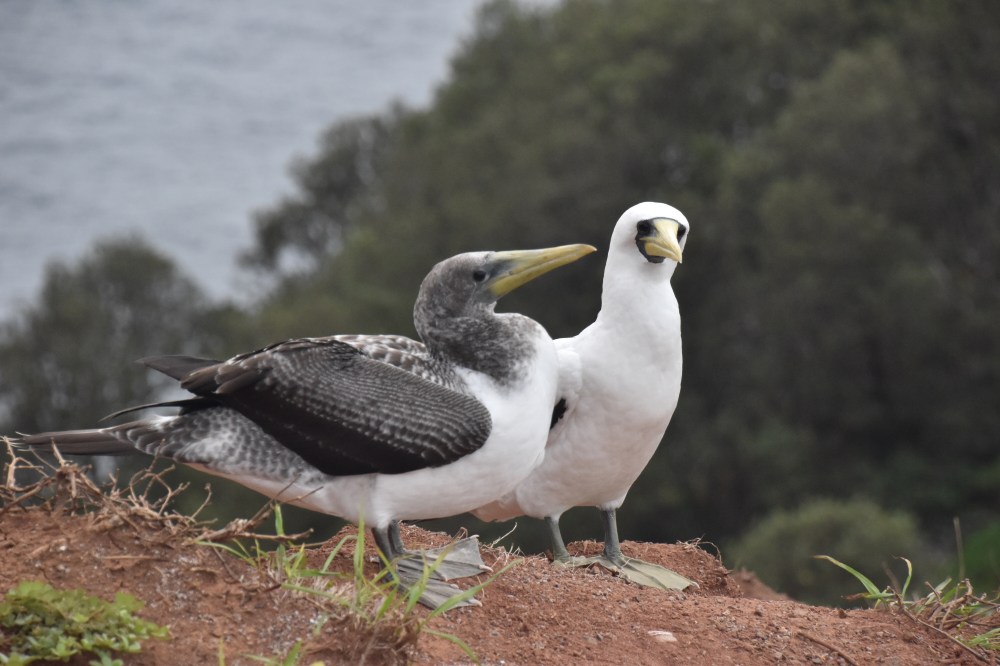
To get to the Fisherman’s camp is an adventure too. Luke said “Wear the rock boots”. When I arrived to the spot where we left the rock boots and my snorkelling gear, everything was filled with more mud. I had to take the gear to the edge of the shore where I waited for the right sized swell to rinse the mud. This accomplished, there was a rock ledge with a rope to cross to the Fisherman’s camp. Again, one has to wait for a receding swell to dash across the brown water to the point where this camp was located then clamber up a crack in a cliff to get to the porch.
To my surprise I found Luke calmly asking “Would I like a brandy?” He was busily answering e-mail on the couch with glass to the side. It’s a stressful field camp, Phillip Island especially when you’re not really cut off from the outside hustle and digital world. “A shooting in Christchurch, New Zealand” Really, I would rather not know.
I only had 20 minutes of Norfolk Island Telecom minutes left, so all I could do was check that nothing terrible had happened in my world and send off a quick email to those at home. I pondered the beauty of the almost cobalt blue ocean, cliffs, tropicbirds, noddies soaring in contrast to the swirling brown waters at the base of the Stoop. These seabird islands are so ragged. Intense with life and death.
The evening was beautiful. Clouds soared past the half moon and the Southern Cross stars and Milky Way when the headlights were turned off. The Black-winged Petrels chattered and so many swooped by. Luke could even recognize a Kermadec Petrel in the night sky. I’m not sure how he does this. My eyes are not half as sharp as the two lads, who are excellent birders. At night, we mostly work on the White-necked Petrels as they are surface nesters. Finally, the parent of chick Red 4 (under the convoluted White Oak that corners Owen’s hut) returned to feed the chick. I was “staking out” this nest for nights previously. One could just see the chick through a hole in the twisting root structure. Sometimes, to check the status of this nest, we had to squeeze through a bunch of 5 gallon water jugs and around a stall of tarps to shine the light into the hollow. This might qualify as the most bizarre of nest sites. 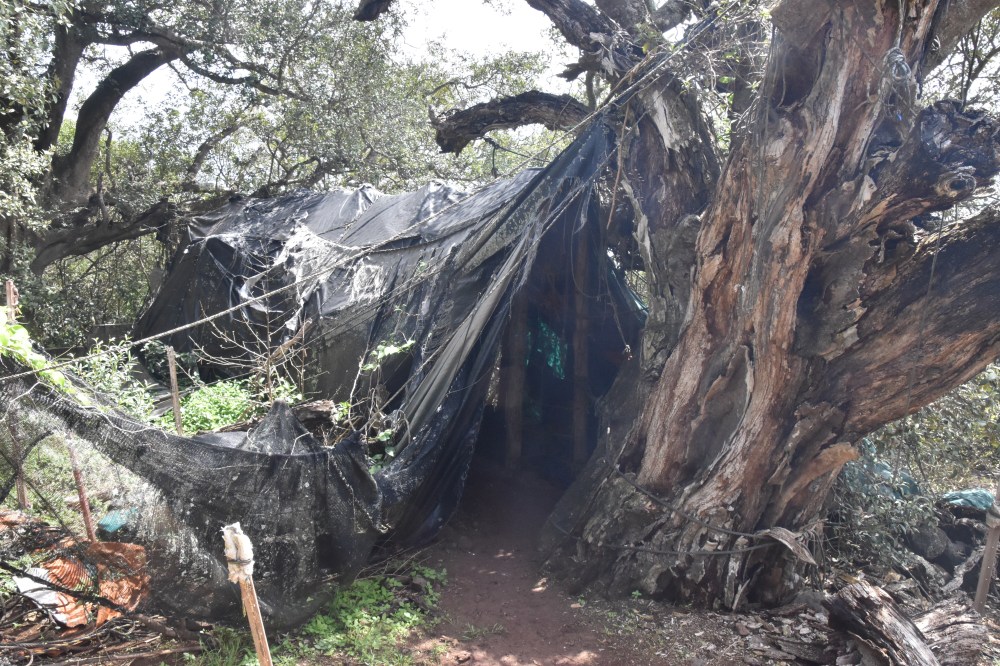
We had weighed the chick earlier and it had lost weight, meaning that a parent would return soon. Luke let the chick feed and checked other nests before we returned to attach a GPS tag to this bird. Luke retrieves a couple more GPS tags from the Black-necked Petrels and deploys more GLS tags so is reasonably pleased with the tracking process. Daniel decides to check his centipedes whereabouts in the middle of the night so goes out from 3am to about 6:30 am. He would like to see where they actually stay in the day. Are they using seabird burrows?
March 18th
Things are drying up and Phillip Island regains its brightness. The volcanic unconsolidated soils are remarkably porous and do dry quickly in the warm breezes. So as to not disturb Daniel sleeping in the cabin, I decide to head up to the summit. It is short hike past Owen’s camp which provides great views of the cliff faces, Red-tailed Tropicbirds soaring, wheeling in courtship and nesting on cliff ledges. Surprisingly, there is a Sacred Kingfisher at the summit with a gecko in its bill.
This morning Luke and I head out to weigh Black-winged Petrel chicks. I am glad to see most survived the storm and have gained weight. Some are starting to lose down and get tiny pin feathers on their little stubby wings. Our original intent was to check Kermadec Petrels for Nicholas (Luke’s supervisor) but instead we finish the Black-necked Petrel weighing and come down to camp for lunch. Luke is becoming concerned we will run out of food for the next couple of weeks here. I think we will manage, however it is challenging to know what and how much to bring out to this remote site, especially as there are shortages on Norfolk Island too when the freighter can’t come in from New Zealand due to bad weather.
Daniel and I concoct dinner. Both Daniel and Luke make excellent curries. I stick to mashed potatoes which are very well appreciated. So nice to head up the hill tonight under stars and stiff breeze which cuts the humidity factor. I’ve taken to carrying a bandana to wipe down the sweat. I am still “staking out” R8 and R3 nests, waiting for adults to return so that they can be tagged with a GPS. There is one White-necked Petrel parent in Owen’s hut that I am particularly fond of. She calmly preens her new chick around its head to calm the pecking instinct. The little chick, then begins to make a soft but insistent begging call. Eventually she regurgitates some of her fish, squid etc. load to the open bill of the hungry chick. The pattern repeats, then the chick tucks in beside her and they rest. I have lots of chance to watch both Black-winged Petrels and the White-necked Petrels around the hut, while Luke is in the Vale of Mud checking on other birds coming in.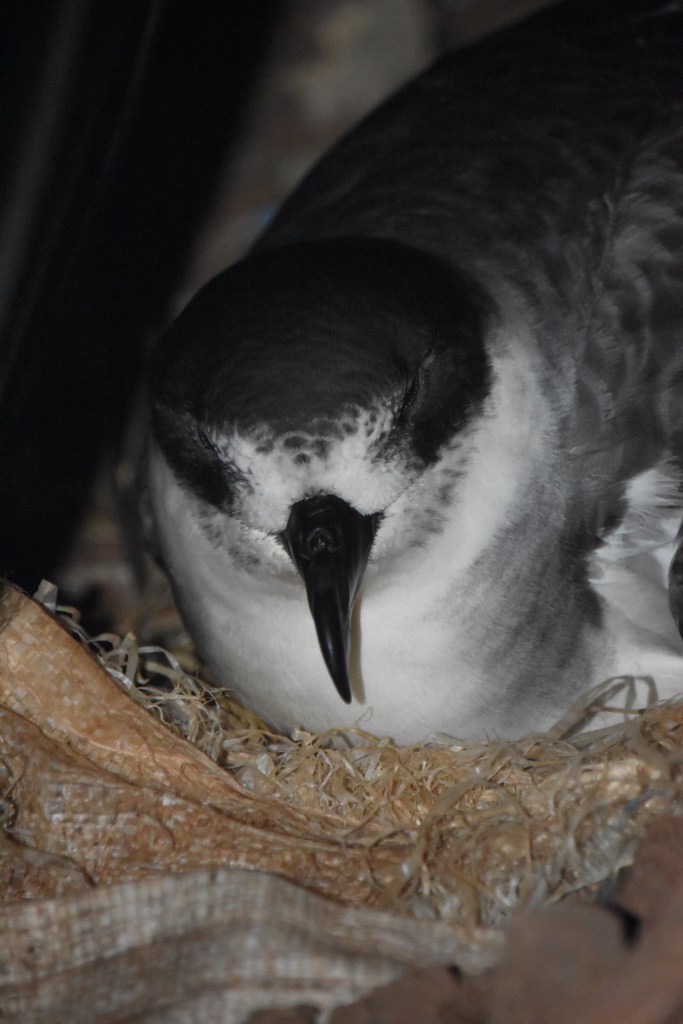
The moon is waxing over this week. While I wait for the study birds I turn my headlight off and listen to the wind and cacophony of chirruping and symphony of calls. The clouds and petrels sweep across the moon. Moonlight silhouettes the gnarled branches of the old white oak.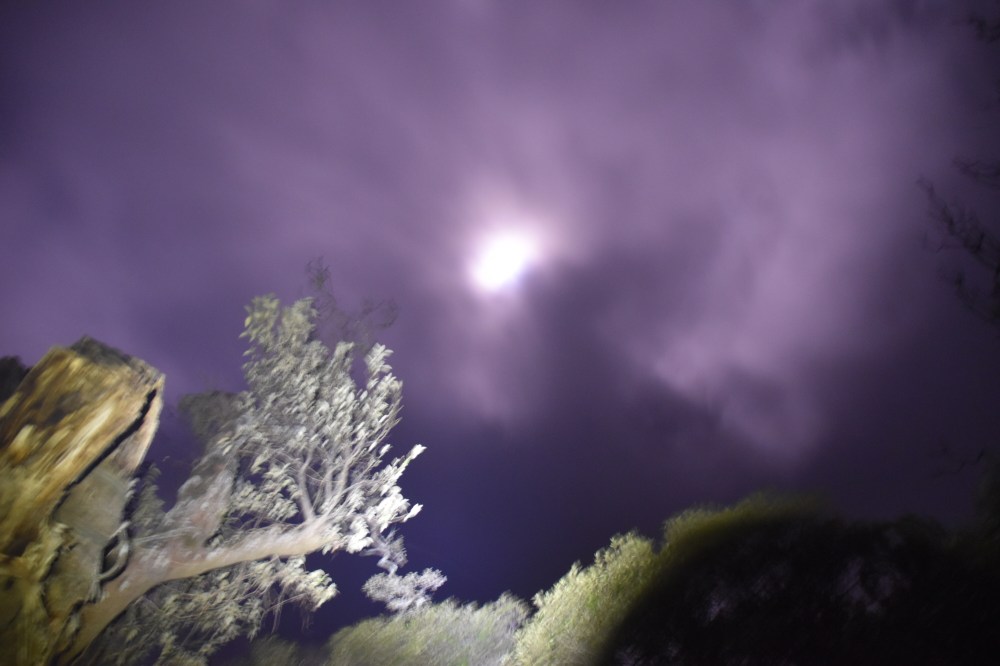
March 19th
Today is marked by the sudden appearance of 4 park rangers in the morning. They have come to fix the washouts and boulders on the trail up from the Stool. During our rainy sojourn in the cabin, Daniel reads the story of the mutineers on Pit Cairn Island. We realize that three of the jovial rangers are descendants of the Bounty mutineers: Joel and Ken Christian and Rossco Quintal. They all hustle and bustle about for an hour or so with lots of cheery chatter, coffee and lunch at cabin then head down to work. We suspect they were checking that we were OK during the storm.
Today Luke and I head up the hill for a check on Kermadec Petrels for one of Luke’s supervisors, Nicholas Carlile. Nicholas is a world expert on Gadfly Petrels. Kermadec Petrels only nest on Lord Howe (50-100 pairs) and Phillip Island (10-30 pairs). Fortunately more nest on their namesake Kermadec Islands. The Kermadec Petrels nest on the ground under the thick olive bushes and are super camouflaged and a bit shy. 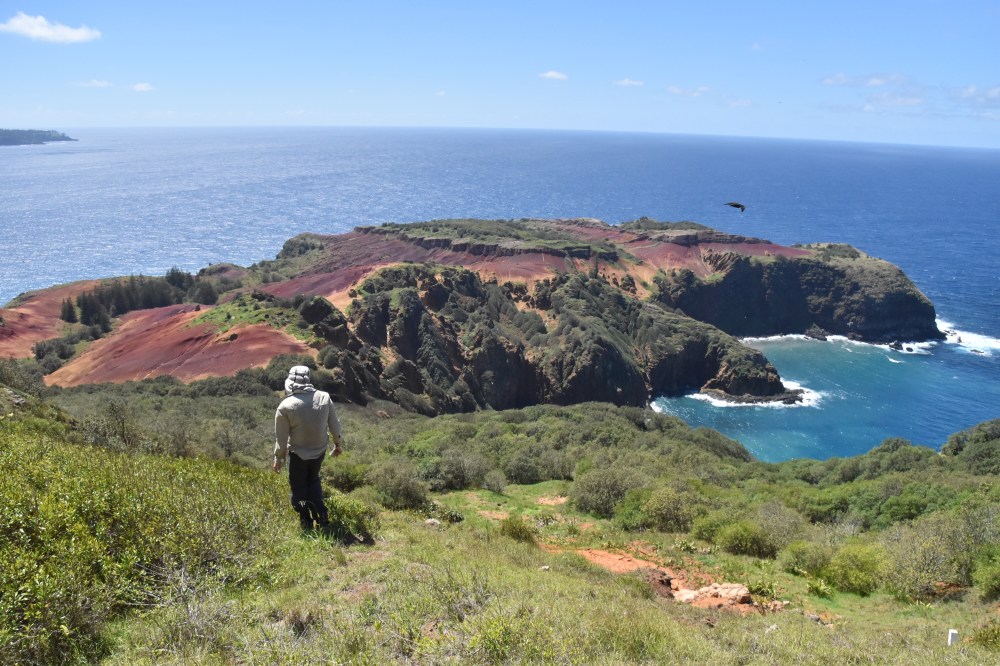
Luke has an airphoto with the study nests marked, so its like an Easter Egg hunt trying to find the nests. Some are on the edge of a really steep washout and others are in a tangle of olive, white oak roots and boulders. In a couple of nights, we have to look for more nests and deploy geo-locator tags. There are only a handful of the nests that are occupied by the Kermadec adults and chicks. 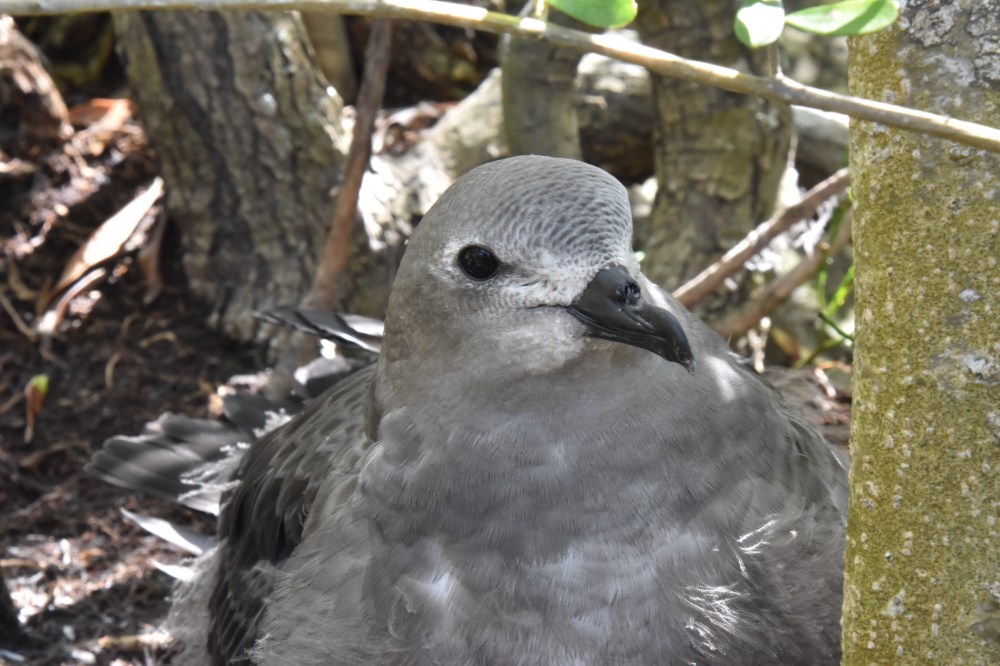
They appear to have both spring and autumn nesting times, as there is one large chick close to fledgling and a couple nests still have adults with eggs. The Kermadecs are slightly larger than the Black-winged Petrels and have a grey back and variable breast pattern.
March 20th
Fair morning again. Today we weigh the White-necked Petrel chicks. Sadly, this doesn’t take long. Last night, another chick was lost from the study set. Luke thinks this one was carried off by a Tarlar bird as there isn’t even a trace of R10 chick. The Tarlar or Australasian Swamphen belongs to a group of birds called Crakes and Moorhens. Tarlars have really long spreading toes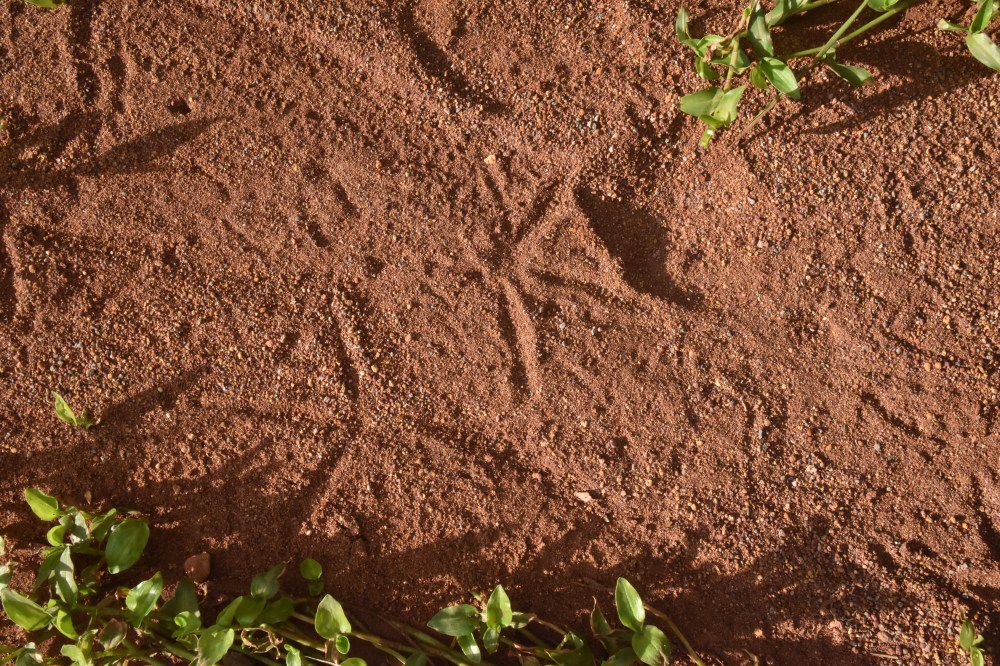
, a bright red thick bill, purplish colour and shrieky call. They are very wary of us and fly away or scuttle under the thick olives bushes. In Australia, Tarlars are not problematic, but here on Phillip Island they are very numerous and responsible for high chick mortality.
Luke tries his hand line at fishing for Kingfish in the Stoop. The usual fishermen’s story of the ‘Kingfish that got away’, but he does notice some sea-urchins in tide pools. The conditions at the Stoop (still run-off mud and great swell) are not encouraging for snorkelling.
I’ve had my eye on hiking across the valley to the hills and towards the ocean to the north, so make my way down eroded bare ridges, through a dense olive thicket in the vale and up and along the slopes across from the cabin. At the heads of ridges, indignant Masked Boobies are startled by my presence and Black Noddies call from their nest sites. Great views of cliffs and sea below. Although I’ve heard many Tarlar birds in the bushes far away, I get a good view of one flying from an olive patch. They are abundant but likely since the rangers will shoot them if they can, they avoid people. It’s fun to watch the antics of a Masked Booby chick trying to convince its’s attending parent to actually feed it. The chick begs and calls repeatedly. It puts its wings back and up, then bows slightly. Finally the parent regurgitates food into the hungry chick and all are content for a very short moment, before the chick begins the 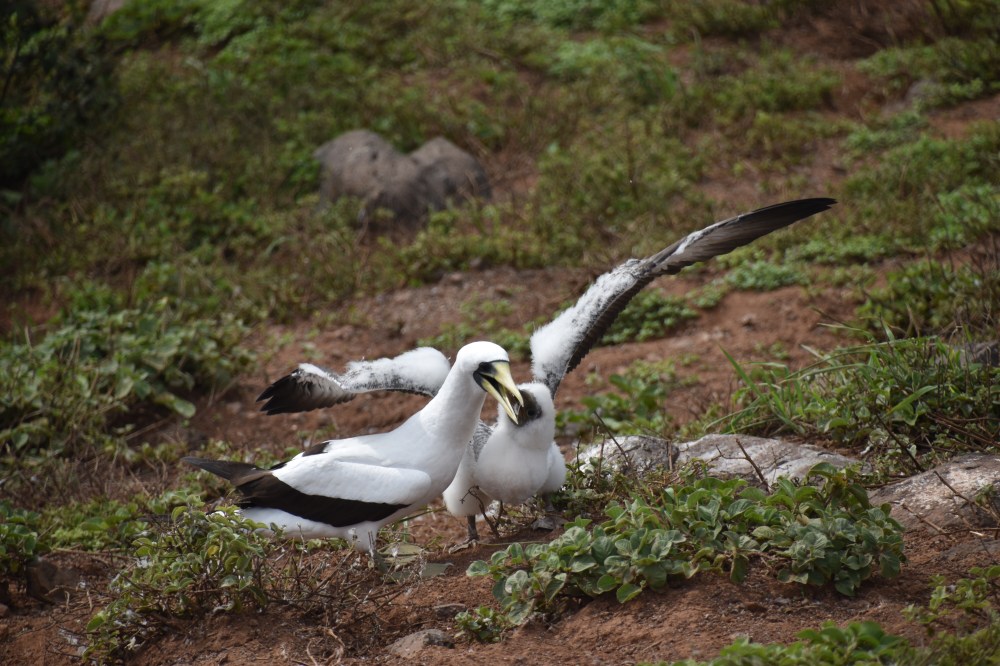
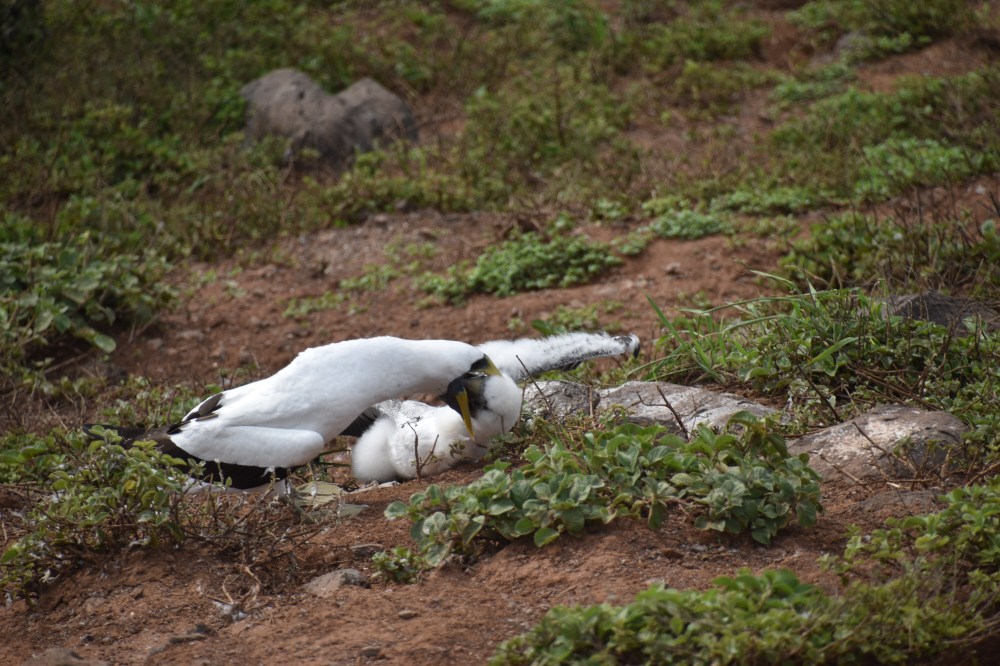 whole song and hungry dance over again. Did I mention that the chick was teenaged?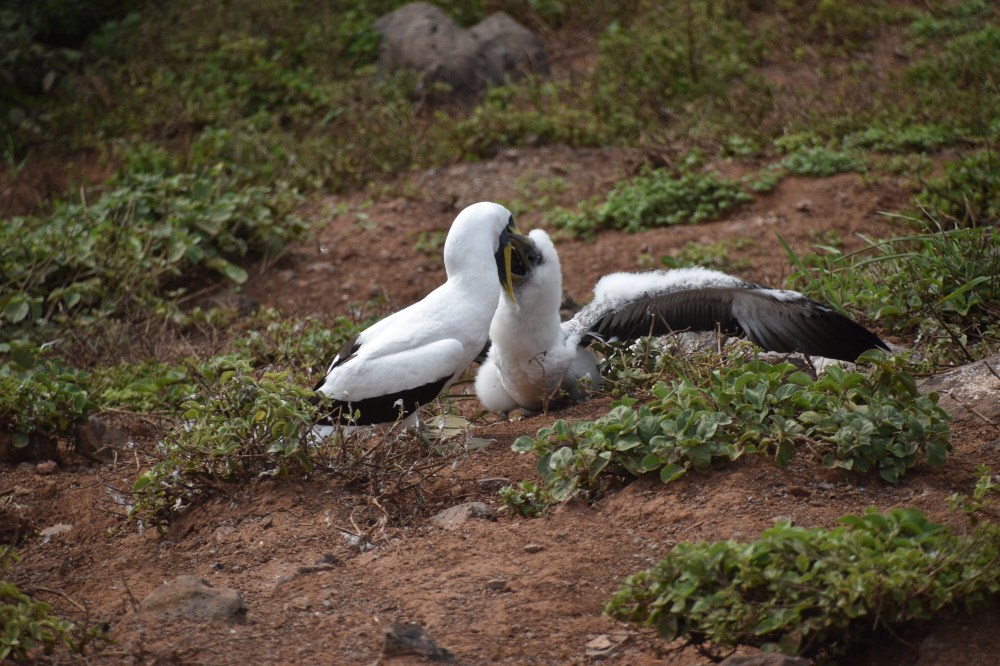
Due to my recognition of our own Great Blue Heron flight pattern, I was able to recognize an unusual bird for Phillip Island. A White-faced Heron paid the cabin a visit!
This evening was very slow in terms of putting geo-locators or tags on petrels of both species. The chicks in Owen’s hut mostly waited by themselves. Petrels range widely over the ocean and often leave their chicks for up to a week, so it can take some time for the adults to be “recaptured” so the GPS tags (that don’t have long battery life) can be replaced. Between yawns, I watch the sky as the petrels swoop across the moonlight sky, then use the red light to check if the White-necked Petrels have returned to their chicks. The very attentive parents at R27 and R4 return to feed, preen and be with their chicks, but they are not the “right” birds that need tags.
Luke re-discovered the lost White-necked Petrel chick from R10 very far from its nest. A parent was at the empty nest, Luke heard a begging call in the woodlands, followed the call and found a chick in the open by itself. Since there were no other nests around, Luke returned the chick to the nest, whereby the parent began preening the chick. Since there are only up to 30 White-necked Petrel nests on Phillip, this made the night for me.
March 21st
Autumn Equinox on Phillip Island. Dreams of spring flowers and friends. The dusk of dawn is filled with first with incessant moaning calls of the Wedge-tailed Shearwaters then the chatter of Black Noddies at their colonies in the valleys. Instead of staying in tent, I walk out over the gullied moonscape crest to see the sunrise. From the barren promontory behind the cabin one can see both sunset and sunrise over the Pacific.
The morning routine today is weighing Black-necked Petrel chicks and checking certain burrow traps for retrieving the GPS tags from Black-necked Petrel adults. Daniel has been up most of the night, looking for centipedes as he wants to sample at all times of day and night to determine the activity patterns of these macabre animals. He is super excited to report the details of a centipede cannibalizing another centipede this morning, despite being up all night!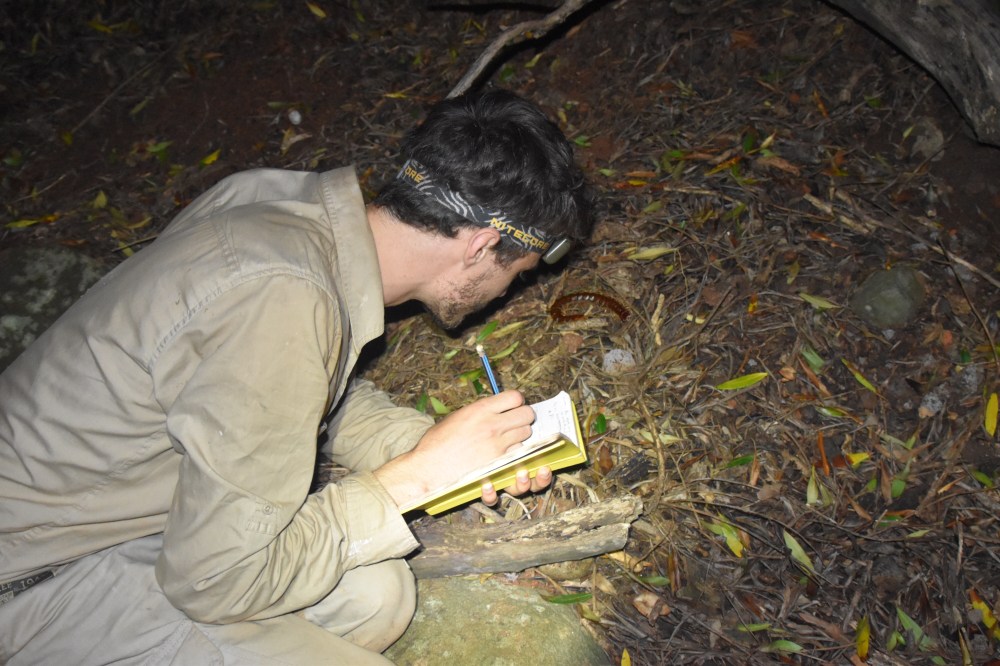
The guys head down to Dar Stool (the Norfolk name for the channel where we land and fisherman’s camp). The wifi connection draws them down as well as the possibility of catching a fish for supper. Daniel is trying to contact his supervisor to book a flight home, but can’t make connection from our remote location, despite the wifi infrastructure. It goes to show that even with our interconnectedness through this electronic age, connection really depends on our willingness to engage.
Daniel cooks this afternoon, so that Luke and I can head up the hill early to look for new Kermadec Petrel nests and band and measure any unbanded birds we find. Kermadec Petrels come in just before sunset at about 6:00 pm. They nest on the ground, slightly under boulders or in dense shrubs. It is crazy windy on their exposed nest sites and the scattered olive and white oak patches are sculpted to the angle of the slope and a dense tangle. First we sit out to watch and listen for Kermadecs. They swoop overhead calling with a distinctive “kerwoo, glunk, glunk, glunk”. (Sorry for my differing attempts to mime calls!) If they drop down and land I am supposed to report the nest area. Then we dive under the shrubs to look for birds and mark the nest with a yellow number on a wire stake. There are only about 30 nesting pairs of Kermadec Petrels on Phillip Island and although we don’t find any new nests tonight, Luke is able to band two adults. I am pleased to find one of these birds by spotting it while we are crawling through the brush and rocks while Luke is otherwise occupied.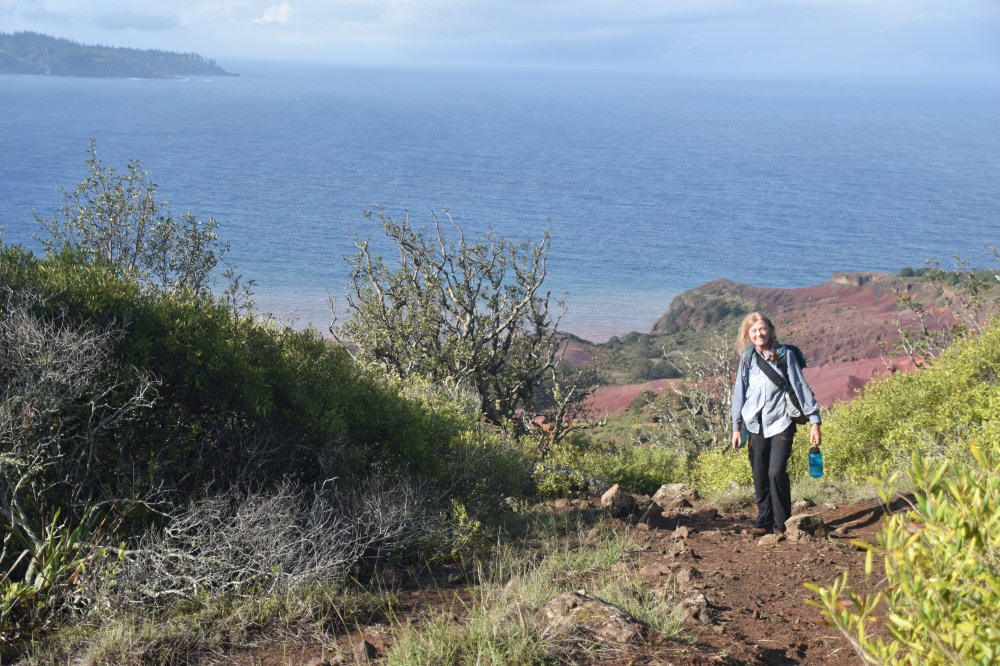
Heading up to check on Kermadec Petrels
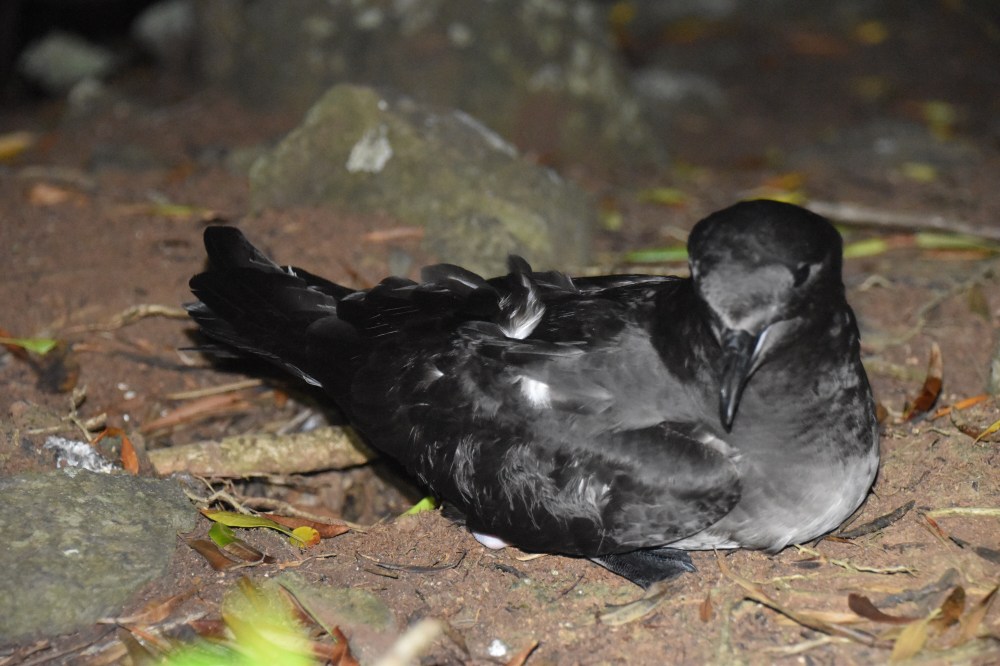
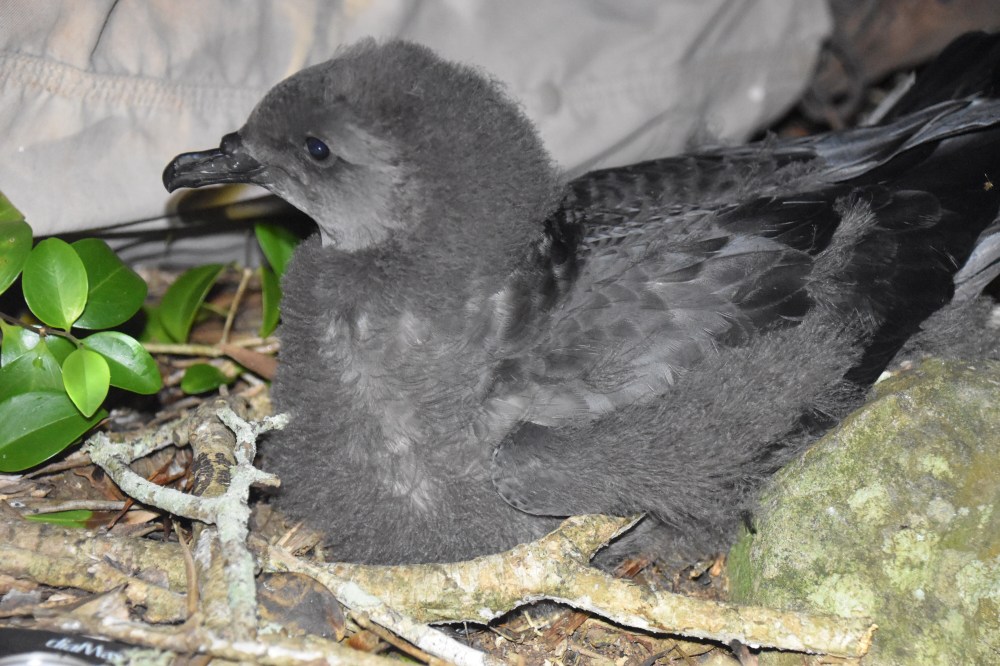
We rush back to Owen’s Hut by 7:00 pm to check for White-necked Petrel adults with GPS tags that come in to feed their chicks. Like most seabirds, White-necked Petrels only come into their chicks in the dark, presumably to avoid predators. The moon is full tonight and casts moon shadows around the giant oak. Tonight, the White-necked Petrels come in very slowly, if at all. We are not able to find any experimental birds that need to have their GPS tags replaced. One has to be content watching the lights of Norfolk in the distance, geckos climbing trees, the exquisite curves of white oak branches, 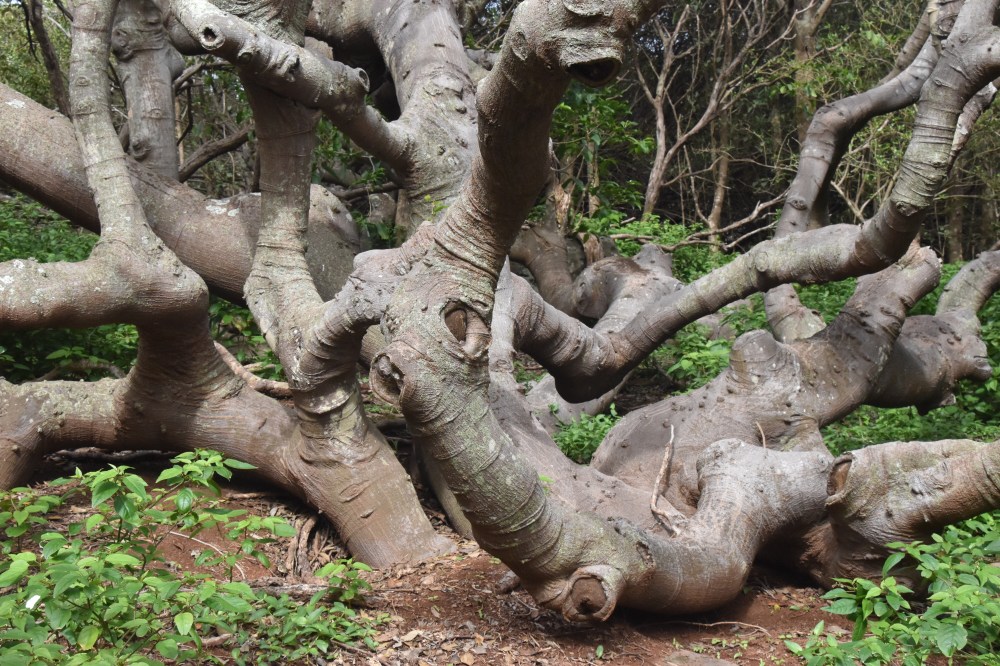
and the chicks in their nests.
March 22nd
Every third day, there is a break from weighing chicks so I go out with Daniel to Long Valley at 7:00. This is an area that has been replanted with Norfolk Pines and was the attempted re-introduction site for the Norfolk Island Green Parakeet. Now it is a large and noisy Black Noddy colony. Hard to say why this re-introduction failed, but the rangers mentioned that a review of the practices is underway. The way to Long Valley is over one of the bare and semi-steep gullied promontories, so the area couldn’t be accessed during the storm. 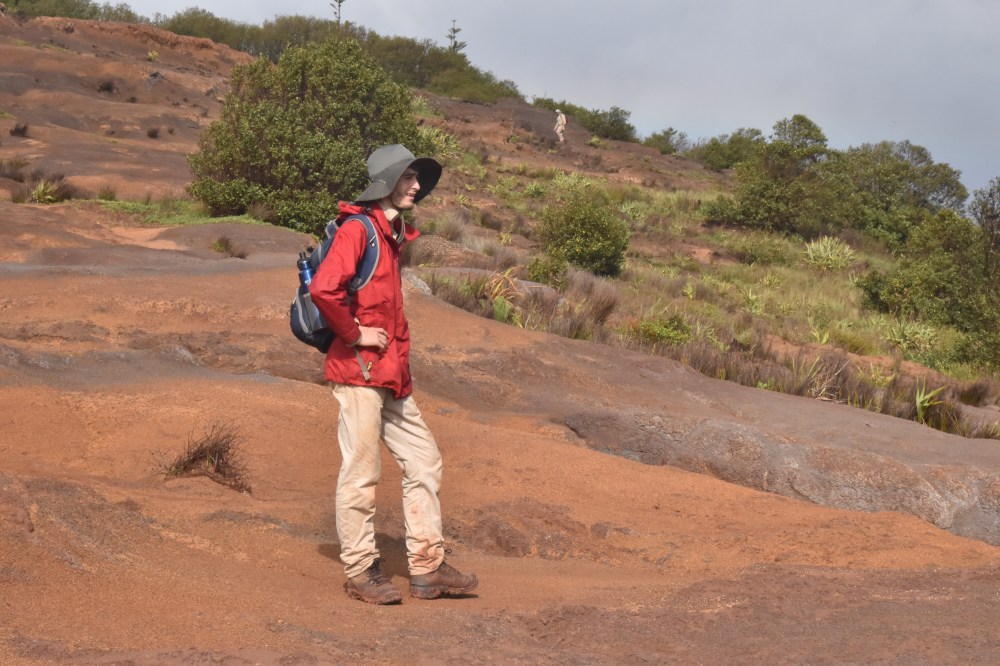
Daniel and I explore the length of the canyon down nearly to the Stool. However there is a short couple of longish cliff drops that look pretty dangerous. I recall the stories of Dids about bringing water tanks up this route and can understand why the bringing up of equipment to the camp was legendary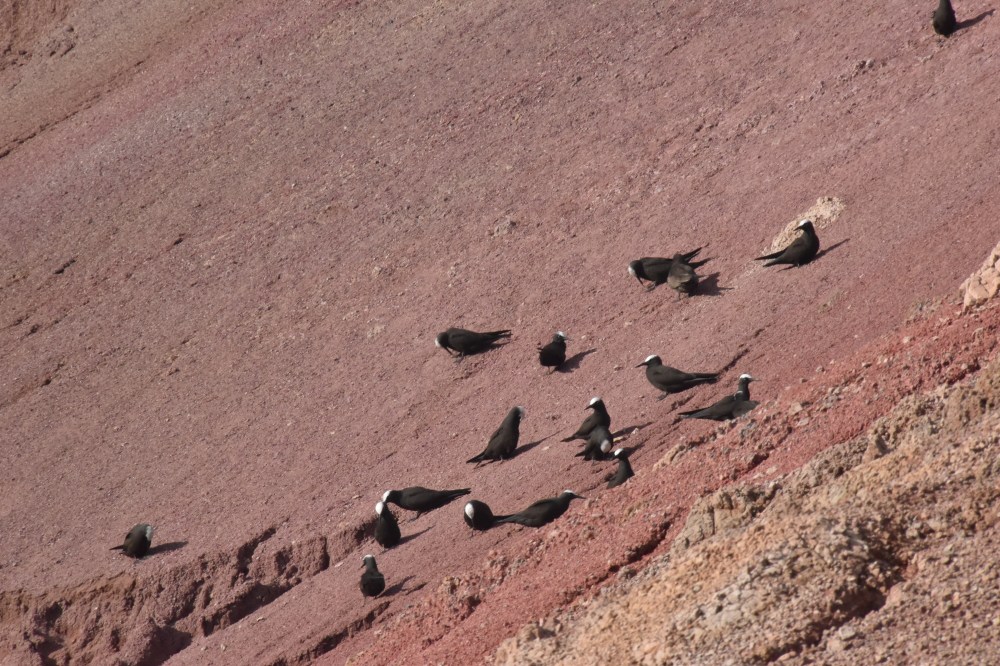
. Daniel’s study site is near the aviary under some 15 inch Norfolk Pines. We search the pine needle litter for centipedes. At first I was frightened about getting a centipede bite, but have become pretty used to their presence now and use my hands to sweep a 5m x 5m area of litter. Black Noddies chatter from their nests above and drop deposits on my hat and back. 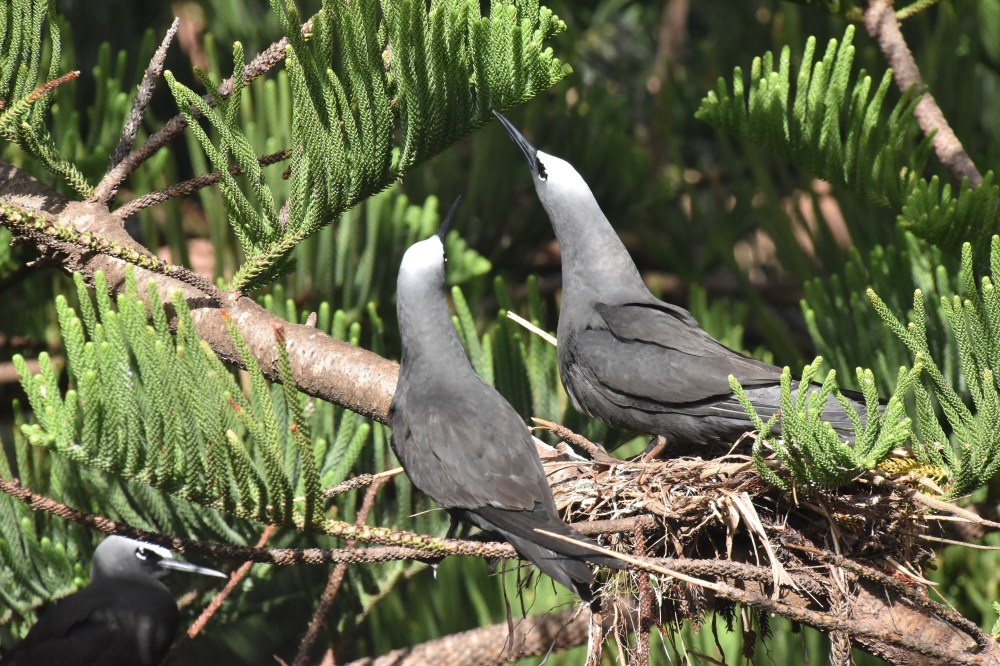
Daniel is thrilled to turn up one centipede in his search of deep litter.  All of a sudden, the heavens open and we are drenched quickly and “high tail it” for the camp. Luke radios us en route. The world turns to mud so quickly.
Luke and I check the one way burrow traps 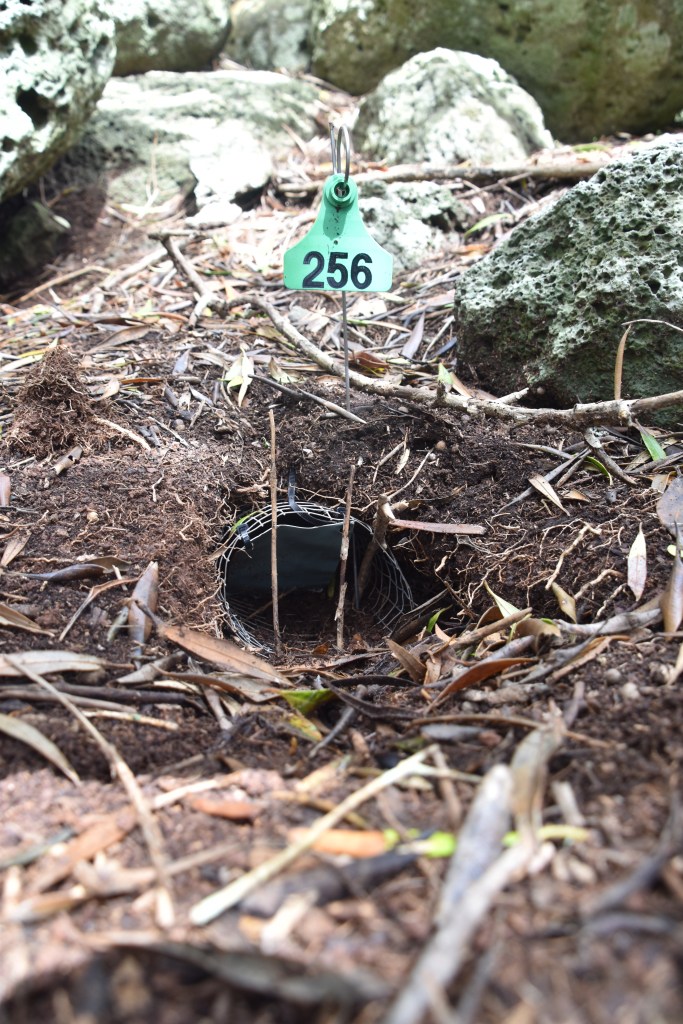
for the Black-winged Petrels then return to cabin for lunch. After lunch, Luke and Daniel invariably head to the Stool to check e-mail and fish. Luke invariably returns with a rant against bureaucracy and nary a fish! Daniel and I head up the hill in the mist and slight rain. As I near the ridge, the mist thickens, but this does nothing to deter Daniel’s enthusiasm at seeing and hearing Providence Petrels swooping past. The Providence Petrels were birds that literally fell to the feet of Norfolk settlers during a time of famine, hence their name.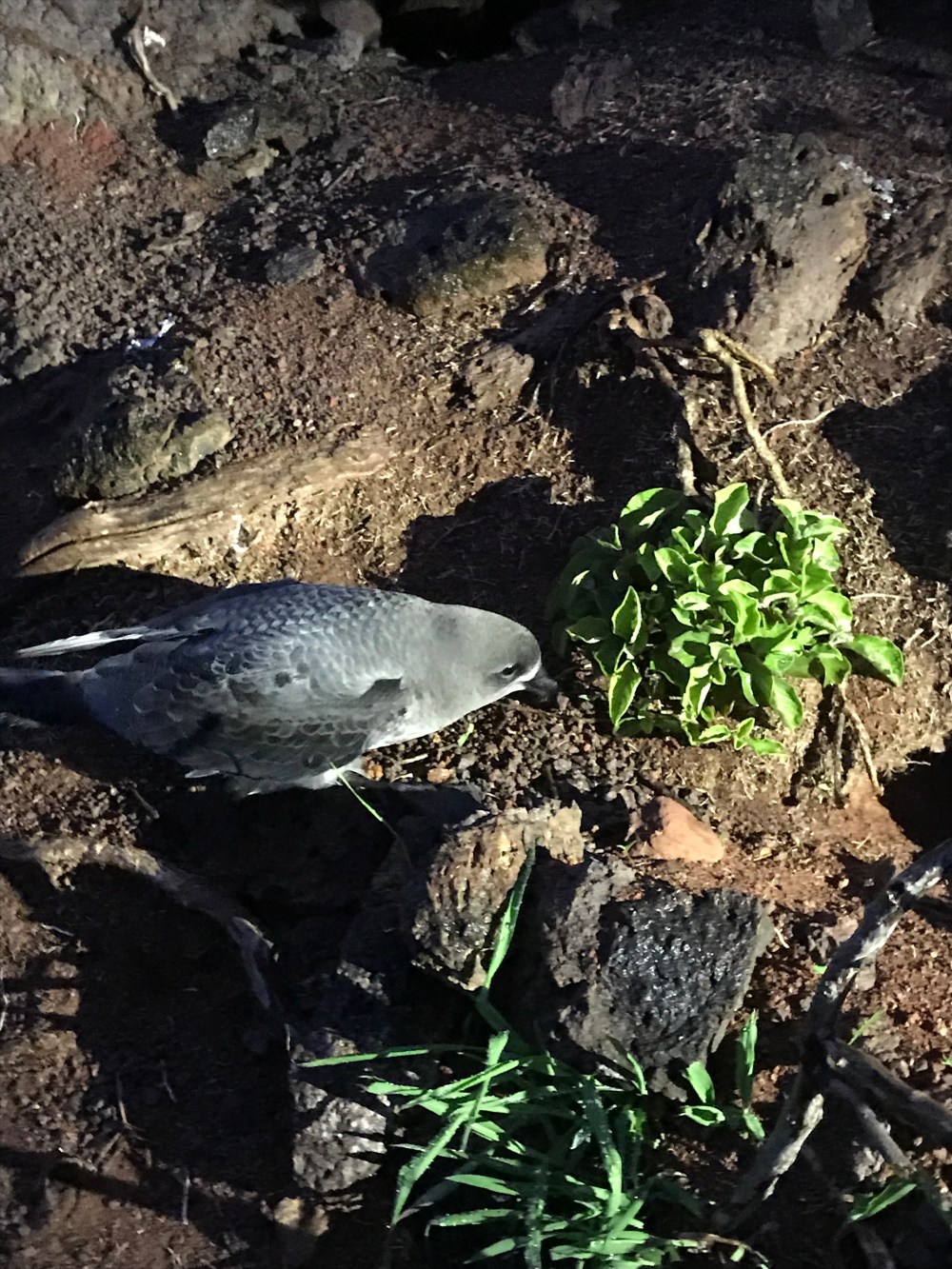
Sadly though, the settlers were greedy, eating up to 4 petrels per person, per day and now the Providence Petrel is thought to be extirpated from Norfolk Island. Perhaps the burrows I saw on my Mt. Pitt bushwhack are signs of returning birds? Norfolk Island’s rats and cats are very problematic for the ground nesting seabirds, so it is good to see the courting Providence Petrels swooping, rising and twisting in the wind at the ridge on Phillip Island. 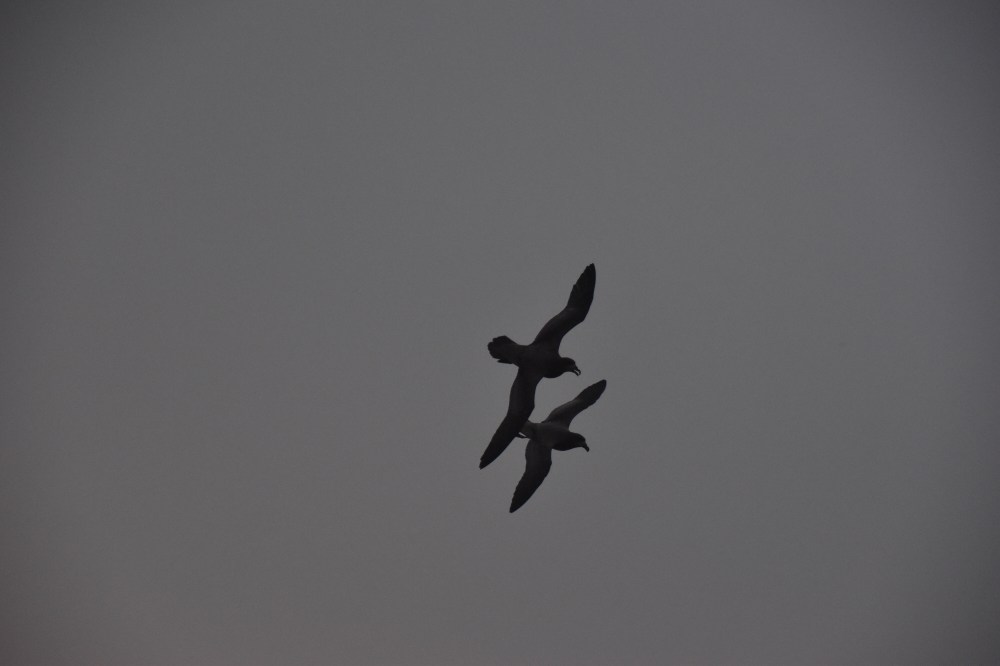
Their call is similar in cadence to the Black-winged Petrels but lower in pitch. Of course, Daniel and Luke can recognize the birds on the fly, but this eludes my poorer eyes and I rely on recognition of calls.
It’s a bit of a wet night and it pours on our way down the hill. I slip in the clay and my right thigh cramps very painfully. Perhaps I’m not taking in enough electrolytes in this humid climate. Rain drives in under the tent as a fly peg has come out. When I crawl into the tent I discover dampness under the foam mattress. Too tired to deal with this, I just move away from the damp spot and fall into dreams.
Casualties of the storm
Here a few photos of chicks that survived the storm as we washed the mud off their closed eyes and muddy bills.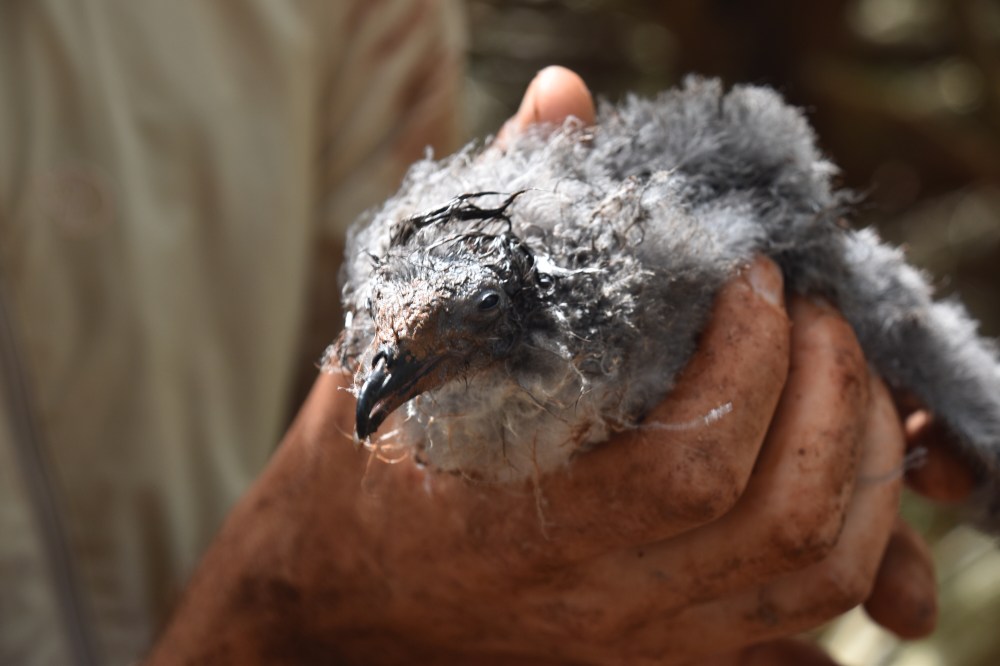
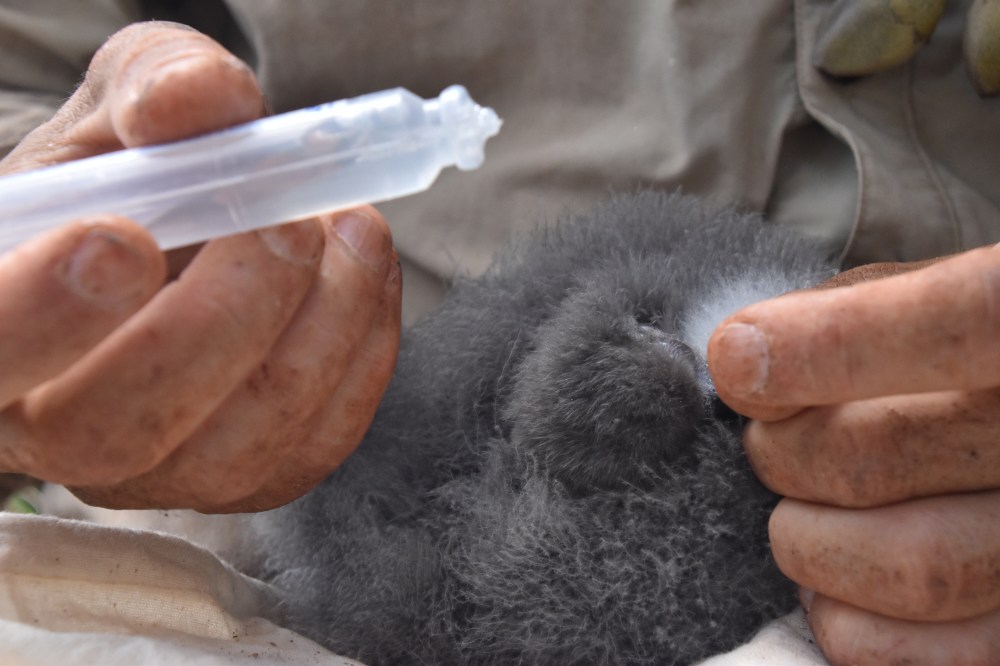
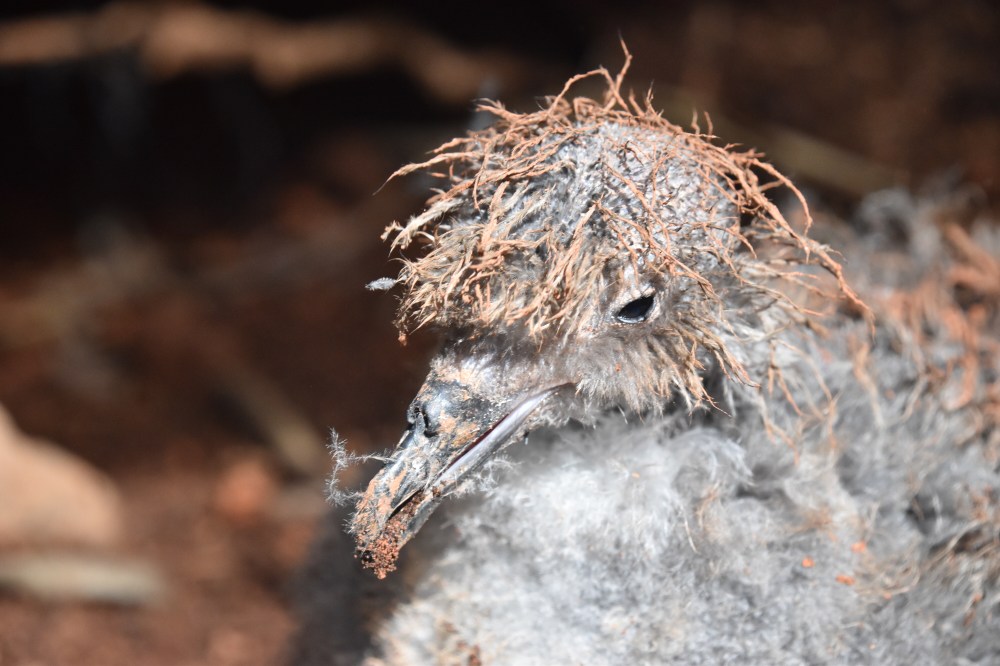
March 24th Full Moon
The sea is running this morning. Sky is grey and portends rain. Aside from a few Welcome Swallows flying over camp, Black-winged Petrels catching the wind and the odd Black Noddy, it is very quiet. Rain to the west.
The last 4 nights of waiting for White-necked Petrels to come in for their GPS tags to be changed have been very slow. The moon was full on March 23rd and we attribute the lack of parental visitation at the colony to “lunar phobia”. At about 530 pm there is a frenzy of activity by Providence Petrels at the summit and Kermadec Petrels along from Owen’s camp upwards to the ridge. Black-winged and White-necked Petrel activity peaks from about 6:30 to 7:30 when they wheel, spin and call in the sky before the moon rises. Apparently, most of this activity is courtship and other social activity associated with non-breeders, or in the case of the Providence Petrels pre-breeding activity. As the night progresses though, the calls and flights diminish and there is hardly any activity at the nests. After our foray to the summit, I am stationed at Owen’s camp to watch 4 nests, so I intermittently check these with my red headlamp to see if the parent has come in to feed their chicks. Luke checks the nests near the giant White Oak and Vale of Mud. Last night we managed to watch until 10pm just to make sure we weren’t missing any returns. Only chicks quiet in their nests, sometimes tucked up against the remains of their eggshell. Time is occupied by watching stars, moonrise, a medi-vac plane over Norfolk Island, doing owl and shearwater calls back and forth and pondering the universe. Sometimes, collecting field data is all about waiting.
March 25th : Fair weather on Phillip
Today the sun woke me in the tent and the day felt breezy and sublime. I decide to clean up the tent, dry it out and also let the silty mud around and under tent, dry. It’s a challenge just keeping the ochre, clay mud at bay from cabin, clothes, tent, camera, binoculars: everything!
Daniel has been out most of the night chasing centipedes but stays up to recount the details of their feeding events (Stalking, hunting or blind fluke). Luke and I head up the hill to check for Black-winged returns and the day time check of Kermadec Petrel nests. I love the exposed Kermadec sites looking over Moo’oo bay and cliffs. Kermadec nests are on the ground under a tangle of shrubs, under boulder faces or in labyrinths of white oak roots. Finding the nests, requires belly bush-whacking and some crawling. Like all petrels, Kermadecs can only breed once annually, but have a range o when they begin to nest: December through early April. We find empty nests (38), adults with eggs (3), young downy chicks (2), near to fledging chicks (wanderers) (6). Kermadec Petrels have quite restricted breeding sites (here and Lord Howe island) and populations are low (overall hundreds of pairs). Since we have heard so many Tarlar birds, Nicholas Carlisle worries that the Tarlars will take the youngest chick unattended by its parent.
In the afternoon I go down to the Stool to check the tide pools for sea-urchins. My long-time friend Maria Byrne has sampled Echinoderms far and wide but has never been to the Norfolk group. She is not only an Echinoderm expert, but also looks at climate change and predicts many marine species may re-distribute to the relatively colder waters in these oceanic islands. The water at the Stool is still too muddy for snorkelling. Besides that, the surge, possibility of rips and sharks is not encouraging. The only habitats for urchins may be the tide pools. It’s very hard prying these spiny creatures from the rock crevices in the pools. They must be adapted for the strong surges on Phillip. Daniel helps me photograph a couple of species, that I manage to 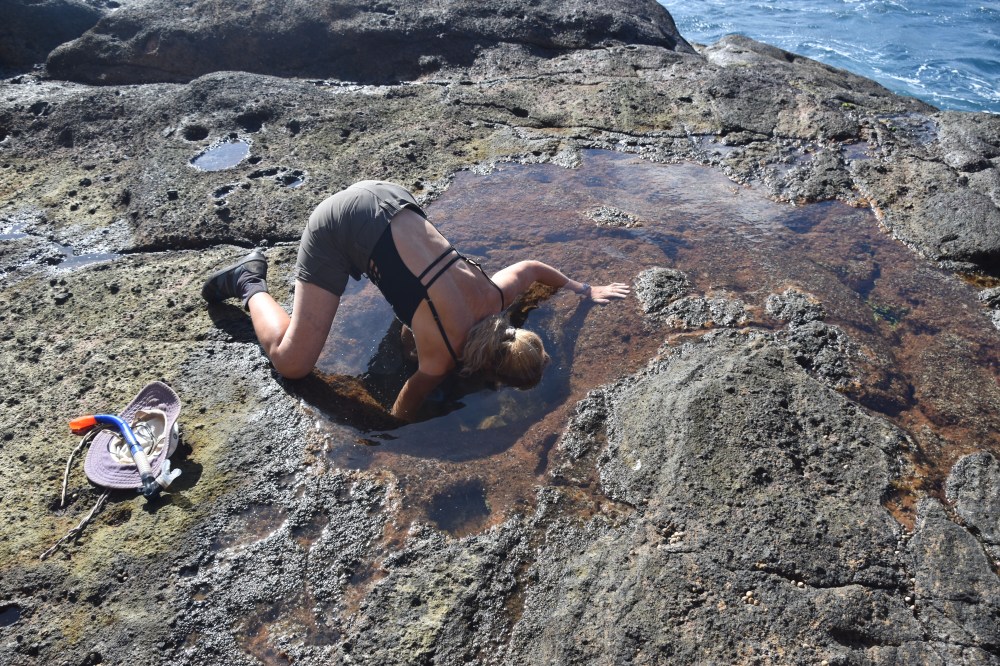 extract.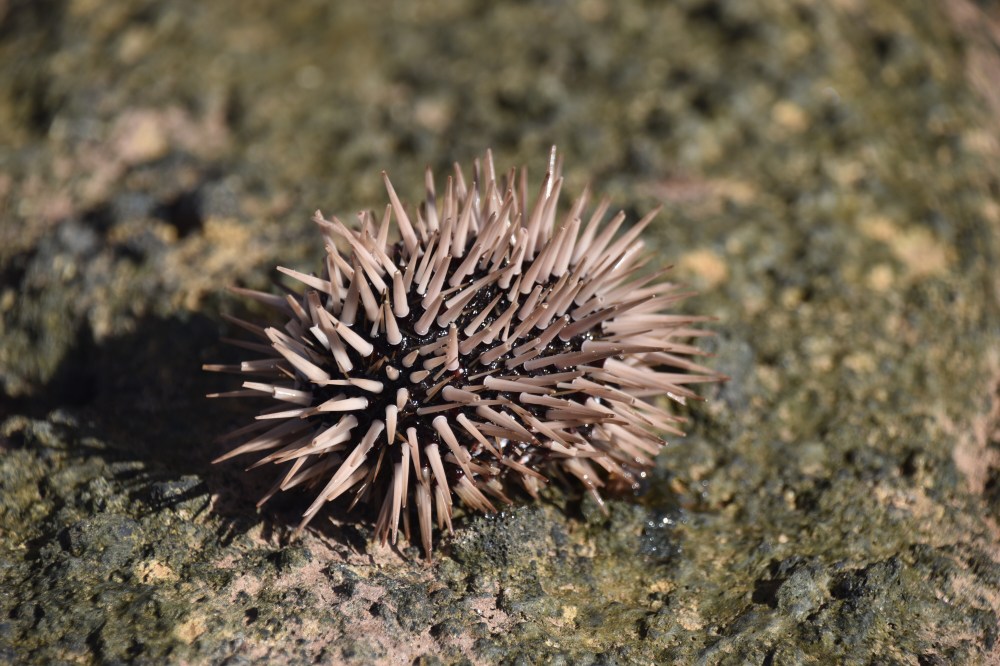
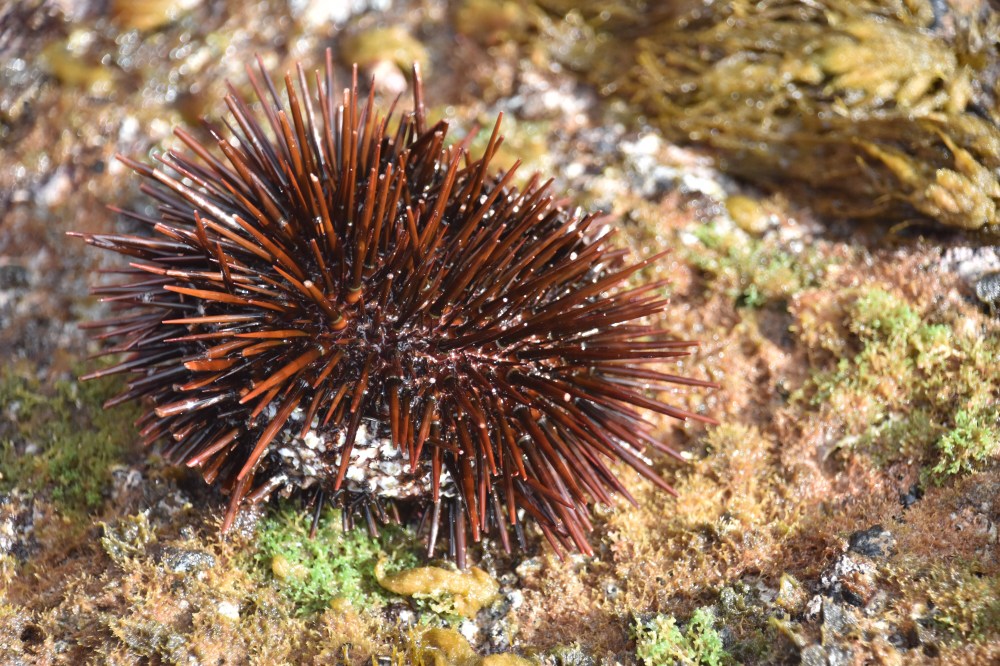
Red Sea urchin from Phillip Island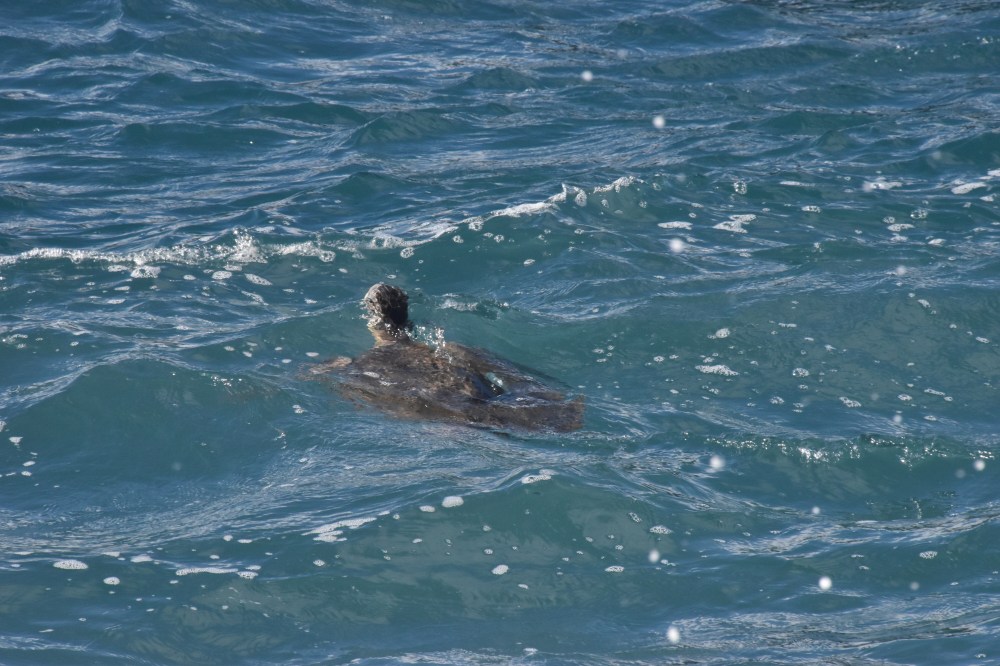
This evening as the night is fair and the moon won’t be rising until after 9:00 pm, Luke and I are full of hope for the return of GPS tagged birds. Luke programs 8 GPS tags. We vow to stay out until after 10:00 pm as this morning we discovered that a White-necked Petrel chick had been fed the night before. We could have only missed the feeding by not waiting long enough for the adult to return. This could mean days before its partner comes in and the GPS battery might die. We manage to retrieve 3 GPS tags, which is a much improved rate of return compared to the previous moonlight period. Another benefit of the lack of moonlight is stargazing. Stars twinkle so brightly through the shrubbery on the top of the eastern cliff face that they almost look like lights. The Southern Cross and Milky Way form an arc over the sky. Geckos scuttle around burrows, trees and in the so-called walls of Owens hut.
Even though I have spent hours in Owen’s hut waiting and watching for White-necked Petrels, I still have no idea what Owen had in mind for this odd structure of interlaced ropes, fraying tarps, upside down cupboards, and collection of boards. Did he and his wife actually live in this chicken-coop smelling place? No wonder, his wife reportedly hated every minute on Phillip Island!
March 26th
Breezy, changeable weather. Rainbows to the west, showers, sun and cloud. 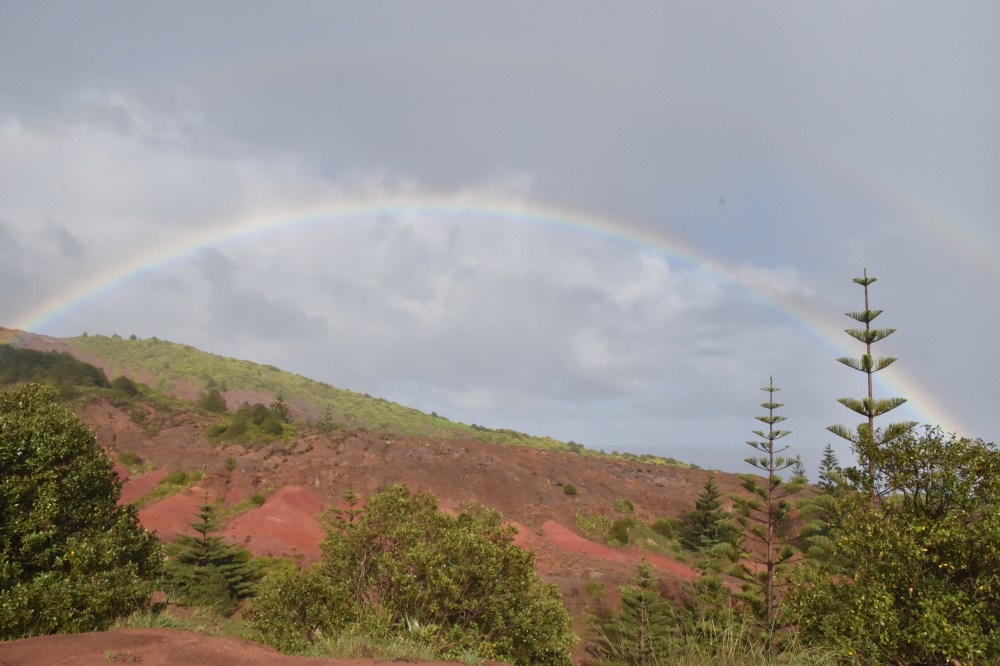
Welcome Swallows swoop over cabin, Tarlar birds shriek from the olives, boobies grunt from across the valley and most interesting are the courting calls of Black-winged Petrels from under the cabin where Luke is sleeping (in reprieve of ants in tent). Although I’m up before the others, this is the first time I’ve heard birds under the cabin. These petrels are likely “prospectors” , pairing up and looking for suitable nest sites. We see the Black-winged Petrels on the ground both day and particularly at night. On the paths at night, one must take care not to tread on or too near them. Sometimes, their breasts, head and feet are splattered with the ochre mud. “Diggers”, says Luke; they are working at making burrows. 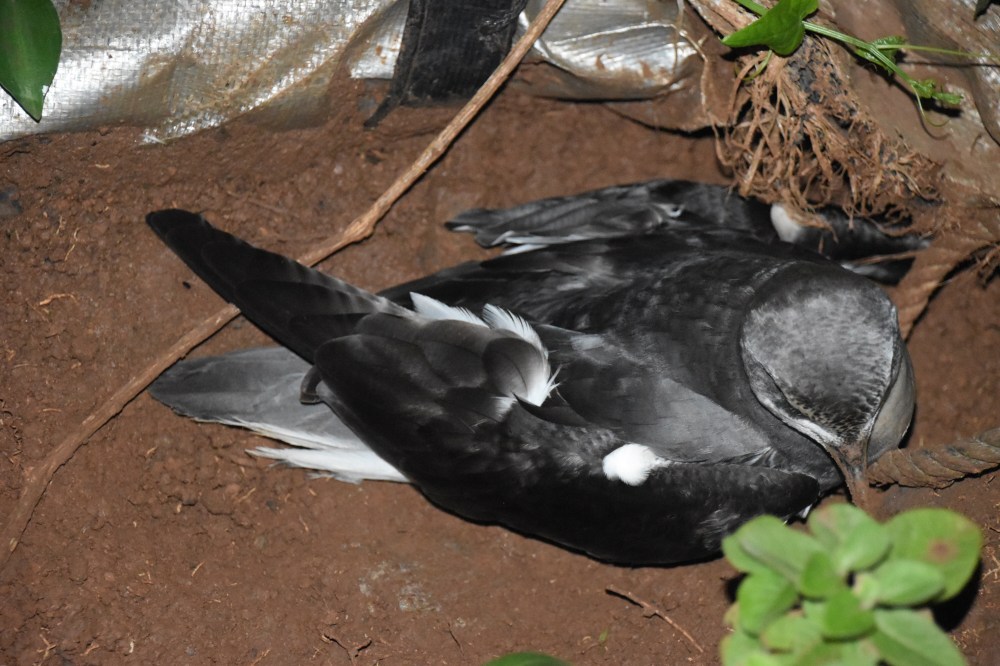
After our experience in the storm, these muddy sites don’t make good burrows, but what does a young, inexperienced and amorous seabird know?
The Black-winged Petrels are one of the only diurnal species of Pterodromids (Tubenosed seabirds). Their aerial synchronized courtship displays are quite spectacular and occur day and night. They have quite a repertoire of calls from a high-pitched chatter on the wing, purring, squeezing and almost guttural duets on the ground. Some the calls could also be interpreted as territorial. They breed in the austral summer on Lord Howe Island, Norfolk Island group, Chatham Island and around New Zealand islands. Luke says they are quite successful as seabirds go and populations are expanding. What is it about their breeding strategy that allows them to adapt to the changing Pacific whereas many seabirds populations are declining?
March 27th
Phillip Island is really growing on me. Islands are such marvellous cradles of evolution, full of interesting but somewhat limited numbers of species. This means that a naturalist like me can actually learn many of the species and understand somewhat the ecosystem function. Fortunately the park has left a handbook for management with photos of many of the native and introduced species of plants. I love the routines of our day and night and the cheery camaraderie we have discussing birds, invertebrates, people, cultures, places and foods. I would like to visit Victoria state where Luke and Daniel live but that will have to wait for another trip.
The mornings are cool, breezy and sublime and no work is anticipated until Luke has made a good coffee and checked his ‘In-reach” satellite device for messages. I was just anticipating weighing chicks to check their growth, when Luke announces that “Bigze says “There is a big swell coming and we need to get off the island!” . What to do? We certainly have more work to do catching adults to change their tags and both Daniel and I don’t want to spend 5 days on Norfolk, when we could be on Phillip collecting information. Luke frets, “You and Daniel can’t miss flights.” I think we should risk that we can get off sometime in the next 4 days before our flight on April 1st, but it is not my decision.
Daniel is sent down to the Fisherman’s cabin to check the Windy website for the wind and swell forecast. Luke tries to communicate with the rangers and someone else to check weather. Finally we head up the hill, to weigh chicks. Luke mutters, but I notice that he doesn’t take out the traps. Yeah! Once back to the cabin, he decides to take a risk and stay. Daniel and I are very pleased and happy to go up the hill and wait for seabirds and skulk for centipedes!
March 28th
Tonight is a record day and night for tagging and re-tagging both the Black-necked and White-necked Petrels. We are now on the “dark-side” of the moon and the adults are coming in to feed their hungry chicks. We re-tagged five White-necked Petrels which was a record. Also some the Black-winged petrels had their GPS tags replaced with Geo locators and were therefore “done” until Luke picks up these in December . Such great progress goes a long way to easing the work of the next session when this field season wraps up. I was pleased to have a busy night after so many slow nights. We howl back at the Wedge-tailed Shearwaters in Mordor!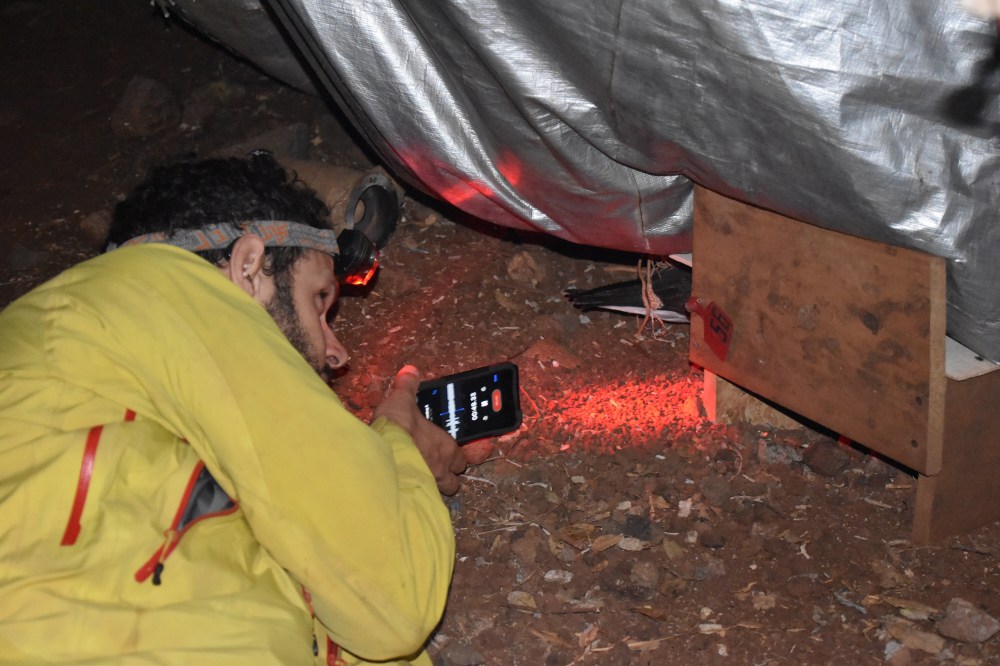
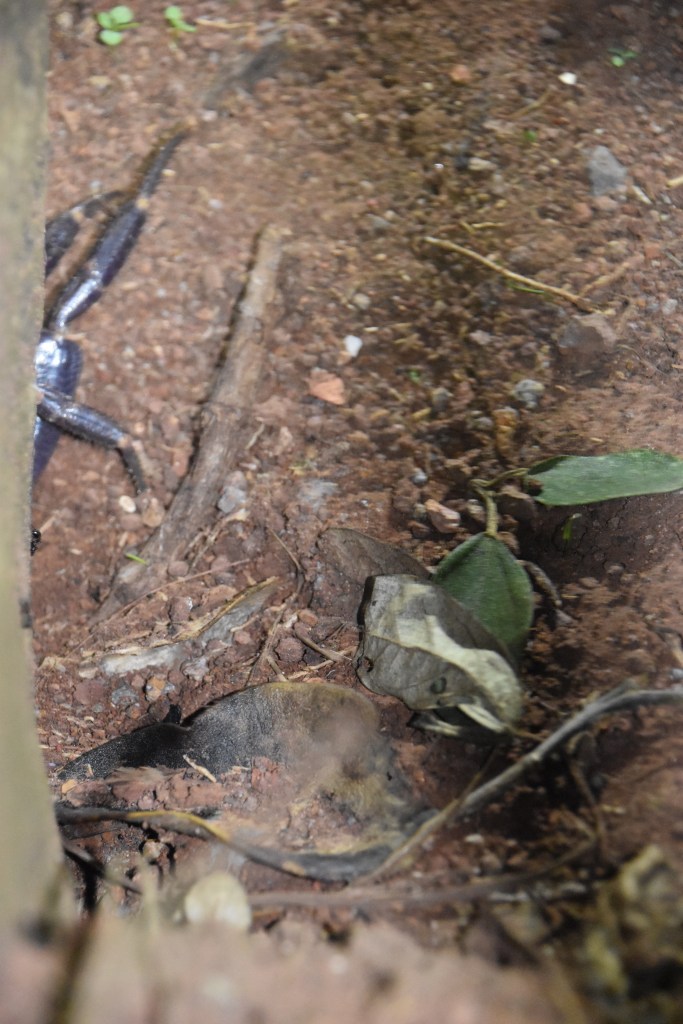
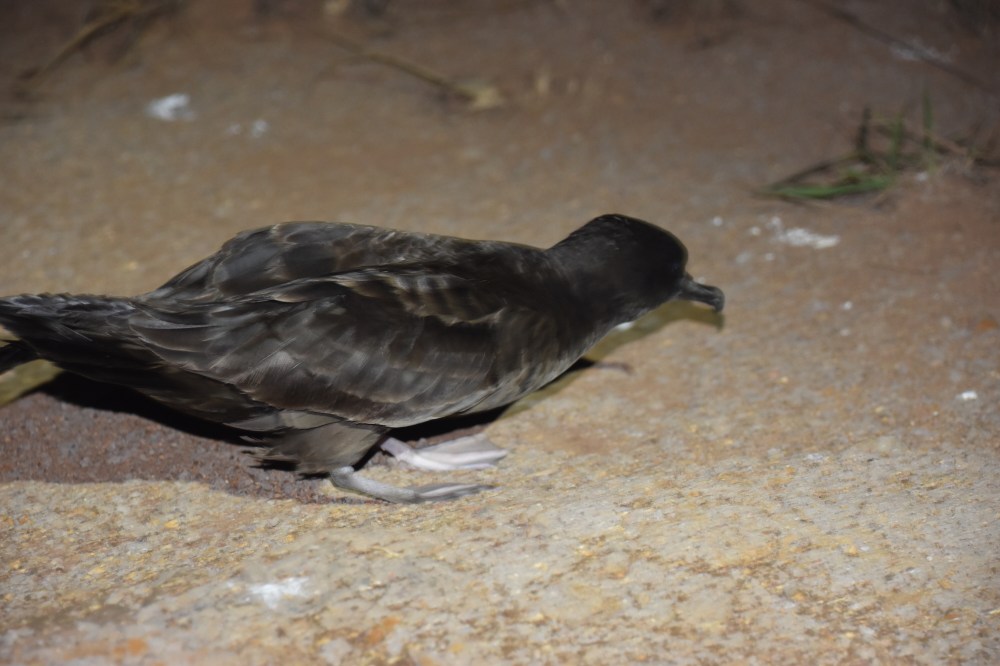 Daniel finds the land crab tonight, so we don’t go to bed until midnight after crab searching and night explorations.
March 29th- Our last day and night on Phillip
Luke makes some delicious bannock biscuits for breakfast. The bread has gone a bit mouldy and there are very few fresh items. Luckily, we have a good amount of butter and scrounged some small packages of jam.
Today we need to weigh all the chicks of both species. Most have had a great feed last night and gain 20 grams or more. Some White-necked Petrel chicks gained over a 100 grams and are just little balls of fluff with giant bellies. 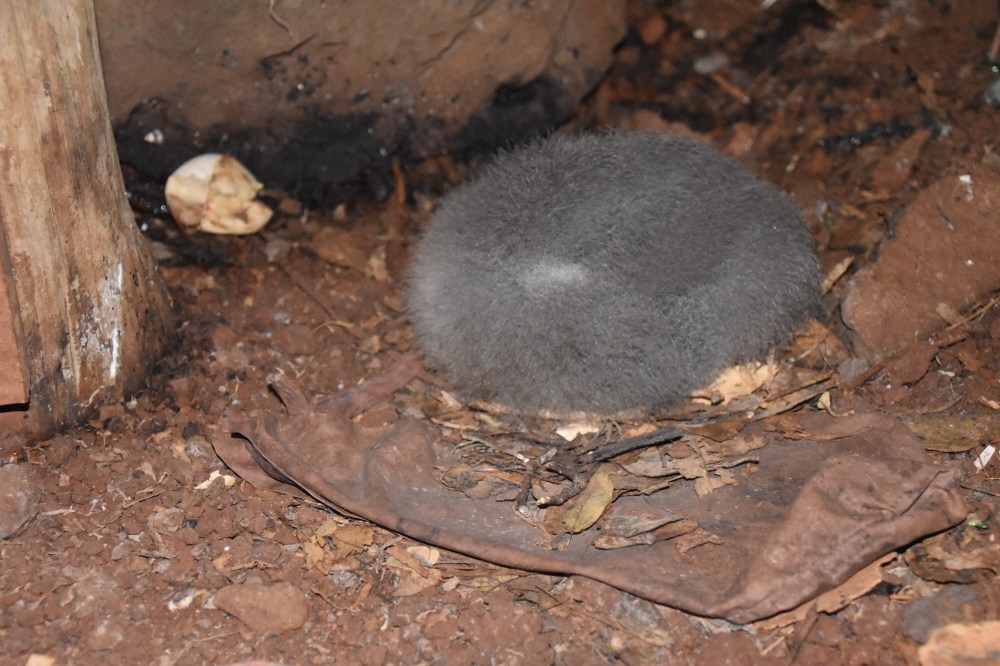
I call one of the chicks in Owen’s camp “Pudding bird” as it sits in its open nest in a perfectly round fluffy shape with just its bill poking out. The chicks are getting pin feathers on their wings and are very active with poking bills and squeaking when they are weighed. 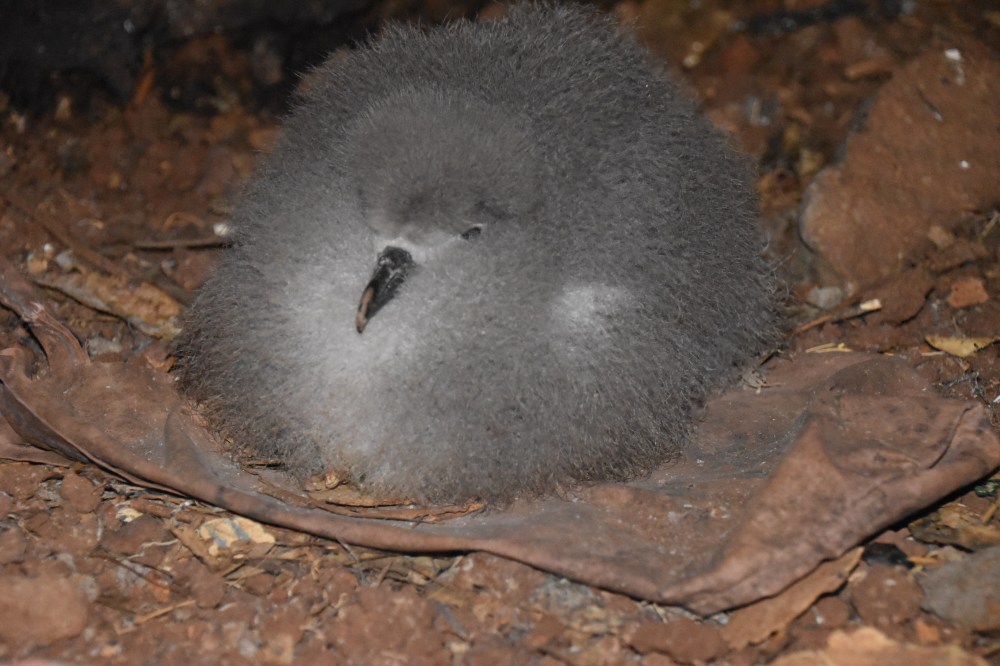 It will be another couple of months before they fledge at the end of May or in June.
In the afternoon, after visiting all the Red-tailed Tropicbirds around camp, I attempt a curry with Daniel’s help. 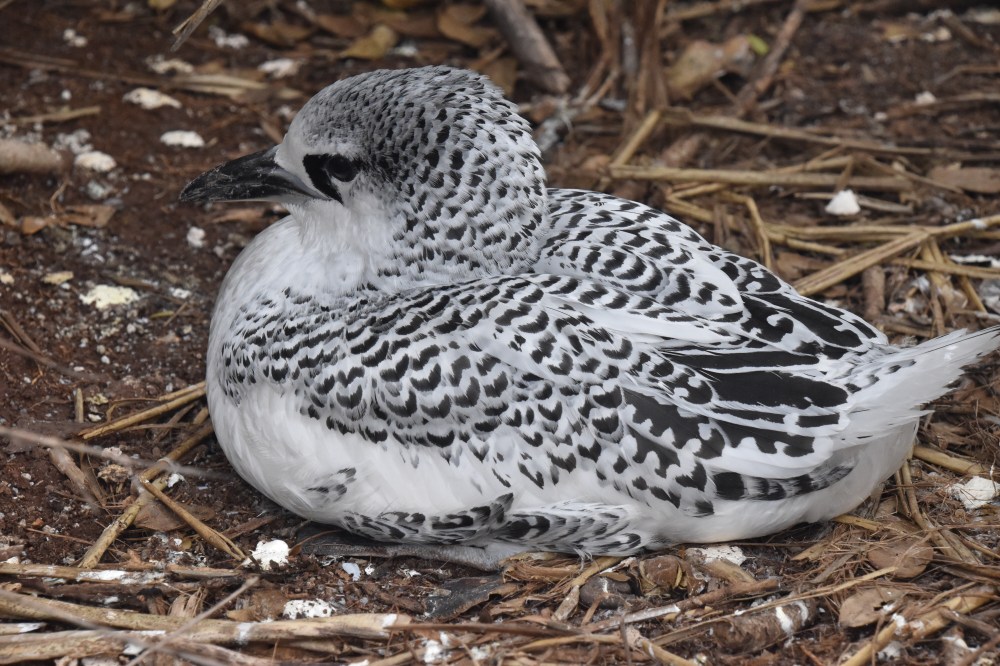
We eat by a record 4:15 pm, so to head up to the summit to see the Providence Petrel flight on our last night. Great views of pairs wheeling and swooping. Hard to get photos though. I attempt the Masked Boobies which are slower and more direct in their flights. 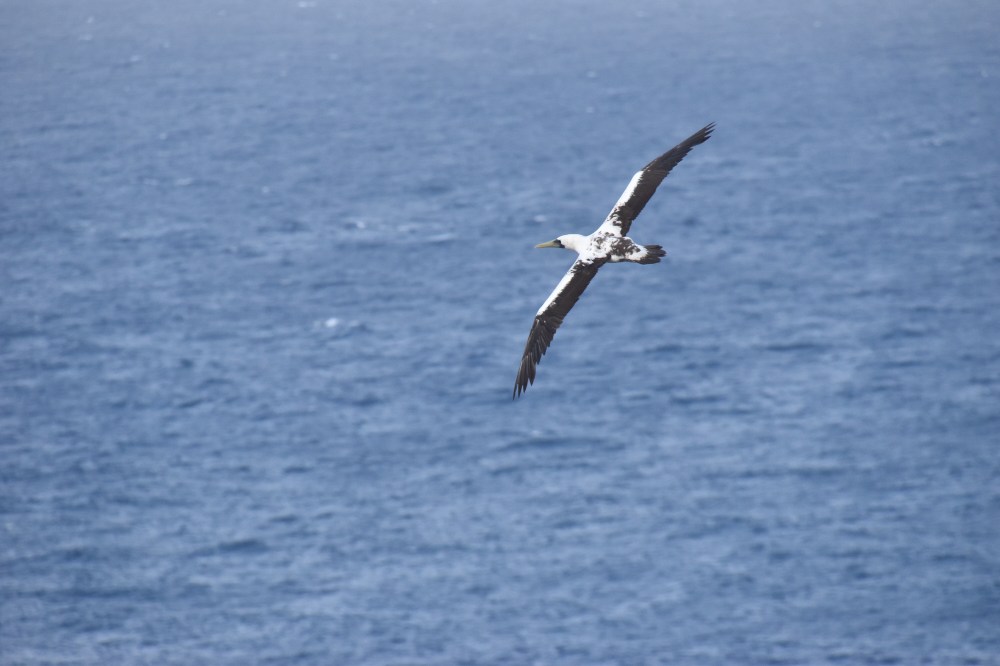
There are at least 20 Providence Petrels and many in pairs. Hopeful sign in the setting sun.
Back down to Owen’s Camp and the din of White-necks, Black-winged and Kermadec Petrels. Luke is pleased that he can download a GLS from a Kermadec Petrel that has been loggered for 2 years. That will be quite a track of movement over thousands of kilometres of ocean. 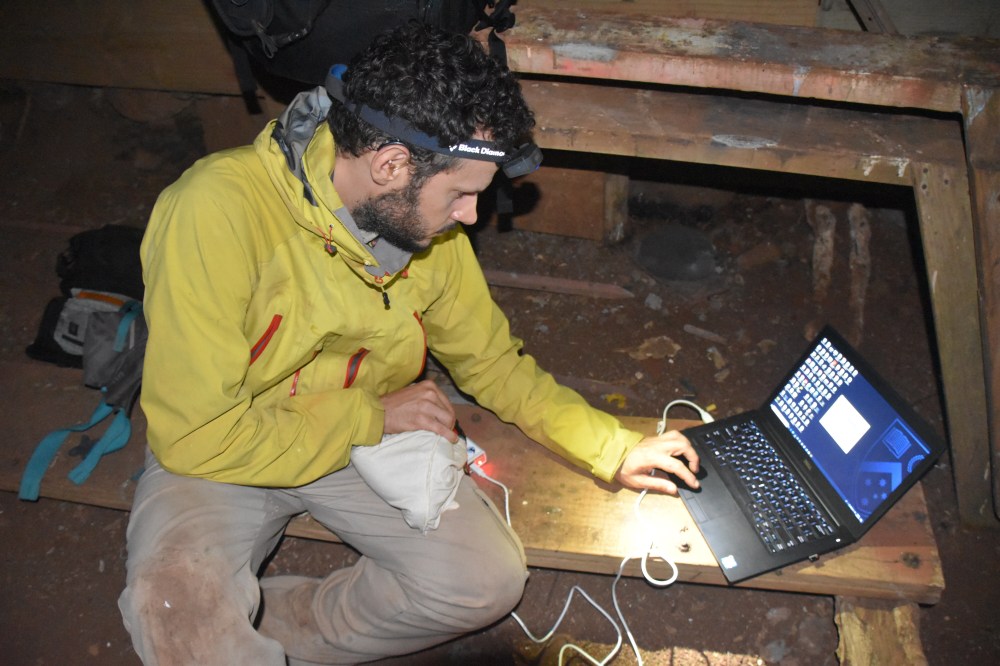
Mosquitoes are fierce tonight, but they don’t get me down as I’m happy we were able to stay and experience the wonder of a seabird colony.
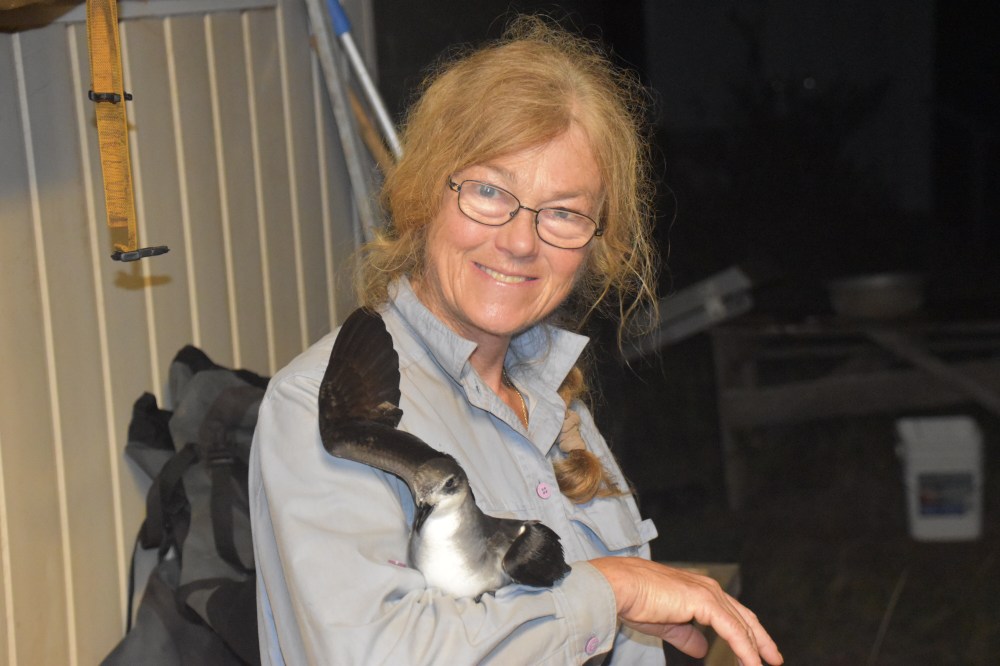
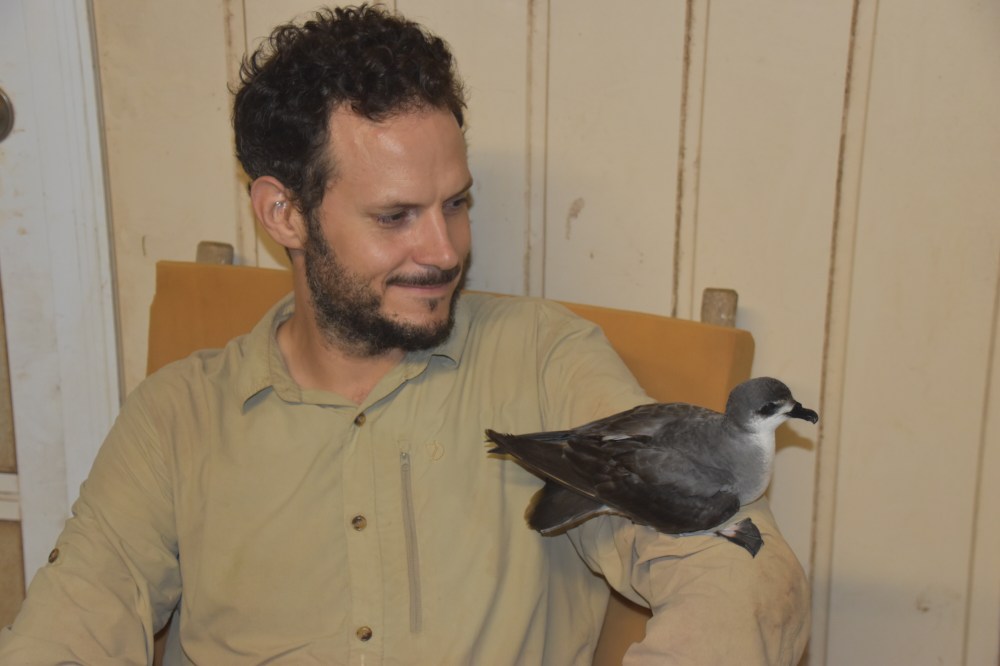
March 30th – Departure
Bigze is going to pick us up at 7:00 am at the Stool. That means leaving camp by 6:30 am. Quite a feat to get up, have coffee and something to eat, pack up last stuff, tidy up and pack down the trail! We make it just on time, but no boat is seen before 7:30. Daniel and I check the shore crabs in the tide pools and we prepare for the leap on to the boat. Bigze arrives with a boat load of tourists looking apprehensive. The boat swirls in and out on the swell, then gets close enough for their guide to get off on the slippery algae covered rocks. The coralline algae gives the best grip, so we wait and help the passengers off, chain our gear to the boat and get on easily. The weather is fair and we get back to Kingston Pier in about 15 minutes. At the pier, someone lowers a hook on a wire from the crane, a truck backs up and hauls up the boat. It’s quite a procedure and to think that every supply on Norfolk Island comes in this way. It seems amazing that there is so much infrastructure on both islands. We’re back on Norfolk !
Another group of wary and elderly sightseers gingerly get in the boat in sandals and white pants. Bigze attempts his utmost politeness and wipes the gunnels as the lady didn’t want to get her trousers wet!
We dash off to ‘The Olive’ for good coffee and second breakfast. There is a washing machine at the Polynesian which I use to great advantage, hang gear in the sun, go for a snorkel in Emily Bay and have a lovely but expensive dinner at the Bowling Club. Funny to see cars even go by, overhear chats about Norfolk Island independence and how unfair the Australian government is. We convince Luke to drive us out to Hundred Acre Woods to listen for Boobook or Morepork Owls and watch for bioluminescent fungi to end the night. Sleep comes easily after a long day.

 Trudy’s Pacific Adventures
Absolutely fantastic Trudy! I was totally in and planning to figure how to do this….until the rain came! Thanks for sharing and totally distracting me from work. Leah
LikeLike
dear Trudy! this is possibly the Most Amazing email I have ever received! what an amazing adventure! all those beautiful seabirds with oh so many challenges. lots of love from us!
On Thu, Apr 4, 2019 at 2:07 AM Trudy’s Pacific Adventures wrote:
> Trudy Chatwin posted: ” Phillip Island is only 6 km off Norfolk Island in > the South Pacific Ocean (latitude 29 degrees S and longitude 168 degrees > E). It is 190 hectares and 2 km length and width, with an altitude of 280 > m. It supports endemic plants, invertebrates including” >
LikeLike
WoW!!! What an adventure!
LikeLike
I am extraordinarily impressed. I cannot believe the challenging conditions for those precious birds and their chicks. It seems miraculous that any chicks survive the onslaught of the Australian tailors , the centipedes and the frightful deluges.
I can hardly believe the strength and dedication of Luke and his team.
LikeLike
Thank you Trudy so much for this wonderful account and beautiful pictures of your adventures. What a challenge for these birds! Hopefully the work that Parks is doing will continue to restore this special place, and make it a little easier for them to survive.
LikeLike
Hi Connie. Thanks so much. It was wonderful to be working with the birds again. We went out this morning looking for herons and trillium. No herons here that we could see. Lots of trillium. Now I’m working on income tax 😐. How were toads at Morrell this year?
LikeLike
Thank you, Trudy for writing such a fascinating account of your experiences on Phillip Island. Your photos are excellent. I have a super busy day today but could not stop reading. Good job! I will share this with my seabird fans here in Hawaii. Luke and I counted albatrosses together at Midway Atoll and stay in touch. Much aloha, Susan Scott http://www.susanscott.net
LikeLike
Trudy, I just love coming back to this blog entry to indulge in enjoyable recollection of our time on Phillip! Only got two weeks out there next year.
LikeLike