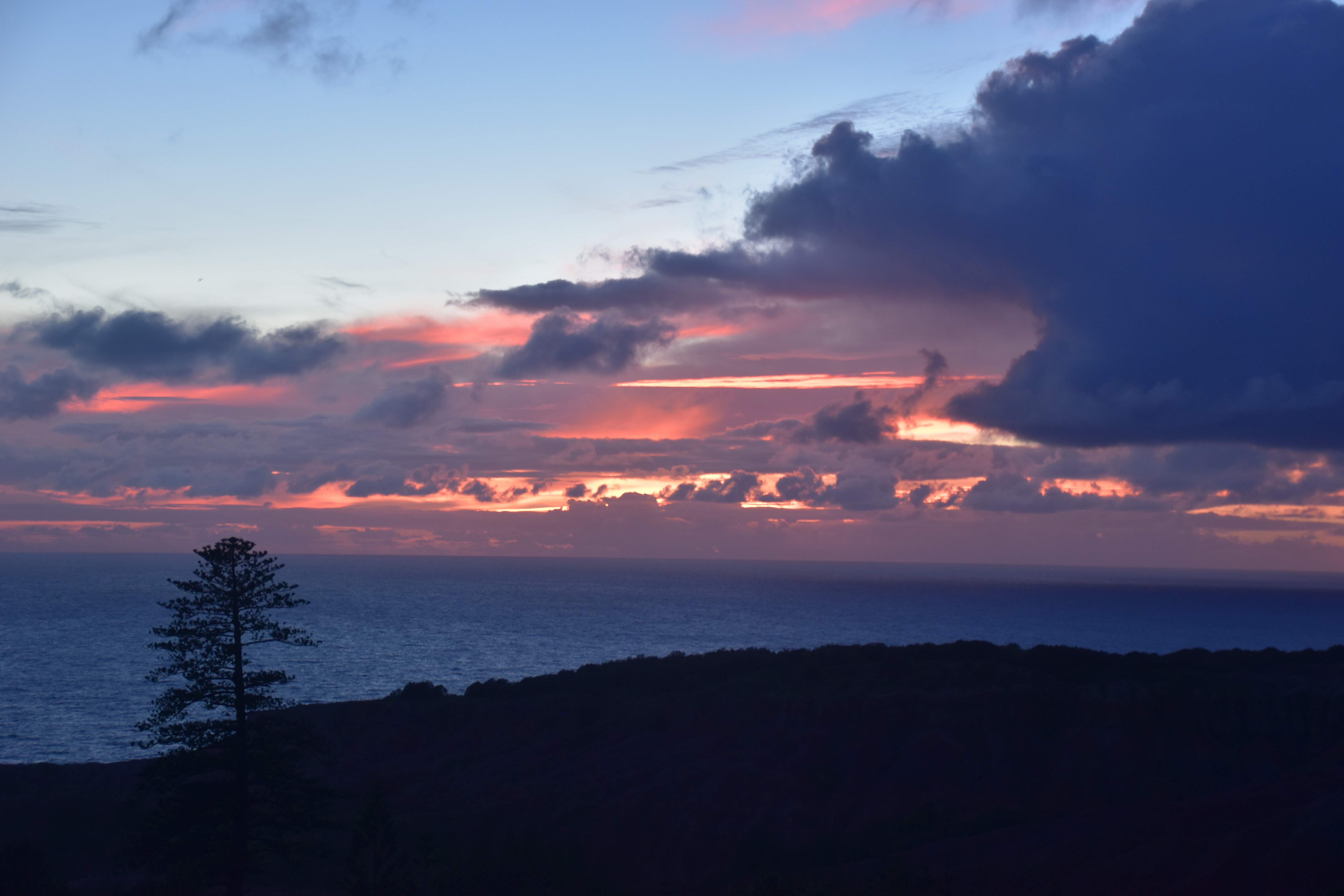
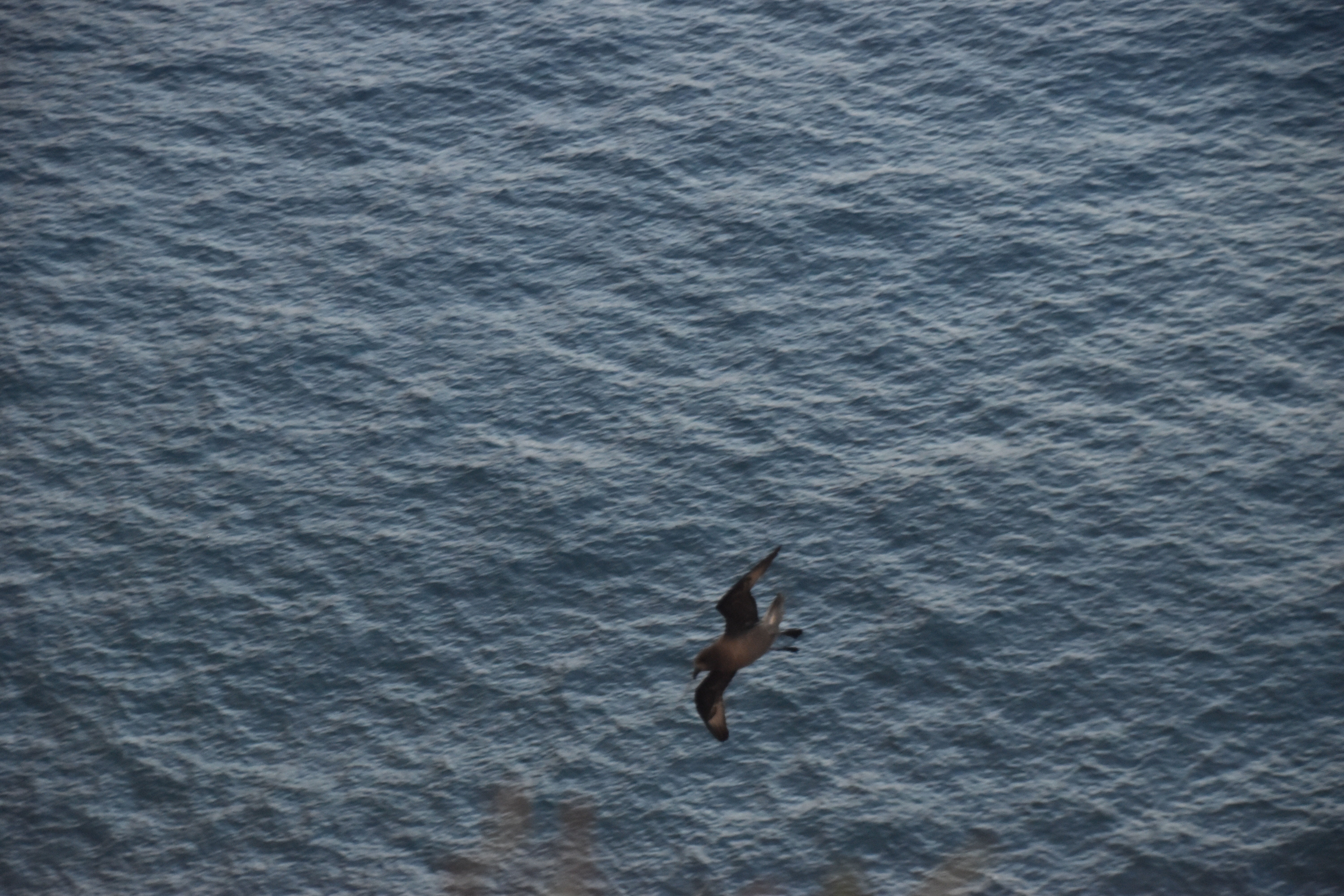
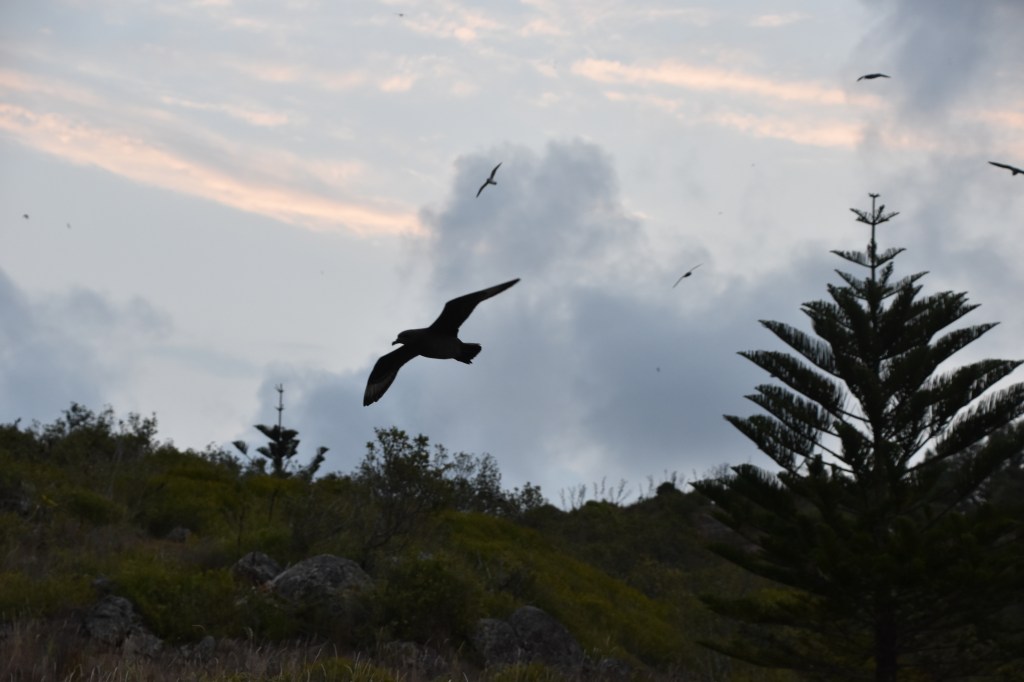
The wind picks up in the afternoon from breeze to gale. About an hour before sunset, Phillip Island comes alive with sight and sound. Visiting Black-winged Petrels begin to fill the sky with their high-pitched “weh-weh-woo-did- dear” chatter and aerial acrobatics. Often the Black-winged Petrels tip, glide and swing by in pairs, so they are a constant source of entertainment at camp. They are especially impressive on headlands as they catch the updraft.
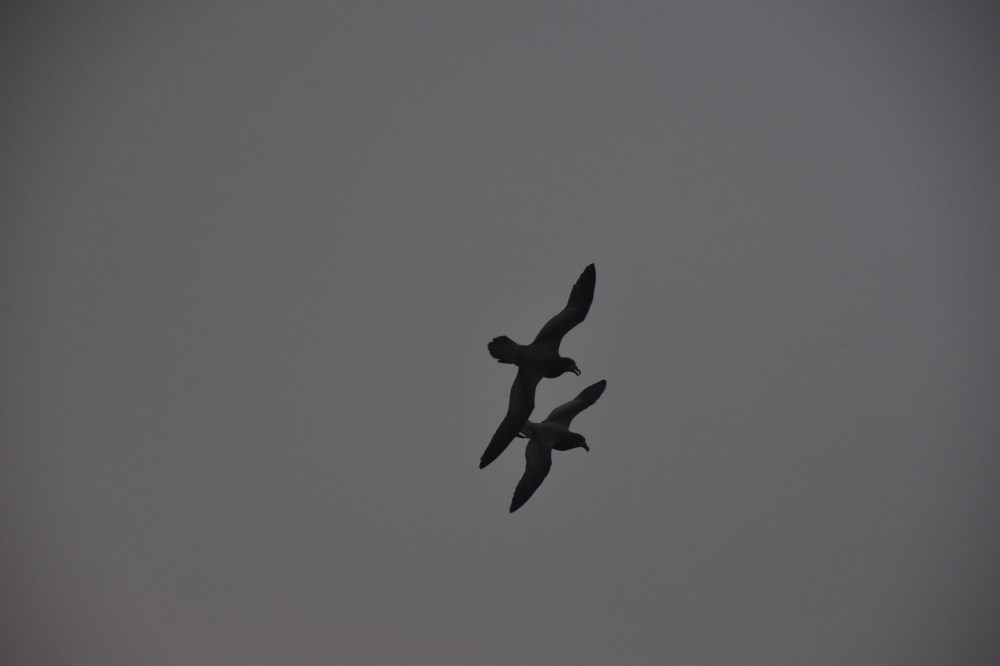
A pair of Black-winged Petrels wheel, swoop and call
In late March they have been joined by the Providence Petrels whose call is similar but in a lower pitch. The sun sets, often spectacularly over the western horizon of the Pacific.
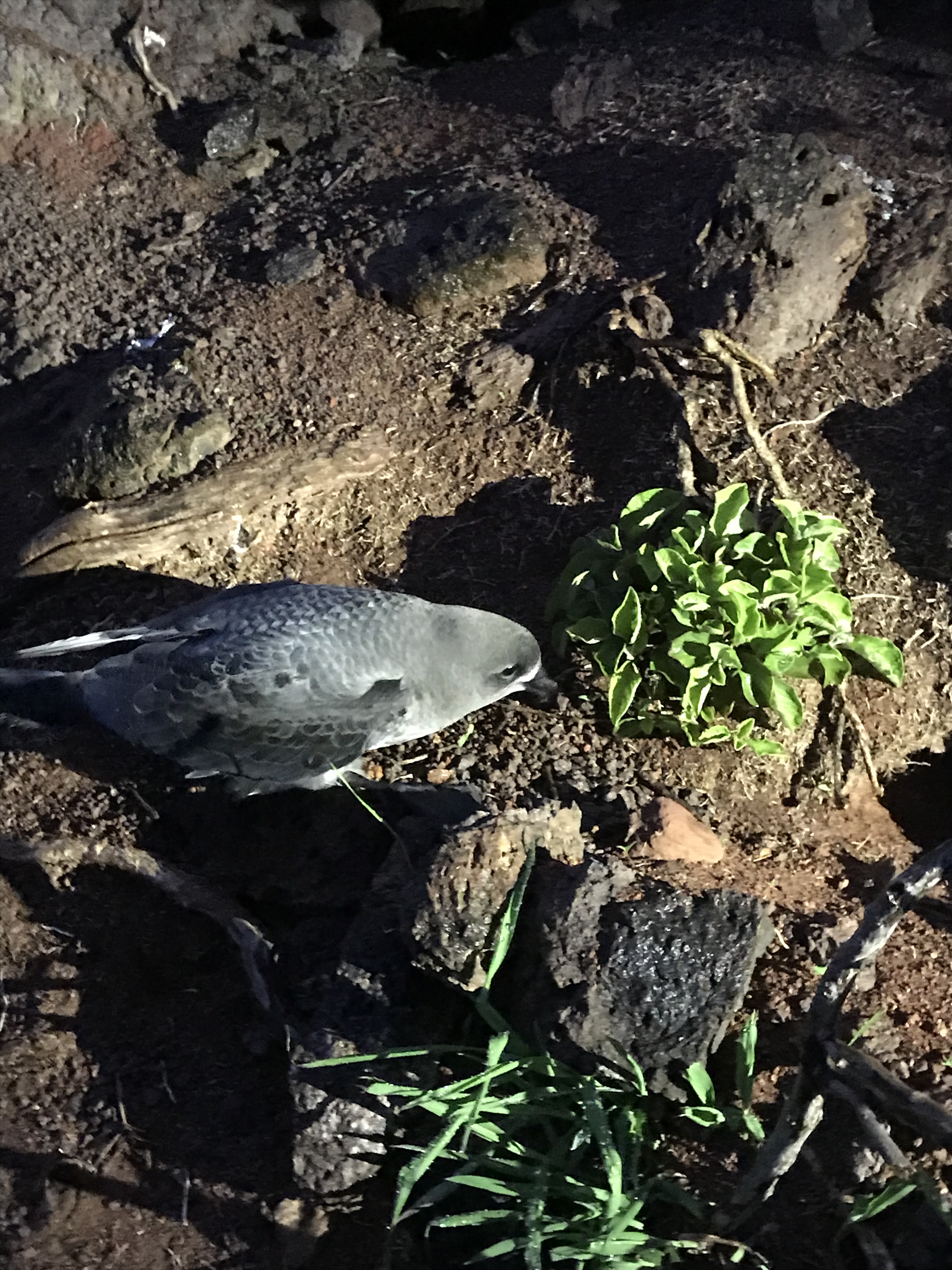
Black Noddy adult and chick begging calls diminish as light fades. If we want to catch the incoming flight of Kermadec Petrels, we have a very early supper (4:15 pm) and head up to Jacky Jacky and Ridgeback at the summit of Phillip Island. The sounds of seabirds drown out the surf and wind. Kermadec Petrels have a distinctive guttural “owark-gluck-gluck-gluck” and are heard from below Owen’s camp to the grassy area below the ridge. Providence Petrels swoop by at eye-night on windswept Ridgeback and Jackie Jackie. It is an amazing sight with the steep cliffs to the ocean and just ocean until New Zealand.
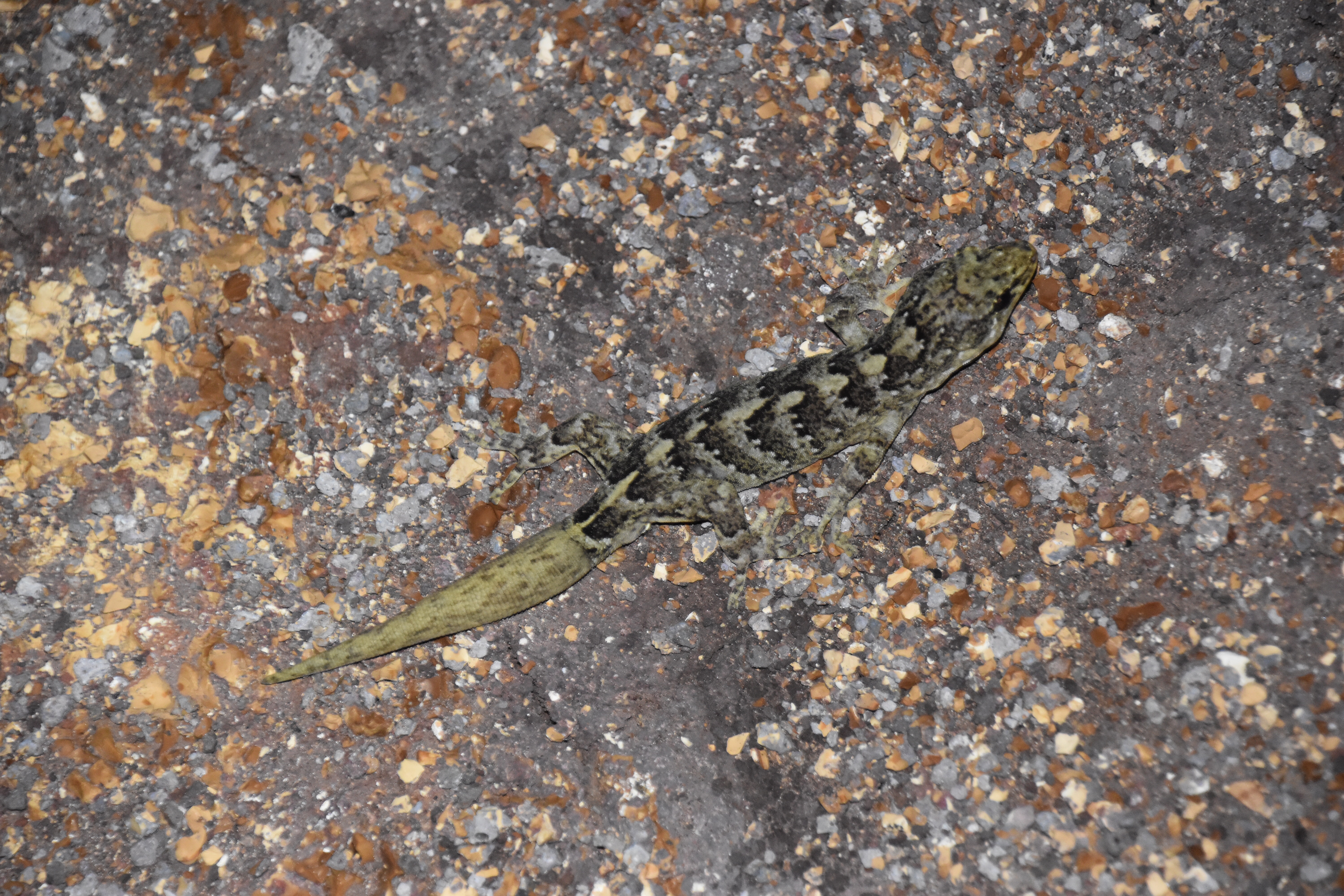
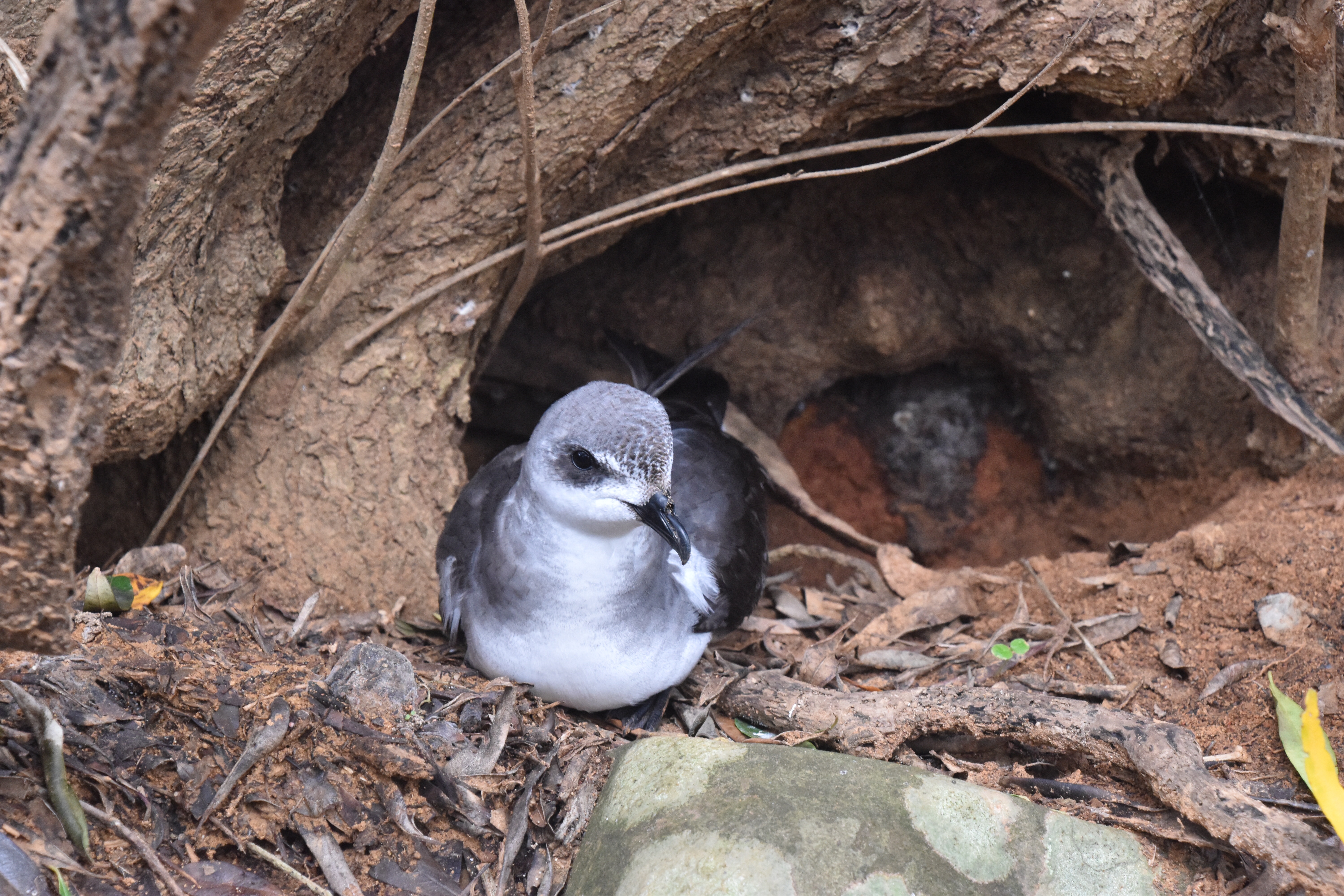
Headlights on, we scuttle back down to Owen’s camp. By 6:30 pm it is a cacophony of Black-necked Petrels and White-necked Petrels with their distinctive trumpeting, almost maniacal call (woo-awe grack-grack-grack). When I first head under the tarps to check for the adult White-necked Petrel return, about 20 fat geckos scuttle away from my light.
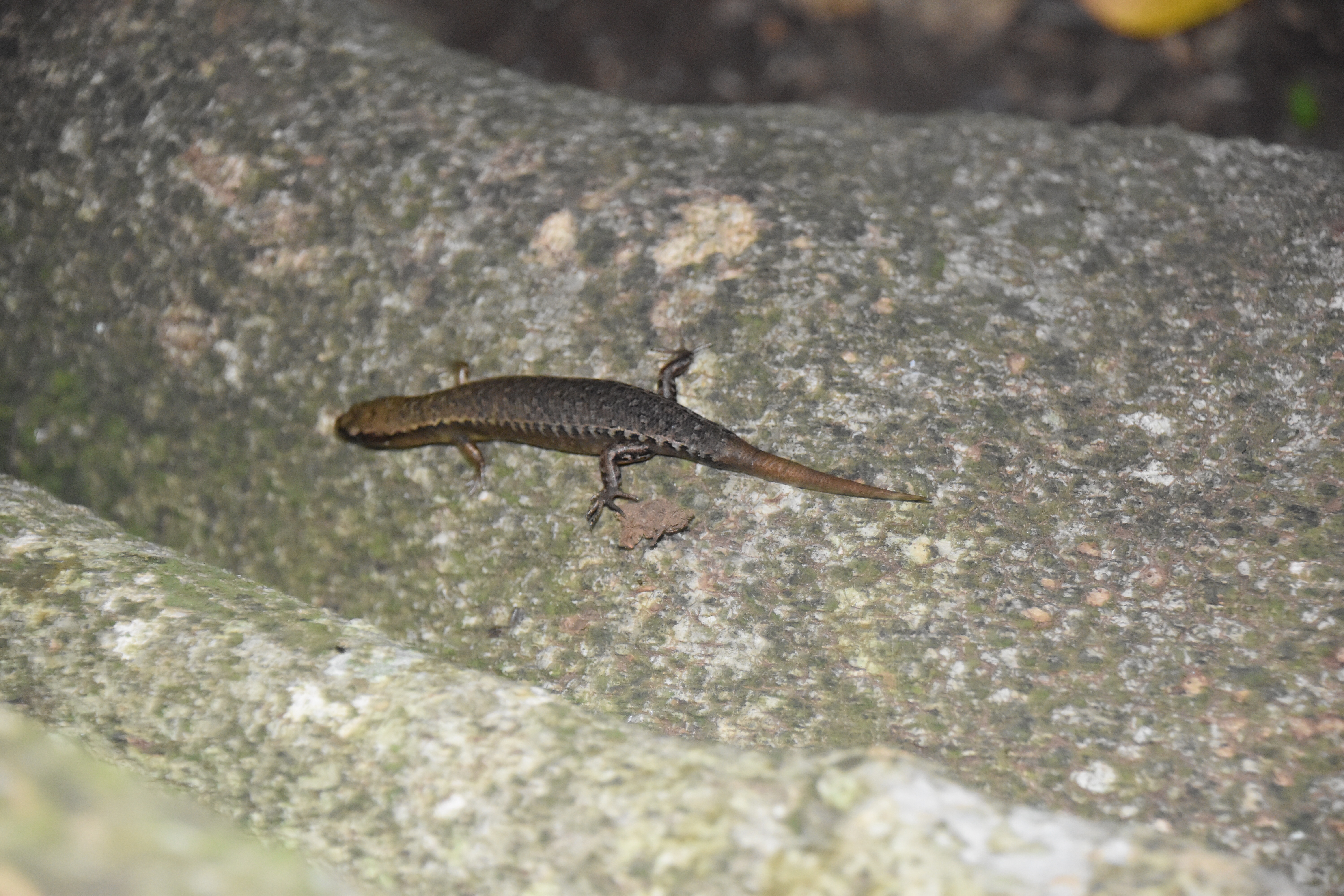
These nocturnal reptiles emerge from under boards and the myriad of crevices at the odd structure. Sometimes as I creep around checking nests with my very dull red light, then grab a post for support, I inadvertently grab a gecko which is somewhat startling, even though they are quite harmless. The Phillip Island gecko (Christinus guentheri) is super abundant here and like other geckos can drop its tail when disturbed. The dropped tail writhes like a live fish, presumably as a predator decoy. Even the only other reptile on Phillip, the Norfolk Island skink (Cyclodina lichengera) is nocturnal on Phillip Island.
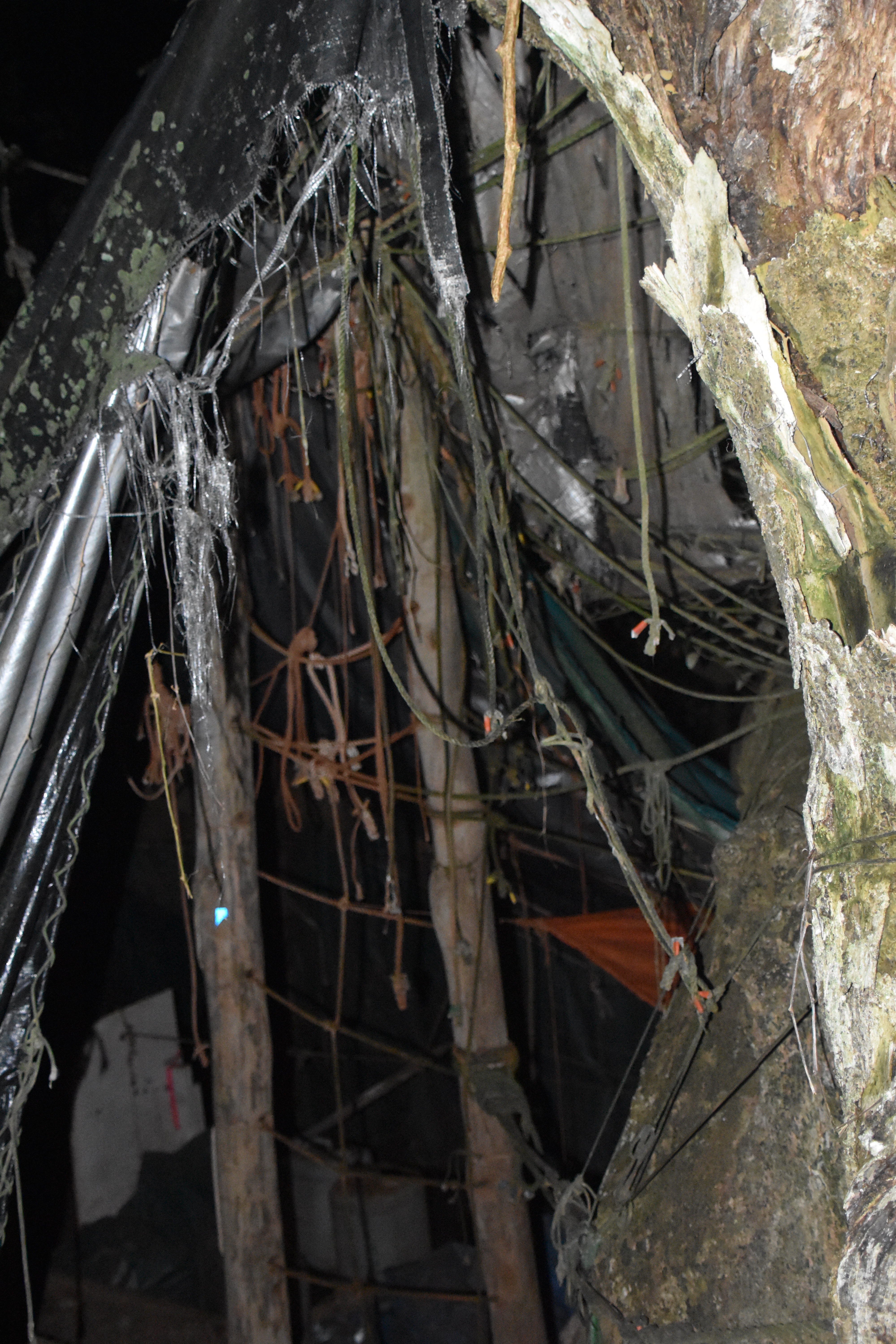
The smell of Owen’s camp bears mentioning. Perhaps its the combination of flattened geckos, seabird droppings and moist spots?
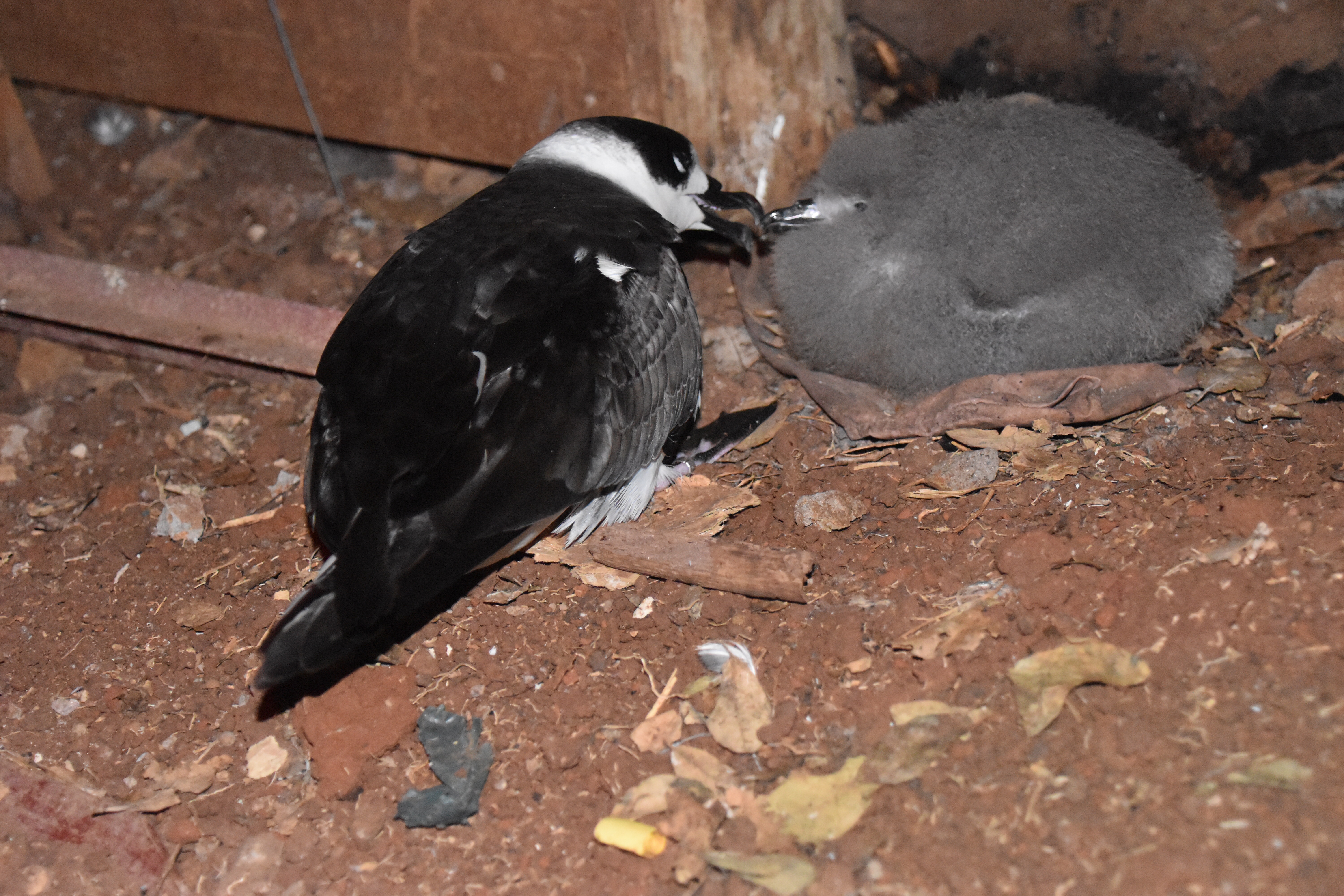
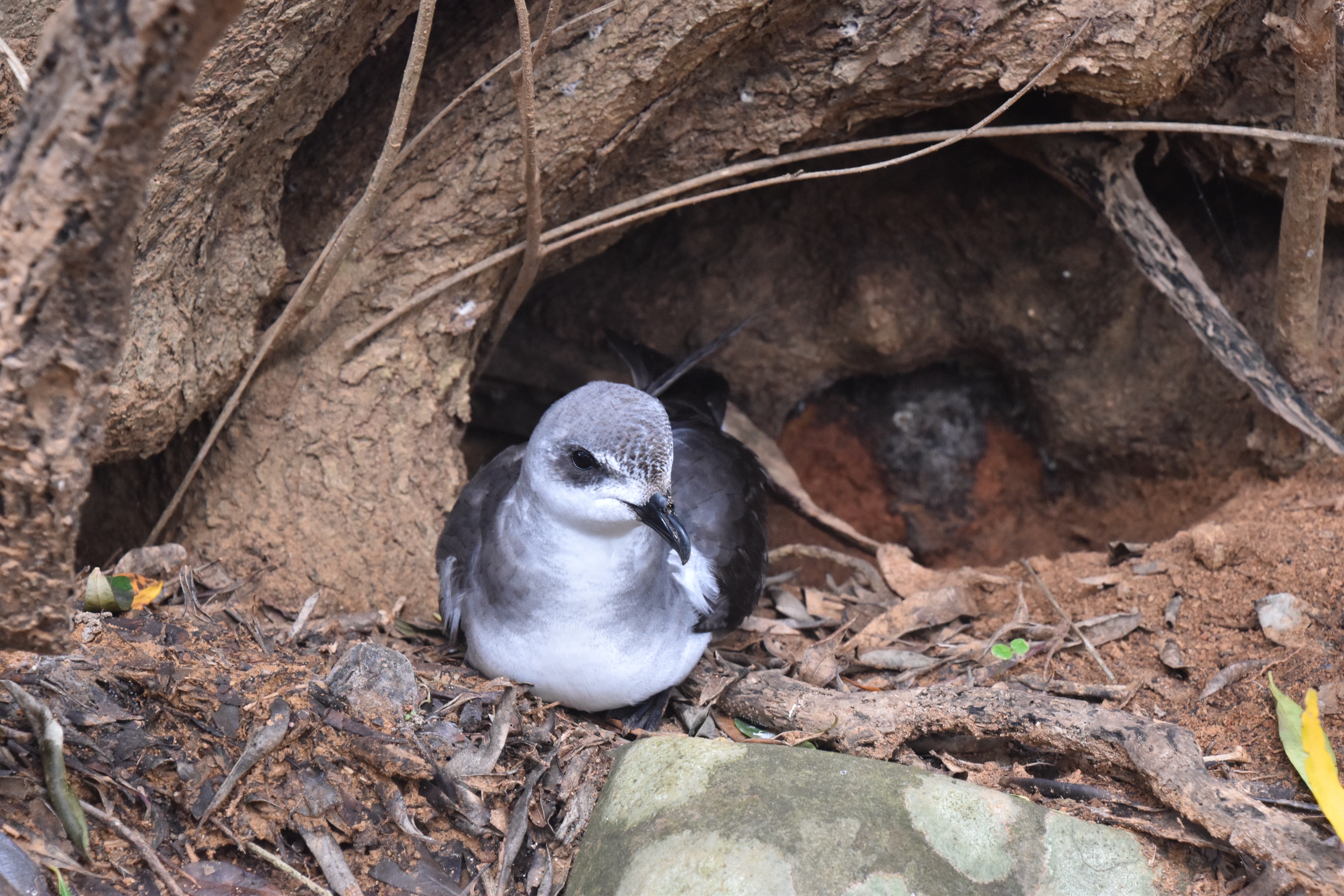
Owen’s camp smell is reminiscent of a bad chicken coop. I have gotten used to the sounds and smells here while waiting for the likely silent parents of White-necked Petrel chicks coming in. One hears scrunching plastic and scratching as prospecting pairs of Black-wings trying to dig through and under tarps to make burrows. There is the static radio noise of a pair of courting White-necked Petrels just outside the tarps. I first thought this was Luke trying to radio me! When the petrels are quiet (by about 8pm) one hears the dull roar of wind outside interrupted by Luke coming to check on me and the annoyed chatter of noddies when he walks under their nests. The sound that I wait for is the sweet pleading of chicks when their parents return with proventriculas full of partly digested small fish, squid and krill. The chick first squawks and pecks at its parent who then preens the chick (especially just under bill), then the chick begins the squeaky begging call.
“Bird in the hole, bird in the hole!” is the radio call I excitedly make. “Watch that bird, don’t let it leave!” Replies Luke. There is a lot of waiting for the adults to arrive and have their GPS tags either removed or attached to their medial tail feathers. Each GPS tag has only a battery life of approximately 3 to 4 weeks max. These 2 gram tags with antenna not only cost around $800 each but contain the tracking data, Luke needs for his PHd thesis. The GPS tags contain very accurate tracks that can be used to determine what oceanographic and habitat conditions the petrels use during their flights to provision for the chick and themselves.
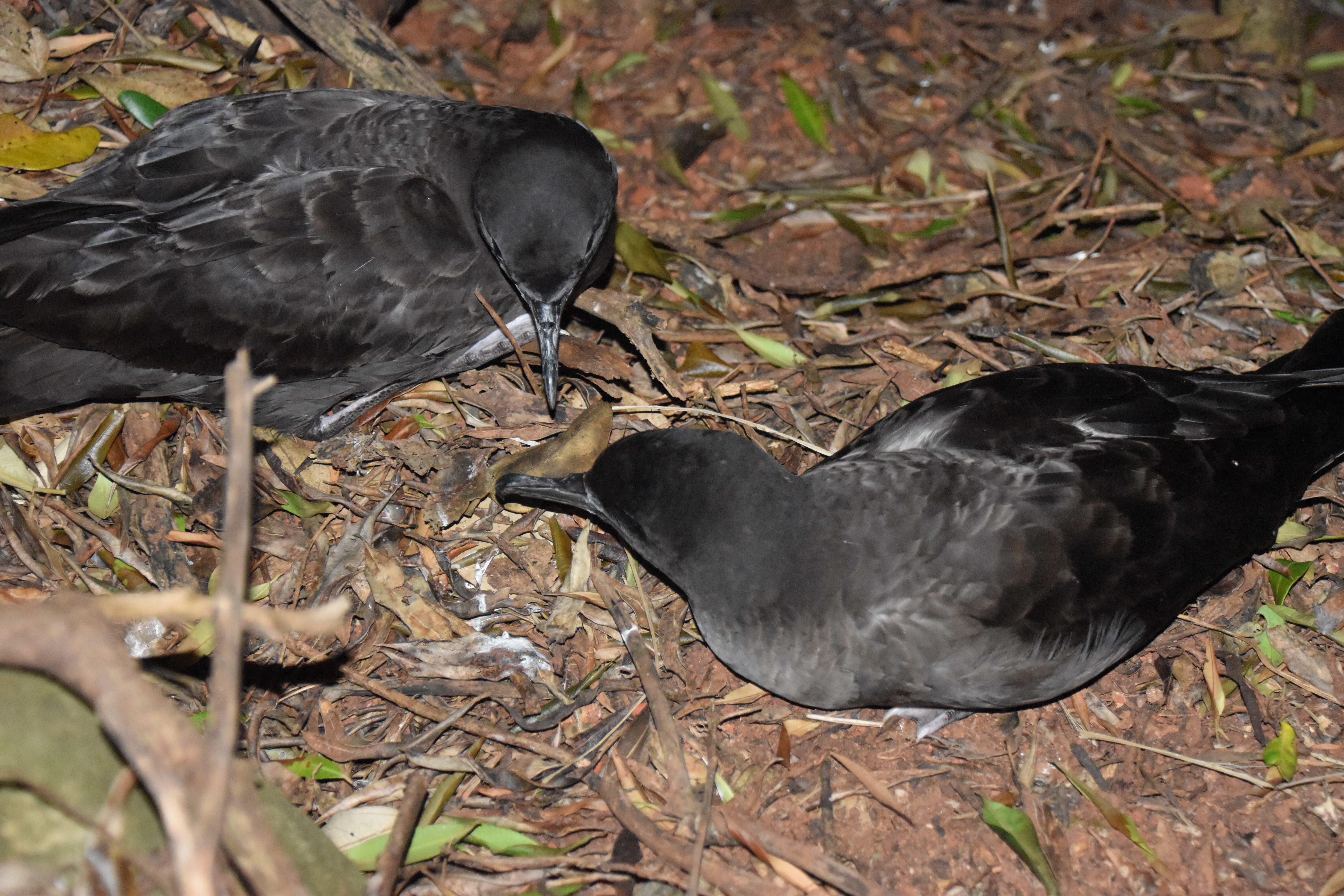
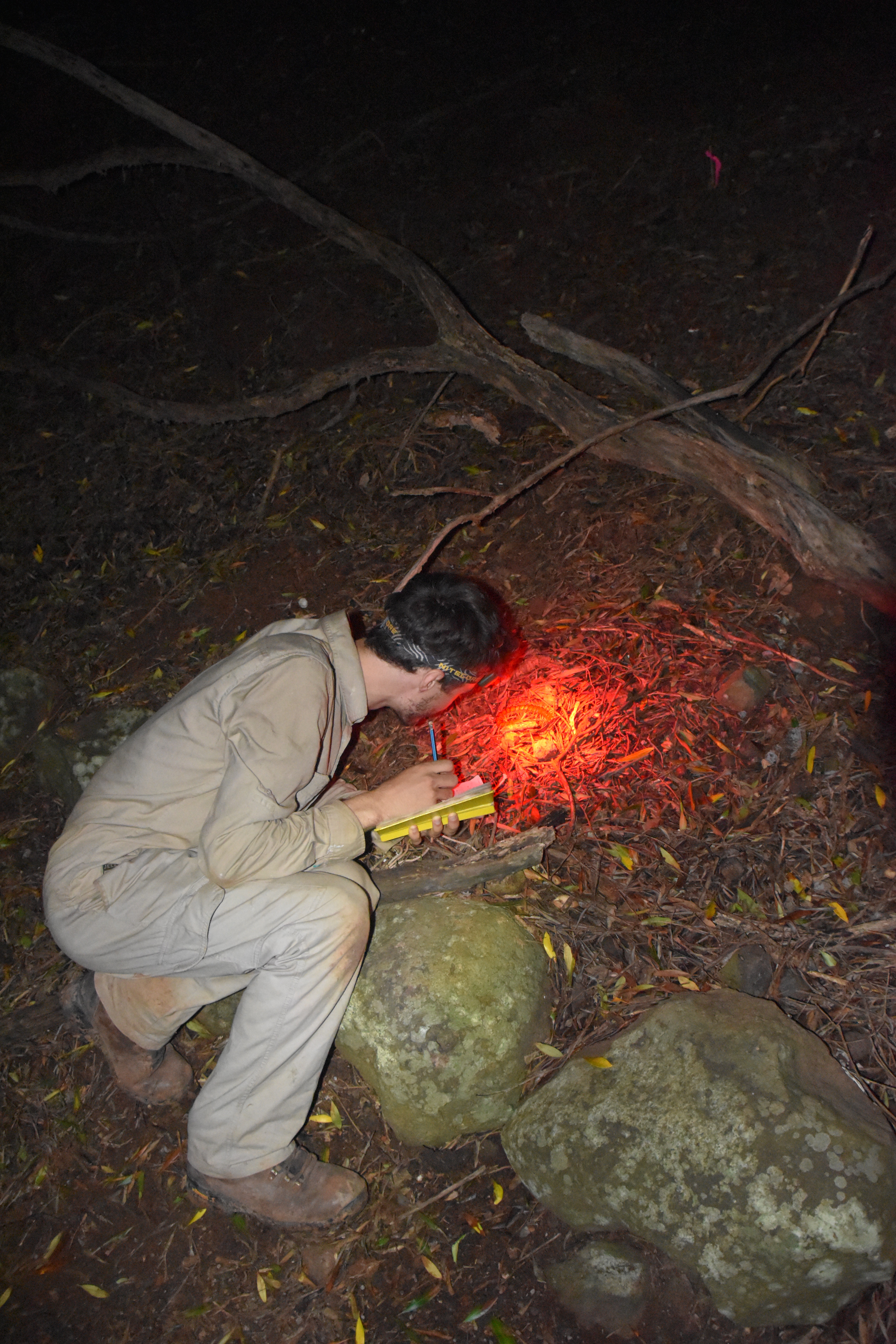
I usually wait just outside the hut and occupy myself (between red-light nest checks so as to not disturb the nocturnal birds) for 3 to 4 hours with watching the night sky (sometimes with stars and moon), shadows of the gnarled white oak branches, the wind whipped African olives and best of all, the courting or possibly sparring Black-winged petrels.
The pairs will scuttle about and duet quite loudly. On a couple of nights, I sat beside some rotting stumps and cut olive branches until Daniel pointed out a giant centipede that was scuttling into the rotting wood. Although the centipedes seem to prefer dark, dank crevices to the relatively dry hut or rocks, we have seen centipedes in the hut.
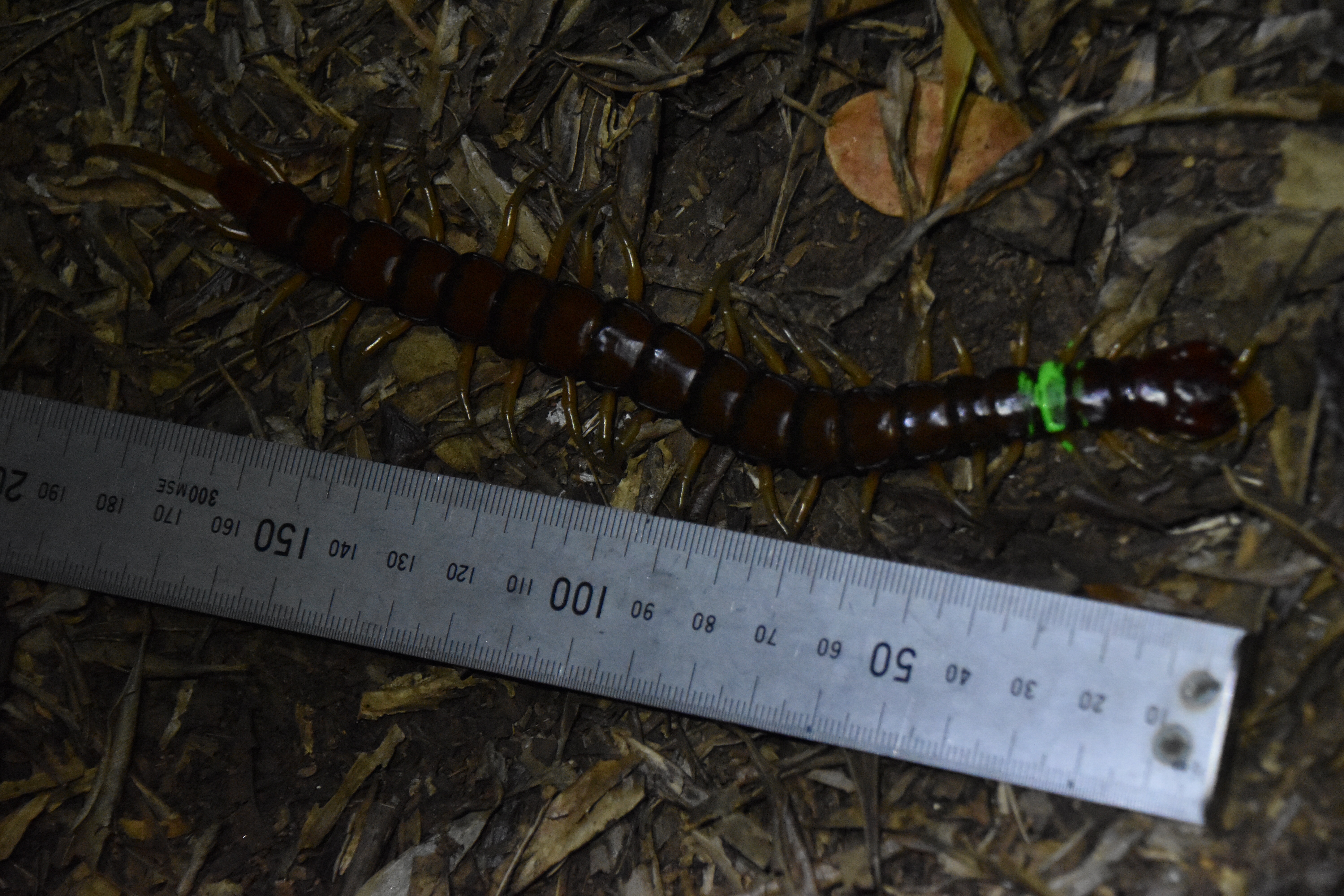
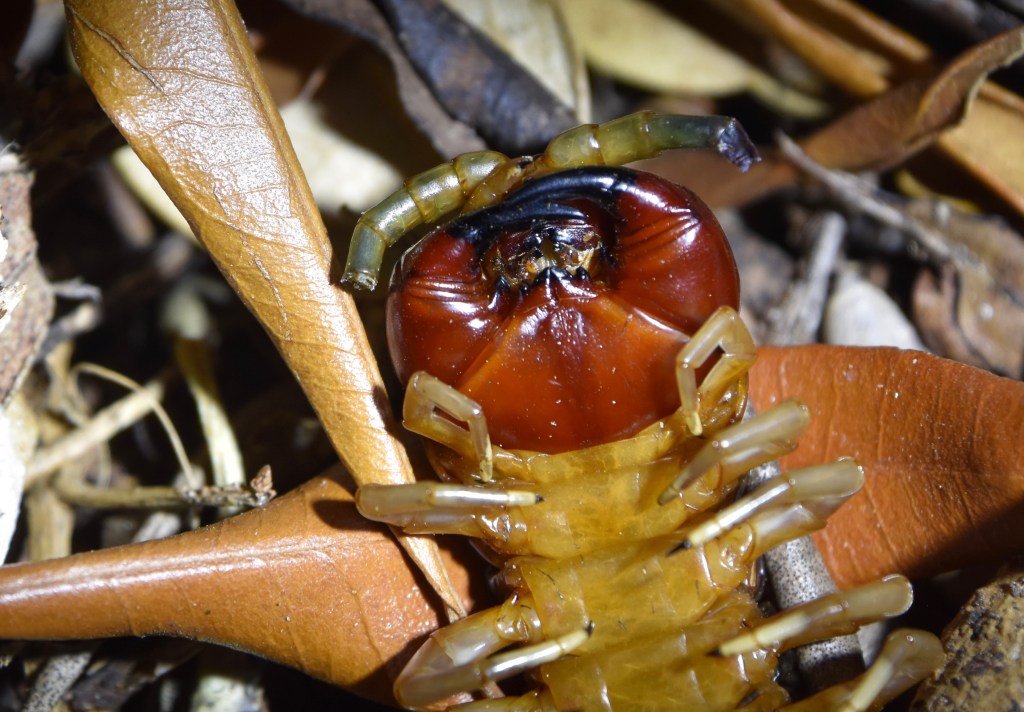
Aside from one paper describing Cormocephalus guentheri, nothing is known. It turns out these creatures are nocturnal and quite adverse to bright light.
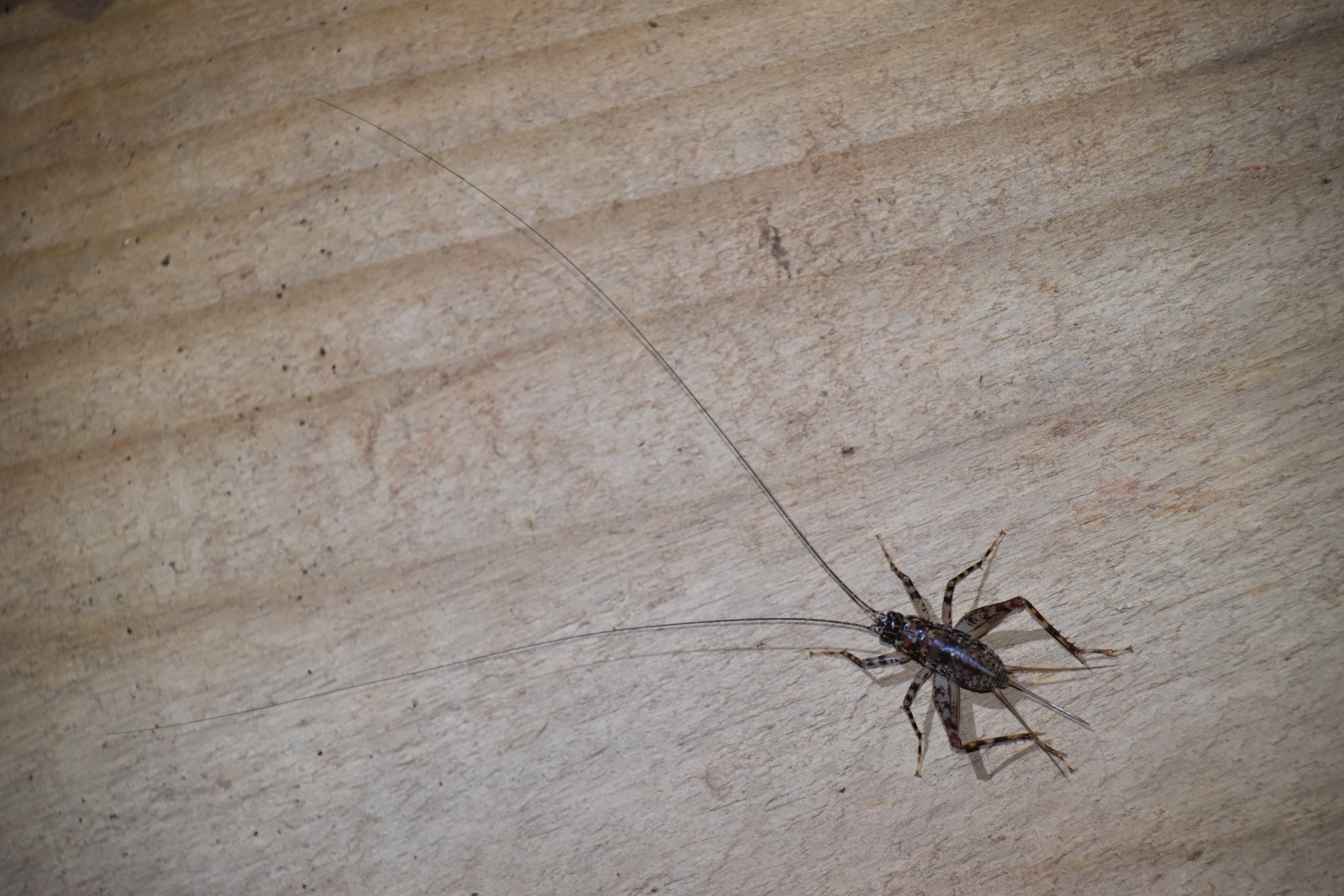
Both the centipedes and the cockroaches mostly occur in humid gullies with an overstory of white oak or olive and multiple crevices. Centipedes have been observed raising up and attacking petrel chicks with their biting mouthparts, but mostly Daniel observes them eating crickets, pill bugs, other invertebrates, dropped fish and geckos.
The centipedes also will eat dead things and Daniel has some good observations of one cannibilizing another centipede. Of concern is their predation on petrel chicks. While I was here, Daniel reported in detail the prolonged attack and death of a Black-winged Petrel chick. These giant centipedes are up to 30 cm in length and about 1.5 cm wide and with their all their legs, they present a menacing appearance. Daniel’s mark-recapture work seems to indicate they are very numerous, but the centipedes can manage to scrape off marking when they clean themselves. Synthesizing all the hours of observation data at all times of day and night will be the challenge of Daniel’s BSc Honours thesis.
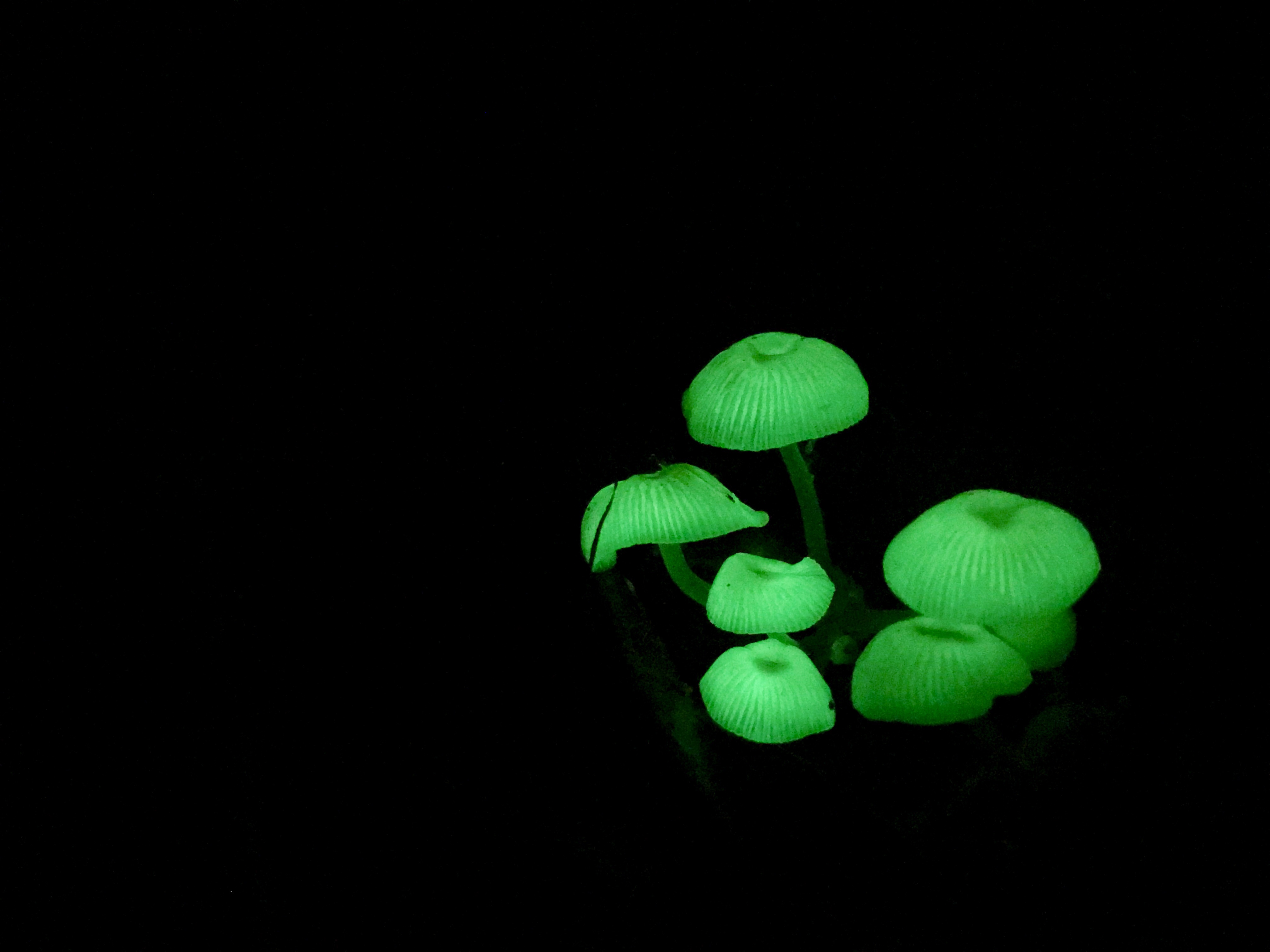
Once Luke is satisfied that either the White-necked Petrels are finished coming in (moonlight nights) or we have been able to tag all the White-necked Petrel adults possible (record night March 28th, 2019 after the period with moonlight) we pack up and head down the hill to our camp. En route, there are amazing things to be seen in the dark. Of all the mushrooms that have emerged after the big rains, the bioluminescent mushrooms are the most beautiful.
“Turn off your light” says Luke. Clusters of glowing green mushrooms appear in Mordor and on dead trees along the path. With a background chorus of prolonged ghostly ” woo-oohs”of Wedge-tailed Shearwaters and giant centipedes lurking about underfoot, surely a shipwrecked sailor on Phillip would wonder if he’d been dropped in some haunted place. We howl back at the Wedge-tailed and it prompts more ghostly howling.
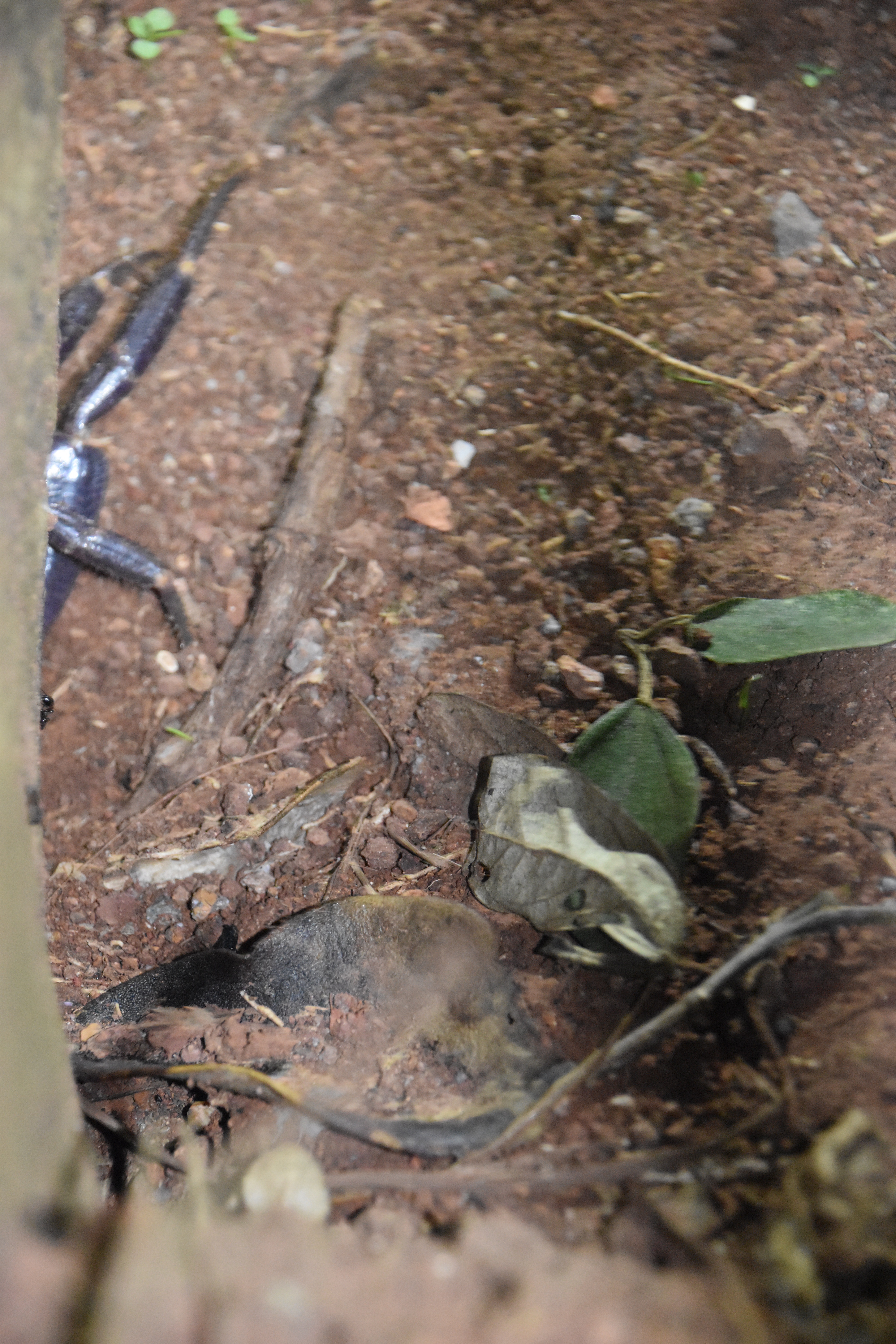
One night, Daniel radioed us that he had observed a crab going into a burrow. Luke knew that land crabs were rare on these oceanic islands and thought this observation was worthy of checking on. Joel (Norfolk ranger) said that one or two had been seen, but not for several years. So Luke and I went on a land crab search near the spot Daniel had seen the crab. Where would such a creature hide? Similar to many of the nocturnal creatures here, Luke located the crabs legs poking out of a burrow under a tree root. Despite luring it partly out of the burrow by vibrating a twig nearby, the dark purplish coloured crab with hirsute hairs on its legs would only partly emerge from its liar. Daniel managed one crab photo with a cheliped and one eye emerged. The crab’s behaviour suggests that it is an ambush predator. The cool thing about working on an oceanic island like Phillip is the possibility of discovering a species like this crab that is new to science.
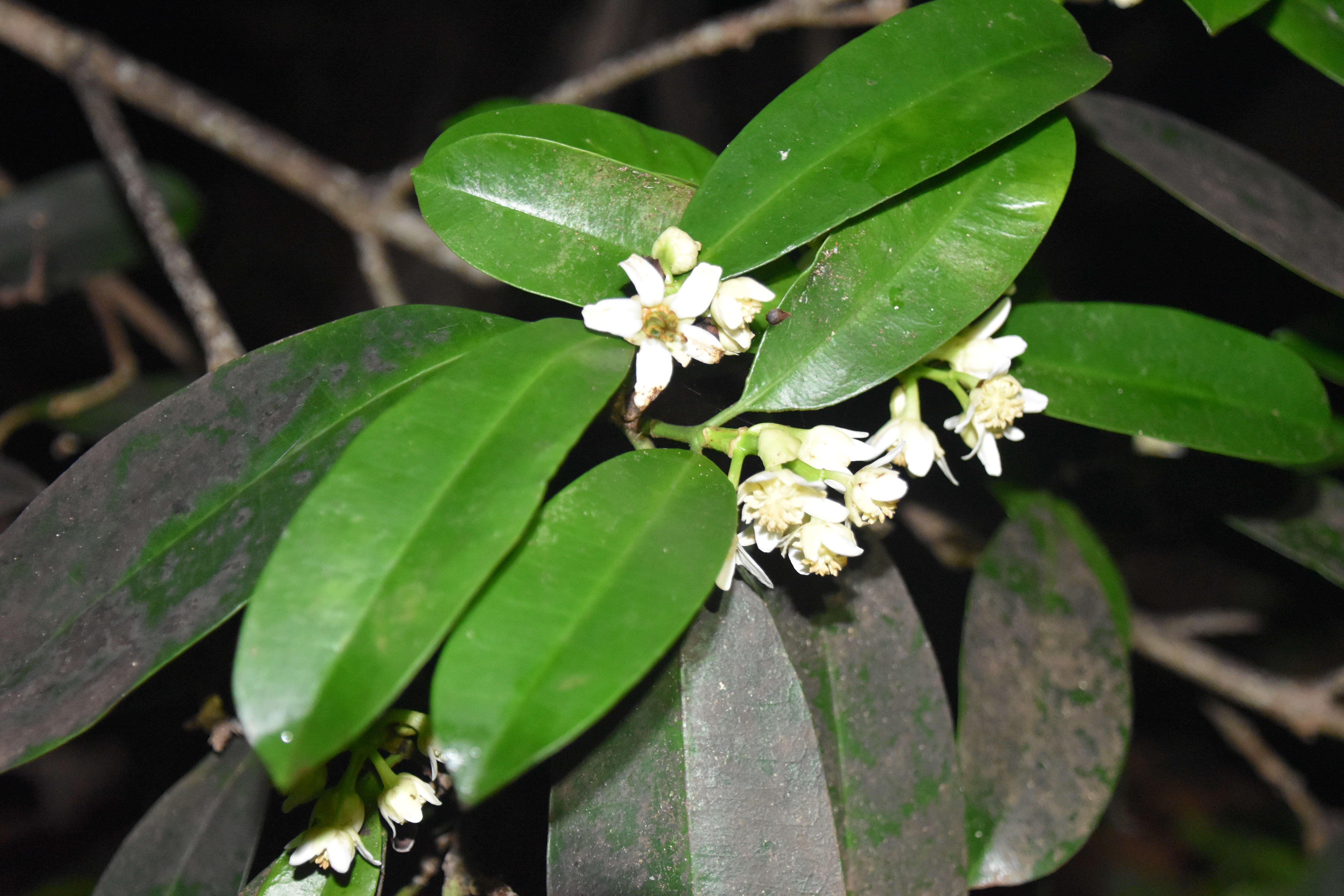
In the dark with headlights focussed on a small area, it is possible to see things that blend into the landscape by day. The sweet night scent of bloodwood (Baloghia inophylla) drew us to a small native remnant of sub-tropical forest. This tiny ecosystem seems full of life and is the only spot that cricket sounds over-power the seabird calls.
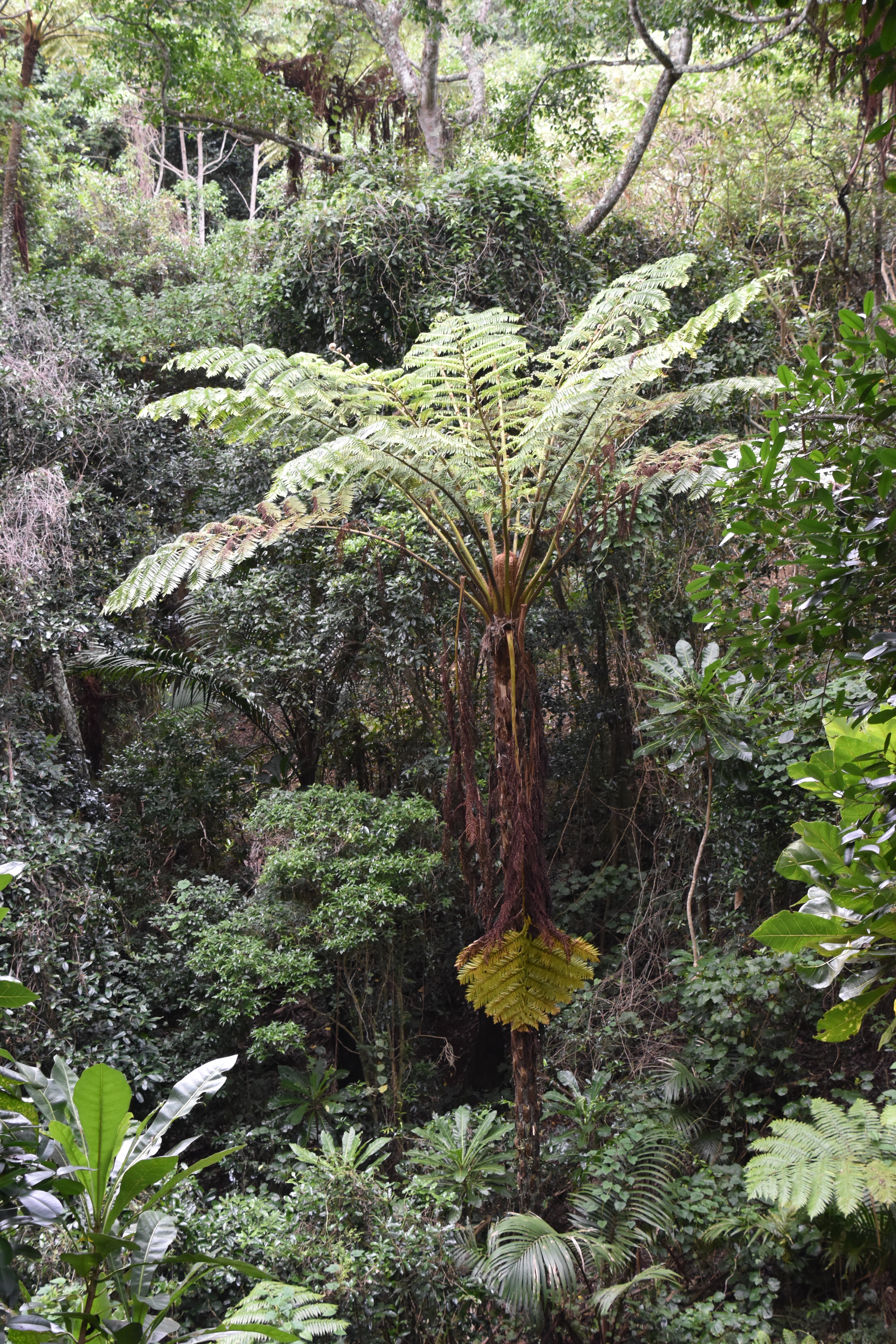
Giant Norfolk Island tree ferns (Cyathea brownii),
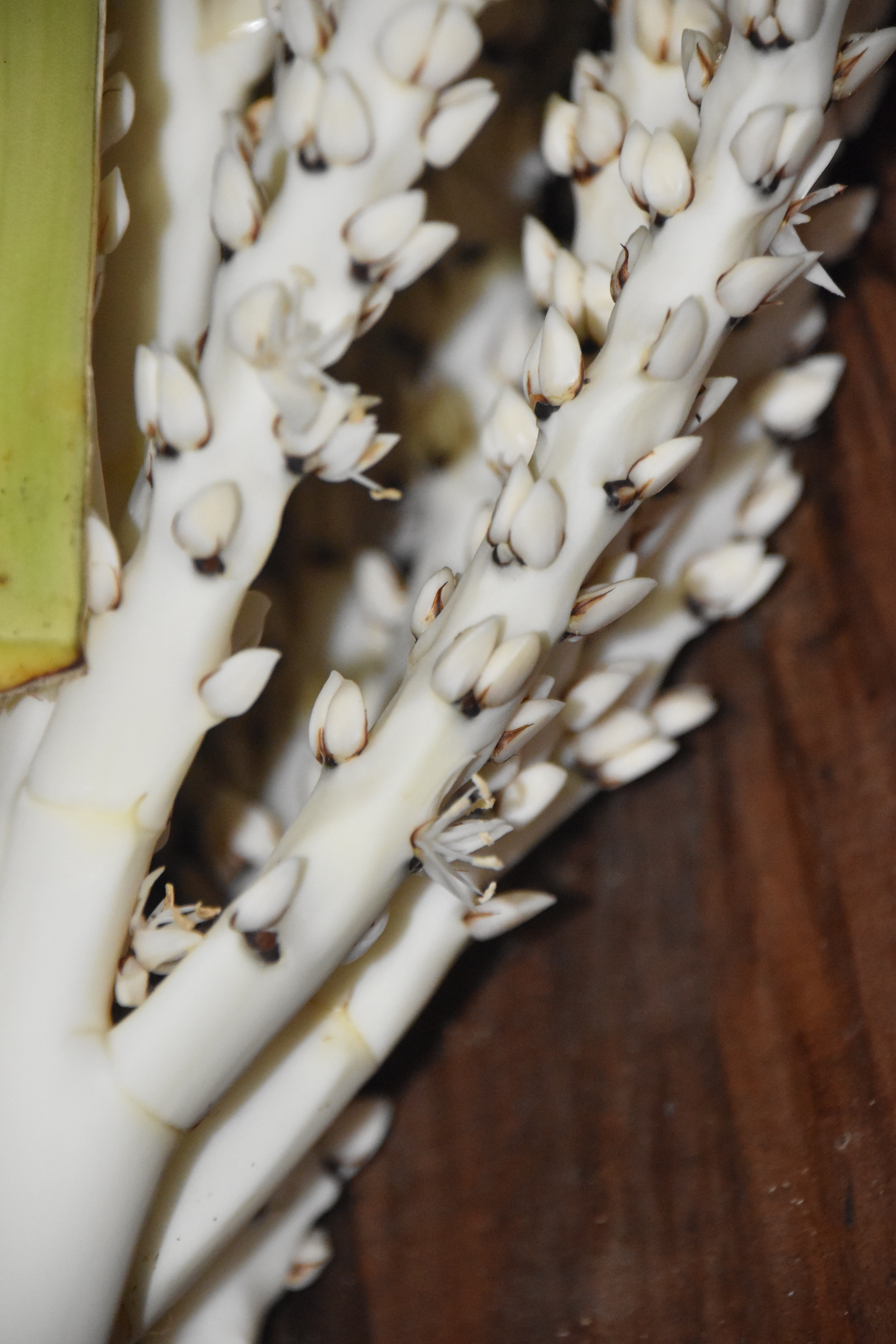
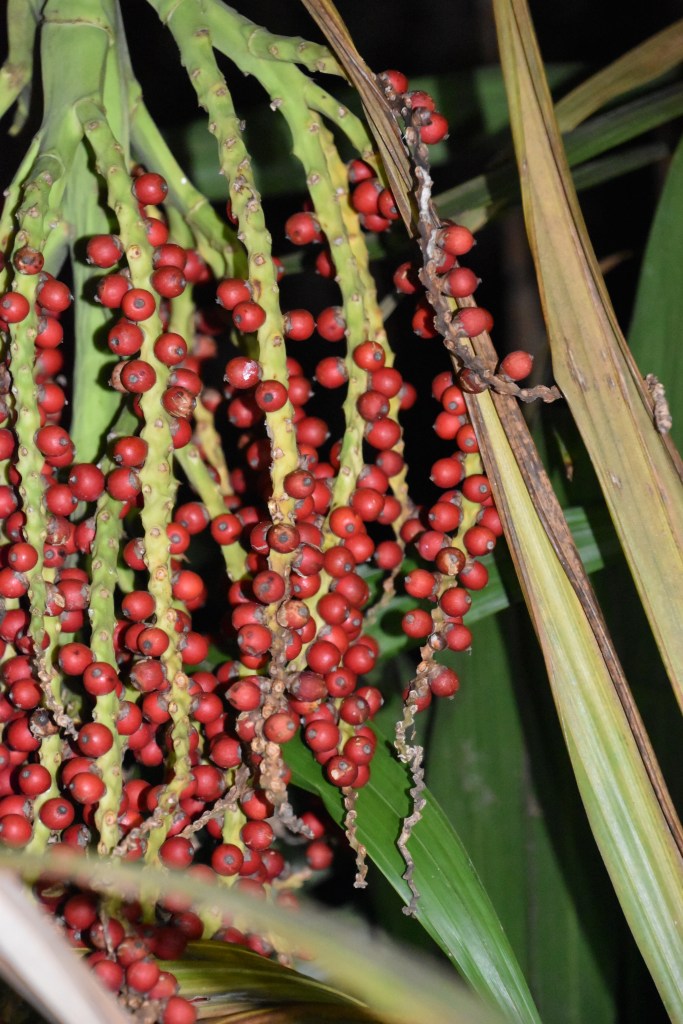
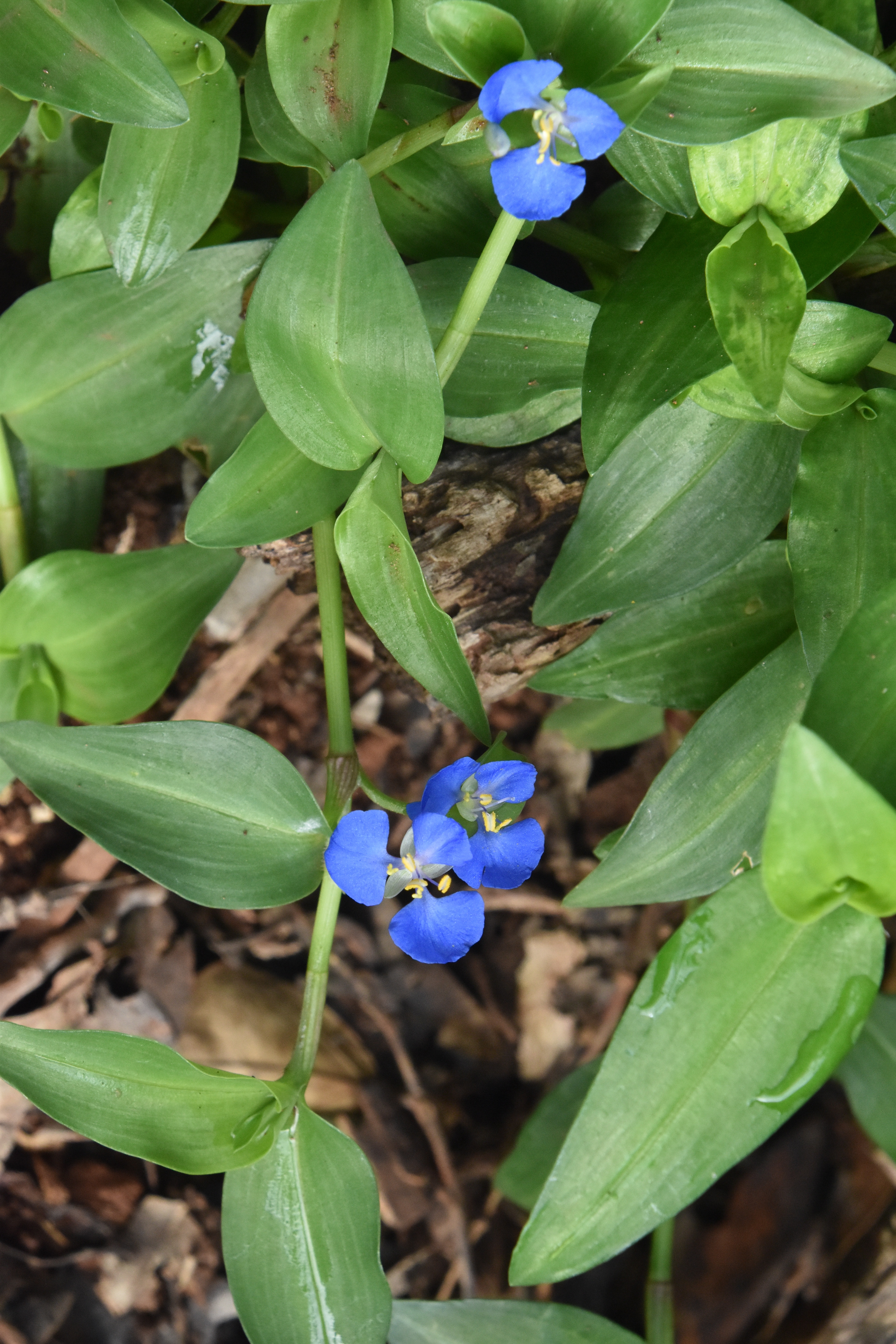
White oak (Lagunaria patersonia), Ti (Cordyline obteca) and Norfolk Island palm (Rhopalostylis baueri var. baueri) seemed to tower above us. The shrubs and forbs that must have covered Phillip Island before the introductions of grazing animals included the Norfolk Island Abutilon (Abutilon juliane) and Forget-me-not (Commelina cyanea) were here.
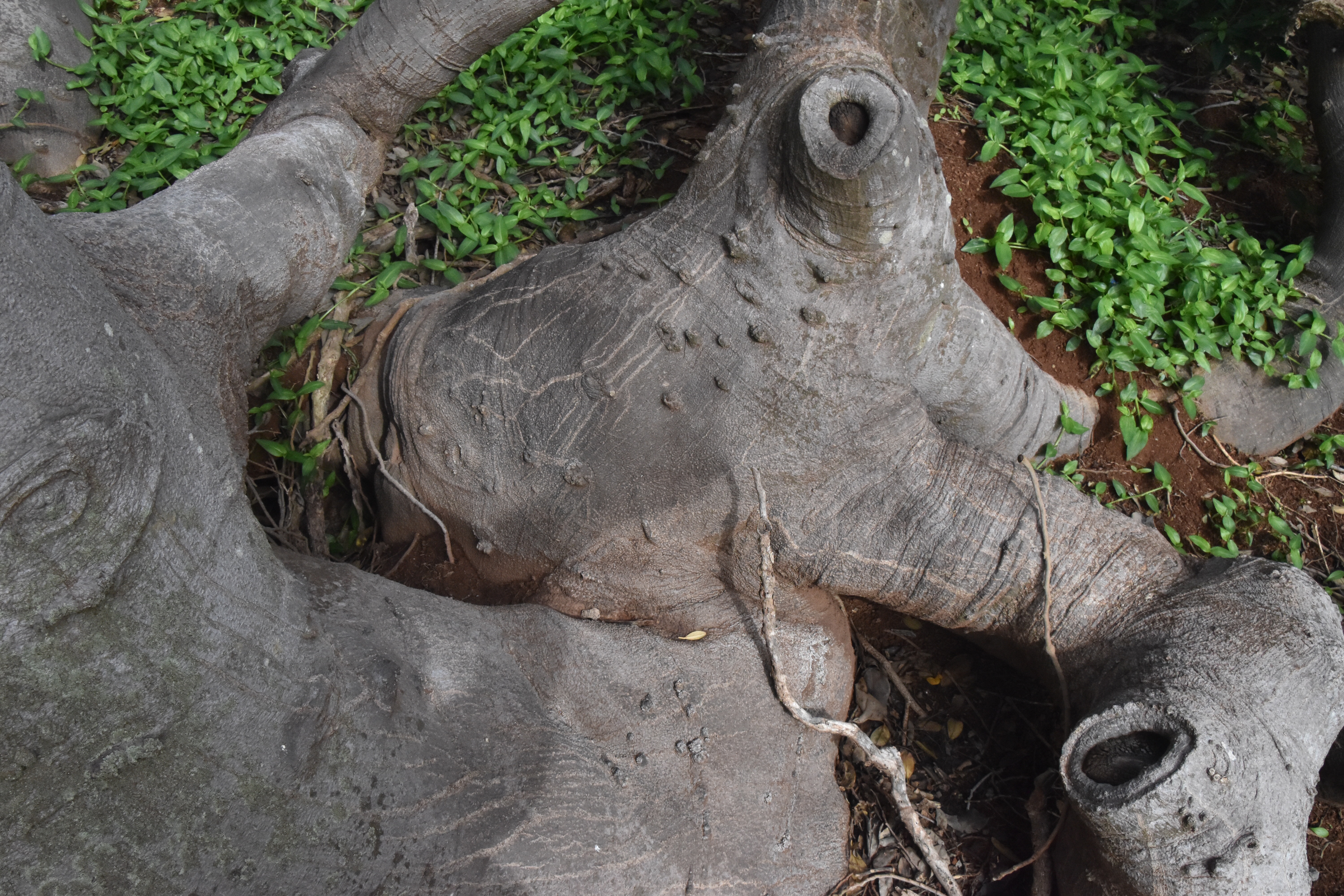
On this humid night, with the din of crickets and moan of the Wedge-tails one could easily imagine a Jurassic environment of the past.
It was near midnight as we carried on over the bare volcanic hills down the ladder steps, avoiding treading on Black-necked petrels that are everywhere. Then we check on the last marked nests by the cabin. “Nobody home” says Luke. Will “cabin bird’s” parents ever come in with that GPS tag? Luke de-programs the unused tags while I shower off the day’s sweat and mud, then head to the tent. The sound of Black-winged petrels chirping and coming in continues in my dreams.

 Trudy’s Pacific Adventures
You are keeping very busy!
LikeLike
Very cool Trudy!!
LikeLike