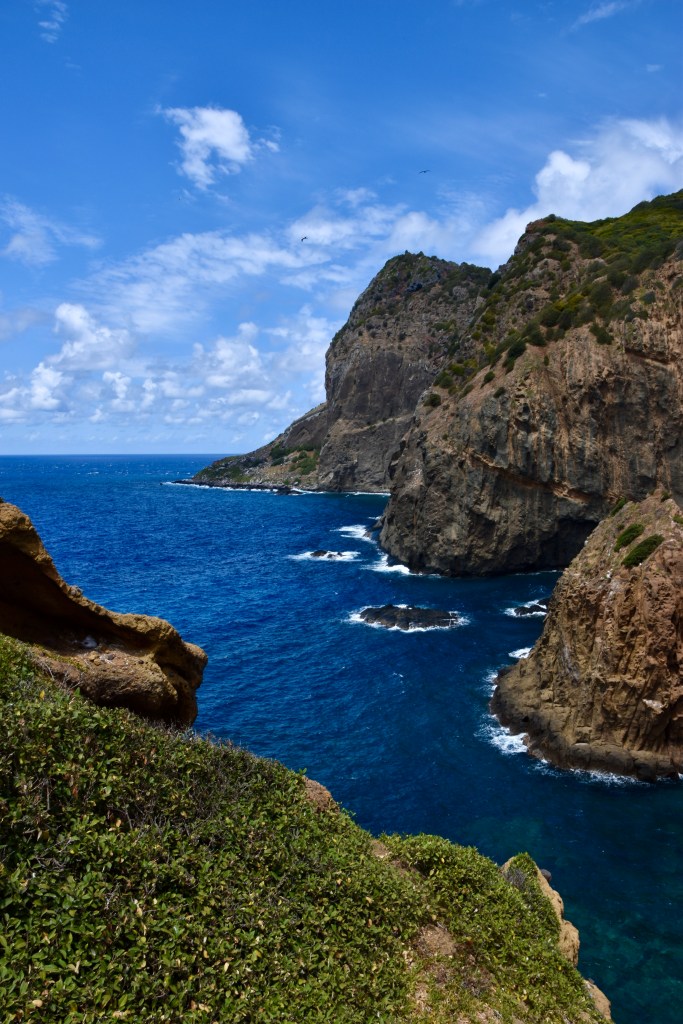
Inevitably, if one stares at an interesting spot long enough, one tries to figure out how to get there. Adventure calls. Both Luke and I have been spending our evenings above Spin Bay on the “wind tunnel”, a steep grassy ridge running north-south and generally perpendicular to the easterly wind. We have watched the shadows fall over the ridge, the waves below swirling, crashing against cliffs and coming ashore on a rocky beach. We hear the wind swooshing through the Norfolk Hibiscus and have both wondered if we could get down to that rocky beach tucked into the cove. “Do you think we could get down that gully, by that lone Norfolk Pine?, Luke asks. “Maybe” I say.
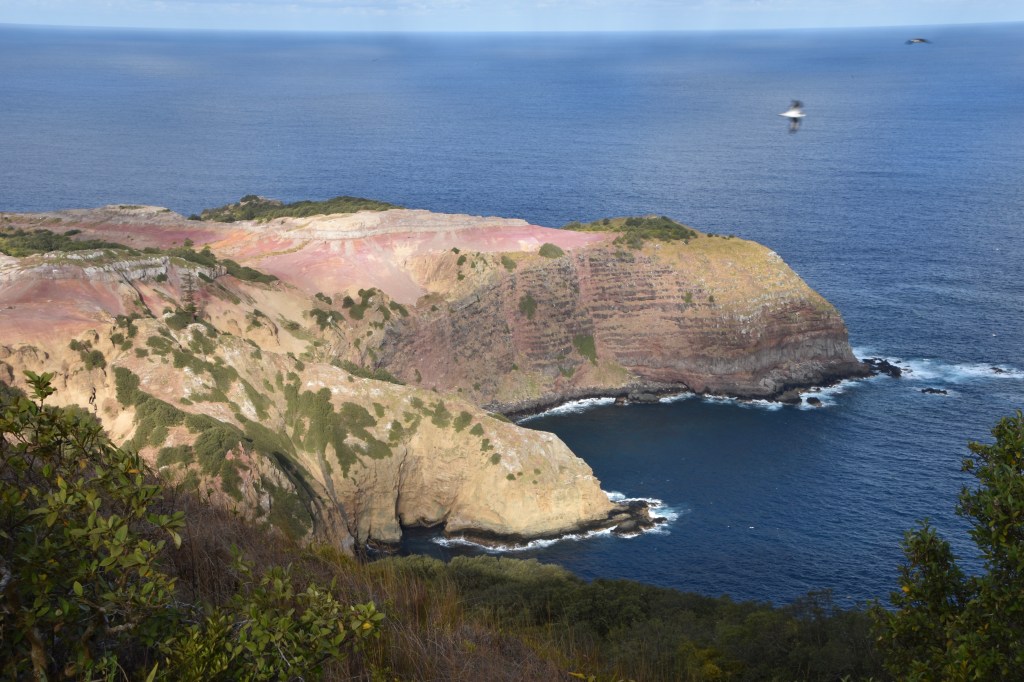
Then one evening we both spot an anchored ladder going down one of the bluffs. We wonder where that ladder was leading to? Since we have actually caught most of the GPS’d Kermadec Petrels and Red-tailed Tropicbirds and are fairly up-to-date with fitting the GLS tags on the Black-winged and White-necked Petrels, we decided on a morning hike.
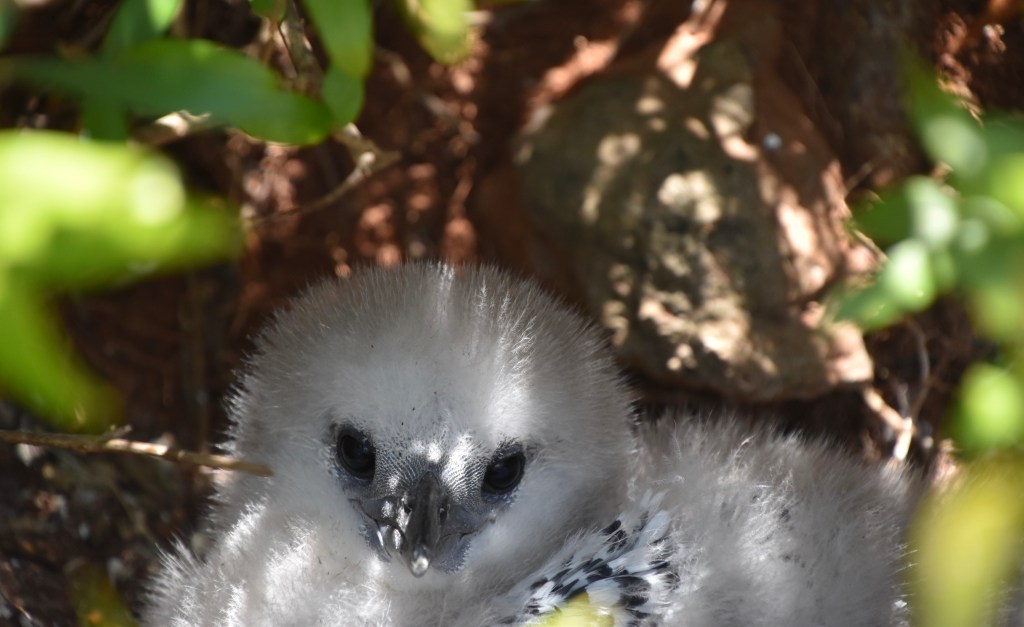
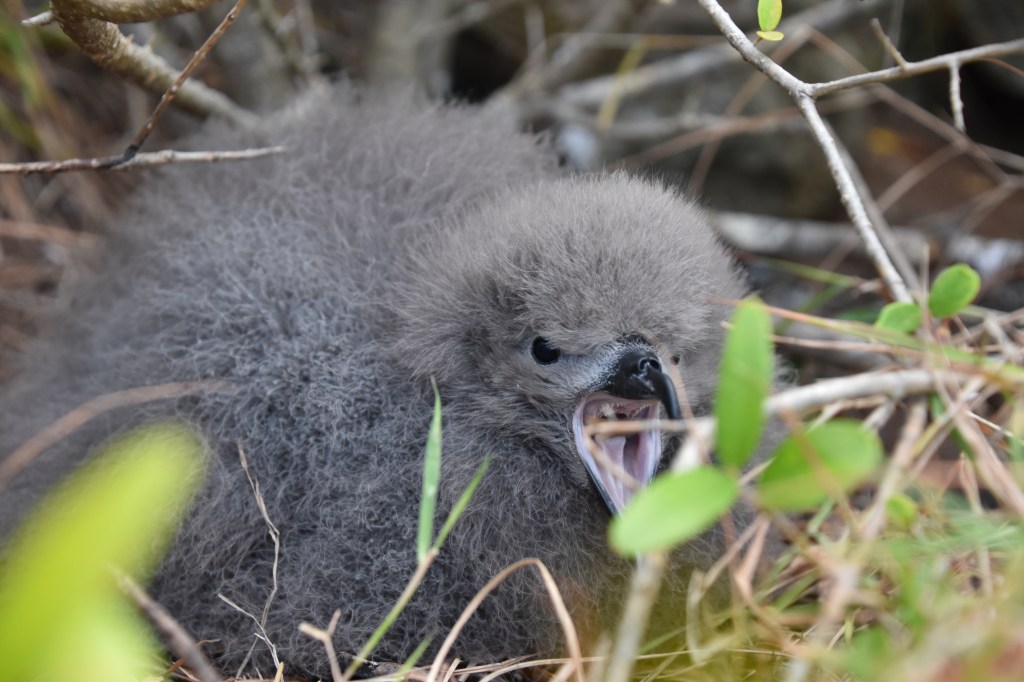
This turned out to be a circular hike, starting by checking those elusive” Kermachicks” and “Tropicturds” to see if the adults had come in to feed the chicks.
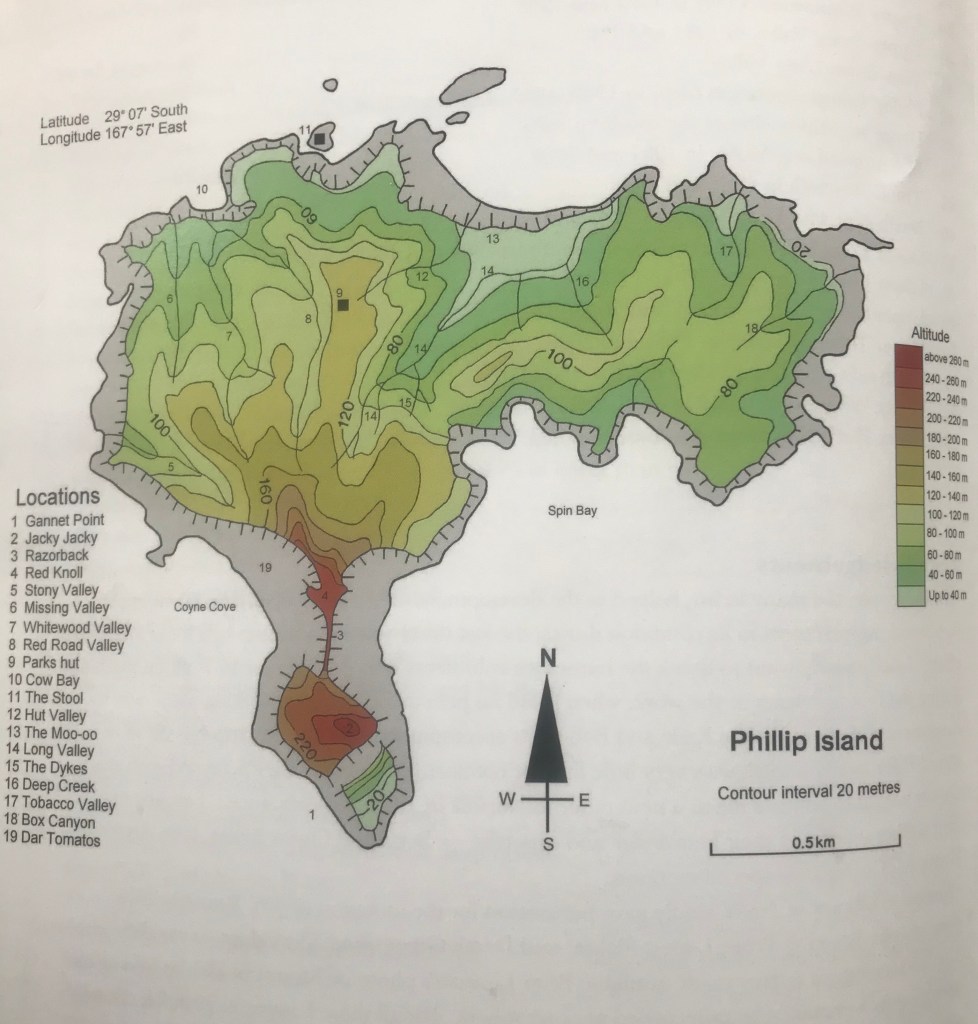
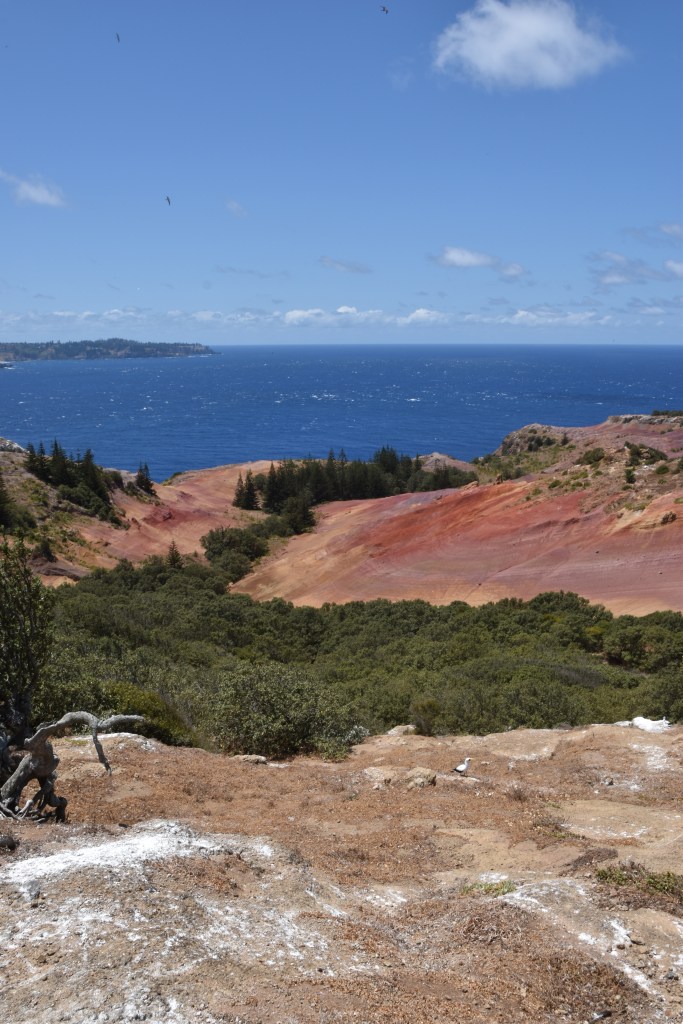
Then we headed to the eroded slopes above Long Valley. Long Valley is the largest “watershed” on Phillip Island and it runs from the South to the North-east and drops to the ocean west of the Stool.
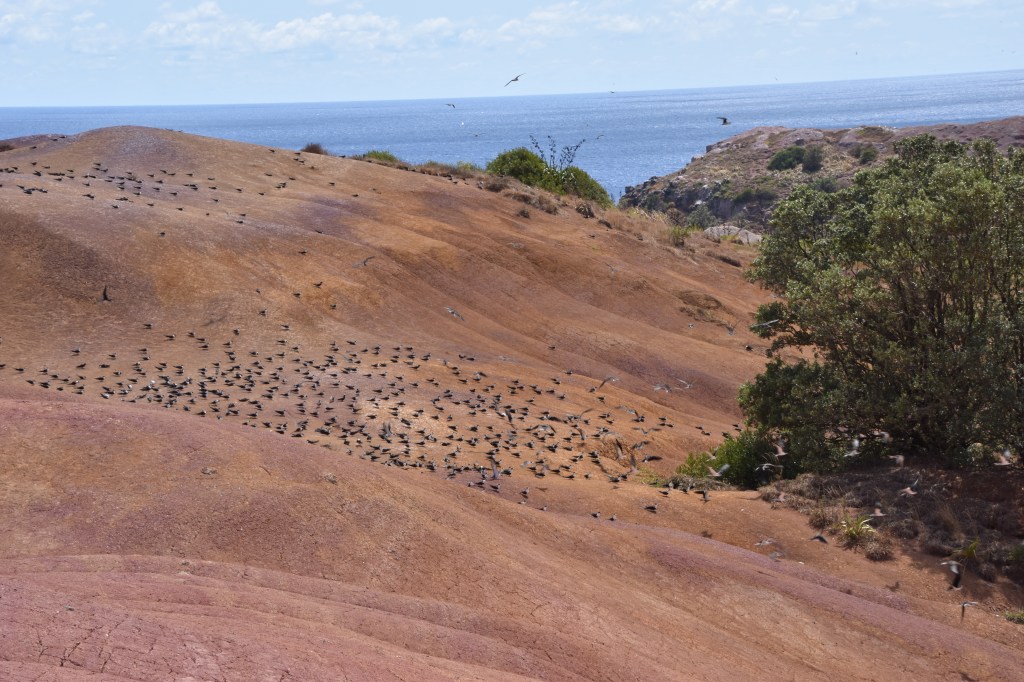
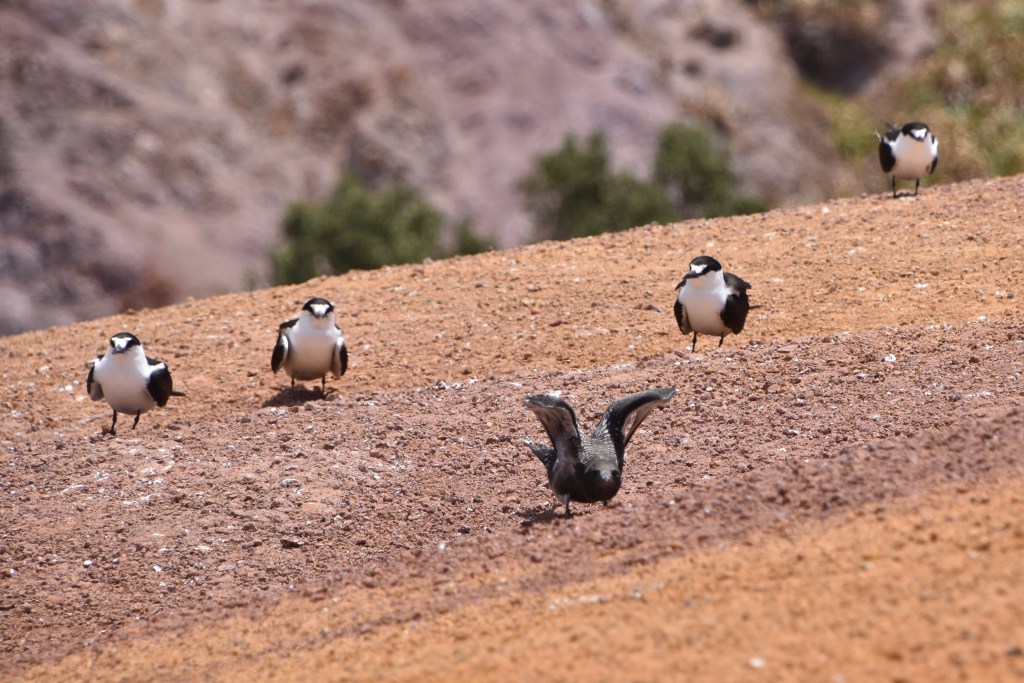
First we marvelled at the great flock of Sooty Terns roosting on the eroded red slopes on the Northwest side of the valley. This was the first year Luke had seen the return of Sooty Terns and this was attributed to the rangers working hard to cull the invasive Tarlar birds. Sooty Terns nest right out in the open and their chicks tend to wander from the nest and fall easy prey to Tarlar birds.
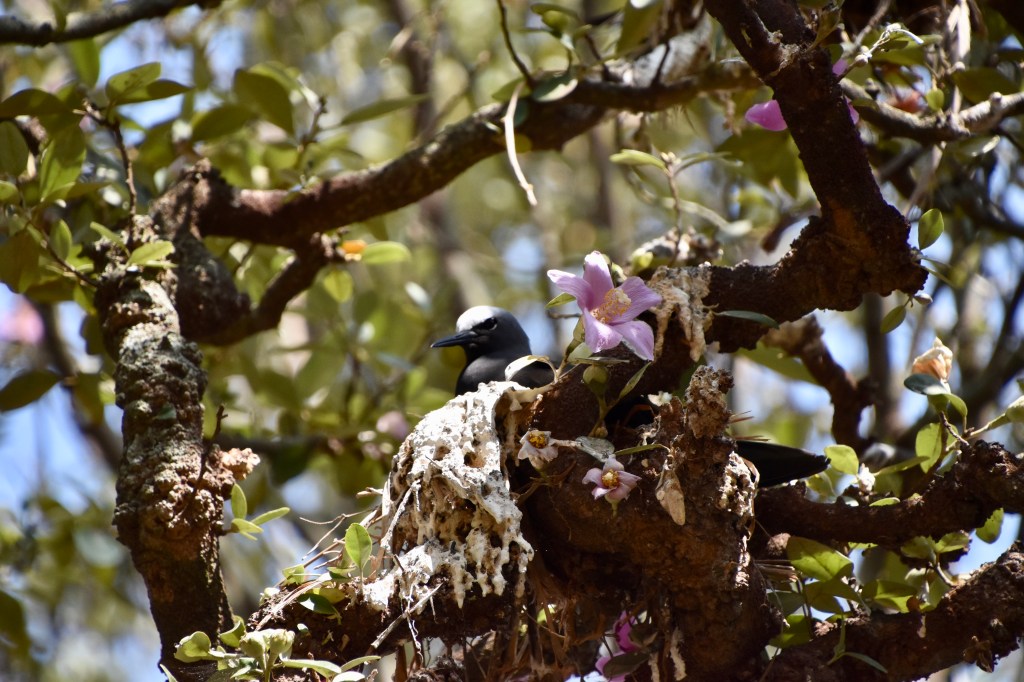
Then under the stand of Norfolk Pine planted by the rangers. This is the largest Black Noddy colony on Phillip Island. Their guano fertilizes the Norfolk Pines and Norfolk Island Hibiscus that grow in this windless part of Long Valley.
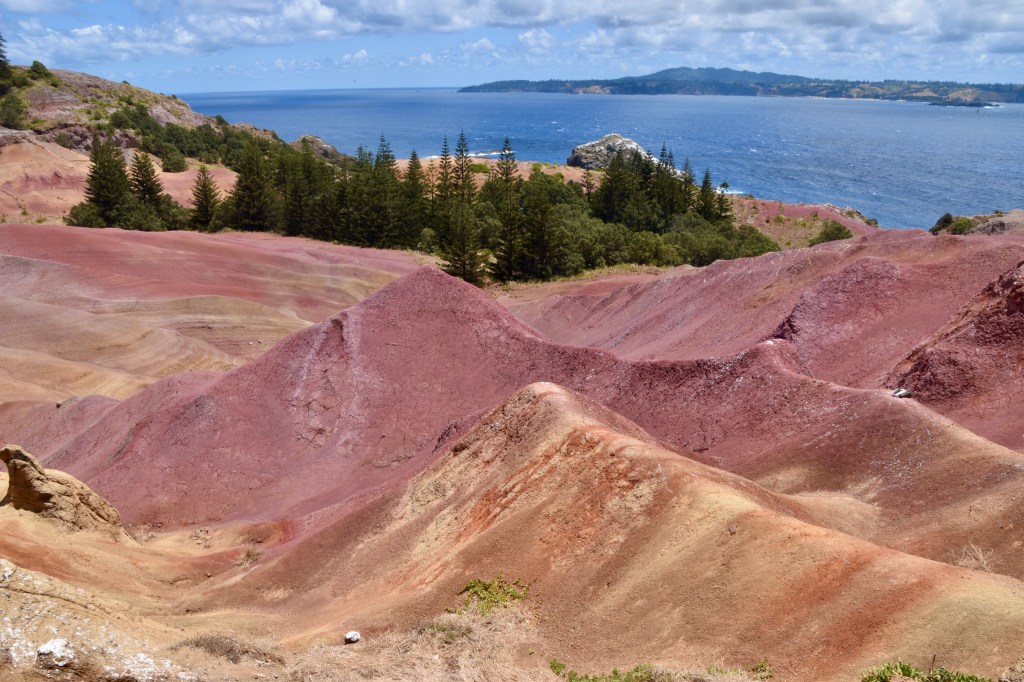
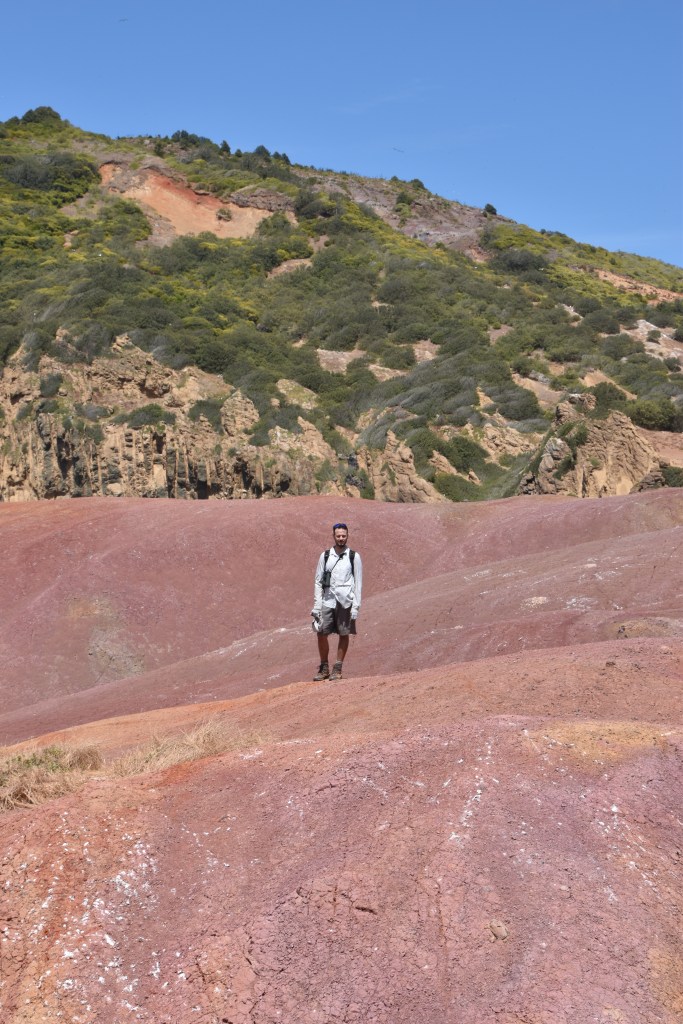
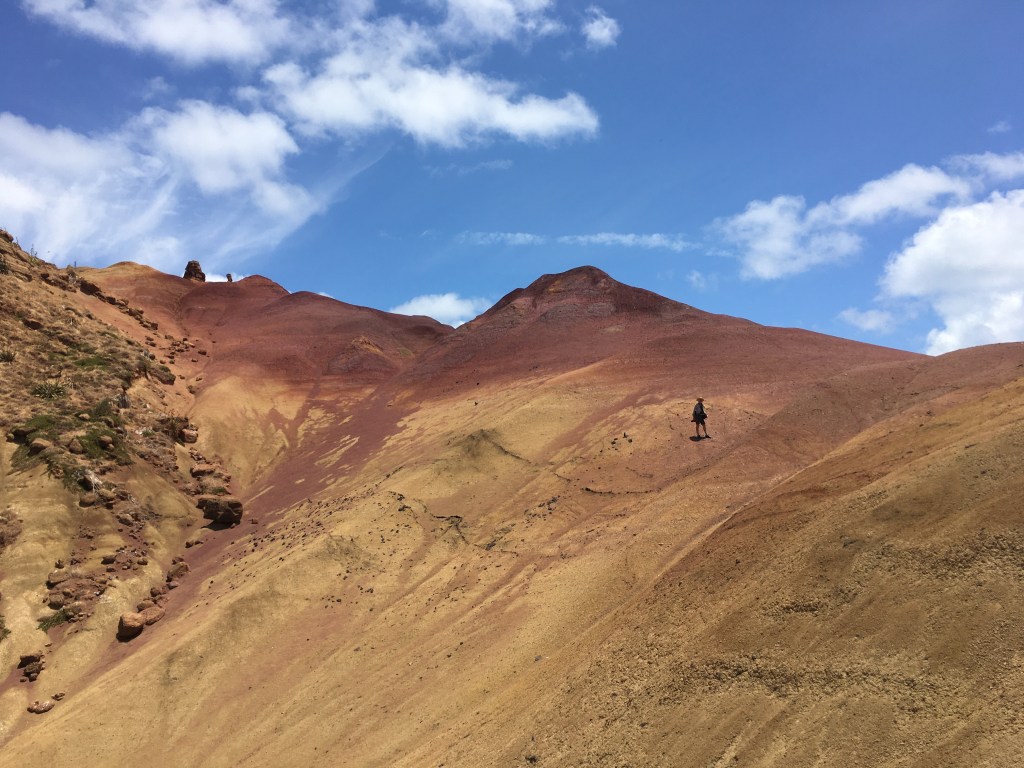
We hiked down the gully for a ways, then headed east up some colourful slopes of volcanic tuff with interesting pyroclasts (remnant volcanic rocks) to another bluff. Up the ladder and then headed south along the ridge top.
We hopped along grass tufts and solid areas so as to avoid crushing burrows in the unconsolidated material. Here’s where started walk through the “Sulidae Village” . Every bare promontory had a Masked Booby chick of various age or family of boobies.
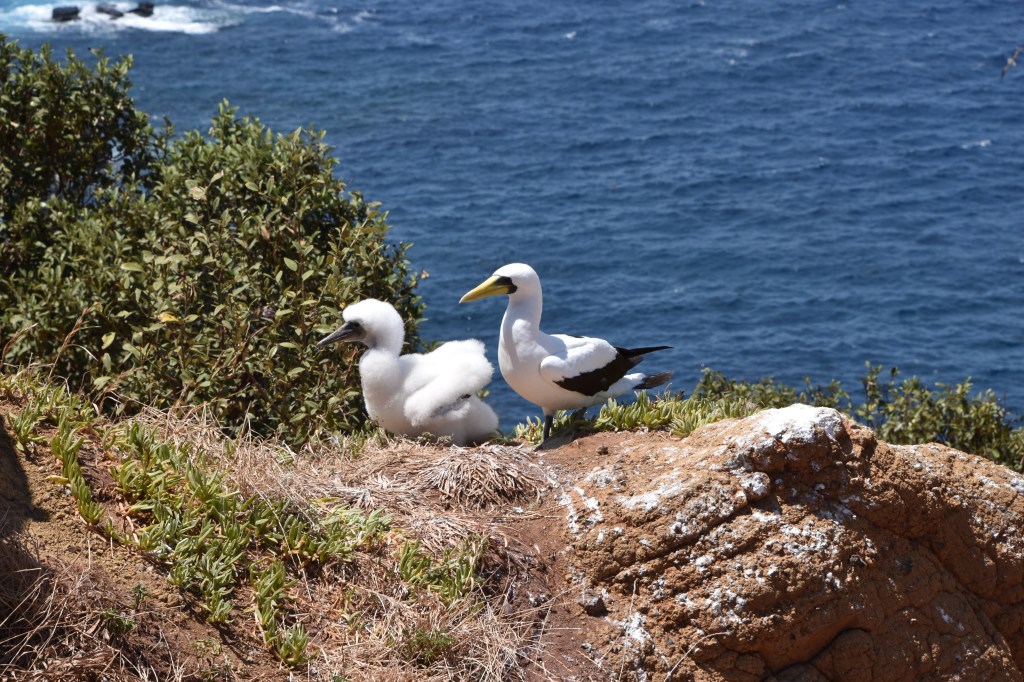
Masked Boobies (Sula dactylatra ssp tasmani) are the largest booby species, with a wingspan of up to 1.7 metres and weighing in at up to 2.2 kilograms. They are famous for their courtship dances where the male “sky-points” with bill in air, “prances” and “gazes” into the mate’s eyes. The male gathers sticks, but no nest is used. In fact, Masked Booby nest sites are devoid of vegetation. Boobies incubate their eggs with their great webbed feet, which must be interesting to see. Unfortunately, for us, the main mating season on Phillip Island is in September, but we are seeing various stages and antics of booby chick rearing.
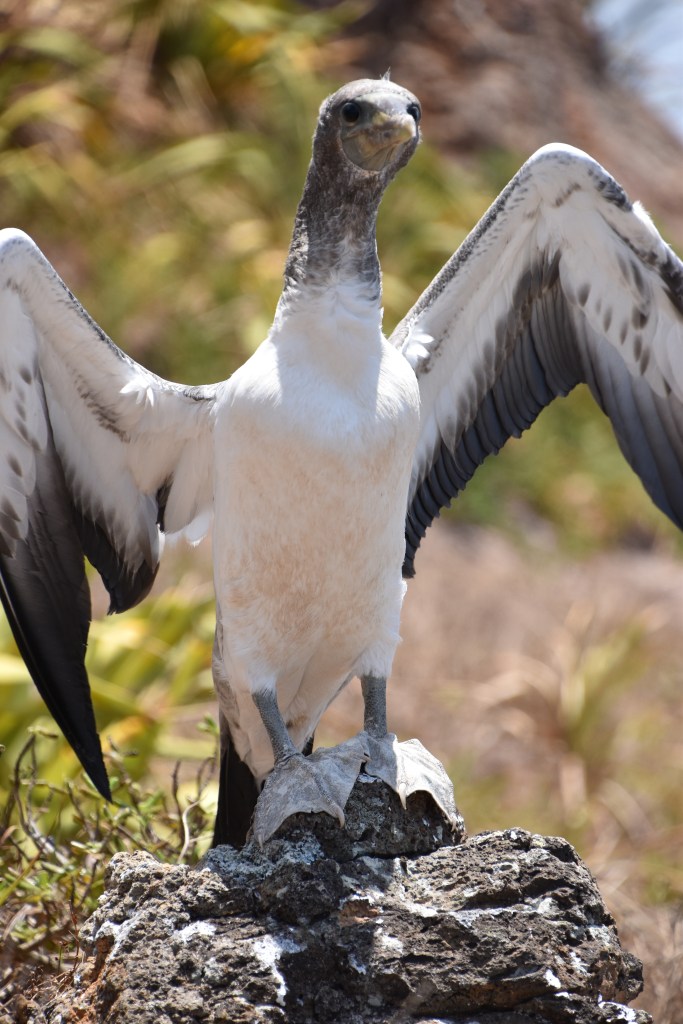
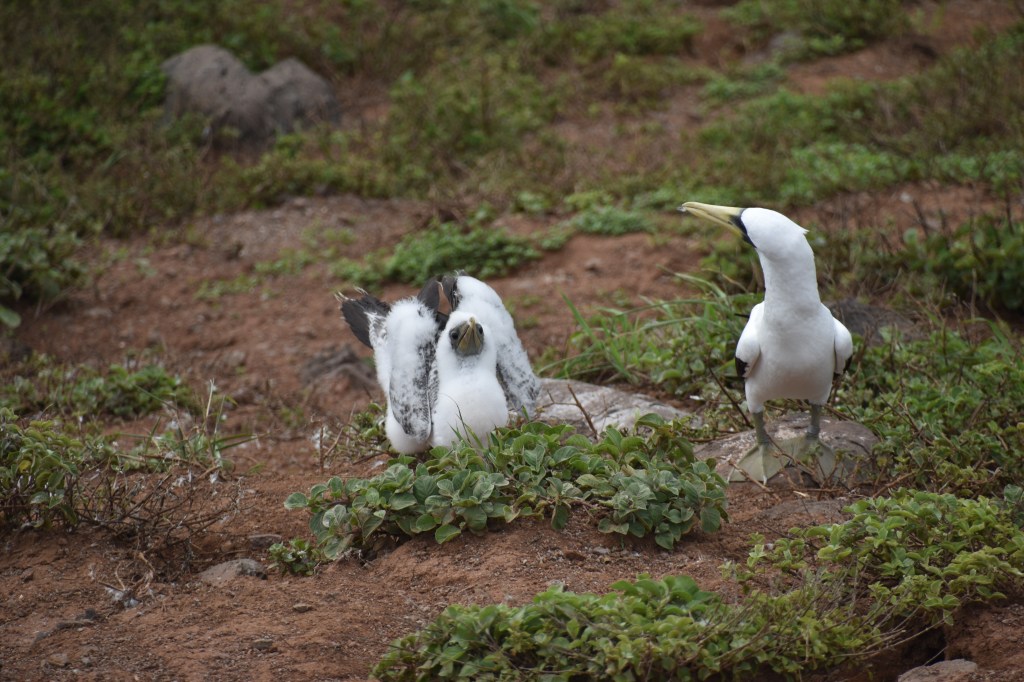
Apparently, the first Masked Boobys recorded on Phillip Island were in 1908, when there was less vegetation due to introduced feral pigs, rabbits and goats. In 2007, Nicholas Carlile estimated that there were 3oo pairs of Masked Boobies nesting on Phillip Island. Today we followed ridges and trails and I estimate we saw at least 50 pairs in our walk. Masked Boobies lay 2 eggs, but only one chick survives due to siblicide. I have only ever seen 1 chick in a nest, so this phenomenon must happen quite early on. One can only speculate on why a bird would lay 2 eggs, to have the eldest kill the younger chick?.
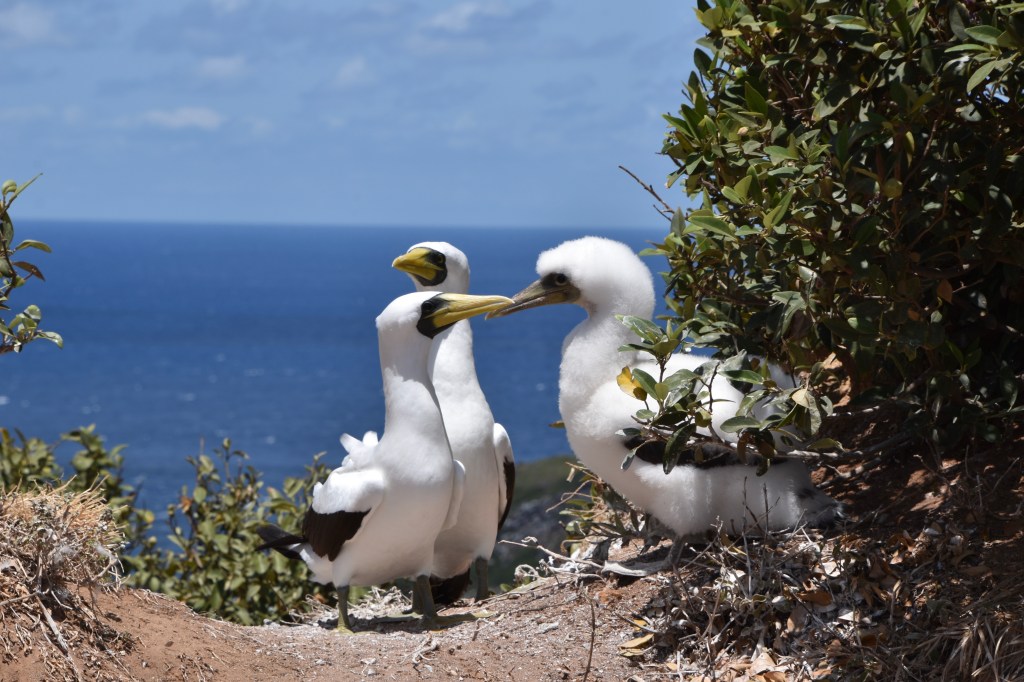
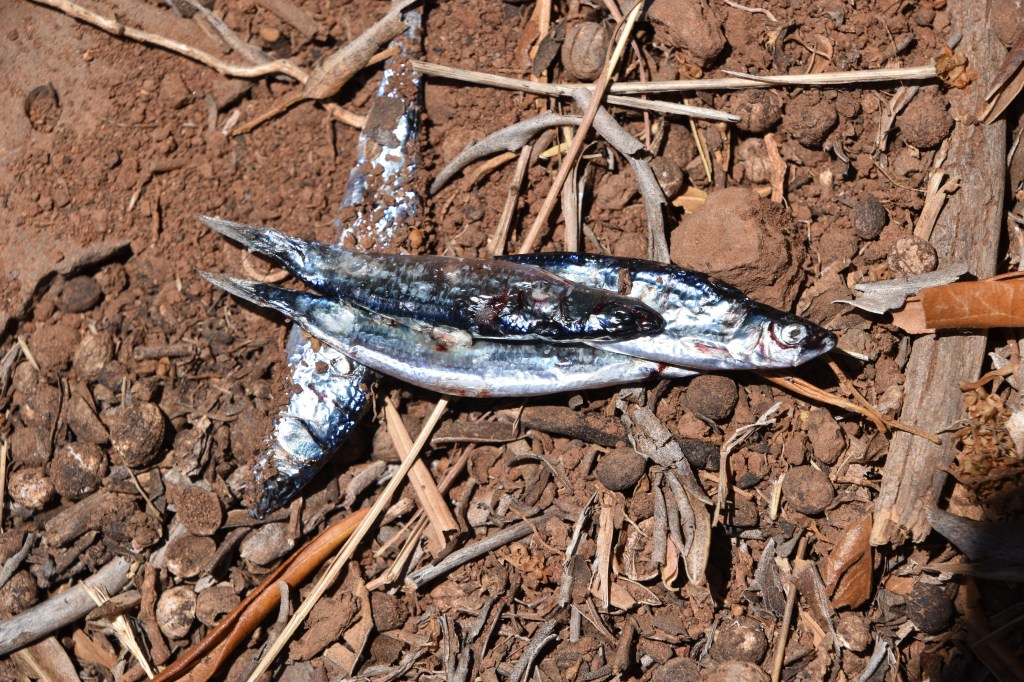
Boobies are spectacular plunge-divers, diving vertically from 12 -100 metres, reaching speeds of 70 km/hour and piercing through the ocean surface to catch squid and fish. Their main food is flying-fish. Flying-fish are driven to the surface by tuna or other predatory fish, so over-fishing of tuna is a threat to boobies.
Masked Boobies are widespread over the tropical Pacific, however the Masked Booby is the rarest and locally distributed booby. The global subspecies Sula dactylatra tasmani from Phillip Island is considered Vulnerable as there are only approximately 1000 pairs worldwide.
When we walk by the Boobies, adults females honk in protest and bill stab.
Males will whistle and even the older chick gets into a flap. In the morning at my tent, I find the chorus of subdued booby honking quite restful.
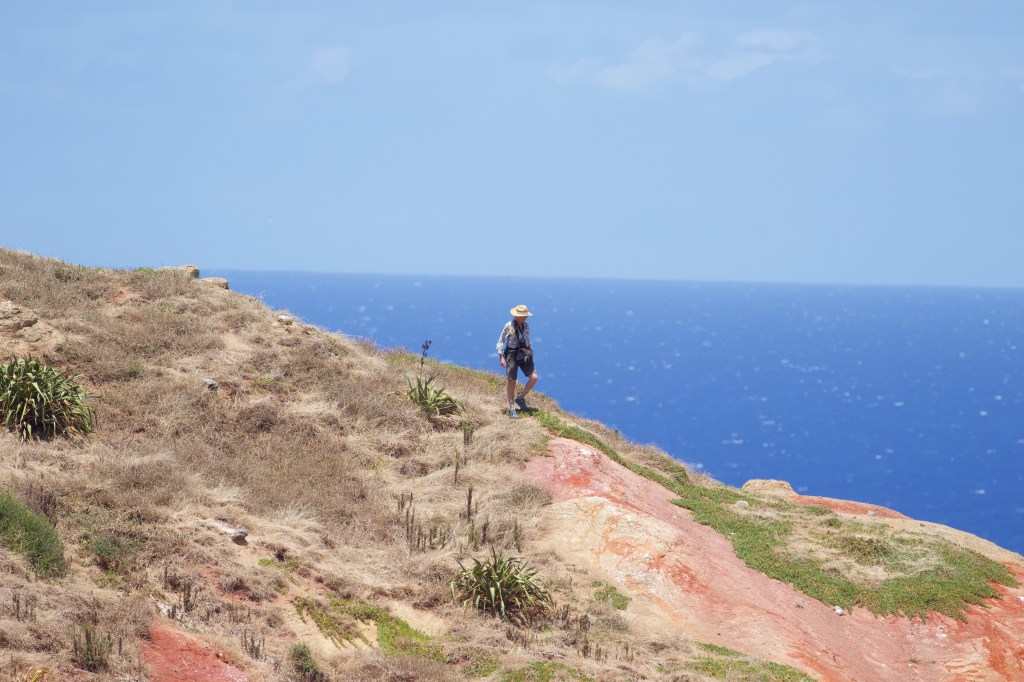
So, onto the rest of the adventure. . . Once we traversed the ridge, we found the second ladder down a red bluff, descended into an other-worldly landscape of tuff, hoodoos and windswept gullies. Since it was dry, it wasn’t hard to glissade down the tuff, watching for drops and hard bits.
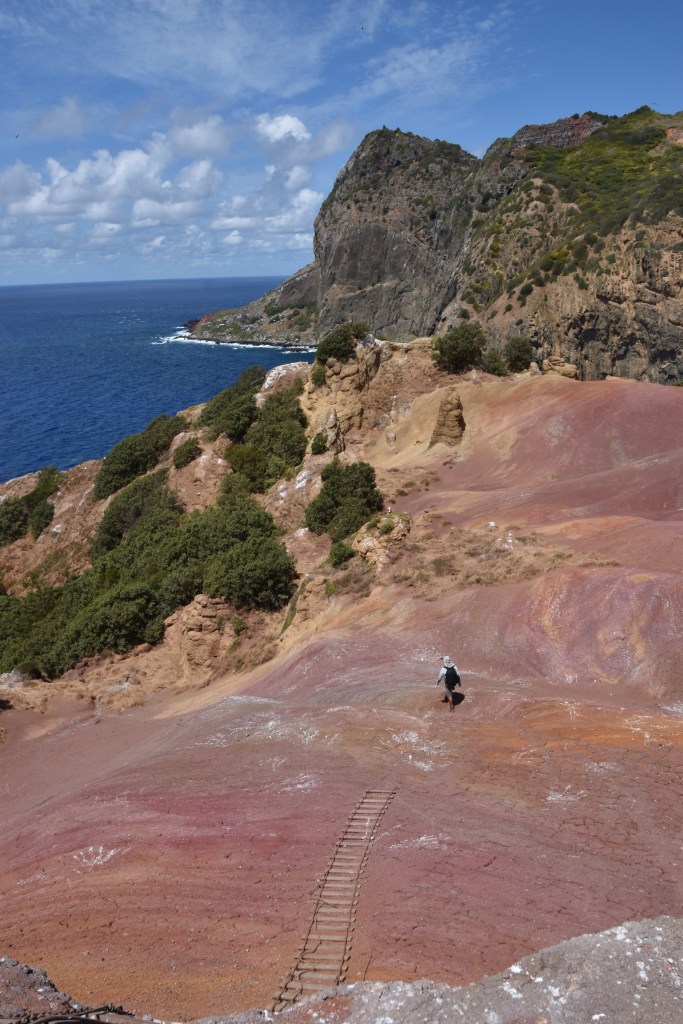
Traversing over the steepest slopes, we encouraged each other on. “Do you think we can get down there?” “Maybe, if we just try down that way”. “I’ll go on and let you know if it’s doable.” Luke says. But I see a way and traverse down to where Luke stops. “It’s dicey!” he says. ‘Discretion is the better part of valour’ and we both decide its better to return than risk falling.
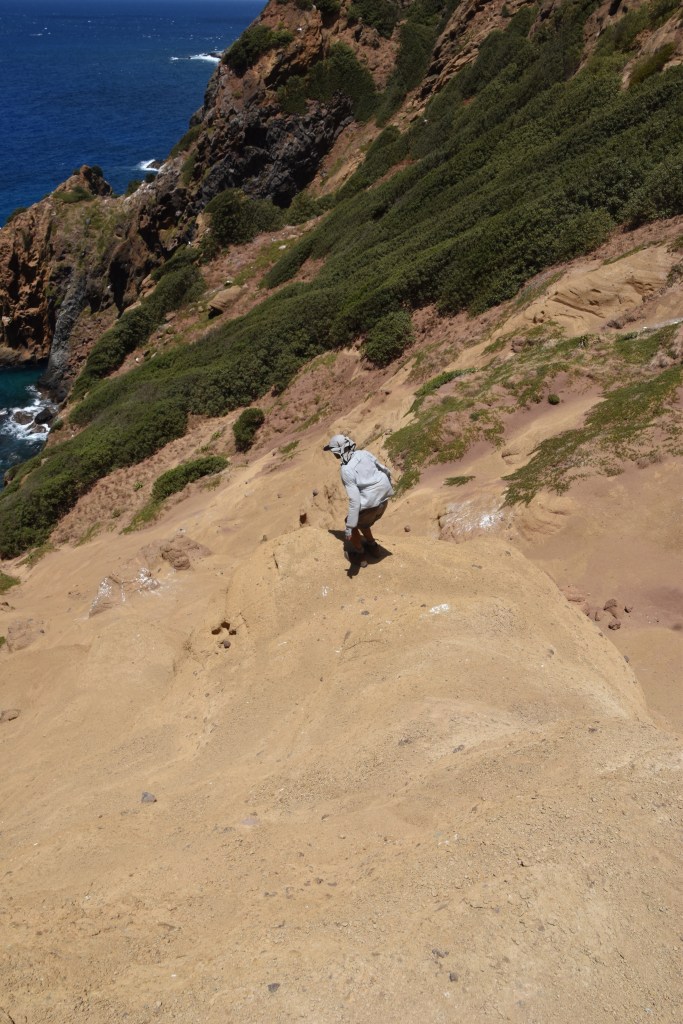
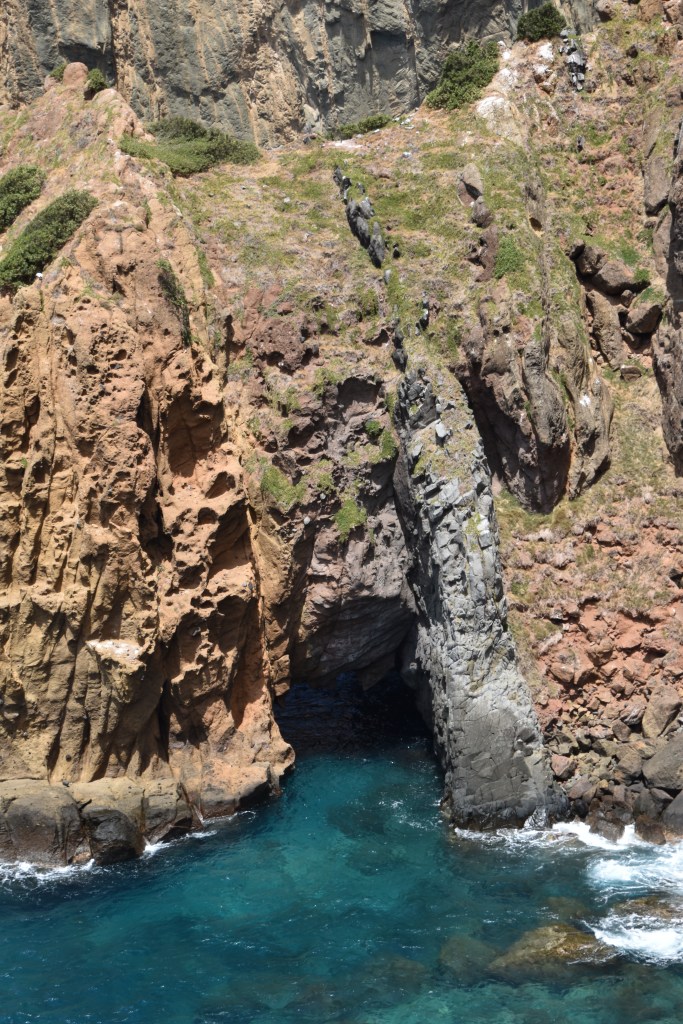
We gaze down at the unattainable rocky beach. I think of Peter Coyne and his days of delivering vials of diseased fleas to every part of the island, in a valiant effort to get rid of the introduced rabbits. If it meant completing a mission, no doubt we would have gone to the same risk. However, this was just an exploratory jaunt. The view from 20 metres above was spectacular enough! A huge sea arch had formed along a volcanic lava dyke, as the tuff was eroded away by relentless waves. Grey ternlets wheel on the ledges and the tropicbirds cartwheel above.
Getting up the bare hills in the noon-day sun was hot work. Luke decided to head back to the camp for lunch. I wanted to see if one could make it to the top of Long Valley and cross over the drainage to the west. More booby promontories were traversed, then I saw an open area where the rangers had cleared invasive olive (Olea europeaea) and I was able to alternately traverse through the Norfolk Island hibiscus (White Oak) and up the cleared booby nesting areas.
What was amazing is that all of a sudden I hit the trail up to the nesting areas for Kermadec and White-necked Petrels. Well, since it was after mid-day, I might as well check the “Tropicturds” and “Kermachicks”. Only the “bitey chicks” waiting in their nests. By the time I came to the cabin for lunch, Luke was readying to come up. I enjoyed a lunch of beans and bannock while the great southern winds blow in the heat of the day!

 Trudy’s Pacific Adventures
What an adventure and I’m glad you chose to not attempt the final descent. I’ve never heard of siblicide before. Curious biological survival mechanism
LikeLike
Beautiful photos Trudy! Yes, better safe than sorry in such a remote place.
LikeLike
Great stories and photos Trudy! I think the siblicide is a strategy to maximize reproductive output in case of a rare boom year in which they can successfully raise 2 chicks… or do they never fledge both?
LikeLike
I saw some quite young chicks, so it must be an event that happens early on. How would the parents prevent it? It would take knowing that they were very fat and then when the chicks are older, there Is a crazy begging ritual that I can see that sibling rivalry would take place then. We gave a talk last night to the Norfolk Island Flora and Fauna Society. Honey McCoy was there and I knew of her from a bit of reading. In her day, she banded every booby on Phillip Island and hiked everywhere, swam into Gannet Point (braving bronze whaler sharks) and camped at the very top of the island. I should ask her.
LikeLike