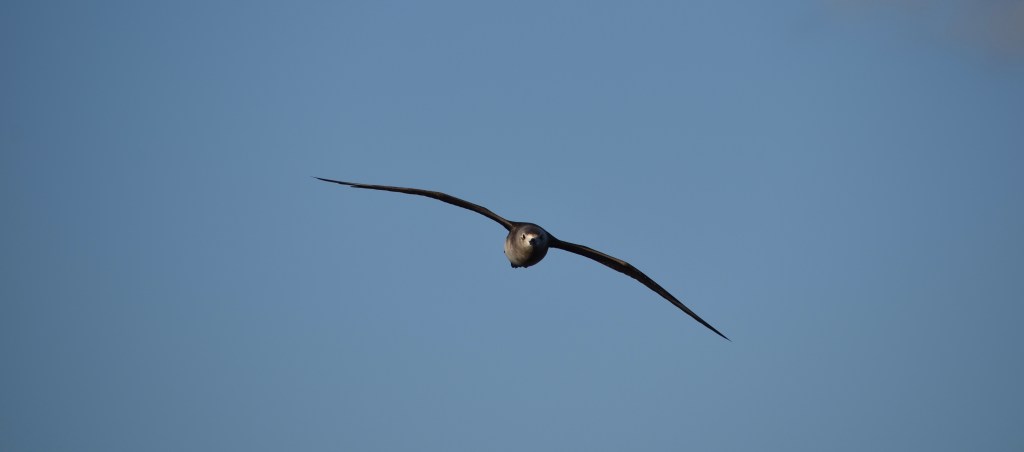
It’s 8:07 pm, the moon has risen to the north, the wind is steady and and strong from the northeast and the sky is wild with petrels. Black-winged Petrels are winging, whirling and calling in a constant high-pitched cheeping, weep-will-wheeping. The sky darkens and guttural calls of the Kermadec Petrel decline, while the lower pitched nech-nech-neck calls of the White-necked Petrels start up.
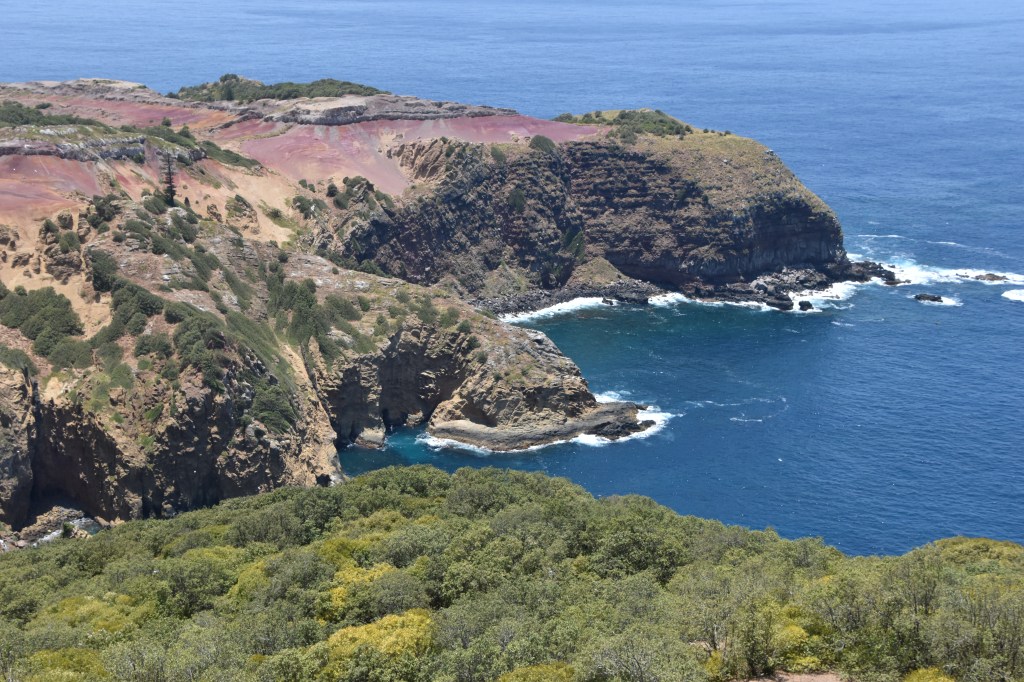
I am waiting above Spin Bay, which is a north-south ridge and steep grassy saddle on Phillip Island. It is a stunningly beautiful and wild spot with waves crashing on cliffs, basaltic intrusions dark against the red volcanic tuff and the sea over a hundred metres below.
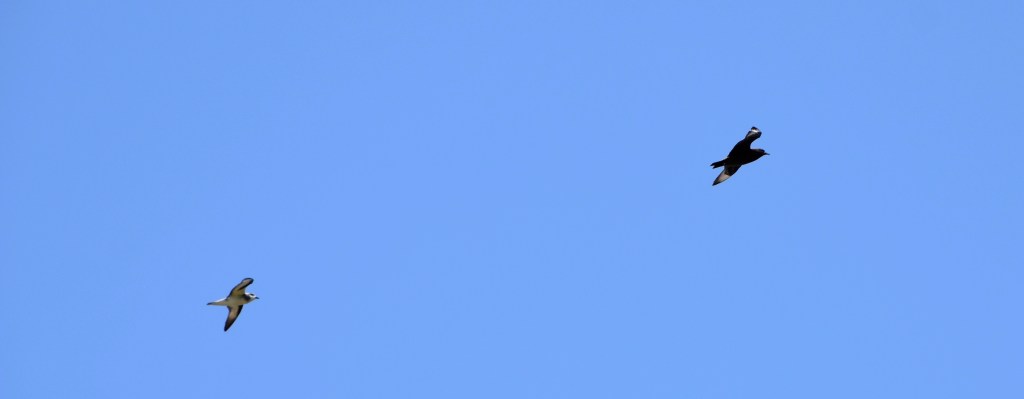
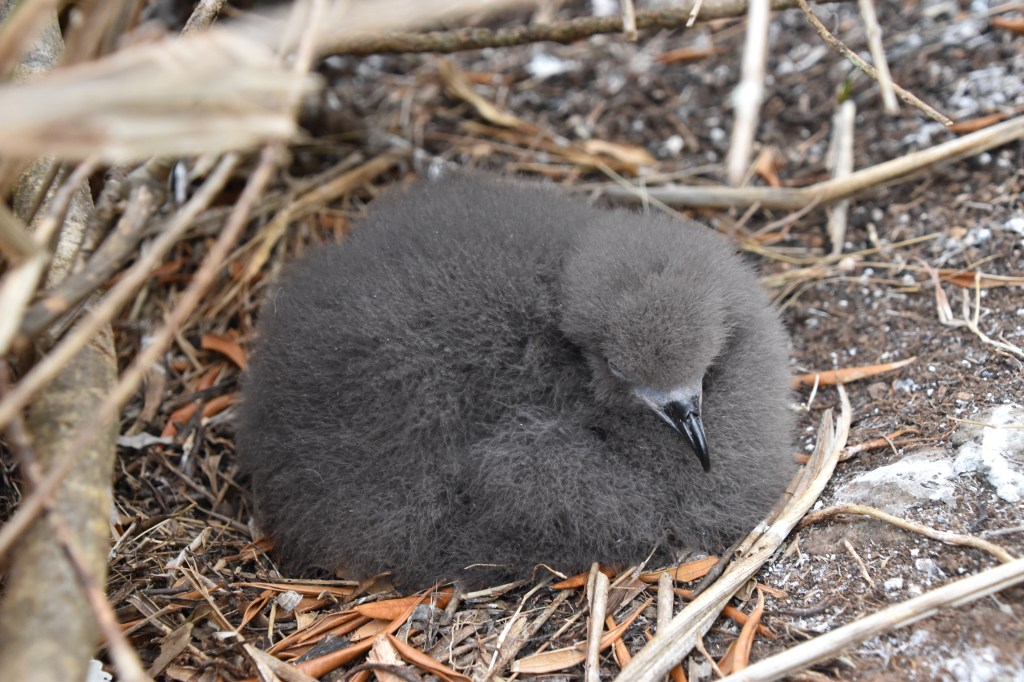
I’m trying to spot Kermadec Petrels, watching carefully from a distance for the adults to come into their nests to feed their chicks. Earlier, I could see them swooping over the windswept slopes catching updrafts and wheeling over their nesting area, but rarely does one see them drop into their nests under the tangle of olive shrubs and flax leaves. I get on my head-light and creep carefully down the rocks and grass, reach the nest area, switch the headlight to red (so as to not disturb the adult if its in the nest), and peer through a small opening at the fluffy chicks. I do the rounds of 3 nests every 10 minutes or so. “Only a fluffy chick”, round after round, night after night. Petrels fly long distances to forage for themselves, so this is somewhat expected. So when after a week of the night stake out, an adult appears, it’s like magic.
Nicholas Carlile is an emminant Australian research biologist and ornithologist. He has been working to quantify, identify and conserve the seabirds of Australia including here on Phillip Island since the 1990’s. Many of the species, Luke Halpin now works on have had some information collected by Nicholas. A focus of our early 2020 work is finding the Kermadec Petrel nests that Nicholas has marked, observing what is happening and putting geo-locators and/or satellite tags on the adult Kermadecs. In this way, we can understand of this secretive seabird’s foraging range, habits and breeding biology.
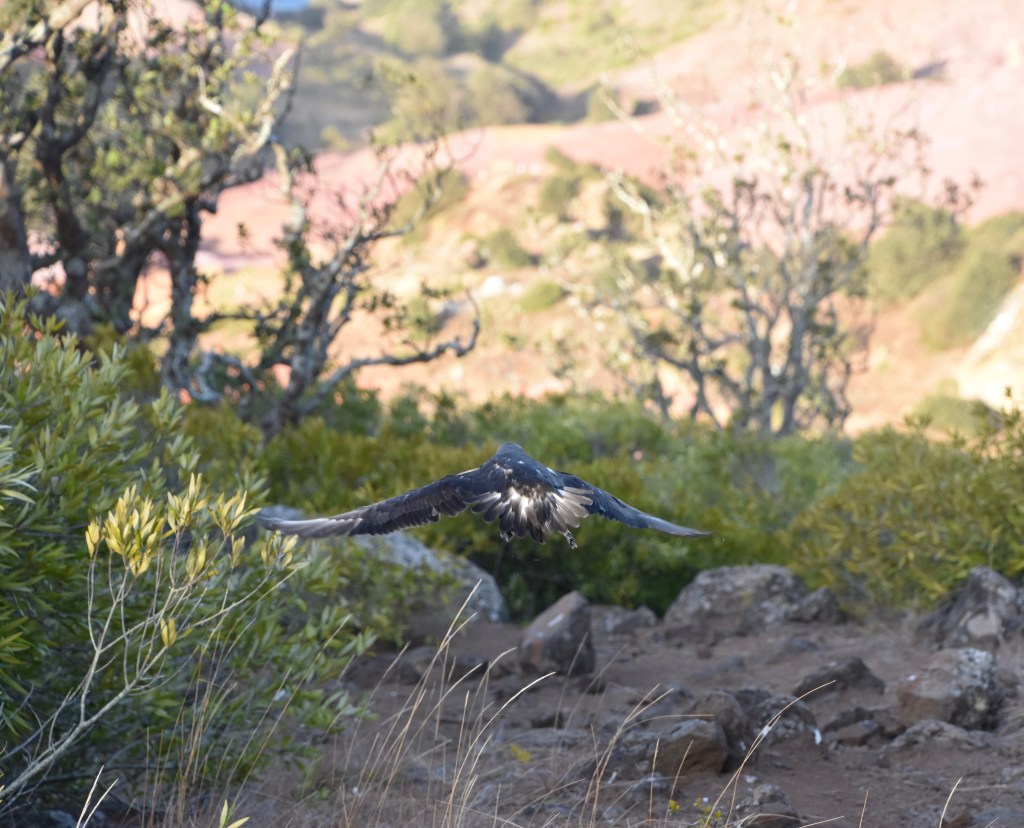
Kermadec Petrels (Pterodroma neglecta) are a medium sized (about half a kilogram and wingspan of 100cm) Gadfly petrel. Gadfly petrels are closely related to albatross. The order Procellariiformes which albatross, petrels, prions and storm petrels belong, comes from the Greek derivation “violent wind or storm”. The genus Pterodroma comes from the Greek meaning “winged runner . How apt a name for these adept fliers with long wings, covering thousands of kilometres in a single feeding session across the Tasman Sea and South Pacific.
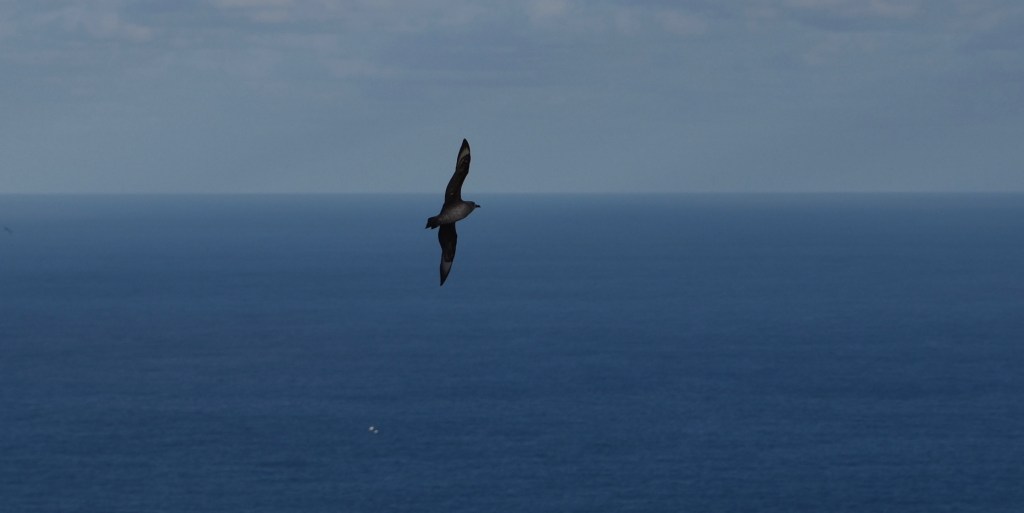
Petrels (or tubenoses) have two nostril tubes which serve to excrete salt and smell. They are birds of the wind, catching the great southern winds to find food far from the nest. Their stomach converts fish, squid and krill into a petrel oil which fuels long journeys and is regurgitated to their one chick.
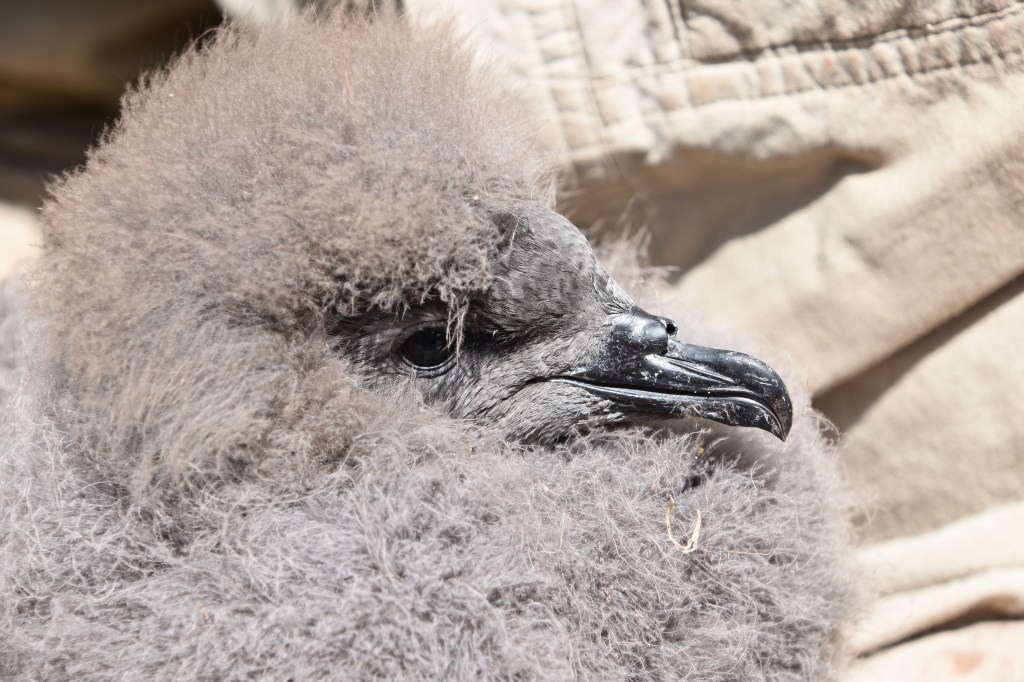
Kermadec Petrels only breed on Phillip Island, the Kermadec Islands, Lord Howe Island, Pitcairn Islands, Tuamotus, and the Juan Fernandez Islands in Chile. They are a conservation concern in Australia due to low populations and vulnerability to land predators. They are a ground nester laying only one egg per year. There are approximately 100 pairs nesting on Phillip Island. On other islands, introduced rats and people have decimated their populations. Long-lived birds like petrels (likely they can live to at least 50 years) are extremely vulnerable to adult mortality, as taking out one adult means a loss of over 30 years of breeding potential. The petrels are monogamouas and both adults care and feed the chick.
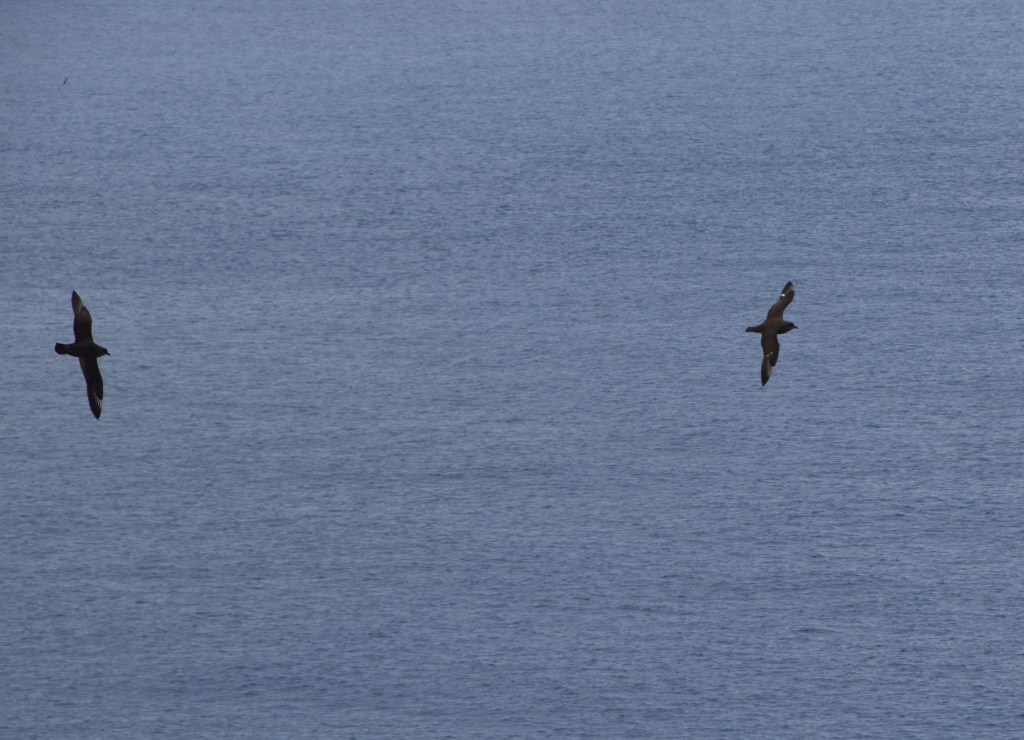
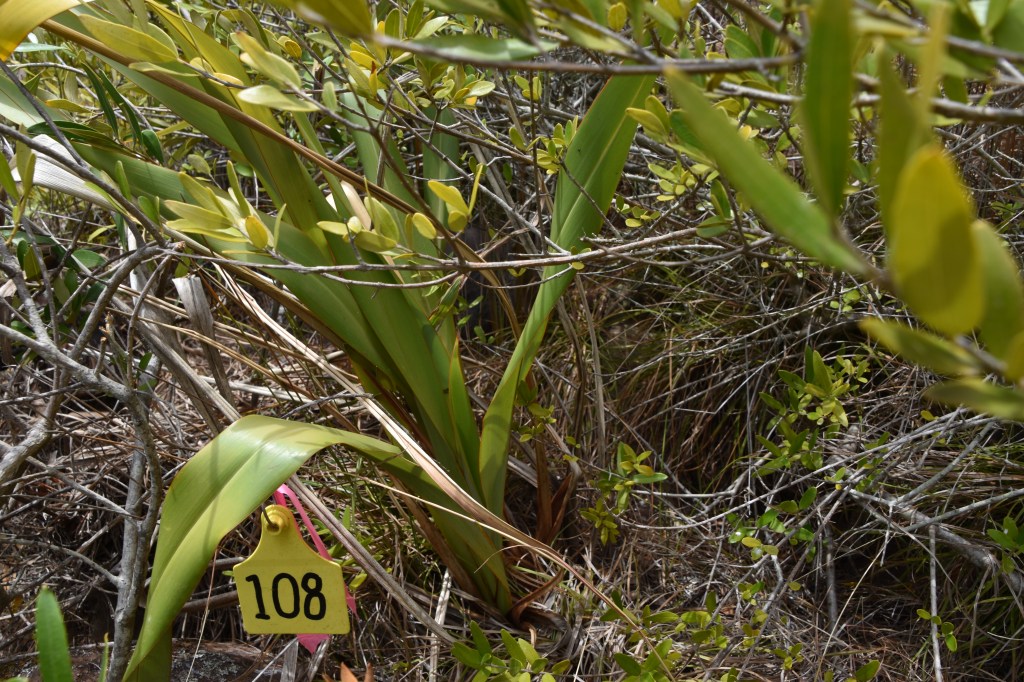
Kermadec Petrels were found in the fossil record on Cemetery Beach on Norfolk Island and nearby Nepean Island. Likely, human harvesting and the rats eliminated this species from Norfolk and Nepean Island. Introduced pigs in the 1800’s made quick work of the Kermadecs on Phillip Island and they weren’t seen on Phillip until Owen and Beryl Evans recorded their nesting in 1986. Since the elimination of rabbits, Kermadecs secretly nest on steep windy slopes under windswept White oak and introduced scrub olive bushes. Their nests are not at all obvious as they manage to hide amidst tangles of roots and branches. This is likely an adaptation to predation. Finding the nests is like an Easter egg hunt on a cliff. Luke and Nicholas manage this very well. However in some cases, I can barely see the camouflaged birds even if there is a marker. Their varying steely grey plumage is also a camouflage. In flight they can be recognized by longish wings and white flashes on upper and lower wings.
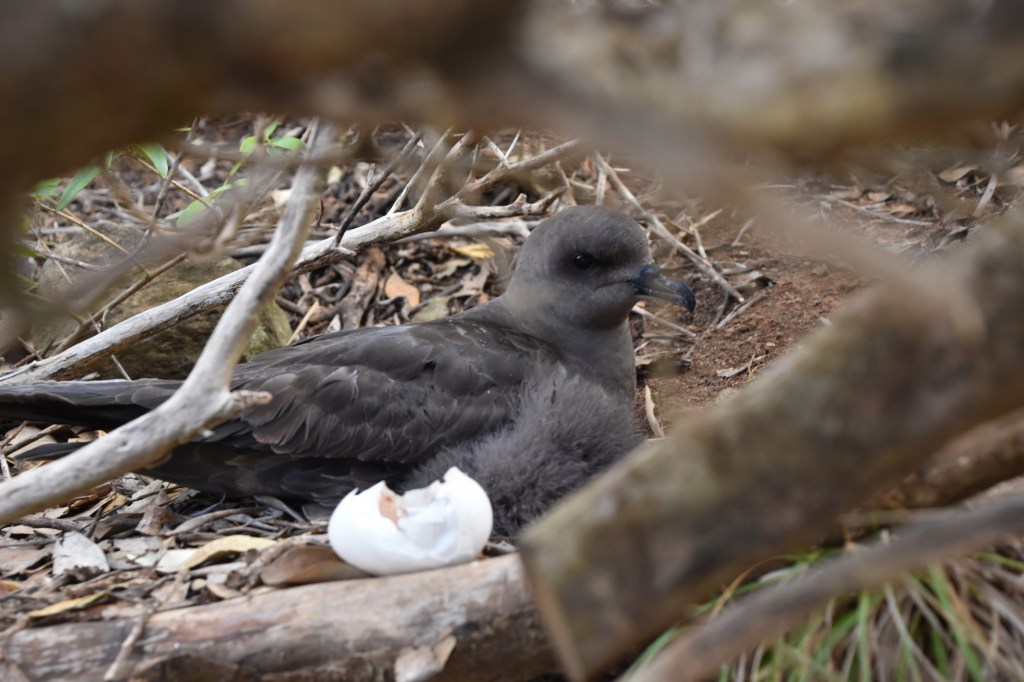
Kermadecs are very vocal around the colony. They have a drawn out descending “Eeooh, Glee, glee,gluee, gluee. . . ” type of call. At dusk, the adults swoop in great circles, catching updrafts of wind at ledges. There seems to be two main times of breeding for Kermadecs: a group that has eggs in December with chicks on the nest now (January) and a second group that come to the island in late March. This season, we are focusing on the earlier group of breeders that came in December. Still, there seems to be asynchrony in the nesting times as Luke is finding adult Kermadecs on eggs, some young chicks by themselves and even some older chicks. Likely Kermadec chicks will be on the nest for at least two months which increases the vulnerability of these seabirds.
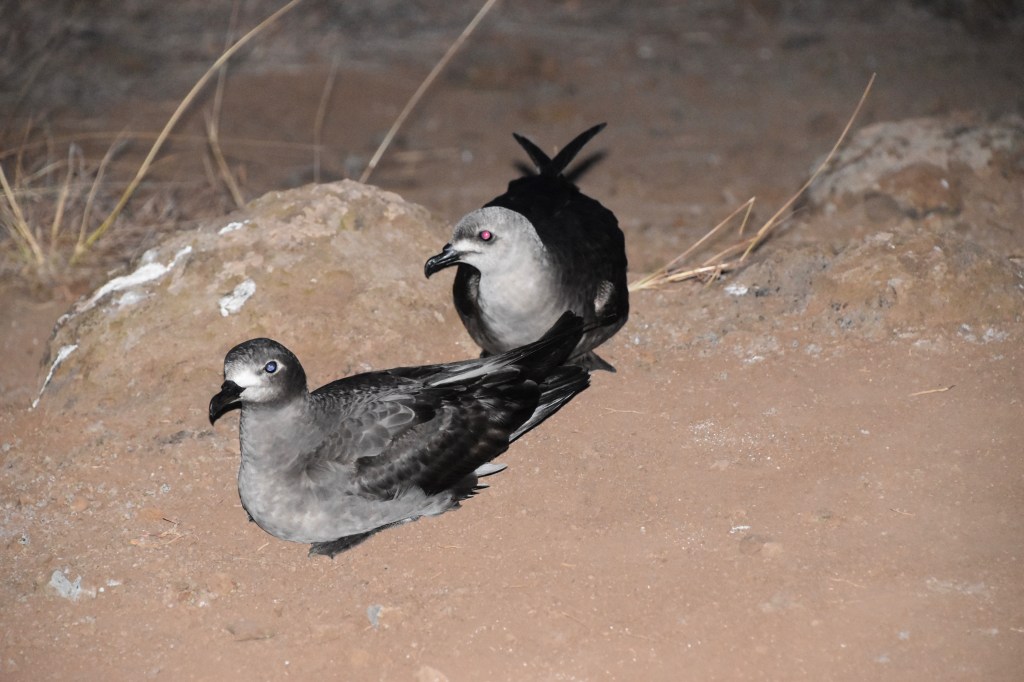
Luke has put satellite tags which last about 2 weeks on birds with smaller chicks, figuring that the adults will come in more often to feed younger chicks. Right now we have 9 satellite tags out, with some on both adults in the pair. Kermadecs seem to be shier than the other birds and do their best to sneak into the nest, feed the chick and get out!
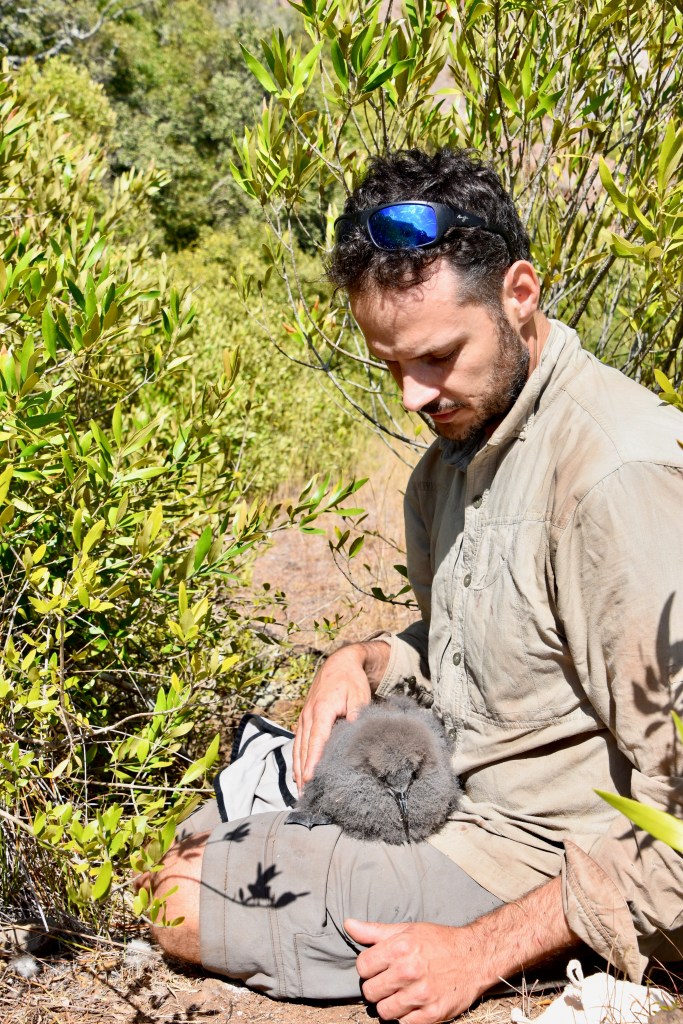
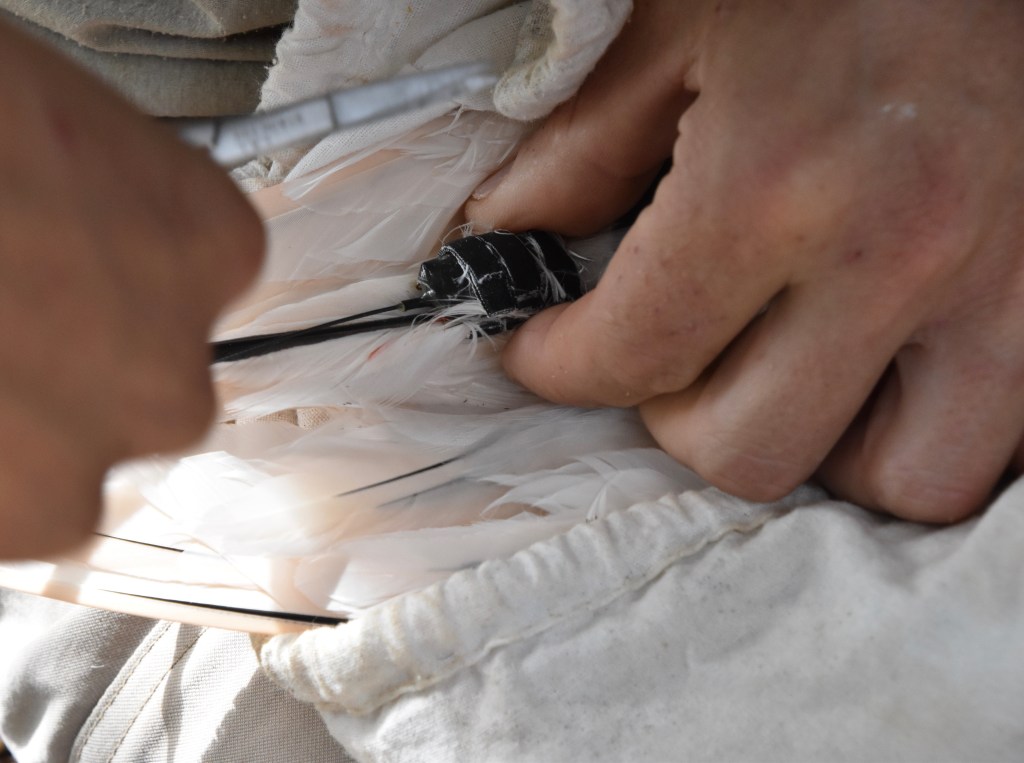
It’s a waiting game. The Kermadecs come in before dark, but also in the dark. Once the adult in nest is spotted, we wait for it to feed it’s chick then it’s carefully put it in the bird-bag. The bird is weighed, bands are examined and recorded, geo-locator logger removed (if it has one) and then Luke has me sit in a position to hold bird with bill pointing toward me and tail-feathers level, so that the satellite tag can be taped to the tail feathers with the antennae pointing backwards. The attachment of the transmitter doesn’t take long, but it is a delicate business as squirmy birds lift their tails, and struggle knocking off the transmitter or getting bits of tail feather stuck to the tape. Since the satellite transmitters cost about $800 and data is hard to come by, it is important that the transmitters stay attached to the tail. The bird is placed back in the nest and then the waiting game starts again in about 11 days. Since the birds are such long distance foragers, we really have only one crack in our month and a bit here to retrieve the satellite GPS transmitters.
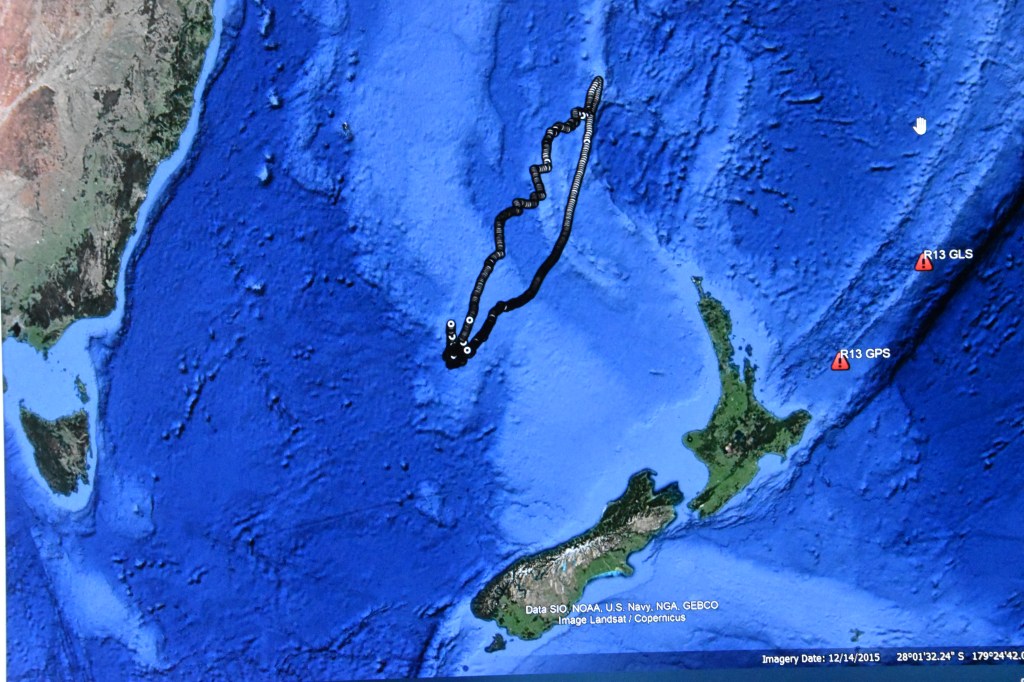
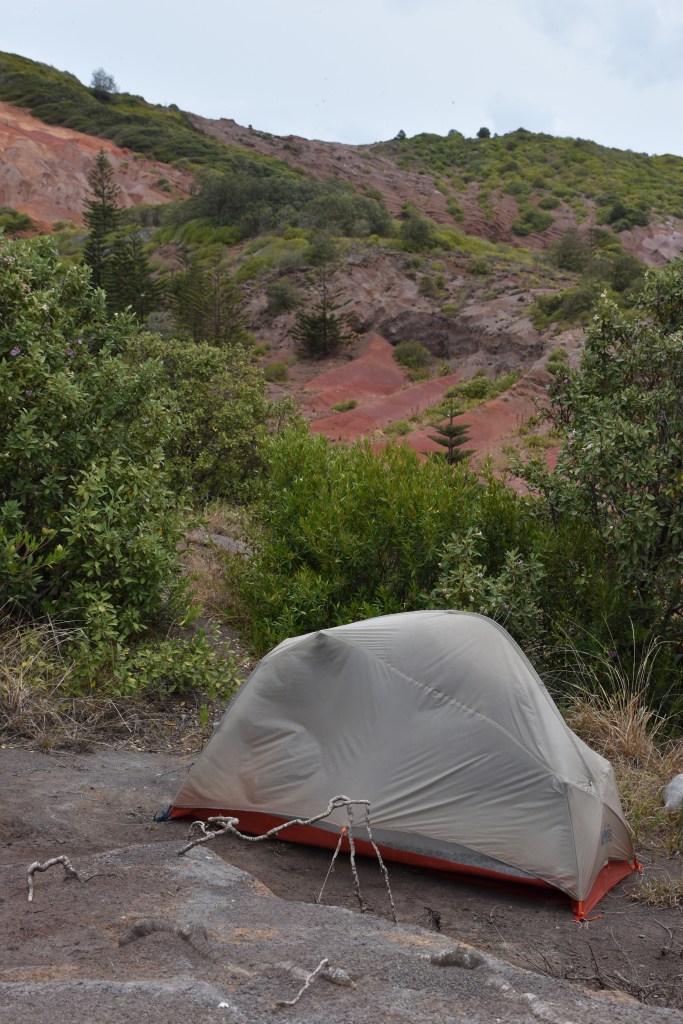
I gaze out to sea with nothing but miles and miles of ocean between here and the next island or Chile, South America. So far away The wind howls and the olive branches rattle. Since 10 minutes has elapsed since the last “chick check”, I creep down the rocky slope to Y111 which we tagged on January 10th. A full week has passed and still no parent has come in. On to the rock bird tucked in behind a rock under some tangly olive “only a bitey chick”, then down to a clump of vegetation above a steep red erosion slope. This chick is really tucked in and just sits quietly. “Nobody home tonight” It’s time to head down the hill, watching carefully not to tread on Black-winged Petrels as they court on the path. We check on the progress of White-necked Petrels on their eggs at Owen’s Camp, stop to listen to crickets at the jungly spot, have a look for the land crab and then head across the bare windy ridge to the camp. Luke downloads and calibrates tags while I have a quick wash of the day’s dust, dirt and sweat. The I happily slip into my tent while the seabirds still cry in the wind.

 Trudy’s Pacific Adventures
Hi Trudy – a great read –
Love from us all
Maria
LikeLike
Hi , Trudy et al , I’m so enjoying , sitting on your shoulders so to speak , inspiring !
LikeLike
What a lovely place and a wonderful read! Gives me some hope for our future wildlife with people like you around! Best wishes for all the work you do in the future too❣️🐦
Regards Carol🌻
LikeLike
Amazing!
Ernie
LikeLike
Thanks Trudy – so interesting to hear and see your adventures!
LikeLike