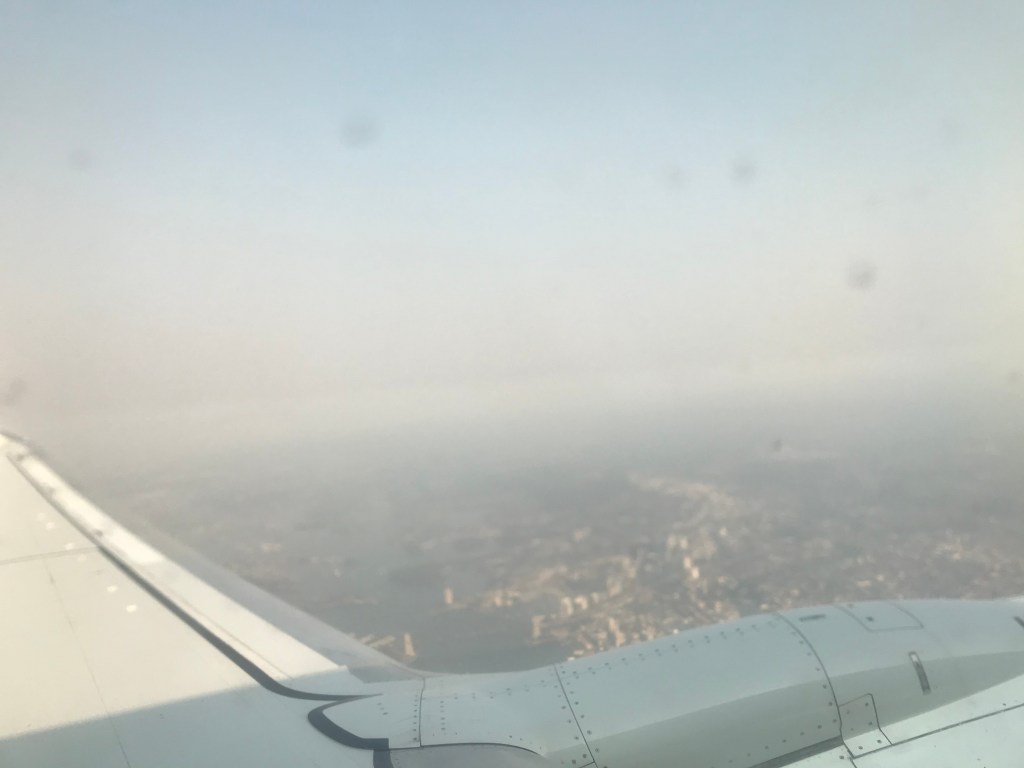
While the wildfires raged in Australia, I felt somewhat guilty getting on the train to Sydney Airport, winging to Brisbane in a smoky haze, then heading off to Norfolk Island, a two hour flight east into the Tasman Sea. Somehow, Norfolk Island is considered an international destination, despite being a protectorate of Australia. Perhaps it’s part of the independence movement, so strong on Norfolk Island? At any rate one has to leave from the Brisbane International Terminal for Norfolk, something that the baggage handlers seem to have troubles with, as my big backpack was nowhere to be found upon arrival at Norfolk airport.

Norfolk Airport is a tiny friendly airport somewhat like Massett in Haida Gwaii. As there are only about 1800 people living on Norfolk Island, flying here is the only real way of coming and going. Border Control, Customs and Air New Zealand staff seem to know what’s up with everybody. Suzanne at the airport was wearing her Air New Zealand hat today and was most apologetic saying “the next flight arriving will be four days away, due to New Year’s etc.” She kindly gave me the name of several dress shops, but also the number of Barbara, main volunteer at the “Ops Shop” . “Give her a ring and she’ll likely open for you” . Despite preparing New Year’s dinner for 9, Barbara opened the Opportunity Shop. I quickly compiled a list of what I might need and also considered Plan B (if my pack didn’t show up). In 10 minutes I managed to try on hats, shorts, bathing suits and shirts. Everything tolled up to $10 which turned out to be the price of 6 beets or 1.5 kg of potatoes in a Norfolk shop!
I was pleased with the bargain and headed to the Polynesian apartments, unpacked then Luke and I walked to the Bowling Club for supper. Food is an atrocious price on Norfolk and one has to ignore the prices and enjoy!
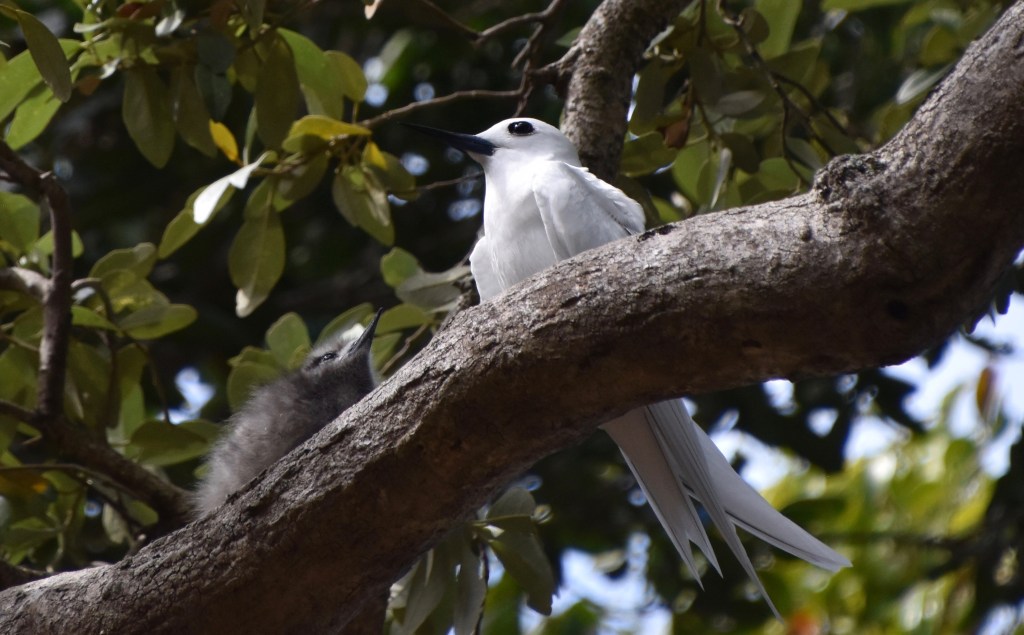
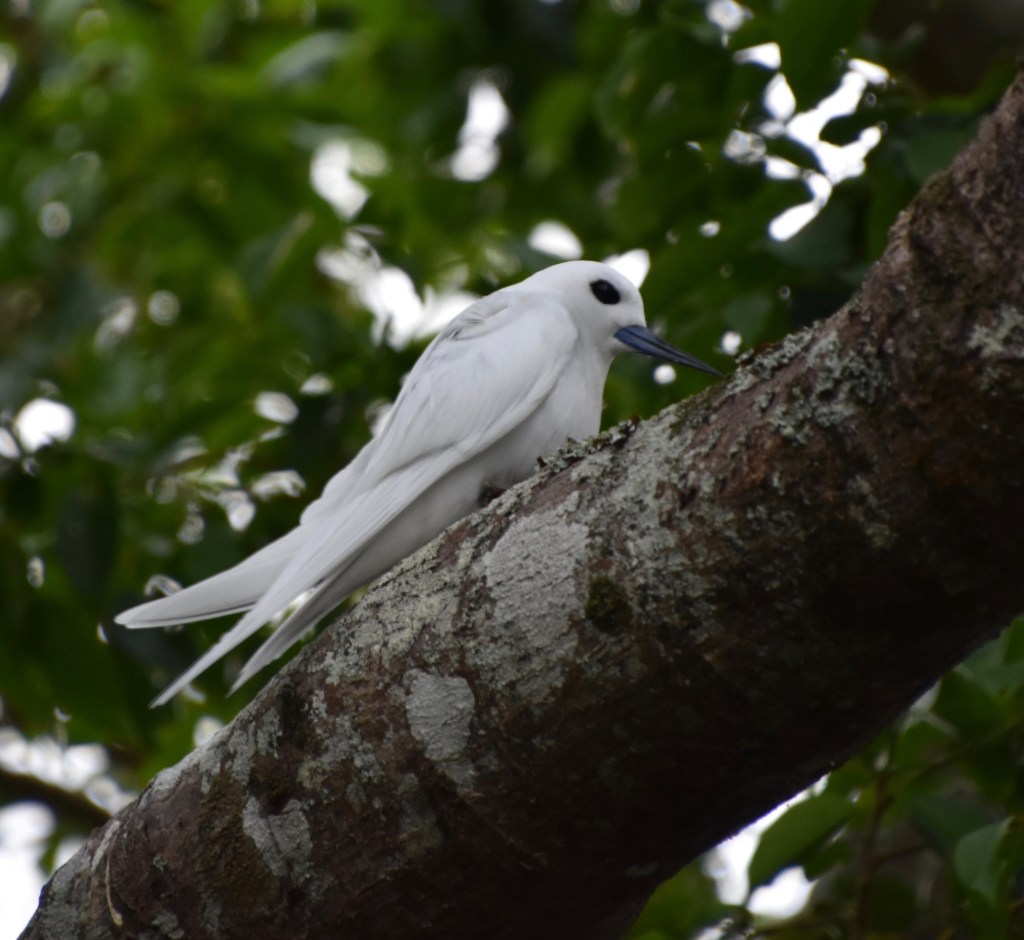
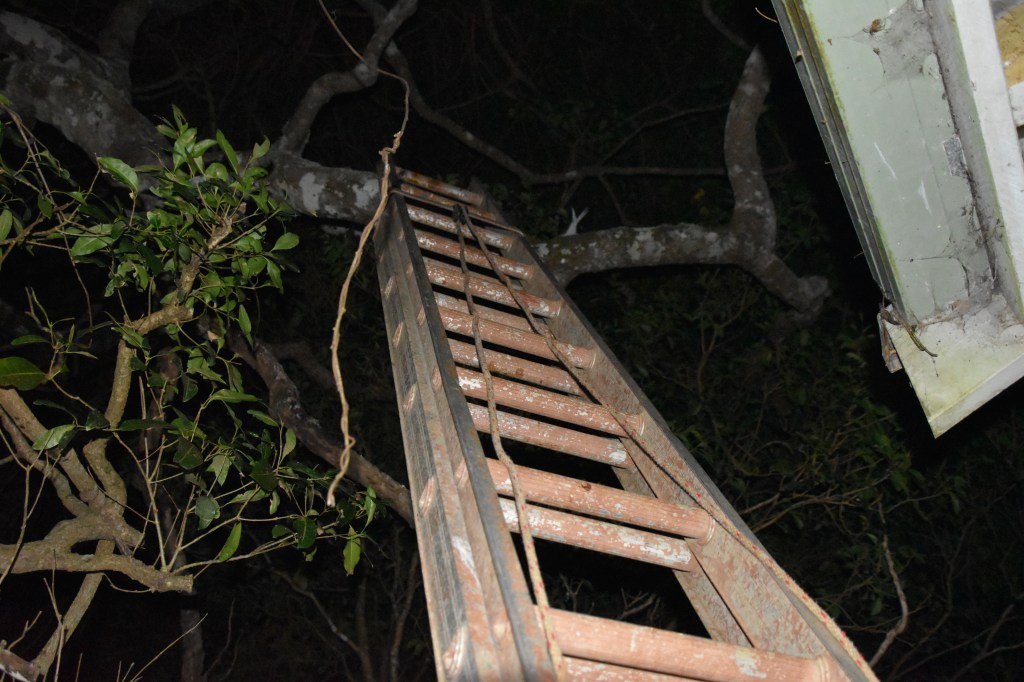
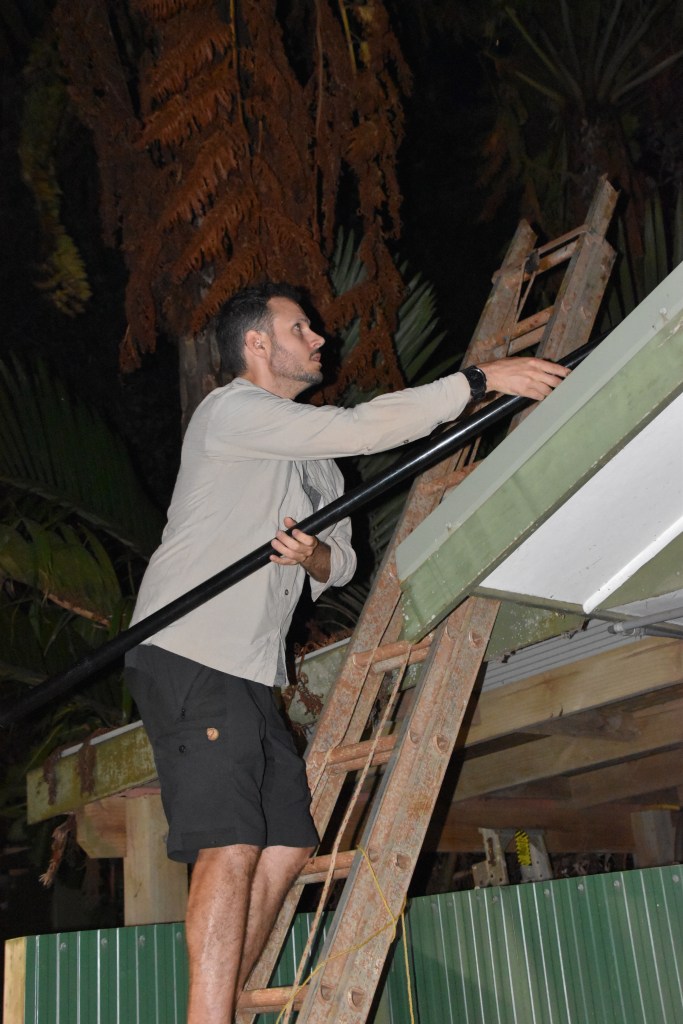
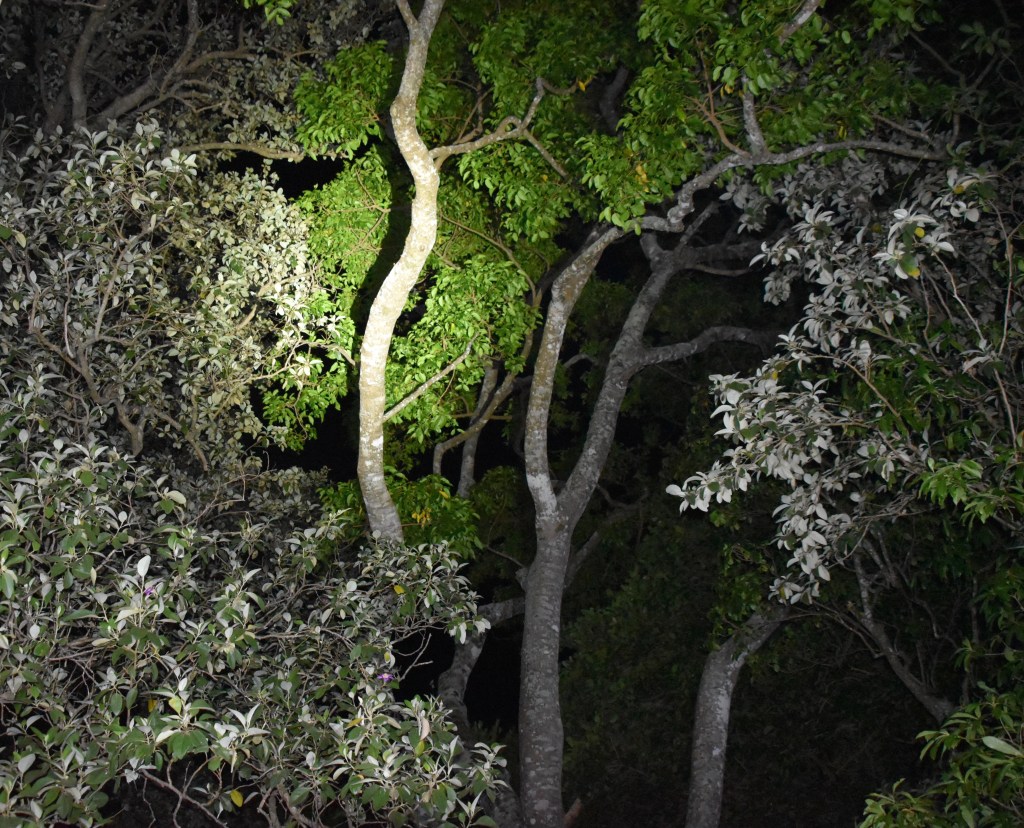
Soon after dinner we headed up to the Norfolk Island National Park office to see if we could retrieve some geolocators from White Terns nesting in trees in the park. Luke had already scoped out the nests that Nicholas Carlisle had tagged earlier. “I’m not sure how he reached those birds?” Luke bemoaned. White Terns are delicate tropical seabirds who nest on tropical islands throughout the Pacific. Navigators used White Terns to predict landfall as they forage relatively close to islands on surface fish, squid and particularly flying fish. They were named Hawaii’s official bird such as Hawaii. Although they persist in human landscapes, cats are a major threat. White Terns lay an egg and raise one chick on rather slender tree branches. This habit is thought to reduce nest parasites, but has the risk of egg or chick being blown off the branch in a heavy wind. In our case, one nest was relatively easy to access by firmly attaching a ladder to a post, climbing, then delicately catching the bird. However, the second nest was on a long branch about 12 metres from the ground. One fall for either of us would risk the field season on Phillip and the conclusion to Luke’s Phd studies. Not a good prospect.
Since my luggage was lost, I didn’t even have a headlight but armed with a hoop net on an extending pole and a long bit of bamboo to distract the adult, we made a couple of passes at both birds. Missed! Then we tied the ladder to the post and Luke climbed up gingerly.
The adult tern with chick was caught and its GLS transmitter retrieved.
Fortunately, chicks have well developed feet with claws adapted for clinging to the branch, so all was well and the adult was returned to the chick.
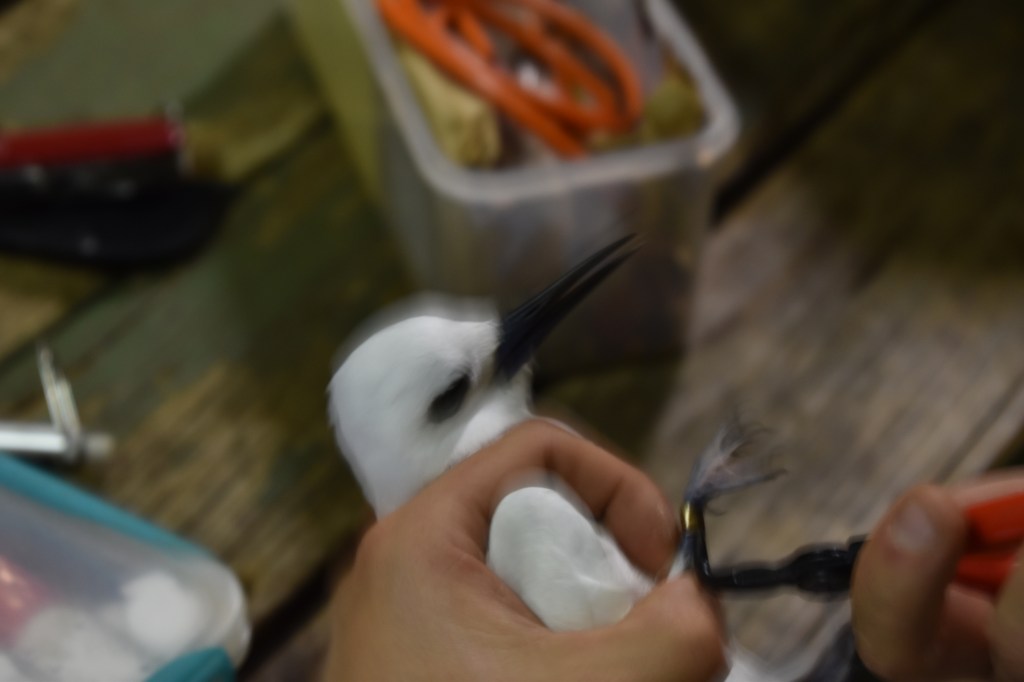
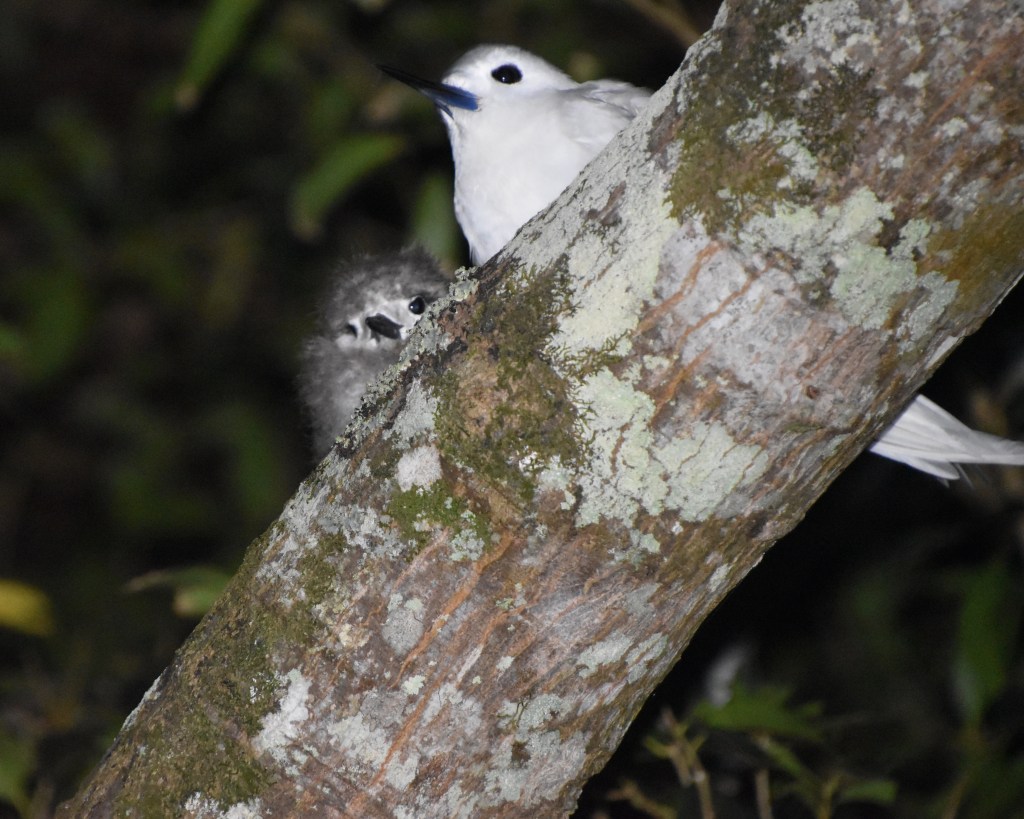
We struggled with the ladder to the second nest, but concluded that we needed help and climbing aids to even attempt the second nest, which didn’t even have a chick yet. The adult White Tern was safe for another night and so were we! It was the most unusual and eventful New Years Eve I’ve ever had!

 Trudy’s Pacific Adventures
Lots of various adventures! Watch those ladders!
LikeLike
how on earth do those white terns keep their egg on a branch! what an unusual nesting strategy. Does only one parent incubate and tend the chick then?
LikeLike
The White Terns are amazing and I’ve also seen them in Honolulu parks. Like most seabirds, both parents help incubate the egg and feed the chick. Apparently, the chick has such well developed feet and claws it can “stick” to the branch. Also, the adults take off from the branch backwards to avoid knocking the chick off branch.
One of the reasons we were so reluctant to re-capture the adults was the risk of knocking the chick off the branch. Sadly, if a chick falls, they fall prey to cats. Adult terns on Norfolk also fall prey to cats and Margaret Christian recently posted a photo of “Angel Wings” (terns caught by cats).
LikeLike
Those White Terns should find a mossy patch to hold the egg safely, just like our marbled murrelets! Thanks Trudy.
LikeLike